
Chinese wedding dresses center on red for luck and joy, gold embroidery for prosperity, and silhouettes that support kneeling, pouring tea, and long family greetings. The right choice balances cultural symbolism with how the garment moves, breathes, and photographs under indoor lighting or outdoor sun. These 16 styles move from formal qun kwa grades and xiu he fu sets to fitted qipao options and modern fusions, organized by structure, embroidery density, and practical wear for tea ceremonies versus banquets.
1. Classic Red Dragon-Phoenix Qun Kwa
This two-piece set pairs a structured jacket with a straight or lightly pleated skirt in red silk or satin, covered in raised gold and silver embroidery of dragons and phoenixes. The motifs signal marital balance while the looser cut lets you kneel and rise during the tea ceremony without the fabric fighting your posture. Dense hand embroidery adds weight and a three-dimensional texture that catches light, making it the traditional choice for Cantonese and Hong Kong families who treat the piece as an heirloom. Most versions close with frog buttons or a concealed zipper and sit over red undergarments for continuity of color.
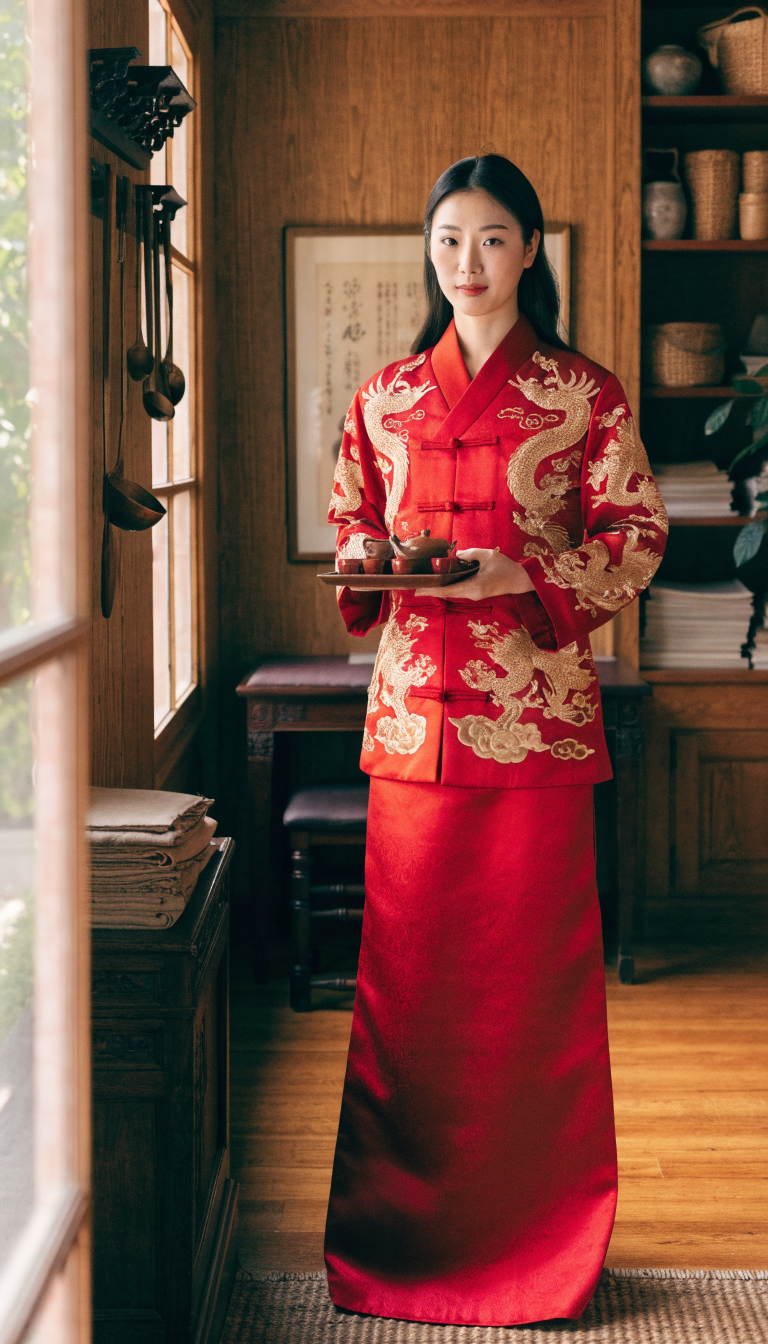
- Tea ceremony priority: Supports kneeling and extended sitting better than fitted one-piece dresses.
- Embroidery weight: Heavy gold thread can feel warm in unairconditioned spaces; test movement early.
- Heirloom potential: High-density pieces are often framed or stored for the next generation.
2. Full-Coverage King Kwa
Nearly every inch of the red base disappears under continuous gold and silver embroidery, creating a luminous, almost metallic surface. Artisans use layered stitches that stand proud of the fabric, producing the highest grade of qun kwa traditionally reserved for the most formal moments. The jacket remains boxy enough for comfort across a full day of rituals, while the skirt falls straight so you can walk and bow without catching the hem. Because the work is so intensive, production commonly stretches several months beyond standard bridal timelines.
- Formality marker: Highest embroidery density signals maximum prosperity symbolism.
- Handling care: The raised threads catch easily; steam rather than iron, and avoid heavy bags.
- Ordering window: Expect multi-month lead times for true hand-embroidered examples.
3. Queen Kwa with Substantial Gold Coverage
Roughly ninety percent of the surface carries gold embroidery, leaving only subtle glimpses of the red silk beneath. The result looks regal under banquet lighting yet still reads as traditional rather than costume. Jacket sleeves typically stop at three-quarter length so gold bangles remain visible, and the skirt’s modest volume accommodates sitting through lengthy family photographs. Slightly less dense than the king grade, it often proves easier to source in a ready or sample size when timelines tighten.
- Bangle visibility: Three-quarter sleeves keep traditional jewelry on display.
- Sample availability: More common in showroom stock than fully covered versions.
- Alteration note: Hem adjustments remain straightforward because the skirt is not heavily layered.
4. Xiu He Fu with Flared Skirt
A waist-length or longer jacket sits over an A-line or circular skirt that flares from the waist, giving freer movement than the structured qun kwa. Embroidery focuses on peonies, lotuses, clouds, or bats rather than full dragon-phoenix coverage, so the fabric feels lighter and less rigid. The silhouette works well for brides who want traditional motifs but plan to change outfits later or move between indoor and outdoor spaces. Lightweight silk or silk-blend bases drape more fluidly than dense brocade.
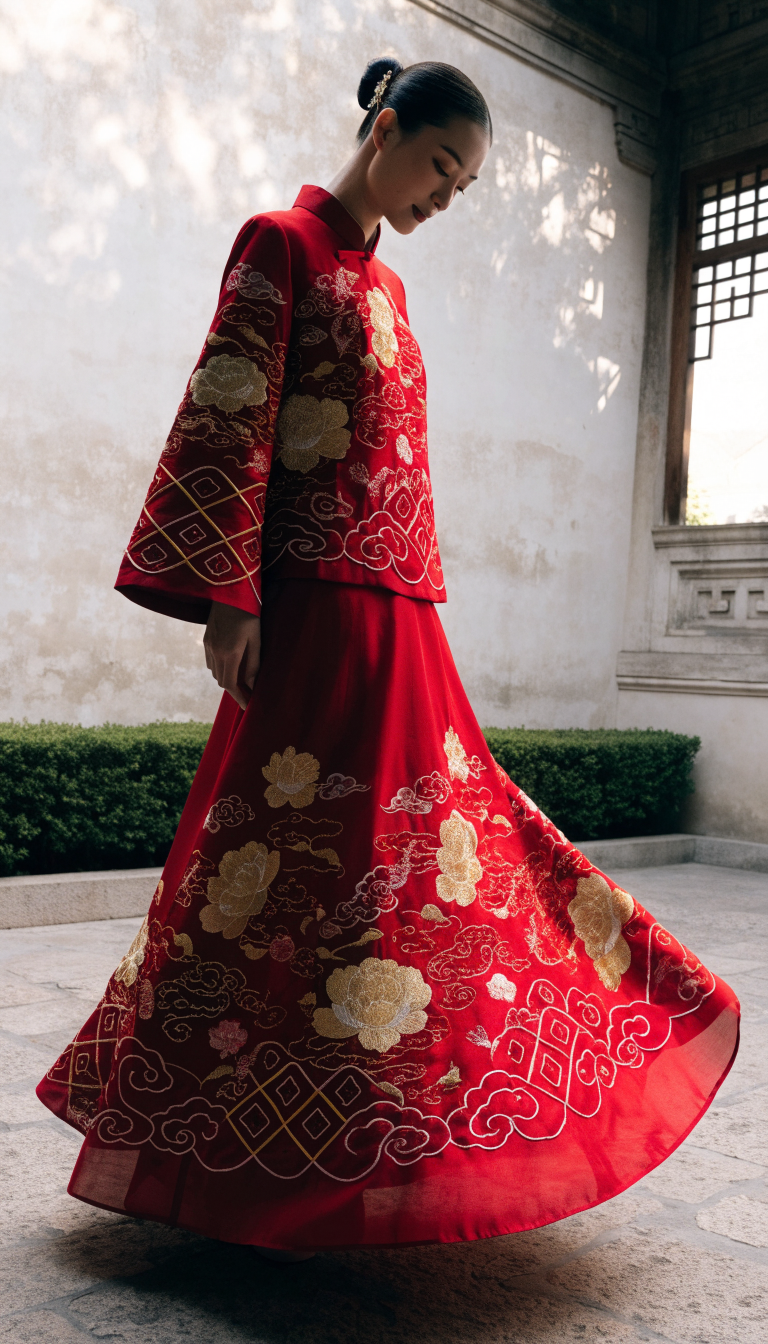
- Movement advantage: Flared skirt lets you sit and walk without the stiffness of straight-cut styles.
- Motif flexibility: Peony and lotus patterns carry prosperity and purity without requiring full dragon sets.
- Heat consideration: Reduced embroidery density stays more comfortable in humid venues.
5. Fitted Red Qipao for Banquet Wear
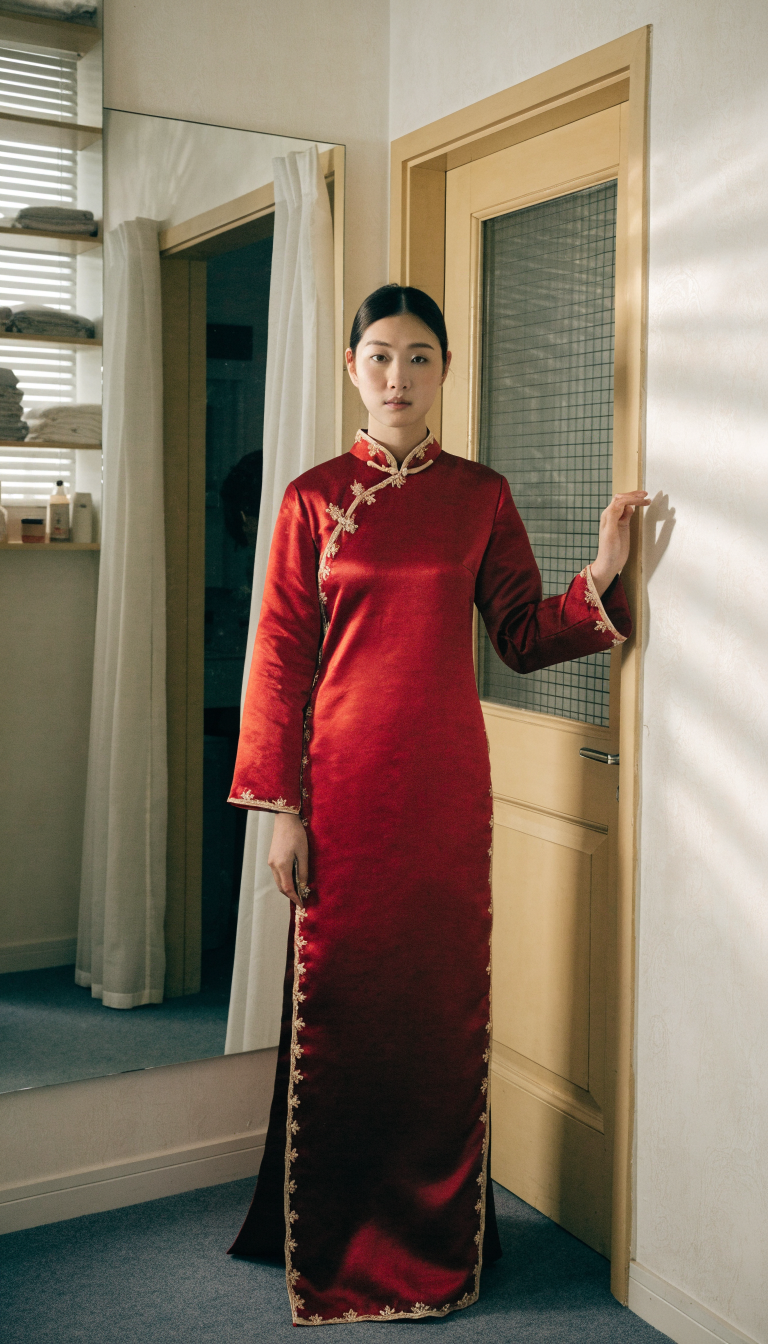
The one-piece cheongsam or qipao uses a high mandarin collar, frog-button closure, and side slits in red silk or satin. Its close fit follows the body through the hips before releasing slightly at the hem, creating a sleek line that photographs cleanly against banquet backdrops. Stretch lining or a softer silk blend improves comfort for dancing, while the slits allow a natural stride once the tea ceremony ends. Many brides reserve this as a second look after changing out of a heavier qun kwa.
- Second-look timing: Ideal once formal kneeling is finished and the schedule shifts to dining and dancing.
- Slit practicality: Side openings make walking and sitting easier than a fully closed sheath.
- Undergarment check: Smooth shapewear prevents lines under the fitted silk.
6. Ivory or Champagne Qipao with Gold Accents
A modern qipao in ivory or champagne silk keeps the mandarin collar and frog closures but substitutes Western bridal tones for traditional red. Sparse gold embroidery or beading along the collar and hem nods to cultural symbolism without overwhelming the lighter palette. Fluid charmeuse or lightweight crepe moves softly and wrinkles less than pure silk in travel, making it practical for destination or multi-event weekends. The silhouette remains fitted through the torso with a modest train or ankle-length hem.
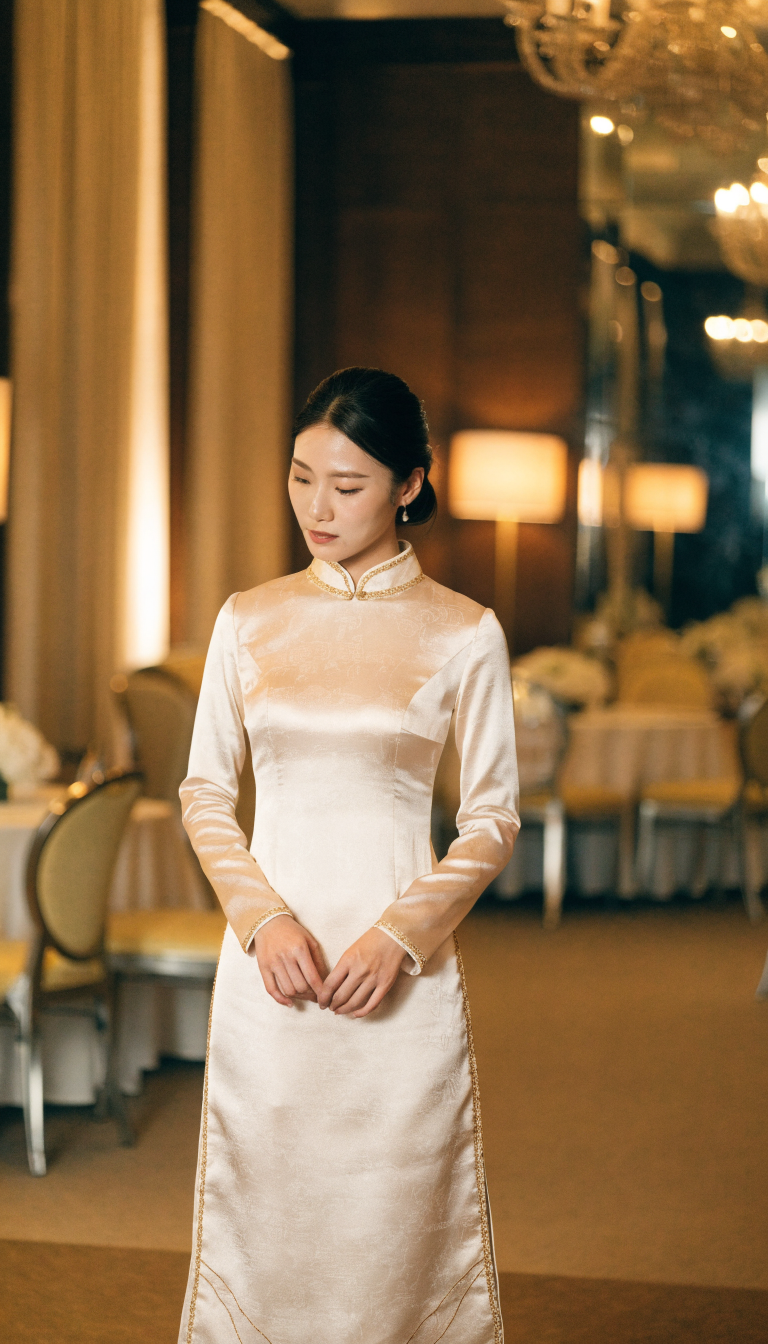
- Color versatility: Works for brides blending Western ceremony aesthetics with Chinese details.
- Fabric drape: Charmeuse falls smoothly and resists the bulk of heavy brocade.
- Re-wear potential: Neutral tones and simpler embroidery support later anniversary or banquet use.
7. Wine or Burgundy Qun Kwa
Deep wine or burgundy silk replaces bright red while retaining gold embroidery of traditional motifs. The richer base photographs well under warm indoor lighting and feels less stark against contemporary décor or mixed-cultural guest lists. Structure stays true to the two-piece jacket-and-skirt format, so kneeling and pouring remain comfortable. Because the color is less saturated, minor fabric variations between jacket and skirt show less clearly after alterations.
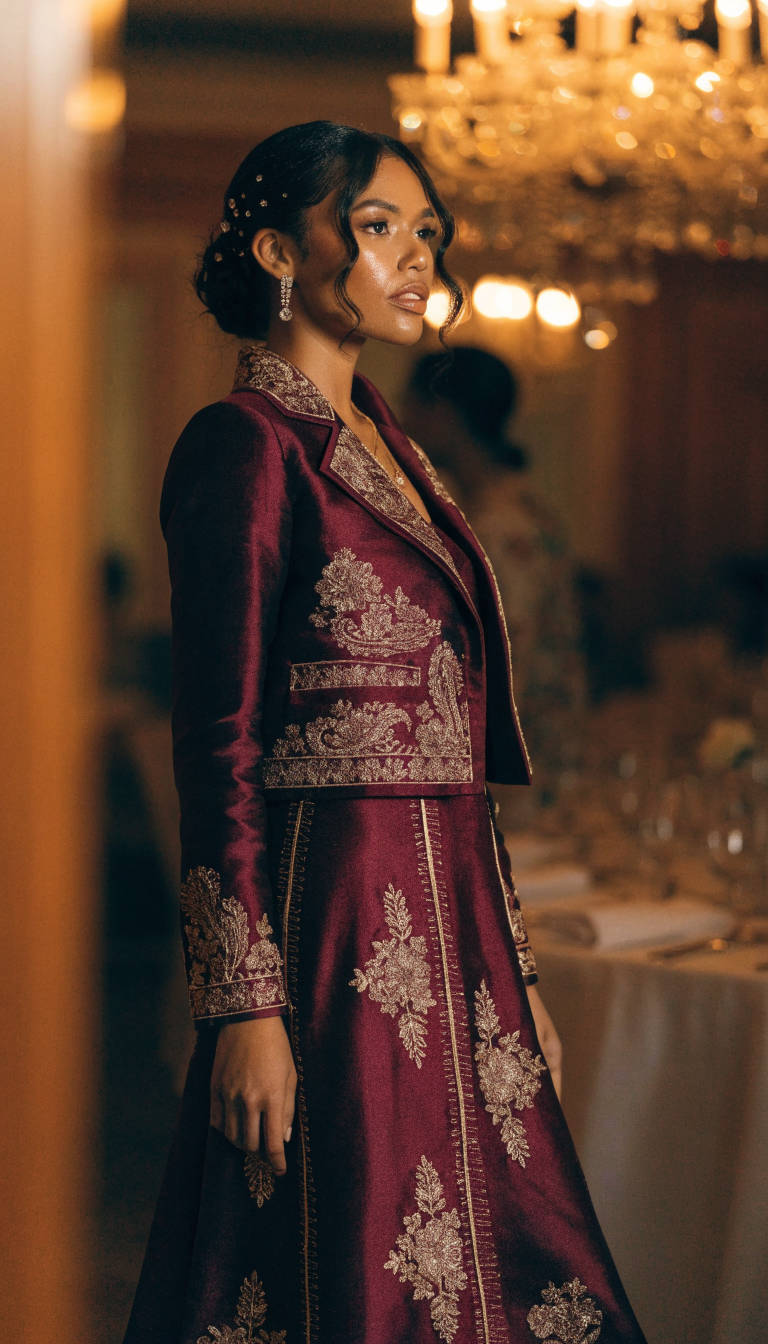
- Lighting match: Darker reds hold their depth under banquet chandeliers better than pure scarlet.
- Family discussion: Confirm the shade still reads as auspicious to elders who expect classic red.
- Steam care: Burgundy silk shows water marks easily; professional steaming is safest.
8. Lightweight Silk Qipao for Warm Climates
A sleeveless or cap-sleeve qipao cut in breathable silk georgette or lightweight satin keeps the mandarin collar and side slits but sheds the heavy embroidery of ceremonial pieces. The fabric moves with air and dries quickly if the venue is humid or outdoors. Minimal beading or tonal embroidery maintains elegance without trapping heat against the skin. This version suits afternoon tea ceremonies or garden receptions where a full qun kwa would feel oppressive.
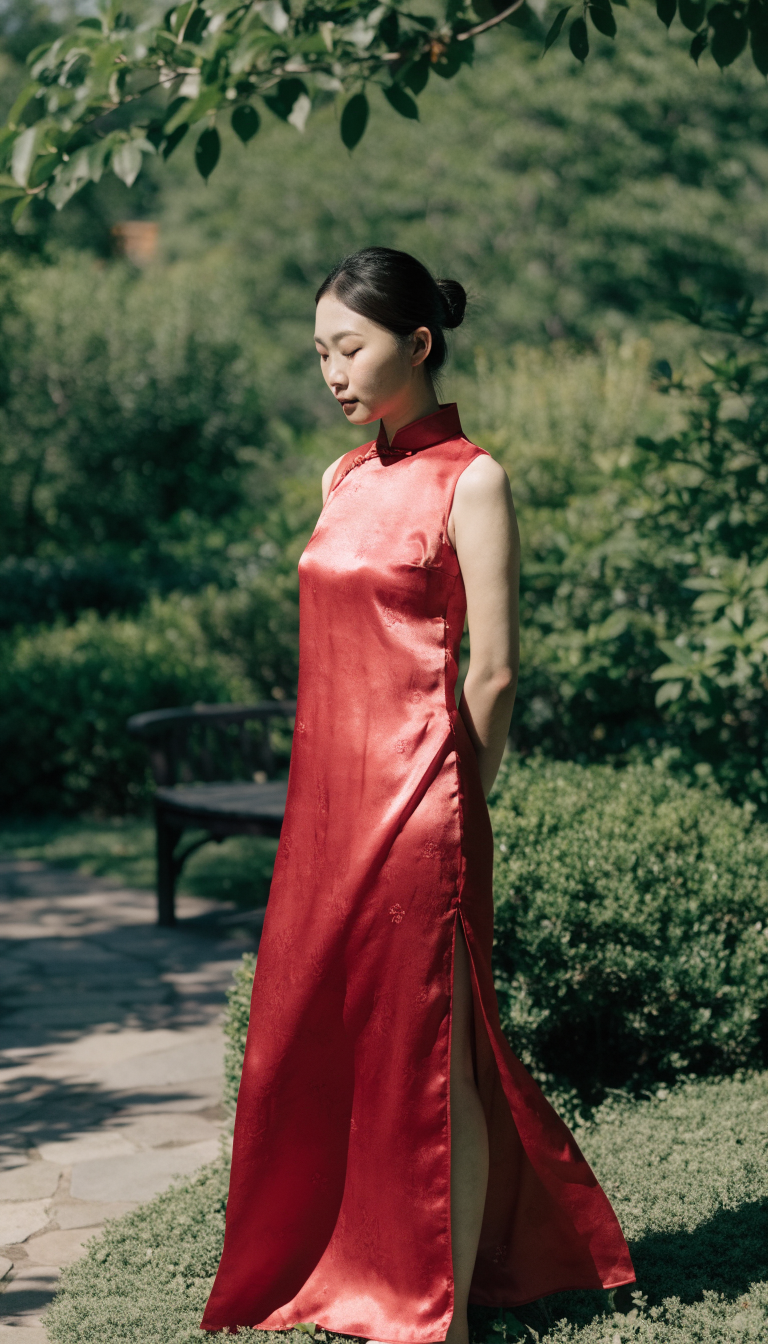
- Climate fit: Sheer or lightweight silk reduces heat buildup during outdoor or summer events.
- Collar support: The high neck still frames the face even without dense decoration.
- Quick change: Lighter weight makes swapping into a reception look faster.
9. Fusion Gown with Mandarin Collar
A Western ball-gown or A-line silhouette incorporates a mandarin collar, frog-button details, or a detachable embroidered cape. The bodice may use structured mikado or satin while the skirt layers soft tulle, giving volume that reads bridal yet culturally specific. Embroidery concentrates on the collar, cuffs, or a short train rather than covering the entire surface, balancing symbolism with easier movement. This hybrid works when the main ceremony follows Western customs and a Chinese element appears at the reception or tea.
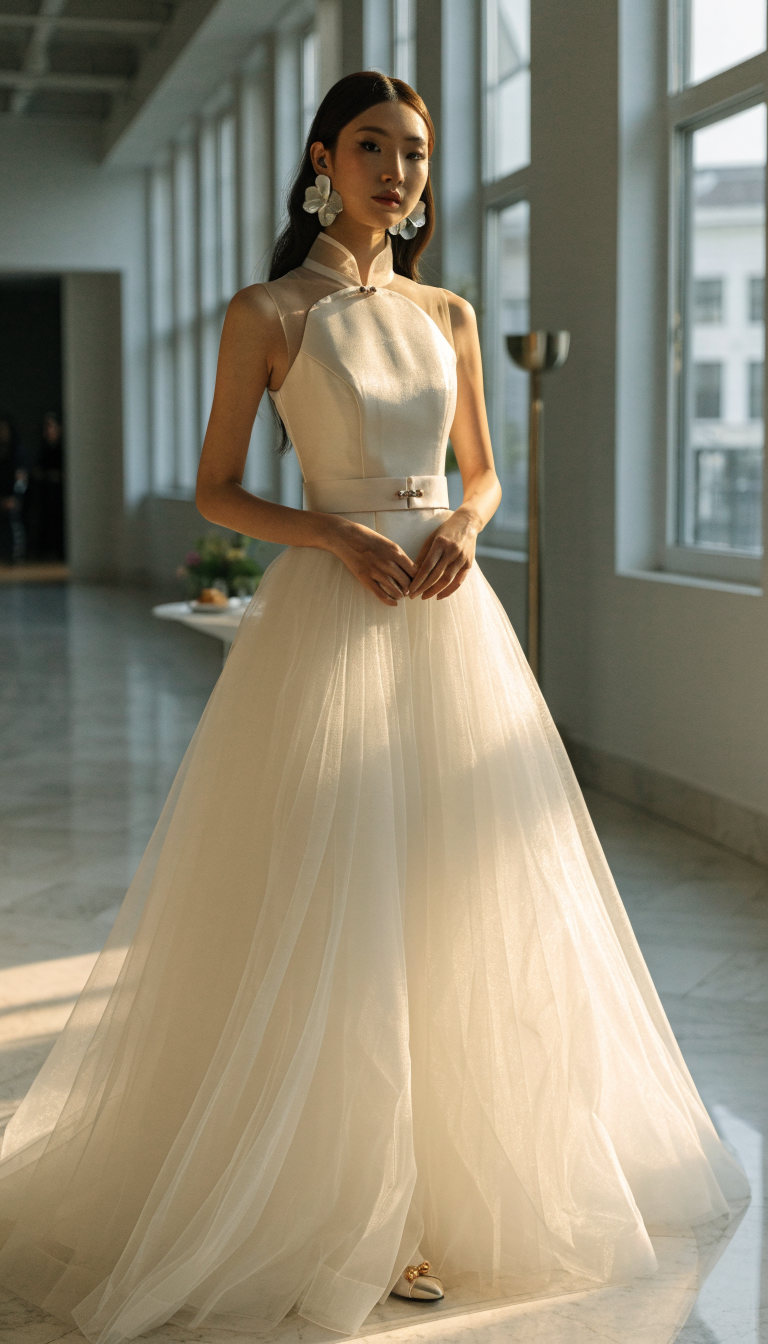
- Train management: A short detachable train avoids the bulk of traditional Western lengths during tea service.
- Fabric contrast: Crisp mikado in the bodice holds shape while tulle in the skirt stays light.
- Alteration complexity: Collar and frog details require careful matching if the gown is adjusted.
10. Sleeveless Xiu He Fu for Extended Wear
Removing sleeves from the xiu he fu jacket reduces fabric weight and allows air circulation while the A-line skirt retains its ceremonial volume. Embroidery stays concentrated on the front panels and hem so the overall look remains formal. The open arms make it easier to pour tea, accept gifts, and greet guests without sleeves catching on table edges or bangles. Lightweight silk or silk-blend fabrics further improve comfort across a full day.
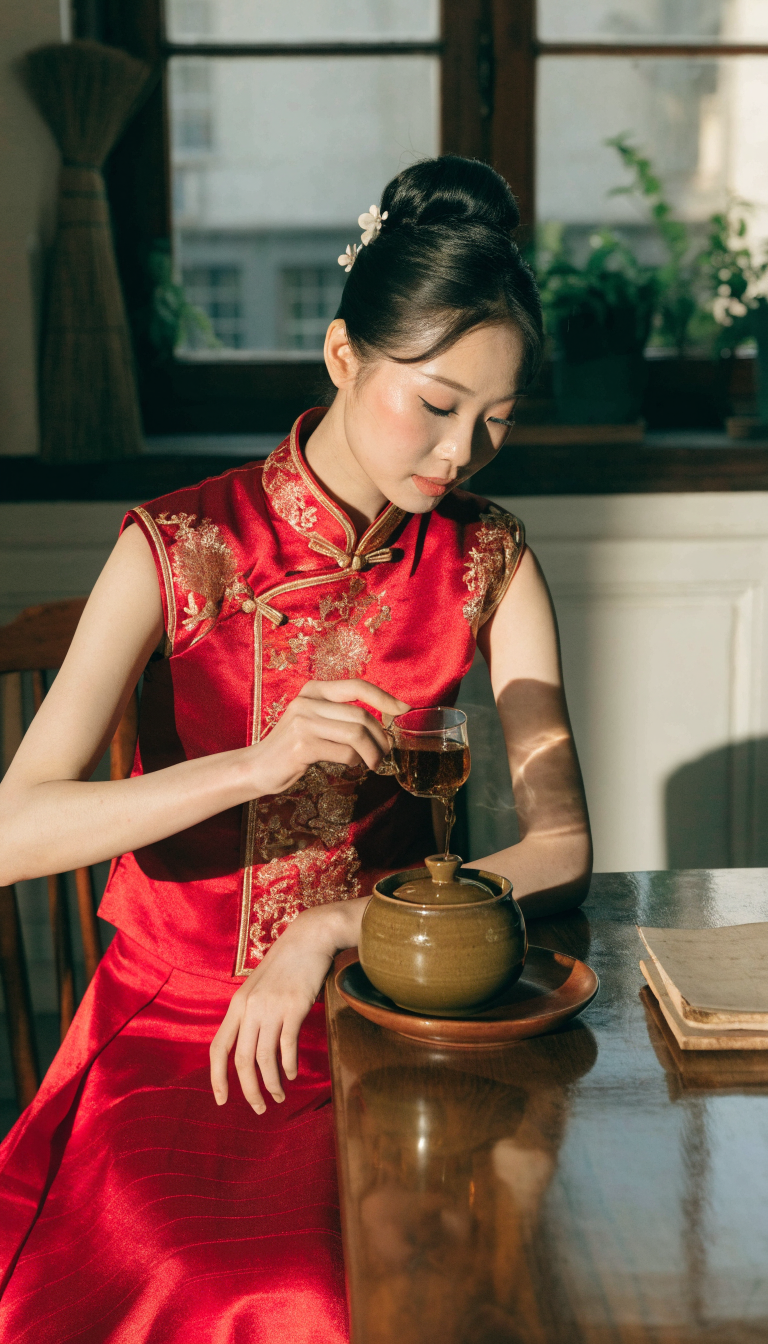
- Arm freedom: Sleeveless construction simplifies pouring and gesturing during family rituals.
- Layering option: A sheer bolero can be added later if the venue cools.
- Skin comfort: Less fabric against the arms reduces heat during long photo sessions.
11. Peony-Focused Embroidery Set
Instead of dense dragon-phoenix coverage, the design centers on large peony blooms in gold and silver thread across a red or wine base. Peonies traditionally represent wealth and honor, so the motif still carries strong blessing symbolism while appearing softer in photographs. Both qun kwa and xiu he fu constructions can use this focus; the resulting surface is less rigid than full-coverage gold work. The visual weight sits mainly on the front, leaving the sides and back cleaner for movement.
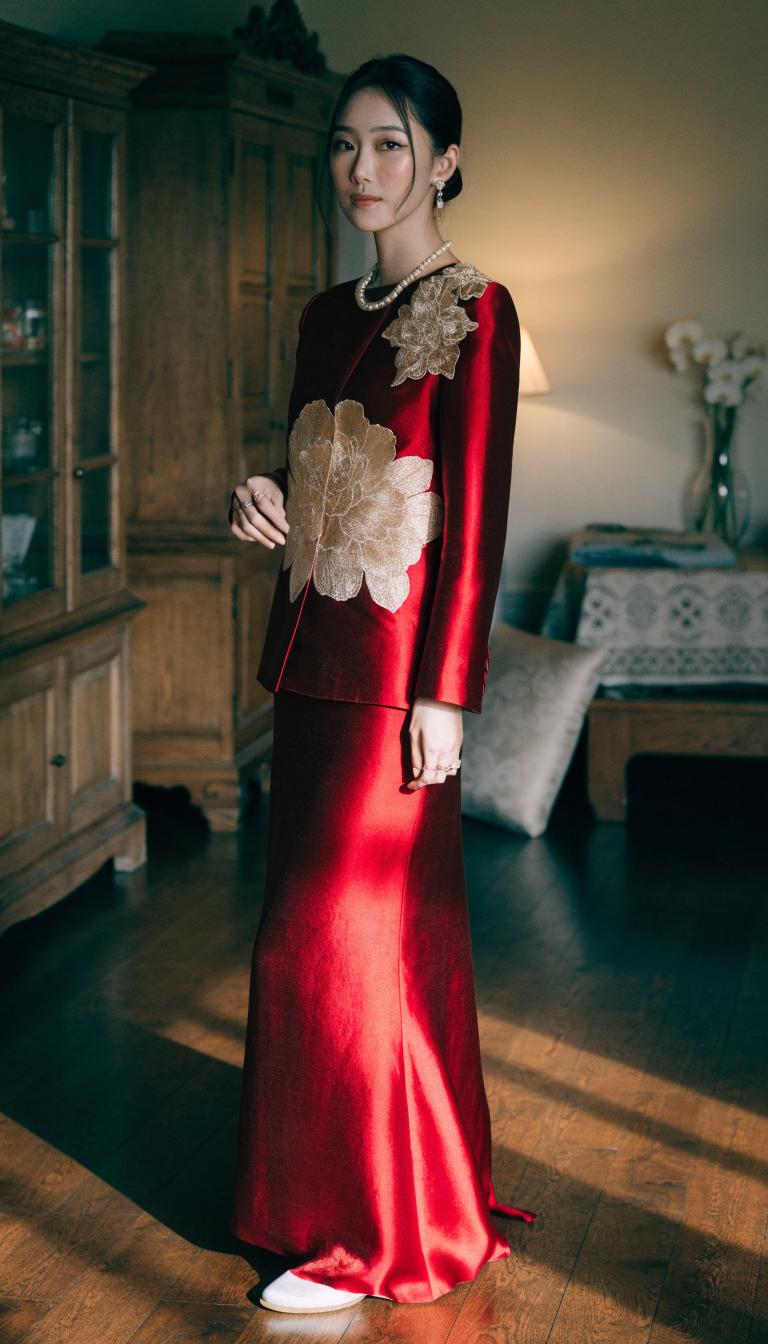
- Symbol clarity: Peonies communicate prosperity without requiring the full dragon-phoenix pairing.
- Photo softness: Larger floral motifs read clearly from a distance without looking metallic.
- Budget flexibility: Lower embroidery density often shortens production time and cost.
12. Two-Piece Separates for Multiple Moments
A matching embroidered jacket and skirt can be worn together for the tea ceremony, then the jacket removed or swapped for a simpler top at the banquet. The skirt alone, paired with a modern blouse or strapless bodice, extends the life of the garment beyond a single ritual. Silk or satin bases hold their color and structure through changes, and the separates travel more easily than a one-piece gown. This approach suits couples planning several outfit transitions across the day.
- Outfit transitions: Jacket can be set aside once formal greetings finish.
- Packing ease: Separates fold and pack more compactly than structured one-piece dresses.
- Mixing potential: The skirt pairs with contemporary tops for later reception looks.
13. Stretch-Lined Qipao for Comfort
A classic red or ivory qipao gains a stretch silk or satin lining that moves with the body instead of restricting it. The outer fabric can still be traditional brocade or silk, but the lining prevents the dress from riding up or pulling during sitting and dancing. Side slits remain functional, and the mandarin collar stays crisp because the structure comes from the outer layer rather than the stretch element. This construction reduces the need for constant adjustments during a long banquet.
- Sitting test: Stretch lining keeps the hem and slits in place when you sit for photos or dinner.
- Dance practicality: Fabric recovers after movement instead of staying stretched or wrinkled.
- Fitting priority: Try the dress while seated and with arms raised to confirm the lining behaves.
14. Minimal-Embroidery Sample or Pre-Owned Piece
A previously worn or sample qun kwa or qipao with lighter embroidery (around fifty to seventy percent coverage) offers a practical entry point when budgets or timelines are tight. The reduced thread weight improves comfort and shortens any needed alterations, while the core red-and-gold palette and mandarin details remain intact. Many samples have already been fitted once, so minor hem or sleeve adjustments finish faster than starting from raw fabric. Always confirm the embroidery is securely attached and the silk has not faded in storage.
- Timeline relief: Ready pieces bypass the multi-month wait of full custom embroidery.
- Condition check: Inspect seams and raised threads for loose stitches before purchasing.
- Cost awareness: Prices vary widely by prior wear and embroidery density; factor in professional cleaning.
15. Detachable Cape or Overlay for Layered Looks
A simple qipao or lightweight xiu he fu gains a detachable embroidered cape or organza overlay that adds formality for the tea ceremony and comes off for the reception. The base garment stays cool and mobile, while the cape concentrates the gold work and symbolic motifs where they photograph best. Organza or lightweight silk overlays drape without adding much heat, and secure fastenings at the shoulders keep the piece stable during bows. This modular approach lets one core dress serve multiple parts of the day.
- Layer control: Remove the cape once the formal portion ends to reduce weight and heat.
- Fastening security: Shoulder ties or hidden snaps should hold through repeated kneeling.
- Storage note: Keep the cape flat or on a wide hanger so embroidery does not crease.
16. Hanfu-Inspired Ensemble with Wide Sleeves
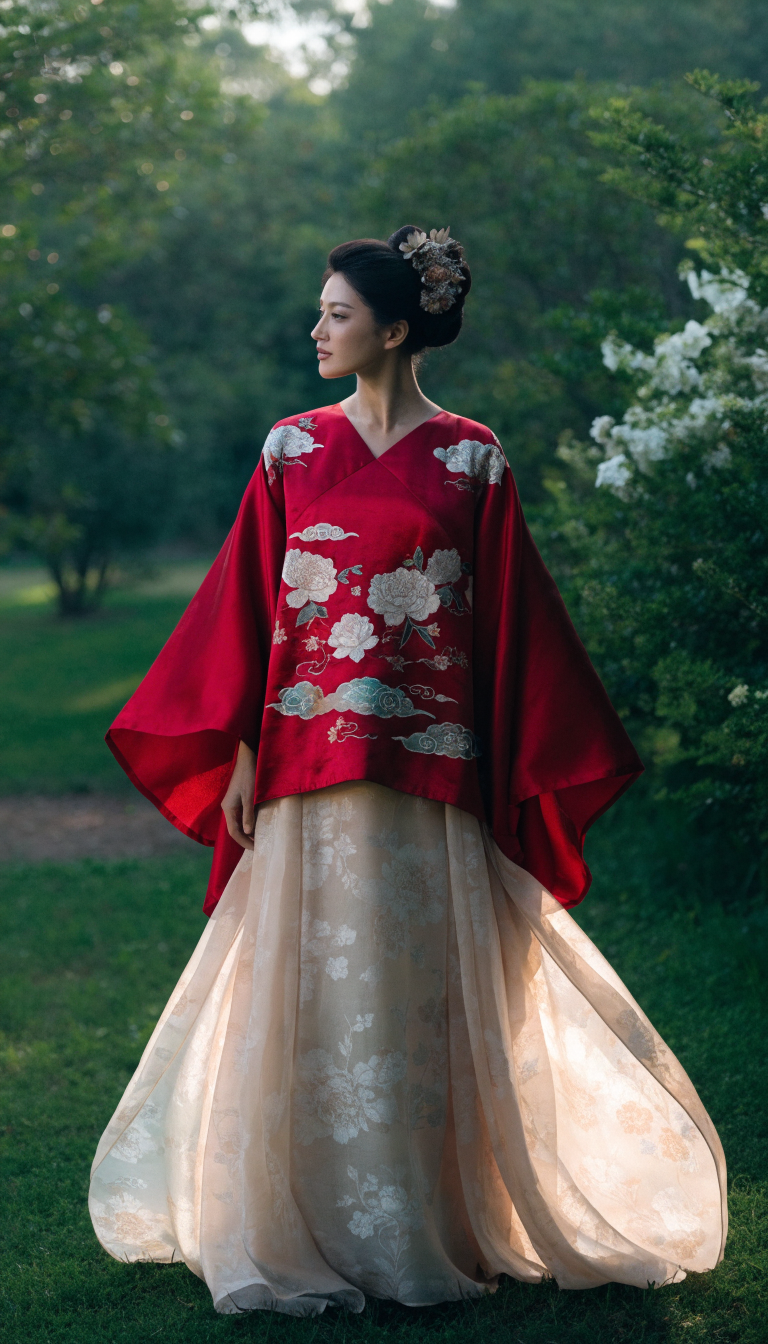
A modern interpretation draws on earlier hanfu construction: a cross-collar upper garment over a full, flowing skirt in red or wine silk. Wide sleeves and layered panels create movement that reads ceremonial without the dense gold coverage of a qun kwa. Embroidery appears as scattered peonies or clouds rather than continuous fields, keeping the fabric lighter and more breathable. The silhouette suits outdoor or garden settings where a structured jacket might feel restrictive, and the generous skirt accommodates kneeling while still looking graceful in photographs.
- Sleeve drama: Wide sleeves photograph well but need practice so they do not catch on tableware.
- Layer breathability: Multiple lightweight silk panels move air better than single heavy brocade.
- Venue match: Flowing lines suit garden or outdoor tea settings more than tight indoor spaces.
Choosing among these styles starts with the day’s sequence: confirm which moments require kneeling and which allow freer movement, then match embroidery density and fabric weight to the climate and schedule. Bring photos of the venue lighting, a list of required rituals, and the shoes you plan to wear so the fitting reveals how each garment actually behaves. Most traditional pieces are made to order, so begin conversations with makers several months ahead and budget separately for alterations and professional steaming.
FAQ
How far in advance should I order a custom Chinese wedding dress? Hand-embroidered qun kwa pieces commonly need several months because the raised gold work is labor-intensive; simpler qipao or lower-density xiu he fu styles can finish faster. Confirm the maker’s current lead time early and ask about sample or ready options if your date is closer.
Can I wear a qun kwa or qipao if the main ceremony is Western? Yes. Many couples use the traditional garment for the tea ceremony or family portraits and change into a Western gown for the vows, or they incorporate only a mandarin collar and limited embroidery into the main dress. Discuss the plan with both families so expectations stay clear.
What undergarments work with these styles? Traditional practice places red silk under the outer garment for continuity of color and luck. For fitted qipao, smooth shapewear that matches your skin tone prevents lines; for structured qun kwa, the looser cut usually needs less compression. Test everything together during the final fitting, including the shoes.
Are alterations complicated on embroidered pieces? Hemming a straight or A-line skirt is usually straightforward, but adjusting a heavily embroidered jacket or mandarin collar requires matching thread and careful hand work so the motifs stay aligned. Budget extra time and cost for any changes near dense gold areas, and avoid last-minute major reshaping.