
A baddie wedding dress centers on close fit, deliberate structure, and confident details rather than soft volume or demure coverage. These 17 styles draw from mermaid and column silhouettes, corset construction, plunging or illusion necklines, and fabrics that hold a line so the gown reads intentional in photos and in motion. Most bridal gowns are made to order, so several-month lead times are common; alterations (a separate cost) refine the fit across multiple visits. Prices vary widely by designer, fabric, and region—expect approximate ranges from off-the-rack or sample-sale options into custom territory, always confirmed at the salon. The list moves from body-conscious silhouettes through neckline and bodice choices, then into fabric and detail decisions that keep the look wearable for the aisle, dinner, and dancing.
Sculpted Silhouettes
1. Mermaid Silhouette with a Thigh-High Slit
The mermaid cut follows the body closely through the hips before flaring near or below the knee, creating a sculpted outline that photographs with clear definition. Pairing it with a thigh-high slit adds walkability so the hem does not restrict steps during the processional or first dance. Stretch crepe or lined satin holds the shape without clinging excessively once boning is placed correctly in the bodice. The silhouette works well in ballrooms or evening venues where lighting catches the smooth fabric, but the close fit through the thighs means testing stairs and sitting early in the fitting process.
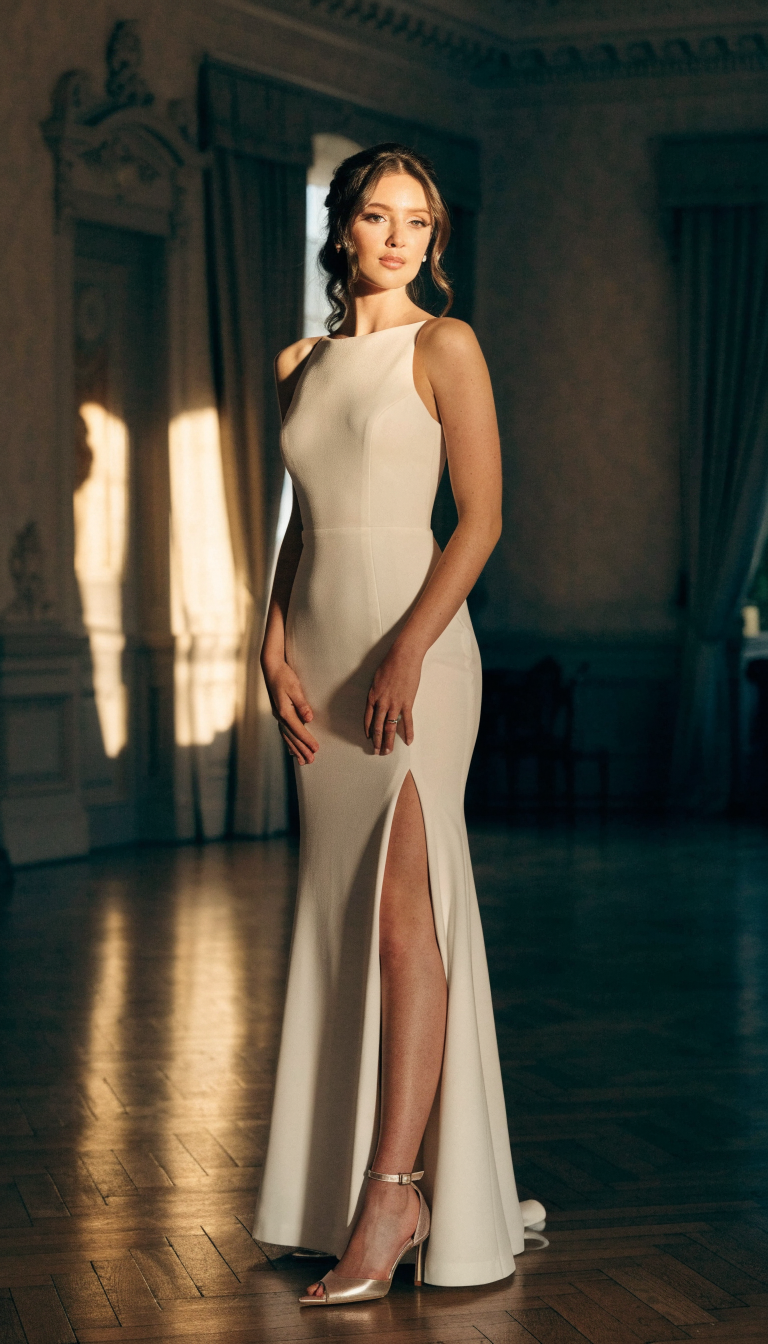
- Stairs and sitting check: Walk a short flight and sit through a mock dinner; the slit should open cleanly without gaping.
- Boning placement: Look for internal boning that supports the bust and waist so the fabric does not pull across the hips.
- Evening venue match: Strong under directional lighting that emphasizes the clean flare rather than soft outdoor diffusion.
2. Trumpet Cut That Flares Mid-Thigh
A trumpet silhouette stays fitted longer than an A-line but opens earlier than a true mermaid, typically around mid-thigh, giving more stride room while still reading as body-conscious. Structured satin or mikado (a firmer silk with a matte-to-subtle sheen) keeps the flare crisp instead of collapsing. The earlier flare reduces the risk of restricted walking compared with lower mermaid styles, yet the overall line remains sleek for formal indoor ceremonies. Alterations often focus on the hip seam and hem balance so the flare sits evenly when the wearer is both standing and in motion.
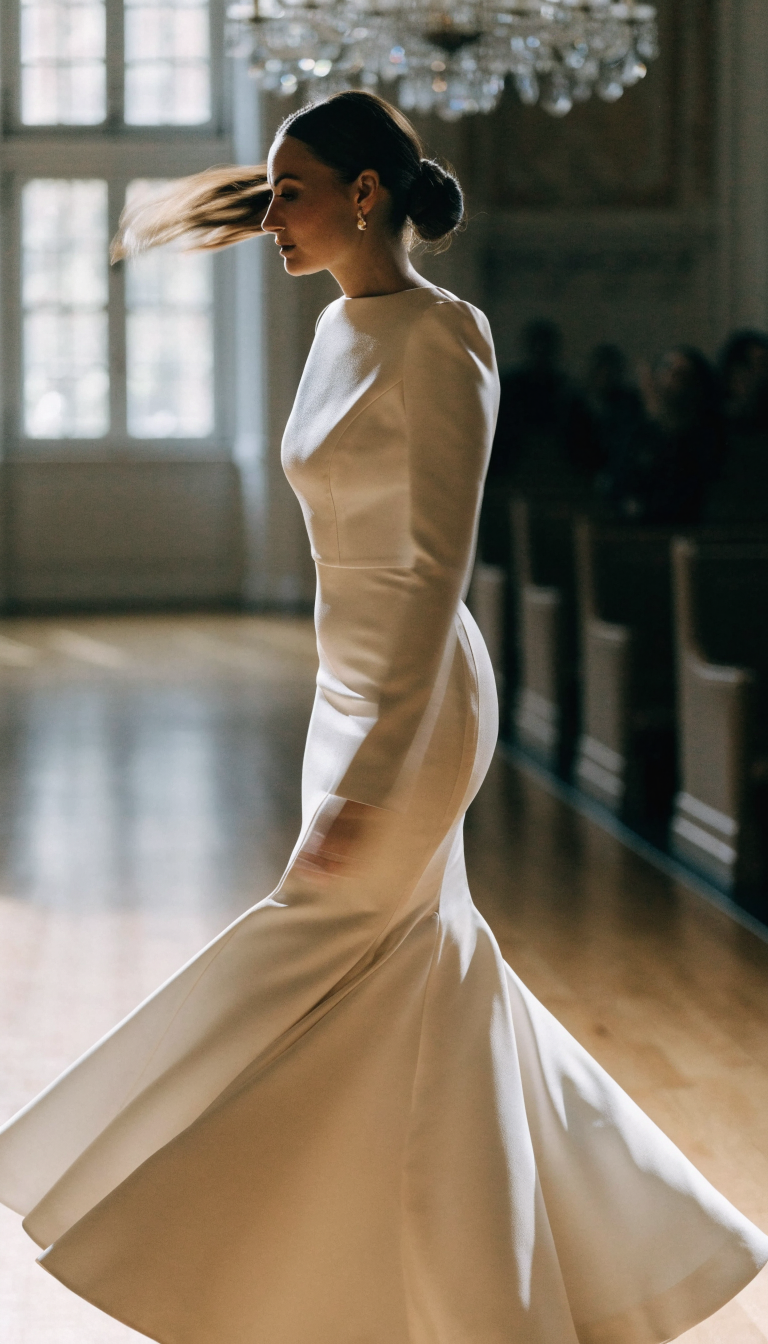
- Stride length note: The mid-thigh opening allows longer steps than a knee-level flare, useful for aisle length or outdoor paths.
- Fabric hold: Mikado resists wrinkling better than lighter satin during travel or long photo sessions.
- Hem balance: Ask the tailor to check the flare while you walk in the actual shoe height planned for the day.
3. Column Sheath in Matte Crepe
The column or sheath follows the body in a nearly straight line from bust to hem, relying on precise seaming and fabric weight rather than flare for shape. Matte crepe skims without high shine and drapes cleanly, so the outline stays architectural rather than clingy once lined. This cut suits modern indoor venues or courthouse settings where a minimal silhouette reads deliberate. Because there is little excess fabric, hem and side-seam adjustments are usually straightforward, though the close fit through the seat requires a thorough sitting and bending test.
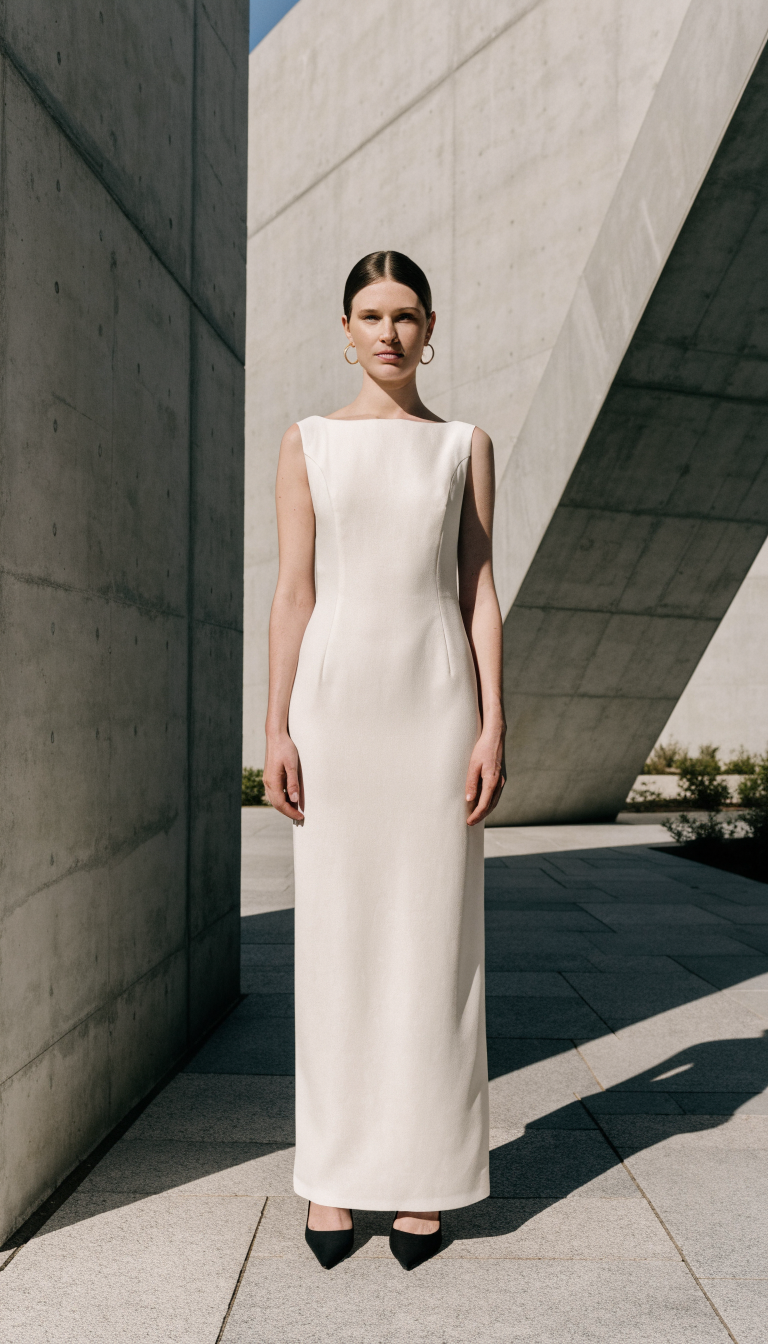
- Sitting and car test: Sit, cross one leg if comfortable, and simulate getting into a car; the fabric should recover without permanent creasing.
- Lining choice: A smooth stretch lining prevents the outer crepe from sticking and improves movement.
- Minimal venue fit: Clean lines photograph clearly against architectural backdrops without competing volume.
4. Fit-and-Flare with a Defined Waist Seam
Fit-and-flare hugs through the waist and hips before releasing into a controlled flare, offering more ease below the hip than a pure mermaid while still emphasizing the waist. A firm satin or crepe with light boning at the waist seam creates the definition without external corsetry. The style balances structure and movement, making it practical for venues that include both a seated dinner and dancing. Hemming is typically simpler than with full skirts, but the waist seam must be precisely placed so it does not shift when the wearer raises their arms or sits.
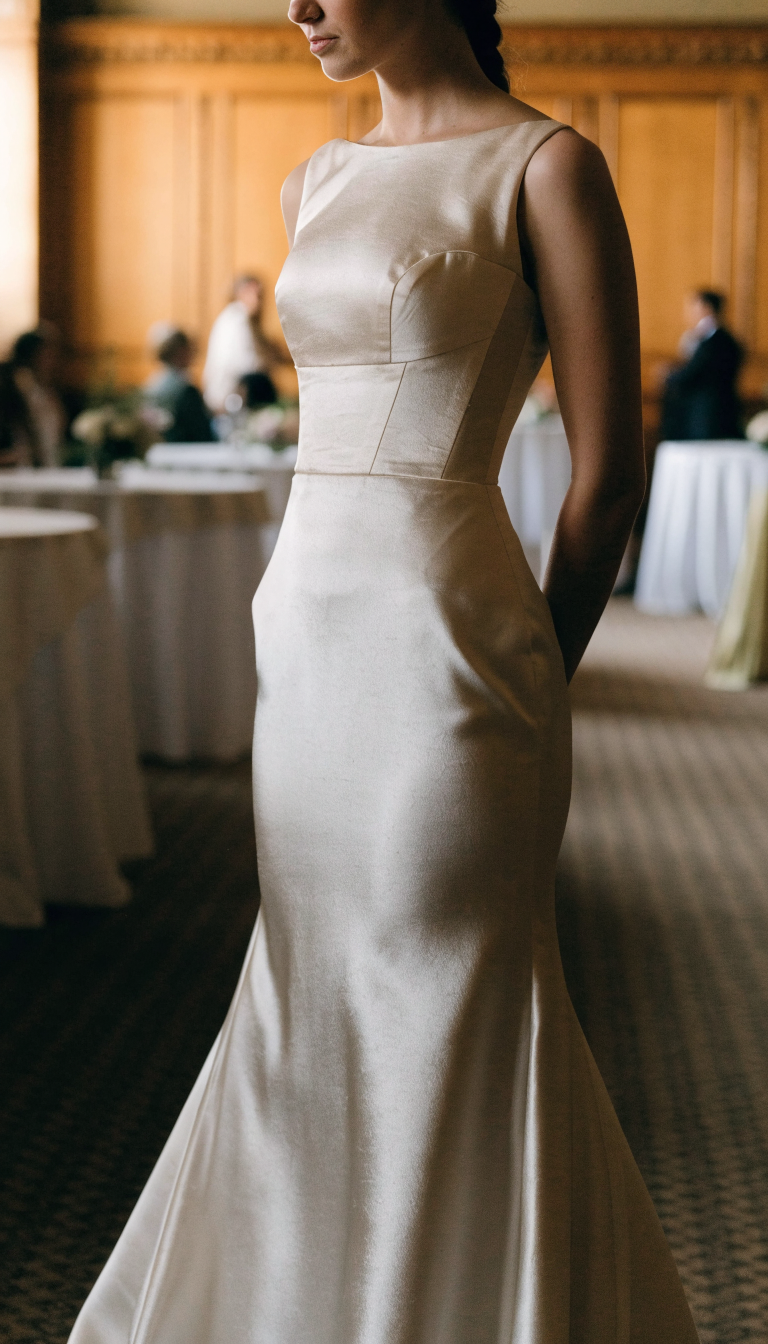
- Waist seam check: Raise both arms and sit; the seam should stay level rather than riding or gaping.
- Dance-floor ease: The controlled flare allows larger steps than a full mermaid once the hem is cleared.
- Alteration simplicity: Fewer layers mean fewer bustle points if a short train is added.
5. Asymmetric Skirt Detail on a Fitted Base
An asymmetric hem or draped panel on a fitted bodice and skirt adds visual interest without full volume, keeping the overall line sleek. Fluid crepe or charmeuse (a lighter satin with high drape) lets the longer side move while the shorter side reveals a slit or leg line. The asymmetry works in garden or modern indoor settings where the uneven hem catches light differently from each angle. Construction must keep the drape secure so the longer panel does not catch on heels or furniture.
- Drape security: Have the longer panel tacked at key points so it does not swing open unexpectedly.
- Heel clearance: Walk in planned shoes; the shorter side should clear the floor without constant adjustment.
- Angle variation: The uneven line photographs differently from the front, side, and back, useful for varied photo setups.
Neckline and Bodice Structure
6. Exposed Corset Bodice with Visible Boning
An exposed corset shows the boning channels and structural seams, creating an intentional, architectural bodice that defines the waist and bust. Firm satin or brocade holds the shape, while the boning itself (vertical stays inside channels) provides support so the neckline stays in place without constant adjustment. The style reads bold in evening or ballroom settings and can pair with a fitted or lightly flared skirt. Most corset constructions require multiple fittings to balance the lacing or closure so it remains secure during movement yet comfortable for hours of wear.
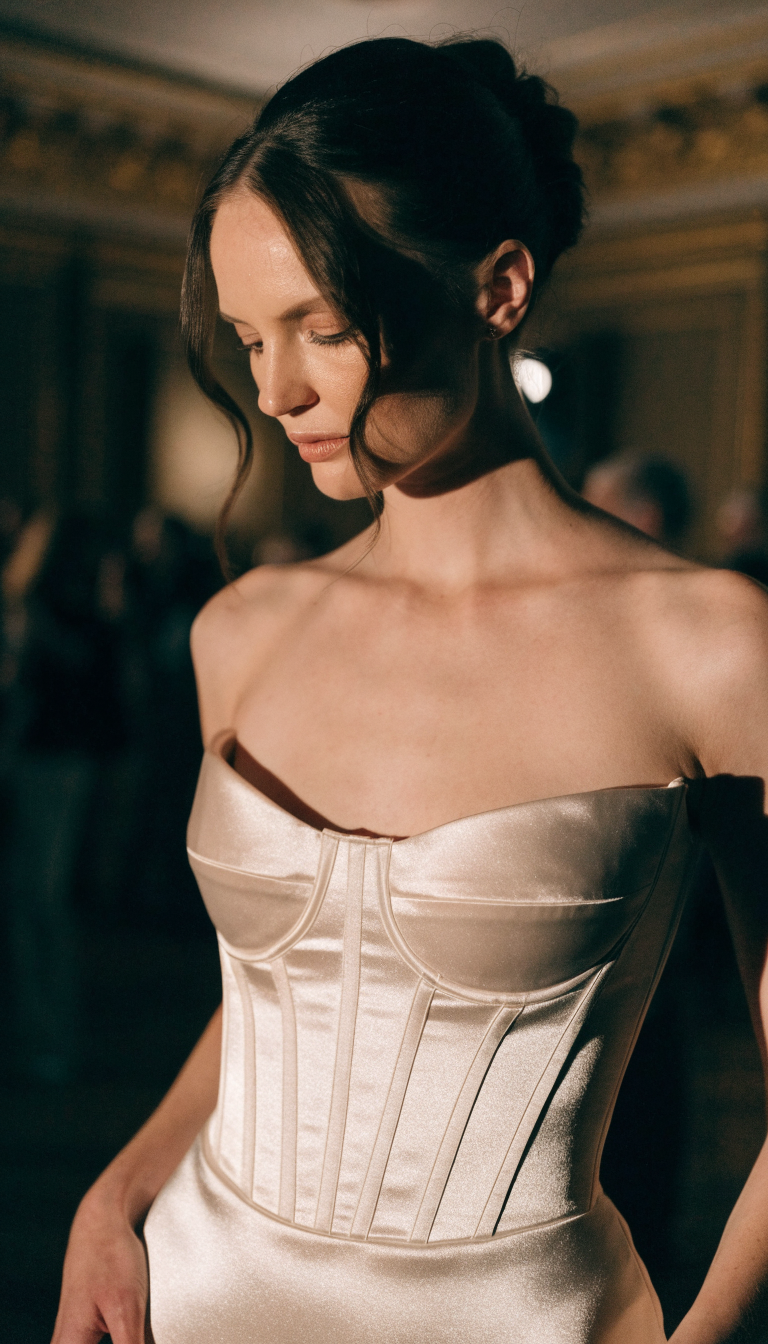
- Lacing or closure test: Fasten fully and raise arms, twist, and sit; the bodice should not gap or dig.
- Support level: Built-in cups or a separate strapless bra may still be needed depending on bust placement.
- Evening lighting: Visible seams catch light cleanly in controlled indoor settings.
7. Deep Plunge V-Neckline with Internal Structure
A deep plunge extends the V low on the bust, lengthening the torso visually when supported by internal boning, illusion mesh, or carefully placed straps. Stretch crepe or lined lace finishes the edges cleanly so the opening stays flat against the body. The neckline suits formal indoor venues where the vertical line remains the focus. Because the bust relies on the construction rather than fabric coverage, a proper fitting must confirm the plunge does not shift when leaning forward or dancing.
- Lean-forward check: Bend at the waist and reach; the edges should stay in place without gaping.
- Illusion or strap support: Mesh or narrow straps can stabilize the V without adding bulk.
- Formal indoor match: The clean vertical line holds up under strong lighting better than soft outdoor conditions.
8. Halter Neckline with a Low Open Back
A halter rises around the neck and leaves the shoulders and upper back bare, balancing a fitted skirt with an open rear view. Satin or crepe provides a smooth surface that photographs cleanly, while a secure neck closure and internal bust support keep the front stable. The style works for warm-weather or evening events where bare shoulders feel appropriate, yet the neck tie or button must be comfortable for hours. Open-back construction often simplifies bustling a train but requires checking how the back sits when seated.
- Neck comfort: Wear the halter for at least 20 minutes in the fitting; pressure points should not appear.
- Back seating check: Sit against a chair back; the open area should not dig or shift the front.
- Warm-weather note: Bare shoulders reduce layering needs, though sun exposure on outdoor venues remains a factor.
9. Off-the-Shoulder Bodice with Internal Boning
An off-the-shoulder neckline sits just below the shoulder points, framing the collarbones while internal boning and a fitted band keep the bodice from slipping. Structured satin or lace-over-satin holds the shape so the neckline stays level. The cut suits both indoor formal and garden settings when the fabric weight matches the temperature. Because the shoulders are free, arm movement is unrestricted, but the under-bust or side seams need precise alteration so the neckline does not migrate downward.
- Slip test: Raise arms overhead and twist; the neckline should remain level.
- Band placement: The under-bust or side structure should sit securely without rolling.
- Garden or indoor flexibility: Works in both when fabric weight is chosen for the expected temperature.
10. Square Neckline with Sheer Side Panels
A square neckline creates a clean horizontal line across the bust, while sheer side panels or illusion inserts add a lighter visual without full coverage loss. Firm crepe or satin with a light mesh overlay keeps the square edges sharp. The combination reads modern in contemporary venues and can accommodate a range of bust placements when the panels are placed correctly. Alterations focus on keeping the square level and the sheer sections from pulling.
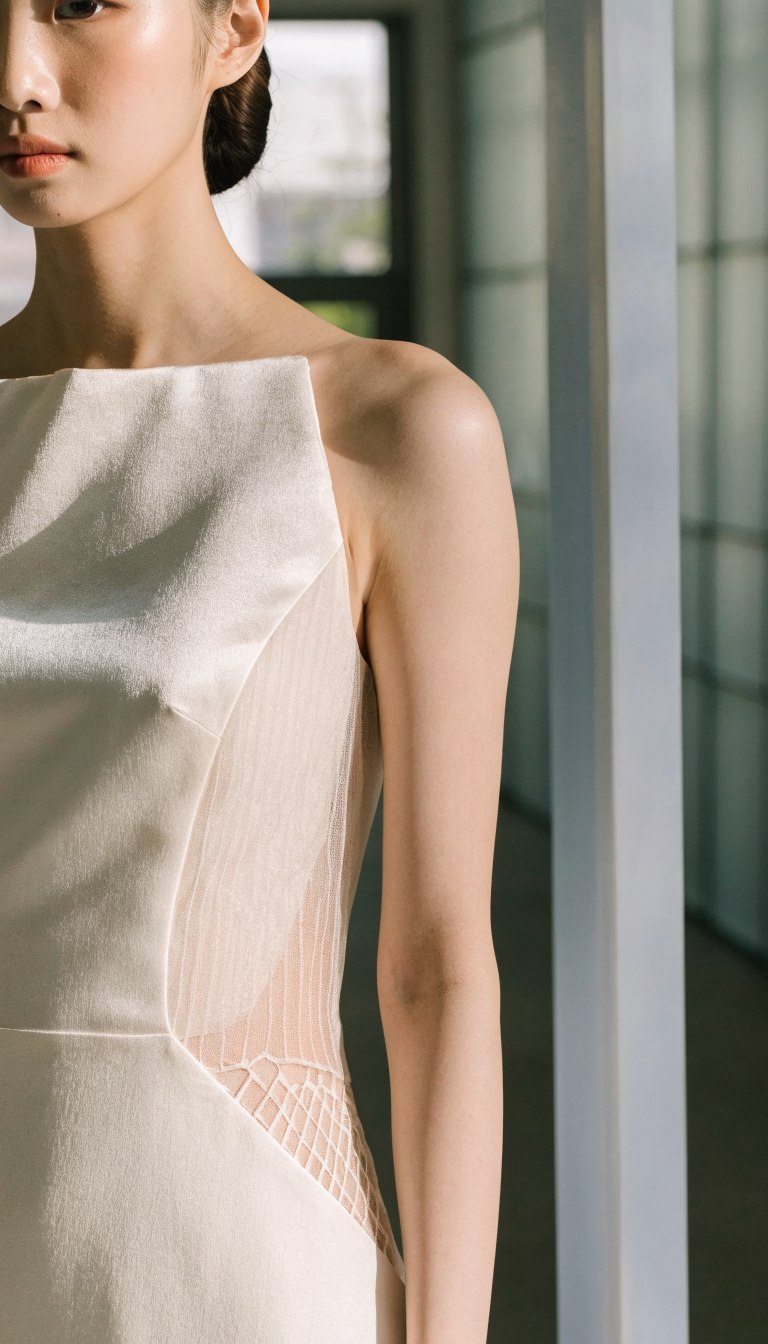
- Level check: The horizontal line should stay parallel to the floor when standing and sitting.
- Sheer placement: Side panels should not gape at the underarm once the arm is lowered.
- Contemporary venue: Clean geometry photographs well against minimal architectural backgrounds.
11. Illusion Plunge with Lace or Appliqué Edges
An illusion plunge uses sheer mesh in the center of a V or sweetheart, finished with lace or appliqué so the opening appears deeper while remaining supported. The mesh (a fine, skin-tone or matching tulle-like fabric) is reinforced at the edges so it does not stretch out of shape. This approach works in both lace-heavy and cleaner satin gowns and suits venues where a softer texture is desired alongside the bold cut. Multiple fittings ensure the mesh stays taut and the lace does not lift when the wearer leans.
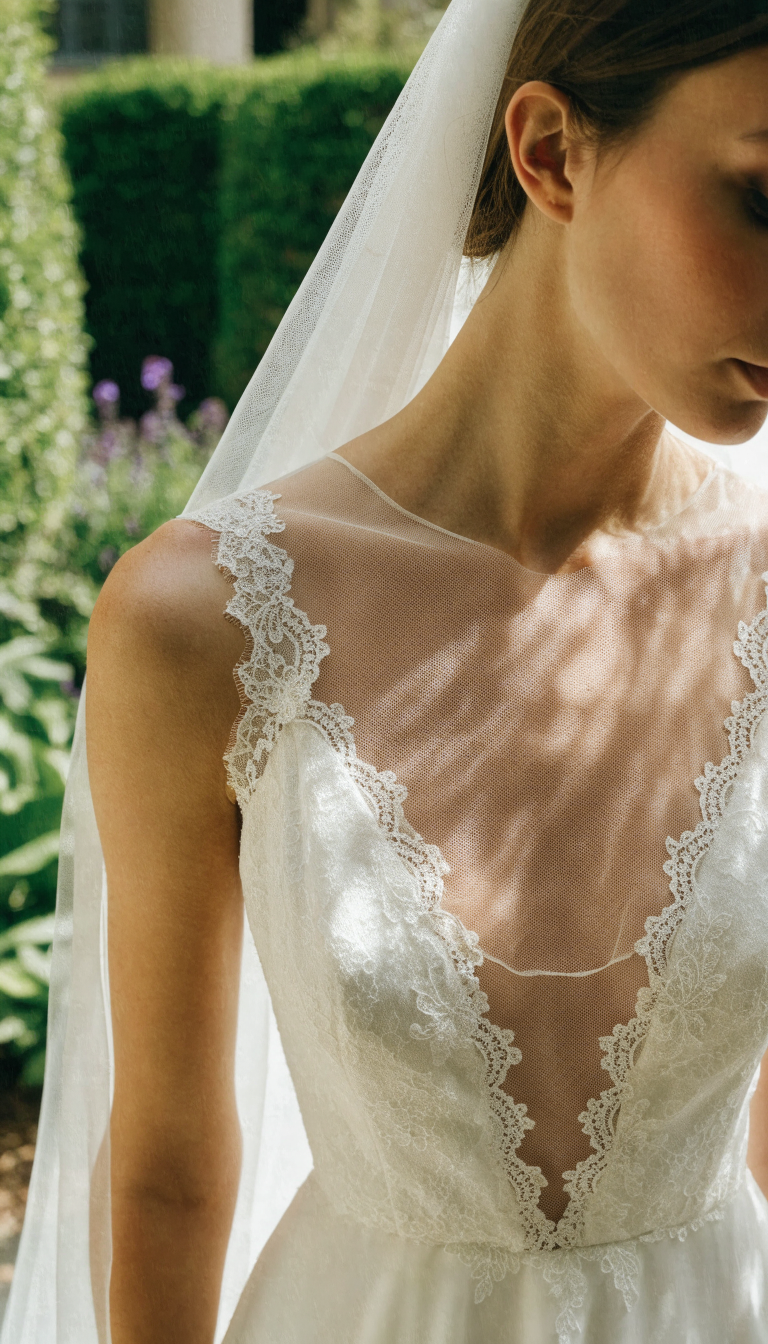
- Mesh tension: The illusion should lie flat without wrinkles after movement.
- Appliqué security: Edge flowers or motifs need hand-tacking so they do not flip outward.
- Texture balance: Lace softens the plunge for mixed indoor-outdoor venues.
Fabric and Detail Choices
12. Glossy Satin or Charmeuse for Light Catch
Satin and charmeuse (a lighter, more fluid satin) reflect light cleanly, emphasizing body lines and making a fitted silhouette read polished in photographs. The fabric holds structure when lined and weighted appropriately, though heavier satin can feel warm in high temperatures. It pairs well with mermaid, column, or corset styles for evening or ballroom settings where controlled lighting enhances the sheen. Steaming before the day removes packing creases, and a smooth lining prevents the outer layer from clinging.
- Light behavior: Strong indoor lighting accentuates the sheen; soft outdoor light softens it.
- Heat consideration: Heavier satin layers can trap warmth during long outdoor ceremonies.
- Steaming note: Professional steaming after travel keeps the surface smooth for photos.
13. Matte Crepe for Architectural Lines
Crepe offers a matte surface with subtle texture that skims the body and resists high shine, so seams and structure remain the focus. It drapes cleanly in column or fit-and-flare cuts and wrinkles less dramatically than some satins once the lining is secure. The fabric suits modern or minimalist venues and holds up through extended wear when the weight is chosen for the season. Alterations are usually clean because the fabric does not have a strong directional sheen that shows every pin mark.
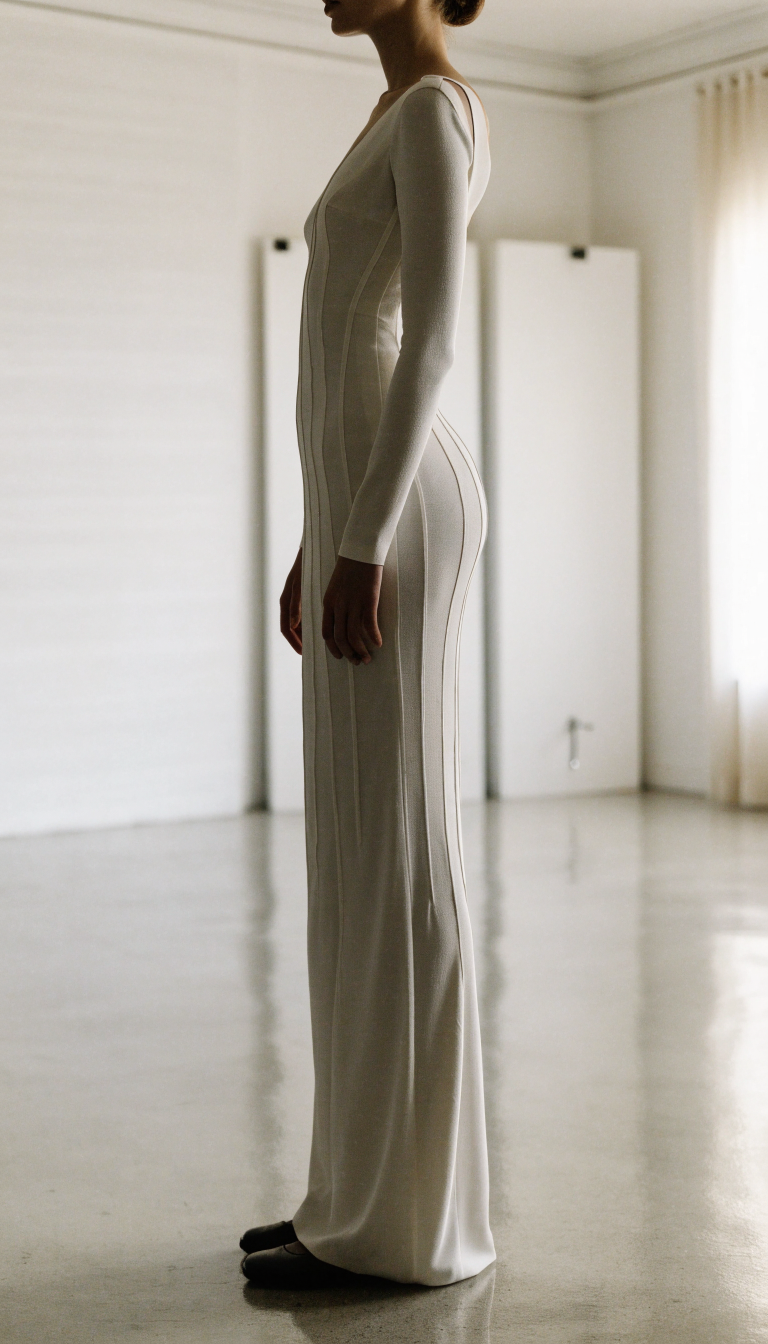
- Texture focus: The matte finish keeps attention on seaming and silhouette rather than reflection.
- Wrinkle recovery: Light creasing from sitting usually releases with a short hang or light steam.
- Season match: Mid-weight crepe works across indoor temperatures better than very light or heavy options.
14. Lace Overlay with Strategic Cutouts
A lace overlay over a fitted base allows cutouts at the waist, sides, or back while the lace motifs finish the edges cleanly. Chantilly or similar soft lace adds texture without bulk when the underlayer is a smooth crepe or satin. The combination works in both formal and garden settings when the lace density matches the desired coverage. Hand-finishing the cutout edges prevents the lace from fraying or lifting during movement.
- Edge finish: Cutouts should be bound or appliquéd so raw edges never show.
- Coverage control: Lace density can be adjusted so the cutouts remain intentional rather than accidental.
- Movement security: Test twisting and reaching; the lace should not catch or shift over the base.
15. Beaded or Crystal Accents on a Fitted Bodice
Strategic beading or crystal placement on the bodice or waist draws the eye to structure without covering the entire gown. The weight of the embellishment must be balanced by the underlying fabric and boning so the bodice does not pull downward. This detail suits evening venues where lighting catches the stones, and it pairs with both satin and lace bases. Professional application and secure stitching are essential so stones do not loosen during wear or alterations.
- Weight balance: Heavier beading needs matching support in the lining or boning.
- Lighting catch: Crystals read clearly under evening or ballroom lights.
- Security check: Gently tug embellished areas in the fitting; nothing should shift.
16. Detachable Overskirt for Ceremony and Reception
A fitted base gown paired with a detachable overskirt (often in tulle or organza) creates two looks: fuller volume for the ceremony and a sleek silhouette once the overskirt is removed. The attachment points (hooks, buttons, or a waistband) must be secure yet easy to release, ideally with help. This approach works for venues that move from formal indoor to more active reception spaces. The overskirt adds packing and steaming considerations, and the base gown still needs its own proper fit and hem.
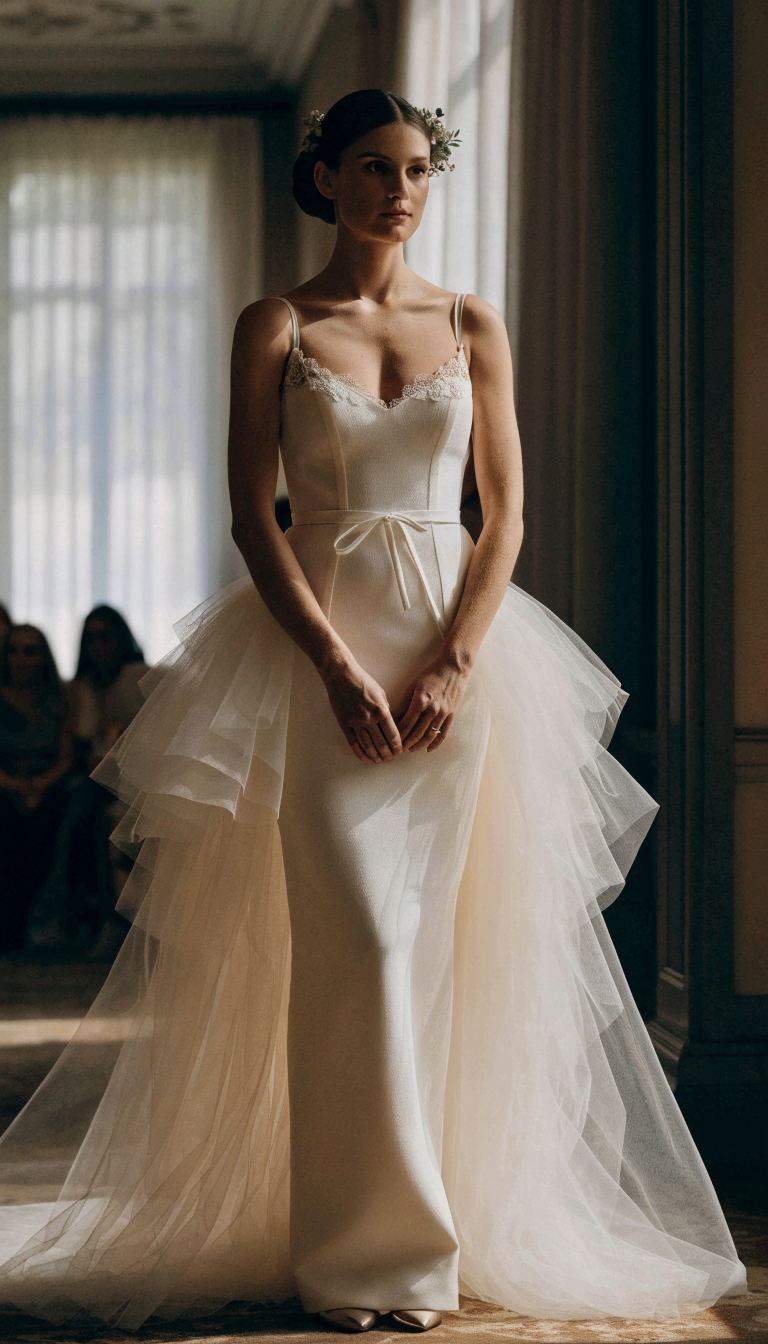
- Attachment test: Fasten and unfasten the overskirt; it should stay level and release cleanly.
- Two-look practicality: The base remains wearable for dancing once the extra layer is off.
- Packing note: The overskirt requires its own garment bag or careful folding to avoid crushing.
17. Controlled Train with a Practical Bustle
A modest train on a fitted silhouette adds length for the aisle without overwhelming the close fit of the skirt. A bustle (hooks, buttons, or ties that lift and secure the train) keeps the fabric clear for dancing and dinner. The train length and bustle style should be tested in the actual shoes so the hem clears the floor once secured. This detail is relevant for most wedding-dress timelines because the bustle is typically added during alterations after the gown is ordered.
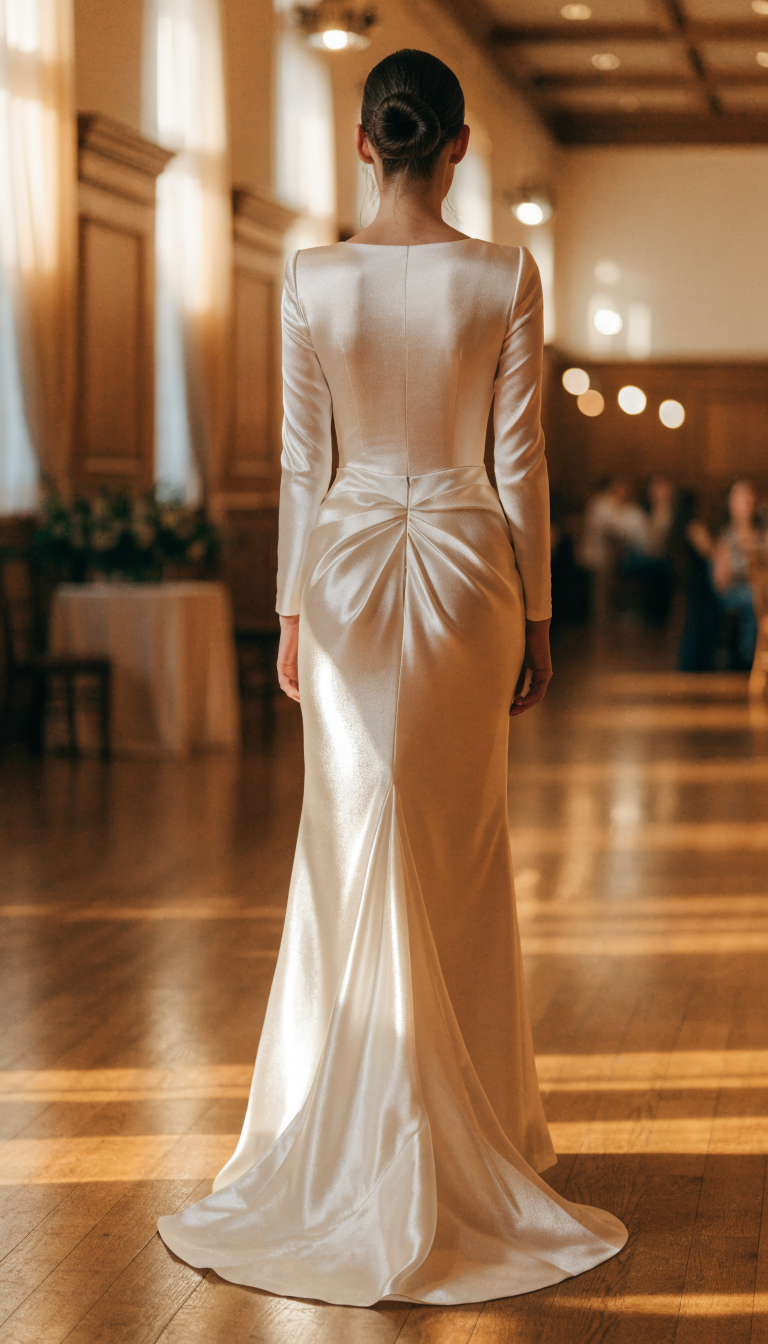
- Bustle function: Practice the bustle with help; it should lift evenly and stay secure through movement.
- Length balance: A shorter train on a mermaid or column reduces bulk once bustled.
- Alteration timing: Bustle points are usually set in the final fittings once the hem is complete.
Most of these styles benefit from starting the search several months ahead so sample fittings, ordering, and at least two or three alteration appointments can happen without rush. Bring the planned shoes, any shapewear, and a clear sense of the venue’s temperature and formality to each fitting; test walking, sitting, reaching, and a few dance steps every time. Narrow choices by trying the closest silhouette and neckline combination first, then refine fabric and details once the base fit feels secure.
FAQ
How far in advance should a made-to-order baddie wedding dress be ordered? Most salons recommend ordering several months ahead so production, shipping, and multiple alteration fittings fit comfortably before the date. Exact lead times vary by designer and season, so confirm current timelines when you first visit.
Can a sample dress be purchased and altered into one of these styles? Yes, sample gowns are often available at a reduced price and can be altered, though the original size, fabric, and construction limit how much the silhouette or neckline can change. Discuss alteration scope with the salon before buying.
How many fittings are typical for a fitted or corset style? Fitted and corset gowns commonly need two to four fittings to refine the boning, seams, hem, and any bustle. The exact number depends on the complexity of the construction and how the fabric behaves on the body.
What undergarments work with plunge or corset bodices? Many styles include built-in cups or enough structure that a separate bra is unnecessary, but adhesive options or a low-back strapless style can still be tested. Bring preferred undergarments to fittings so the final support can be confirmed.