
White wedding dresses remain the most requested choice in bridal salons because the color photographs cleanly against both outdoor greenery and formal indoor settings while offering a wide range of silhouettes and fabrics. The right style depends less on trends and more on how the dress moves during the ceremony, how it handles your climate, and how much alteration time you have before the date. Most gowns are made to order with lead times of several months, and alterations are almost always a separate cost that requires multiple fittings. This list of 16 white wedding dress options is grouped by silhouette families and practical variations so you can quickly match a shape to your venue, season, and comfort priorities. Approximate price tiers appear where useful; final costs vary by designer, fabric weight, region, and the extent of tailoring.
Timeless Silhouettes
1. A-Line White Wedding Dress
An A-line white wedding dress fits closely through the bodice and waist before opening in a gradual flare to the hem, creating a balanced shape that works across many body proportions. The silhouette photographs clearly from a distance, which makes it reliable for both church aisles and outdoor ceremonies. Mikado or structured satin holds the flare without collapsing, while a lighter crepe version moves more easily if you plan to dance for several hours. Hemming is usually straightforward, though a full skirt may need a simple bustle to keep the fabric clear of the floor once the ceremony ends.
Garden and chapel match Works equally well on grass or carpeted aisles because the flare stays clear of the ground with a modest train. Fabric drape to check Look for medium-weight mikado if you want crisp folds that resist wrinkling in humid air. Fitting-room sit test Sit on a low chair for a minute; the skirt should rise only slightly and fall back into place without bunching at the knees.
2. Ball Gown White Wedding Dress
A ball gown white wedding dress pairs a fitted bodice with a full, voluminous skirt that creates a strong ceremonial entrance. The shape suits formal ballrooms, hotel ballrooms, or traditional church settings where the volume reads clearly in group photos. Layers of tulle over a satin underlayer give lift without the heaviness of pure taffeta, though the overall weight can feel warm in summer. Most versions include internal boning and a built-in cup or lining so the bodice stays secure during the walk down the aisle.
Formal indoor setting The volume reads best in rooms with high ceilings and space for the skirt to spread. Weight and heat note Layered tulle stays lighter than dense organza, but plan for a cooler reception space if the ceremony is midday. Alteration complexity Expect multiple fittings to set the hem and attach a bustle; the full skirt takes longer to steam and press.
3. Mermaid White Wedding Dress
A mermaid white wedding dress follows the body closely through the hips and thighs before flaring sharply near the knee or mid-calf. The line creates a strong vertical shape that photographs well in formal indoor venues. Stretch crepe or a satin with a small amount of elastane allows sitting and walking without the fabric locking in place. A modest train can be added, but the close fit means the dress needs precise hip and thigh measurements during the first fitting.
Indoor formal venue The sculpted line stands out against clean architecture and works less well on uneven outdoor ground. Movement trade-off Test a short walk and a seated position; the flare should open enough for normal steps once the train is bustled. Support and undergarments Built-in cups or a separate adhesive bra usually provide the cleanest line under a strapless or thin-strap version.
4. Trumpet White Wedding Dress
A trumpet white wedding dress stays fitted through the waist and upper thigh, then opens more gently than a classic mermaid. The gradual release gives a bit more stride length while still defining the silhouette. Crepe or lightweight satin with a soft hand works well because the fabric can follow the body without rigid seams. The style suits both indoor receptions and covered outdoor spaces where you want definition without the extreme restriction of a mermaid cut.
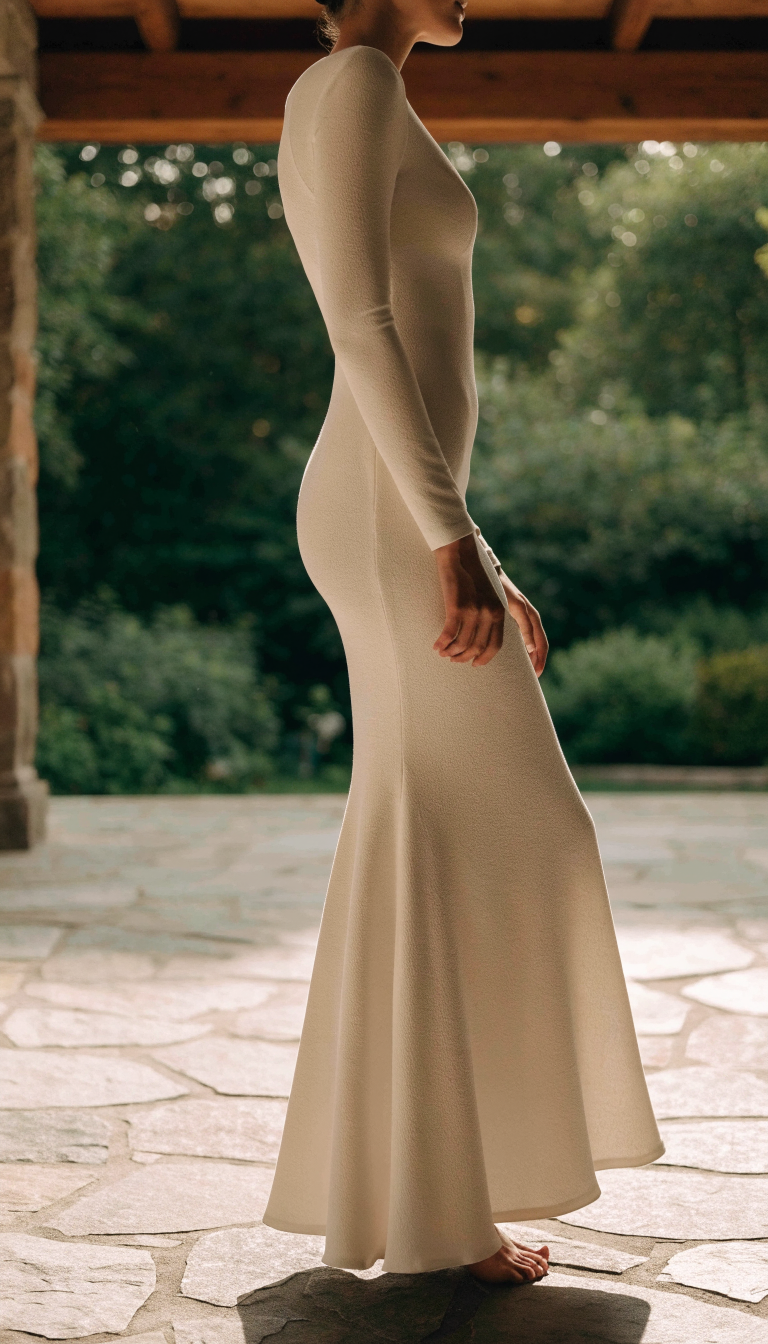
Covered outdoor option The moderate flare clears grass or stone paths more easily than a full ball-gown skirt. Fabric behavior Soft crepe resists the sharp wrinkles that shiny satin can show after sitting. Bustle and hem note A simple bustle is usually enough; confirm the flare point sits above the knee so walking stays natural after the ceremony.
Fitted and Sculpted Shapes
5. Sheath Column White Wedding Dress
A sheath or column white wedding dress falls in a straight line from the shoulders or bust to the floor with little or no flare. The clean shape suits minimalist venues, courthouse ceremonies, or modern hotel spaces. Fluid crepe or charmeuse creates a soft drape that moves with the body, while a more structured mikado version holds a sharper line. Because the dress has no volume to hide minor fit issues, accurate measurements and a final fitting close to the date matter more than with fuller styles.
Minimalist venue fit The straight line reads clearly against plain architecture or beach backdrops. All-day wearability The light weight makes long receptions easier, though a long train still needs a bustle for dancing. Undergarment line check Try the dress with the exact shapewear you plan to wear; smooth fabrics can show seams or edges.
6. Fit-and-Flare White Wedding Dress
A fit-and-flare white wedding dress is fitted through the bodice and hips, then releases into a gentle flare around the upper thigh. It offers more movement than a mermaid while still defining the waist. Stretch satin or crepe with a small amount of give handles sitting and dancing better than rigid fabrics. The style works for both garden ceremonies and indoor receptions when you want a defined shape without extreme restriction.
Dance-floor comfort The flare point should allow a natural stride once the train is secured. Stretch fabric preference Look for a fabric with a small percentage of elastane so the hip fit remains comfortable after several hours. Hemming timeline Plan the final hem after shoe height is confirmed; the flare can change length slightly with different heels.
7. Empire Waist White Wedding Dress
An empire-waist white wedding dress raises the seam just below the bust and lets the skirt fall in soft folds from that higher point. The raised waist creates an easy, flowing line that works well for outdoor or destination ceremonies. Lightweight chiffon or georgette keeps the skirt airy and cool. The style often needs less structured boning than a natural-waist gown, which can make long wear more comfortable.
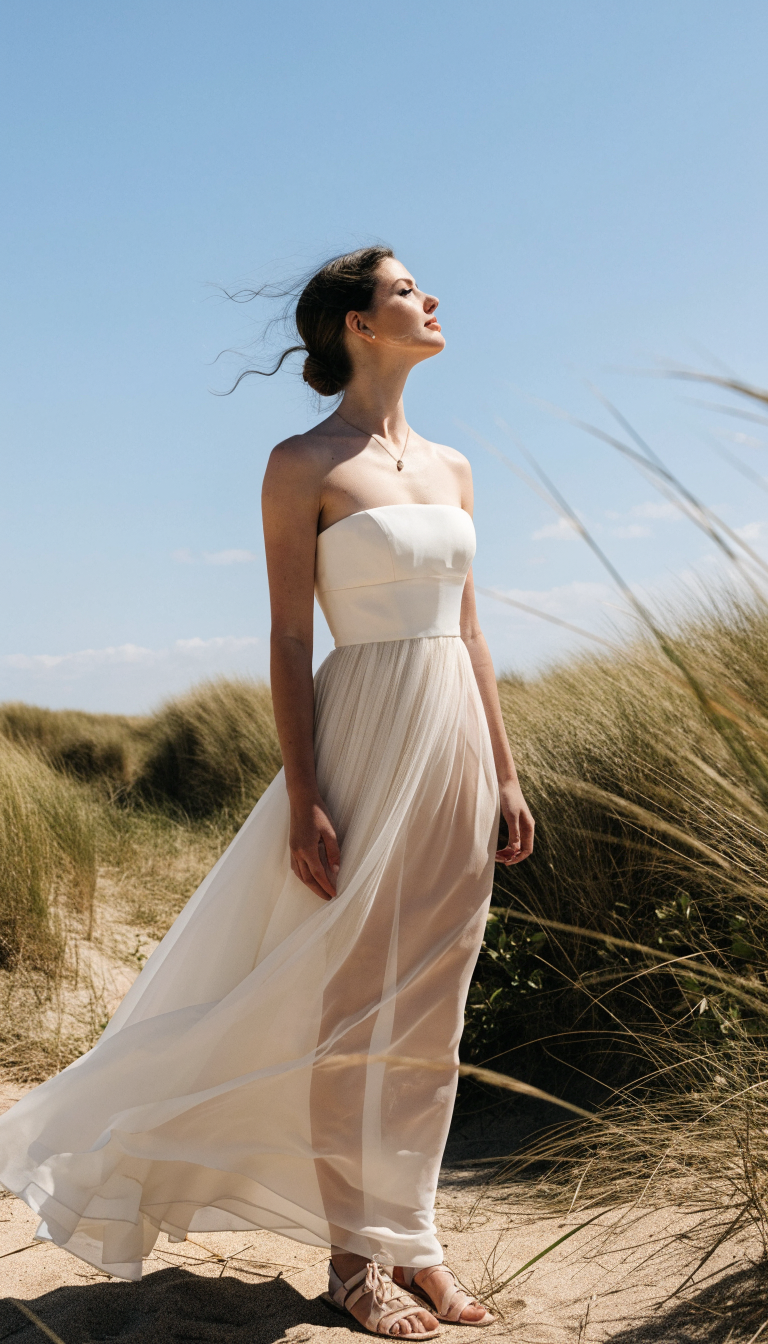
Outdoor and destination ease The high waist and fluid skirt move well in light breeze and on uneven ground. Fabric for heat Chiffon layers stay cooler than dense satin but can wrinkle if packed tightly. Support note Built-in cups or a separate strapless bra usually provide the cleanest under-bust line.
Neckline, Sleeve, and Detail Variations
8. Off-the-Shoulder White Wedding Dress
An off-the-shoulder white wedding dress rests along the upper arms and frames the collarbones and shoulders. The neckline reads softly in photographs and works for both garden and indoor settings. Soft tulle or lightweight satin holds the shape without digging into the arms. Detachable straps or a light lining can be added if you want extra security during the ceremony.
Shoulder and collarbone frame The line draws attention upward and pairs cleanly with a simple veil or earrings. Strap security check Move your arms through a normal range; the fabric should stay in place without constant adjustment. Season suitability Works in mild weather; add a light wrap if the ceremony is in a cool indoor space.
9. Long Sleeve White Wedding Dress
A long-sleeve white wedding dress covers the arms with fitted, bishop, or lace sleeves that extend to the wrist. The coverage suits cooler seasons, traditional venues, or brides who prefer more fabric. Stretch lace or a soft crepe knit allows the sleeves to move without pulling across the shoulders. Buttoned or zippered backs remain common, and the sleeves often reduce the need for a separate cover-up during the ceremony.
Cooler-season match The sleeves provide modest coverage without adding the bulk of a heavy jacket. Lace or crepe hand Stretch lace stays flexible at the elbows; rigid fabrics can restrict reaching. Alteration for length Sleeves can be shortened, but the cuff finish should be planned early so the proportion stays balanced.
10. Strapless Sweetheart White Wedding Dress
A strapless sweetheart white wedding dress curves gently across the bust and leaves the shoulders bare. The neckline works for warmer climates and formal indoor venues where the clean line photographs well. Structured satin or mikado with internal boning and built-in cups keeps the bodice secure. A light adhesive bra or the dress’s own cups usually provide enough support for most wearers.
Warm-weather option Bare shoulders stay cooler than long sleeves in humid or sunny settings. Boning and cup check Confirm the bodice stays level when you raise your arms and lean forward. Shoe and posture note Higher heels can change the bust line slightly; test the dress in the shoes you plan to wear.
11. V-Neck Crepe White Wedding Dress
A V-neck crepe white wedding dress uses a matte, fluid fabric that falls cleanly from a moderate or deep V. The combination creates a modern, understated line that works for city venues, hotel ceremonies, or minimalist outdoor spaces. Crepe resists shine and holds a soft drape without stiff folds. The fabric’s stretch often makes minor size adjustments simpler than with rigid satin.
Modern venue pairing The matte finish reads cleanly against stone, brick, or contemporary architecture. Crepe movement The fabric recovers from sitting better than shiny satin and shows fewer sharp wrinkles. Neckline support A well-fitted V usually needs less adhesive support than a strapless style, but confirm the depth stays secure.
Lightweight, Lace, and Alternative Options
12. Lace Appliqué White Wedding Dress
A lace appliqué white wedding dress places floral or geometric lace motifs over a lining or base fabric, often in an A-line or fit-and-flare shape. The texture adds visual interest without the weight of full lace yardage. Soft tulle or chiffon under the appliqués keeps the skirt light. The style suits garden and outdoor ceremonies where the open lace reads well in natural light.
Garden texture match Appliqués catch light differently than solid fabric and look detailed in close portraits. Layer weight Ask how many layers sit under the lace; too many can make the skirt warm and heavy. Steaming and care Lace appliqués need careful steaming; confirm the salon’s process before the final fitting.
13. Chiffon Beach White Wedding Dress
A chiffon beach white wedding dress uses multiple layers of lightweight, semi-sheer fabric that moves in light wind. The silhouette is often A-line or empire so the skirt stays clear of sand. A simple lining prevents transparency while the outer layers remain airy. The style suits coastal or destination ceremonies but can wrinkle if packed for travel.
Coastal and outdoor breeze The fabric lifts gently in wind without the stiffness of organza. Sand and hem practicality A slightly shorter front or a modest train reduces the amount of fabric that can drag. Travel packing note Roll rather than fold if possible; chiffon recovers better from soft creases than from hard folds.
14. Minimalist Slip White Wedding Dress
A minimalist slip white wedding dress follows the body in a bias-cut or softly draped column with little or no structure. The clean line works for courthouse ceremonies, small indoor gatherings, or modern hotel spaces. Fluid charmeuse or lightweight crepe creates a liquid drape. Because the dress has minimal internal support, the fit depends heavily on accurate measurements and the right undergarment.
Courthouse and intimate setting The simple shape photographs cleanly in small rooms and against plain backgrounds. Bias-cut movement The fabric should glide rather than cling; test a short walk to confirm the drape. Undergarment visibility Smooth, seamless shapewear or a built-in lining usually gives the cleanest result.
15. Tea-Length White Wedding Dress
A tea-length white wedding dress ends between the ankle and mid-calf, removing the need for a long train or complex bustle. The shorter hem works for garden receptions, daytime ceremonies, or venues with uneven ground. Crisp cotton sateen, lightweight satin, or layered tulle can be used depending on the formality. The style is often easier to find off-the-rack or as a sample, which can shorten the timeline.
Daytime garden practicality The hem stays clear of grass and stone without constant lifting. Off-the-rack availability Many tea-length styles are stocked in standard sizes, reducing made-to-order wait times. Shoe pairing A lower or block heel keeps the proportion balanced and makes walking easier on soft ground.
16. Two-Piece White Wedding Dress Separates
Two-piece white wedding dress separates pair a fitted top or bodice with a separate skirt, allowing different fabrics or silhouettes to be mixed. A structured crepe top with a flowing chiffon skirt, for example, can be adjusted independently. The approach suits brides who want flexibility for climate changes or who plan a shorter reception look later in the day. Each piece can be altered separately, which sometimes simplifies fitting.
Climate flexibility A removable jacket or different skirt weight can be swapped if the weather shifts. Independent alteration Tops and skirts can be fitted on different timelines if one piece needs more work. Coordination check Confirm the waistline of the top and skirt meet cleanly when both pieces are worn together.
Choosing among these 16 white wedding dress styles starts with your venue surface, the temperature you expect, and how freely you want to move after the ceremony. Bring the shoes you plan to wear, any shapewear, and notes about your timeline to the first fitting so the consultant can flag lead times and alteration needs early. Sample sales and pre-owned gowns remain practical options when the made-to-order window is short.
Frequently Asked Questions
How far in advance should I order a white wedding dress? Most made-to-order gowns need several months for production plus additional time for alterations. Starting six to nine months ahead is a common guideline, though sample or off-the-rack dresses can be ready sooner.
Do white wedding dresses always need a bustle? Only styles with a train long enough to be stepped on or dragged usually need one. Shorter trains or tea-length hems often require none.
Can I wear a white wedding dress in a warm climate? Yes. Lightweight chiffon, crepe, or single-layer lace versions stay cooler than dense satin or heavily layered tulle. Choose a silhouette with airflow and confirm the lining is breathable.