
A fantasy wedding dress works when the details feel intentional rather than theatrical. Soft volume, light-catching embroidery, or flowing sleeves can read as otherworldly without tipping into costume territory, but the dress still has to survive the aisle, photos, sitting, and the first dances. These 15 styles group common fantasy elements by how they actually move and wear, so you can match the look to your venue, climate, and comfort level instead of chasing a single photo.
Ethereal Volume
1. Layered Tulle A-Line with Soft Floral Appliqués
This silhouette starts with a fitted bodice that holds its shape, then releases into multiple layers of fine tulle that float rather than stand stiffly. Scattered floral appliqués, denser near the waist and thinning toward the hem, catch light without adding bulk. The result feels light on the body even though the skirt has presence. Mikado or structured crepe underneath keeps the waist defined so the tulle does not collapse inward when you sit.
Garden or outdoor ceremony fit — Works well on grass or stone paths where the skirt can move freely. Sitting and stair test — Lift the layers once in the fitting room to check they do not tangle under the bodice. Alteration note — Hemming multiple tulle layers takes extra time; plan fittings accordingly.
2. Off-the-Shoulder Bishop Sleeve Ball Gown
Voluminous sleeves that gather at the wrist create a storybook outline while the structured bodice and full skirt supply classic ball-gown drama. Soft organza or lightweight tulle in the sleeves keeps them from feeling heavy, and a defined waist prevents the volume from overwhelming the upper body. The look reads romantic rather than costume when the fabric has enough body to hold the sleeve shape without collapsing.
Ballroom or historic venue match — The scale suits high ceilings and formal processions. Heat and weight reality — Full sleeves and layered skirts trap warmth; better for cooler seasons or climate-controlled spaces. Undergarment check — Confirm the neckline stays in place when you raise your arms; built-in cups or a supportive strapless bra usually help.
3. Empire-Waist Chiffon with Flutter Sleeves
An empire line sits just under the bust and lets the skirt fall in soft, uninterrupted folds. Fine chiffon moves with every step and photographs as almost weightless, while small flutter sleeves add a fairy-like edge without covering the arms fully. The higher waist can feel freeing for all-day wear and works with many body shapes because the skirt skims rather than clings.
Warm-weather or destination option — Lightweight chiffon breathes better than dense tulle or satin. Movement on the dance floor — The skirt shifts easily; just confirm it does not catch under heels. Support and lining — Many versions need a slip or built-in lining so the fabric does not cling when you sit.
Nature and Woodland Details
4. Cape-Sleeve Column with Vine Embroidery
A narrow column silhouette keeps the overall shape clean while sheer cape sleeves that begin at the shoulders add continuous movement. Delicate vine or leaf embroidery along the sleeves and bodice creates the woodland effect without covering the whole dress. Crepe or fluid charmeuse underneath gives the column enough structure so it does not cling, and the cape stays lightweight even in mild wind.
Woodland or garden aisle — The sleeves catch air and look intentional outdoors. Fabric drape reality — Sheer cape fabric can show undergarment lines; a nude lining or carefully placed embroidery helps. Quick fitting check — Swing your arms to make sure the cape does not pull the bodice off the shoulders.
5. Bell-Sleeve Lace Mermaid with Pointed Cuffs
The mermaid shape follows the body through the hips before flaring near the knees, while long lace sleeves that widen at the wrist give a medieval-fantasy outline. Soft Chantilly lace stretches enough for movement, and the pointed cuffs keep the sleeves from looking costume-like. The skirt’s flare supplies walking room once the train is bustled, so the dress can still move after the ceremony.
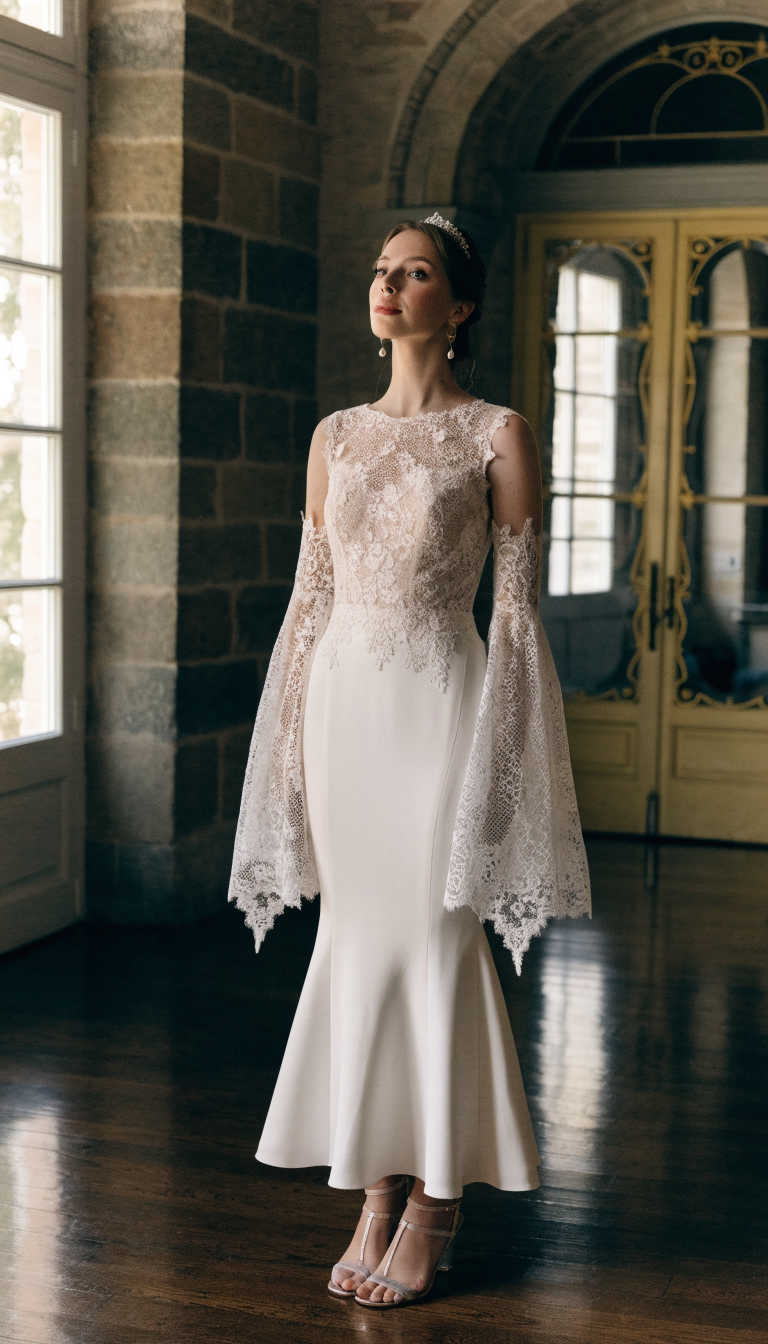
Castle-style or formal indoor setting — The structured silhouette and lace read polished rather than rustic. Bustle and dance comfort — A French or American bustle is usually needed; practice sitting and walking with it in place. Lace stretch test — Reach forward in the fitting room; rigid lace will pull at the seams.
6. Leaf-Motif Guipure A-Line
Guipure lace has an open, sculptural quality that makes botanical patterns stand out against skin or a simple underlayer. An A-line skirt keeps the silhouette wearable while the lace itself supplies the fantasy texture. Because the motifs are larger and more defined than fine Chantilly, a few well-placed pieces often look more intentional than dense all-over coverage.
Historic hall or estate venue — The architectural lace suits stone and wood backgrounds. Weight and temperature — Guipure is usually lighter than heavily beaded lace but still warmer than plain chiffon. Alteration complexity — Matching or extending lace motifs during hemming requires an experienced seamstress.
Celestial and Light-Catching Looks
7. Star-Embroidered Organza Ball Gown
Fine silver or crystal embroidery scattered like constellations across organza layers catches candlelight or string lights without the weight of dense beading. The ball-gown skirt holds its shape because organza has more crispness than soft tulle, while a boned bodice keeps the volume from swallowing the waist. The effect stays ethereal when the embroidery is spaced rather than solid.
Evening or candlelit ceremony — The subtle sparkle shows best under warm, low light. Snag and care note — Organza can catch on rough surfaces; check outdoor paths before choosing it. Shoe height balance — The full skirt often looks better with a moderate heel that keeps the hem from dragging.
8. Moonlit Silver-Thread Chiffon Column
A simple column cut in soft chiffon lets fine metallic thread woven through the fabric do the visual work. The dress skims the body and moves fluidly, while the silver thread creates a quiet shimmer that reads celestial rather than glittery. Because the fabric is lightweight, the overall look stays cool and easy to wear for long hours.
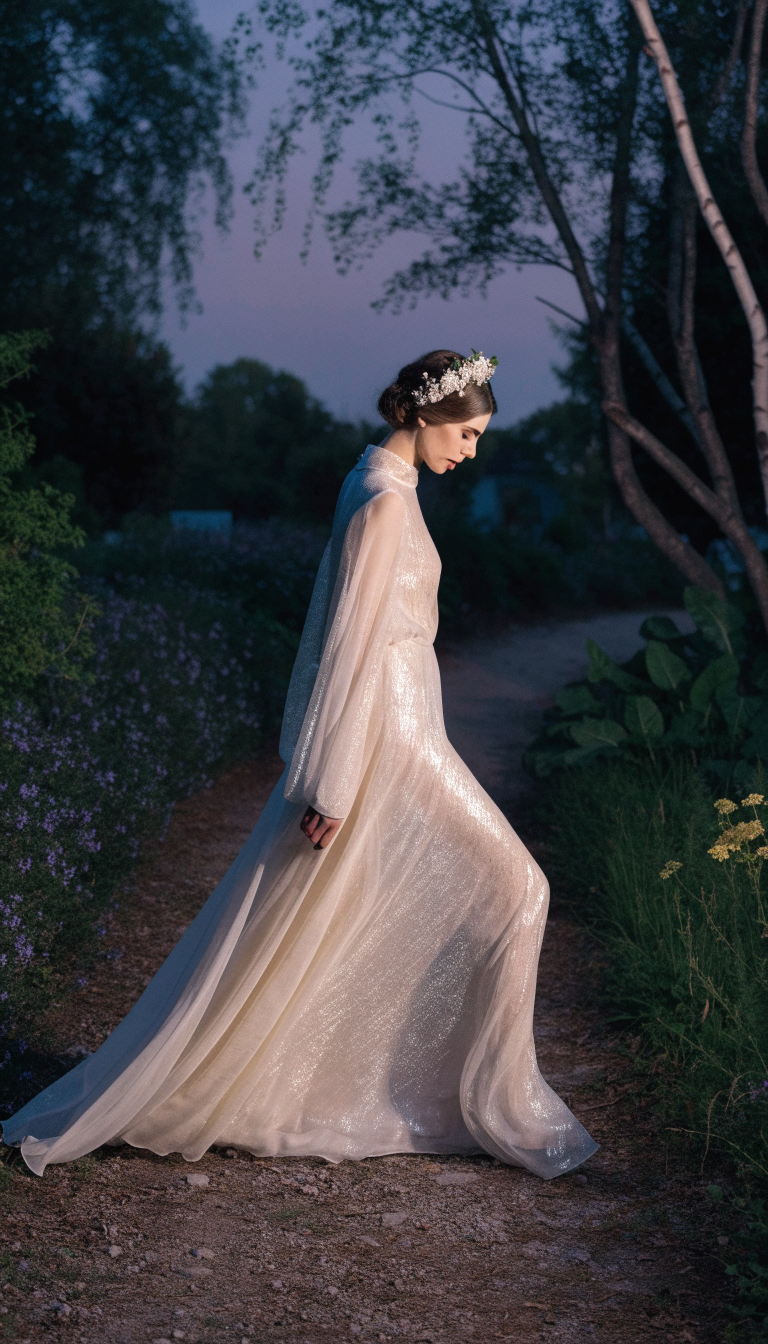
Nighttime or open-air reception — The thread catches light as you move across the floor. Undergarment lines — Chiffon shows everything; a seamless slip or built-in lining is usually essential. Wrinkle behavior — Pack a steamer or choose a version with a slightly heavier lining if you will travel.
9. Pearl-Beaded Sweetheart with Detachable Sheer Cape
The structured sweetheart neckline and pearl or crystal beading supply classic bridal romance, while a detachable sheer cape adds a single fantasy element you can remove later. The cape can be lightweight tulle or organza so it does not compete with the bodice detail. This approach lets you have ceremony drama and a simpler reception look without changing dresses.
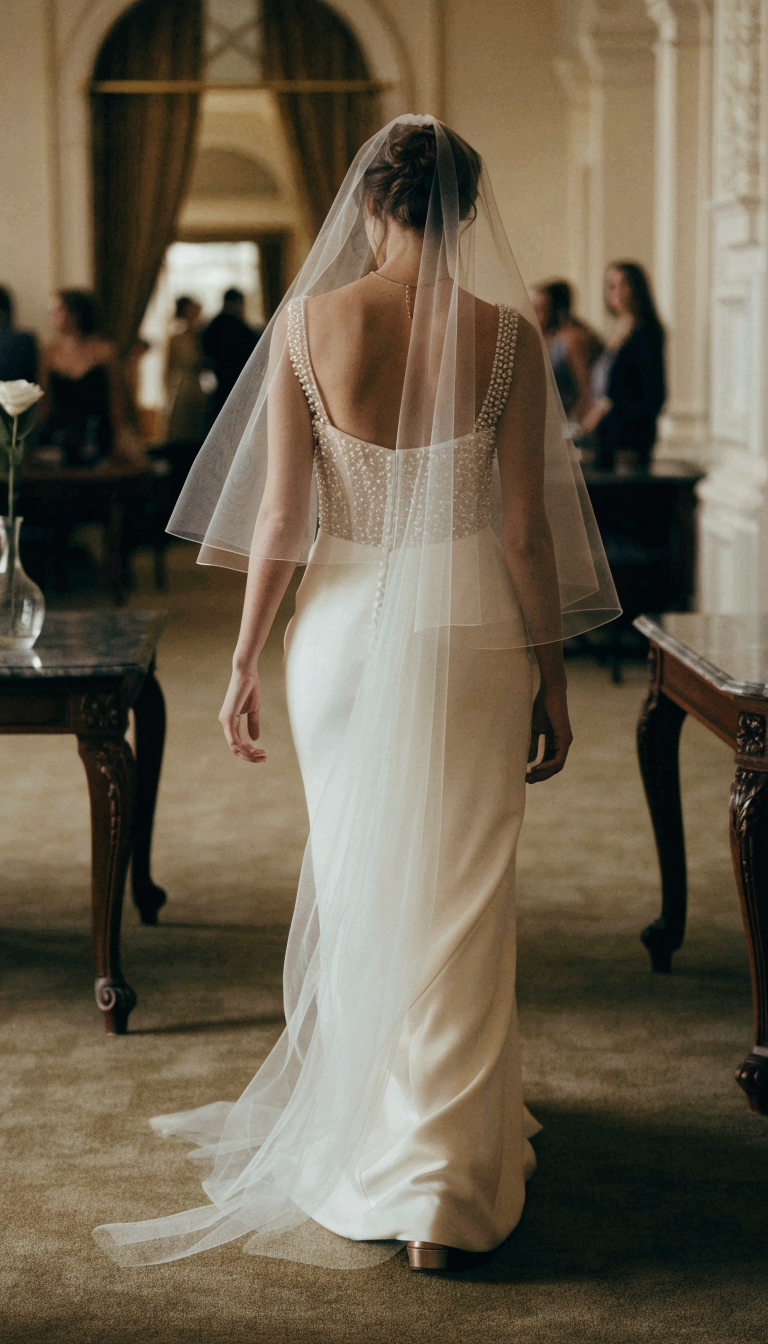
Indoor ballroom or church processional — The cape photographs well from behind as you walk. Removal practicality — Confirm the cape attaches with covered buttons or hooks that are easy to manage. Support under the neckline — Sweetheart styles often need built-in cups or a well-fitted strapless bra.
Structured Romance with Fantasy Edges
10. Illusion Neckline Sheath with 3D Blossoms
A close-fitting sheath uses illusion tulle or fine lace across the neckline and upper chest so the dress appears to float against the skin. Dimensional floral appliqués clustered on the bodice and trailing onto the skirt create texture without volume. The narrow shape stays comfortable when the fabric has enough stretch or when a side zipper and lining allow easy movement.
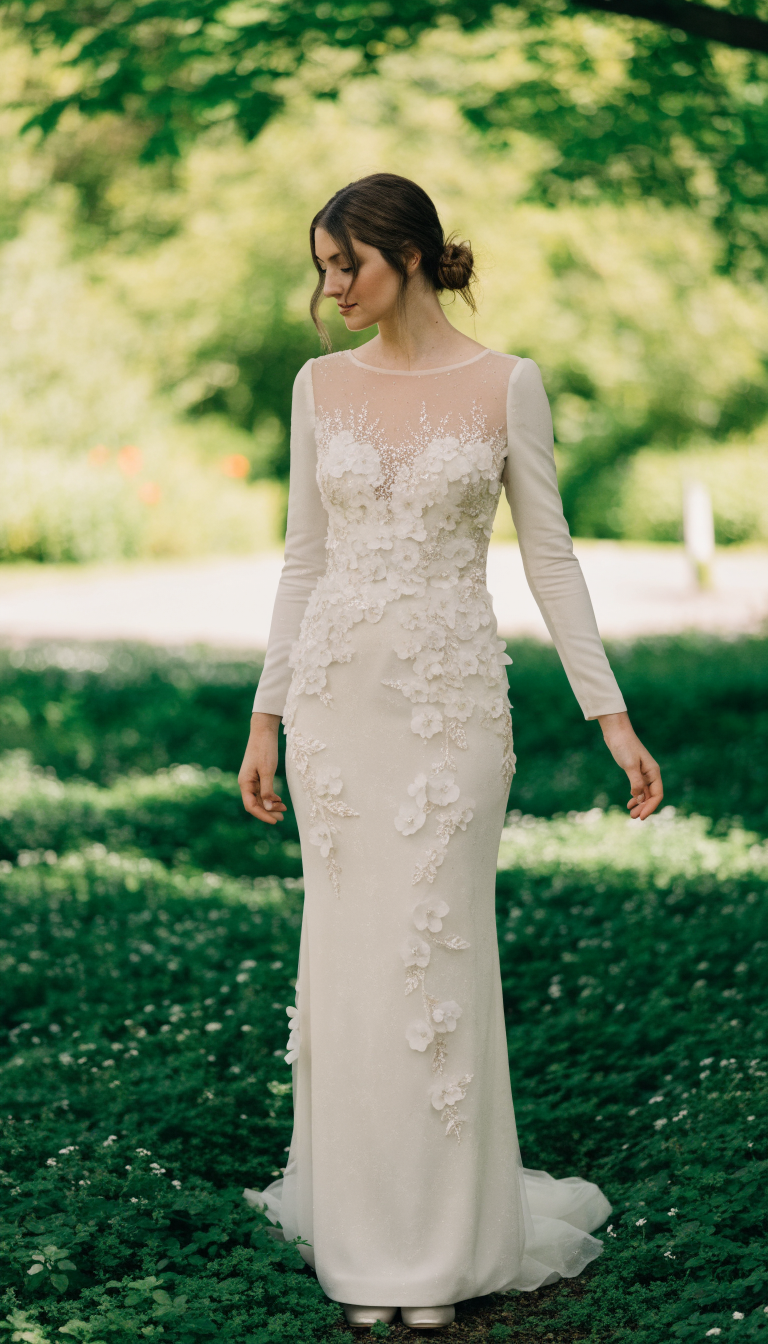
Garden or intimate indoor setting — The clean lines keep the 3D flowers from looking overcrowded. Sitting comfort — Sheaths can ride up; test a full seated position and check the hem length with your chosen shoes. Appliqué durability — Ask how the 3D pieces are secured so they do not snag or loosen during wear.
11. Open-Back Corset with Cascading Lace Train
Internal boning and a lace-up or buttoned corset back give the bodice structure while the open back adds a fantasy edge. A lace train that continues the same motif creates visual flow from bodice to floor. The construction supports the body well, but the train will need a bustle for dancing, and the open back can require careful undergarment planning.
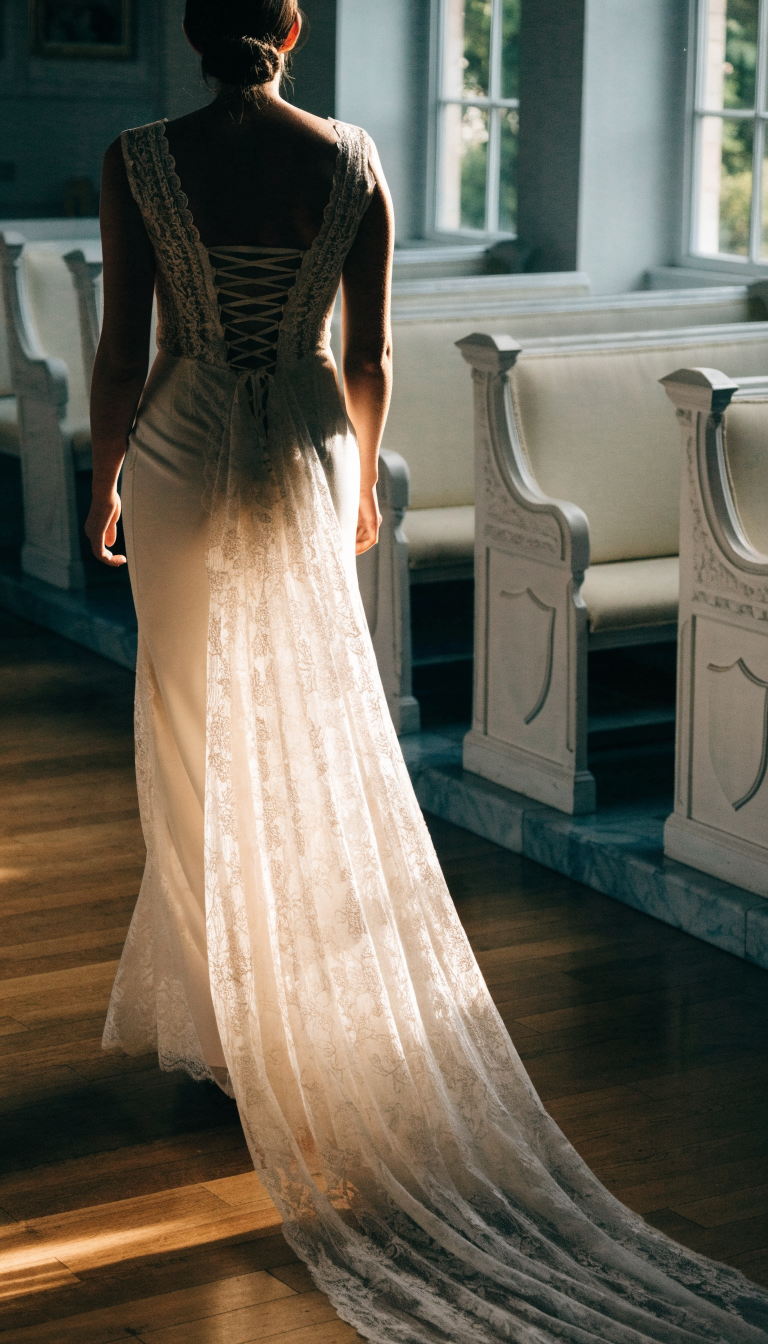
Formal indoor or chapel aisle — The back detail shows clearly during the processional. Boning and breathing room — The corset should feel supportive without restricting a full breath; move and sit during the fitting. Bustle planning — Most cascading trains need at least a few secure bustle points; practice the process once.
12. Basque-Waist Ball Gown with Soft Tulle Skirt
The basque waist dips to a gentle point at the front, lengthening the torso and creating a romantic, slightly historic outline. Layered soft tulle keeps the skirt airy rather than stiff, so the overall volume feels lighter than a traditional satin ball gown. The pointed waist works across many proportions because it draws the eye downward without requiring a perfectly defined natural waist.
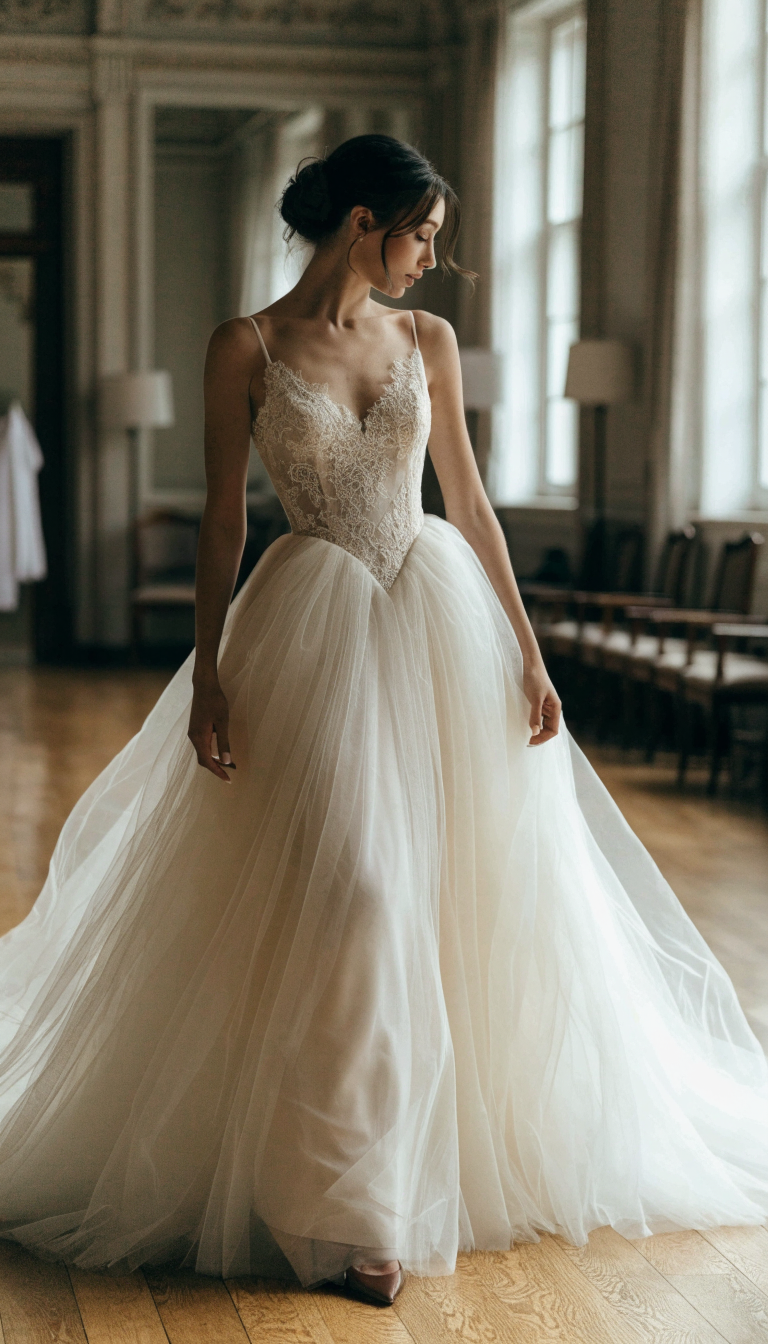
Grand entrance or ballroom — The shape photographs dramatically from a distance. Heat under the skirt — Multiple tulle layers still trap warmth; consider the season and venue airflow. Hemming time — The full circumference means alterations take longer and cost more than a narrower skirt.
13. Fit-and-Flare with Hooded Cape Overlay
A fit-and-flare silhouette follows the body through the hips before easing outward, while a separate hooded cape in sheer or velvet-trimmed fabric adds an elven or storybook layer. The cape can be removed after the ceremony, leaving a cleaner dress underneath. Choosing a lightweight outer fabric prevents the overlay from looking heavy or costume-like.
Cooler-season or evening ceremony — A velvet-trimmed hood adds warmth without a full coat. Layer management — Practice putting the cape on and off so the dress underneath does not shift. Train interaction — Confirm the cape does not catch on the dress train when you walk.
14. Floral-Embroidered Tulle with Long Train and Bustle
Dense but delicate floral embroidery concentrated on the bodice and upper skirt, then scattering down a chapel or cathedral train, creates a single continuous fantasy motif. Soft tulle underneath keeps the dress from feeling rigid. Because the train is long, a well-planned bustle is essential once the ceremony ends; otherwise the embroidery can drag or snag.
Outdoor processional or large venue — The train needs space to be seen and to turn. Bustle style choice — A French bustle keeps the embroidery visible from the front after it is lifted. Snag risk — Dense embroidery on tulle can catch on rings, buttons, or outdoor surfaces; handle carefully.
15. Structured Mikado Trumpet with Sheer Overlay
Mikado has a crisp, slightly lustrous hand that holds a trumpet shape without collapsing, while a fine sheer overlay embroidered with small motifs softens the overall look. The flare begins below the knee so walking remains possible, and the overlay adds the fantasy element without changing the underlying support. The combination feels modern yet still romantic.
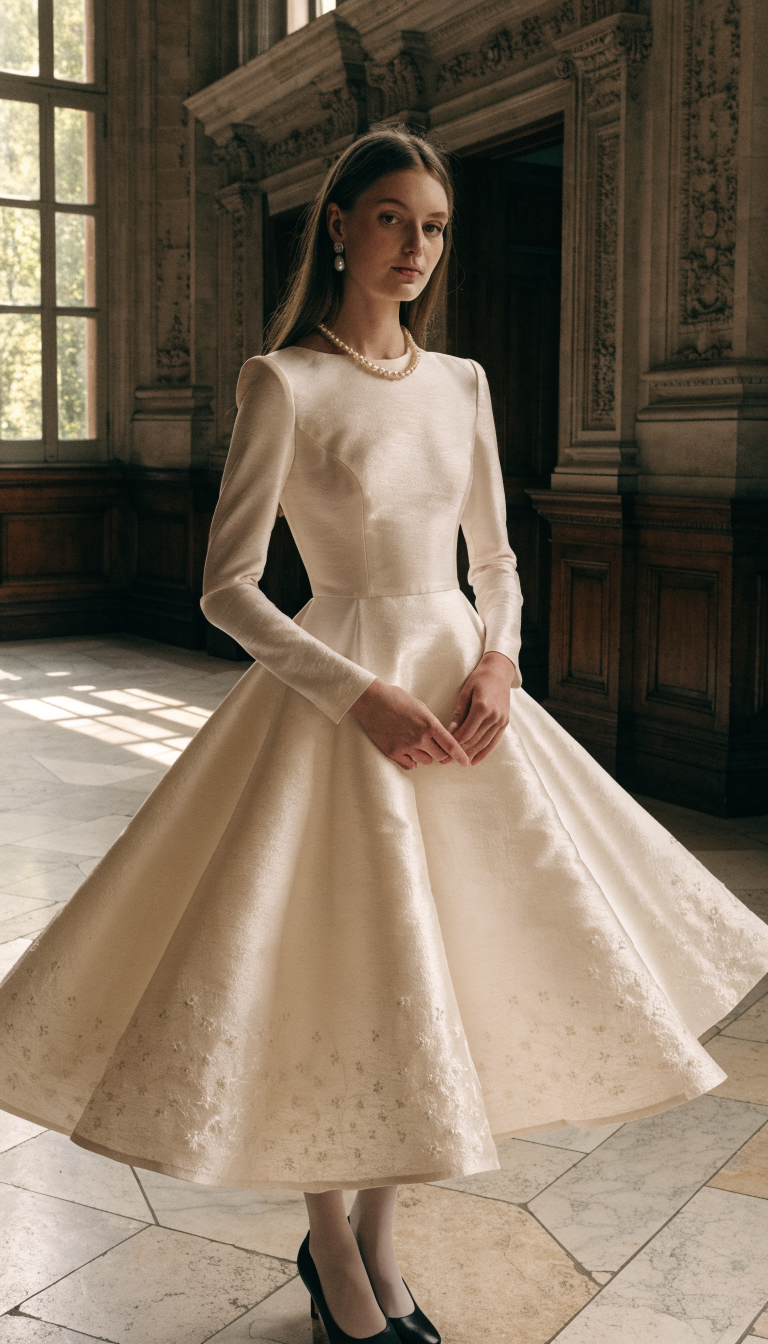
Formal or historic indoor space — The structured fabric suits polished venues. Movement in the flare — Practice stairs and sitting; the trumpet flare can catch if the overlay is too full. Steaming note — Mikado responds well to steaming but can show water spots; follow care instructions closely.
Prices for fantasy-style wedding dresses vary widely by designer, fabric quality, amount of handwork, and whether the gown is made to order. Most bridal gowns fall in a broad approximate range once alterations are included, but the final number depends on those factors plus regional pricing.
Start by bringing two or three clear photos that show the specific detail you want—whether that is the sleeve shape, the density of embroidery, or the amount of skirt volume—rather than a single character reference. Try the dresses while sitting, walking, and raising your arms so you can feel how the fabric and construction actually behave. Most made-to-order gowns need several months of lead time, and alterations usually require multiple fittings after the dress arrives.
FAQ
How far in advance should I order a fantasy wedding dress? Most made-to-order bridal gowns require four to eight months, sometimes longer if the style has extensive embroidery or a custom element. Sample sales or off-the-rack options can shorten that timeline but may limit size and detail choices.
Will a very full or heavily embroidered dress feel comfortable all day? It depends on fabric weight, lining, and fit. Lightweight tulle and chiffon versions are generally easier in warm weather, while dense embroidery or multiple structured layers can feel warmer and heavier. Testing the dress while seated and moving is the most reliable way to judge.
Do fantasy details make alterations more complicated? Yes, when the dress has dense lace, 3D appliqués, or a long embroidered train. Matching motifs during hemming or installing a bustle takes extra skill and time, so choose a seamstress experienced with bridal work and allow extra fittings.