
An old money wedding dress prioritizes fabric quality, clean construction, and restrained detail over ornamentation. The silhouette should photograph clearly in both formal ballrooms and estate gardens, move comfortably through vows and dancing, and still feel considered years later. Most bridal gowns in this style are made to order, so plan for several months of lead time plus separate alteration fittings; prices vary widely by designer, fabric, region, and tailoring and are noted only as approximate ranges where useful. The list below groups practical options by silhouette, neckline, and fabric behavior so you can shortlist what matches your venue, climate, and movement needs.
1. Silk Crepe Column Silhouette
A silk crepe column falls straight from the shoulder or bust with minimal seaming, creating a narrow line that reads polished rather than tight. The fabric has a matte, slightly weighty hand that skims the body without clinging or shining, so it photographs cleanly under mixed indoor and outdoor light. Many brides pair it with a modest chapel train that can be bustled into a few fabric loops for reception movement. The construction often includes internal boning or a light lining for support without adding bulk.
- Estate and church aisles: Holds its line on stone or carpet without billowing.
- Dance-floor ease: Light enough for seated dinners yet structured enough that the hem does not wrap legs.
- Alteration note: Hemming and bustle placement usually require two fittings because the straight cut shows any unevenness.
2. Mikado Ball Gown with Defined Waist
Mikado, a firm silk-blend fabric that holds its own shape, lets a ball gown achieve volume without layers of tulle or heavy beading. The fitted bodice and natural or slightly dropped waist create structure that stands away from the body, while the skirt remains smooth rather than puffy. This works especially well in cooler venues where the fabric does not collapse or wrinkle under body heat. Covered buttons or a clean zipper close the back so the overall impression stays tailored.
- Grand ballroom presence: The skirt maintains its width on stairs and in photos without needing constant arrangement.
- Heat consideration: The structured hand feels substantial; choose a lined version for comfort in air-conditioned spaces.
- Budget range: Expect higher fabric and labor costs than crepe styles; sample sales can reduce the total.
3. Bateau Neckline A-Line in Duchess Satin
A bateau neckline sits high and wide across the collarbone, offering coverage that still frames the neck and shoulders. In duchess satin the fabric has a crisp, low-luster surface that catches light softly and holds the A-line flare without collapsing. The silhouette balances a fitted upper bodice with a gently widening skirt, making it suitable for both formal ceremonies and garden receptions. Strap options range from wide satin bands to sleeveless cuts with built-in support.
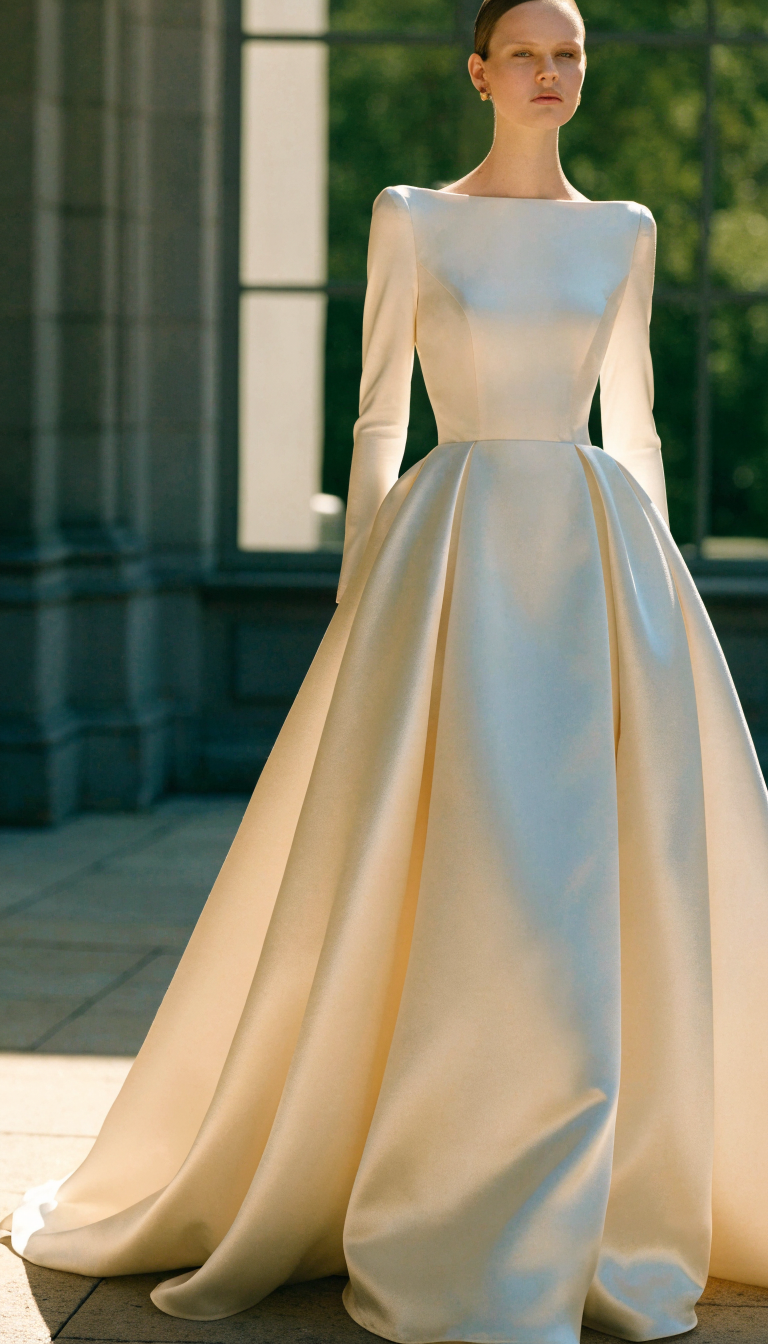
- Shoulder and collarbone framing: Works with pearl studs or no necklace at all.
- Sitting and standing test: The satin skirt usually requires a modest bustle so the hem does not pool when seated.
- Undergarment match: Built-in cups or a low-back bra keep the neckline smooth without visible straps.
4. Long Sleeve Lace Sheath
Fine floral or scroll lace over a smooth silk or crepe lining creates texture without adding shine or bulk. The sheath follows the body closely through the hip before falling straight or with a gentle flare at the knee, so the lace pattern remains visible rather than lost in volume. Long sleeves offer coverage for cooler seasons or more formal dress codes while still allowing the dress to feel light if the lace is soft and the lining is breathable. Covered buttons down the back or a hidden zipper keep the finish clean.
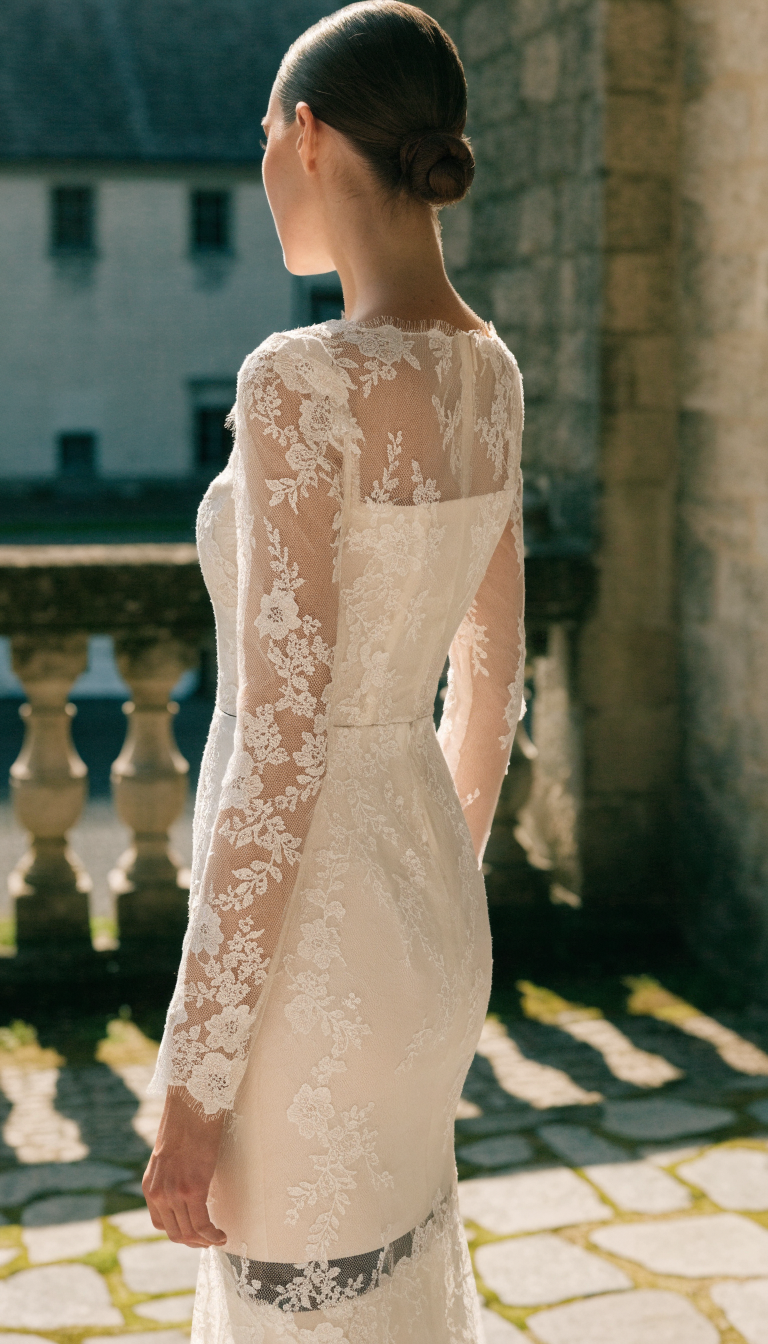
- Fall and winter ceremonies: Lace provides visual interest without heavy beading that can catch on coats.
- Movement trade-off: The fitted hip can restrict large strides; practice walking and sitting during fittings.
- Tailoring complexity: Lace alignment at seams and hems often needs an experienced bridal tailor.
5. Off-the-Shoulder Fit-and-Flare in Silk Charmeuse
Silk charmeuse has a fluid, slightly lustrous drape that softens an off-the-shoulder neckline and allows the skirt to flare gently from the knee. The bodice is usually structured with light boning so the neckline stays in place without constant adjustment. This style suits indoor evening receptions where the fabric’s soft sheen reads elegant rather than reflective under warm lighting. A short or medium train can be added without overpowering the clean lines.
- Shoulder coverage balance: The draped fabric sits securely yet leaves the upper arm free.
- Heat and dance comfort: Charmeuse moves easily but can cling if humidity is high; a light slip helps.
- Fitting-room check: Confirm the neckline stays put when arms are raised and when leaning forward.
6. Square Neck Column with Covered Buttons
A square neckline creates a clean horizontal frame across the chest and works especially well with a narrow column skirt in matte crepe or structured satin. Covered buttons running down the center back add a tailored detail that photographs clearly without requiring lace or beading. The overall effect stays minimal while still offering a defined silhouette that suits both courthouse and estate settings. Internal structure keeps the neckline from gaping.
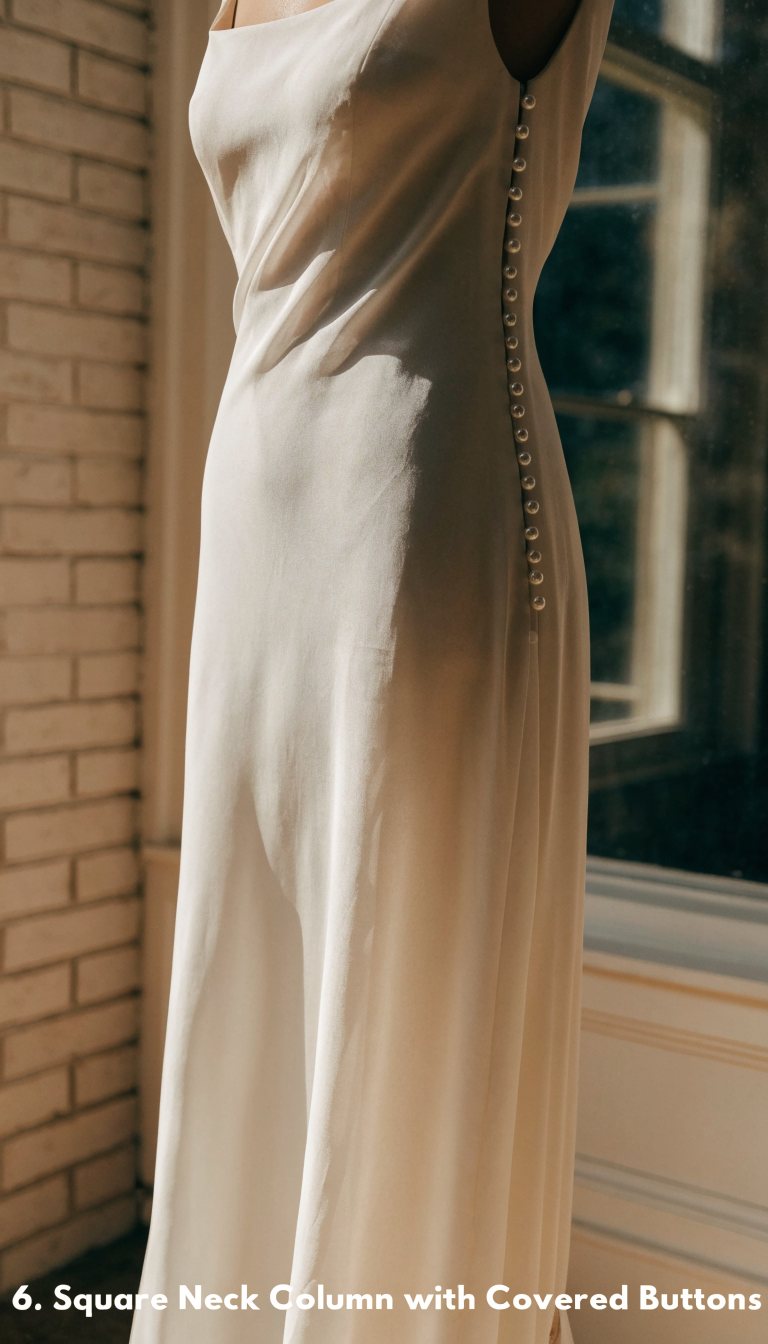
- Courthouse and city venues: The straight lines read formal without needing a long train.
- Button-back practicality: Buttons take longer to fasten; many brides add a hidden zipper underneath for the reception.
- Support note: Wide straps or a built-in corset keep the square neckline stable during movement.
7. High Neck Illusion Lace Overlay
A high neck finished with fine illusion tulle or soft lace creates modest coverage while still feeling light. The overlay is typically layered over a lined bodice so the neckline stays opaque at the front and the lace pattern remains delicate. This construction pairs naturally with a simple A-line or column skirt in crepe, letting the upper detail carry the visual interest. It suits church ceremonies or cooler outdoor settings where full coverage is preferred.
- Modest dress-code fit: The neckline provides coverage without looking heavy.
- Layering behavior: The illusion fabric can feel warm; choose a breathable lining and test in the expected temperature.
- Veil pairing: A simple tulle or silk veil sits cleanly against the high neck.
8. Tea-Length Silk Organza for Intimate Gatherings
Silk organza has a crisp yet translucent quality that creates soft volume in a tea-length skirt without the weight of a full ball gown. The shorter hem (usually ending mid-calf to ankle) makes walking, sitting, and moving through smaller venues easier while still reading formal when cut with a clean waist and simple neckline. Many versions include a light lining so the organza does not reveal undergarment lines. This length works well for garden, courtyard, or second-look reception dresses.
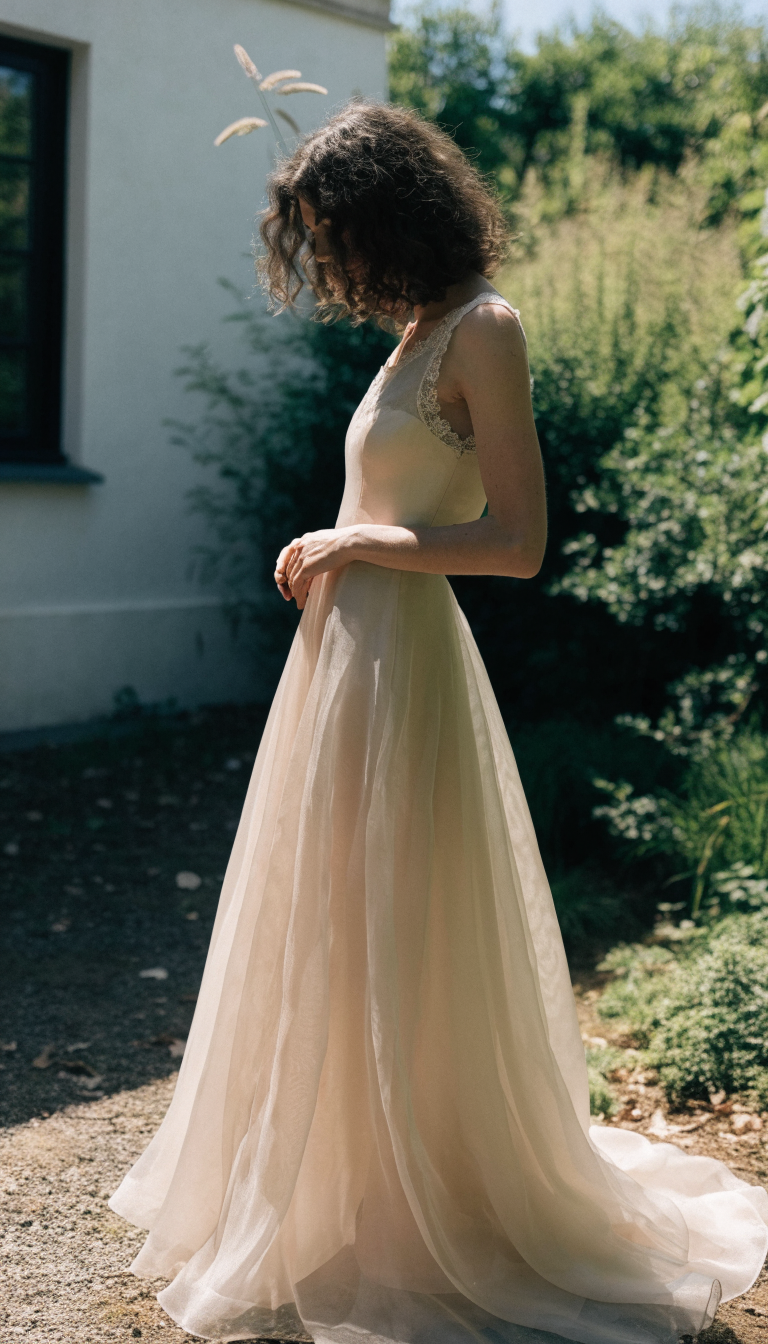
- Smaller venue ease: No long train to manage in tight spaces or on grass.
- Re-wear potential: The length and clean construction make it practical for later events.
- Hemming detail: Organza edges can fray if not carefully finished; confirm the tailor’s experience with the fabric.
9. Bias-Cut Slip Dress in Silk Charmeuse
Cut on the bias, silk charmeuse skims the body with fluid movement and minimal seaming, producing a column or soft A-line that feels modern yet rooted in 1930s tailoring. Thin straps or a cowl neckline keep the design spare so the fabric’s drape becomes the main feature. The style suits intimate indoor ceremonies or warm-weather destinations where heavier fabrics would feel restrictive. A light lining prevents transparency while preserving the soft hand.
- Warm-climate comfort: The fluid fabric moves with air and does not trap heat the way structured mikado can.
- Sitting test: Bias cuts can ride up slightly when seated; a small internal weight or careful hem helps.
- Undergarment clarity: Seamless options or a matching slip keep lines invisible under the thin fabric.
10. Basque Waist A-Line in Structured Mikado
A basque waist dips lower at the center front, elongating the torso and creating a tailored point that reads refined rather than trendy. In mikado the fabric holds the pointed seam cleanly and supports a gently flaring A-line skirt without additional understructure. Covered buttons or a clean back finish keep the focus on the waist detail. The silhouette works for formal daytime or evening events where structure is desired without ball-gown volume.
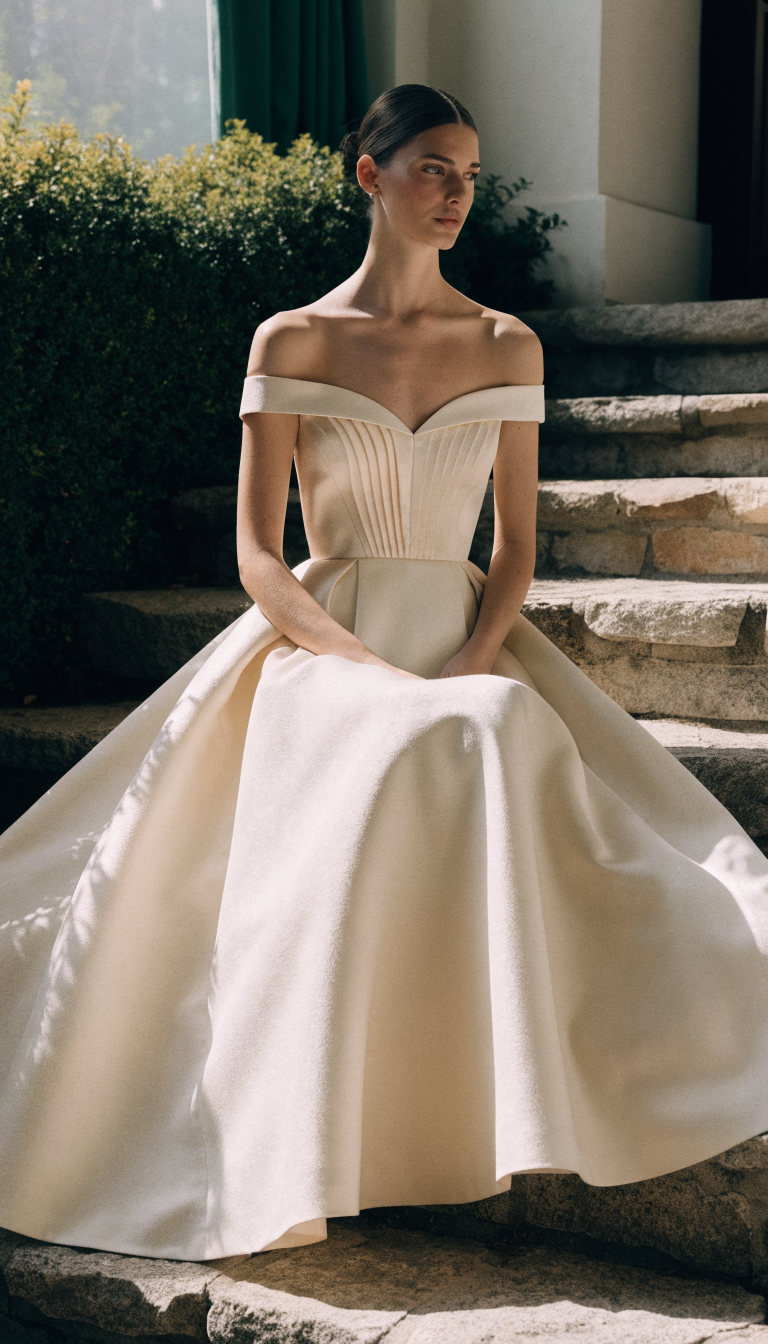
- Torso length effect: The lowered waist can balance proportions for many body shapes.
- Bustle and train needs: A modest train usually requires a simple French or American bustle.
- Alteration timeline: The precise waist seam often needs careful pinning across multiple fittings.
11. Cap Sleeve Crepe Sheath with Clean Back
Cap sleeves in matte crepe offer a small amount of shoulder coverage while keeping the overall line narrow and modern. The sheath silhouette follows the body closely, and a low or open back finished with a row of covered buttons or a simple zipper adds interest without decoration. Crepe’s smooth, non-shiny surface photographs evenly and feels comfortable against the skin for long wear. This style suits city ceremonies and refined garden settings alike.
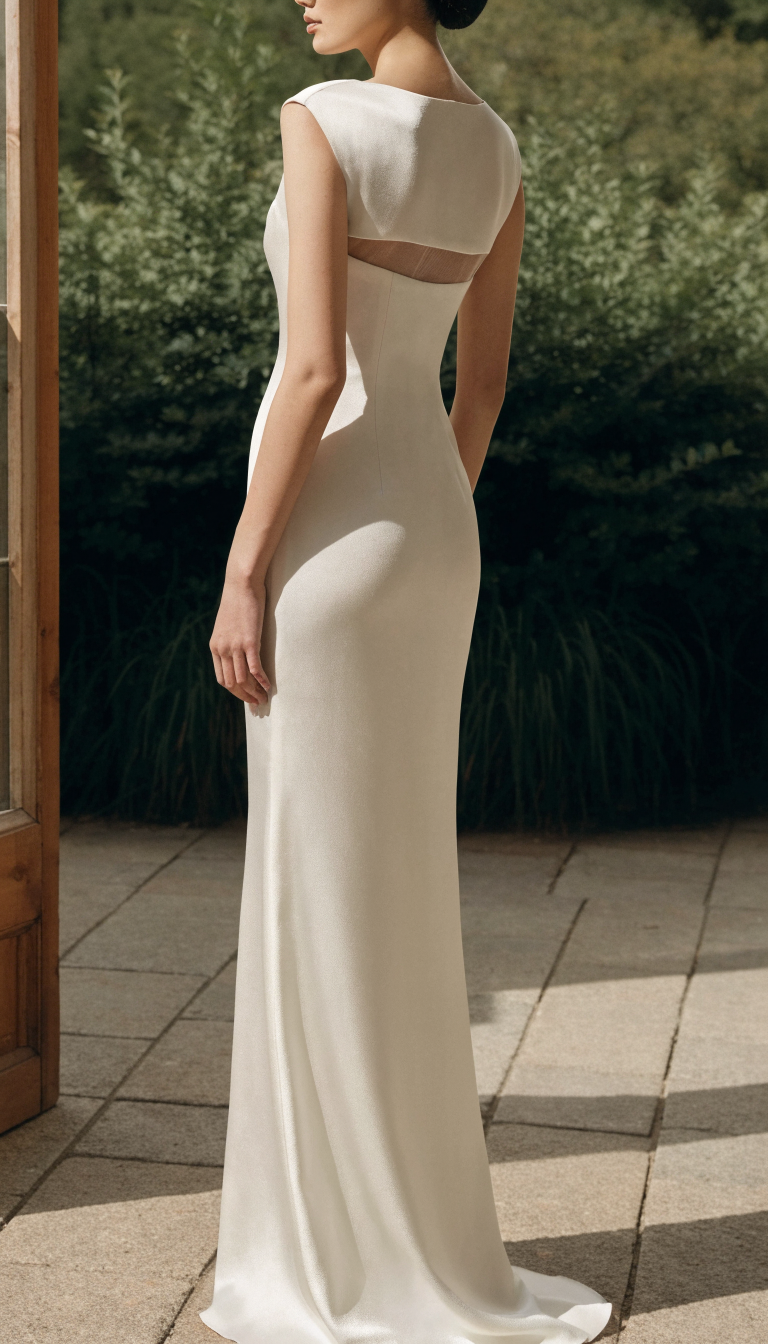
- Shoulder coverage without bulk: The short sleeve stays put and does not slip during movement.
- Back detail practicality: Buttons look finished but take time; many prefer a hidden zipper for the reception.
- Shoe and height note: The fitted hem shows shoe height clearly, so try the dress with the planned heel.
12. Three-Quarter Sleeve Satin with Subtle Draping
Three-quarter sleeves in duchess or silk satin provide coverage while leaving the lower arm free for movement and accessories. Soft draping across the bodice or at the waist adds texture without beading or lace, keeping the overall impression quiet. The fabric’s crisp hand holds the sleeve shape and the drape in place so the dress does not look limp. It works well for transitional seasons and venues that call for a polished but not overly formal look.
- Seasonal flexibility: Sleeves offer warmth without full length that can feel heavy in mild weather.
- Drape behavior: Satin draping can crease if packed tightly; steaming on arrival usually restores it.
- Support structure: Light boning under the drape keeps the bodice smooth when seated.
13. Modest Train Column in Fluid Crepe
A column cut in fluid crepe with a short or medium train offers the classic bridal entrance without the volume of a ball gown. The train can be bustled into a few discreet points so the hem remains practical for dancing and dining. Crepe’s matte finish and slight stretch make the narrow silhouette comfortable for longer wear, while internal lining prevents transparency. This style suits both indoor formal events and outdoor ceremonies on stable surfaces.
- Train management: A simple bustle keeps the fabric off the floor during the reception.
- Walking and car entry: The narrow skirt and modest train are easier to manage than full skirts.
- Lead-time reminder: Made-to-order versions typically need several months plus alteration appointments.
14. Sweetheart Neckline with Tailored Boned Bodice
A moderate sweetheart neckline paired with a fully boned bodice creates structure that stays in place without heavy embellishment. In satin or mikado the clean curves of the neckline and the defined waist read classic rather than ornate. The boning provides support so straps are optional, and the overall silhouette can be column, A-line, or fit-and-flare. This construction works for formal evening settings where a polished upper body is desired.
- Built-in support: The boned bodice often reduces the need for a separate bra.
- Strap option: Detachable or optional straps allow flexibility between ceremony and reception.
- Fitting focus: Confirm the neckline sits securely when leaning and when arms are raised.
15. Open Back with Button Detailing in Satin
An open back finished with a row of covered buttons or a corset-style lace-up creates a tailored detail that photographs well from multiple angles. In structured satin the fabric edges stay crisp so the opening does not collapse or gap. The front can remain simple—square, bateau, or modest V—so the back becomes the main interest. This style suits formal venues and pairs cleanly with a cathedral-length veil if desired.
- Back coverage balance: The opening is usually modest enough for most dress codes while still offering visual interest.
- Button or lace-up speed: Full button backs take longer to fasten; some designs hide a zipper.
- Undergarment fit: A low-back or strapless option keeps the open area smooth.
16. Empire Waist Soft Silk for Fluid Movement
An empire waist sits just below the bust and allows the skirt to fall in soft folds, creating movement without tight hip structure. Soft silk or silk crepe drapes easily from the high seam and feels light for warm climates or long outdoor ceremonies. The neckline can be simple—V, scoop, or bateau—so the focus stays on the fluid fabric. A light lining keeps the skirt opaque while preserving the airy hand.
- Warm-weather comfort: The high waist and soft fabric allow airflow and easy sitting.
- Body-shape flexibility: The raised waist can accommodate changes in fit more readily than a fitted hip.
- Hem and train note: Longer versions still benefit from a light bustle for reception practicality.
17. Classic Trumpet in Structured Satin with Minimal Train
A trumpet silhouette follows the body through the hip and knee before flaring gently, creating a tailored line that remains elegant rather than dramatic. Structured satin holds the flare in place so the skirt does not collapse or require constant adjustment. A short or medium train adds the traditional bridal sweep without overwhelming the clean shape. Covered buttons or a simple back finish keep the overall look restrained.
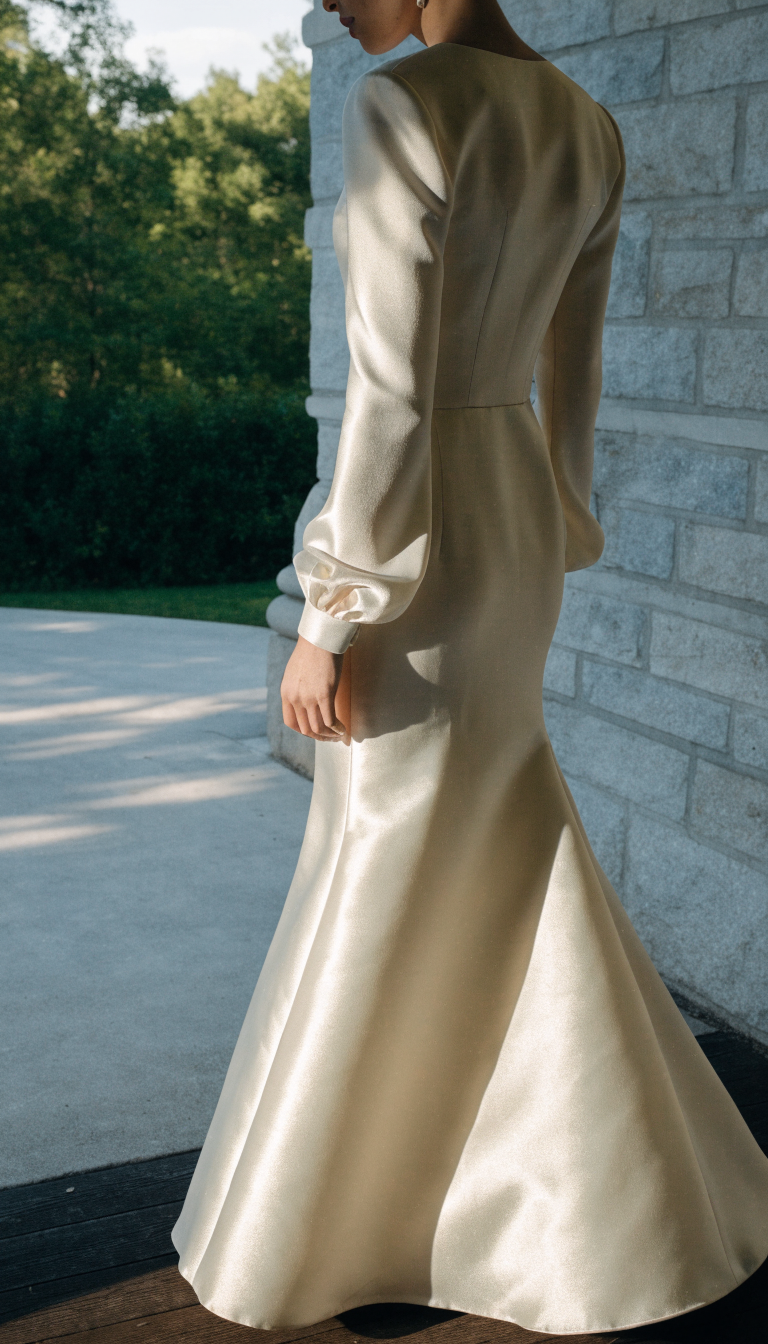
- Formal evening presence: The flare photographs clearly on stairs and in processional shots.
- Movement limitation: The fitted knee can restrict stride length; practice the aisle walk during fittings.
- Alteration precision: The flare point must be placed accurately so the skirt moves correctly when walking.
Narrow your shortlist by testing each favorite for sitting, walking, and arm movement in the expected venue temperature. Bring the shoes, undergarments, and any veil or jewelry you plan to wear to fittings so proportions stay accurate. Start appointments several months ahead to allow for made-to-order timelines and the multiple fittings most structured gowns require.
FAQ
How far in advance should I order an old money wedding dress? Most made-to-order gowns need four to eight months for production, plus time for two or three alteration fittings. Sample or pre-owned pieces can shorten the timeline if the size and condition match your needs.
Do these styles require a bustle? Any gown with a train longer than a few inches usually needs a bustle for reception ease. Column and A-line styles often use a simple French or American bustle; discuss placement with your tailor early.
Can I find these looks off the rack or in sample sales? Yes. Many salons carry crepe, satin, and lace versions in stock or offer sample sales at reduced prices. Check sizing carefully, as sample dresses may have been altered already.
What undergarments work best with clean-lined old money dresses? Seamless or built-in options keep lines invisible under crepe and silk. For open backs or strapless necklines, a low-back or adhesive solution usually provides the needed support without showing.