
Ivory wedding dresses offer a warm, soft alternative to bright white that flatters a wide range of skin tones and photographs gently in natural light. The creamy undertone softens against fair, medium, olive, and deeper complexions alike while still reading as bridal from across the room. Choosing the right style matters because the silhouette affects how the dress moves during the ceremony and reception, how comfortable you feel sitting and dancing, and how many fittings the alterations will require. This list organizes 12 distinct ivory wedding dress styles by silhouette and key details so you can match fabric weight to your climate and venue, then test movement in the fitting room. Most bridal gowns are made to order with lead times of several months, and alterations are a separate cost that usually needs two or three fittings.
1. Classic A-Line Ivory Satin Wedding Dress
An A-line silhouette in ivory satin starts fitted through the bodice and flares gently from the natural waist, giving easy movement without dramatic volume. Crisp satin holds a clean shape that photographs with a soft sheen rather than a hard shine, making it a reliable choice for church aisles or garden ceremonies where you want presence without heaviness. The fabric drapes smoothly when you walk and sits comfortably at a reception table, though the weight can feel warm if the venue has limited airflow. Built-in cups or light boning in the bodice often provide enough support that a separate bra is unnecessary once the fit is refined.
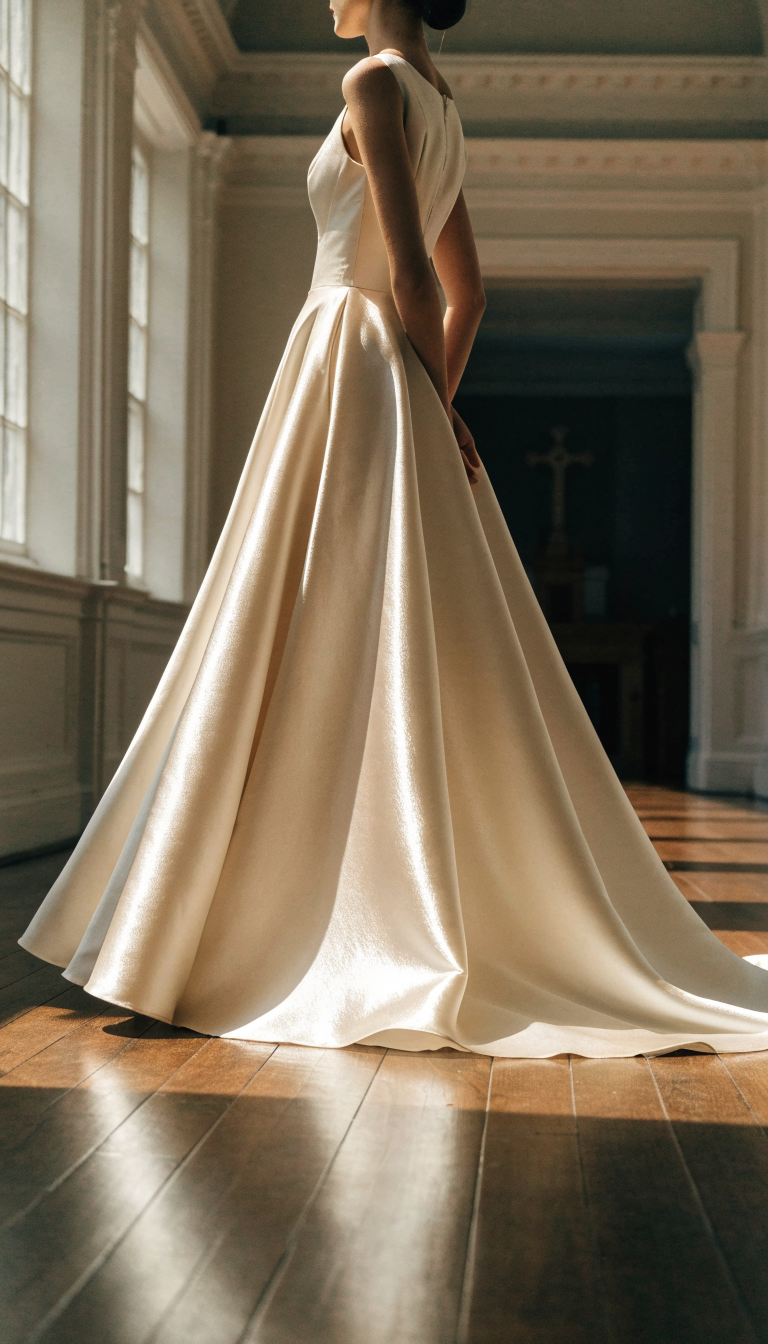
- Church aisle presence: The structured flare keeps the skirt clear of pews while the ivory tone warms against stone or wood.
- Satin hold and drape: Look for a mid-weight satin that resists wrinkling yet moves when you turn.
- Hemming and bustle: Expect a standard hem plus a simple bustle for any train; schedule fittings eight to ten weeks out.
2. Dramatic Ball Gown Ivory Tulle Wedding Dress
A ball gown in ivory tulle pairs a fitted bodice with a full, layered skirt that creates traditional volume and a clear hourglass outline. The airy tulle layers feel lighter than they look and catch soft light in a way that flatters photographs in both indoor ballrooms and outdoor evening ceremonies. Because the skirt spreads widely, sitting and navigating tight spaces require practice, and the layered construction can trap heat on warm days. A separate petticoat is often built in or added during alterations to maintain the shape without extra bulk at the waist.
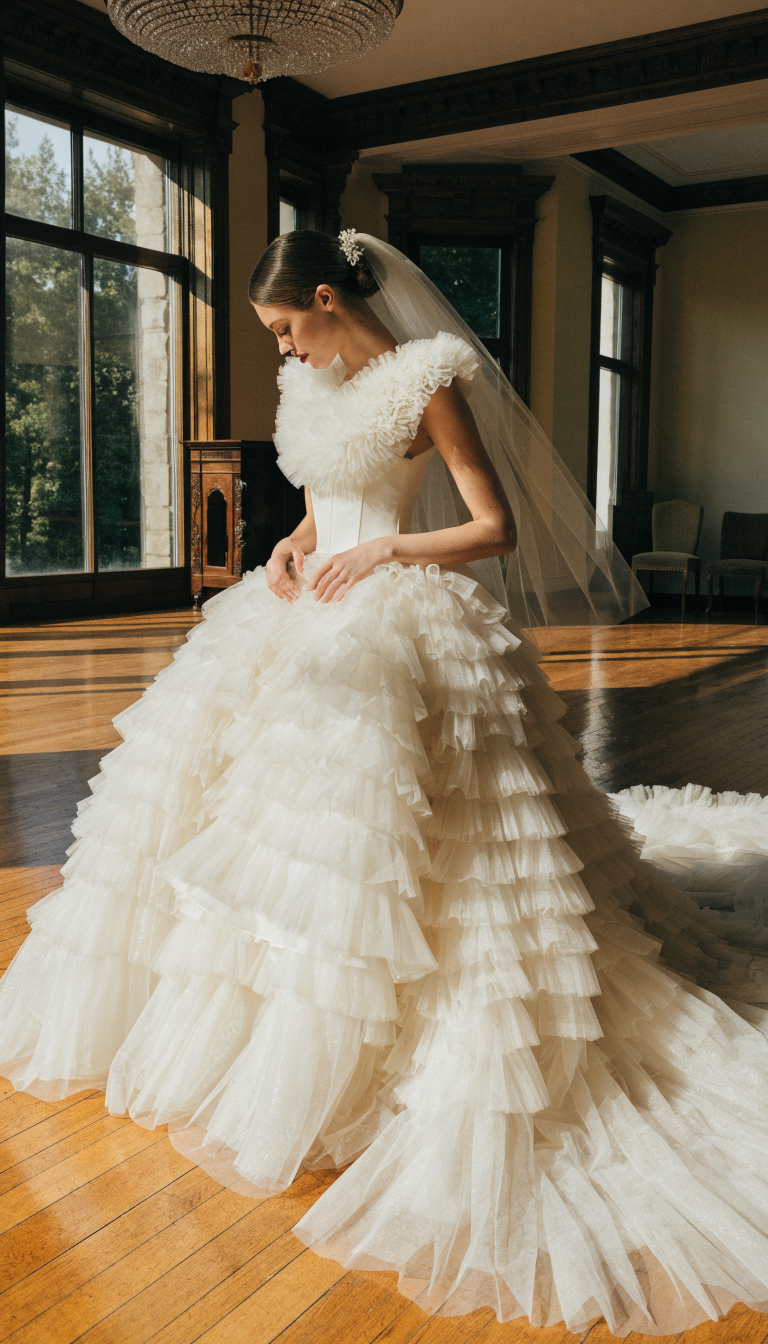
- Grand ballroom fit: The full skirt reads formal under high ceilings and chandeliers.
- Tulle volume in heat: Multiple layers stay breathable only if the lining is lightweight; test outdoor comfort early.
- Petticoat and sitting test: Sit fully in the sample to confirm the skirt does not bunch or ride up.
3. Fitted Mermaid Ivory Lace Wedding Dress
A mermaid silhouette in ivory lace follows the body closely through the hips before flaring near the knees, creating a defined shape that still allows a modest step. Allover lace or lace over a smooth lining adds texture that softens the ivory tone and photographs with depth rather than flatness. The close fit through the thighs can limit stride length and make restroom breaks slower, so stretch panels or a slight kick pleat help with daily movement. Boning in the bodice keeps the lace from collapsing while you dance, but heavy beading raises the weight.
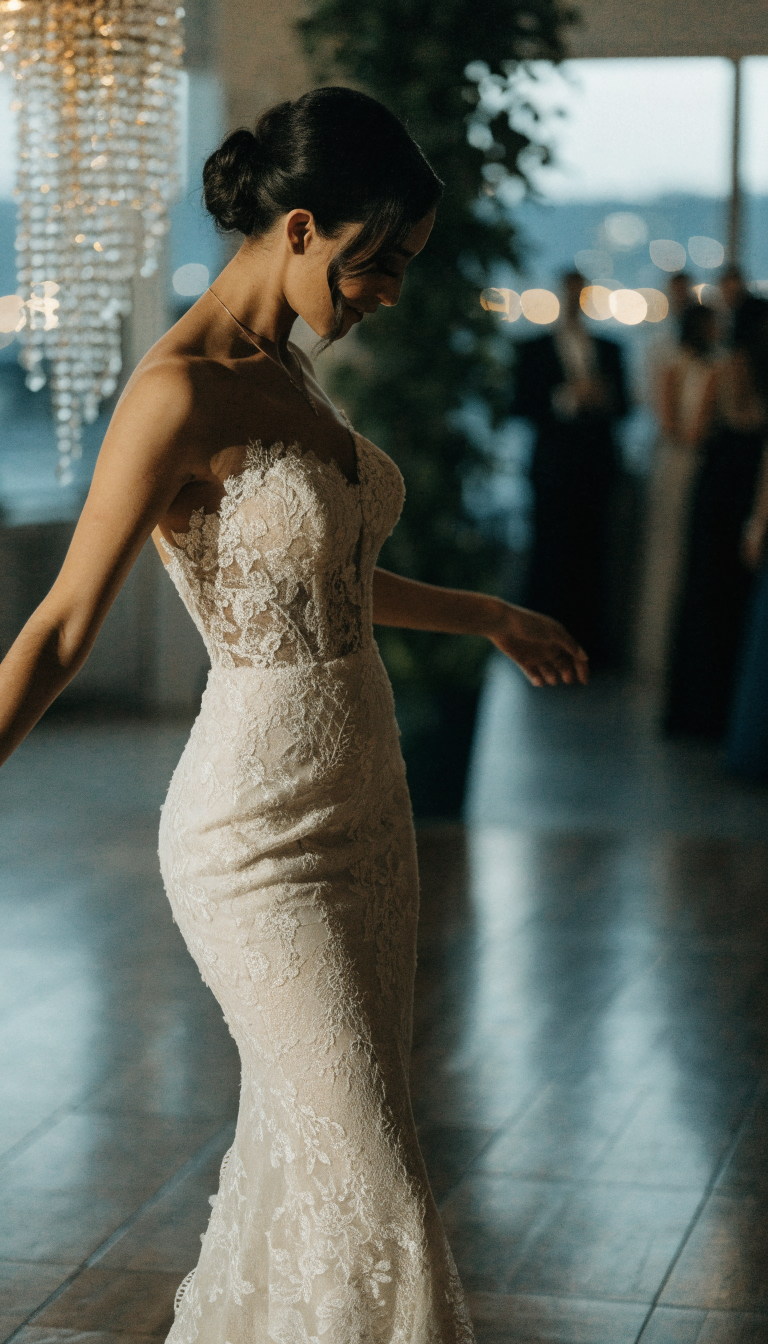
- Evening reception drama: The flare catches light when you turn on a dance floor.
- Lace stretch and support: Choose a lined version so the lace does not itch or show undergarment lines.
- Stride and restroom check: Walk and sit in the fitting room to confirm you can move without assistance.
4. Modern Fit-and-Flare Ivory Crepe Wedding Dress
Fit-and-flare cuts in ivory crepe hug through the waist and hips, then release into a softer flare just below the knee. Matte crepe absorbs light rather than reflecting it, giving a clean, modern look that works for both courthouse ceremonies and relaxed garden settings. The fabric moves fluidly when you walk and resists the heavy drape of satin, though it can show every undergarment line if the lining is thin. A modest slit or stretch panel improves comfort for dancing without changing the silhouette.
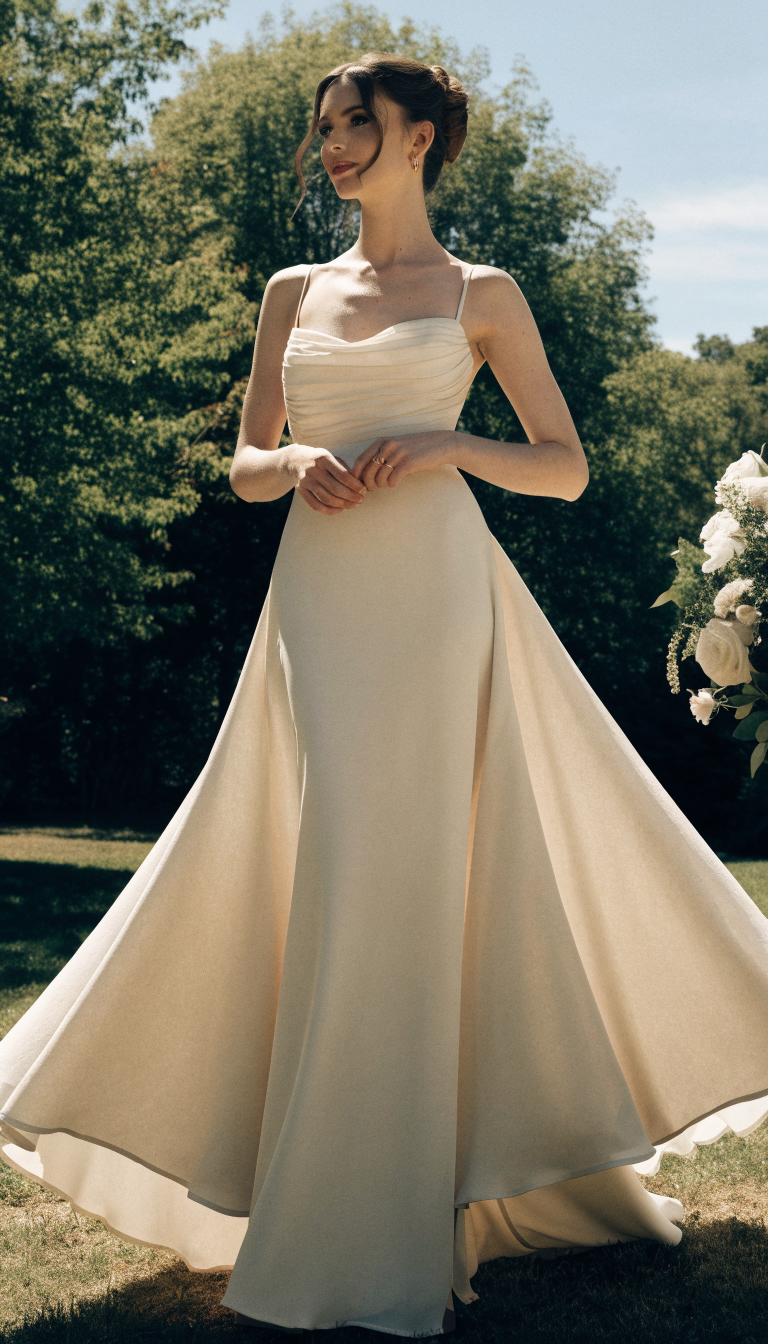
- Courthouse or garden ease: The controlled flare travels well and sits neatly in photos.
- Crepe drape and lining: Ask for a full lining so the matte surface stays smooth against skin.
- Dance-floor comfort: Confirm the flare starts low enough that you can take full steps.
5. Sleek Column Ivory Mikado Wedding Dress
A column silhouette in ivory mikado falls in a straight line from the shoulders to the hem, creating a minimalist shape with architectural structure. Mikado, a heavier silk or polyester satin with a firm hand, holds its shape without clinging and photographs with quiet elegance in formal indoor venues. The structured fabric can feel warm and less forgiving when you sit or bend, so a well-fitted waist and light boning matter. Trains on column gowns are usually shorter and easier to bustle than fuller styles.
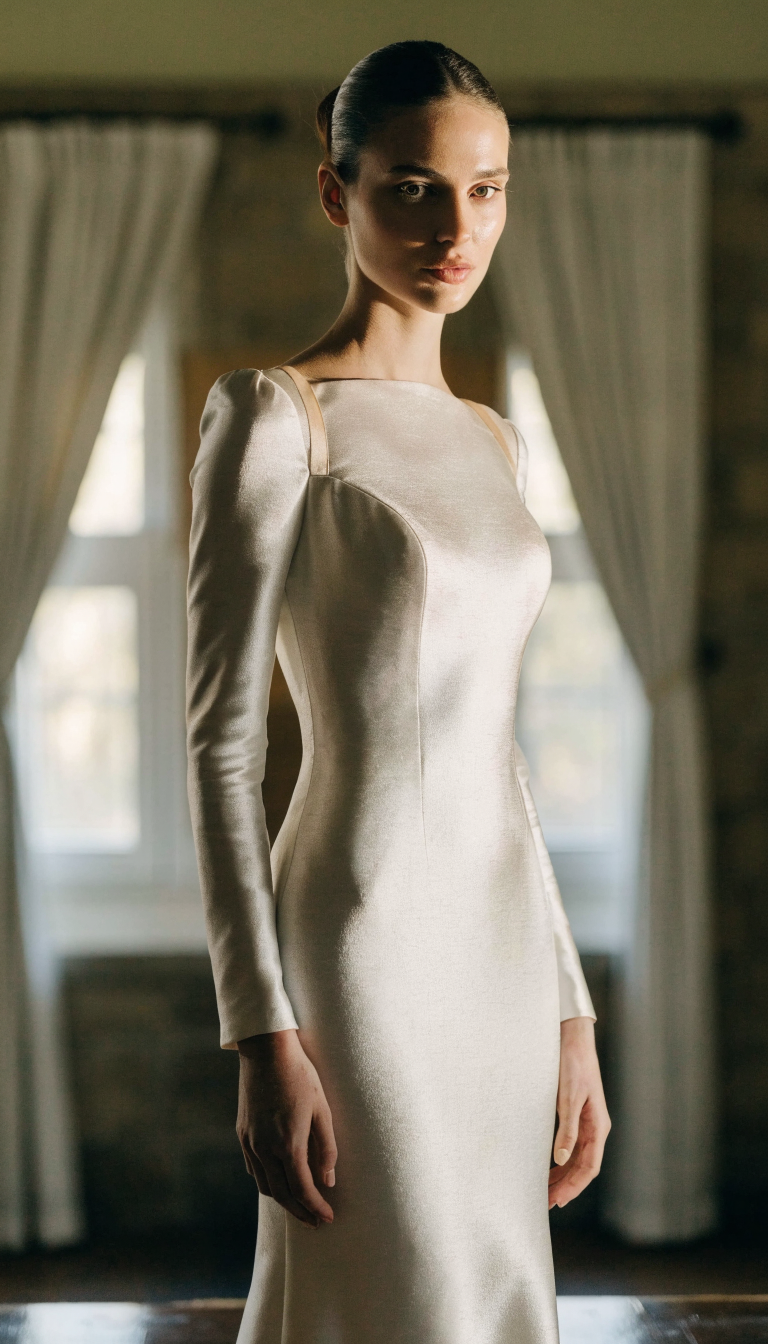
- Formal indoor venues: The clean line reads sophisticated under controlled lighting.
- Mikado structure: The fabric keeps its shape but needs precise hemming so it does not drag.
- Sitting and car test: Sit and stand in the sample to check for pulling at the hips or back.
6. Soft Off-the-Shoulder Ivory Wedding Dress
An off-the-shoulder neckline in ivory softens the upper body by framing the collarbones and shoulders while the skirt can be A-line, mermaid, or ball gown. Lightweight satin or crepe drapes smoothly over the arms, and the style photographs warmly in both daylight gardens and evening receptions. The neckline can slip if the fit is loose, so a structured bodice or hidden elastic is useful. Detachable sleeves can be added later if the weather turns cooler.
- Garden ceremony warmth: The open shoulder line balances soft outdoor light and florals.
- Neckline security: Test arm movement to make sure the fabric stays in place.
- Undergarment pairing: Built-in cups or a low-back bra keep the line clean under the drape.
7. Strapless Sweetheart Ivory Wedding Dress
A strapless sweetheart neckline in ivory curves gently across the bust and pairs with almost any silhouette from A-line to mermaid. Smooth satin or lace-over-satin creates a clean, classic look that works for church, ballroom, or outdoor ceremonies. Without straps, the bodice relies on boning and a precise fit to stay secure while you dance or raise your arms. A modest train is easy to bustle, and the open shoulders leave room for a simple veil or statement earrings.
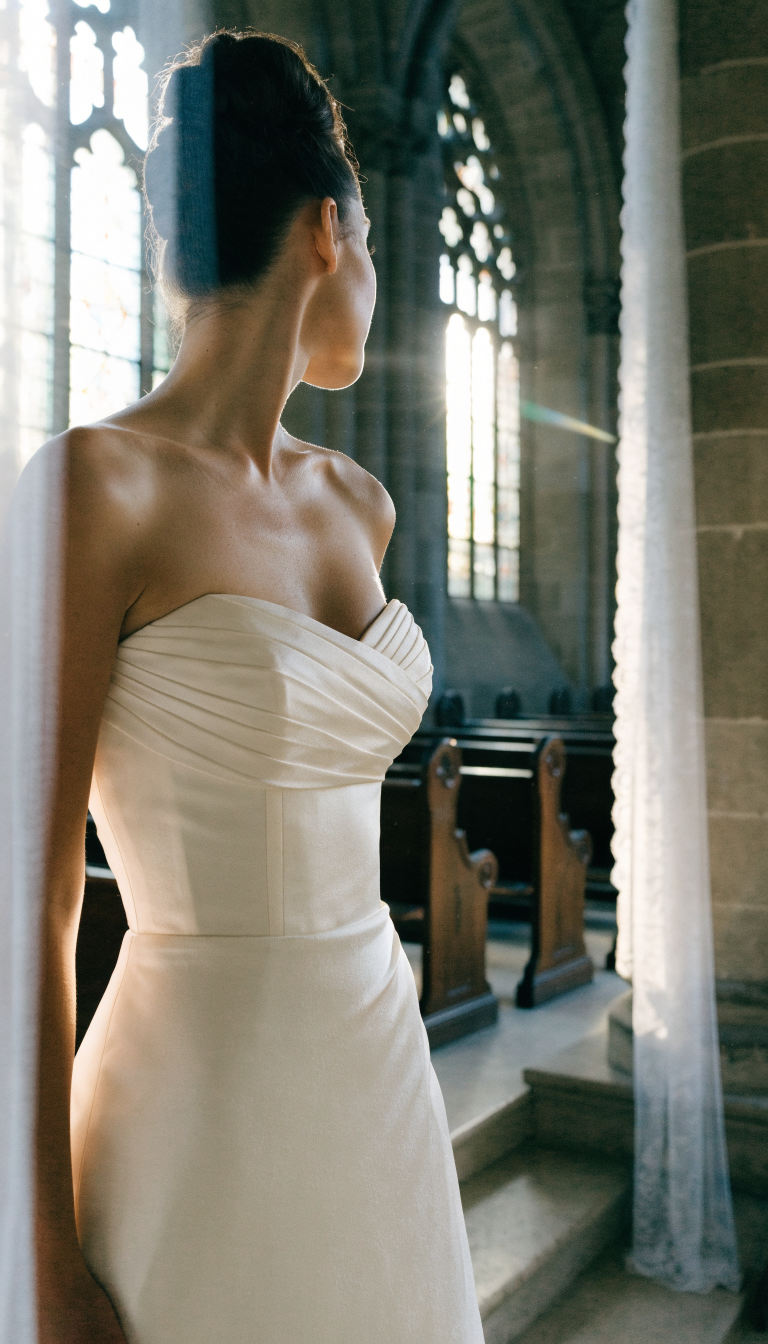
- Classic ceremony match: The sweetheart shape reads traditional without feeling heavy.
- Boning and grip: Confirm the bodice stays put when you lift your arms and turn.
- Bra and strap options: Many styles include removable straps or built-in support for flexibility.
8. Romantic Long-Sleeve Ivory Lace Wedding Dress
Long sleeves in ivory lace cover the arms fully while the bodice and skirt can remain fitted or flowing. Delicate lace over a lining adds texture that photographs softly and suits cooler seasons or more formal indoor venues. The sleeves can restrict arm movement if the lace is stiff, so stretch lace or a slight opening at the wrist improves comfort. A button or zipper back still allows easy dressing, and the covered arms reduce the need for a separate shrug.
- Cooler-season coverage: The sleeves provide warmth without a heavy outer layer.
- Lace flexibility: Choose a softer lace that bends at the elbow when you move.
- Button-back timing: Practice fastening so a helper can close the dress quickly.
9. Tea-Length Ivory Wedding Dress
Tea-length ivory dresses end at mid-calf, showing the shoes and giving a lighter, vintage-inspired silhouette that works for daytime garden parties, courthouse weddings, or second looks. Crisp satin or soft crepe holds a gentle flare, and the shorter hem travels easily and stays cooler than floor-length styles. Because the length is precise, hemming must match your exact shoe height, and any petticoat should stay invisible. The open hem also makes restroom breaks and dancing simpler.
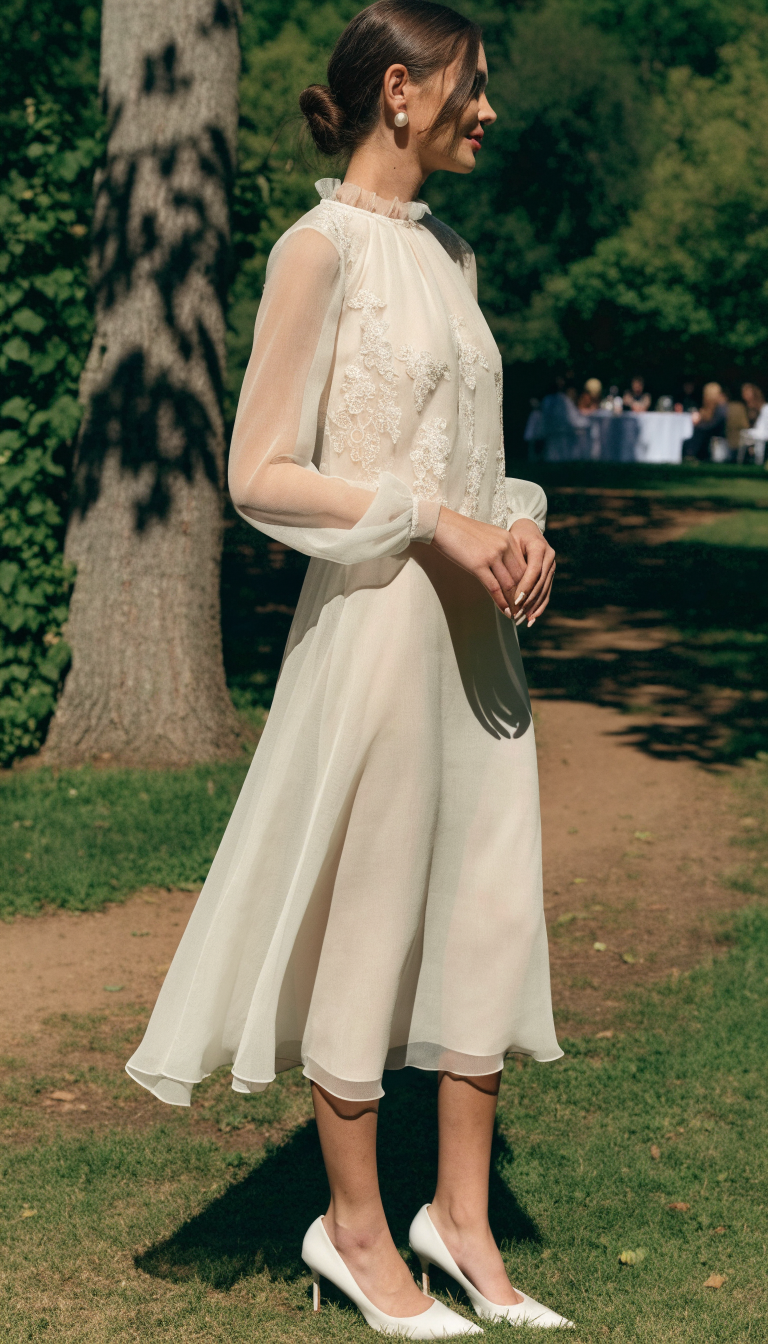
- Daytime garden ease: The shorter length keeps the dress clear of grass and gravel.
- Shoe-height precision: Bring the exact heels to every fitting so the hem lands correctly.
- Movement freedom: The length lets you walk and sit without managing a train.
10. Lightweight Chiffon Ivory Wedding Dress for Outdoor Venues
Chiffon in ivory creates a fluid, almost weightless drape that moves with a breeze and stays breathable for beach, garden, or destination ceremonies. The fabric photographs softly in bright daylight and layers well over a simple lining so undergarments stay hidden. Because chiffon wrinkles and can cling when damp, a full lining and careful steaming matter. Trains are usually light and easy to bustle, and the overall weight remains low even with a modest A-line skirt.
- Beach or destination match: The airy fabric handles humidity better than structured satins.
- Chiffon wrinkle behavior: Plan for steaming on the day; the fabric shows creases quickly.
- Lining and modesty: Confirm the lining covers enough so the dress remains opaque in sunlight.
11. High-Neck Vintage Ivory Lace Dress
A high neckline with long or three-quarter sleeves in ivory lace creates a modest, vintage-inspired silhouette that covers the shoulders and chest while the skirt can be A-line or tea-length. Intricate lace adds texture that photographs with depth in historic houses or garden settings. The high neck can feel warm, so a breathable lining and open back or button detail help with airflow. Covered buttons down the back take extra time to fasten, and the overall coverage pairs well with simple accessories.
- Historic or formal settings: The covered neckline suits traditional venues and dress codes.
- Lace texture and breathability: Choose a softer lace over a light lining so the neck does not feel stiff.
- Button-count practice: Count and practice the closures so dressing stays efficient.
12. Minimalist Ivory Sheath Wedding Dress
A sheath silhouette in ivory crepe or satin skims the body in a straight line with almost no flare, creating a clean, modern shape that works for courthouse ceremonies or minimalist indoor venues. The matte or lightly structured fabric photographs with quiet elegance and moves easily when you walk or sit. Because the fit is close, precise alterations at the waist and hips are essential, and a small slit improves stride length. Trains are short or absent, which simplifies the bustle and reduces heat.
- Minimalist venue match: The clean line stays understated in modern or small spaces.
- Crepe or satin smoothness: The fabric shows fit clearly, so schedule an early fitting for adjustments.
- Stride and sitting ease: Test walking and sitting to confirm the hem and any slit stay comfortable.
| Silhouette | Best Venue | Heat Comfort | Alteration Notes |
|---|---|---|---|
| A-line | Church or garden | Moderate | Standard hem and bustle |
| Ball gown | Ballroom or formal | Lower | Volume and petticoat checks |
| Mermaid | Evening reception | Moderate | Close fit and stretch panels |
| Fit-and-flare | Courthouse or garden | Higher | Precise waist and flare point |
| Column / sheath | Indoor formal | Moderate to lower | Exact length and support |
Bring the shoes, undergarments, and any jewelry you plan to wear to every fitting so the hem, neckline, and support can be checked together. Start shopping eight to twelve months ahead if you are ordering a made-to-order gown, and schedule the first alterations appointment as soon as the dress arrives.
FAQ
How far in advance should I order an ivory wedding dress? Most made-to-order bridal gowns need four to six months or longer for production and delivery. Ordering eight to twelve months before the wedding leaves room for fittings and any unexpected delays.
Do I need alterations on every ivory wedding dress? Nearly all bridal gowns require some adjustments for hem length, bust support, and personal fit. Plan for two or three fittings starting eight to ten weeks before the wedding, and budget for alterations separately from the gown price.
Is ivory more flattering than white for most people? Ivory’s warm undertone softens against a wide range of skin tones and photographs gently in natural light. The only reliable test is to hold both shades near your face in daylight and see which one makes your complexion look clearer.
How many fittings should I expect? Most brides complete alterations in two or three appointments: an initial pinning, a check of the main changes, and a final fitting with the bustle practice one to two weeks before the wedding.
Can I wear a sample ivory dress instead of ordering one? Sample dresses are often available sooner and at a lower price, but they may already be altered to a specific size. Ask about the remaining seam allowance and whether the fabric color matches your preferred ivory shade before deciding.