
Choosing an African wedding dress means selecting fabrics and cuts that carry cultural meaning while surviving hours of movement, heat, and photography. These 18 options range from handwoven traditional sets to modern silhouette fusions, organized by cultural origin and practical construction. Most are custom-made, so plan for lead times of several months and separate alteration costs that vary by designer, fabric, and region.
1. Yoruba Aso-Oke Iro and Buba Ensemble
Aso-oke is handwoven in narrow strips, traditionally from cotton or silk blends, and formed into a wrapper skirt (iro) paired with a blouse (buba) and gele headwrap. The firm, textured weave holds structure well for ceremony entrances yet allows enough give for dancing when cut with proper ease. Modern versions often use lighter polycotton blends that breathe better than older heavy weaves. Coral or gold beads complete the look without adding bulk to the torso.
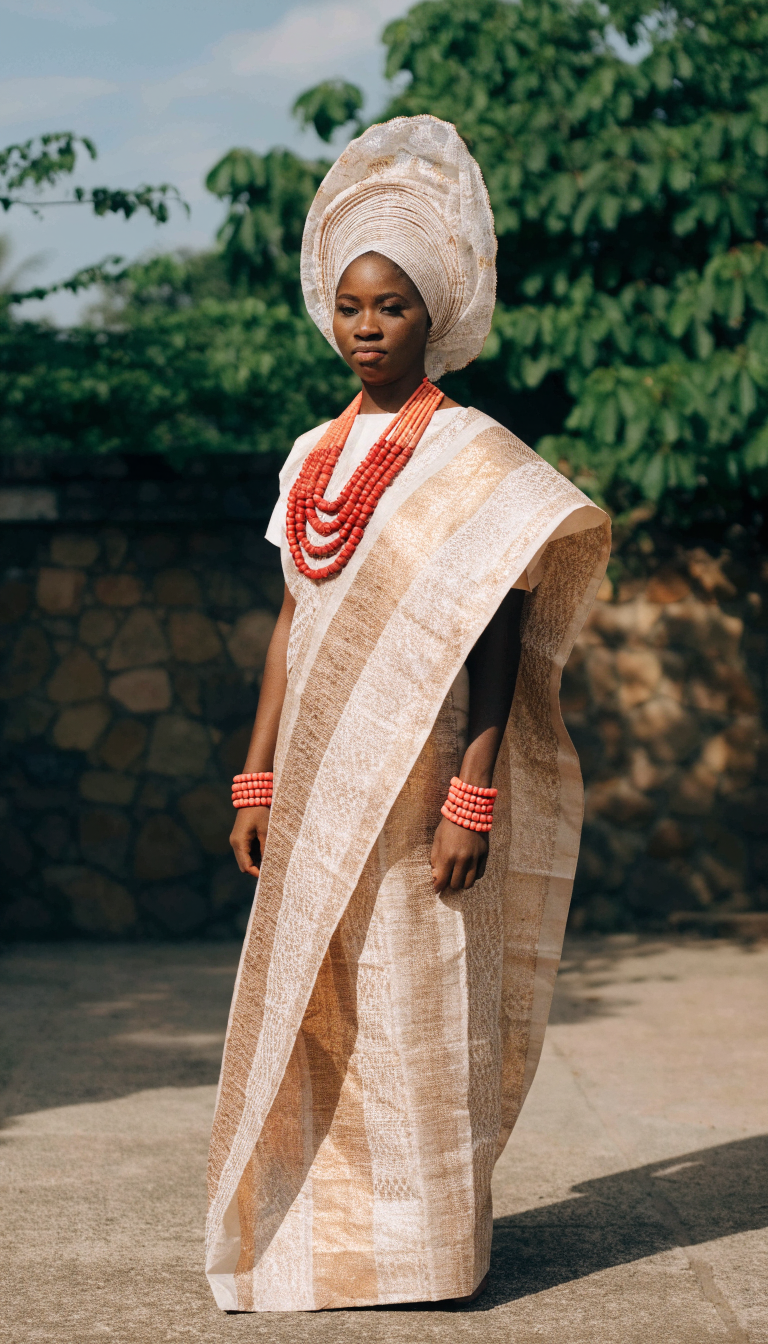
- Ceremony-day movement: The wrapper can be re-tied if it loosens, which helps after sitting or dancing.
- Heat-aware fabric: Request a cotton-heavy blend if the venue is outdoor or poorly ventilated.
- Fitting check: Sit and raise your arms to confirm the buba doesn’t gap or pull at the shoulders.
2. Ghanaian Kente Cloth Full Gown
Kente is strip-woven and sewn edge-to-edge, producing a substantial cloth with geometric patterns that carry specific meanings. A full gown version typically uses a structured bodice and A-line or modest flare skirt so the weight distributes evenly. Handwoven versions feel denser and warmer than printed imitations; many brides mix woven panels with lighter lining or cotton underlayers. Gold accessories are common and sit cleanly against the bold pattern.
- Weight management: Strong waist seams and a lined bodice prevent the cloth from dragging the neckline downward.
- Outdoor suitability: Printed or cotton-blend kente versions stay cooler for garden or daytime events.
- Pattern placement: Confirm strips align at seams so symbols don’t break awkwardly across the bodice.
3. Igbo George Wrapper and Blouse Set
George fabric is a densely embroidered, often heavy textile used for a double wrapper and matching or contrasting blouse. The lower wrapper falls near the ankle while the upper one sits higher to show its border. Coral beads—necklaces, bracelets, and sometimes a headpiece—form a core part of the ensemble rather than optional decoration. The look works for traditional ceremonies where layered textiles signal formality.
- Tying practicality: Practice the wrapper knots at home; they need to stay secure through kneeling and walking.
- Bead layering: Start with fewer strands during a fitting so you can add weight only where it feels balanced.
- Blouse support: Built-in cups or a strapless bra option help if the neckline is off-the-shoulder.
4. Ethiopian Habesha Kemis with Embroidery
The Habesha kemis is a long, typically white or light gown with hand-embroidered borders at the neckline, cuffs, and hem. The fabric is usually lightweight cotton or cotton-blend, which drapes softly and allows air movement. A matching shawl or cape (kaba) is often worn over the shoulders and can be removed once the formal processional ends. Gold jewelry and a structured hairstyle keep attention on the embroidery.
- Climate match: The open weave and pale color handle warm indoor or outdoor ceremonies better than dense silks.
- Embroidery density: Heavier threadwork at the hem adds weight; test walking to ensure the skirt doesn’t cling.
- Layer option: The cape provides coverage for modest preferences and can be adjusted throughout the day.
5. Zulu-Inspired Isidwaba Skirt Ensemble
Traditional isidwaba is a flared skirt historically made from leather, now often recreated in structured fabric with beadwork. Modern bridal versions pair it with a beaded or embroidered bodice and sometimes a wide-brimmed or cylindrical hat (isicholo). The shorter or mid-length silhouette frees the legs for movement compared with floor-length gowns. Bead colors and patterns often carry specific meanings related to marital status.
- Movement advantage: The flared hem lets you step and dance without catching fabric underfoot.
- Modern fabric swap: A fabric isidwaba is lighter and easier to clean than leather for a full celebration day.
- Bead placement: Confirm beads are securely attached so they don’t snag during hugs or dancing.
6. Vibrant Ankara Ball Gown
Ankara (wax-print) cotton is crisp, colorful, and available in endless patterns. A ball-gown silhouette uses the print for volume in the skirt while keeping the bodice more tailored. The fabric holds shape without heavy interfacing, which helps in heat, though multiple layers can still trap warmth. Many brides choose this for receptions or outdoor venues where bold color photographs clearly.
- Volume control: Ask for a modest petticoat rather than maximum fullness if you need to sit comfortably for long periods.
- Print scale: Larger motifs work better on full skirts; smaller prints read more clearly on fitted bodices.
- Care note: Cotton ankara wrinkles but steams out easily and washes more readily than silk or lace.
7. Hausa-Fulani Modest Embroidered Kaftan
Hausa and Fulani bridal styles favor long sleeves, higher necklines, and flowing silhouettes in silk, satin, or embroidered cotton. The kaftan or abaya-style gown covers arms and legs while allowing air to circulate through the loose cut. Delicate embroidery or metallic thread adds detail without dense weight. A matching headscarf or veil completes the ensemble and can be adjusted for temperature.
- Coverage preference: The high neck and long sleeves suit venues or family expectations that favor modest dressing.
- Airflow in cut: The straight or gently flared shape moves with you rather than clinging in humidity.
- Undergarment pairing: A simple slip or camisole works underneath; avoid bulky shapewear that shows through lighter fabrics.
8. Moroccan Takchita Layered Ensemble
The takchita consists of an inner dress and an open-front overdress secured with a wide belt (mdamma). Fabrics range from silk and organza to embroidered cotton, often in rich colors with metallic thread. Multiple layers create volume and texture while the belt defines the waist. Moroccan brides traditionally change outfits during the celebration, so this style is built for transitions.
- Layer practicality: The open overdress can be removed later for freer movement during dancing.
- Belt placement: Position the mdamma so it sits securely without pinching when you sit or bend.
- Fabric drape: Lighter inner layers prevent the total ensemble from becoming too warm under lights.
9. South African Shweshwe Column Dress
Shweshwe is a printed cotton with fine geometric patterns, often in indigo, burgundy, or brown tones. A column or sheath silhouette lets the small-scale print remain visible without overwhelming volume. The fabric is relatively crisp and holds a clean line, making it suitable for both traditional and contemporary venues. Many brides pair it with simple beadwork or a matching shawl.
- Print clarity: The tight geometric motifs stay readable on a straighter cut better than on heavy gathers.
- Comfort in heat: Cotton construction breathes, though a full lining can reduce that benefit—request a partial lining if needed.
- Hem test: Walk and turn in sample shoes to confirm the column doesn’t restrict stride length.
10. Modern Aso-Oke Mermaid Gown
Contemporary designers cut aso-oke into fitted mermaid or trumpet shapes with internal boning and a flare near the knees. The handwoven texture adds interest without additional beading, while a stretch lining improves mobility. This version keeps cultural fabric at the center while using a silhouette familiar from Western bridal wear. It works well for indoor evening ceremonies where structure photographs cleanly.
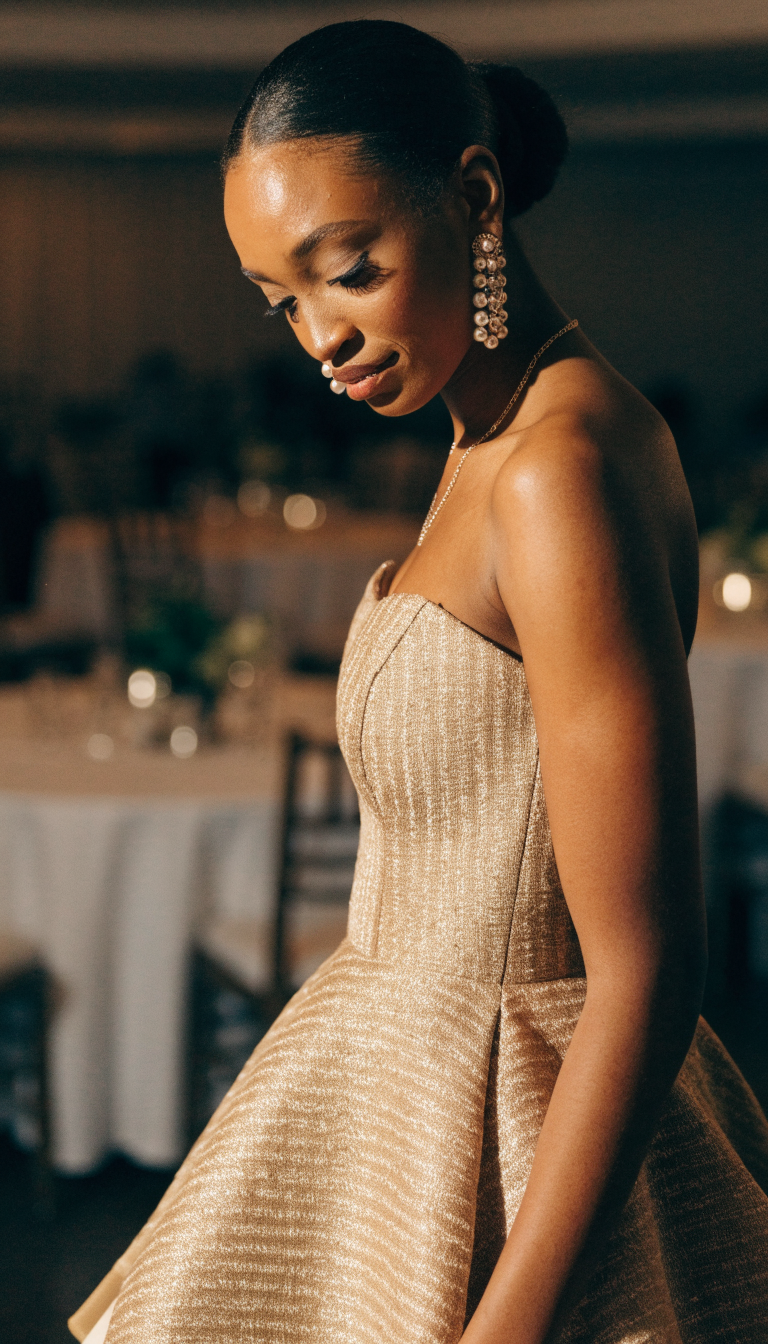
- Flare placement: The knee or below-knee flare determines how freely you can dance or climb steps.
- Boning support: Confirm the boning ends where it supports the bust without digging into the waist.
- Textile match: Lighter aso-oke weaves reduce bulk through the hips compared with traditional heavy strips.
11. Guipure Lace and Print Fusion Gown
Guipure or cord lace, often French or Swiss, is combined with ankara or kente panels for contrast in texture and pattern. The lace provides an open, airy feel on the bodice or sleeves while the print grounds the skirt in color. This hybrid appears frequently in Nigerian and Ghanaian-inspired modern gowns. The combination allows breathability where lace is used and structure where print is placed.
- Texture balance: Place denser lace where you want coverage and open print where you want movement.
- Alteration ease: Lace edges and print seams both require careful matching, so budget extra fitting time.
- Undergarment visibility: Test in the intended lighting; lace can reveal lines that solid print hides.
12. East African Kitenge A-Line Dress
Kitenge (also called chitenge or kanga in some regions) is a vibrant printed cotton used across East and Central Africa. An A-line cut uses the print for both bodice and skirt, creating a balanced, wearable shape that suits many body types. The fabric is generally lighter than handwoven textiles, which helps in warmer climates. Beaded collars or simple jewelry from local artisans often complete the look.
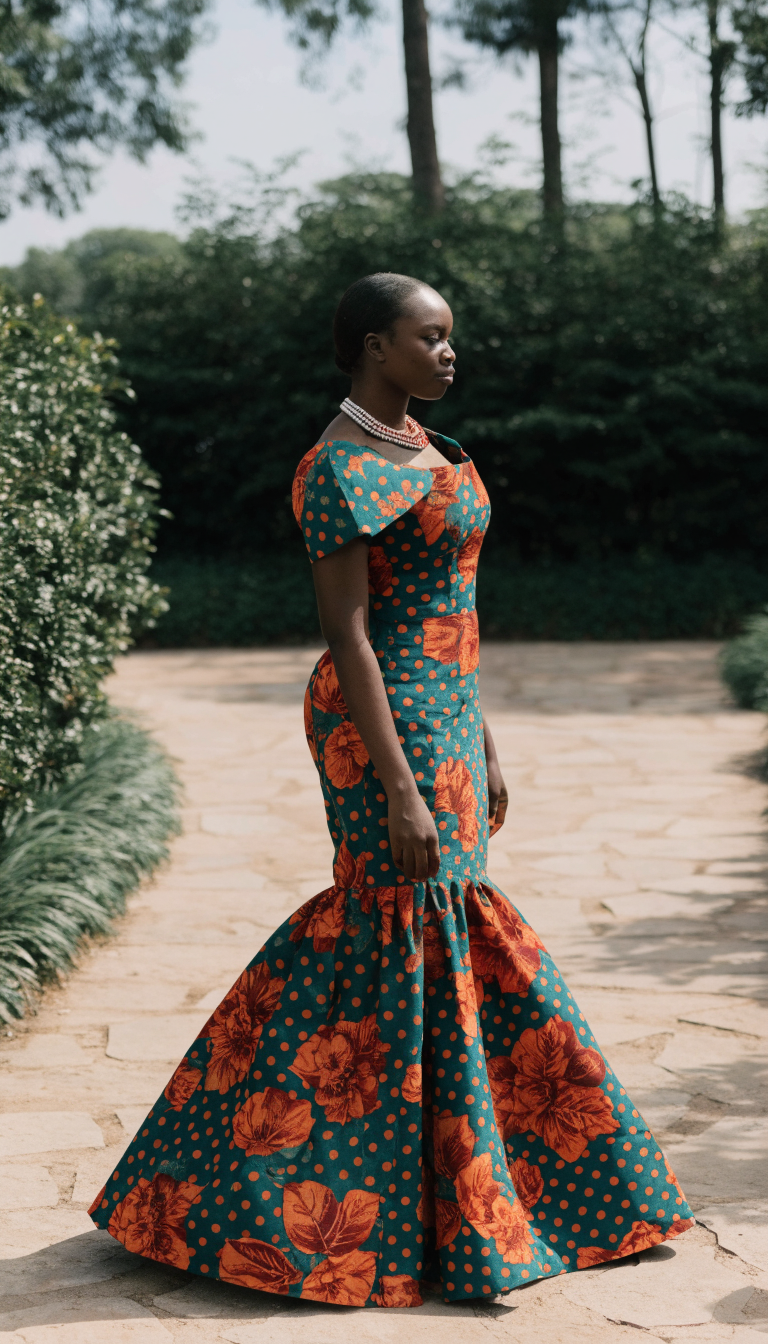
- Venue flexibility: The moderate volume works for both church aisles and garden receptions without excessive train management.
- Print direction: Align motifs so they flow downward rather than fighting at the waist seam.
- Sitting test: The A-line allows room to sit without the skirt riding up excessively.
13. Handwoven Akwete Wrapper Look
Akwete cloth is handwoven, typically by women in the Akwete region of Nigeria, with distinctive textured patterns. Worn as a double wrapper with a blouse, it carries specific cultural associations and feels firmer than many commercial prints. The weave creates visual interest through structure rather than surface shine. It is often paired with coral beads and a traditional headpiece.
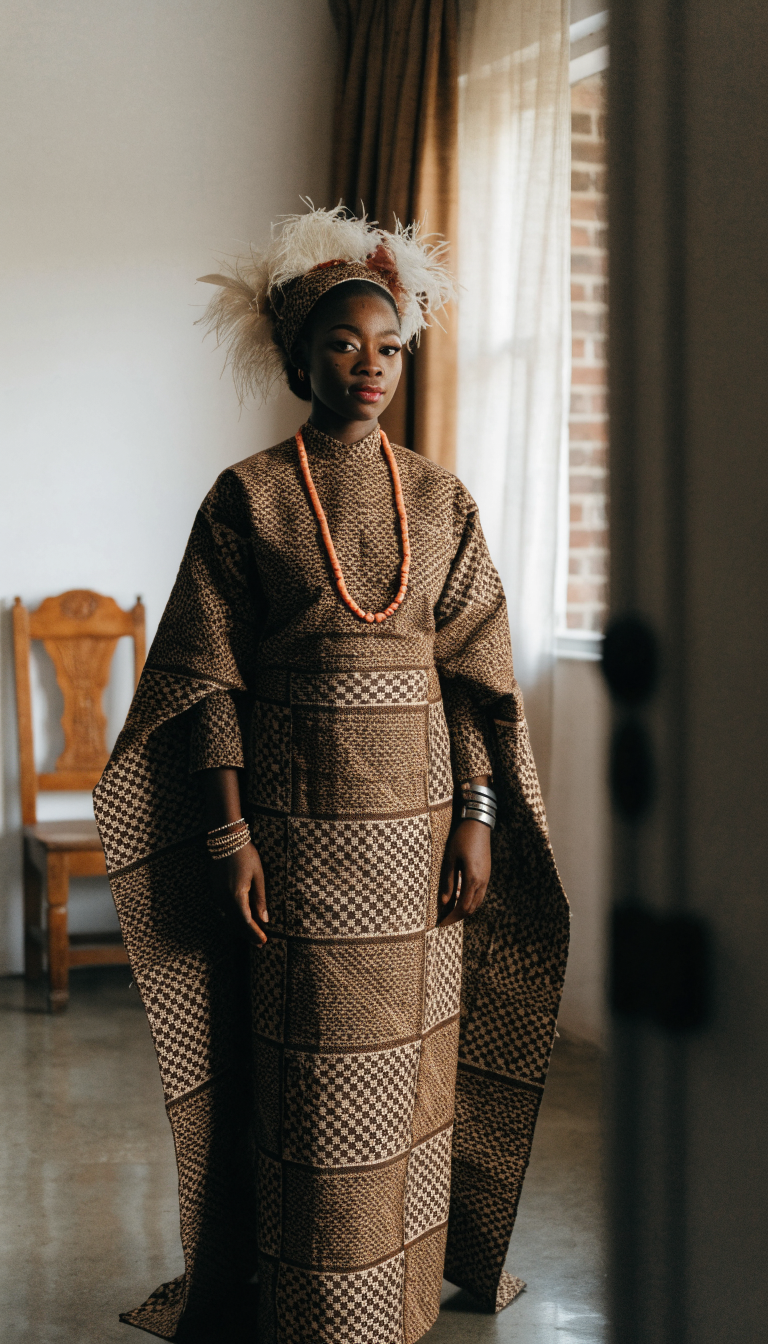
- Wrapper security: The textured surface can grip better than smooth fabrics, but still practice the tie for a full day.
- Season consideration: The denser weave is better suited to cooler indoor settings or evening events.
- Heritage note: Families with Akwete roots may prefer this over more widely available commercial fabrics.
14. Beadwork-Focused Bodice with Simple Skirt
Heavy beadwork or coral embellishment concentrates detail on the bodice while the skirt uses a plain or lightly patterned fabric. This approach reduces overall weight and cost compared with full-beaded gowns while still delivering cultural visual impact. The bodice can be strapless, off-the-shoulder, or high-neck depending on preference. It pairs well with both traditional and modern skirt shapes.
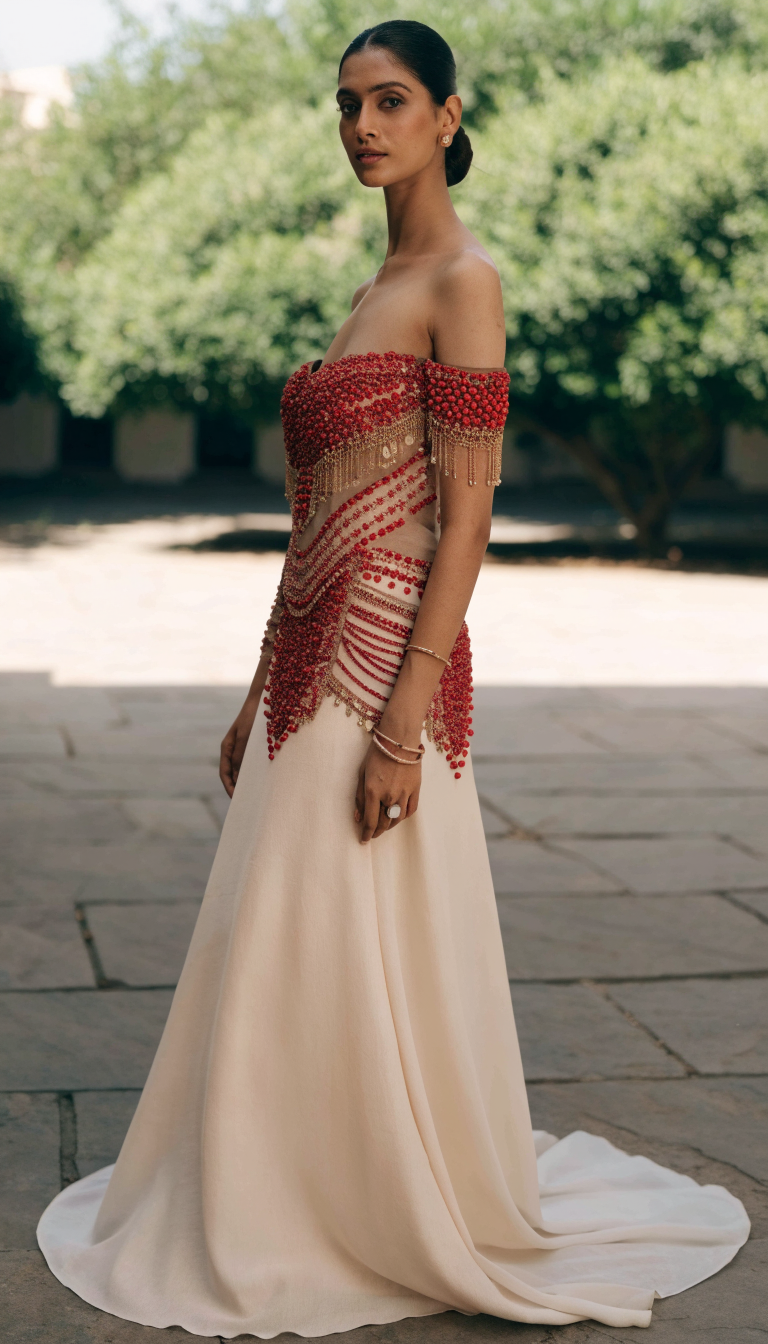
- Weight distribution: Beads add density to the upper body; a well-fitted waistband keeps the dress from shifting.
- Restroom practicality: A side zipper or hook closure is easier to manage alone than a full button back.
- Bead durability: Ask how the beads are attached so they survive dancing and transport.
15. Off-the-Shoulder Ankara or Kente Dress
An off-the-shoulder neckline frames the collarbones and works with both ankara and kente fabrics. The style often includes a structured bodice and either a fitted or gently flared skirt. Sleeves, if present, are usually short or detachable so the shoulders remain the focus. It photographs well from multiple angles and suits both indoor and outdoor venues.
- Strap support: Built-in cups or adhesive options help maintain the neckline during movement.
- Sun and heat: Exposed shoulders can feel cooler outdoors but may need sunscreen or a light shawl for long ceremonies.
- Fabric behavior: Crisp ankara holds the off-shoulder shape better than fluid silks.
16. Modest High-Neck Silk or Bazin Gown
Bazin or glazed cotton, common in West African formal wear, has a subtle sheen and structured hand. A high-neck, long-sleeve gown in this fabric offers coverage while still feeling ceremonial. Embroidery or metallic thread can be added at the neckline and cuffs. The silhouette is usually straight or lightly flared so the fabric doesn’t cling.
- Coverage and climate: Long sleeves and a high neck suit both modest preferences and air-conditioned indoor venues.
- Sheen level: Bazin’s finish photographs with soft luminosity rather than high shine.
- Movement ease: Avoid extreme fitted cuts; the fabric has limited stretch.
17. Peplum Waist African Print Dress
A peplum flare at the waist defines the midsection while the skirt can be pencil, A-line, or full. Ankara, kente panels, or aso-oke work well because the peplum adds structure without requiring heavy underlayers. This cut photographs clearly from the front and side and works for both ceremony and reception. It also accommodates a range of body types by drawing the eye to the waist.
- Proportion check: The peplum length should balance the skirt volume so the overall silhouette doesn’t feel top-heavy.
- Dance-floor test: Raise your arms and turn to confirm the peplum doesn’t flip or catch.
- Tailoring note: The waist seam needs precise fitting because the peplum amplifies any gap or tightness.
18. Contemporary Cape and Gown Combination
A simple column or A-line gown in solid fabric is paired with a detachable kente, aso-oke, or embroidered cape. The cape provides cultural detail and coverage during the processional, then can be removed for dancing or warmer moments. This approach lets you wear a lighter base dress while still incorporating heritage textiles. It is practical for destination or multi-climate celebrations.
- Transition ease: Practice removing the cape so the gown underneath stays neat.
- Weight contrast: Keep the cape in a lighter weave if the base gown is already structured.
- Photo timing: The cape creates a strong entrance look; the base gown works for close portraits later.
These 18 styles give concrete options for matching fabric behavior, cultural meaning, and the physical demands of a wedding day. Bring swatches of preferred textiles, note your venue’s temperature and seating time, and schedule fittings early enough to adjust weight, hem, and closures. Most bridal versions are made to order, so begin conversations with a designer or tailor several months ahead and confirm alteration timelines separately.
FAQ
How far in advance should I order an African wedding dress? Custom pieces using handwoven or specialty fabrics commonly require three to six months or more, depending on the designer’s queue and whether the textile is locally available or imported. Off-the-rack or sample options can be faster but may still need alterations.
Can I mix traditional fabrics with a Western silhouette? Yes. Many brides use aso-oke, kente, or ankara for the full gown or as panels and accents on mermaid, A-line, or ball-gown shapes. Discuss pattern matching and seam strength with the tailor so the fabric’s structure supports the cut.
What should I test during a fitting? Sit, walk, raise your arms, and simulate dancing or kneeling if your ceremony includes those movements. Check zipper or wrap security, bead attachment, and how the dress feels after ten minutes of standing so heat and weight become apparent.