
Victorian wedding dresses draw on structured bodices, generous skirts, and precise detailing that evolved across the mid-to-late nineteenth century. Queen Victoria’s 1840 white satin gown with Honiton lace flounce helped popularize the white bridal dress in Western fashion, though styles shifted from fuller early silhouettes to bustles and dramatic sleeves later in the era. Today’s versions keep the romance and coverage while using modern construction for movement and comfort. This list groups twenty distinct styles and features by silhouette, neckline and bodice construction, sleeve treatments, and fabric or finishing choices so you can match them to your venue, climate, and how you plan to move through the day. Approximate prices vary widely by designer, lace complexity, and custom work; most gowns are made to order with multi-month lead times, and alterations are typically a separate cost requiring several fittings.
Silhouette Foundations
1. Full Ball Gown with Soft Structure
A full ball gown silhouette captures the generous volume of early Victorian skirts while remaining wearable for modern ceremonies. The fitted bodice meets a defined waist before releasing into a skirt that is supported by lightweight tulle or organza layers rather than rigid historical crinolines. Silk satin or soft mikado gives the skirt a quiet sheen and enough body to hold a rounded shape without collapsing when you sit or walk. This cut suits formal venues where the skirt can be seen in full, and the added volume creates graceful movement down an aisle without requiring extreme understructure.
- Venue scale match: Works best in ballrooms or historic halls where the skirt has room to clear steps and chairs.
- Heat and weight note: Multiple layers can feel warm; request a breathable lining and test sitting in the sample.
- Bustle planning: A modest train may need a simple bustle for dancing; confirm the style during the first fitting.
2. Bustle-Back Skirt Silhouette
The bustle-back silhouette concentrates volume at the rear, creating the distinctive shape associated with later Victorian fashion. Modern versions use soft gathers, draped fabric, or a removable bustle pad rather than heavy historical padding so the gown stays lighter. A fitted bodice flows into a skirt that lies relatively smooth in front while the back adds depth and a short-to-medium train. Crisp taffeta or structured satin holds the folds cleanly and photographs well from multiple angles.
- Rear detail focus: Ideal when ceremony photos will include the back view or when a train is part of the processional.
- Movement test: Walk and sit in the sample to check that the bustle does not shift or dig; ask about weight distribution.
- Alteration complexity: Bustle placement and train length often need precise hemming and button or hook placement.
3. Princess Line Cut
A princess line gown uses continuous vertical seams from the shoulder or bust through the waist and into the skirt, eliminating a horizontal waist seam. This creates a smooth, elongated line that still allows a full or gently flared skirt. The construction pairs well with light boning for structure and a silk or crepe base that drapes without bulk. It reads as historically inspired without the exaggerated volume of a true ball gown.
- Seam and fit note: Vertical seams must be carefully shaped during fittings so the gown follows the torso without pulling.
- Fabric drape preference: Soft silk or crepe behaves better than stiff satin for this seamless look.
- Dance-floor ease: Less fabric pooling at the waist makes sitting and moving through a reception simpler than a heavily gathered skirt.
4. Basque Waist A-Line
The basque waist dips to a soft point at the front of the bodice before the skirt releases into an A-line shape. This detail elongates the torso visually while still providing the coverage and structure associated with Victorian bodices. Satin or silk faille holds the point cleanly, and subtle boning keeps the waistline defined without a rigid corset. The A-line skirt balances the pointed bodice so the overall silhouette remains practical for walking and dancing.
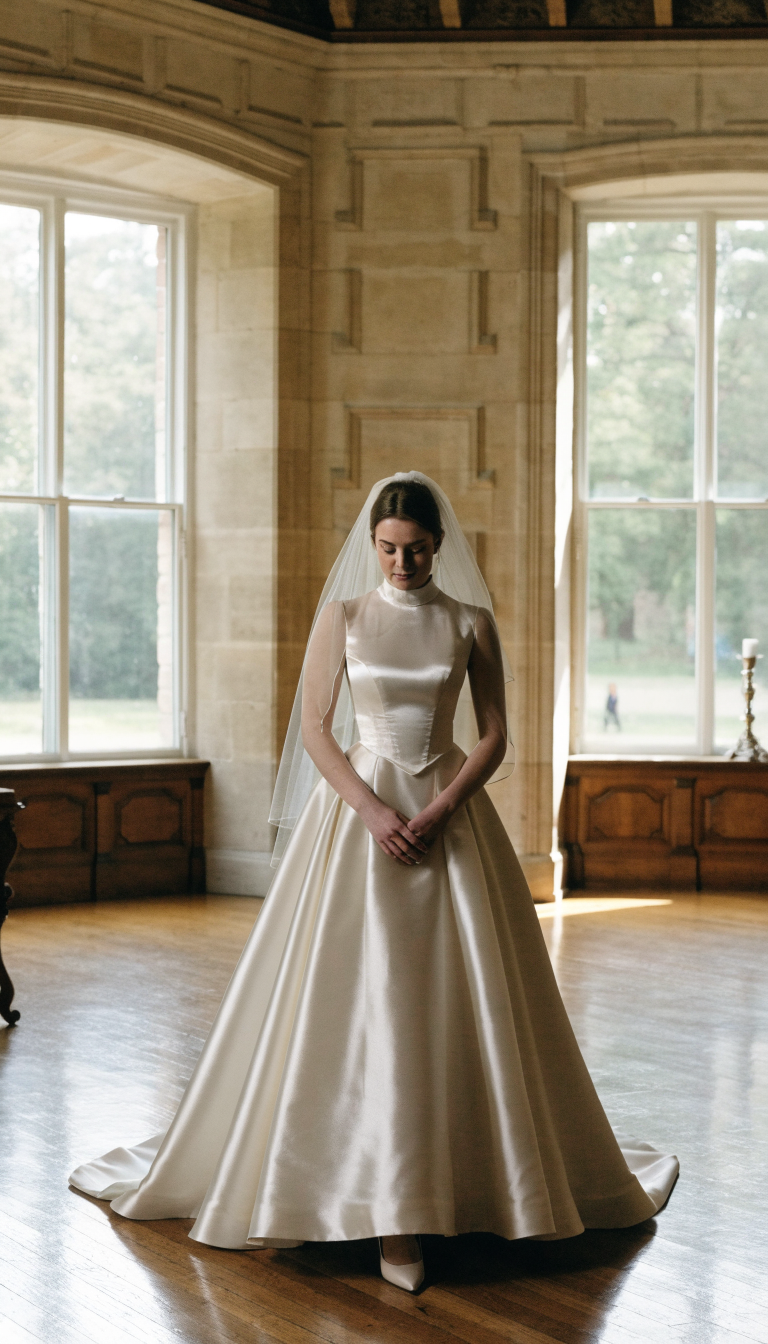
- Torso proportion check: The point should sit naturally; excessive length can interfere with sitting or car entry.
- Support construction: Light boning and a well-fitted waistband reduce the need for separate shapewear.
- Hemming timeline: A-line hems are straightforward, but confirm the basque point stays centered after any alterations.
5. Modest A-Line with Defined Waist
This practical variation keeps the Victorian emphasis on a shaped waist and full-enough skirt while reducing extreme volume. An A-line cut from a natural or slightly raised waist offers ease of movement and works across a range of venues. Pair it with long sleeves or a high neckline for added coverage, using a matte crepe or lightweight satin that breathes better than heavy silk. The result feels intentional and period-inspired without requiring specialized understructure.
- Climate suitability: Lighter fabric and moderate skirt volume suit outdoor or warmer ceremonies better than full ball gowns.
- All-day wearability: Easier to navigate stairs, restrooms, and seating than more structured silhouettes.
- Sample-size note: Off-the-rack or sample versions may need less extensive alteration than highly custom ball gowns.
Neckline and Bodice Construction
6. High Standing Collar
A high standing collar frames the face and provides the modest coverage typical of later Victorian styles. Often finished in lace or edged with a soft roll, the collar sits just under the chin or slightly lower for comfort. It pairs with a fitted bodice that uses light boning or built-in support so the neckline stays in place without constant adjustment. This detail works especially well for church or formal indoor ceremonies where coverage is preferred.
- Collar comfort test: Sit, turn your head, and check that the collar does not ride up or press against the throat.
- Fabric choice impact: Sheer lace over a solid lining keeps the high neck breathable while maintaining opacity.
- Accessory pairing: Minimal earrings or a simple brooch at the throat keep the focus on the collar rather than competing jewelry.
7. Off-the-Shoulder Bertha Style
The bertha is a wide, soft flounce of lace or fabric that rests across the upper chest and shoulders, echoing the neckline treatment of Queen Victoria’s own gown. It creates a romantic, slightly lowered line while still offering more coverage than a modern strapless dress. The flounce is usually attached to a structured bodice so it stays in place. Soft satin or silk with lace overlay gives the flounce gentle movement without stiffness.
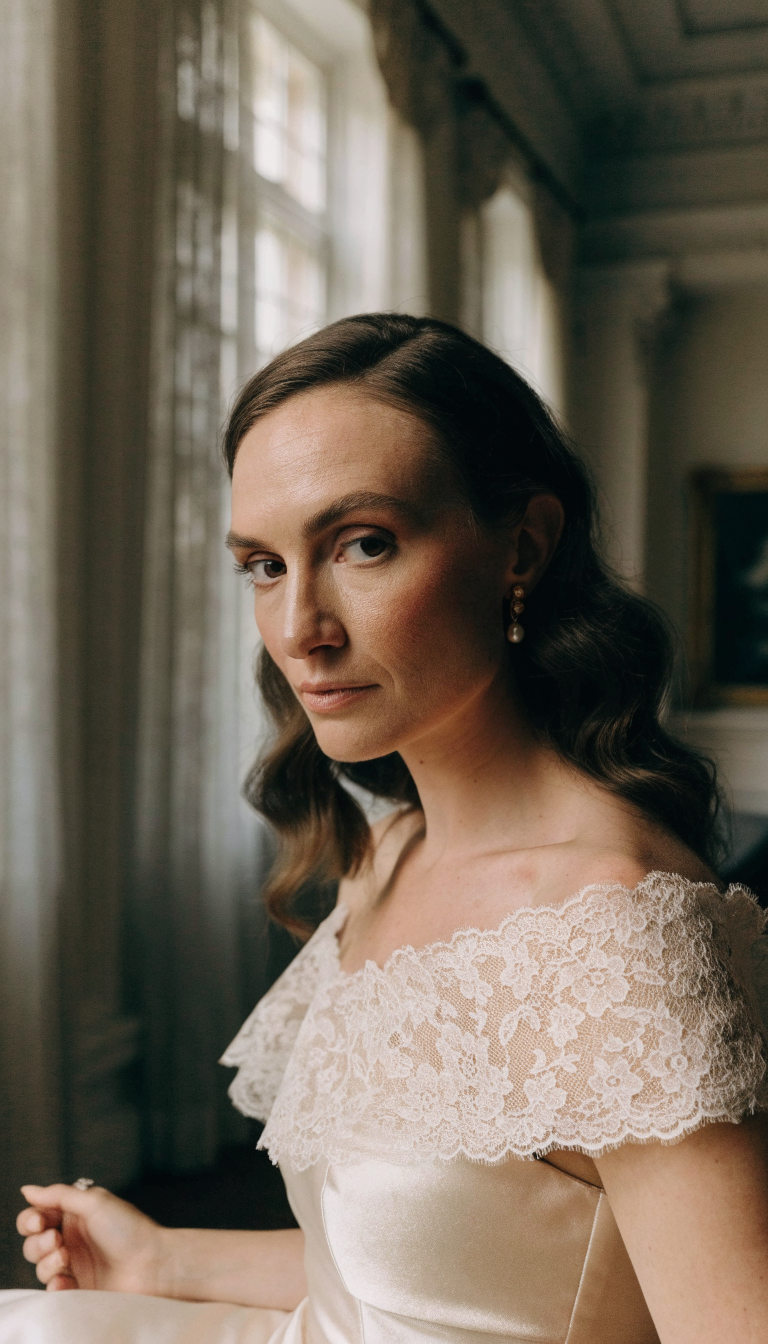
- Shoulder support: Built-in cups or light boning help the bodice stay secure when the neckline sits off the shoulders.
- Seasonal fit: The open shoulder line suits milder weather or indoor venues; add a light wrap if temperatures drop.
- Undergarment compatibility: Smooth, strapless shapewear works best so nothing shows under the flounce.
8. Square Neckline with Lace Trim
A square neckline creates clean horizontal lines across the chest and pairs naturally with Victorian lace detailing. The square can be modest or slightly lower depending on preference, and a lace edge or piped trim softens the geometry. This neckline works well with a fitted bodice and either long sleeves or a lace overlay. It photographs clearly and suits both historic interiors and garden settings.
- Bust and support: Confirm the square sits evenly; light boning or cups prevent gaping during movement.
- Lace placement: Delicate lace along the edge adds texture without overwhelming a simple satin bodice.
- Shoe and posture: The structured neckline encourages an upright posture that looks balanced with most heel heights.
9. Illusion High Neck Panel
An illusion panel uses sheer tulle or lace from the bust line up to a high neck, creating coverage while allowing skin tone to show through. This modern adaptation delivers the modest Victorian effect without a heavy solid collar. The panel is usually edged or appliquéd with lace so the transition looks intentional. It pairs with a fitted bodice and can be combined with long sleeves for a fully covered silhouette.
- Opacity check: Examine the panel in natural light to ensure undergarment lines do not show through the sheer fabric.
- Heat management: Sheer panels breathe better than solid high collars in warmer venues.
- Fitting adjustment: The panel can often be shortened or reshaped during alterations if the original height feels restrictive.
10. Fitted Corset-Style Bodice
A fitted bodice with visible or internal boning creates the structured waist associated with Victorian dressmaking. Modern versions use flexible steel or synthetic boning rather than rigid historical materials, and many include built-in cups so separate bras are unnecessary. The bodice can close with covered buttons, a lace-up back, or a hidden zipper. When paired with a full or A-line skirt, the contrast between the shaped torso and the released skirt remains clear.
- Boning comfort: Test sitting and reaching; flexible boning should support without digging when you move.
- Closure preference: Button backs add period character but take longer to fasten; discuss zipper options if speed matters.
- Alteration focus: Bodice seams and boning channels are the areas most often adjusted for a custom fit.
Sleeve Variations
11. Leg-of-Mutton Volume Sleeves
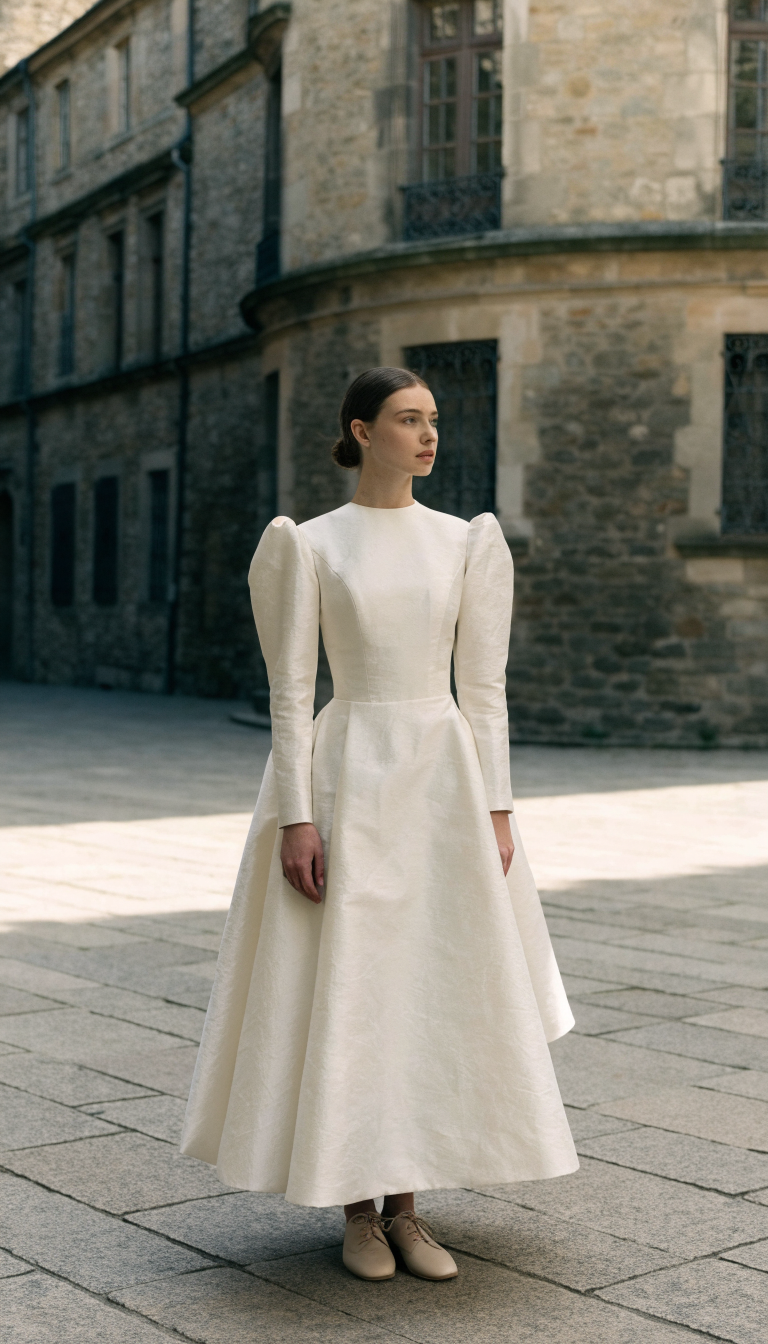
Leg-of-mutton sleeves are full at the shoulder and upper arm before tapering to a fitted forearm, a shape that became popular in the 1890s. The volume balances a fitted waist and adds presence without requiring an extremely full skirt. Soft silk, crepe, or lightweight satin keeps the puff from looking stiff. This sleeve style works well with high or square necklines and reads as distinctly Victorian from a distance.
- Shoulder balance: The volume sits best when the bodice is structured so the sleeve does not pull the neckline.
- Arm movement: Raise and lower your arms in the fitting room to confirm the taper does not restrict the elbow.
- Fabric weight: Lighter textiles prevent the sleeves from feeling heavy during a long ceremony or reception.
12. Long Sheer Lace Sleeves
Long sleeves made from floral or Chantilly-style lace provide full arm coverage while remaining light. The lace is usually lined or underlaid only where needed for modesty, so the sleeves stay breathable. They pair naturally with high necklines or illusion panels and add texture without bulk. This choice suits both formal indoor ceremonies and milder outdoor settings.
- Lace quality check: Look for soft, flexible lace that does not scratch or feel stiff against the skin.
- Undergarment lines: A nude lining or careful placement of support keeps the sheer sleeves looking smooth.
- Seasonal comfort: Sheer lace works in spring or fall; heavier lace may feel warmer in summer.
13. Fitted Buttoned Sleeves
Fitted long sleeves finished with a row of small covered buttons along the forearm or cuff offer a tailored, period-inspired detail. The buttons can be functional or decorative and sit neatly against the wrist. This sleeve style pairs with structured satin or crepe bodices and keeps the overall silhouette clean. It is especially practical for cooler weather or more formal dress codes.
- Button functionality: Decide whether the buttons need to open for ease of dressing or can remain decorative.
- Wrist fit: Check that the cuff sits comfortably over the hand without cutting into the wrist when you move.
- Alteration ease: Sleeve length and button placement are usually straightforward to adjust during fittings.
14. Elbow-Length Sleeves with Soft Flounce
Elbow-length sleeves finished with a gentle lace or fabric flounce echo the shorter sleeve treatments seen on some early Victorian gowns. The flounce adds softness at the arm without the volume of a full puff. This length works well with off-the-shoulder or square necklines and suits venues where full long sleeves might feel too warm. Soft satin or silk with a lace edge keeps the finish light.
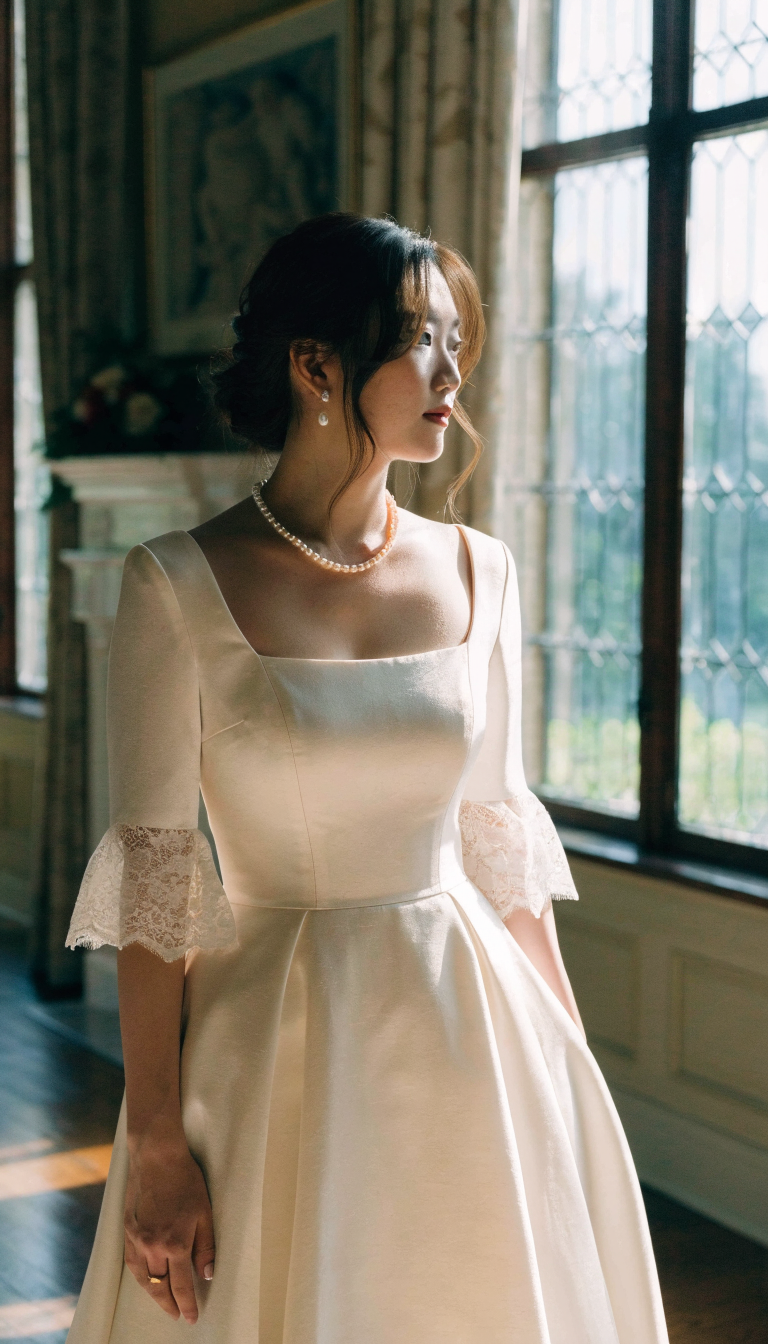
- Temperature balance: The open forearm helps in milder weather while still providing some coverage.
- Jewelry space: The flounce leaves room for a simple bracelet or watch if desired.
- Fitting adjustment: Sleeve length can often be shortened or the flounce reshaped with minimal disruption.
Fabrics, Trims, and Finishing Details
15. Silk Satin with Lace Flounce
Silk satin provides a smooth, slightly luminous surface that holds structured shapes cleanly, while a deep lace flounce along the neckline, sleeves, or hem adds the decorative layer associated with nineteenth-century bridal gowns. The combination photographs well and feels substantial without being heavy when the satin is of medium weight. This pairing suits formal indoor ceremonies and pairs naturally with both high and more open necklines.
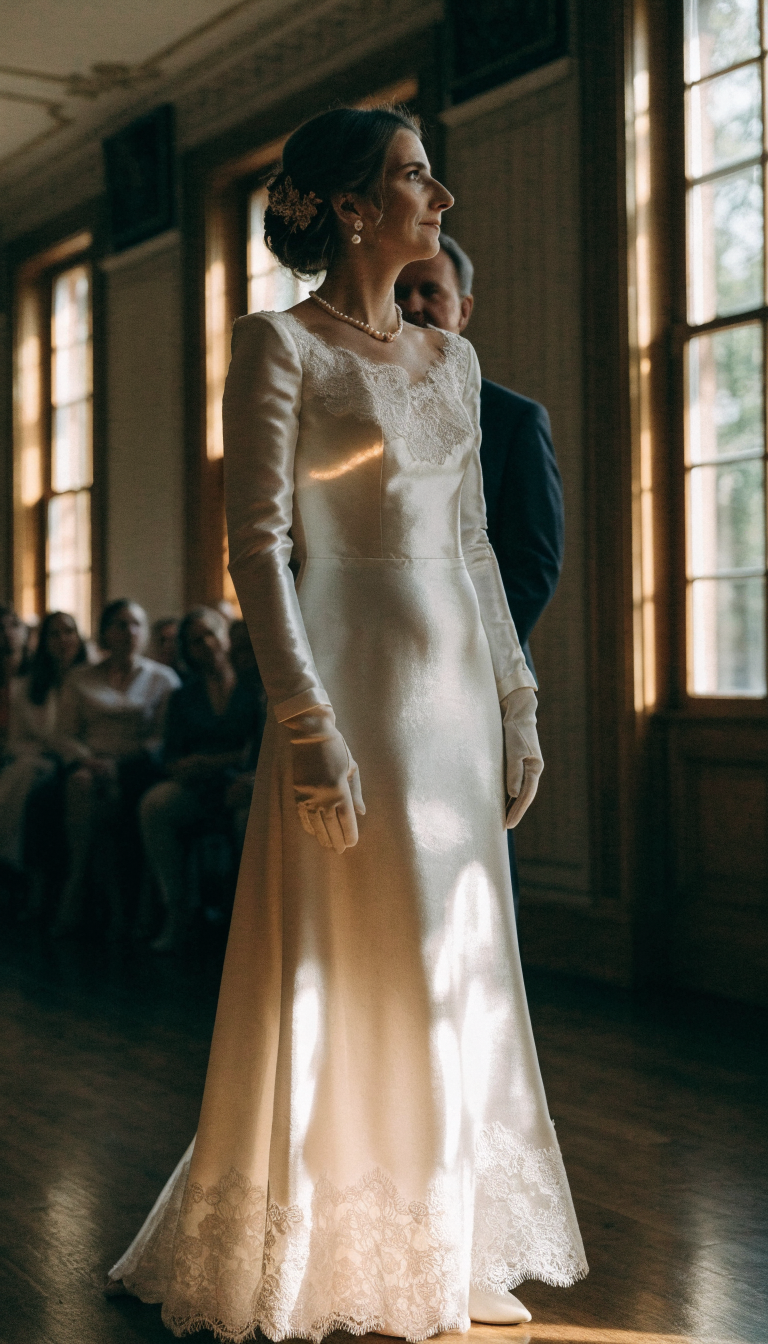
- Satin behavior: Medium-weight satin resists wrinkling better than very soft silk and holds pleats or gathers.
- Lace integration: The flounce should be securely attached so it does not shift during wear or steaming.
- Care consideration: Satin can mark easily; plan for careful handling and professional steaming before the day.
16. Intricate Lace Overlay on Solid Base
A full or partial lace overlay on a solid satin or crepe base creates depth and texture while maintaining opacity. Floral or scrolling lace patterns reference historical Honiton and other nineteenth-century laces without requiring an entirely lace gown. The overlay can cover the bodice, sleeves, and upper skirt, then transition to a simpler hem. This approach allows the gown to feel detailed yet still practical for movement.
- Layer weight: A lightweight lace over a supportive base prevents the gown from becoming too heavy.
- Transparency control: The solid underlayer ensures coverage even if the lace is open.
- Hemming note: Lace edges may need careful finishing or a clean satin hem underneath for a polished look.
17. Structured Taffeta for Crisp Shape
Taffeta offers a crisp hand and subtle rustle that helps full skirts and structured bodices hold their intended shape. It is less shiny than satin and works well for both the skirt and a fitted bodice. When used for a Victorian-inspired gown, taffeta pairs effectively with lace trim or a simpler neckline so the fabric’s texture remains visible. It is particularly useful when you want volume that stays defined throughout the day.
- Sound and movement: The fabric makes a soft sound when you walk; test this if a very quiet ceremony is planned.
- Heat retention: Taffeta can feel warmer than chiffon or crepe; consider a breathable lining.
- Wrinkle resistance: It holds creases less readily than soft silk, which can simplify travel and steaming.
18. Covered Button Back Closure
A row of covered buttons running down the center back is a classic Victorian finishing detail. The buttons can be small and closely spaced for a tailored look or slightly larger for more presence. This closure pairs with both high-neck and open-back styles and adds visual interest when the gown is seen from behind. Modern versions often include a hidden zipper underneath so the buttons are primarily decorative and the gown is easier to fasten.
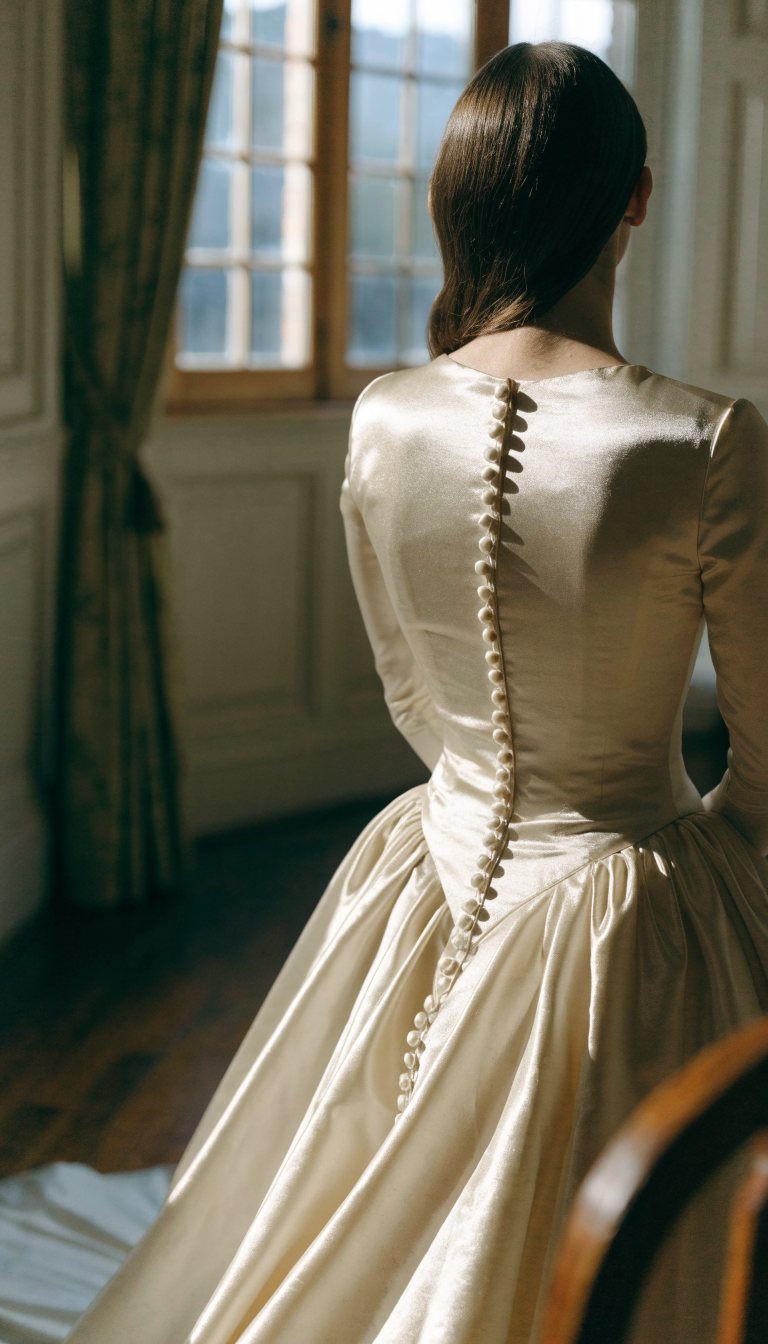
- Fastening time: Decorative buttons take longer to close; plan extra time or choose a zipper-assisted design.
- Back fit: Buttons look best when the bodice is smoothly fitted so the row lies flat.
- Alteration impact: Adding or removing buttons is possible but requires careful matching of fabric and spacing.
19. Cathedral or Sweeping Train with Practical Bustle
A longer train extends the Victorian silhouette into the processional while a well-designed bustle allows the fabric to be gathered for the reception. Modern bustles use buttons, hooks, or ties that can be fastened relatively quickly. The train works with both ball-gown and A-line silhouettes and is usually cut from the same fabric as the skirt so the transition looks continuous. This detail is most practical when the ceremony space can accommodate the length and attendants or a bustle plan is arranged in advance.
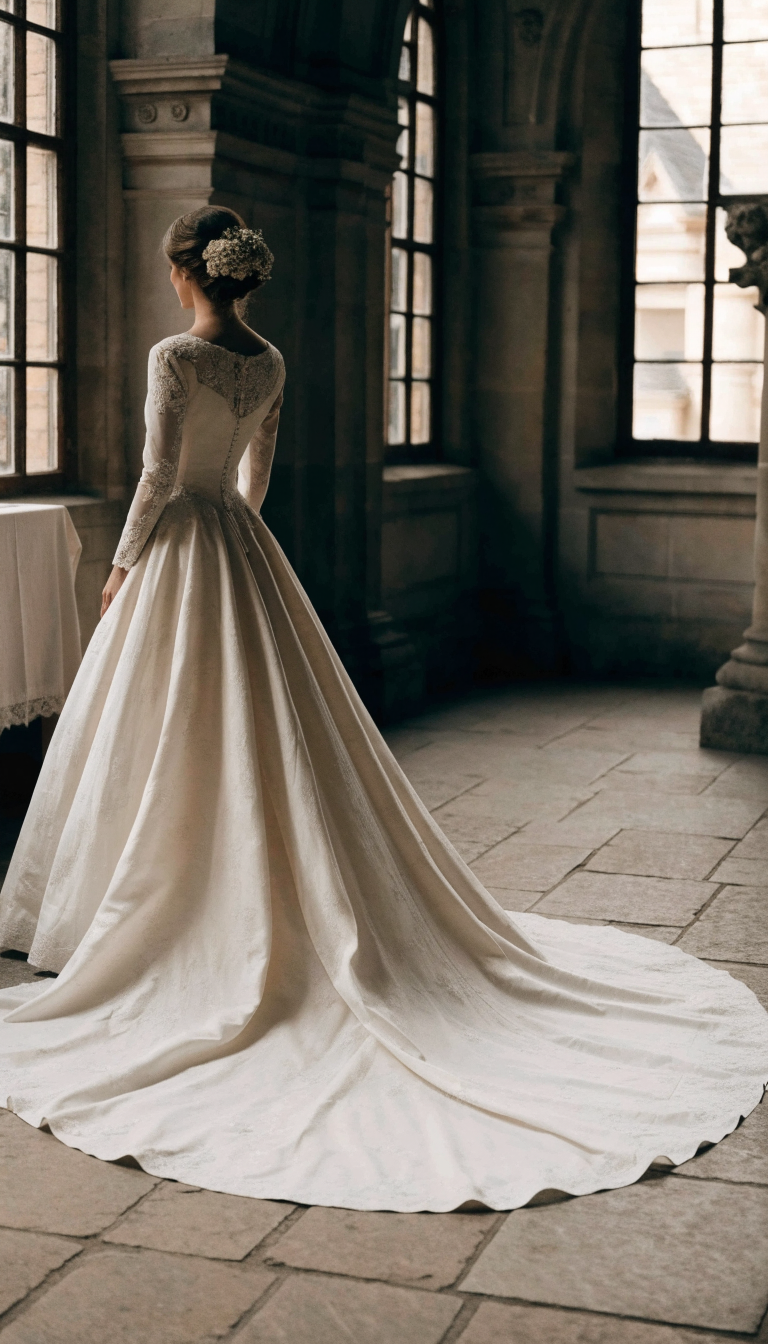
- Space requirement: Confirm aisle width and photography locations can handle the train length.
- Bustle style: Ask the salon to demonstrate the bustle and time how long it takes to secure.
- Hem and train protection: Consider a simple train loop or careful floor conditions to reduce soiling.
20. Lightweight Modern Interpretation
A lightweight interpretation keeps the visual cues of a Victorian gown—shaped bodice, lace detail, modest neckline—while using crepe, soft silk, or airy tulle for greater comfort. The skirt may be less full, the sleeves sheer, and the boning flexible so the gown moves more easily in warmer climates or longer receptions. This approach still photographs with period character but reduces the physical demands of heavier historical fabrics and structures.
- Climate advantage: Lighter fabrics and reduced layers suit outdoor or summer ceremonies better.
- Support balance: Flexible boning and built-in cups maintain shape without the restriction of rigid construction.
- Ordering note: Even lighter modern versions are typically made to order; allow several months for production and fittings.
Victorian-inspired gowns reward early decisions because custom construction and detailed lace or button work take time. Begin with a clear priority—coverage, a defined waist, or a specific sleeve shape—then test the chosen elements for sitting, arm movement, and heat during fittings. Bring reference images of the exact details you like so the salon can match proportions and fabric behavior to your plans.
FAQ
How far in advance should a Victorian-style wedding dress be ordered? Most bridal gowns, including those with custom lace, boning, or button details, are made to order and commonly require four to eight months or more. Starting earlier allows time for production plus multiple fittings and any bustle or train adjustments.
Can I wear a high-neck or long-sleeve Victorian dress in warm weather? Yes, if the fabric is lightweight and the construction includes breathable linings or sheer panels. Request samples or descriptions of the specific textiles and test the gown in conditions similar to your venue if possible.
Are alterations more complicated for these styles? Structured bodices, basque points, bustles, and precise sleeve or collar fits often need careful work. Expect several fittings; the salon can usually advise on the typical number once the gown style is chosen.
Do I need special undergarments? Many modern versions include built-in cups and light boning, so a separate bra may not be necessary. Smooth shapewear that does not create lines under sheer or fitted areas is usually the practical choice.