
A princess wedding dress pairs a fitted, structured bodice with a full skirt that flares from the waist, delivering the ball-gown volume long associated with formal entrances and sweeping photographs. The shape creates clear waist definition and dramatic movement, yet the skirt’s width also changes how the gown sits, navigates doorways, and behaves on a dance floor or in warm air. The styles below focus on fabric behavior, neckline construction, and practical wearability so the look can be matched to a church aisle, garden lawn, or ballroom without sacrificing comfort through a long day. Most bridal gowns are made to order, with multi-month lead times common as a general guideline, and alterations form a separate cost that typically requires several fittings. Approximate price ranges noted here vary by designer, fabric, region, and the extent of alterations.
1. Classic Tulle Ball Gown with Sweetheart Neckline
Layers of soft tulle over a structured bodice create the lightest version of princess volume, floating outward from a natural waist and catching light as the wearer walks. The sweetheart neckline frames the upper chest while built-in cups or light boning supply support, and the skirt’s airy construction photographs with soft motion rather than rigid structure. This combination works especially well when the ceremony calls for a clear visual presence down a long aisle yet the reception involves extended dancing. The tulle remains relatively cool compared with heavier weaves, though excessive layers can still add visual bulk in very small spaces.
- Aisle float check: Lift the front gently with each step so the skirt advances without catching underfoot on stone or carpet.
- Dance-floor ease: The lightweight layers twirl readily once a bustle lifts the train, and the skirt hides footwear completely.
- Fitting-room support test: Sit and stand while checking that the sweetheart edge stays secure without constant adjustment or visible gaping.
2. Structured Mikado Satin Princess Gown
Mikado, a dense satin-weave fabric with a soft lustre and firm body, holds a clean, architectural skirt that flares outward and maintains its shape through standing and turning. The bodice often uses precise seaming or light internal structure so the waist reads clearly before the volume begins, producing a polished royal silhouette that photographs with defined edges rather than soft blur. This fabric resists wrinkling better than many lighter options and suits formal indoor venues where crisp lines matter more than airy movement. The weight is carried at the waist, so balance depends on how the skirt is distributed.
- Formal venue match: The held shape reads clearly across a ballroom or estate hall and stays orderly in processional photos.
- Skirt memory note: Pleats and volume stay put without constant smoothing, reducing day-of fussing.
- Car-exit planning: Gather the front layers with both hands before sitting; a larger vehicle reduces snagging on door frames.
3. Lace Appliqué Princess Dress
Floral or botanical lace appliqués placed over tulle or organza add texture and depth while preserving the full skirt’s movement. The lace can cover only the bodice or cascade onto the skirt, creating visual interest that softens the silhouette without adding the stiffness of a fully lace gown. This construction suits garden or outdoor ceremonies where the raised details catch natural light, and the underlying layers keep the overall weight manageable. Alterations focus mainly on the bodice fit and hem, since the appliqués themselves rarely need major reworking.
- Outdoor light play: Raised lace edges create subtle shadow and highlight that read well in soft daylight.
- Weight distribution: Concentrating heavier appliqués higher on the bodice keeps the lower skirt lighter for walking.
- Bustle placement care: Confirm the seamstress can lift the train without trapping or distorting the lace motifs.
4. Off-the-Shoulder Princess Ball Gown
An off-the-shoulder neckline sits along the upper arms and frames the collarbones while the full skirt supplies the traditional princess volume below. The construction usually includes internal support so the neckline stays in place during walking and turning, and detachable straps or a modest overlay can be added if more coverage is preferred for the ceremony. This neckline pairs cleanly with both tulle and structured satin and works in cooler venues where bare shoulders feel appropriate. The open upper line also simplifies jewelry choices and keeps the focus on the skirt’s movement.
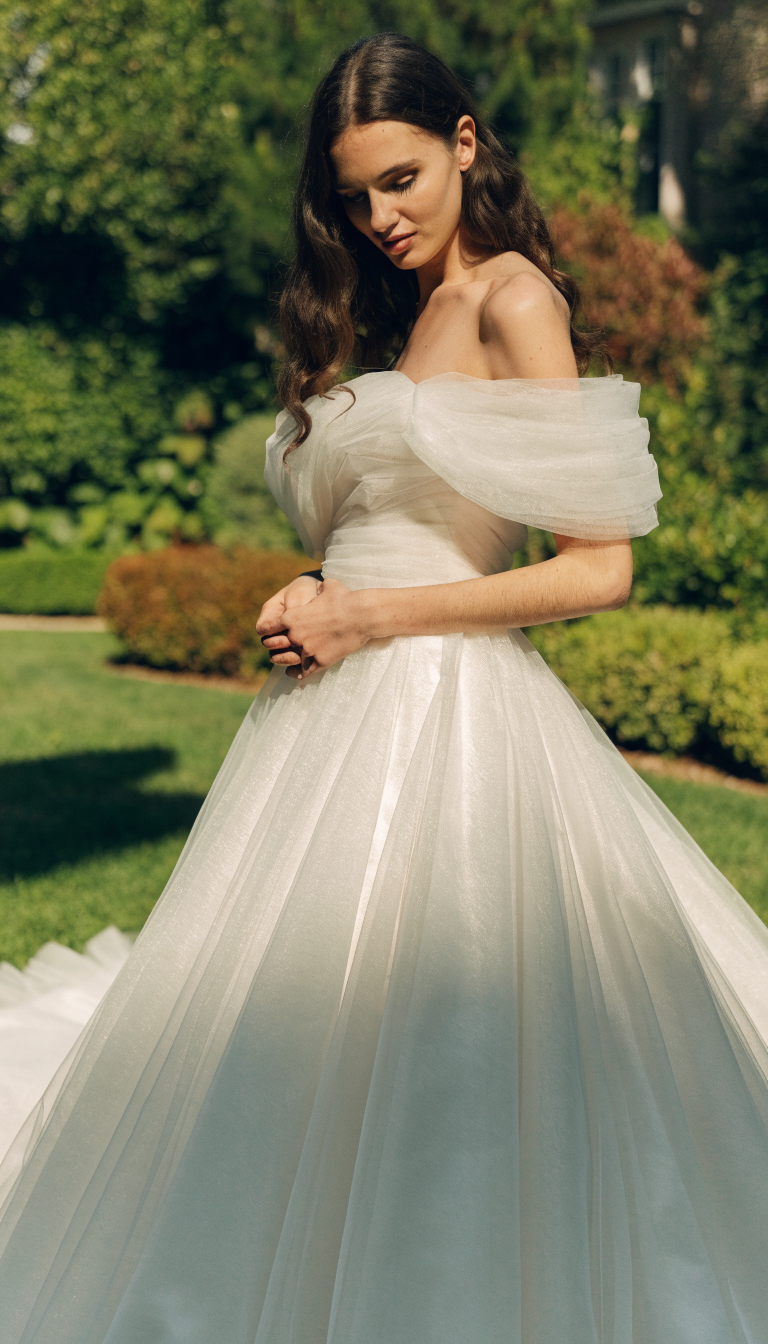
- Shoulder security check: Raise both arms overhead and hug a friend to confirm the edge does not slide or dig.
- Cooler-climate fit: The open neckline benefits from a wrap or detachable sleeves if temperatures drop after the ceremony.
- Jewelry pairing: A simple chain or studs often suffice because the neckline already creates a clean frame.
5. Long Sleeve Princess Wedding Dress
Fitted or gently flared long sleeves balance the full skirt by extending the visual line of the arms and adding coverage that suits church or cooler-season ceremonies. The sleeves may be opaque satin, sheer lace, or a combination, and the bodice remains structured so the waist definition is not lost under the added fabric. This style photographs with a formal, finished quality and can incorporate modest necklines without sacrificing the princess silhouette. Movement through the sleeves depends on the fabric stretch and how the armhole is finished.
- Arm-mobility trial: Cross the arms, reach forward, and turn the head to check that the sleeves neither bind nor gap at the shoulder.
- Church-aisle coverage: The long line reads as appropriately formal for traditional indoor ceremonies.
- Heat-layer note: Sheer or lightweight sleeve fabrics keep the added coverage from trapping warmth in milder weather.
6. Softer A-Line Princess Silhouette
An A-line skirt that flares gradually from the waist or just below offers princess volume without the extreme width of a classic ball gown. The reduced circumference makes sitting, walking narrow aisles, and moving through doorways easier while still creating a clear waist and flowing hem. This shape works across a range of body proportions and venue sizes, and it can be executed in tulle, organza, or a lighter satin. The train is often shorter, which simplifies the bustle and reduces the fabric that must be managed on a lawn or carpet.
- Narrow-space advantage: The gentler flare clears door frames and church pews more readily than a full ball-gown skirt.
- Sitting test result: Gather less fabric when sitting, so the skirt pools more naturally around the chair.
- Petite-frame balance: The controlled volume avoids overwhelming a shorter stature while still delivering presence.
7. Basque Waist Princess Gown
A basque waist dips into a V or soft U below the natural waist, lengthening the visual torso before the full skirt begins and creating a sculpted, corset-like transition. The bodice is typically boned or firmly structured so the pointed seam holds its shape, and the skirt volume starts from that lower line for a pronounced hourglass effect. This construction suits formal venues and photographs with clear geometric interest. The extra length through the torso can help balance proportions, though precise fitting is essential so the point sits smoothly against the body.
- Torso-length effect: The dipped seam draws the eye downward and can make the upper body appear longer in photos.
- Boning comfort check: Sit and lean forward to confirm the rigid point does not press uncomfortably at the center front.
- Alteration focus: The waist seam and boning placement usually need careful adjustment to keep the point centered and smooth.
8. Puff or Bishop Sleeve Princess Style
Puffed or bishop sleeves add soft volume at the shoulder or forearm while the skirt remains full, creating a balanced, storybook proportion. The sleeves can be made from the same tulle or organza as the skirt or from a contrasting lace, and they often detach so the look can shift from ceremony to reception. This detail works well in garden or indoor settings where the extra upper volume reads as intentional rather than excessive. The construction must allow the arm to bend and lift without the sleeve collapsing or pulling the neckline.
- Sleeve-detach option: Removable sleeves let the gown feel more open once the formal portion of the day ends.
- Arm-bend trial: Flex the elbow fully and raise the arm to check that the volume does not restrict movement or gap at the armhole.
- Proportion balance: The upper puff helps visually counter the width of a full skirt so neither element dominates.
9. Sparkle or Beaded Tulle Princess Gown
Fine glitter tulle or scattered beading across a full skirt catches light without the weight of heavy embroidery, producing a soft shimmer that moves with the fabric. The bodice may carry denser beading or appliqués for contrast, while the skirt layers stay relatively light so the gown does not become cumbersome. This finish suits evening or indoor receptions where artificial light enhances the sparkle, and it photographs with lively highlights. The embellishment is usually concentrated higher or spaced widely to avoid adding bulk at the hem.
- Light-catch movement: The sparkle reads most clearly when the wearer turns or walks under directional lighting.
- Weight placement: Keeping denser beading on the bodice prevents the skirt from dragging or feeling bottom-heavy.
- Steam caution: Delicate glitter or bead work often requires professional steaming rather than home ironing to avoid damage.
10. High Neck or Illusion Neckline Princess Dress
A high or illusion neckline adds coverage and formality while the full skirt supplies the princess volume below, creating a balanced silhouette suitable for modest preferences or traditional venues. The sheer panel can be plain tulle or lightly embroidered, and the bodice structure underneath provides support so the neckline does not rely solely on the fabric for security. This construction works across seasons and can incorporate long sleeves for additional coverage. The higher line also simplifies the need for extensive neck jewelry.
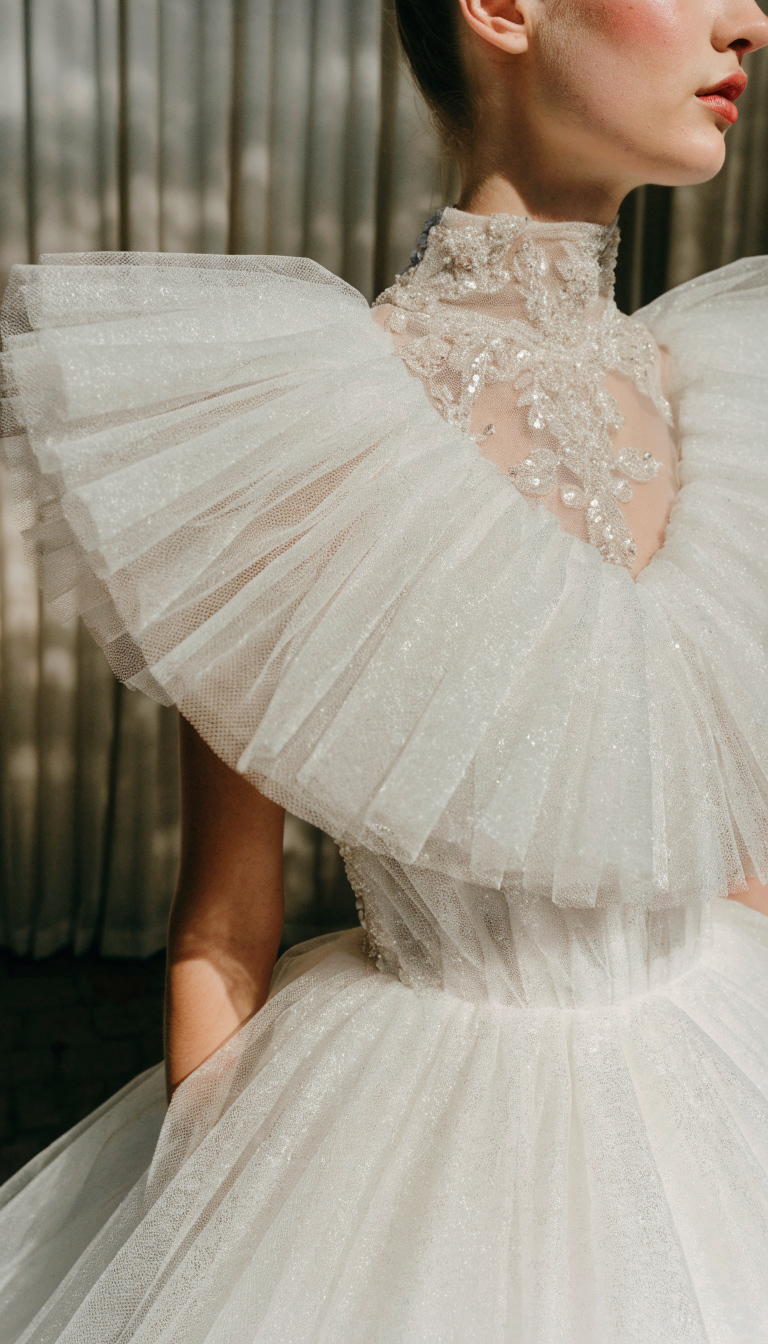
- Coverage preference: The raised neckline meets modest or cultural dress expectations without reducing the skirt’s drama.
- Support placement: Internal cups or boning keep the illusion panel from shifting during movement.
- Jewelry restraint: A simple earring or bracelet often completes the look because the neckline already provides a finished frame.
11. Detachable Sleeves on a Princess Gown
Detachable sleeves—whether long lace, sheer bishop, or short puff—allow one gown to shift between a covered ceremony look and a more open reception style. The base dress remains a classic princess silhouette with a fitted bodice and full skirt, and the sleeves attach at the shoulder or armhole with discreet fasteners. This option suits weddings that move from a formal indoor space to a warmer outdoor or evening setting. The sleeves must be tried on with the gown so the attachment points sit cleanly and do not alter the bodice fit.
- Ceremony-to-reception shift: Removing the sleeves after photos creates a lighter upper line without changing the skirt.
- Attachment security: Confirm the fasteners hold through a full range of arm movement and do not leave visible gaps.
- Storage planning: The sleeves need a protective bag or hanger so they remain wrinkle-free until needed.
12. Lightweight Organza Princess Dress for Warmer Venues
Crisp yet airy organza layers create structured volume that still allows more airflow than dense satin or heavily layered tulle. The fabric holds a clean skirt shape while remaining relatively cool, making it practical for outdoor or destination ceremonies where heat is a factor. The bodice can be lined or supported with light boning so the waist definition stays clear, and the overall weight is lower than many traditional ball gowns. Organza can show undergarment lines if not properly lined, so careful fitting and fabric choice underneath matter.
- Heat-airflow advantage: The open weave moves air through the skirt more readily than solid satin or thick tulle stacks.
- Lining necessity: A smooth, breathable lining prevents the organza from clinging or revealing lines during movement.
- Wind consideration: The lighter layers can lift in strong breeze, so a secure hem or light weight at the edges helps on open lawns.
A short comparison of three common approaches can help narrow the field before appointments:
| Style focus | Best venue match | Heat comfort | Alteration complexity |
|---|---|---|---|
| Tulle ball gown | Formal indoor or garden | Higher (light layers) | Moderate (bustle, hem) |
| Mikado satin | Ballroom or estate | Lower (structured weight) | Moderate (shape holding) |
| A-line princess | Smaller spaces or mixed | Higher (reduced volume) | Lower (simpler hem) |
Bring the shoes and undergarments planned for the day to every fitting, and test sitting, walking, and raising the arms in each gown under consideration. Starting the search several months ahead leaves room for made-to-order lead times and the multiple fittings most full-skirt gowns require.
FAQ
How far in advance should a princess wedding dress be ordered? Most full-skirt bridal gowns are made to order, so allowing several months between order and wedding is a common guideline. This window covers production plus the fittings needed to set the hem, adjust the bodice, and install a bustle.
Is a sample dress a practical option for this silhouette? A sample can work if the size is close and the fabric condition is good, often at a lower price. Check that the layers and structure have not been stretched or soiled from repeated try-ons, and budget for the same alteration work as a new gown.
How many fittings are typical for a ball-gown style? Two to three fittings over several weeks are usual so the hem, waist, and bustle can be refined after the initial adjustments. Bring the planned shoes each time so the length is set accurately.
Does the full skirt make dancing or using the restroom difficult? A well-fitted bustle lifts the train and excess fabric for the reception, and the volume can actually hide movement on the dance floor. Practice gathering the skirt for sitting and restroom use during a fitting so the motion becomes familiar.