
A gothic wedding dress works when the dark palette, texture, and structure feel intentional rather than costume-like. The right choice balances drama for photos with real movement for the ceremony and reception—whether that means layered black lace over charcoal tulle for depth, a velvet corset that photographs richly in candlelight, or a lighter chiffon option that won’t overheat outdoors. This list organizes twelve distinct styles by silhouette, fabric behavior, and venue fit so you can shortlist quickly. Prices vary widely by designer, fabric, region, and whether the gown is sample, made-to-order, or custom; alterations are almost always a separate cost.
1. Black Lace Ball Gown with Layered Tulle
A full black lace ball gown creates volume without feeling heavy when floral or botanical lace sits over mixed black and charcoal tulle layers. The lace adds visible texture that prevents the skirt from reading as a solid black shape in photos, while the tulle keeps the weight manageable. It suits indoor evening ceremonies or autumn garden settings where candlelight or late-day light catches the openwork. Most versions include a modest train that can be bustled for the reception.
Photo depth check: Photograph the gown near a window and in a dimmer corner to confirm the lace layers hold detail. Dance-floor mobility: The layered skirt needs a well-fitted bustle so the hem stays clear when you sit or move. Alteration note: Lace motif matching at the hem adds time and cost; budget extra fittings if the train is long.
2. Burgundy Velvet Corset A-Line
Deep burgundy or oxblood velvet on a corseted bodice with a smoother A-line skirt delivers rich color that absorbs light rather than reflecting it harshly. The pile of velvet feels plush and looks especially strong in stone or wood venues with low lighting. Because velvet can crush where you sit and retains heat, it is best reserved for cooler months or climate-controlled spaces. A lace-up or corset back allows adjustment after dinner.
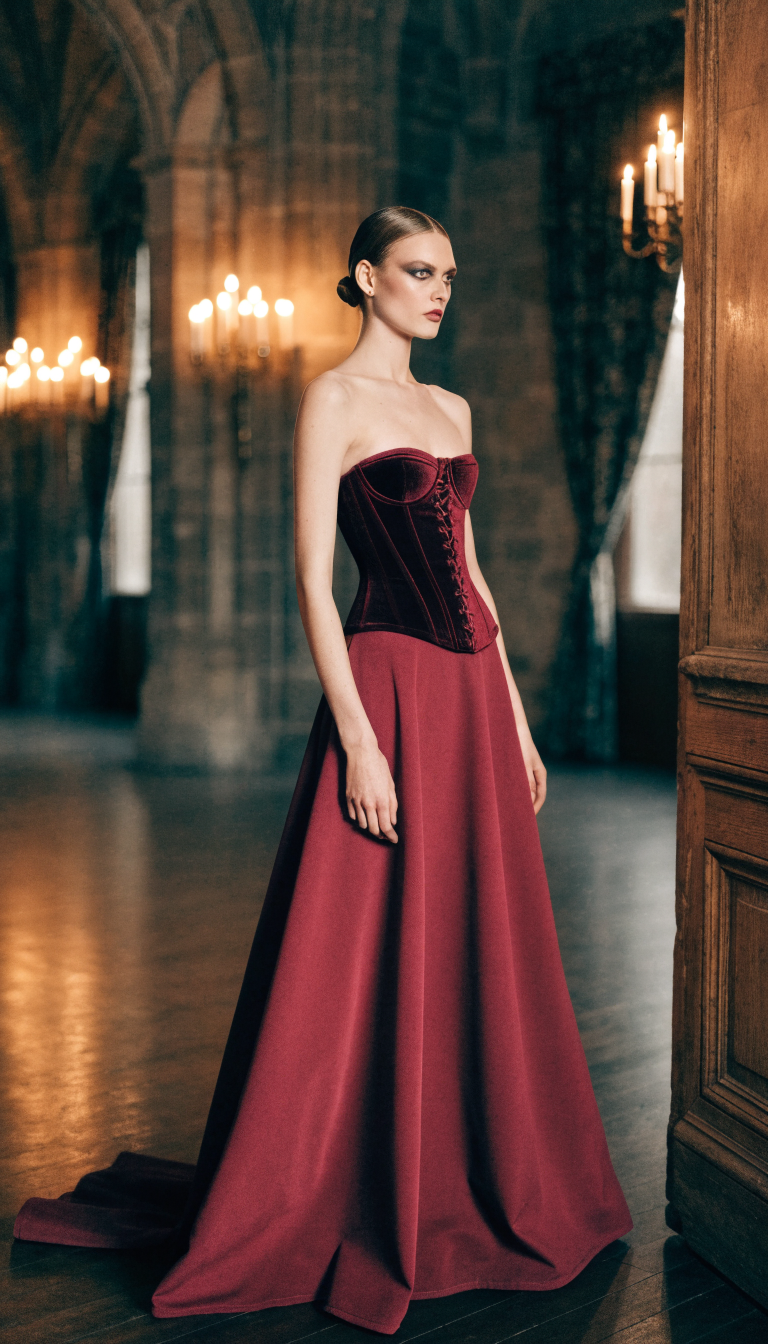
Season and venue match: Ideal for autumn or winter ceremonies in historic halls or candlelit rooms. Sitting and heat reality: Velvet marks easily; steam from the inside after wear and avoid tight seating for long periods. Structure support: Built-in boning and cups reduce the need for a separate bra in most cases.
3. Embroidered Black Tulle Mermaid
A mermaid silhouette in black tulle with scattered floral embroidery or appliqués hugs through the hips then flares at or below the knee. The embroidery adds visual interest so the fitted shape doesn’t disappear in low light, and the tulle keeps the flare lighter than solid satin. This style photographs well in both indoor formal settings and outdoor evening events. The knee flare makes walking and dancing more practical than a fully fitted sheath.
Movement practicality: Test the flare point while taking steps and sitting; a higher flare eases restroom and car access. Fabric texture: Look for embroidery that sits on top of the tulle rather than dense solid panels that add weight. Fitting priority: The hip and knee fit is critical; even small adjustments here affect how the skirt opens.
4. High-Neck Victorian Lace Column
A column or sheath shape with a high lace neckline, long or three-quarter sleeves, and covered buttons down the back creates a formal, historical mood without full volume. The lace can be pure black or black over a lighter lining so skin tone shows through subtly. It works cleanly in church or historic venues where a modest neckline is preferred, and the streamlined skirt is easier to manage than a ball gown. Pair it with a shorter veil or none at all to keep the high collar visible.
Venue formality: Suits indoor ceremonies with architectural detail or cooler outdoor settings. Undergarment fit: The high neck and sleeves usually eliminate the need for a strapless bra; a smooth slip works underneath. Button and train care: Covered buttons take longer to fasten; a shorter train or no train simplifies the day.
5. Crimson and Black Ombre Layered Gown
Layered tulle that shifts from black or deep plum at the bodice into crimson or smoky red at the hem creates soft color movement without hard lines. The gradient works best across multiple tulle layers so the fade looks intentional rather than printed. It reads as dramatic yet bridal in evening light and pairs well with dark florals. The lightweight construction is more comfortable than solid velvet for longer receptions.
Color in photos: The lighter hem edge helps the dress retain shape and detail even when backlit. Weight and breathability: Multiple tulle layers stay cooler than dense fabrics; still test in the expected temperature. Custom timeline: Ombre dyeing or layered construction often requires made-to-order lead times of several months.
6. Minimalist Black Satin Sheath
A simple black satin or charmeuse sheath or column relies on clean lines and the fabric’s subtle sheen rather than heavy decoration. It photographs as polished and modern in formal indoor spaces and is easier to sit and dance in than structured volume. Because pure black satin can lose detail in dim light, a light texture, subtle beading, or a contrasting underlayer helps. This style is often available closer to the wedding if you find a sample or off-the-rack option.
Lighting sensitivity: Satin reflects light; check how it looks under both bright and candle-level illumination. Comfort while moving: A side slit or moderate stretch in the fabric makes walking and dancing more fluid. Budget-friendly path: Samples and ready-to-wear versions frequently fall lower than custom lace or velvet gowns.
7. Long-Sleeve Black Chiffon with High Slit
Fluid black chiffon or georgette with long sleeves and a thigh or higher slit offers movement and airflow while still reading as gothic. The lightweight fabric drapes softly and can be lined selectively so the slit area stays secure. It suits outdoor or destination ceremonies in mild weather and works for brides who want sleeves without the bulk of velvet. A built-in lining or separate slip keeps the silhouette clean.
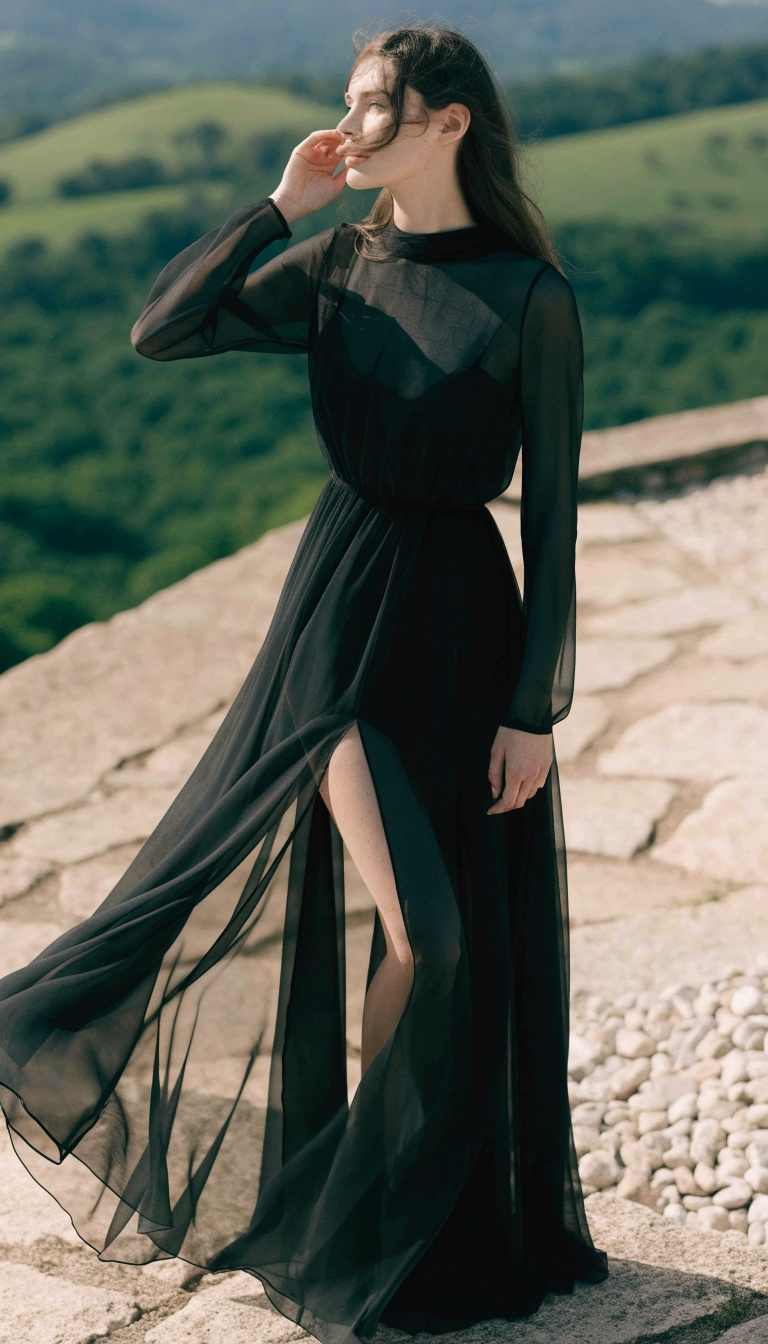
Heat and airflow: Chiffon breathes better than satin or velvet; still confirm the lining doesn’t trap heat. Slit security test: Walk, sit, and step into a car during the fitting to confirm the slit stays in place. Undergarment pairing: A matching slip or built-in shorts prevent show-through at the slit.
8. Ivory or Antique White with Black Lace Accents
An ivory or soft white base with black lace embroidery, appliqués, or a black lace overlay delivers gothic mood while remaining closer to traditional bridal color. The contrast creates detail that photographs clearly, and the lighter ground color often satisfies family preferences. It works across seasons when the base fabric is chosen for climate—chiffon or tulle for warmth, satin for cooler formal rooms. Detachable black elements can be removed after the ceremony if desired.
Family and venue flexibility: The lighter base softens the gothic statement for mixed guest lists or more formal settings. Texture balance: Black lace over ivory reads as intentional rather than costume when the motifs are refined. Alteration complexity: Matching black lace to the hem or train requires careful motif placement.
9. Structured Mikado Corset Ball Gown
Mikado, a denser satin-like fabric with low sheen and natural body, holds a sculpted corset bodice and full skirt without excessive boning or understructure. In black or deep charcoal it creates clean architectural lines that photograph strongly against stone or wood. The fabric is heavier than tulle, so it suits cooler weather or indoor venues with controlled temperature. A modest train is common and can be bustled.
Shape retention: Mikado keeps its form through the day better than lighter satins; steaming is usually straightforward. Weight consideration: The structured skirt is substantial; confirm comfort for standing and walking distances at the venue. Formal indoor fit: Best in ballrooms, historic buildings, or evening ceremonies where volume is welcome.
10. Gown with Detachable Cape or Sleeves
A base gown—often a corset or A-line—in black lace or satin paired with a removable velvet cape, tulle overskirt, or long lace sleeves lets you adjust drama between ceremony and reception. The detachable piece adds volume or coverage for the processional and can come off for dancing or warmer indoor moments. This approach is useful when the ceremony and reception have different temperatures or formality levels. Most detachable elements fasten with hooks, buttons, or a simple sash.
Two-look practicality: Remove the cape or sleeves after photos or dinner without changing the entire dress. Attachment security: Test how the piece sits and moves so it doesn’t shift during the aisle walk. Ordering note: Detachable components may add lead time if made to match the main gown.
11. Tea-Length Black Lace for Easy Movement
A tea-length or midi black lace dress shortens the hem so it clears grass, cobblestones, or dance floors more easily than a full gown. The lace still provides gothic texture, and a fitted bodice with a gently flared skirt maintains bridal presence. It suits outdoor garden, forest, or courthouse ceremonies where a long train would be impractical. Pairing with interesting shoes becomes part of the look because the hem is higher.
Venue practicality: Ideal when the ceremony involves uneven ground, steps, or a shorter processional. Rewear potential: The shorter length can transition to other formal events more readily than a full gown. Support and shoes: Confirm the bodice provides enough structure; shoe height affects the final hem line.
12. Brocade or Jacquard Renaissance-Inspired Gown
A structured brocade or jacquard fabric in black, deep red, or charcoal carries a subtle pattern that reads as historical without requiring extensive lace. The denser weave holds a fitted bodice and fuller skirt while adding quiet texture that shows in photographs. It works well in cooler months and formal indoor or castle-like venues. Because the fabric is less sheer than lace or tulle, lining choices are simpler and undergarment lines are easier to manage.
Pattern scale: Larger motifs can overwhelm; smaller or tonal patterns keep the look refined. Season weight: The fabric has body and retains warmth, making it better for autumn or winter. Customization path: Many makers will adjust neckline, sleeves, or train length on a base pattern.
Start by identifying your venue’s lighting, temperature, and ground surface, then try two or three silhouettes that match those conditions. Bring the shoes and undergarments you plan to wear, and photograph each option in both bright and dimmer light. Most bridal gowns are made to order, so beginning fittings several months ahead leaves time for adjustments and any custom elements such as detachable sleeves or color work. Alterations typically require multiple appointments and are budgeted separately from the gown itself.
FAQ
How far in advance should I order a gothic wedding dress? Most made-to-order or custom gowns need several months of production time, especially if they involve specialty fabrics, embroidery, or color work. Starting the search and fittings six to nine months before the date is a common practical window.
Will a black gown photograph well? Yes, when the fabric has texture—lace, embroidery, layered tulle, or a subtle sheen—rather than a single solid matte panel. Testing photos in the actual lighting conditions of your venue helps confirm the detail remains visible.
Are alterations more complicated on dark fabrics? They can be, particularly when matching lace motifs or working with velvet that marks easily. Clear communication with the seamstress about the fabric type and any train or bustle needs keeps the process smoother.
Can I wear a gothic dress in warm weather? Lighter options such as chiffon, single-layer tulle, or lace over a breathable lining are more comfortable than velvet or heavy mikado. Confirm the specific construction and lining during fittings if outdoor heat is expected.