
A forest wedding dress needs to feel at home on uneven paths, under filtered light, and in cooler shade while still looking bridal. The right choice photographs cleanly against bark and ferns, moves without snagging on roots, and stays comfortable for hours outdoors. This list groups 27 forest wedding dress options by silhouette, fabric, neckline and sleeve choices, botanical details, and practical additions so you can match the gown to both the venue and a full day of walking, sitting, and dancing. Approximate price tiers appear only where they help narrow options; final costs depend on designer, fabric, region, and alterations.
Silhouettes Suited to Woodland Paths
1. Soft A-Line with Botanical Lace
An A-line skirt falls from a defined waist and flares gently, so the hem clears most roots and grass without dragging. Botanical lace—vines or small leaves rather than dense formal motifs—reads clearly in dappled light and keeps the dress from looking heavy against the trees. Soft chiffon or a light tulle underlayer lets the skirt move in a light breeze while the fitted bodice supplies structure for photos. Most brides find this silhouette easy to walk in once the hem is set for the actual ground.
Path clearance: Test the hem on a slight slope in the fitting so it doesn’t catch on uneven terrain. Lace density: Choose open, leafy patterns so the dress doesn’t look solid or stiff under the canopy. Alteration note: A simple hem is usually straightforward; allow time for a bustle if the train is longer than fingertip.
2. Empire Waist for Easy Movement
The high waist sits just under the bust, so the fabric falls freely from there and never binds at the natural waist while you walk or sit on a low chair. Fluid chiffon or georgette drapes without weight, which helps on warm afternoons that still feel cool in deep shade. The silhouette photographs softly against vertical tree trunks and works well if you expect a long ceremony or photos that involve walking between sites. Many people prefer the lack of a defined waistband when the day includes uneven ground.
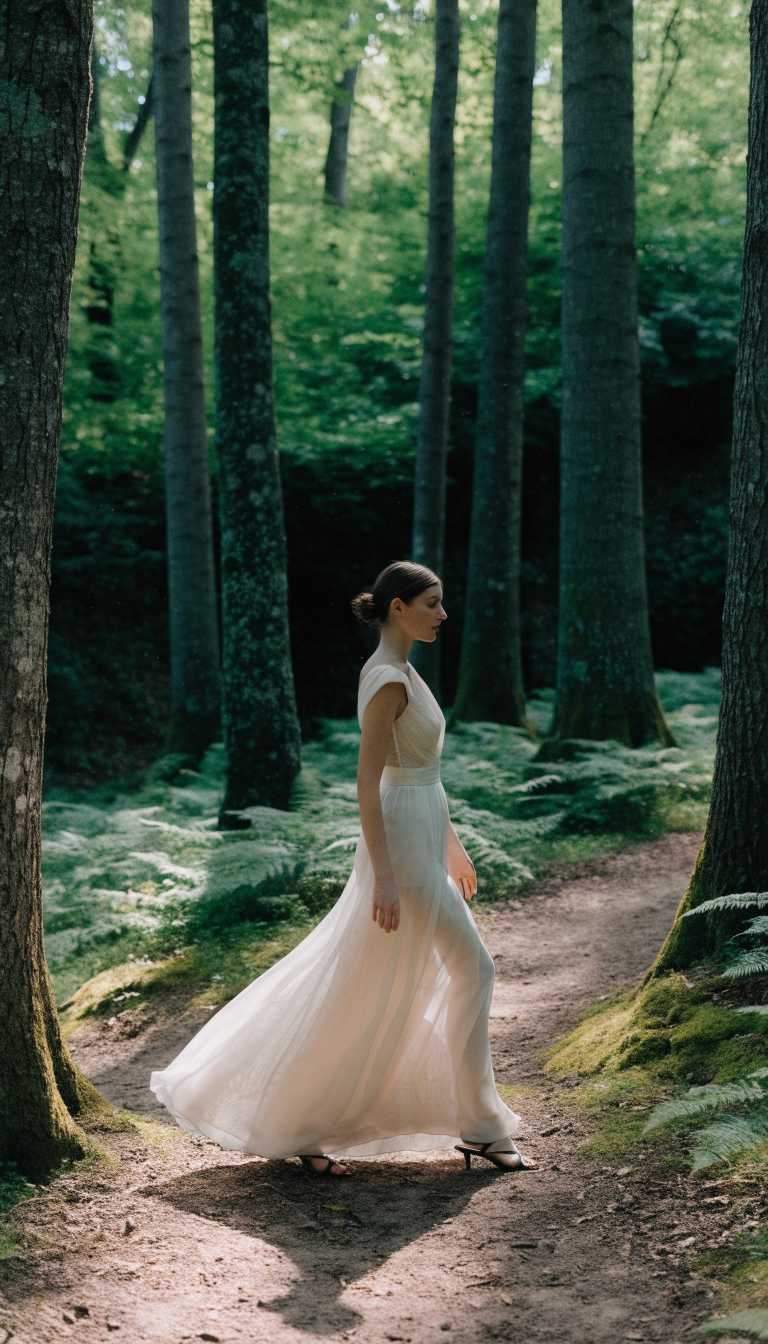
Sitting comfort: The high seam stays in place when you lower yourself onto a rustic bench or log. Fabric drape: Look for lightweight, non-static cloth so the skirt doesn’t cling in humidity. Support check: Confirm the bodice has enough structure or built-in support for the length of the ceremony.
3. Lightweight Sheath in Crepe
A sheath follows the body closely then falls straight, which keeps the hem narrow and less likely to snag on undergrowth. Matte crepe has a soft hand and minimal sheen, so it contrasts cleanly with rough bark without reflecting harsh light. The silhouette is practical for cooler forest mornings when you want coverage without bulk, and it photographs with clean lines against dense greenery. Order early if you need a made-to-order version, as bridal lead times commonly run several months.
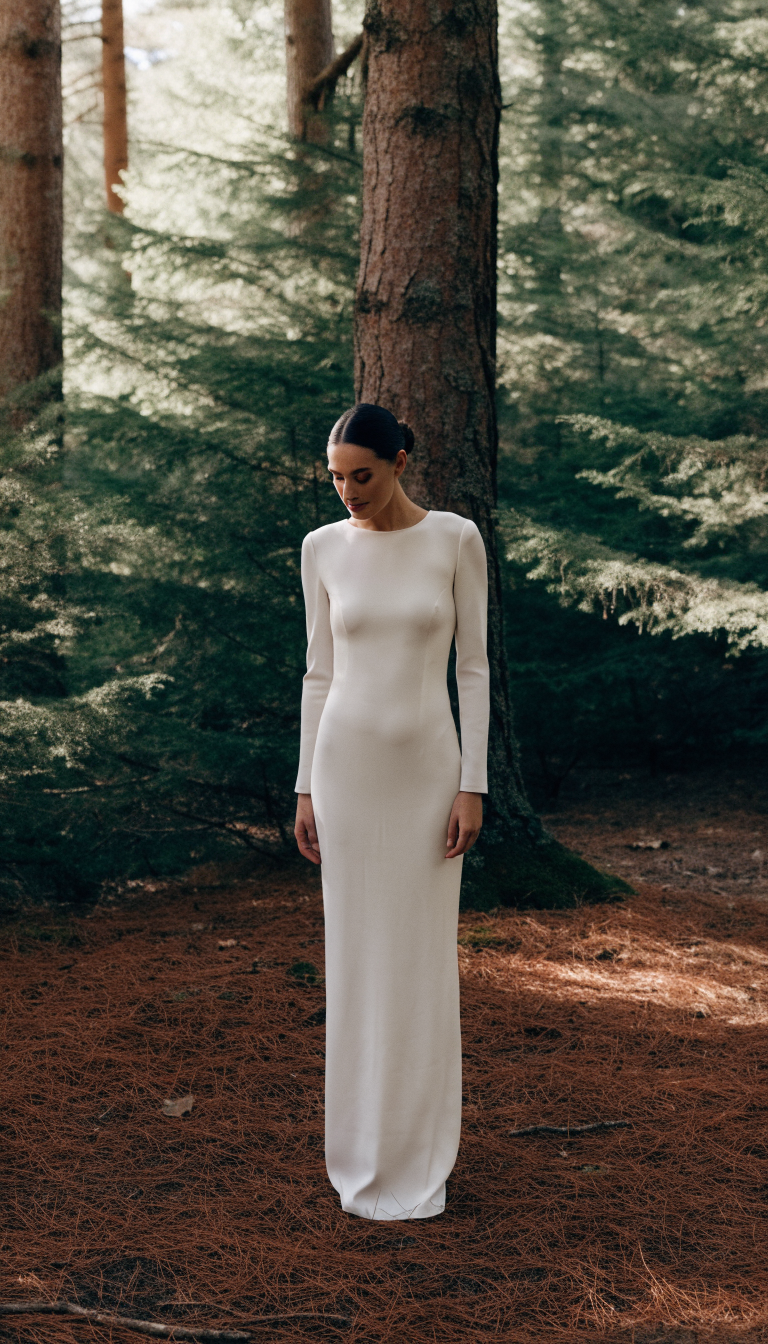
Ground contact: A shorter train or no train reduces the chance of picking up needles or mud. Crepe behavior: The fabric resists wrinkling better than chiffon yet still breathes. Fitting test: Walk and turn fully to confirm the hem clears the floor in your chosen shoes.
4. Airy Tulle Ball Gown with Soft Layers
Soft, multi-layer tulle creates volume that reads as romantic against tall trunks without the stiffness of heavily structured skirts. A fitted bodice balances the fullness so the dress doesn’t overwhelm a woodland clearing. The layers move in a breeze and photograph with gentle lift, yet they stay lighter than they look if the tulle is fine. Plan a bustle or shorter train so the volume doesn’t become a hazard on paths.
Volume control: Ask for soft rather than starched tulle so the skirt doesn’t fight the natural setting. Heat factor: Multiple layers can still feel warm once you leave the shade; test in similar temperatures. Bustle plan: Confirm the bustle points are secure before the final fitting so dancing stays simple.
5. Tea-Length for Practical Terrain
A tea-length hem ends mid-calf, which keeps the fabric clear of grass, leaves, and soft soil while still feeling intentional for a forest ceremony. Lightweight fabrics such as chiffon or soft lace over a lining let the skirt sway without weight. The length also makes it easier to manage in and out of a car or onto a rustic wooden floor later. Many people pair it with block heels or low boots that stay stable on natural ground.
Hem height: Measure in the shoes you will actually wear so the length stays consistent outdoors. Re-wear note: The shorter cut can work for other events if the fabric and neckline are versatile. Support pairing: A simple slip or built-in lining prevents transparency in bright patches of light.
6. Fit-and-Flare with a Manageable Train
The bodice and hips stay close, then the skirt flares from the knee, giving movement without a full ball-gown circumference. A fingertip or shorter train can be bustled quickly for photos that involve walking between trees. Crepe or a light satin blend holds the shape while remaining easier to walk in than heavy mikado. This option suits brides who want definition yet still need to navigate uneven ground.
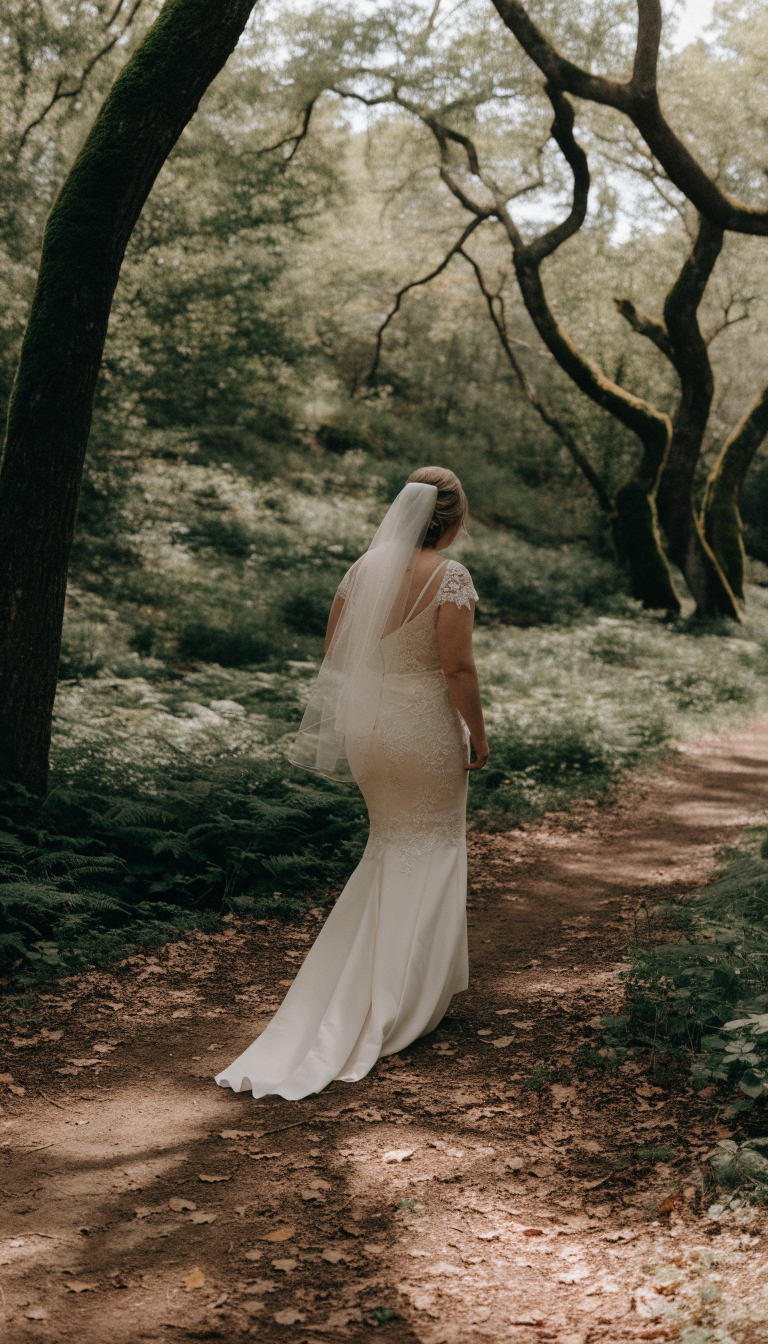
Flare placement: Check that the flare begins high enough to clear typical root height. Train length: Shorter trains collect less debris and are simpler to bustle between ceremony and reception. Alteration time: Expect at least two fittings for the hem and bustle on a made-to-order gown.
Fabrics That Complement the Canopy
7. Chiffon Overlay for Breath and Flow
Chiffon is light, slightly sheer, and moves with almost no effort, which suits a day spent mostly in shade with occasional sun. An overlay over a soft lining adds texture that catches dappled light without adding bulk. The fabric breathes well in warmer months and photographs with gentle folds against moss and ferns. It wrinkles more easily than crepe, so plan for light steaming on site if travel is involved.
Breeze response: The cloth lifts naturally in light wind, which looks intentional in outdoor photos. Layering choice: Pair with a nude or ivory lining so the overlay doesn’t read as too transparent. Care on site: Keep a travel steamer or steamer service in mind for long-distance arrivals.
8. Organza for Subtle Hold
Organza is crisp yet still light, so it holds a soft A-line or gentle flare without collapsing against the body. The slight sheen catches filtered light in a way matte fabrics do not, which helps the dress stay visible in deeper shade. It works well for cooler forest mornings when you want structure that does not feel heavy. Most versions need a lining for opacity and comfort.
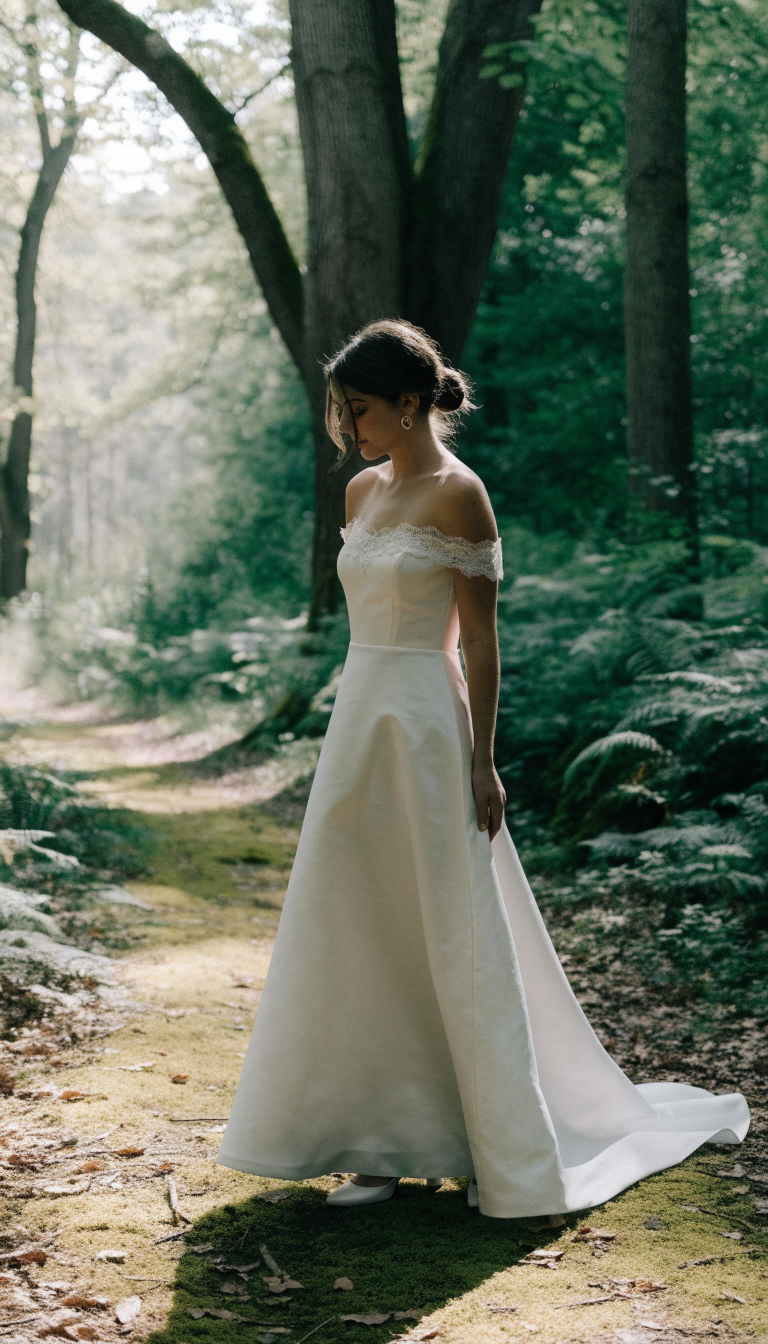
Shape retention: The fabric keeps its line even after sitting, which helps in longer ceremonies. Light interaction: The mild sheen prevents the dress from looking flat under green-filtered light. Undergarment note: A smooth slip reduces the chance of visible lines through the crisp weave.
9. Matte Crepe for Clean Contrast
Crepe has a soft, matte surface that stands out against textured bark and leaves without competing for attention. It drapes closely or flows depending on cut, and it resists wrinkling better than many lightweight options. The fabric feels substantial enough for cooler shade yet remains breathable for most of the day. It is a practical choice when you want modern lines in a natural setting.
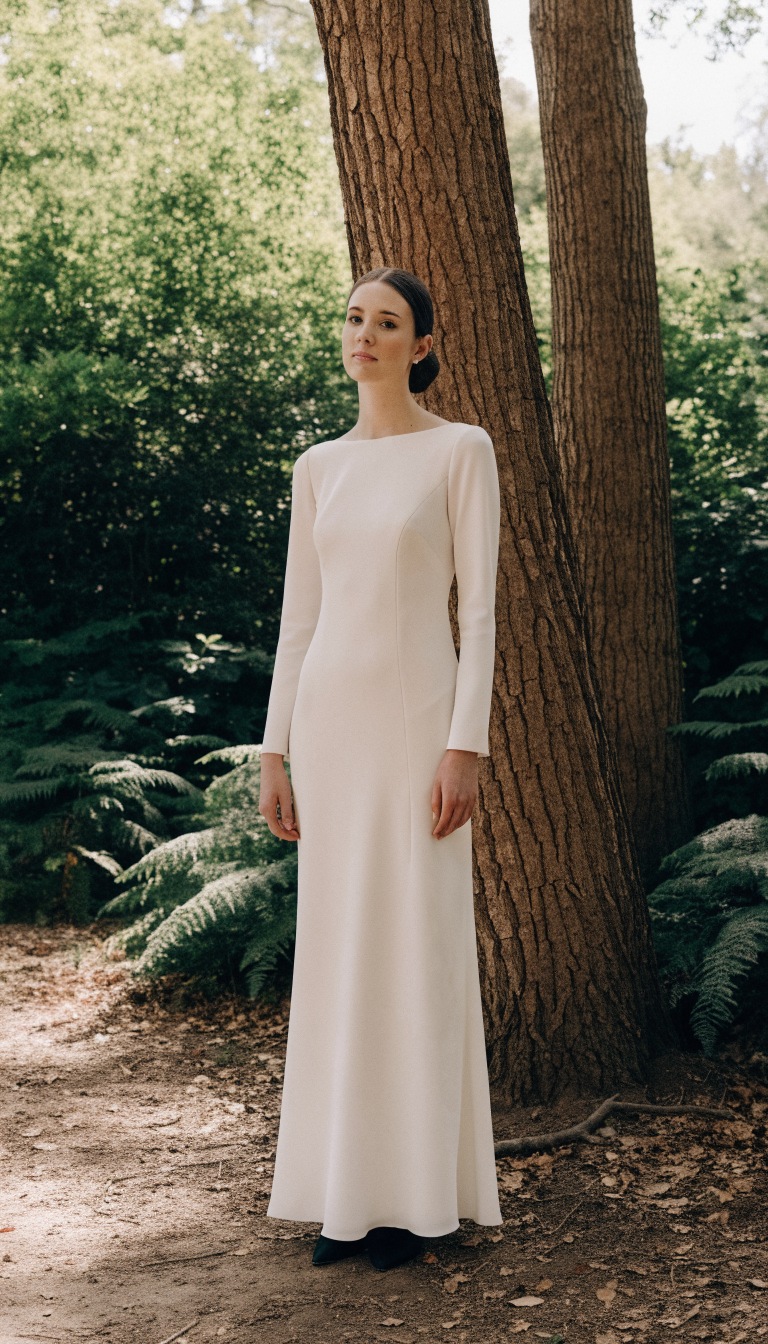
Wrinkle resistance: Crepe travels better than chiffon if you are dressing off-site. Contrast value: The matte finish keeps the dress from blending into green foliage in wide shots. Price tier: Mid-range designer crepe gowns often fall in a moderate bracket before alterations.
10. Layered Soft Tulle for Movement
Fine tulle layers add volume and a sense of air without the weight of heavier skirts. In a forest the layers catch light differently at each depth, which photographs with depth against vertical trunks. Soft rather than stiff tulle moves with walking and does not hold a rigid shape that looks out of place outdoors. Confirm the lining covers enough for comfort and opacity.
Layer count: Fewer, softer layers usually feel cooler and easier to manage on paths. Opacity check: Test the finished skirt in daylight so the lining covers as intended. Dancing ease: The volume can be gathered or bustled so it does not restrict steps later.
11. Lace Over a Light Base
A lace overlay on chiffon or soft tulle combines open texture with movement. Leaf or vine patterns read especially well in woodland light because they echo the surroundings without matching them exactly. The open weave breathes, and the base fabric controls transparency. Choose a lace weight that does not stiffen the skirt on uneven ground.
Pattern scale: Smaller, scattered motifs usually photograph better than dense all-over lace in shade. Base fabric: A chiffon or soft tulle base keeps the overall dress light for walking. Snag risk: Open lace can catch on branches; a shorter hem or careful path planning reduces that.
Necklines and Sleeves for Forest Light
12. Long Lace Sleeves for Cool Shade
Sheer or lightly opaque lace sleeves add coverage in the cooler air under trees without adding bulk. Vine or floral lace continues the botanical theme and looks detailed in close photos. The sleeves need enough stretch or ease so you can raise your arms for a bouquet or hug. Many versions include a lining or underlayer for comfort.
Arm mobility: Lift both arms fully in the fitting to confirm the sleeves do not bind. Temperature match: The coverage helps in morning shade yet can feel warm if the afternoon sun reaches the clearing. Button or zipper: Check how the back closes so getting dressed on site stays simple.
13. Off-the-Shoulder with Soft Drape
An off-the-shoulder neckline frames the collarbone and works with a floral crown or simple updo against green light. Soft chiffon or lace sleeves that sit just off the shoulder stay in place better than fully strapless styles in a breeze. The open line photographs well when the background is vertical tree trunks. A lightly structured bodice keeps the neckline secure for the length of the ceremony.
Stay-in-place test: Move and raise your arms to confirm the neckline does not slip. Accessory room: The open shoulders leave space for a simple necklace or none at all. Coverage option: Detachable or draped sleeves can add warmth if the shade feels colder than expected.
14. Deep V-Neck in Fluid Fabric
A deep V elongates the torso and draws the eye upward in photos where the background is busy with leaves. Soft crepe or chiffon follows the body without stiffness, and the neckline stays secure with the right internal support. The shape works across many body types and pairs cleanly with either a simple skirt or light botanical detail. Most versions need built-in cups or a compatible undergarment.
Support level: Confirm the bodice holds the neckline without constant adjustment. Modesty layer: A sheer illusion insert can be added if more coverage is preferred. Jewelry scale: A delicate chain or none usually balances the open neckline.
15. Illusion Neckline with Botanical Embroidery
An illusion neckline uses sheer mesh to carry lace, vines, or small embroidered leaves across the collarbone. The detail shows clearly in natural light and keeps the overall look light against the forest. Matching the mesh tone to skin in daylight rather than shop lighting prevents an odd cast under green shade. The construction works with A-line, sheath, or soft ball-gown skirts.
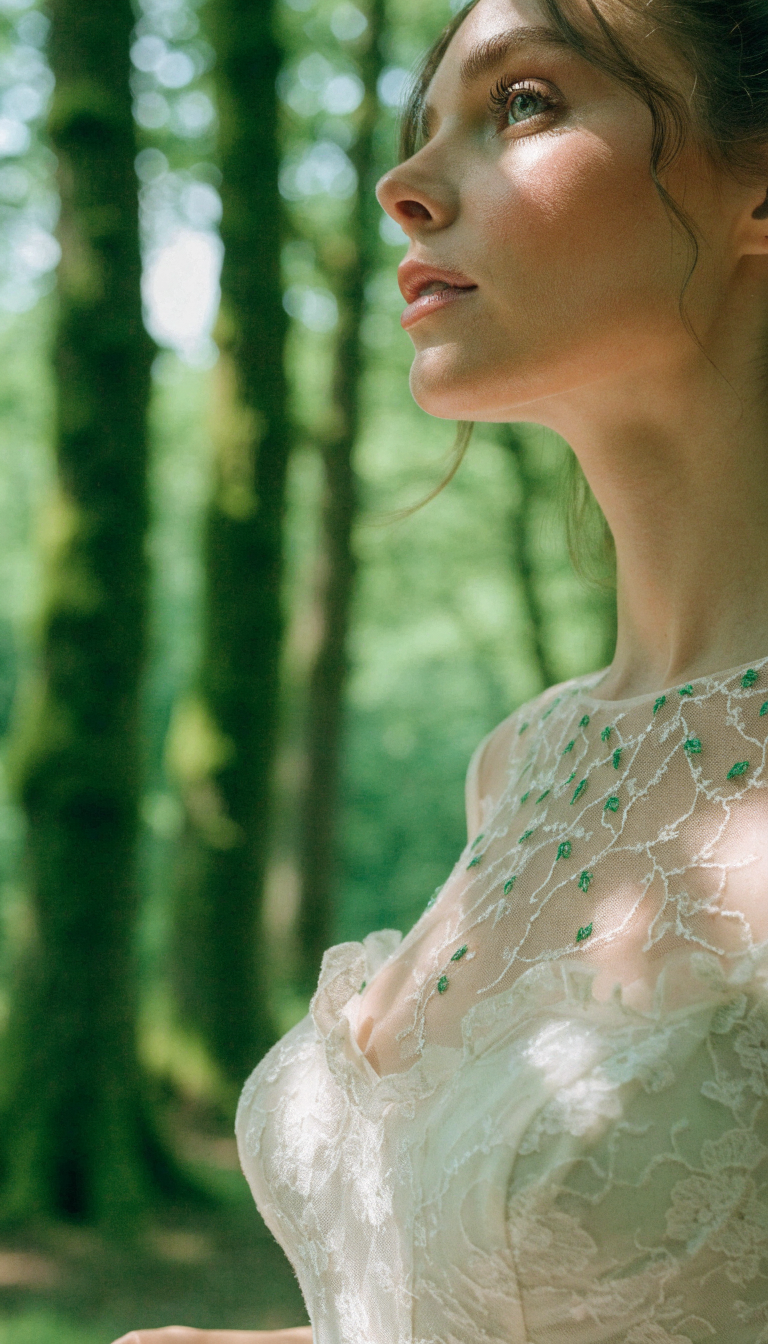
Mesh match: Check the illusion fabric outdoors so it blends rather than contrasts sharply. Detail visibility: Raised embroidery catches light and adds texture that plain fabric can lack in shade. Comfort fit: Ensure the mesh does not pull or itch across the shoulders during wear.
16. Cap Sleeves in Delicate Lace
Short cap sleeves add a light frame without full coverage, which suits milder forest temperatures. Lace versions continue botanical motifs onto the shoulder and photograph softly in close shots. The length leaves the arms free for movement and bouquet handling. Pair with a lining that matches the neckline support you need.
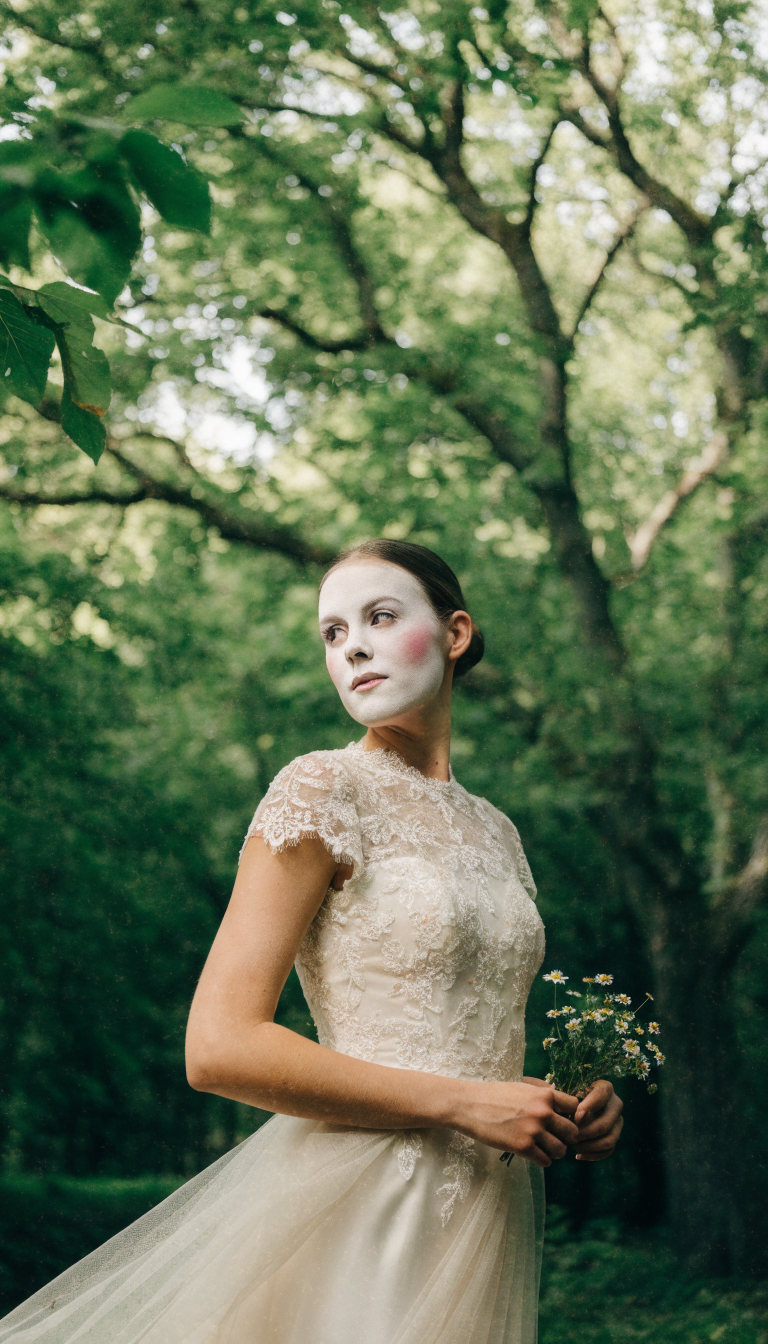
Shoulder ease: The short length should sit without digging or slipping during walking. Season fit: Best for spring or early fall when full sleeves are unnecessary. Undergarment: A strapless or convertible bra usually works if the bodice has built-in support.
17. Detachable Sleeves for Changing Conditions
Detachable lace or chiffon sleeves start the ceremony with coverage and can be removed once the temperature rises or dancing begins. The main dress stays consistent while the sleeves adapt to shade versus sun. Most attach with hidden snaps or buttons that a attendant can manage quickly. This option adds versatility without requiring a second gown.
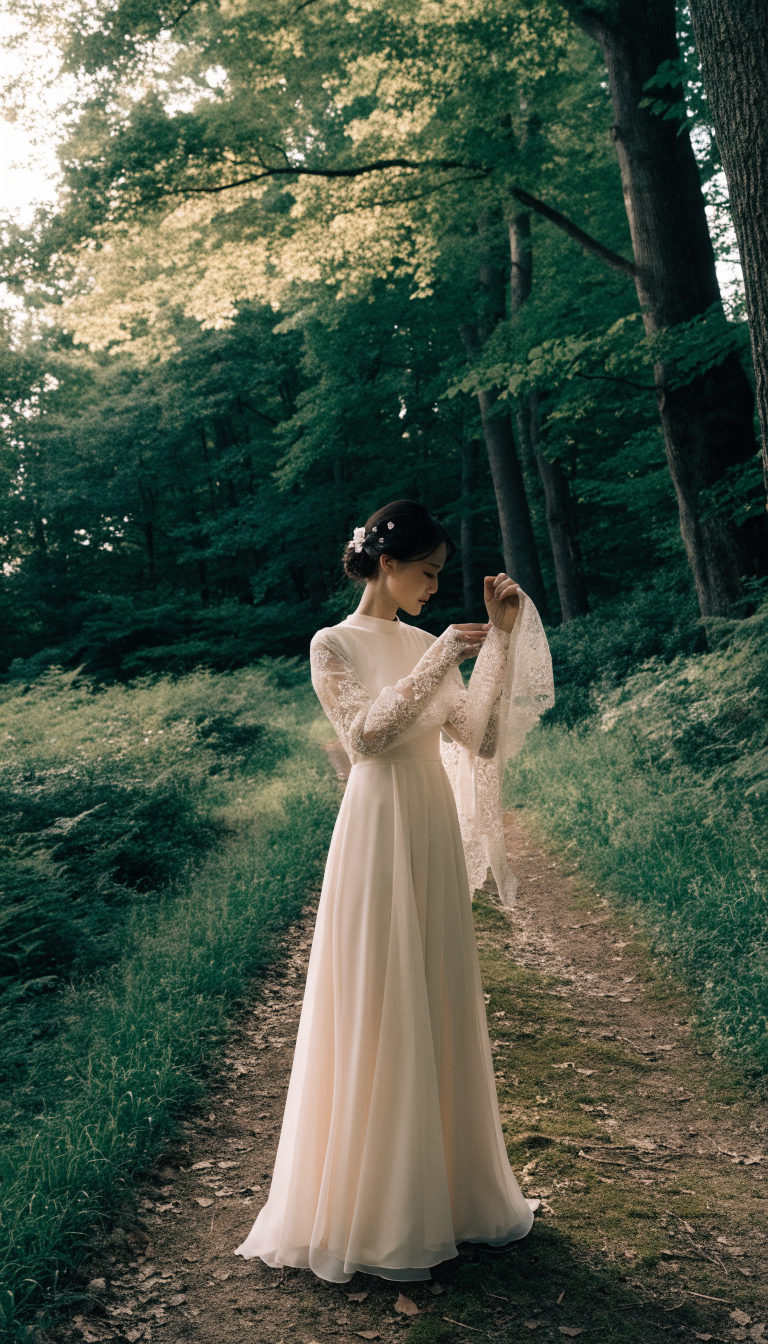
Attachment security: Test the fasteners so the sleeves stay put during the processional. Transition timing: Plan who will help remove them and where the pieces will be stored. Matching fabric: The sleeves should blend with the bodice so the removal looks intentional.
18. High Neck for Elegant Coverage
A high or bateau neckline offers more coverage while still allowing intricate lace or embroidery to show. Sheer panels or lace inserts keep the look from feeling heavy under the canopy. The style photographs with clean vertical lines against tree trunks and works well for ceremonies where more modesty is preferred. A soft skirt balances the higher neck.
Coverage balance: Lace or illusion panels prevent the neckline from looking closed or severe. Warmth level: The higher line adds a little insulation in cool morning shade. Hair pairing: An updo or half-up style keeps the neckline fully visible.
Details That Echo the Trees
19. Leaf or Vine Embroidery on the Bodice
Scattered leaf or vine embroidery adds texture that catches light without covering the entire dress. The motifs sit well on a soft A-line or sheath and echo the surroundings without matching them exactly. Thread in ivory, soft green, or pale gold reads clearly in filtered light. The embroidery is usually light enough that it does not stiffen the fabric.
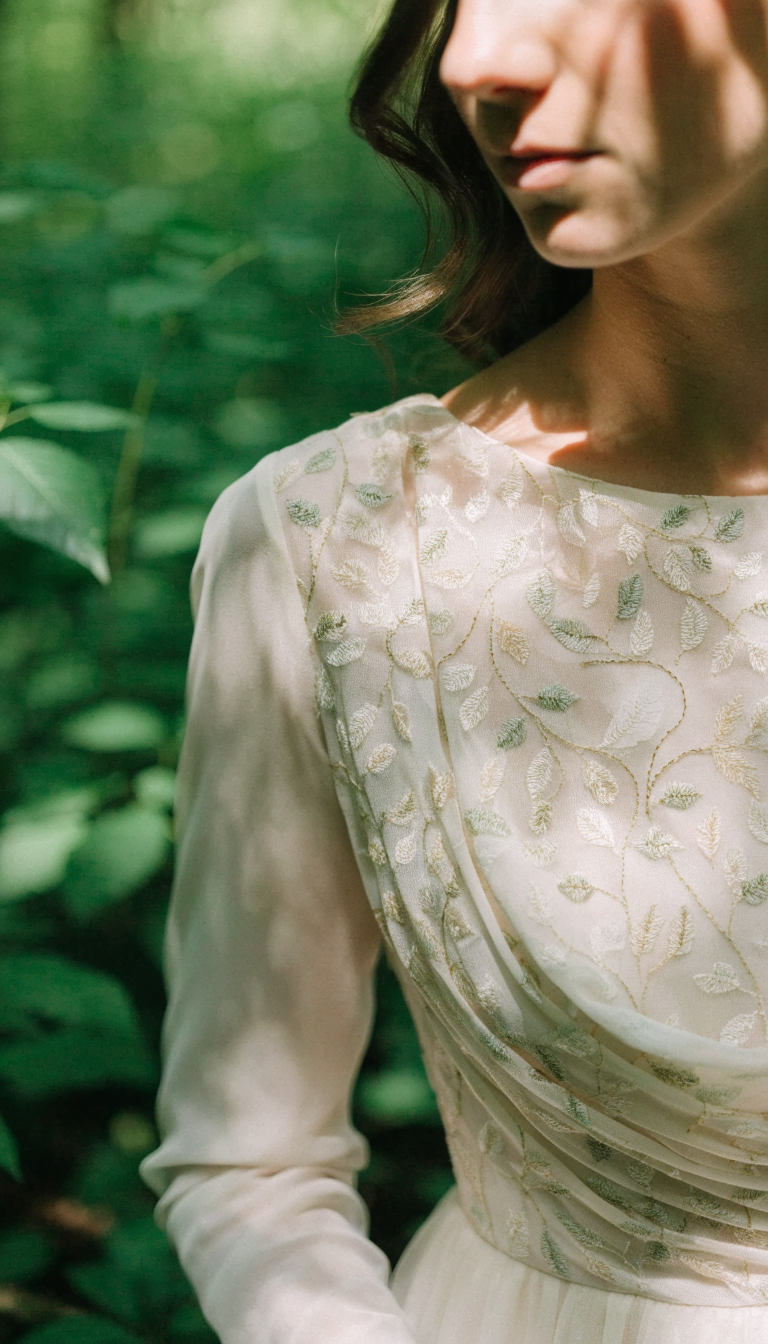
Motif placement: Concentrating detail on the bodice and fading it down the skirt keeps the hem light. Thread weight: Fine embroidery stays flexible for movement on uneven ground. Photo contrast: Raised stitches create small shadows that help the dress read against dense greenery.
20. Open or Corset Back for Photos
An open or corset-style back creates a clean line in photos taken among vertical trunks. Button or lace-up closures add detail that shows when you turn. The construction needs secure support so the front neckline stays in place. Many versions include a modesty panel if preferred.
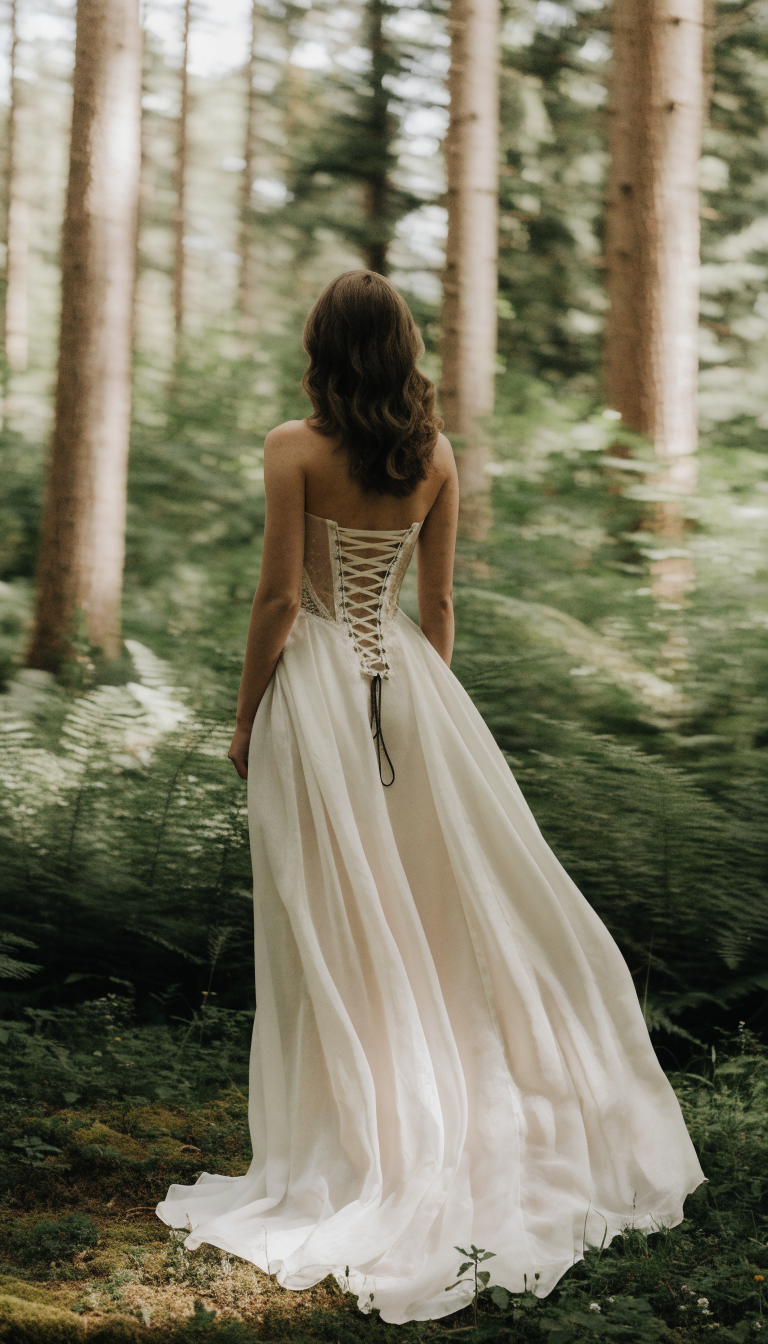
Closure ease: Practice the lacing or buttons so dressing on site stays manageable. Support check: Confirm the bodice holds without the back closure being overly tight. Photo angle: The back detail photographs well when the background is soft foliage rather than a busy structure.
21. Functional Pockets in the Skirt
Pockets sewn into a chiffon or crepe skirt give a place for a small item without a separate bag. They sit at a natural hand height and do not distort the silhouette when empty. The feature is especially useful on a long outdoor day when you may want a phone or lip color nearby. Most bridal versions are discreet so they do not show in photos.
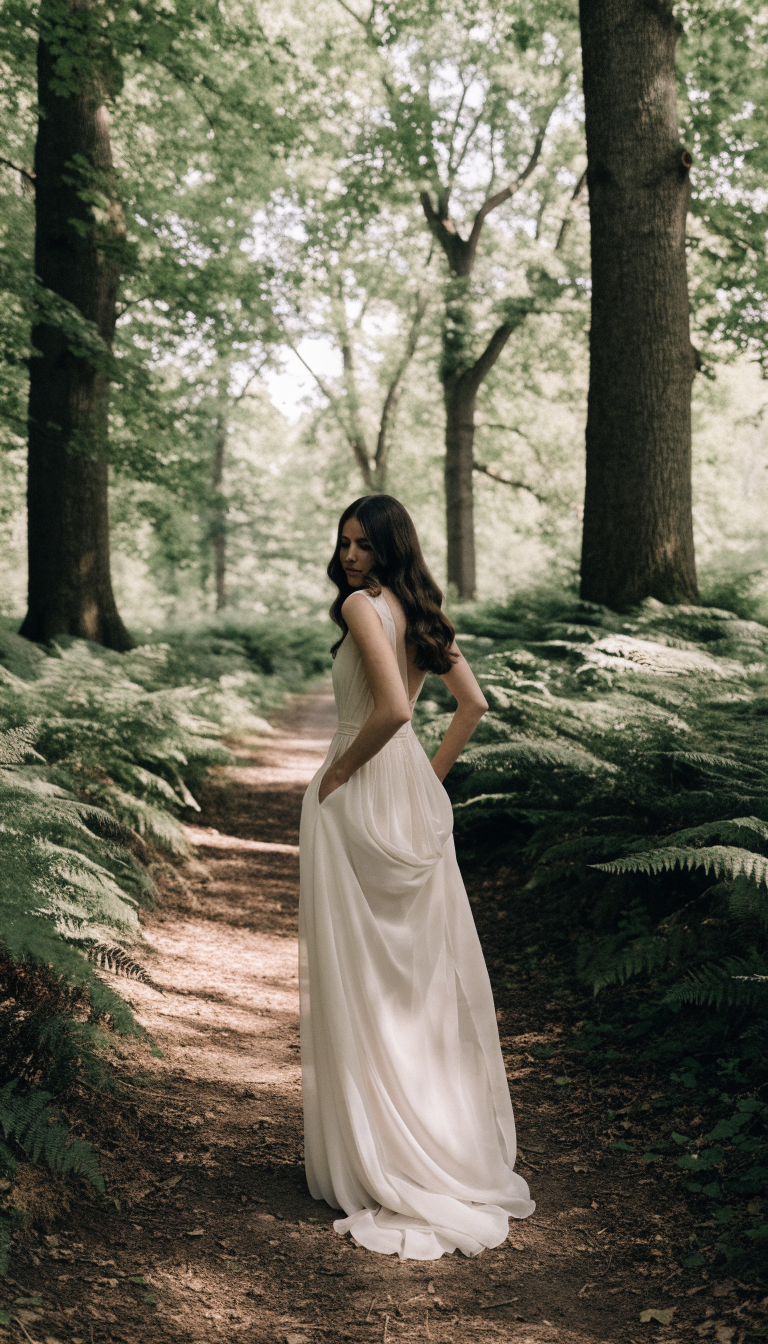
Pocket depth: Test that items stay secure while you walk and sit. Silhouette impact: The pockets should not pull or bulge once the dress is on. Fabric match: The pocket lining should blend so it does not show through lighter skirts.
22. Shorter or Bustled Train for Paths
A fingertip train or one designed for an easy bustle keeps fabric off the ground once the ceremony ends. In a forest, longer trains collect needles, leaves, and moisture more quickly. A well-placed bustle lets you move between photo locations without constant lifting. Discuss the bustle style early so the alterations account for it.
Debris risk: Shorter lengths reduce how much the hem picks up from the forest floor. Bustle type: A French or overskirt bustle often looks cleaner in outdoor photos. Practice needed: Rehearse the bustle so it can be done quickly between events.
23. Cape or Capelet for Extra Coverage
A separate lace or chiffon cape adds drama for the ceremony and can be removed later. It provides light warmth in cool shade without changing the main dress. Botanical lace versions continue the forest theme, while a plain chiffon cape stays minimal. The piece needs a secure attachment so it does not shift during the processional.
Attachment method: Hooks or buttons should hold through walking and light wind. Removal plan: Decide in advance when and where the cape comes off. Fabric weight: Keep the cape light so it does not overwhelm a softer gown underneath.
Color Choices and Practical Additions
24. Ivory or Champagne Over Bright White
Ivory, oatmeal, or soft champagne holds detail better under green-filtered light than a stark bright white, which can lose texture or pick up a cool cast. These warmer tones still read as bridal against bark and moss. The difference is most noticeable in wide shots where the dress sits among dense foliage. Many designers offer these shades in the same silhouettes as traditional white.
Light behavior: Warmer tones keep lace and embroidery visible in shade. Photo consistency: The color stays closer to how it looked in the salon once outdoors. Lining match: Confirm the lining tone complements the outer fabric in natural light.
25. Soft Blush or Sage Undertones
A pale blush or muted sage can blend gently with the setting while still distinguishing the dress from pure greenery. The tint works best in chiffon or layered tulle where the color reads as a soft wash rather than a solid block. In deep shade the color may appear lighter than it did indoors, so view swatches outside if possible. These shades suit spring and summer forest dates especially well.
Shade test: Check the fabric in similar outdoor light before finalizing the order. Blend versus contrast: Too close a match to surrounding leaves can make the dress recede in wide photos. Season note: Sage often feels especially natural in late summer or early fall clearings.
26. High-Low Hem for Trail Walking
A high-low hem is shorter in front and longer in back, which clears the ground for walking while still providing some train drama for photos. The front length makes steps and uneven paths easier, and the back can be bustled or left if the ground is clear. Lightweight fabrics keep the longer back from becoming heavy. This cut is practical when the ceremony and photos involve moving between sites.
Front clearance: Measure the front hem in the shoes you will wear on the actual terrain. Back management: Plan whether the longer section will be bustled or carried between locations. Balance check: The proportions should still look intentional rather than unfinished.
27. Minimalist Crepe or Satin with Clean Lines
A simple crepe or soft satin gown with minimal ornamentation creates a clear shape against textured trees and undergrowth. The clean surface lets the natural setting remain the backdrop rather than competing with dense lace. Matte or low-sheen fabrics prevent glare in patches of sun. This approach works well when the venue itself supplies the visual interest.
Contrast effect: Plain fabric stands out against rough bark without added pattern. Movement ease: Fewer layers and details mean less chance of snagging on the path. Detail addition: A simple belt, cape, or floral piece can be added if more interest is wanted later.
Bring photos of the actual clearing or path, the shoes you plan to wear, and any undergarments to the first fitting so the hem, support, and movement can be checked against real conditions. Most bridal gowns are made to order, so starting several months ahead leaves room for fittings and any needed adjustments. A shorter train, breathable fabric, and stable footwear will matter more on the day than any single decorative detail.
FAQ
How far in advance should I order a forest wedding dress? Most made-to-order bridal gowns require several months of lead time. Starting six to nine months ahead is a common guideline so fittings and alterations can be completed without rush.
Do I need a bustle for a forest ceremony? A bustle is useful if the train is longer than fingertip length, because paths and grass make constant lifting impractical. Discuss the style early so the dress can be constructed or altered to support it.
What shoes work best with these dresses on natural ground? Block heels, low boots, or sturdy flats with a secure sole handle roots and soft soil better than thin stilettos. Bring the actual pair to fittings so the hem can be set correctly.
Can I add sleeves or a cape later if the shade feels colder? Yes. Detachable sleeves or a separate capelet can be ordered with the gown or sourced separately and attached for the ceremony only. Confirm the attachment method in advance.