
A green wedding dress succeeds when the shade, fabric, and silhouette match the setting and the hours you will actually spend in it. Soft sage and mint read gently in gardens and daylight; emerald and forest hold presence in evening or formal rooms; olive sits comfortably in between. The right choice keeps you comfortable through vows, photos, dinner, and dancing while still looking intentional in pictures. This list groups practical options by shade and construction so you can narrow quickly, then test the shortlist in a salon with your shoes and undergarments.
1. Sage Green Chiffon A-Line
A sage green chiffon A-line keeps the color soft and the skirt light enough for outdoor movement. The fitted bodice sits at the natural waist before the fabric flares gently, so walking and sitting stay easy. Chiffon layers breathe and shift with a light breeze, which suits garden aisles, vineyard paths, or any venue with open air and natural light. A short train or none at all reduces the chance of catching on grass or gravel. Most versions arrive made-to-order, so plan several months of lead time plus two or three alteration fittings once it arrives.
- Garden and daylight match — Works especially well when the ceremony sits among trees or flowers and the photos rely on soft natural light.
- Skirt movement check — Walk a few steps and turn during the fitting to confirm the layers do not cling or tangle around the legs.
- Hem and train notes — Expect a straightforward hem; a short train can usually be bustled with a simple set of buttons or hooks.
2. Emerald Green Satin Ball Gown
An emerald green satin ball gown gives the color a formal, reflective quality that stands up under evening lighting. The structured bodice and full skirt create volume without requiring constant adjustment, while the satin surface catches light cleanly rather than appearing flat. This construction suits ballrooms, historic hotels, or black-tie receptions where the dress needs presence from a distance. The skirt weight can feel warm in summer heat, so it is more practical for cooler seasons or air-conditioned spaces. Alterations often focus on the bodice fit and a functional bustle so the train can be lifted for dancing.
- Evening venue strength — Holds its own against candlelight, chandeliers, or dark formal rooms without needing heavy beading.
- Heat and weight note — The full satin skirt adds warmth; test sitting and standing for several minutes if the reception will be long.
- Bustle planning — Ask the seamstress to demonstrate the bustle style during the second fitting so the person helping you knows the steps.
3. Forest Green Velvet Long-Sleeve
Forest green velvet with long sleeves creates a warm, textured look that reads rich in cooler weather. The pile of the fabric absorbs light differently across the bodice and sleeves, adding depth without extra decoration. A fitted or gently flared skirt keeps the overall weight manageable while the sleeves offer coverage for autumn or winter ceremonies. Velvet needs careful pressing and can show marks if crushed, so the gown is best kept hanging until the day. Because the fabric is denser, most versions benefit from built-in cups or light boning for support through the bodice.
- Cool-season comfort — Provides natural warmth for outdoor winter ceremonies or unheated chapels without a separate wrap.
- Pile care reminder — Steam only from the reverse side; direct heat can flatten the texture permanently.
- Support check in fitting — Sit, raise your arms, and check whether the bodice stays smooth once the sleeves are in place.
4. Olive Green Crepe Column
An olive green crepe column follows the body in a clean line and then falls straight, which keeps the silhouette modern and easy to move in. Crepe has a matte surface that photographs evenly and resists the glare that shiny fabrics can produce outdoors. The shade itself sits between soft and deep, so it works for rustic barns, desert landscapes, or city courthouses that prefer understated color. Stretch versions of crepe allow a little give at the hips and knees, which helps with sitting and dancing. Hemming is usually simple, though a slight stretch means the final length should be checked with the exact shoes you will wear.
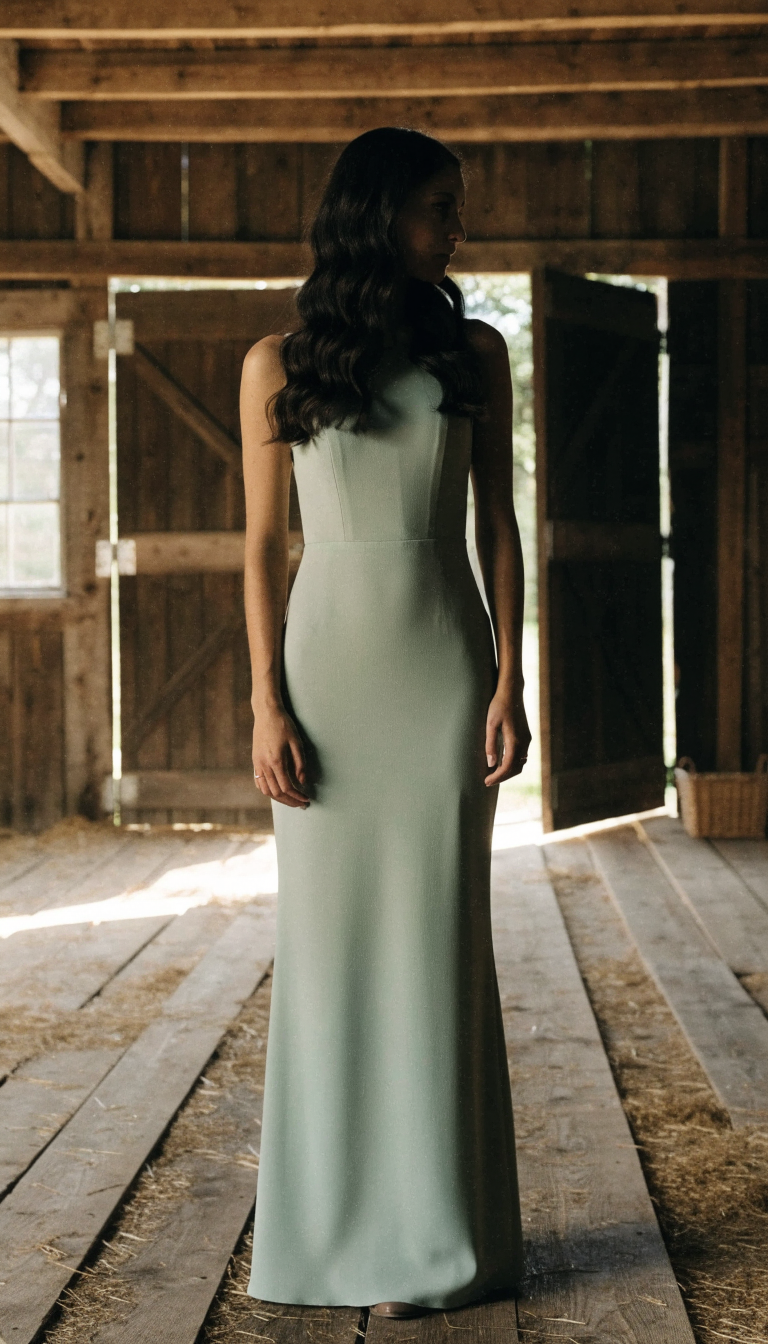
- All-day ease — The fluid fabric and slim shape make restroom visits and car rides less complicated than with a full skirt.
- Outdoor light behavior — The matte finish stays consistent under bright sun or open shade without bright hotspots.
- Shoe and length test — Wear the actual heel height at the final fitting so the hem does not drag or float.
5. Mint Green Tulle Off-the-Shoulder
Mint green tulle cut off-the-shoulder adds soft volume while the lighter shade stays fresh in spring or early summer light. Layers of tulle create movement without the weight of heavier skirts, and the neckline leaves the shoulders and collarbones visible. This combination suits garden ceremonies, tented receptions, or any setting where the dress should feel airy rather than formal. Because tulle is sheer, a solid lining or built-in cups is standard so the bodice remains opaque. The off-the-shoulder shape can slip if the fit is loose, so a secure strap or light boning helps during longer events.
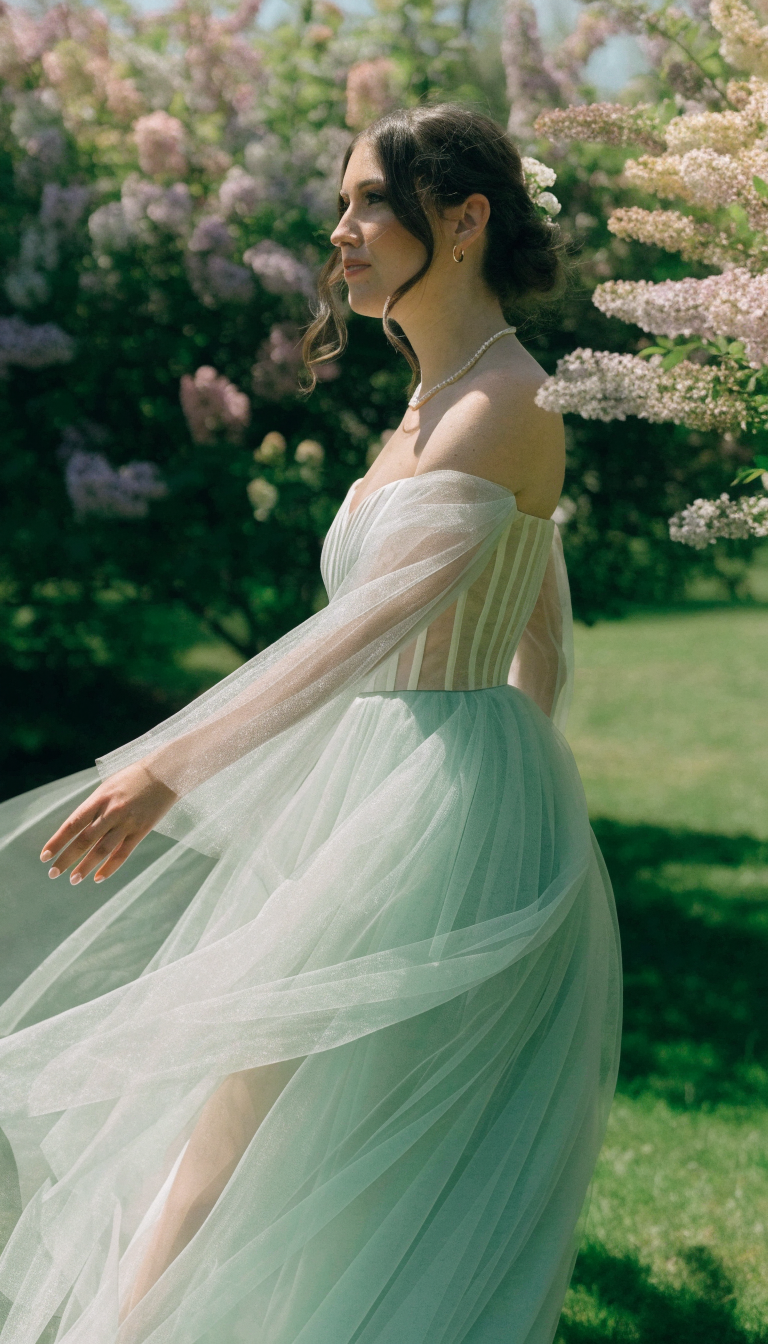
- Spring and breeze suitability — The light layers move easily outdoors and stay cooler than satin or velvet in mild weather.
- Neckline security check — Raise your arms and turn during the fitting to confirm the neckline stays in place without constant adjusting.
- Lining and opacity note — Confirm the bodice lining covers fully under the tulle so undergarments do not show in photos.
6. Hunter Green Lace Fit-and-Flare
Hunter green lace over a fitted base creates texture and a defined shape that flares below the knee. The deeper shade makes the lace pattern read clearly against the lining, while the fit-and-flare silhouette allows a full range of steps once the skirt opens. This style works for woodland venues, evening garden dinners, or formal indoor ceremonies where some structure is useful. Lace overlays can be delicate, so alterations usually focus on the seams and a modest train rather than major reconstruction. A short slit or stretch lining improves comfort when sitting or dancing.
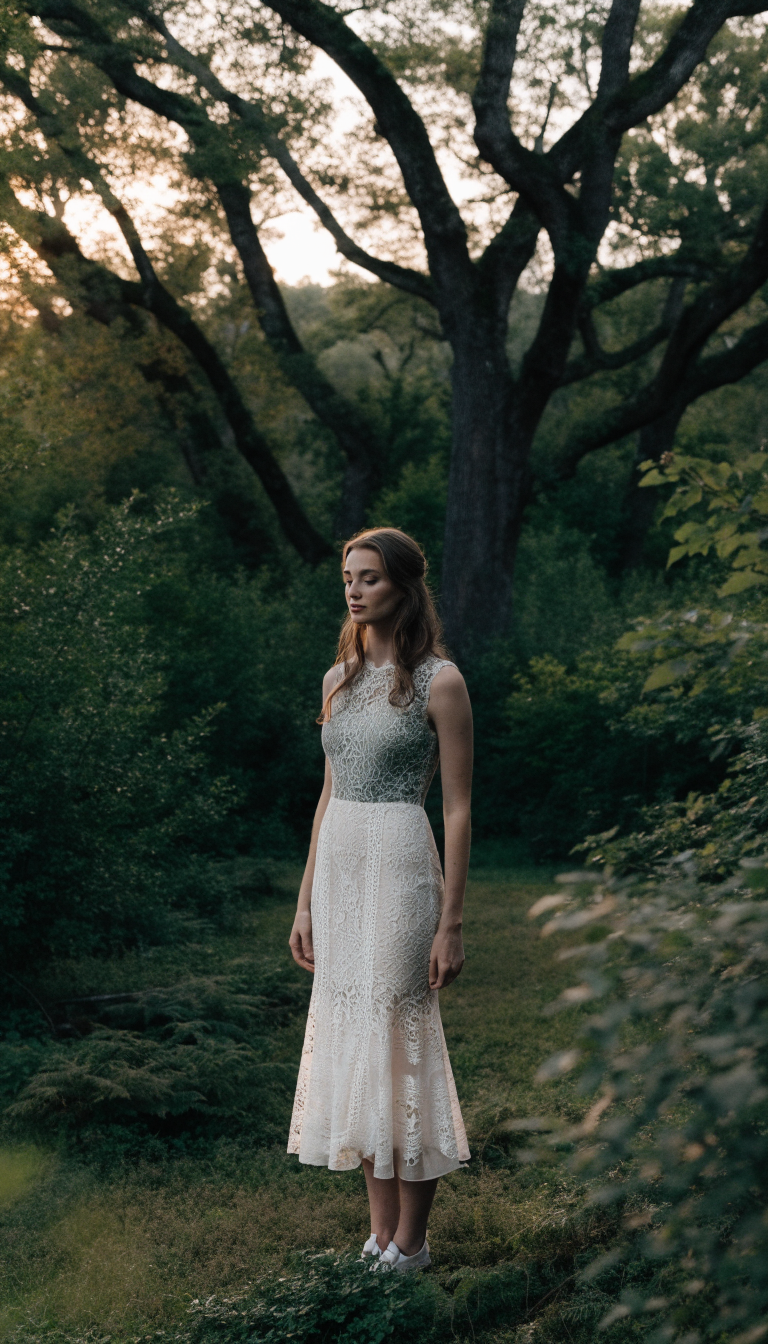
- Woodland and evening match — The rich tone blends with dark foliage or candlelit rooms without disappearing into the background.
- Movement after the flare — Walk and sit to make sure the flare begins low enough that the skirt does not pull across the knees.
- Lace seam care — Request that any alterations follow the existing motif lines so the pattern stays continuous.
7. Eucalyptus Green Georgette Empire
An eucalyptus green georgette empire waist sits just under the bust and falls in soft folds, which keeps pressure off the natural waist. Georgette is slightly more opaque and substantial than chiffon yet still light enough for warm weather. The high waist and flowing skirt suit destination ceremonies, beachside vows, or any event where comfort through long hours of standing matters. The fabric can wrinkle if packed tightly, so hanging or steaming before the ceremony is useful. Most versions need only a simple hem and light bust support rather than extensive structural changes.
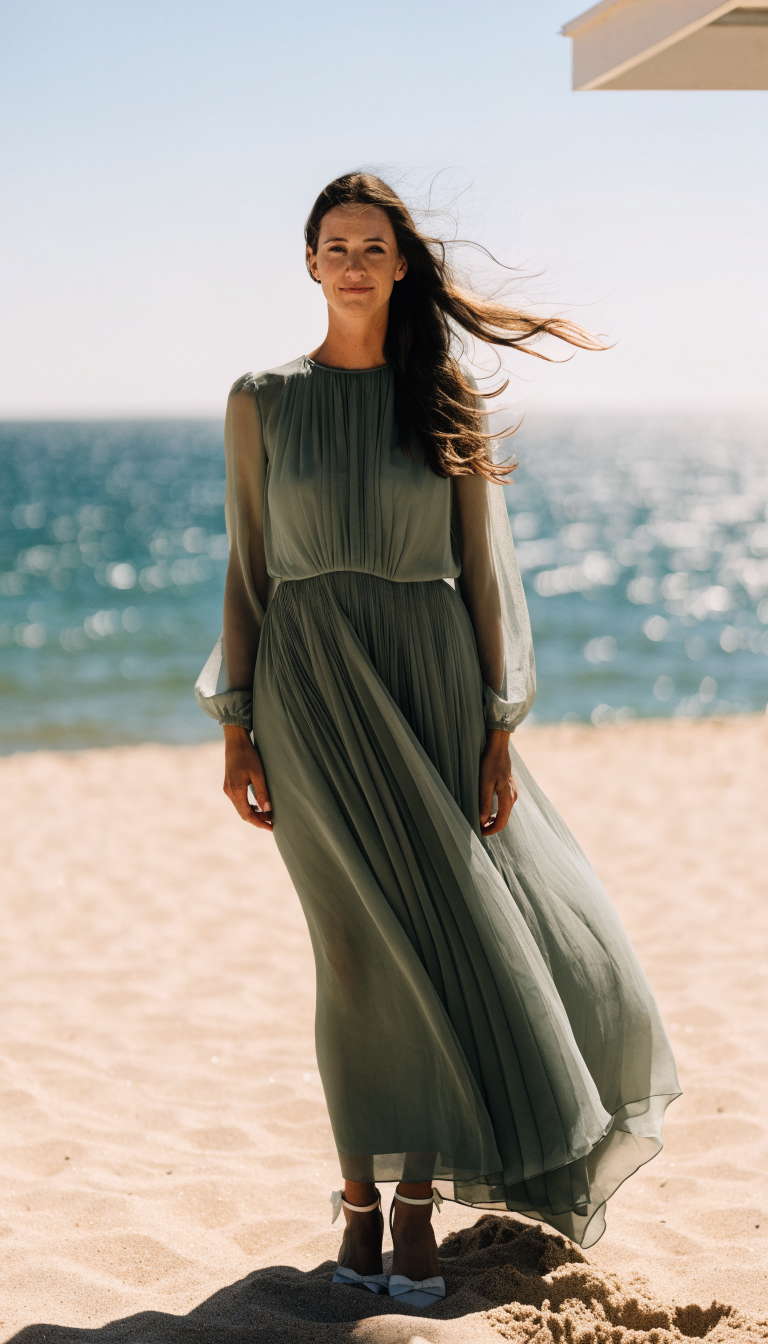
- Warm-weather breathability — The light weight and high waist reduce heat buildup during outdoor or tropical ceremonies.
- Undergarment pairing — A smooth strapless bra or built-in cups keeps the bodice clean under the soft drape.
- Wrinkle recovery — Hang the gown overnight and steam lightly; heavy packing can leave visible creases in the skirt.
8. Emerald Green Mikado Trumpet
Emerald green mikado in a trumpet shape holds a clean, architectural line from the bodice through the hips before flaring toward the hem. Mikado is a crisp, medium-weight fabric with low sheen that keeps its form without heavy internal boning. The combination gives the color presence in formal rooms or evening outdoor settings while remaining more structured than pure satin. Because the fabric is firm, a well-fitted bodice is essential so the shape does not gap or pull. A modest train can be added and later bustled; the crisp hand of mikado usually holds the bustle points securely.
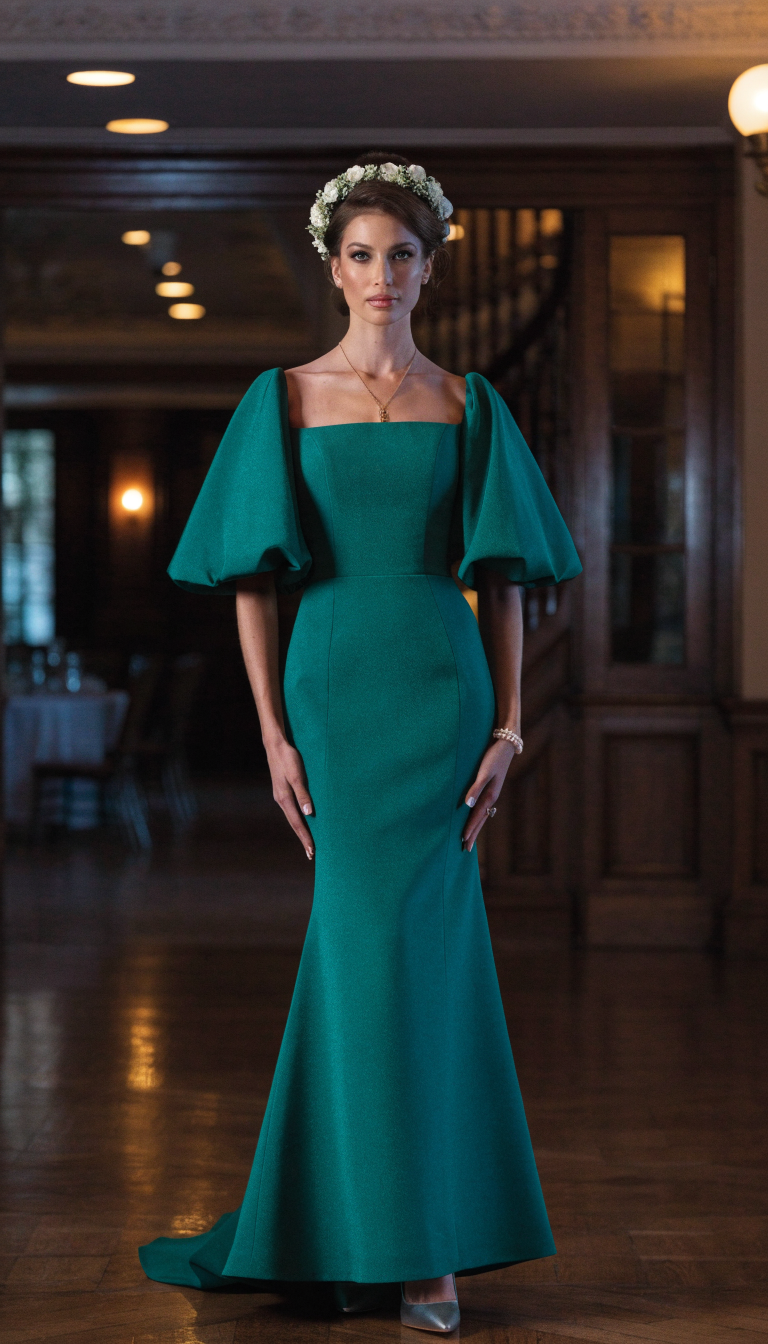
- Formal structure without bulk — The fabric maintains shape through photos and dinner without collapsing or requiring constant smoothing.
- Bodice fit priority — Ask for a close fit through the torso during the first pinning so the trumpet line stays smooth.
- Train and bustle ease — A shorter train is easier to manage; confirm the bustle sits high enough to clear the floor when dancing.
9. Soft Sage Tea-Length Crepe
A soft sage tea-length crepe dress ends between the knee and ankle, which removes the need for a train or bustle and simplifies movement. Crepe keeps the surface matte and the drape fluid, so the shorter hem still looks intentional rather than casual. This length suits courthouse ceremonies, garden lunches, or any daytime event where guests will also be in shorter hemlines. Alterations are typically limited to the hem and any minor bodice adjustments, which can often be completed in fewer fittings. Shoes become more visible, so the pair you choose should complement the sage tone without competing.
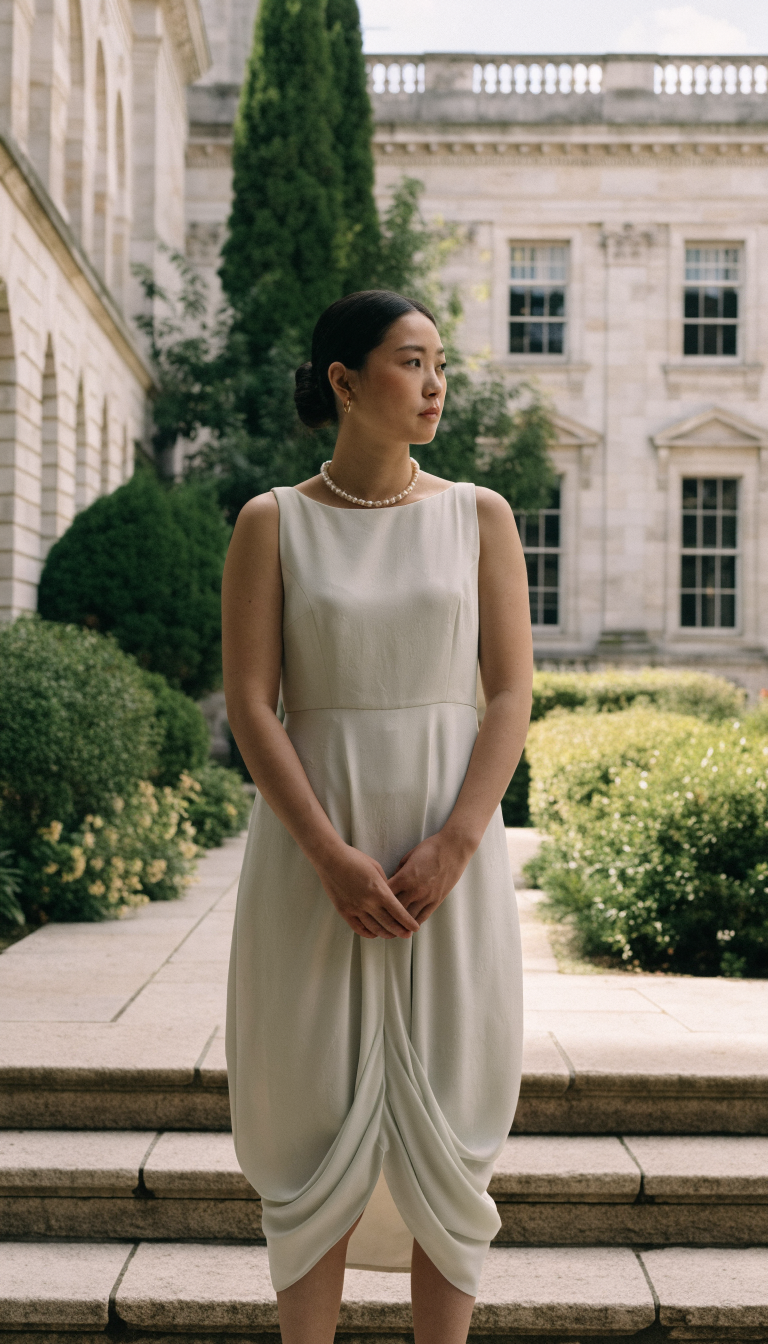
- Daytime and intimate settings — Practical for venues with limited space or events that move between indoor and outdoor areas.
- Hem precision with shoes — Check the length in the exact shoes and any shapewear so the hem falls evenly all around.
- Faster alteration path — Fewer layers and no train usually mean a simpler and quicker tailoring process once the gown arrives.
10. Moss Green Organza A-Line with Pockets
Moss green organza layered into an A-line adds subtle volume and a slight crispness while remaining lighter than tulle. Organza holds its shape at the edges of the skirt yet still moves when you walk. Pockets sewn into the side seams give a practical place for a small item or simply a place to rest your hands during photos. The combination works for outdoor ceremonies with mixed terrain or any venue where you want structure without weight. Because organza can feel stiff at the hem, a light lining underneath keeps the skirt from standing away from the body.
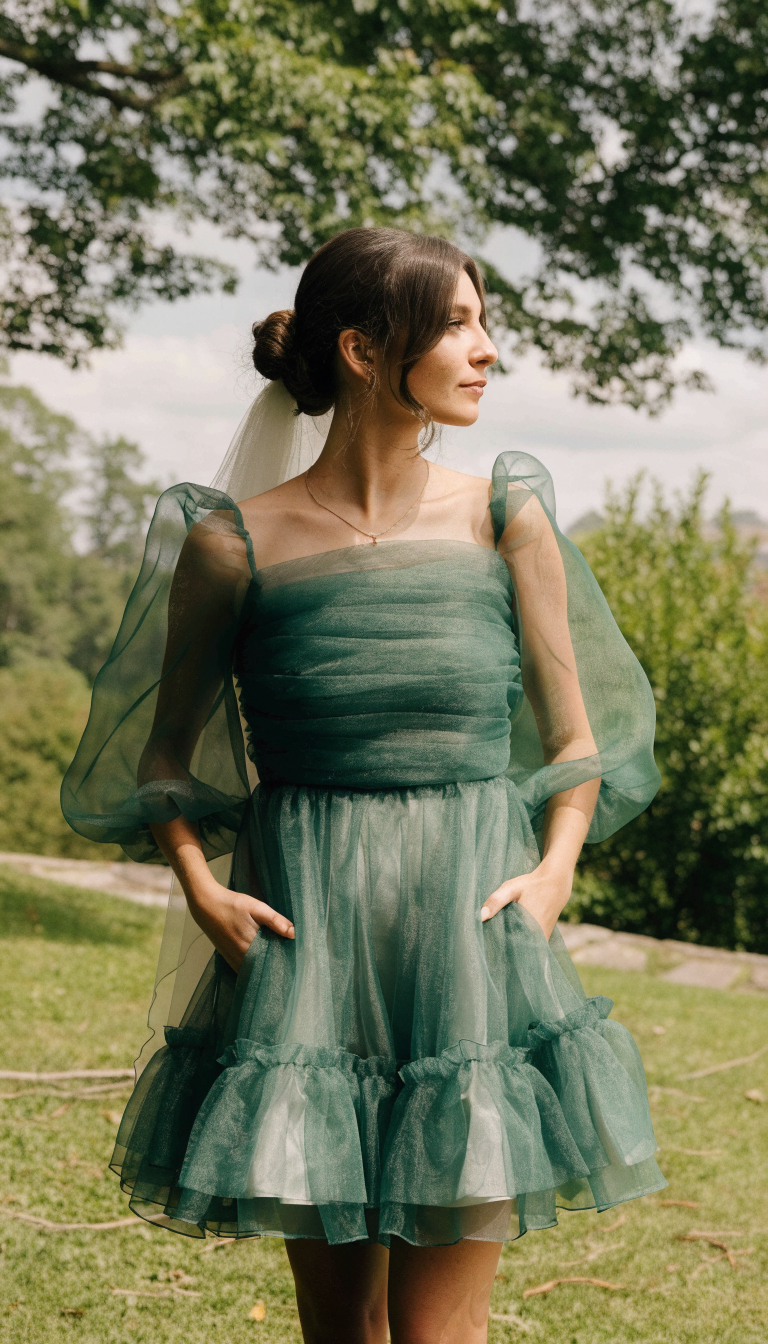
- Practical pocket placement — Confirm the pockets sit at a natural hand height and do not pull the skirt out of shape when used.
- Skirt volume control — The crisp organza keeps the A-line open without the extreme fullness of a ball gown.
- Lining smoothness — A soft underlayer prevents the organza from catching on stockings or showing sharp edges in photos.
11. Forest Green Stretch Crepe Mermaid
A forest green stretch crepe mermaid follows the body closely through the hips and then flares below the knee, creating a defined line with enough give for walking. The matte stretch fabric reduces the rigid feel some mermaid styles have and makes sitting more comfortable. The deeper shade photographs with clear contrast against lighter backgrounds or greenery. This style suits evening receptions or indoor ceremonies where a closer silhouette is preferred. Alterations focus on the stretch seams and a secure hem so the flare does not ride up; a short train can be added if the venue allows.
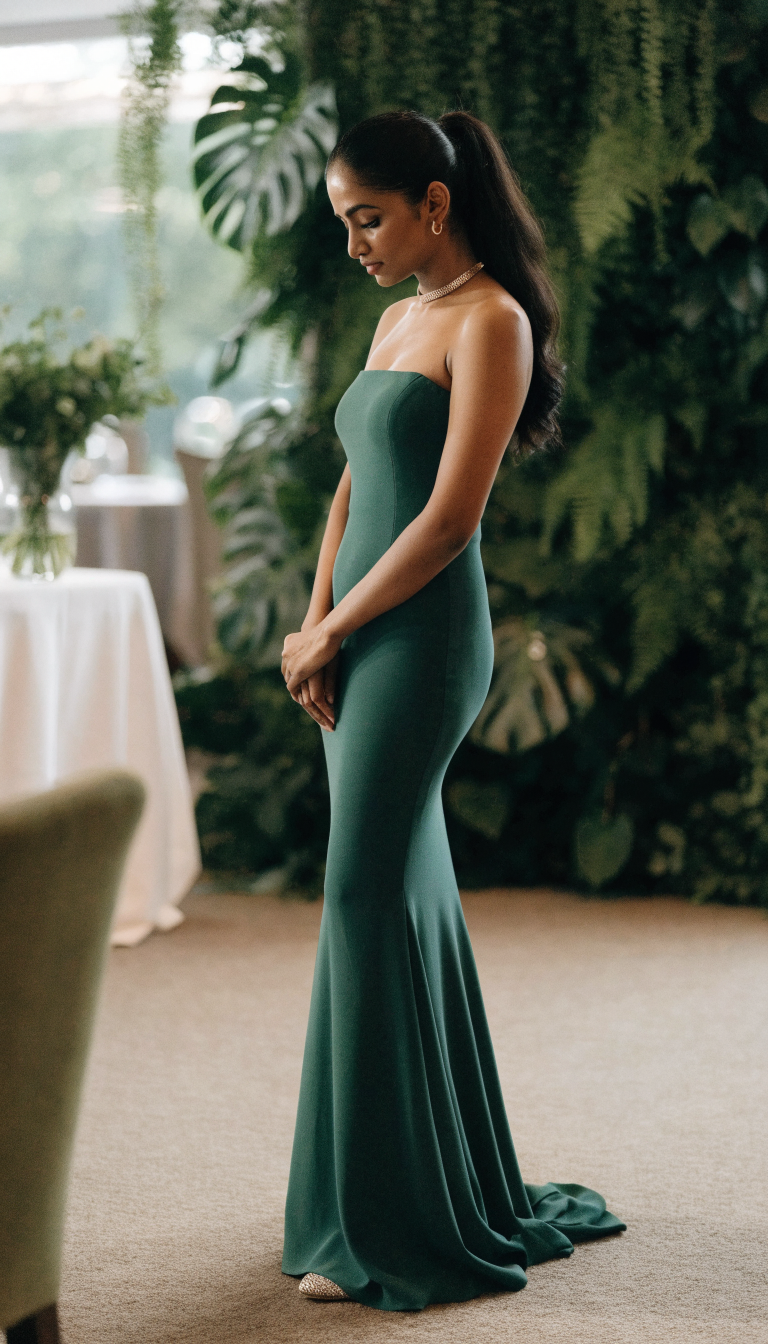
- Sitting and dance comfort — The stretch and lower flare make it easier to sit for dinner and move on the dance floor than a non-stretch mermaid.
- Seam and stretch check — Move through a full range of steps in the fitting to confirm the fabric recovers without bagging.
- Modest train option — A sweep train stays manageable and can be lightly bustled if the reception involves stairs or outdoor paths.
12. Emerald Green High-Neck Lace Overlay
An emerald green high-neck lace overlay over a smooth base gives coverage and texture while the saturated color remains the focus. The high neckline and optional long sleeves create a formal look suitable for church ceremonies, winter indoor venues, or any setting that prefers more coverage. Lace over a solid lining keeps the dress opaque and allows the pattern to show clearly against the green. Most versions include a modest train that can be bustled; the lace edges need careful handling during alterations so the motifs stay aligned. Built-in support or a smooth underlayer helps the high neck sit cleanly without gaping.
- Coverage for formal or cooler settings — The high neck and sleeves provide structure and warmth without adding heavy fabric.
- Lace alignment in alterations — Any bodice or sleeve adjustments should follow the existing pattern so the overlay remains continuous.
- Neckline stability test — Turn and look down during the fitting to make sure the high neck stays flat and does not pull forward.
Prices for green wedding dresses vary widely by designer, fabric quality, region, and the amount of custom work required; alterations are almost always an additional cost. Most bridal gowns are made to order, so a lead time of several months is common, followed by two or three fittings once the dress arrives.
Bring the shoes, undergarments, and any jewelry you plan to wear to every fitting so the final length and support are accurate. Start by choosing the shade that matches your venue lighting and season, then test the fabric and silhouette for movement and heat. A shortlist of two or three options is easier to compare in person than a long list of inspiration photos.
FAQ
How far in advance should a green wedding dress be ordered? Most made-to-order bridal gowns require four to eight months for production. Ordering six to nine months before the wedding leaves room for the gown to arrive and for the usual two or three alteration fittings.
Can an existing white or ivory gown be dyed green? Professional dyeing is possible but results vary by fabric and construction. Saturated shades such as emerald or forest are harder to achieve evenly than softer sage or mint, and the process can affect delicate trims or beading.
How many fittings are typical once the dress arrives? Two to three fittings are standard. The first pins the major adjustments and plans any bustle; later appointments check the completed work and confirm the hem with the final shoes and undergarments.