
Simple elegant wedding dresses rely on precise cut, quality fabric, and thoughtful construction rather than heavy embellishment. They photograph cleanly, move well through a full day, and adapt to many venues because the silhouette and textile carry the look. This list is organized by clean silhouettes first, then key fabrics, necklines and sleeves, and practical details so you can match options to your body comfort, climate, and timeline. Most bridal gowns are made to order with lead times of several months; alterations are a separate step that usually requires multiple fittings. Approximate prices vary widely by designer, fabric, region, and alterations.
Clean Silhouettes
1. Crepe A-Line with a Natural Waist
A crepe A-line follows the torso closely through the natural waist, then releases into a gentle, continuous flare that forms a soft letter A. The matte surface of crepe keeps the shape quiet and modern while the fabric drapes without clinging or adding bulk. It works across many body types because the waist definition is clear yet the skirt skims rather than hugs. In a garden or indoor ceremony the clean geometry photographs evenly, and the moderate weight allows easy walking and sitting without the skirt collapsing or catching.
Movement through the day: The moderate flare gives room for dancing and stairs while still feeling controlled. Climate match: Crepe breathes better than dense satins, making it suitable for mild outdoor afternoons. Fitting-room check: Sit and stand several times to confirm the waist seam sits comfortably and the flare does not pull.
2. Structured Mikado Column
Mikado is a dense, slightly textured fabric that holds a straight vertical line from shoulder to hem with almost no flare. The column silhouette stays architectural and uninterrupted, so the dress reads as a single sculptural form. Because mikado resists wrinkles and keeps its shape, it photographs with clean edges even after hours of wear. It suits formal indoor venues or cooler-weather ceremonies where structure is welcome; the weight feels substantial rather than fluid.
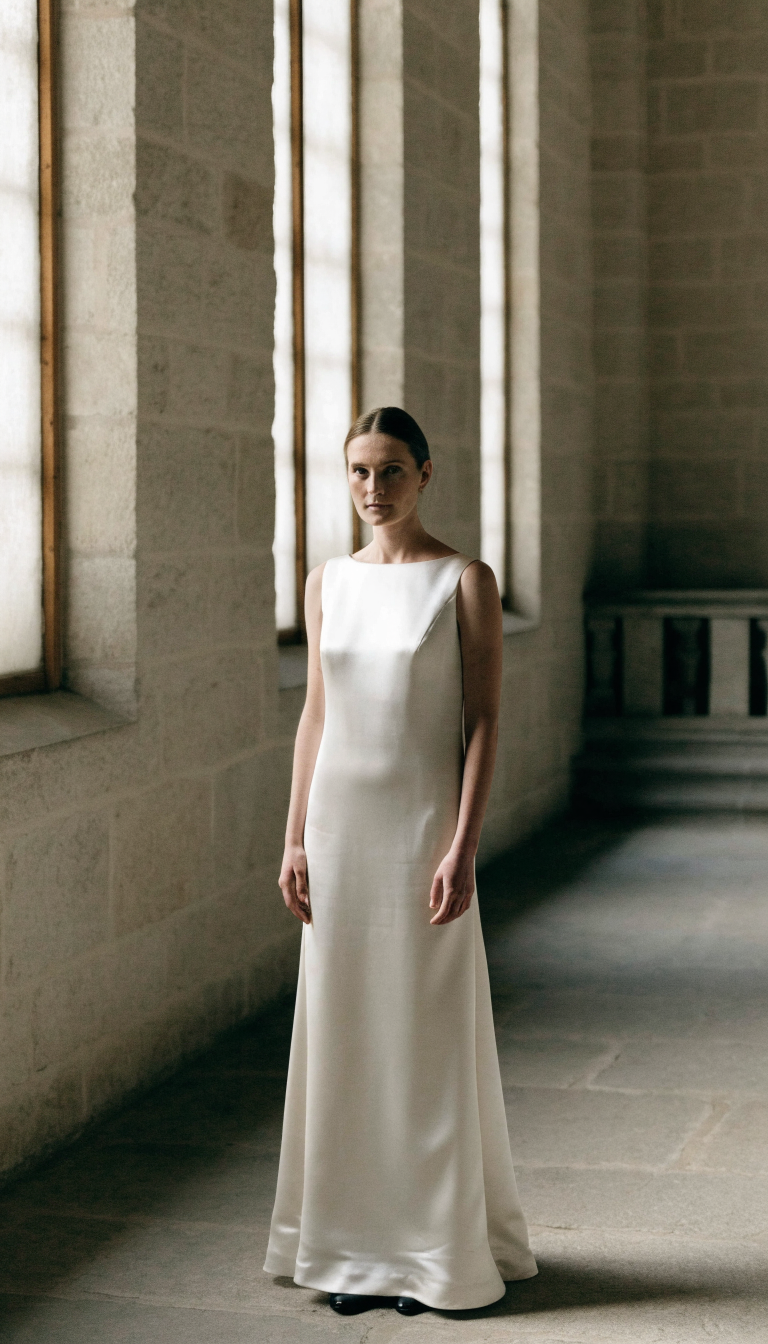
Venue fit: Strong in churches, ballrooms, or city venues where the clean vertical line stands out. Heat note: The density can feel warm in high temperatures or full sun. Alteration complexity: Hemming and minor waist adjustments are straightforward; major reshaping is harder because of the fabric’s stiffness.
3. Bias-Cut Satin Slip
Cut on the bias, a satin slip skims the body in a continuous liquid line with thin straps or a soft cowl. The satin’s gentle sheen catches light along the curves without the need for beading or lace. It is one of the lightest options for simple elegant wedding dresses and moves easily when walking or dancing. The open neckline and low or open back require reliable undergarment support or built-in cups.
Dance-floor ease: Minimal fabric and no structured skirt make turning and sitting simple. Support test: Check that the bodice stays in place when you raise your arms or lean forward. Shoe pairing: Works with both low heels and higher styles because the hem is usually clean and floor-skimming.
4. Stretch Crepe Fit-and-Flare
A fit-and-flare in stretch crepe follows the body through the hips, then opens softly below the knee. The stretch content adds comfort for sitting and moving while the matte finish keeps the look understated. It offers more shape definition than a pure sheath without the restricted movement of a traditional mermaid. The silhouette suits both indoor and outdoor settings and photographs well from the side because the flare creates a graceful line.
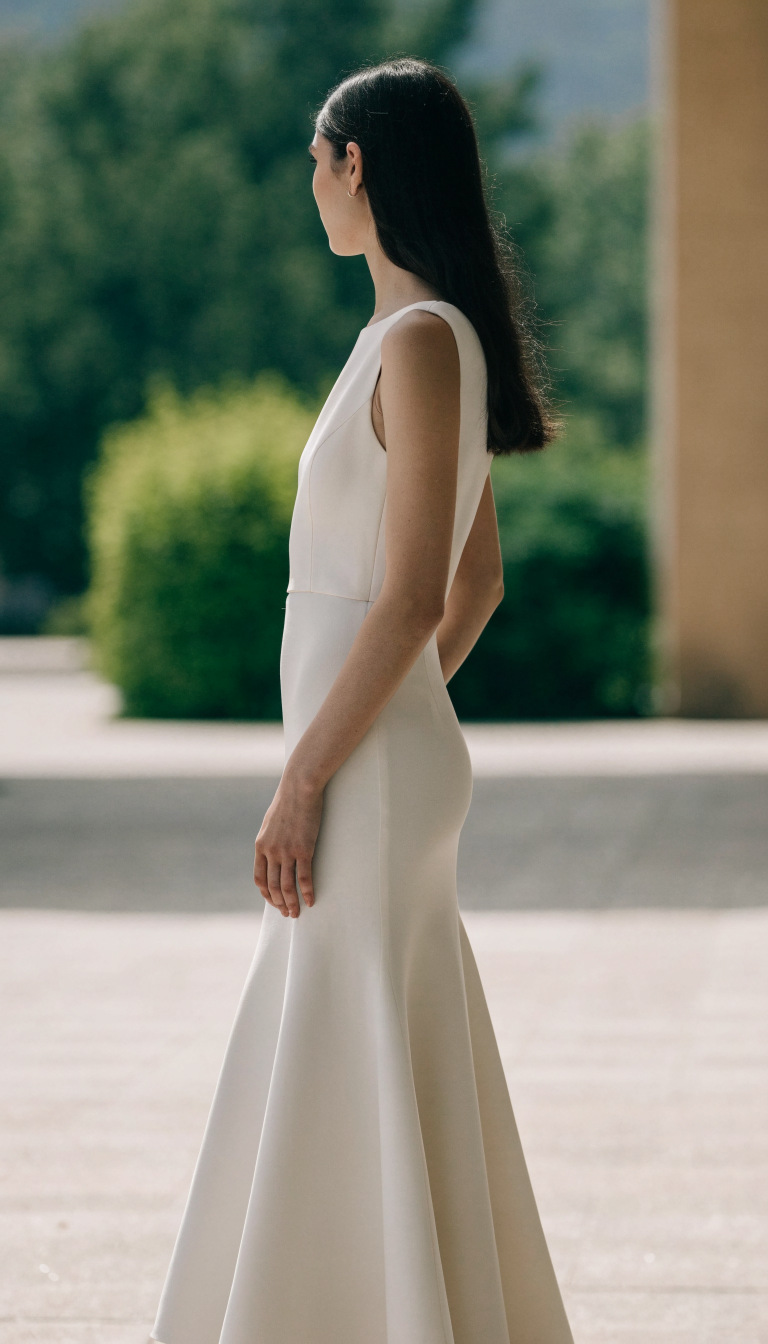
Sitting comfort: Stretch crepe allows you to sit without the fabric binding at the knees. Body preference: Preferred by those who want some curve emphasis with easy walking. Timeline note: Made-to-order versions usually need several months; sample sizes can be altered if the stretch is compatible.
5. Soft Tulle Minimal Ballgown
A single or double layer of soft tulle over a simple lining creates volume without heavy netting or decoration. The bodice stays clean—often a modest V or bateau—and the skirt lifts gently rather than billowing into a full princess shape. The airy fabric feels lighter than traditional ballgowns and moves when you walk, yet still provides a classic elevated silhouette. It works for both formal and garden ceremonies when the weather is mild.
Weight and heat: Lighter than multi-layer tulle; still warm if the lining is dense. Bustle need: A simple bustle or loop keeps the train manageable for dancing. Photo behavior: Soft edges and gentle movement photograph romantically without harsh shadows.
6. Chiffon Empire Silhouette
An empire silhouette places the seam just below the bust and lets a lightweight chiffon skirt fall straight or with soft gathering. The raised waist creates a long, fluid line that many find comfortable for a full day of standing and sitting. Chiffon moves with even a light breeze and stays cool in warmer weather. The style can accommodate modest coverage at the neckline while remaining simple and elegant.
Comfort for long hours: The raised seam avoids pressure at the natural waist. Weather suitability: Excellent for warm or humid climates because chiffon is breathable. Undergarment note: A smooth, supportive bra or built-in cups keeps the bodice clean under the lightweight fabric.
7. Tea-Length Structured Dress
A tea-length dress ends at the mid-calf and uses a structured fabric such as mikado or crisp taffeta to hold a clean A-line or slight flare. The shorter hem makes walking, dancing, and outdoor movement easier while still reading as formal when the fabric has presence. It pairs well with garden, courthouse, or daytime ceremonies and can be more practical for uneven ground or beach settings.
Practical movement: Easier to manage on grass, sand, or stairs than a full train. Re-wear potential: The length and clean lines can work for other formal events after the wedding. Hemming ease: Alterations are usually simpler than on floor-length gowns with trains.
8. Clean Trumpet Shape
A trumpet silhouette stays fitted through the hips and upper thighs, then flares below the knee in a controlled curve. When executed in crepe or a soft satin without added decoration, the shape remains elegant rather than dramatic. The moderate flare gives more walking room than a full mermaid while still creating a defined silhouette. It suits both traditional and modern venues.
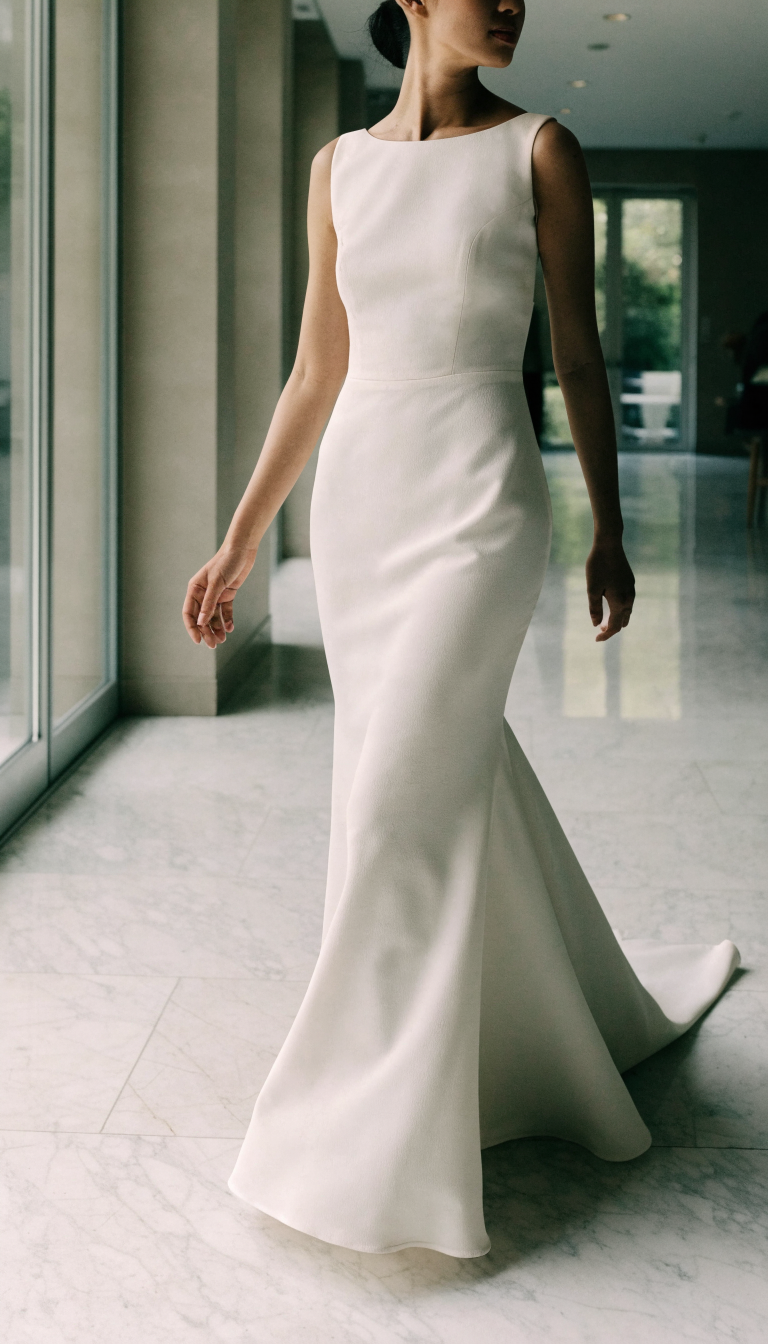
Walking room: The lower flare allows a natural stride once the hem is properly adjusted. Fitting focus: Check hip and thigh fit carefully; stretch versions are more forgiving. Train option: A modest sweep train can be added and bustled without overwhelming the clean line.
Fabrics That Carry the Look
9. Matte Crepe Sheath
A sheath in matte crepe follows the body closely from shoulder to hem with minimal flare. The non-reflective surface keeps attention on the precise cut and clean seams. Crepe’s fluid drape smooths small irregularities while still showing the silhouette, so fit is especially important. The fabric works year-round and photographs evenly in both natural and indoor light.
Fabric feel: Smooth and substantial without shine or stiffness. Heat behavior: Breathes better than dense satins for moderate climates. Alteration tip: Small adjustments at the side seams are common; major changes can distort the clean lines.
10. Luminous Charmeuse Gown
Charmeuse has a fluid, slightly lustrous hand that drapes in soft folds. Used in a column or gentle A-line, it creates liquid movement and gentle light reflection without heavy embellishment. The fabric is lightweight and comfortable against the skin, though it can show undergarment lines if not properly lined. It photographs beautifully in soft light and suits both indoor and mild outdoor ceremonies.
Drape quality: Falls in continuous soft folds rather than holding sharp structure. Lining choice: A lightweight lining prevents cling and keeps the surface smooth. Care during wear: Creases can form if you sit for long periods; a quick steam before photos helps.
11. Crisp Mikado A-Line
Mikado’s dense weave gives an A-line skirt enough body to hold a gentle flare without tulle or petticoats. The low sheen and slight texture keep the dress polished yet understated. The structure makes the silhouette reliable in photos and during movement. It is especially effective for cooler seasons or formal indoor settings where a more architectural fabric is welcome.
Structure without volume: Holds shape cleanly with fewer layers underneath. Season preference: Comfortable in fall, winter, or air-conditioned venues. Budget range note: Mid-to-higher price tiers are common because of the fabric quality and construction.
12. Lightweight Organza Overlay
A simple crepe or satin base with a single layer of organza over the bodice or skirt adds soft texture and a faint sheen without heavy decoration. Organza is crisp yet airy, so it creates gentle volume or a subtle translucent effect while remaining wearable. The combination keeps the overall look simple and elegant while giving a little dimension in photographs.
Layer weight: One layer stays light; multiple layers increase heat and bulk. Movement test: Walk and turn to see how the overlay shifts without catching. Season fit: Works well in spring or mild summer when extra layers would feel too warm.
Necklines and Sleeves
13. Off-the-Shoulder Clean Band
A narrow, structured off-the-shoulder band frames the collarbones and upper arms without adding ruffles or heavy lace. The neckline feels soft and romantic while the clean edge keeps the silhouette modern. It works on A-line, column, and fit-and-flare shapes and suits both indoor and garden venues. Support comes from the band construction and any built-in cups.
Arm movement: Raise your arms to confirm the band stays in place. Climate comfort: Cooler than long sleeves; still offers modest coverage. Photo angle: The horizontal line across the shoulders photographs evenly from the front and side.
14. Square Neck with Structure
A square neckline creates a clean geometric frame at the collarbone and is often paired with light boning or a structured lining for support. The straight edges look modern and architectural on simple fabrics such as crepe or mikado. It provides coverage while remaining elegant and works across many body types. The shape pairs well with both sleeveless and cap-sleeve versions.
Support system: Boning or a firm lining keeps the neckline from gaping. Bra compatibility: Built-in cups or a strapless bra usually work cleanly. Venue versatility: Suitable for church, garden, or city settings because the line is refined.
15. Long-Sleeve Crepe
Long sleeves in a lightweight or stretch crepe add coverage and a continuous line from shoulder to wrist without bulk. The matte fabric keeps the sleeves soft rather than stiff, so they move with the arms. This style suits cooler seasons, formal indoor ceremonies, or brides who prefer more coverage. The sleeves can be set-in or slightly gathered at the shoulder for a gentle shape.
Temperature control: Useful in air-conditioned venues or fall and winter weather. Arm mobility: Stretch crepe versions allow full range for dancing and hugging. Alteration focus: Sleeve length and wrist fit are common adjustments.
16. Cap Sleeve Subtle Detail
A short cap sleeve covers the outer shoulder just enough to soften a strapless or wide-neck bodice. Made in the same fabric as the dress—often crepe or organza—it adds a small amount of structure and coverage without changing the overall simplicity. The detail works on A-line and sheath silhouettes and photographs as a refined accent rather than a separate element.
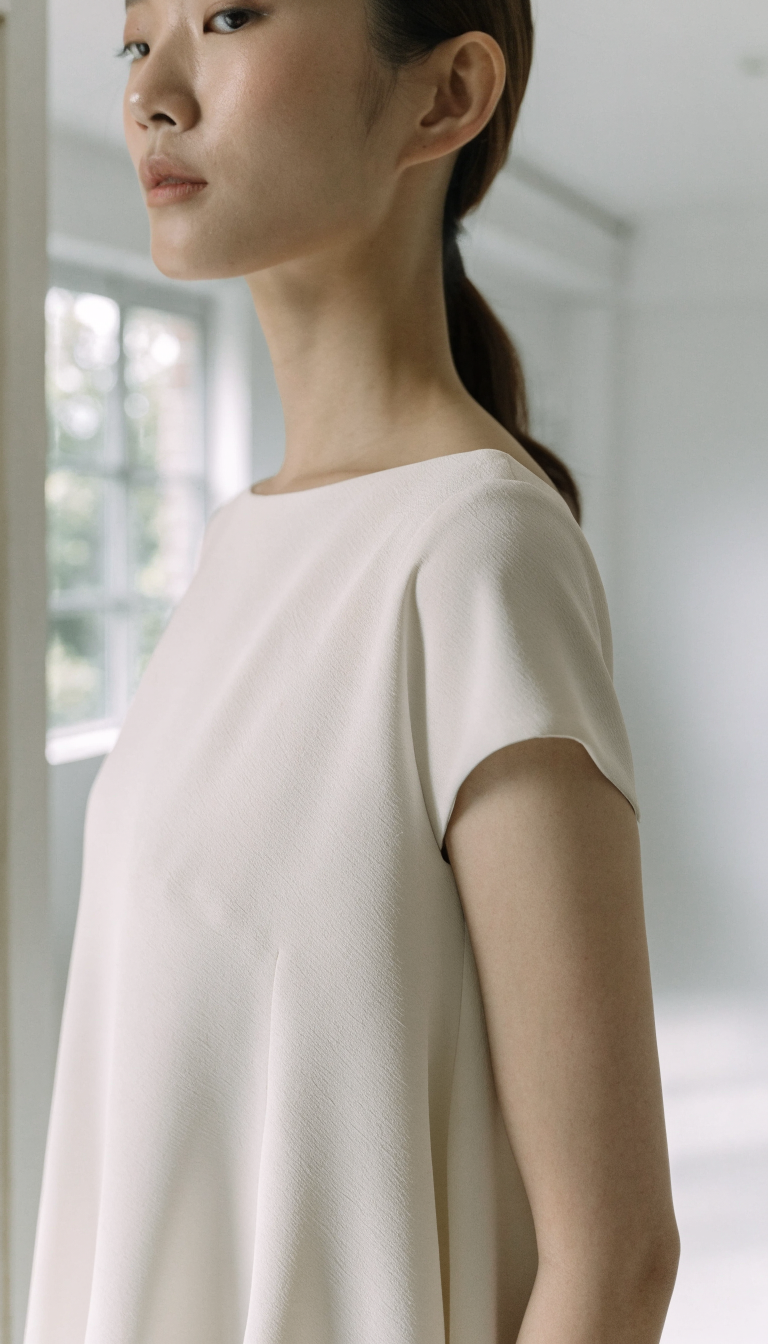
Coverage amount: Enough to feel supported yet still open and light. Fitting check: Confirm the sleeve edge sits smoothly without digging into the arm. Season flexibility: Comfortable in mild weather where full sleeves would feel warm.
17. High Neck with Illusion Panel
A high neck finished with a sheer illusion panel provides modest coverage while keeping the neckline light and elegant. The illusion fabric is usually a fine mesh or organza that disappears against the skin in photographs. Paired with a crepe or mikado body, the style feels refined and works well for traditional or formal venues. Support is typically built into the bodice below the sheer section.
Modesty level: Higher coverage at the neck while remaining soft in appearance. Photo behavior: The illusion panel reads as skin-tone in most lighting. Comfort note: Choose a breathable mesh so the neck area does not feel restrictive.
Practical Details
18. Open Back with Covered Buttons
An open back finished with a row of fabric-covered buttons creates a clean vertical detail without heavy lace or beading. The buttons can be functional or decorative; many styles include a hidden zipper for easier wear. The open area keeps the dress cooler and adds interest from the back view in photographs. It pairs naturally with column, A-line, and fit-and-flare shapes in simple fabrics.
Getting dressed: A helper is usually needed for the buttons or zipper. Cooling effect: The open back helps in warmer venues. Train pairing: Works with a modest sweep train that can be bustled above the button line.
19. Hidden Side Pockets
Deep, well-placed pockets sewn into the side seams of an A-line or gentle flare skirt add everyday function without changing the exterior look. They are especially useful for holding a phone, tissues, or small items during the ceremony and reception. On a simple elegant wedding dress the pockets remain invisible when the hands are relaxed. Construction must be careful so the pocket bags do not pull the skirt out of line.
Everyday practicality: Useful for the ceremony, photos, and reception. Construction quality: Ask to see the pocket bag and how it is reinforced. Skirt balance: Test with items inside to confirm the hem stays even.
20. Detachable Sleeves or Overskirt
Detachable sleeves, a short overskirt, or a removable train let one base dress serve both the ceremony and reception. The base is usually a clean crepe or satin column or A-line; the added pieces provide extra coverage or volume that can be removed later. This approach keeps the overall look simple while offering flexibility for weather or formality changes. The attachment points should be secure and easy to manage.
Flexibility for the day: Add or remove pieces between ceremony and dancing. Attachment security: Check that pins, hooks, or zippers hold during movement. Storage during reception: Plan a place for the removed pieces so they stay clean.
21. Built-In Support Cups
Many simple elegant wedding dresses include molded or lightly padded cups sewn into the bodice so a separate bra is unnecessary. The cups provide shape and coverage while keeping the exterior fabric smooth and uninterrupted. This is especially helpful with strapless, thin-strap, or low-back styles. The cups should sit comfortably without creating visible edges under the outer fabric.
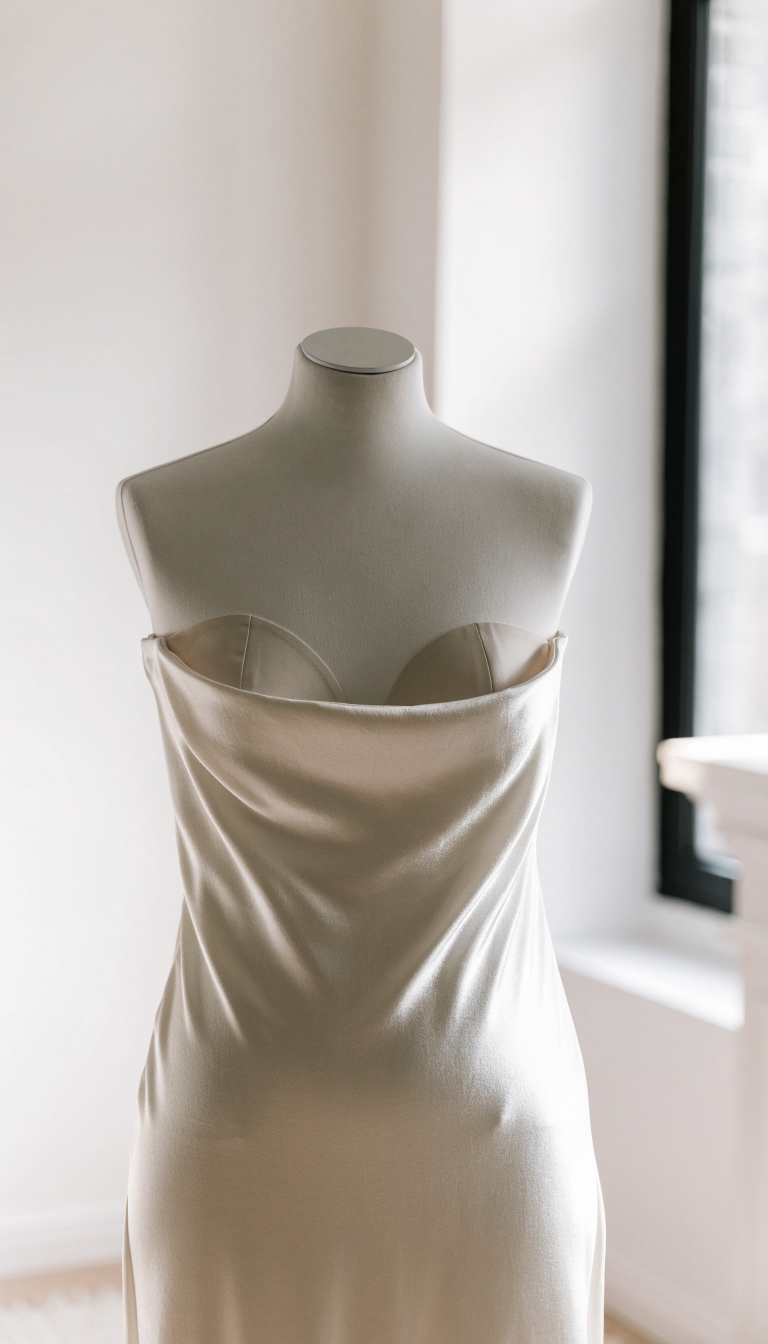
Undergarment freedom: Reduces the need for a separate bra in most cases. Fit test: Lean, raise arms, and sit to confirm the cups stay in place. Adjustment option: Some cups can be swapped or lightly padded during alterations.
22. Lined for Cooler Weather
A fully lined version of a crepe or mikado dress adds warmth and opacity without changing the exterior simplicity. The lining is usually a smooth, lightweight fabric that prevents cling and improves comfort against the skin. This construction works well for fall, winter, or air-conditioned venues. The extra layer also helps the skirt hold a clean shape.
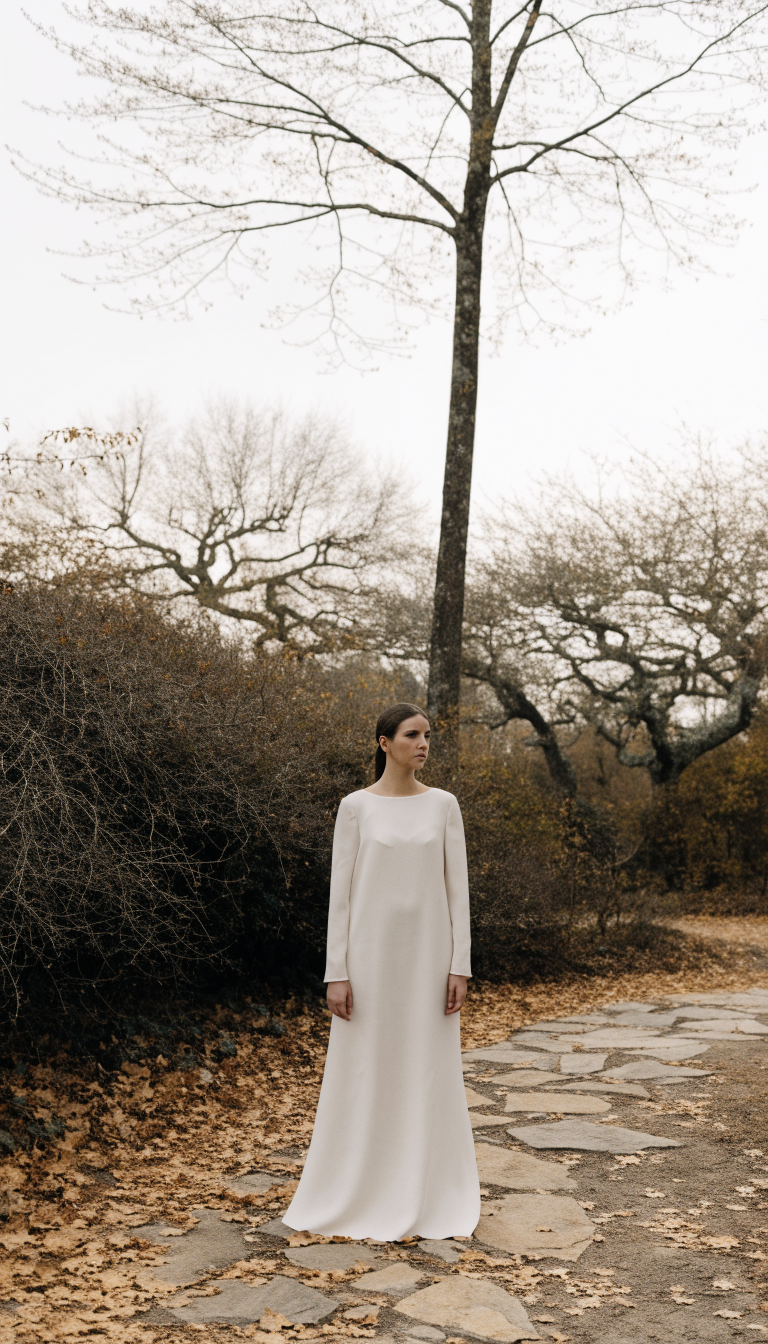
Temperature comfort: The lining adds modest warmth for cooler ceremonies. Opacity benefit: Prevents undergarment lines from showing through lighter outer fabrics. Weight increase: Slightly heavier than an unlined version; still manageable for most days.
23. Flowing Georgette for Beach or Destination
Georgette is a lightweight, slightly textured fabric that moves with the wind and stays cool in warm, humid air. Used in an A-line or empire silhouette with minimal structure, it creates a simple elegant wedding dress that feels appropriate for beach, garden, or destination settings. The fabric drapes softly and photographs with gentle movement. A modest train can be included and easily managed on sand or grass.
Heat and breeze: Excellent airflow and natural movement in outdoor settings. Ground practicality: Shorter trains or tea-length hems avoid sand and grass issues. Lining choice: A soft lining keeps the dress opaque while preserving the light feel.
Choosing among these styles starts with trying on three or four options that match your venue climate and the amount of movement you want. Bring the shoes you plan to wear, a smooth undergarment, and any jewelry that will sit near the neckline. Begin shopping roughly eight to twelve months ahead so made-to-order gowns and alterations have enough time.
FAQ
How far in advance should I order a simple elegant wedding dress? Most made-to-order bridal gowns require several months of production time. Starting eight to twelve months before the wedding is a practical guideline that leaves room for fittings and any unexpected delays.
Are sample dresses a good option? Sample dresses can be less expensive and available sooner, but they may need more extensive alterations because they were tried on by many people. Ask about the original size, fabric condition, and whether the style can still be ordered new if the sample does not fit well.
How many fittings are typical? Three fittings are common: one for the initial alterations, one to check the adjusted fit, and a final check before the wedding. Complex changes or a train that needs bustling can require an extra appointment.
What should I wear under a simple elegant wedding dress? Built-in cups or a smooth strapless bra usually work best. Avoid anything with visible seams or texture that could show through lighter fabrics such as chiffon or charmeuse.
Can these styles work for outdoor or warm-weather weddings? Yes. Lightweight options in crepe, chiffon, georgette, or single-layer tulle are designed for comfort in milder or warmer conditions. Heavier mikado or densely lined dresses are better reserved for cooler seasons or indoor venues.