
A halter wedding dress uses fabric or straps that rise from the bodice and fasten behind the neck, leaving the shoulders bare while offering more built-in support than a strapless style. The neckline draws the eye upward, frames the collarbones, and pairs cleanly with open backs, so the gown reads polished from every angle. Choosing one well means matching the silhouette and fabric to how long you will stand, sit, dance, and move between indoor and outdoor spaces. The list below groups 29 options by silhouette, neckline and back detail, fabric behavior, and practical venue or timeline considerations so you can shortlist quickly on your phone before a salon appointment. Prices mentioned are approximate and vary by designer, fabric, region, and alterations.
Silhouette Pairings for Halter Necklines
1. A-Line Halter Wedding Dress
The A-line silhouette starts fitted through the bodice and flares gently from the waist or hips, so the halter straps create a clean vertical line without adding bulk. Crepe or lightweight satin holds the shape while still allowing the skirt to move when you walk or turn for photos. It suits most venues because the volume stays moderate—neither too slim for a garden aisle nor too wide for a church pew.
Where it sits best: Garden and estate ceremonies where moderate volume photographs well against greenery. Sitting and dancing test: The flare clears the knees easily, so stair climbing and seated toasts stay comfortable. Hem and bustle notes: A simple French bustle usually suffices; plan two to three fittings after the gown arrives.
2. Mermaid Halter Wedding Dress
A mermaid cut follows the torso and hips before flaring near the knees, and the halter neckline balances that curve by drawing attention upward. Stretch crepe or satin with light boning keeps the bodice secure without rigid panels that dig when you sit. The look works for evening ballroom or hotel receptions where the silhouette can catch light along the hips.
Movement reality: Expect a shorter stride until the flare begins; practice walking in the sample size. Support check: Built-in cups or a convertible bra often handle the fitted bodice better than adhesive alone. Alteration timeline: Side seams and the hem usually need more precision work than an A-line.
3. Sheath Column Halter Wedding Dress
The column silhouette falls straight from the shoulders to the floor with minimal flare, letting the halter straps become the main design element. Fluid charmeuse or matte crepe drapes close to the body and shows the neckline’s clean geometry. It reads modern in city venues or courthouse ceremonies where you want structure without volume.
Climate note: Lightweight versions stay cooler indoors; heavier mikado can feel warm outdoors. Undergarment fit: Seamless shapewear under the skirt prevents lines that show through close-fitting fabric. Shoe pairing: A moderate heel keeps the hem from pooling while you walk.
4. Ball Gown Halter Wedding Dress
A ball-gown skirt uses layers of tulle or organza under a structured bodice, so the bare shoulders created by the halter keep the overall look from feeling heavy. Mikado or satin on the bodice holds the neckline firm while the skirt provides the volume. It suits formal indoor ceremonies or winter celebrations where the gown can fill the aisle without competing with outdoor breeze.
Heat warning: Multiple tulle layers trap warmth; test the full weight while standing for several minutes. Bustle complexity: Expect a more involved bustle because of the volume; ask the seamstress how many points are needed. Photo balance: The open shoulders lighten the silhouette against a full skirt.
5. Fit-and-Flare Halter Wedding Dress
Fit-and-flare follows the body through the hips then opens gradually, giving the halter neckline a supportive frame without the extreme flare of a mermaid. Crepe or stretch satin moves with the body and recovers its shape after sitting. The style works well for mixed indoor-outdoor receptions where you will dance and then sit for dinner.
Dance-floor ease: The gradual flare allows longer steps than a true mermaid once you reach the reception. Fabric recovery: Look for a fabric that springs back rather than clinging after heat or movement. Fitting sequence: Bring the shoes you will wear so the hem can be set to the correct break.
6. Trumpet Halter Wedding Dress
The trumpet silhouette stays close through the thighs then flares more dramatically than a mermaid, and a high or mid-neck halter keeps the upper body balanced. Structured crepe or mikado holds the flare without collapsing. It photographs strongly in evening light at hotel or ballroom venues.
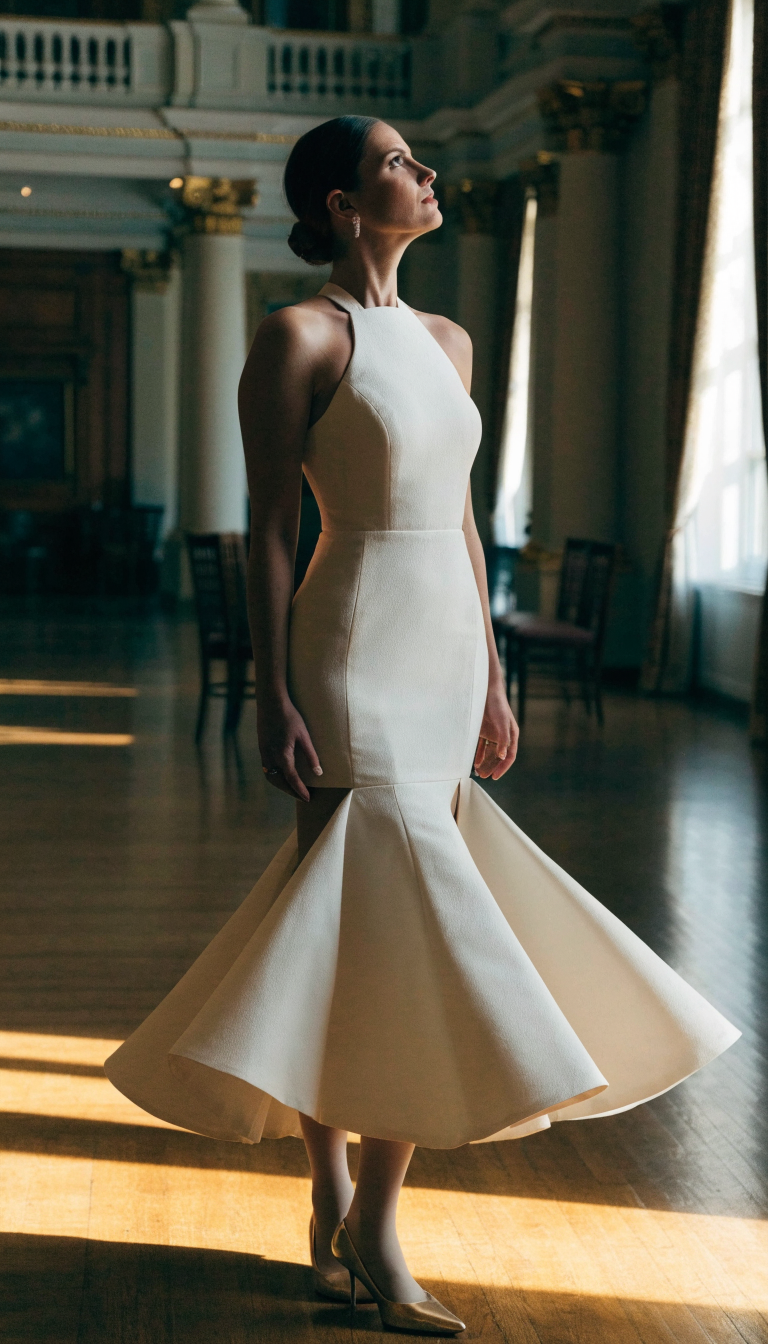
Stair caution: The lower flare can catch on steps; practice the aisle walk in a similar length. Boning placement: Light vertical boning in the bodice supports the neckline without restricting the arms. Train length: A modest chapel train pairs cleanly; longer trains need a clear bustle plan.
7. Empire Waist Halter Wedding Dress
An empire waist sits just under the bust, so the halter straps carry the weight of the bodice while the skirt falls freely. Soft chiffon or georgette creates gentle movement and keeps the look light. It suits outdoor ceremonies or warmer climates where unrestricted airflow around the waist matters.
Comfort through the day: The raised waist reduces pressure on the midsection when you sit or eat. Fabric drape: Chiffon layers move in a breeze without clinging once you start walking. Undergarment simplicity: Built-in cups often provide enough support, so extra shapewear can stay light.
8. Tea-Length Halter Wedding Dress
Tea-length ends mid-calf, and the halter neckline keeps the shorter hem from looking unfinished by framing the shoulders and collarbones. Crisp organza or lightweight satin holds a gentle flare that shows the ankles and shoes. It works for daytime garden, courthouse, or rehearsal-style ceremonies where full length would feel oversized.
Movement freedom: The shorter hem clears the ground and makes stairs, grass, and dancing straightforward. Shoe visibility: Plan the heel height carefully because the hem will show the full shoe. Alteration ease: Hemming is usually simpler and less costly than a floor-length gown with a train.
Neckline and Back Variations
9. High-Neck Halter Wedding Dress
A high-neck version rises close to the base of the throat, offering more coverage in front while the shoulders stay bare. Matte crepe or smooth satin creates a clean architectural line that photographs well in formal settings. The style suits church or traditional ceremonies where modest front coverage is preferred.
Neck comfort test: Wear the sample for several minutes and note any pressure at the nape. Hair and earrings: Pull hair up so the neckline stays visible; statement earrings often replace a necklace. Back option: Pair with a covered or illusion back if full coverage is needed.
10. Plunging Halter Wedding Dress
A plunging front drops into a deep V while the straps still meet behind the neck, creating a balanced contrast between coverage and openness. Fluid charmeuse or satin drapes into the V without gaping when the bodice is fitted correctly. It reads contemporary in evening or hotel venues.
Support solution: Built-in cups or a convertible plunge bra keep the front secure during movement. Fitting check: Raise your arms and lean forward to confirm the plunge stays in place. Modesty note: A higher version of the plunge can still feel covered while remaining graphic.
11. Keyhole Detail Halter Wedding Dress
A small keyhole opening sits at the center of the neckline or upper bodice, adding a precise detail without changing the overall support of the halter. Crepe or lace-trimmed satin keeps the edges clean. The detail works across most venues and adds interest in close-up photos.
Edge finishing: Look for bound or piped edges so the keyhole does not stretch over time. Undergarment visibility: Confirm that any bra or cup sits below the opening. Alteration caution: Enlarging the keyhole later is difficult, so choose the size carefully in the sample.
12. Cowl Neck Halter Wedding Dress
Soft draping across the chest creates a cowl that falls from the neck straps rather than a rigid line. Lightweight silk or charmeuse forms gentle folds that move when you turn. It suits garden or destination ceremonies where a fluid, less structured neckline fits the setting.
Drape behavior: The fabric should settle back into place after you raise your arms. Heat comfort: The open folds allow more airflow than a close-fitting high neck. Lining check: A solid lining under the cowl prevents the folds from becoming transparent.
13. Tie-Neck Halter Wedding Dress
Adjustable ties at the nape let you set the tension of the straps and create a soft bow or long ends that hang down the back. Fluid chiffon or satin responds well to the adjustable fit. The style appears often in destination or outdoor settings where a customizable neckline is useful.
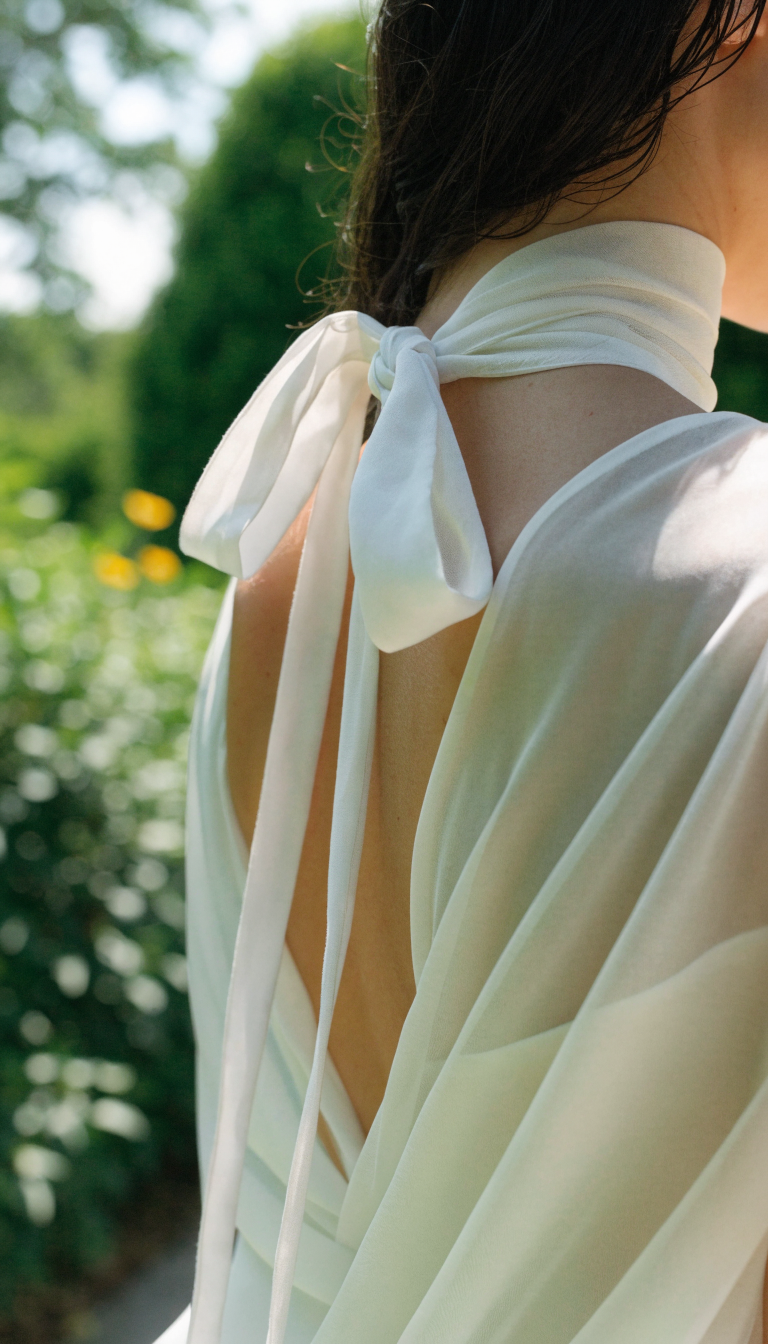
Adjustability benefit: Ties can be loosened slightly for long ceremonies if the neck feels tight. Back interest: The hanging ends add movement without requiring a separate train. Tying practice: Learn the knot before the wedding day so it stays secure while you move.
14. Illusion Back Halter Wedding Dress
Sheer illusion fabric covers the back while the front remains a solid halter, giving the appearance of an open back with more coverage. Lace or plain tulle illusion works over a lined bodice. It suits ceremonies where a fully open back feels too revealing but the shoulder line should still show.
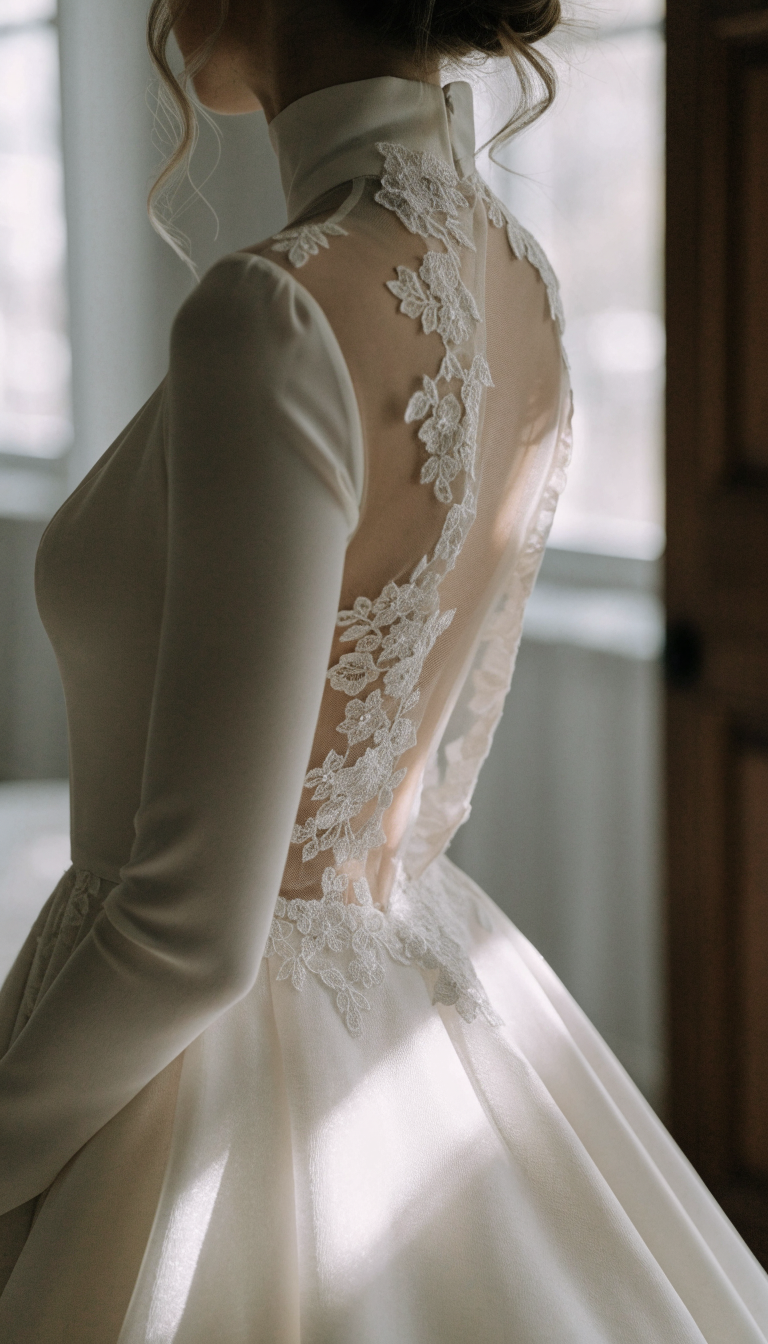
Seam placement: Confirm the illusion edges sit smoothly and do not roll. Undergarment match: Skin-tone cups or built-in support disappear under the sheer panel. Steaming need: Illusion fabric wrinkles easily and usually needs professional steaming before the ceremony.
15. Open Back Halter Wedding Dress
The front stays covered by the halter while the back drops low, often to the waist or below, so the entrance and exit both register. Satin or crepe holds the front cleanly while the open back needs minimal hardware. It photographs dramatically in evening light at hotel or ballroom venues.
Bathroom practicality: Plan how you will manage the open back when using the restroom; a friend or attendant helps. Support source: Most of the hold comes from the neck straps and internal boning rather than a back band. Veil pairing: A long veil can cover the open back during the ceremony if desired.
16. Crossed Strap Halter Wedding Dress
Straps cross at the front or back of the neck, creating an X shape that distributes tension differently from a single band. Stretch crepe or soft satin prevents the straps from digging. The detail adds graphic interest and works in both daytime and evening settings.
Pressure test: Check the cross point for rubbing after wearing the sample for ten minutes. Arm movement: Raise and lower your arms to confirm the straps stay centered. Alteration option: Strap width can sometimes be adjusted if the original placement feels tight.
Fabric Choices That Change the Feel
17. Satin Halter Wedding Dress
Satin provides a smooth surface with a soft sheen that catches light along the neckline and shoulders. Medium-weight versions hold a clean line through the bodice and fall with controlled movement in the skirt. It suits indoor evening ceremonies or winter celebrations where the fabric’s structure stays comfortable.
Light behavior: The sheen photographs well under warm indoor lighting without looking metallic. Wrinkle recovery: Satin shows creases from sitting; plan a quick steam or shake-out before photos. Price tier note: Quality bridal satin often falls in the mid-range once alterations are included.
18. Crepe Halter Wedding Dress
Crepe has a matte, slightly textured surface that drapes close without shine and recovers well after movement. It feels breathable compared with heavier satins and works across seasons when lined properly. The fabric suits modern city or garden venues where a clean, non-reflective finish is preferred.
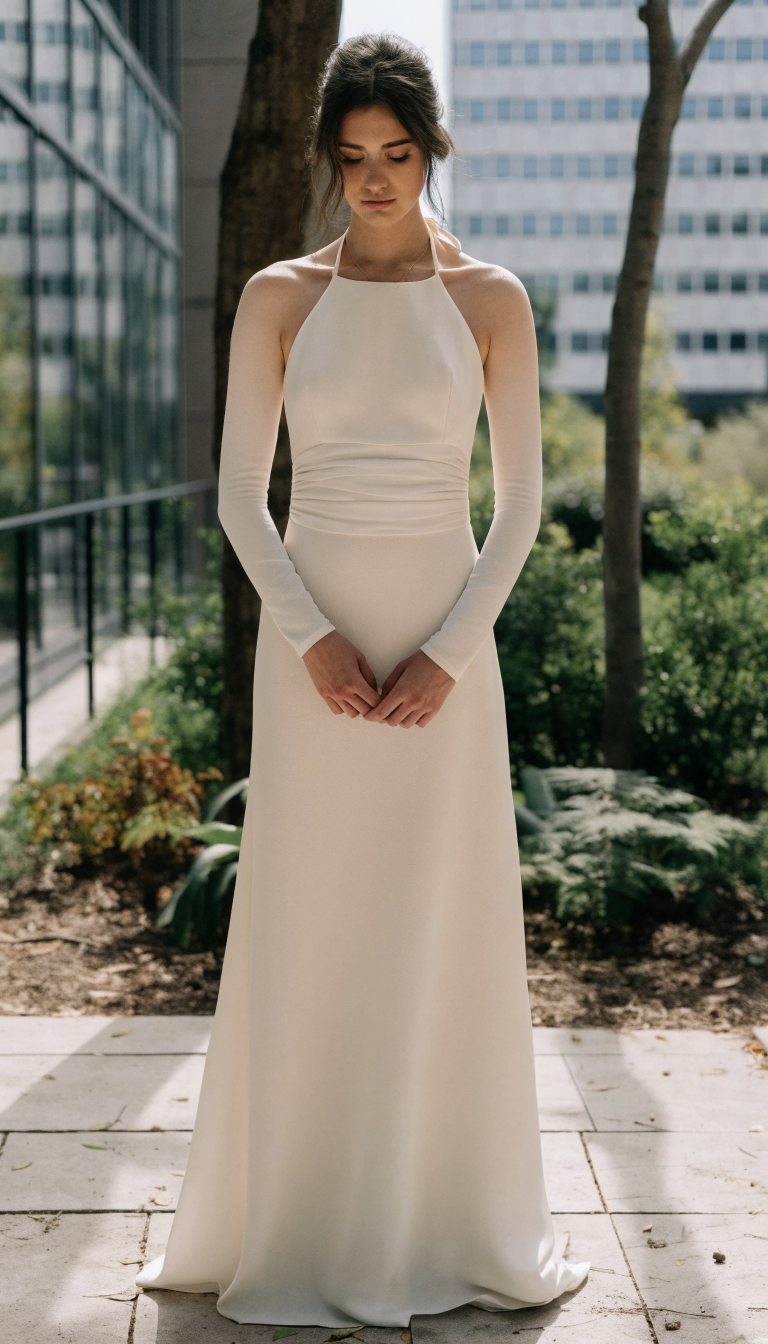
Climate flexibility: It stays cooler than mikado outdoors and warmer than chiffon indoors. Shape retention: Look for a crepe that holds the halter straps without stretching out of shape. Lining importance: A full lining prevents the matte surface from clinging in humidity.
19. Chiffon Halter Wedding Dress
Chiffon is sheer and extremely lightweight, so it is almost always layered over a solid lining or used in the skirt. The fabric moves with the slightest breeze and stays cool against the skin. It is a strong choice for beach, garden, or destination ceremonies in warmer weather.
Airflow advantage: Multiple light layers still allow air to pass, unlike dense tulle stacks. Wind behavior: The skirt can lift; a modest lining or light weight at the hem helps control it. Care note: Chiffon wrinkles easily and usually needs professional steaming the day of.
20. Lace Overlay Halter Wedding Dress
A lace overlay on the bodice or full gown softens the geometric lines of the halter with floral or geometric texture. Alençon or Chantilly lace over crepe or satin adds detail without heavy beading. The combination suits garden or traditional venues where texture photographs well in natural light.
Texture balance: The lace should follow the strap and neckline rather than fighting the shape. Edge finishing: Scalloped or bound edges keep the overlay from fraying after alterations. Weight check: Heavy lace can add warmth; ask about the base fabric underneath.
21. Charmeuse Halter Wedding Dress
Charmeuse is a lightweight silk or silk-blend with a fluid drape and gentle luster that follows the body closely. It creates soft folds around the neck straps and moves easily when you walk. The fabric suits destination or evening settings where a liquid silhouette is wanted.
Drape quality: It settles into natural folds rather than stiff creases. Heat feel: The smooth surface stays cooler than structured satin in moderate temperatures. Alteration caution: Charmeuse can be slippery to sew; choose a seamstress experienced with it.
22. Mikado Halter Wedding Dress
Mikado is a structured silk or polyester blend with a crisp hand that holds architectural shapes, including a firm halter neckline. It resists wrinkles better than lighter fabrics and creates a polished silhouette. It works for formal indoor or cooler-weather ceremonies where structure is an advantage.
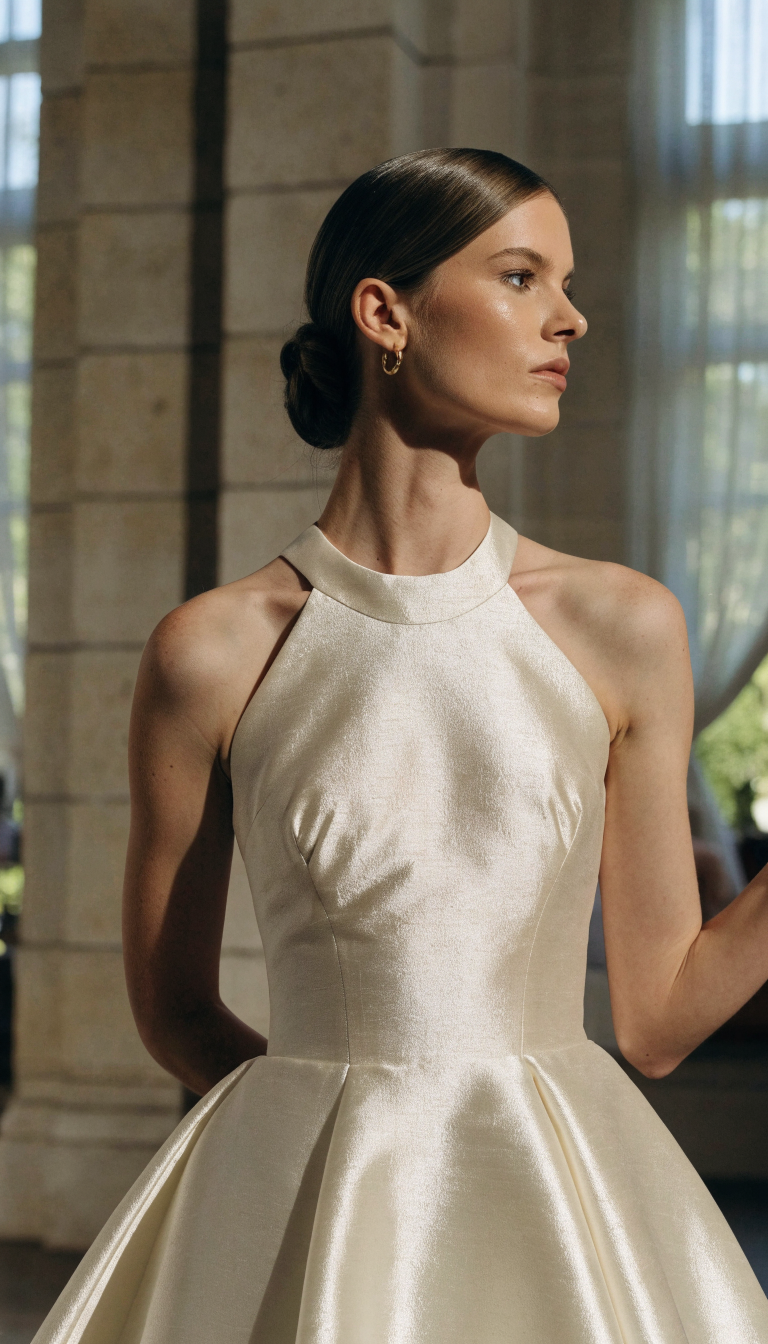
Structure benefit: The fabric keeps the neckline from collapsing even after hours of wear. Weight factor: It is heavier than crepe or chiffon, so test the full gown while standing. Season match: Ideal for autumn or winter indoor events; less comfortable in high heat.
23. Tulle Layered Halter Wedding Dress
Layers of tulle form a soft, voluminous skirt under a fitted halter bodice, adding height and movement without the density of satin. The bodice is often satin or crepe for support while the skirt stays airy. It suits romantic garden or ballroom settings where volume is part of the design.
Layer count: Fewer layers keep the gown cooler and easier to manage in wind. Bustle points: Multiple layers may require more bustle hooks; confirm the plan early. Hem behavior: Tulle can be shortened relatively easily if the length needs adjustment.
Practical Details and Venue Matches
24. Beaded Halter Wedding Dress
Beads or sequins concentrated on the straps and bodice catch light along the neckline while the skirt stays simpler. The embellishment adds weight at the top, so the construction must distribute it through the straps and internal structure. It suits evening or formal venues where the sparkle reads clearly in photographs.
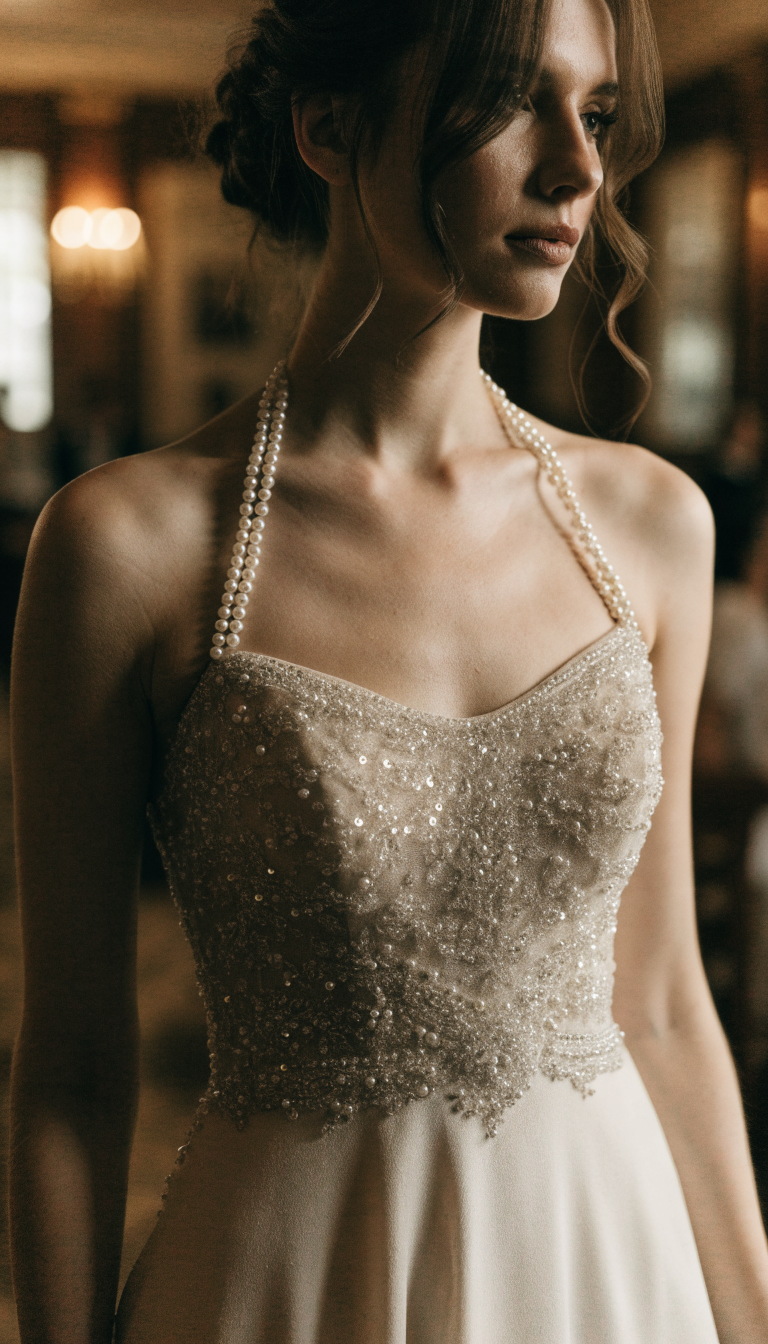
Weight distribution: Try the sample for several minutes to feel whether the beads pull at the neck. Cleaning note: Beading can snag; ask about professional cleaning after the wedding. Budget range: Heavily beaded styles often sit higher once the full cost of construction is considered.
25. Lightweight Beach Halter Wedding Dress
A beach version uses chiffon, georgette, or very light crepe with minimal lining so air moves through the fabric. The halter straps stay secure while the skirt stays short of the sand or can be lifted easily. It fits outdoor coastal or tropical ceremonies where heat and sand are factors.
Sand and wind: A slightly shorter front hem or light weight at the edge reduces drag. Quick dry: Choose fabrics that do not hold water if there is any chance of a splash. Undergarment plan: Adhesive or built-in cups work better than traditional bras in heat.
26. Structured Winter Halter Wedding Dress
Heavier satin, mikado, or crepe with a higher neck or fuller lining provides warmth and structure for cooler indoor ceremonies. The halter still leaves the shoulders bare, so a wrap or cape can be added for outdoor photos. It suits ballroom or hotel venues in autumn or winter.
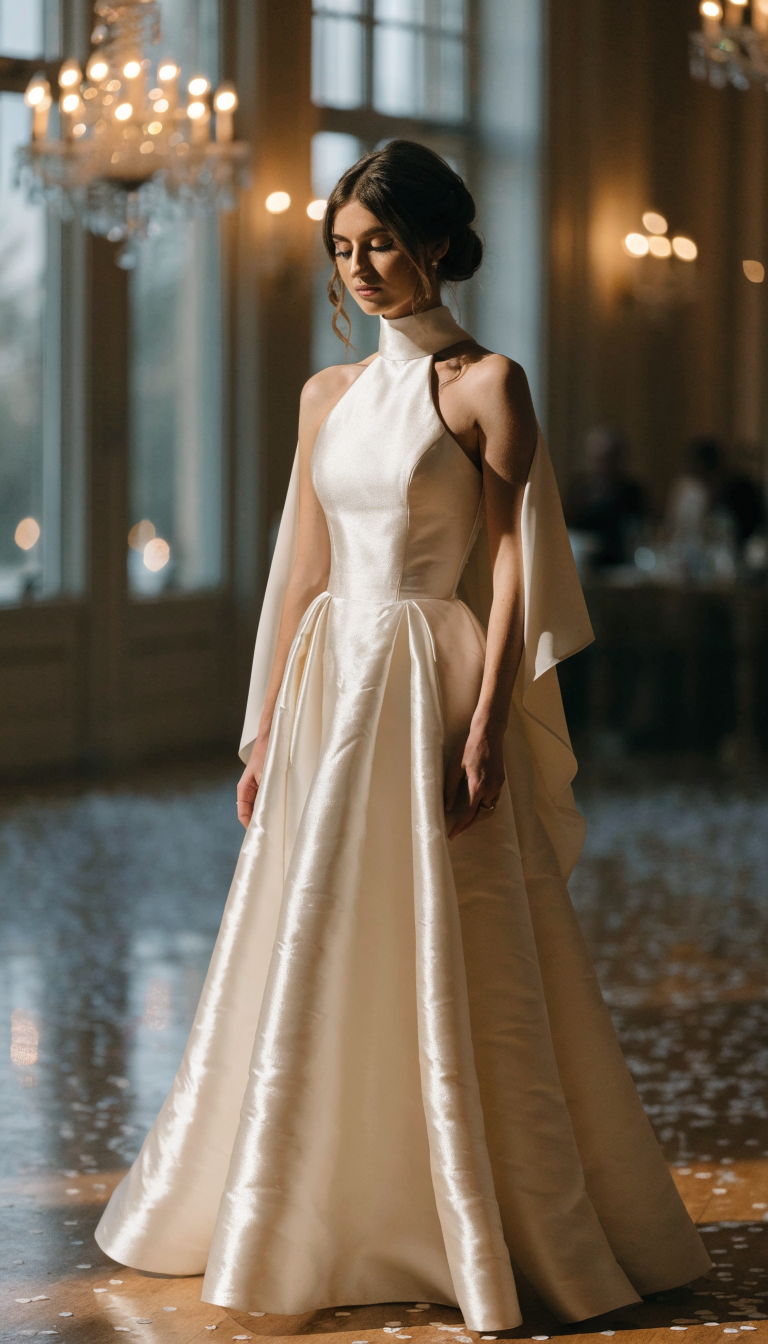
Layering option: A matching wrap or bolero can cover the shoulders between the ceremony and reception. Fabric weight: The denser hand holds shape in cooler air without collapsing. Indoor comfort: Air conditioning can make bare shoulders cool; plan a cover-up for photos.
27. Modest Coverage Halter Wedding Dress
A higher neckline combined with a covered or illusion back and longer sleeves or a matching wrap increases coverage while keeping the halter’s shoulder frame. Crepe or lace over a solid lining maintains the structure. It suits traditional or culturally specific ceremonies where more coverage is preferred.
Coverage balance: The front can stay higher while the back remains open if that fits the dress code. Sleeve addition: Detachable sleeves can be added later if the original design is sleeveless. Fitting priority: Confirm the neckline sits comfortably for the full length of the ceremony.
28. Pocket-Friendly Halter Wedding Dress
Side-seam pockets sewn into an A-line or fit-and-flare skirt give a practical place for a small item without changing the neckline. Crepe or satin holds the pocket shape without sagging. The detail is useful for outdoor or destination weddings where you may want to keep a phone or lipstick accessible.
Pocket placement: Test that the pockets sit at a natural hand height when the gown is on. Weight limit: Keep items light so the fabric does not pull. Alteration note: Pockets can sometimes be added during alterations if the original gown lacks them.
29. Sample or Off-the-Rack Halter Wedding Dress
Buying a sample or ready-to-wear gown shortens the timeline compared with a made-to-order piece that can take several months. Many halter styles appear in sample sizes that can be altered to fit. It is a practical route when the wedding date is closer or the budget needs to stay controlled.
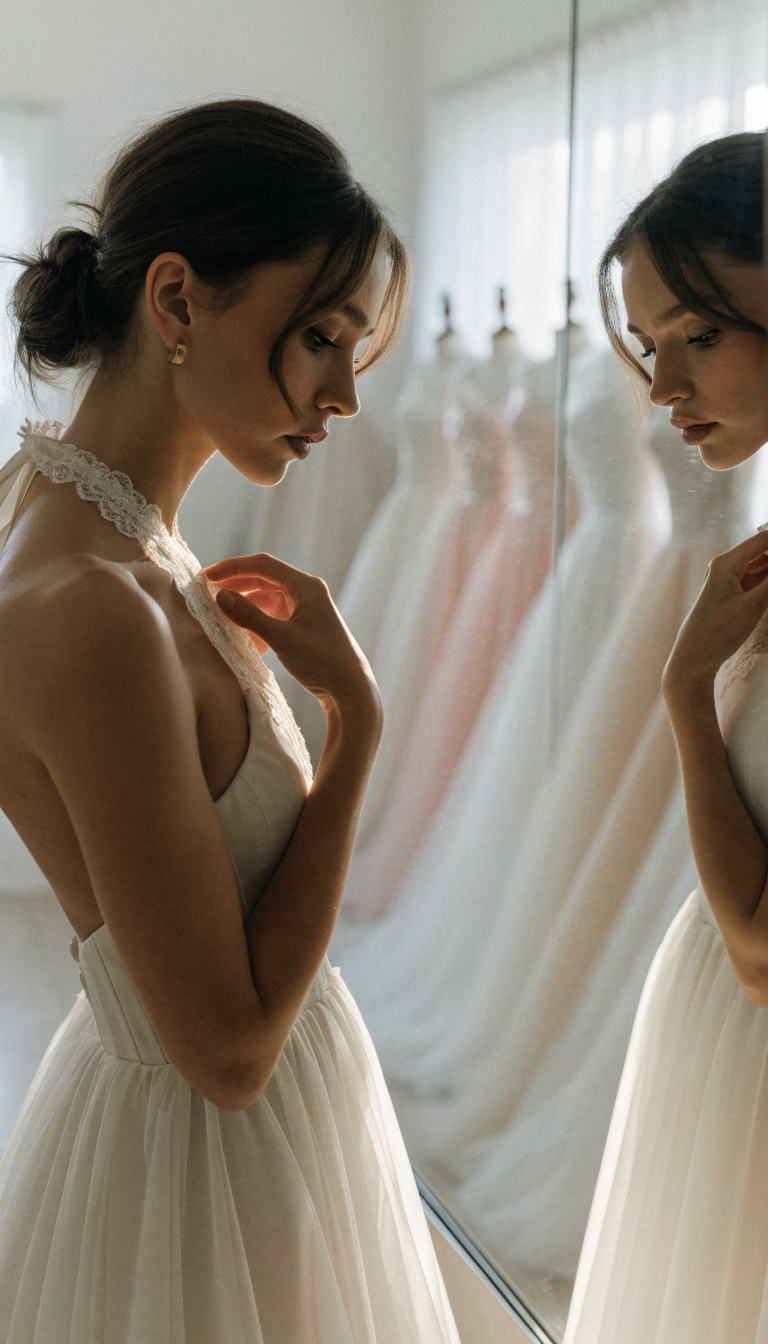
Timeline advantage: Alterations can often be completed in weeks rather than months. Condition check: Inspect for prior wear, missing beads, or stretched straps before purchasing. Fit expectation: Sample sizes vary; budget for more extensive alterations if the closest size is not exact.
Start by narrowing the list to two or three silhouettes and one fabric that matches your venue’s temperature and formality. Bring the shoes, undergarments, and any hair accessories you plan to wear to the first fitting so the neckline tension, hem, and support can be checked together. Most bridal gowns are made to order, so begin shopping several months ahead if you are ordering new rather than choosing a sample.
FAQ
How far in advance should I order a made-to-order halter wedding dress? Most salons recommend starting the search six to nine months before the wedding so the gown can be produced and then altered. Rush options exist at some designers but usually cost more and still require fittings.
What undergarments work with a halter neckline? Built-in cups or a convertible bra that can be configured as a halter often provide the cleanest support. Bring the exact pieces you plan to wear to every fitting so the bodice can be adjusted around them.
Will a halter wedding dress stay comfortable in warm weather? Lightweight fabrics such as chiffon or crepe stay cooler than mikado or heavy satin. Test the gown while standing and moving for several minutes in the salon, and choose fewer skirt layers if the ceremony will be outdoors.
How many fittings should I expect? Most brides complete two to three fittings after the gown arrives. The first sets the major seams and hem; later visits fine-tune the neckline tension, bustle, and any remaining length adjustments.