
Choosing an Indian wedding dress means balancing rich tradition, fabric behavior, and hours of movement through rituals, photos, and dancing. A heavy silk lehenga can look magnificent yet feel restrictive in heat, while a lighter organza option moves more freely but may need careful lining. This list of 30 Indian wedding dress ideas groups classic lehengas, sarees, Anarkalis, and modern fusions so you can match silhouette and material to your venue climate, ceremony length, and comfort needs. Approximate costs vary widely by custom embroidery, region, and designer—often from accessible ready options into higher custom ranges—plus separate alteration fees. Start with the silhouette that supports sitting and walking, then refine fabric and detail.
Classic Bridal Lehengas
1. Traditional Red and Gold Banarasi Silk Lehenga
A full circular or A-line lehenga in deep red Banarasi silk carries the structured sheen and woven zari borders that define many North Indian bridal looks. The fabric holds volume without collapsing, so the skirt photographs with presence during the pheras while the matching blouse and dupatta complete the set. Because the weave itself provides much of the richness, heavy additional embroidery is optional rather than required. It suits formal indoor or evening ceremonies where the weight feels manageable.
- Ceremony weight balance: Silk’s natural body supports long standing rituals without constant readjustment.
- Heat and movement trade-off: Expect noticeable weight after several hours; choose a well-lined skirt for better airflow.
- Blouse and dupatta fit: Prioritize a structured choli with adequate support and practice draping the pallu for photos.
2. Deep Maroon Velvet Lehenga with Antique Gold Zardozi
Velvet’s plush, matte surface absorbs light softly and pairs with antique-gold zardozi for a regal evening presence. The raised metal-thread embroidery adds dimension that catches warm lighting without the high shine of sequins. This combination works especially well in cooler months or air-conditioned venues where the fabric’s warmth is an advantage rather than a burden. The skirt typically needs a smooth lining so it doesn’t cling when you sit.
- Cooler-season match: Velvet’s density keeps the look rich under indoor lights while feeling substantial.
- Sitting and crush note: Request a quality lining and avoid tight folding in transport to preserve the pile.
- Embellishment density: Space zardozi motifs so the weight stays distributed rather than concentrated at the waist.
3. Soft Blush Organza Overlay Lehenga
Layers of crisp yet fluid organza create a light, airy volume that photographs beautifully in natural daylight. Delicate threadwork or scattered pearls keep the surface tactile without adding bulk, making the overall silhouette feel contemporary while still bridal. The overlay moves with walking and gentle dancing, which helps during outdoor or garden ceremonies. A solid underlayer prevents sheerness from showing undergarment lines.
- Daylight photo advantage: Soft color and translucency catch natural light without harsh reflections.
- Breathable layering: Organza stays lighter than silk in warm outdoor settings.
- Lining and support check: Test the full layered skirt while seated to confirm the underlayer stays smooth.
4. Champagne Gold Tissue Silk Lehenga
Tissue silk offers a luminous, slightly sheer quality with a crisp hand that holds soft folds. When cut into a flared lehenga and finished with restrained gold embroidery, it reads elegant for daytime or destination weddings without the opacity of heavier silks. The fabric reflects light gently, so it photographs well against both floral backdrops and indoor décor. Careful steaming keeps the surface even before the ceremony.
- Destination and daytime fit: Lightweight sheen suits travel and bright venues better than dense velvet.
- Drape and wrinkle behavior: Tissue holds shape yet benefits from professional steaming closer to the event.
- Jewelry pairing note: Let the fabric’s glow lead; heavier necklaces can compete with the metallic thread.
5. Rajasthani Mirror Work Lehenga
Small reflective mirrors (shisha) set into dense thread embroidery create sparkle that shifts with every movement. The technique is traditional in certain regions and pairs with vibrant base colors or softer tones for a more modern bridal interpretation. Because the mirrors add both visual interest and slight weight, the skirt benefits from balanced placement rather than full coverage. It performs especially well under evening lighting where the reflections become part of the movement.
- Evening light play: Mirrors catch and scatter light during dancing and processions.
- Weight distribution tip: Ask for mirrors concentrated on borders and panels rather than the entire surface.
- Comfort while dancing: Test full turns to ensure the embellished areas don’t pull or snag.
6. Sequin and Bead Embellished Net Lehenga
Fine net or tulle forms the base, allowing sequins and beads to sit on a lightweight structure that still creates volume. The result feels festive for sangeet or reception while remaining more breathable than solid silk. Scattered or border-focused beadwork keeps the skirt from becoming rigid. A well-fitted blouse and supportive underlayer help the overall look stay polished through long hours.
- Dance-floor movement: Net’s flexibility supports walking and dancing better than stiff brocade.
- Embellishment placement: Border and panel work reduces overall weight compared with all-over coverage.
- Undergarment visibility: Choose a lining that matches your skin tone so the sheer areas stay intentional.
7. Floral Threadwork Pastel Lehenga
Soft peach, mint, or powder-blue silk or georgette carries raised floral embroidery that adds texture without metallic heaviness. The pastel palette reads fresh for daytime or spring ceremonies and photographs cleanly against greenery. Threadwork in matching or slightly deeper tones keeps the surface tactile and dimensional. The silhouette usually follows a comfortable A-line that accommodates a range of body proportions.
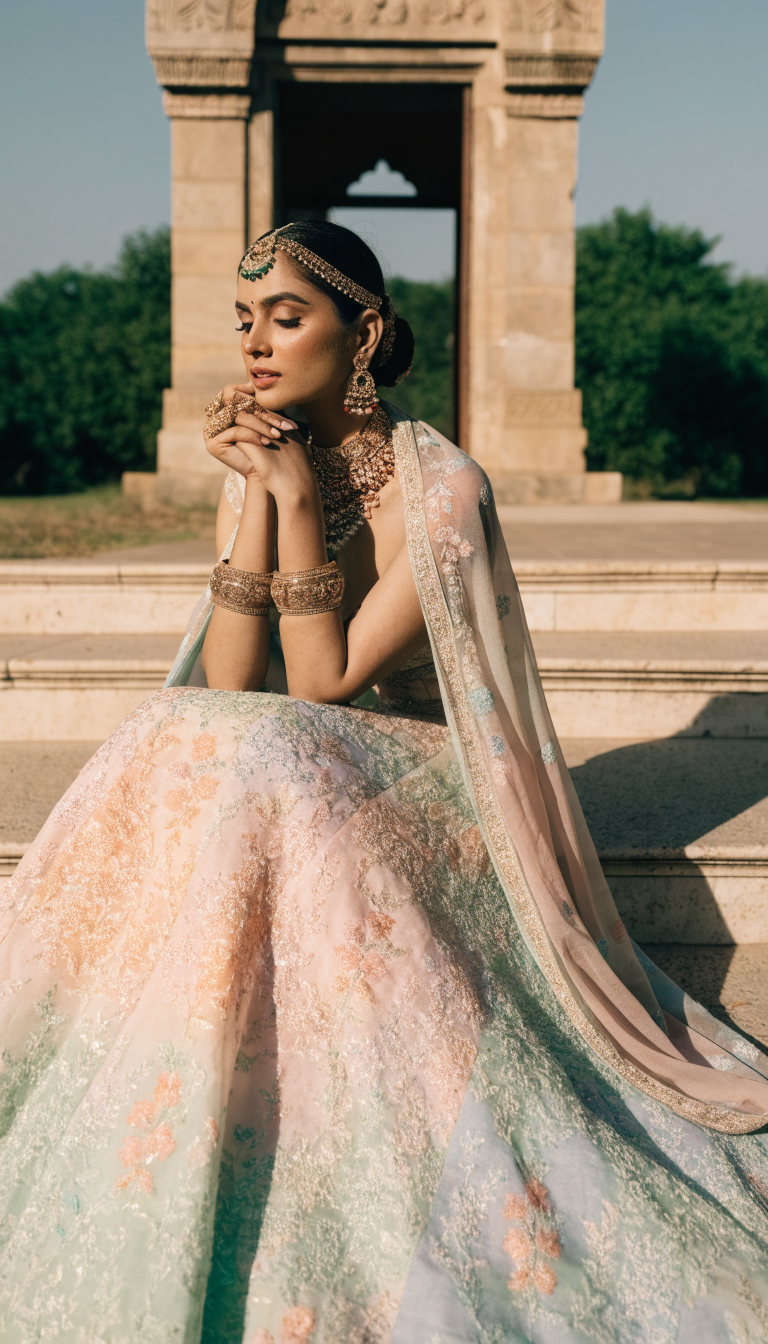
- Garden and outdoor setting: Soft color and lightweight base suit natural light and open venues.
- Texture without bulk: Floral threadwork provides interest while the base fabric stays fluid.
- Color under lighting: Pastels can shift under warm tungsten lights; review samples in similar conditions.
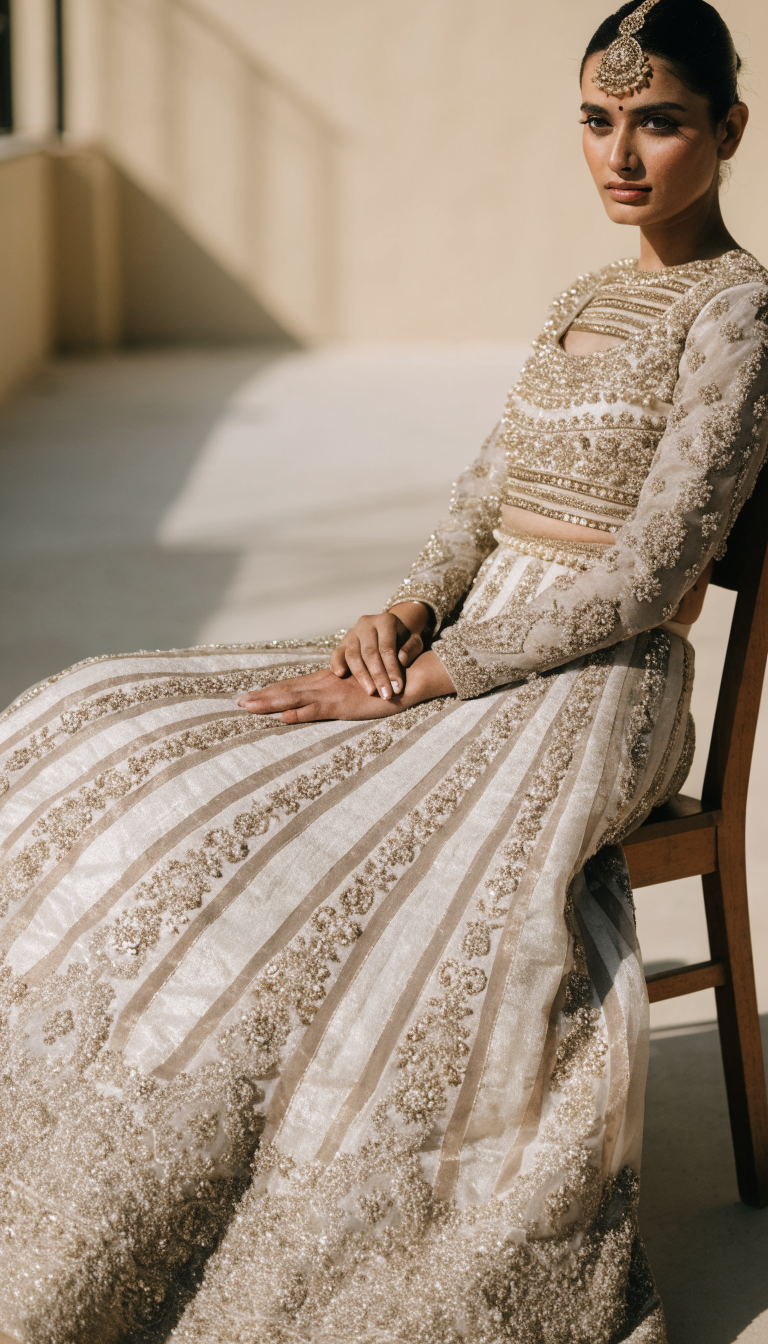
8. Minimalist Ivory Lehenga with Subtle Gold
An ivory or soft champagne base with sparse gold thread or bead detailing offers a quieter bridal alternative to saturated reds. The restrained embroidery lets the silhouette and fabric quality lead, which works for intimate ceremonies or couples who prefer less visual weight. Silk or high-quality georgette holds the shape cleanly. It pairs well with gold jewelry that supplies the traditional sparkle.
- Intimate ceremony scale: Cleaner lines suit smaller venues where heavy embroidery can overwhelm.
- Fabric quality focus: Look for even weave and soft drape rather than dense surface decoration.
- Jewelry and hair balance: Let traditional ornaments provide the ceremonial richness.
Elegant Saree Options
9. Classic Kanjeevaram Silk Saree
Kanjeevaram silk features a dense, lustrous weave with contrasting borders and a substantial pallu that drapes with authority. The fabric’s natural structure helps the saree stay in place during long rituals, and the weight is distributed across the body rather than concentrated at the waist. It remains a strong choice for South Indian traditions and for brides who prefer a single draped piece. Proper blouse fit and a well-practiced drape are essential.
- Ritual duration comfort: Even weight distribution can feel easier than a heavy lehenga skirt during extended standing.
- Drape practice needed: Arrange a trial drape with your stylist so the pallu and pleats stay secure.
- Blouse structure priority: A well-fitted, supportive blouse keeps the overall silhouette polished.
10. Banarasi Silk Saree with Broad Pallu
The characteristic gold or silver zari borders and motifs of Banarasi silk create richness through the weave itself. A broad pallu adds visual weight at the shoulder and photographs dramatically when draped over the head or across the body. The silk has a crisp yet fluid hand that holds pleats well. It works across many regional ceremonies when the color and border scale match the formality of the event.
- Pallu drama control: Decide early whether the pallu will cover the head or rest on the shoulder for photos.
- Weave versus added work: The inherent zari reduces the need for heavy surface embroidery.
- Movement through rituals: Practice walking and sitting so the drape remains even.
11. Contemporary Draped Organza Saree
Lightweight organza with a soft sheen and minimal or tonal embroidery creates a modern draped silhouette that moves more freely than traditional silk. The fabric photographs with a gentle translucency that suits daytime or destination settings. A pre-stitched or carefully pinned version can reduce draping stress on the day. It still requires attention to underlayers so the overall look stays intentional.
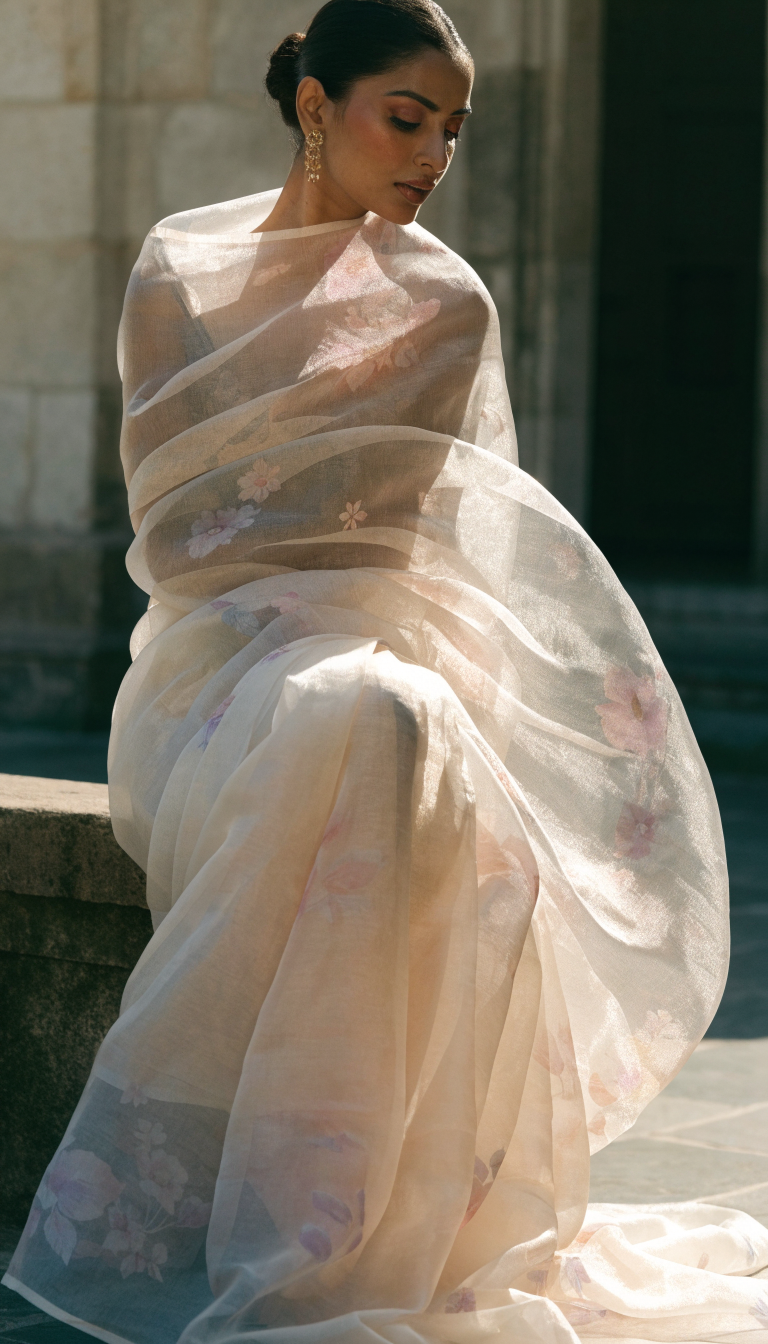
- Destination travel ease: Organza packs lighter and wrinkles less severely than some silks.
- Modern drape flexibility: Lighter weight allows freer movement during processions.
- Sheerness management: Confirm lining and blouse coverage match your comfort level.
12. Embroidered Blouse Paired Silk Saree
A classic silk saree gains contemporary energy from a heavily worked blouse—perhaps with cutwork, zardozi, or bead detailing—while the saree itself remains relatively clean. This combination lets you highlight the blouse as the focal point and still maintain traditional drape. It works when you want the richness of silk without an entirely embellished surface. The blouse construction needs strong support so the embroidery sits correctly.
- Blouse as focal point: Invest in precise tailoring so heavy work on the blouse doesn’t pull or gap.
- Balance of detail: Keep saree borders moderate if the blouse carries dense embroidery.
- Fitting-room support test: Check strap and cup stability with the full jewelry set.
13. Lightweight Daytime Chanderi or Georgette Saree
Chanderi or georgette offers a breathable, fluid hand that suits warmer outdoor ceremonies or daytime events. Subtle woven motifs or light embroidery keep the surface interesting without adding heat-trapping weight. The drape feels softer and less structured than Banarasi or Kanjeevaram, which can be an advantage during long hours in heat. It photographs cleanly in natural light.
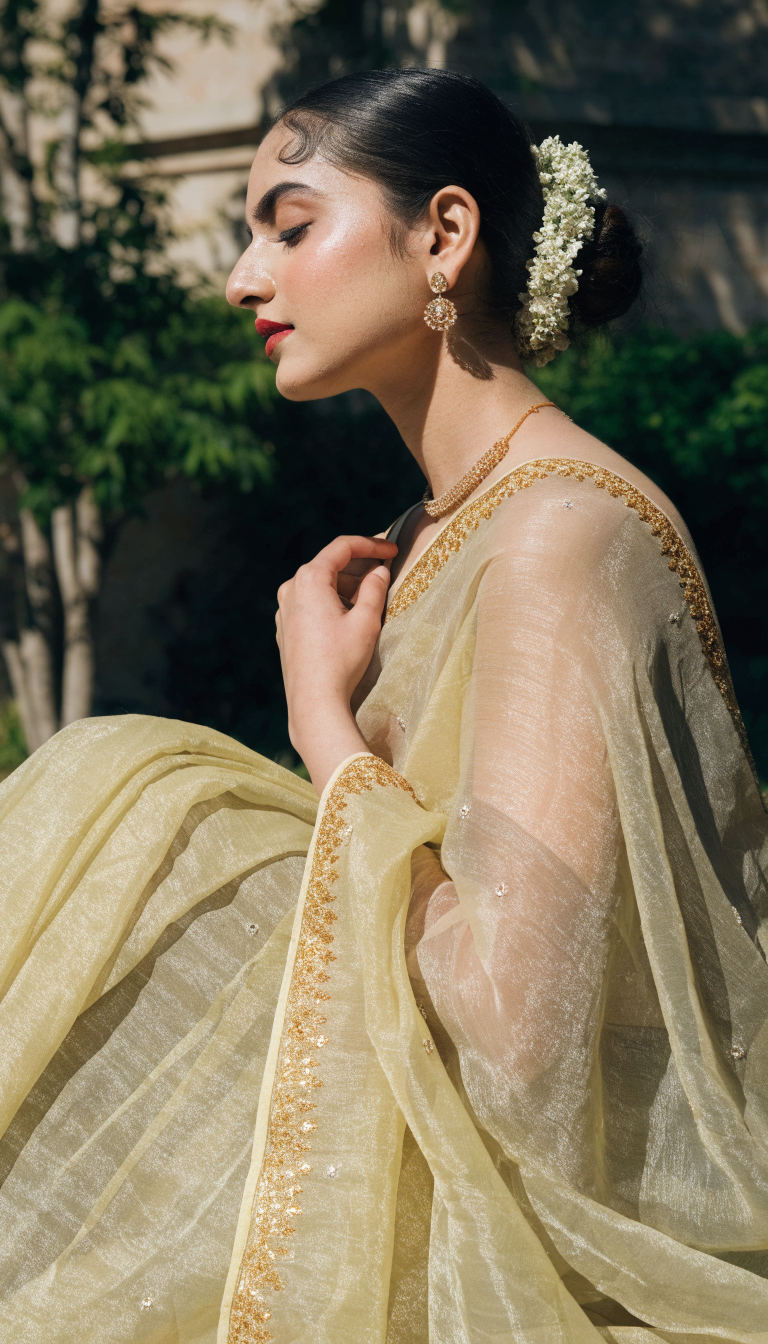
- Warm-climate preference: The open weave and lighter weight improve airflow compared with dense silk.
- Soft drape behavior: Expect gentler folds that move with walking rather than holding sharp pleats.
- Practical re-drape option: Lighter fabric is easier to adjust if the pallu shifts during the day.
Anarkali and Suit Silhouettes
14. Floor-Length Embroidered Anarkali
The fitted bodice and flared skirt of an Anarkali create continuous movement from shoulder to hem while offering more coverage than a lehenga choli. Embroidered panels or border work add bridal formality without the separate skirt weight. Georgette or silk blends keep the flare fluid for walking and dancing. Many brides find the one-piece or coordinated set easier to manage through multiple rituals.
- Coverage and movement: The continuous silhouette supports modest preferences while allowing free steps.
- Flare and sitting test: Sit fully to confirm the skirt doesn’t bunch or ride up uncomfortably.
- Dupatta placement ease: A lighter dupatta stays manageable compared with a heavy lehenga pallu.
15. Flared Pastel Anarkali with Palazzo
A softly colored Anarkali paired with wide palazzo pants creates an elongated line that feels contemporary and comfortable for pre-wedding events or less formal ceremonies. The fabric—often georgette or chiffon—moves easily and photographs with gentle volume. Embroidery can stay concentrated on the bodice and hem so the overall weight remains low. This combination suits brides who want bridal presence with greater ease of movement.
- Pre-wedding event flexibility: Lighter construction works well for sangeet or mehendi when dancing is expected.
- Elongating proportion: The flared top and wide pants create a continuous vertical line.
- Heat and airflow note: Breathable base fabrics help during warmer daytime functions.
16. Sharara Set with Crop Top
Sharara pants flare dramatically from the knee or mid-thigh, creating volume that reads festive while the crop-top or short kurta keeps the waist defined. Embellished borders on the pants and a matching dupatta complete the bridal look for sangeet or reception. The silhouette allows more leg movement than a full lehenga skirt. Choose a fabric with enough body so the flare holds its shape.
- Dance-floor volume: The wide lower flare moves freely during performances.
- Waist definition balance: A well-fitted crop top prevents the pants from overwhelming the proportion.
- Hem and shoe coordination: Confirm the flare length works with your chosen heel height.
17. Gharara with Short Embroidered Kurta
The gharara’s distinctive wide-legged, gathered silhouette offers a refined alternative to both lehenga and sharara. Paired with a short, heavily worked kurta, it creates traditional formality with a slightly different line. Silk or brocade versions hold the structure needed for evening ceremonies. The outfit typically requires careful length adjustment so the gathers fall correctly.
- Structured evening presence: The gathered volume photographs with presence under indoor lighting.
- Length precision needed: Hemming is often essential so the silhouette doesn’t pool or break.
- Modest coverage option: Full-length legs and a longer kurta suit more covered preferences.
Modern Neckline and Fusion Styles
18. Indo-Western Bridal Gown with Cape
A fitted or A-line gown silhouette incorporates Indian embroidery, zardozi, or beadwork and is finished with a detachable or attached cape instead of a traditional dupatta. The cape adds drama for entrances and photos while remaining easier to manage than a long pallu during movement. Fabrics such as organza, silk, or net allow the gown to feel bridal yet contemporary. It works well for receptions or couples blending traditions.
- Entrance and photo drama: The cape creates a strong silhouette that can be removed later for dancing.
- Tradition-blend flexibility: Embroidery keeps the look connected to Indian bridal aesthetics.
- Cape weight and attachment: Test how the cape sits so it doesn’t pull on the shoulders.
19. Off-the-Shoulder Lehenga Choli
An off-the-shoulder or bardot-style blouse paired with a full lehenga skirt offers a romantic neckline while retaining the traditional skirt volume. The exposed shoulders photograph softly, especially with a lightweight dupatta draped across them. Support comes from internal structure or straps that can be adjusted. This neckline suits brides comfortable with the shoulder line and works across many fabric weights.
- Romantic shoulder line: The neckline frames the collarbone and pairs well with statement earrings.
- Support and strap check: Confirm the blouse stays secure during arm movement and dancing.
- Dupatta styling options: A sheer overlay can soften or cover the shoulders as preferred.
20. Cape Sleeve Attached Lehenga
Attached cape sleeves or flowing organza extensions create continuous lines from the shoulder while adding movement. The cape can be embroidered to match the lehenga or left lighter for contrast. This detail modernizes a traditional silhouette without requiring a separate jacket. It photographs dynamically during walking shots.
- Dynamic movement detail: The cape catches air and light as you move.
- Attachment security: Ensure the cape is firmly joined so it doesn’t shift during rituals.
- Layering temperature note: Additional fabric at the shoulders can feel warmer in hot venues.
21. Halter Neck Heavy Embroidered Blouse Lehenga
A halter-style blouse concentrates embroidery and structure at the neck and bust while leaving the back more open. Paired with a full lehenga, it creates a strong vertical line that many find flattering. The neckline requires secure fastening and adequate support so the weight of the embroidery stays comfortable. It suits evening ceremonies where the open back can be styled with jewelry.
- Vertical emphasis: The halter draws the eye upward and pairs well with a maang tikka.
- Back and neck support: Test the closure and any built-in cups during a full fitting.
- Jewelry coordination: Choose necklaces that complement rather than compete with the neckline.
22. Long Sleeve Bridal Blouse with Lehenga Skirt
Full or three-quarter sleeves on the blouse add coverage and a polished line while the lehenga skirt supplies traditional volume. Embroidered sleeves can echo the skirt’s motifs for cohesion. This combination works for cooler venues, modest preferences, or brides who prefer more arm coverage. The sleeve fit needs attention so it doesn’t restrict movement at the elbow.
- Coverage preference match: Sleeves provide an alternative to strapless or short-sleeve options.
- Elbow and arm movement: Confirm you can raise your arms fully for rituals and photos.
- Sleeve embroidery weight: Keep dense work lighter on the sleeves to avoid pulling.
23. Corset-Back Structured Lehenga
A corset-style or lace-up back on the blouse creates adjustable structure and a defined waist while the lehenga skirt remains full. The lacing allows fine-tuning of fit closer to the event. This construction suits brides who want strong support and a sculpted silhouette. It requires multiple fittings so the lacing and boning sit comfortably for hours.
- Adjustable support feature: Lacing can accommodate minor size changes between fittings.
- Boning and comfort check: Ensure the structure doesn’t dig when you sit for extended periods.
- Fitting timeline note: Plan extra appointments so the back closure is finalized early.
Specialty Fabrics and Embellishments
24. Pearl and Crystal Detailed Lehenga
Scattered or clustered pearls and crystals add subtle luminosity that catches light differently from sequins. The embellishment stays relatively lightweight when placed strategically on borders and motifs. It pairs well with softer base colors and creates a refined bridal surface. The stones need secure attachment so they remain intact through movement.
- Soft light reflection: Pearls and crystals give a gentler sparkle than dense sequins.
- Secure attachment priority: Ask about the method used so stones don’t loosen during wear.
- Overall weight control: Strategic placement keeps the skirt from becoming overly heavy.
25. Gota Patti Border Accent Lehenga
Metallic ribbon (gota) applied in borders and motifs creates traditional shine with a slightly raised, tactile edge. The technique is lighter than full zardozi yet still reads ceremonial. It works across silk or georgette bases and suits both classic and more contemporary color palettes. The ribbon edges should be finished cleanly so they don’t snag.
- Traditional border definition: Gota creates clear edges that photograph well in processions.
- Lighter metallic option: Ribbon work adds shine without the full weight of dense metal thread.
- Edge finishing quality: Check that borders lie flat and won’t catch on jewelry or dupatta.
26. Multi-Layer Tulle Skirt Lehenga
Multiple layers of soft tulle create airy volume that feels lighter than solid silk while still delivering bridal presence. Embroidery or appliqué can sit on the outer layers so the underlayers remain fluid. This construction suits receptions or brides who want movement without dense fabric weight. A structured waistband helps the layers sit evenly.
- Airy volume without density: Tulle layers move freely and reduce overall heat retention.
- Layer evenness check: Sit and walk to confirm the layers don’t shift or bunch unevenly.
- Waistband support: A firm waistband keeps the volume controlled at the top.
27. Dual-Tone Ombre Lehenga
A gradual color shift—such as deep maroon fading into gold or blush into champagne—creates visual interest through the dye or fabric transition itself. The effect can be achieved in silk or organza and reduces the need for heavy surface embroidery. It photographs with dimension under both natural and artificial light. The transition should be even so the skirt reads intentional rather than uneven.
- Color dimension without bulk: The ombre supplies interest while embroidery can stay minimal.
- Even transition quality: Review the gradient in person so the shift looks smooth from all angles.
- Lighting consistency note: Check how the colors read under the actual venue lights if possible.
28. Lightweight Georgette Circular Lehenga
A full circular cut in breathable georgette creates generous volume that still feels fluid and less heat-trapping than silk or velvet. Subtle embroidery or border work keeps the surface bridal. The fabric drapes softly and recovers well from sitting. It is a practical choice for warmer climates or outdoor ceremonies where comfort during long hours matters.
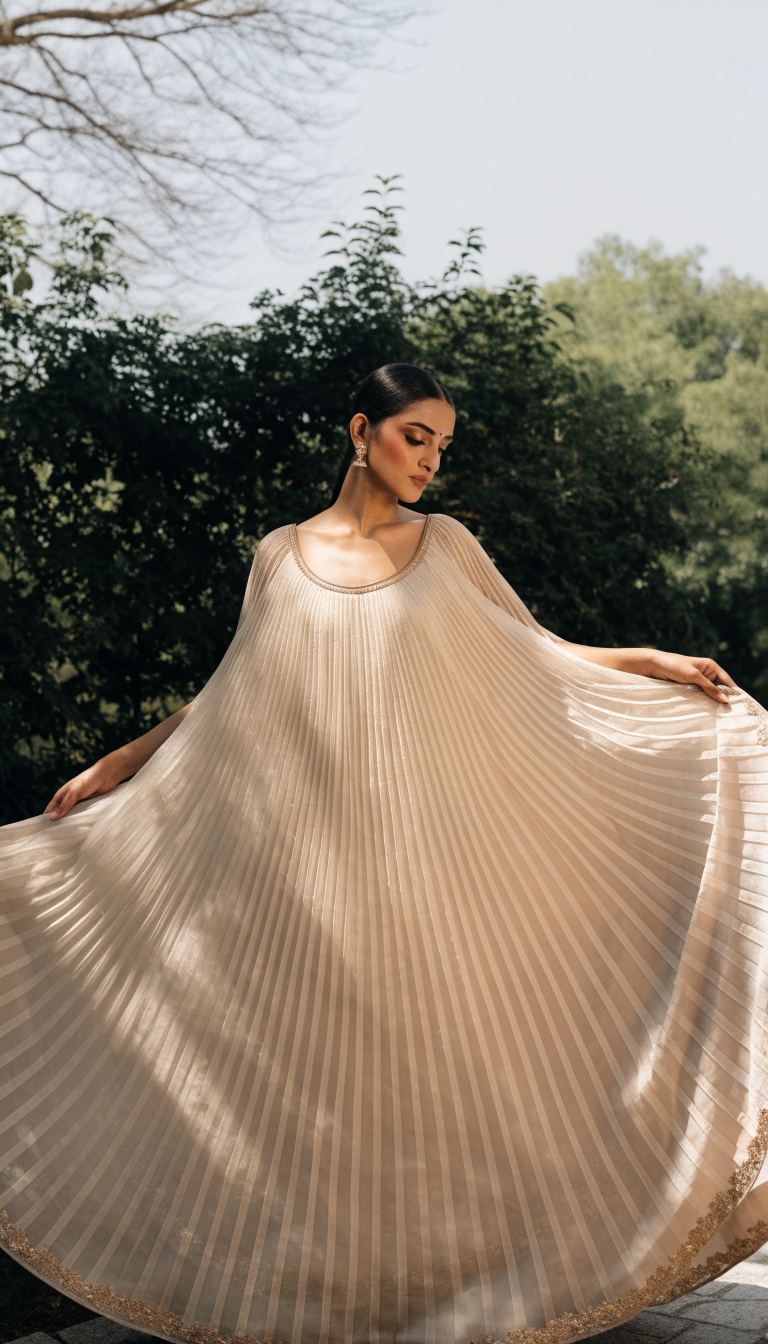
- Warm-weather volume: Georgette’s open weave improves airflow while maintaining flare.
- Recovery after sitting: The fabric generally smooths more easily than stiffer silks.
- Embroidery restraint: Lighter detailing prevents the circular cut from becoming top-heavy.
29. Reception Fusion Cocktail Style Lehenga
A shorter or high-low lehenga skirt paired with a contemporary blouse or crop top shifts the look toward evening cocktail while retaining Indian embellishment. Sequins, beads, or metallic thread keep it festive for the reception. The reduced length or asymmetrical hem improves ease of movement on the dance floor. It suits couples who want a distinct reception outfit separate from the ceremony lehenga or saree.
- Dance-floor practicality: Shorter or high-low hems reduce tripping risk during energetic dancing.
- Evening sparkle level: Concentrated sequin or bead work photographs well under reception lighting.
- Separate outfit planning: Treat this as its own piece so ceremony and reception needs stay distinct.
30. Structured Mikado or Raw Silk Lehenga
Mikado or raw silk offers a matte, structured hand that holds architectural folds and clean lines. The fabric’s body supports minimalist or graphic embroidery and photographs with quiet richness rather than high shine. It works for modern ceremonies or brides who prefer a more tailored silhouette. The structure requires precise tailoring so the skirt falls evenly.
- Architectural drape quality: The fabric’s stiffness creates defined folds that hold through movement.
- Matte surface advantage: Lower shine reduces glare in flash photography.
- Tailoring precision needed: Even hemming and waist construction are essential for the clean line.
Most Indian wedding dresses are made to order or heavily customized, so lead times of several months are common and alterations usually require multiple fittings. Bring clear reference photos, note your venue’s climate and expected ceremony length, and test sitting, walking, and arm movement in any sample. Prioritize the silhouette and fabric that will remain comfortable through the longest parts of your day, then layer embellishment and color to match the formality of each event.
Frequently Asked Questions
How far in advance should I order an Indian wedding dress? Most custom or heavily embroidered pieces need several months for construction and embroidery. Starting six to nine months ahead is a practical guideline so there is time for fittings and any adjustments.
Are sample dresses a good option? Sample or ready pieces can reduce lead time and sometimes cost, but they may require more extensive alterations to fit properly. Always confirm the fabric and construction quality before committing.
How many fittings are typical? Expect at least two to three fittings for a custom lehenga or heavily altered saree blouse. The final fitting should happen close enough to the wedding that minor changes can still be completed.
Can these styles be worn again after the wedding? Many sarees and simpler Anarkalis or lighter lehengas can be restyled for later events by changing the blouse, jewelry, or drape. Heavily bridal-specific pieces with dense red-and-gold work are less frequently reworn in the same form.