
A backless wedding dress reveals the back while keeping the front comparatively covered, which many brides prefer for aisle photos and dancing. The cut can stay modest with a keyhole or illusion panel or go fully open, and the right version depends on how much support the bodice provides, how the fabric behaves against skin, and whether the venue is warm or structured. Most bridal gowns are made to order, so several months of lead time is typical, and alterations usually remain a separate cost that requires multiple fittings. The styles below are organized by back construction so you can match the opening to climate, movement needs, and how much structure you want.
1. Low Scoop Back in Fluid Crepe
A low scoop sits well above the waist and curves gently across the mid-back, so the opening feels intentional rather than fully exposed. Fluid crepe holds a clean line without the high shine of satin; it stretches slightly for sitting and releases without clinging when you stand. This combination works especially well on an A-line or soft column because the skirt weight is carried by the waist rather than the open back. The result photographs cleanly from behind while remaining easy to wear through a long ceremony and reception.
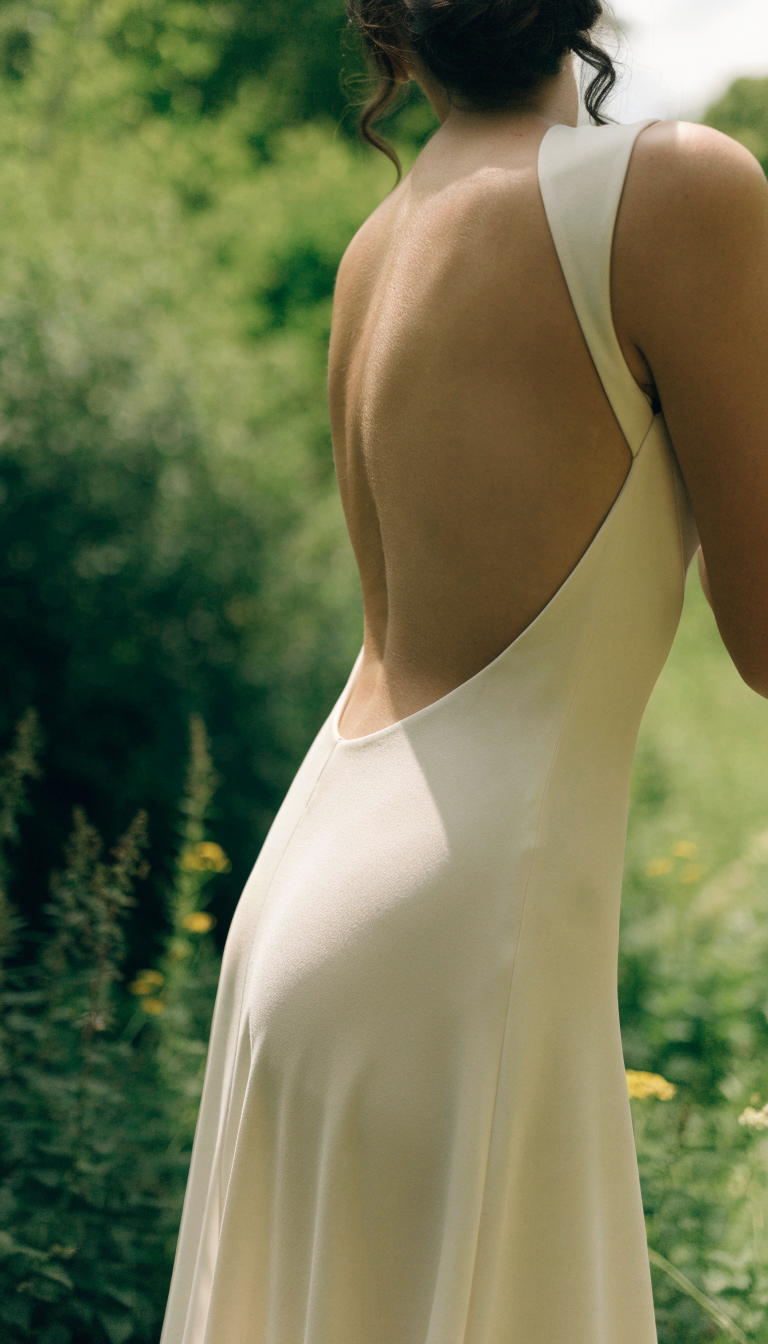
Waist-anchored structure Ask for an internal grosgrain waist stay so the skirt does not pull the front neckline downward.
Crepe movement check In the fitting room, sit and stand several times; the fabric should recover without wrinkling across the lower back.
Venue flexibility Garden and ballroom settings both suit the moderate exposure and matte finish.
2. Deep V-Back Satin Sheath
The deep V drops toward the natural waist or just below, creating a long vertical line that elongates the torso. Heavy satin or silk mikado (a crisp, structured silk with less drape than charmeuse) holds the sharp edges of the V so the opening stays architectural rather than soft. On a sheath or fit-and-flare silhouette the fabric skims closely, which means the bodice needs strong side boning and built-in cups; without them the front can gap. The look reads formal and polished for evening or indoor ceremonies.
Support priority Confirm spiral steel boning and sewn-in cups before you leave the salon; adhesive solutions alone rarely last a full reception.
Satin wrinkle reality Mikado or heavy satin shows creases quickly; plan for steaming right before photos and limit long car rides.
Price tier note Structured satin sheaths with this back often fall in the mid-to-higher designer range once alterations are added.
3. Keyhole Cutout Framed by Lace
A keyhole is a closed shape—teardrop, oval, or diamond—cut into the back and usually bordered by lace or beading. The surrounding fabric keeps more coverage than a fully open back while still showing skin. Floral or scalloped lace grips the body lightly and softens the edge so the cutout feels bridal rather than stark. This style pairs cleanly with A-line or modest mermaid skirts and works in churches or gardens where a fully bare back may feel out of place.
Coverage control The size of the keyhole can often be adjusted during alterations if you want more or less skin visible.
Lace texture test Run a hand over the appliqués; they should lie flat against the skin without snagging or lifting.
Modest-venue match Cathedral and formal garden ceremonies suit the controlled opening better than a fully open scoop.
4. Soft Cowl Back in Charmeuse
Soft fabric is draped across the open back in gentle folds, creating a liquid line that moves when you walk. Charmeuse (a lightweight silk with a quiet sheen) or fluid satin holds the drape without stiffness, so the cowl shifts slightly with each step. The style is usually built into a slip or bias-cut column; the weight of the skirt is minimal, which helps the open back stay comfortable. It photographs with movement and suits warm-weather or evening settings where a heavier fabric would feel restrictive.
Drape stability In the fitting, walk and turn; the cowl should settle back into place rather than bunch permanently.
Heat-friendly fabric Charmeuse breathes better than heavy satin, though a lining is still needed for opacity.
Undergarment note Most brides use adhesive cups or go without a traditional bra; test the combination while seated.
5. Halter Neck Fully Open Back
Straps wrap or tie at the neck, leaving the entire back bare from neck to waist. The halter concentrates support at the neck and shoulders rather than the mid-back, which can feel more secure than thin spaghetti straps for some body shapes. Crepe or soft satin works well because it does not add bulk under the arms. The look has a clean, slightly vintage line and moves freely for dancing once the neck fit is correct.
Neck comfort check Wear the sample for at least ten minutes; pressure at the neck should not dig or shift.
Dance-floor freedom The open back eliminates fabric that can catch or pull during movement.
Alteration complexity Halter adjustments often require more precise fitting than a simple scoop; budget an extra appointment.
6. Illusion Mesh Back with Beading
Sheer illusion tulle or mesh covers the open area and is usually decorated with scattered beads, embroidery, or lace motifs. The mesh provides a light layer of coverage and structure while still reading as bare from a distance. It is commonly used on ball gowns or A-line silhouettes where the skirt volume would otherwise overwhelm a fully open back. The style offers more support than a true open back and photographs with delicate detail rather than pure skin.
Modesty balance The illusion layer lets you keep a traditional bra or built-in cups without visible straps.
Beading weight Heavy beadwork can pull the mesh downward; confirm the placement is secure in the sample.
Season flexibility Works year-round because the mesh adds minimal heat compared with dense lace.
7. Buttoned Corset-Style Open Back
The back is open to the waist and finished with a row of covered buttons or a corset lace-up that stops at the lower edge of the opening. The construction keeps the sides structured with boning so the open area stays clean. Crepe or mikado holds the architectural lines; softer fabrics tend to collapse around the buttons. This version suits formal indoor venues and gives a polished finish that still allows easy movement once the buttons are set.
Bustle planning An under-bustle (attached inside rather than on top) prevents the open back from gaping when the train is lifted.
Button durability Covered buttons can loosen with repeated use; ask the seamstress to reinforce them before the wedding.
Formal venue fit Ballrooms and hotel ceremonies match the structured, finished look.
8. Off-the-Shoulder Scoop Back A-Line
The neckline sits below the shoulders in front while the back opens into a wide, gentle scoop. The off-the-shoulder cut frames the upper back and pairs naturally with an A-line skirt that falls away from the body. Soft crepe or lightweight satin keeps the shoulders comfortable without digging. The combination feels romantic yet practical for outdoor or garden weddings where you want some coverage across the upper arms.
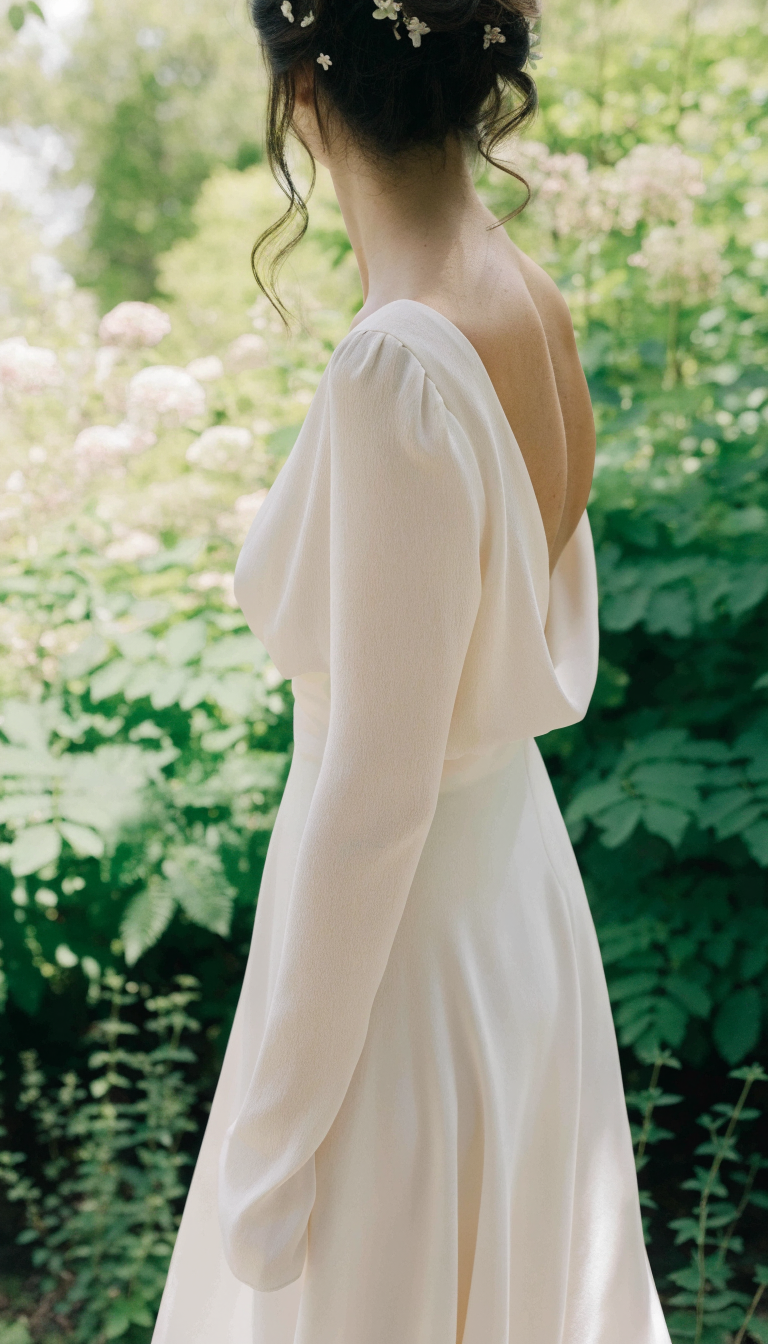
Shoulder comfort The fabric should rest lightly; if it slips, the salon can add light elastic or clear stays.
A-line movement The skirt clears the hips so sitting and walking remain easy even with the open back.
Garden and outdoor match Light fabrics and moderate exposure suit daytime garden or vineyard settings.
9. Long-Sleeve Illusion Open Back
Long sleeves cover the arms completely while the back remains open or finished with illusion panels. The contrast creates a strong visual line from the front and a more dramatic one from behind. Lace or soft crepe sleeves add texture without bulk, and the open back prevents the gown from feeling overly heavy in moderate temperatures. This style works for cooler seasons or venues where full arm coverage is preferred but an open back is still desired.
Temperature balance Sleeves add warmth while the open back releases heat; useful for mixed indoor-outdoor days.
Sleeve fit test Raise your arms and check that the sleeves do not pull the open back out of place.
Cooler-season option Fall and winter ceremonies benefit from the arm coverage without closing the back.
10. Ball Gown with Layered Tulle and Low Back
A full tulle skirt is paired with a low scoop or modest V-back so the volume sits below the open area. The tulle is lightweight and airy, which keeps the overall gown from feeling as heavy as a structured ball gown. Support comes from the fitted bodice and an internal waist stay rather than the back. The silhouette photographs dramatically from every angle and suits formal ballroom or grand indoor venues.
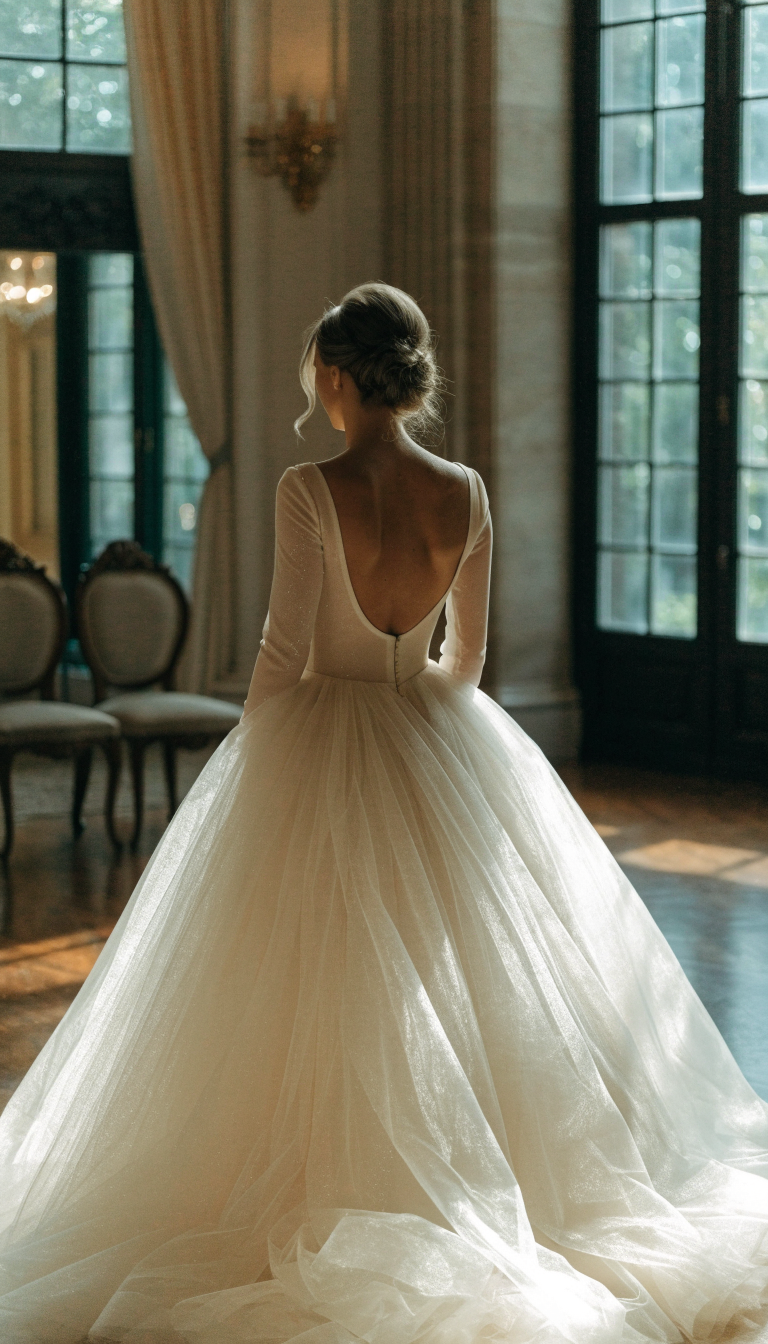
Weight distribution Confirm the waist stay carries the skirt so the open back does not sag.
Tulle snag risk Layered tulle can catch on jewelry or outdoor surfaces; test movement in the sample.
Grand venue scale The volume matches ballrooms and large halls better than intimate spaces.
11. Crisscross Strap Open Back
Thin straps cross over the open back, creating intersecting lines that add visual interest while still leaving most of the skin bare. The straps can be made from the same fabric as the gown or from a contrasting ribbon. Crepe or fluid satin works because it does not stiffen under the arms. The style offers a middle ground between a fully open scoop and a more covered illusion back and moves freely once the straps are adjusted for length.
Strap tension test The straps should stay flat without digging or sliding during a short walk.
Adjustable option Many designs allow the straps to be shortened or lengthened during alterations.
Modern indoor fit Clean lines suit contemporary hotel or loft ceremonies.
12. Bow-Accented Open Back Column
A soft bow or draped fabric detail sits at the base of the open back, usually just above the waist or at the top of the skirt. The bow adds a focal point without closing the opening. Fluid crepe or charmeuse lets the bow fall naturally rather than standing stiffly. On a column or soft sheath the detail keeps the silhouette clean while giving the back more visual weight for photos. It works well for evening or destination weddings where a simple open back might feel too plain.
Bow placement check Sit down in the sample; the bow should not dig into the lower back or shift sideways.
Fabric drape Charmeuse or crepe keeps the bow soft; heavier fabrics can make it look rigid.
Evening and destination match The detail photographs well in low light and travels easily on lighter silhouettes.
Prices for these gowns typically start in the mid-range and rise with designer construction, heavier beading, or custom fabric, and they vary further by region and the cost of alterations. Bring photos of the back style you prefer, wear the shoes you plan to use, and schedule enough time for at least two fittings after the gown arrives. That sequence lets you test support, movement, and how the open back sits once the hem and any bustle are finished.