
A traditional wedding dress relies on established silhouettes, necklines, and fabrics that read as ceremonial in a church, ballroom, or formal garden. The choice affects how easily you walk an aisle, sit for photos, and move during the first dance, plus how the gown photographs and holds up through a long day. This list organizes 26 classic options by silhouette, neckline, sleeve treatment, and construction detail so you can match structure and coverage to your venue, climate, and comfort needs. Most bridal gowns are made to order, so plan several months of lead time; alterations are a separate cost that usually requires multiple fittings. Approximate price tiers appear only where they help with decisions and vary by designer, fabric, region, and alterations.
Classic Silhouettes
1. Ball Gown Silhouette for a Grand Procession
The ball gown pairs a fitted bodice with a dramatically full skirt, often supported by layers of tulle or crinoline that create volume from the waist or hips downward. It delivers the classic princess presence for formal ceremonies while the structured top keeps the upper body defined. Duchess satin or mikado in the bodice adds crisp architecture, while lighter tulle in the skirt allows some movement. The silhouette works especially well when the ceremony involves a long aisle or raised platform.
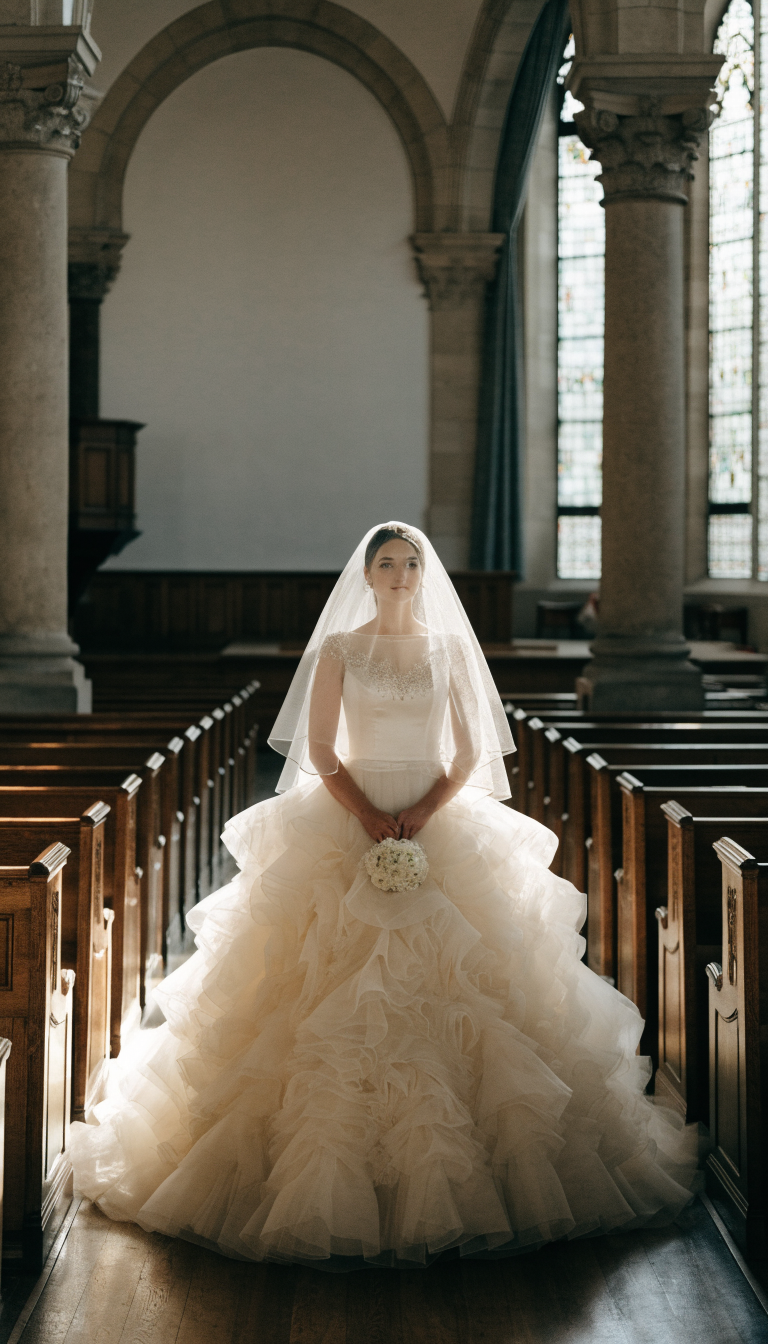
- Aisle and photo presence: The volume photographs clearly from a distance and fills a formal space without relying on heavy embellishment.
- Heat and sitting notes: Multiple skirt layers can feel warm; practice sitting so the fabric does not pool awkwardly under a chair.
- Bustle planning: Expect a multi-point bustle so the skirt can be lifted for dancing without dragging.
2. A-Line Silhouette for Everyday Ceremony Comfort
An A-line dress fits through the bodice and natural waist, then flares gently to the hem in a continuous line that forms the letter A. The gradual volume is less restrictive than a full ball gown yet still provides coverage and a traditional outline. Crepe or soft satin gives a fluid drape, while lace over a lightweight lining adds texture without excess weight. It remains one of the more adaptable shapes for both indoor and outdoor formal settings.
- Venue flexibility: The moderate flare suits church aisles and garden pathways equally well without overwhelming smaller spaces.
- Movement ease: The skirt allows a natural stride and easier navigation in and out of a car compared with fuller styles.
- Hemming reality: Alterations are usually straightforward, though a long train still needs careful bustling.
3. Mermaid Silhouette for Curve-Conscious Formality
The mermaid shape follows the body closely from the bust through the hips and thighs before flaring below the knee into a trumpet-like finish. It creates a strong vertical line that feels distinctly bridal when cut from structured fabrics. Stretch crepe or satin with light boning in the bodice provides support while still allowing limited give. The style is often chosen when the ceremony is seated or processional rather than highly mobile.
- Dance-floor trade-off: The fitted lower section limits long strides; many brides prefer a shorter train or removable overskirt for the reception.
- Fabric choice: Look for a lining with slight stretch so the dress does not feel rigid once you begin walking.
- Fitting focus: Precise hip and thigh measurements matter; multiple fittings are common to keep the flare sitting correctly.
4. Trumpet Silhouette for Balanced Structure
A trumpet gown hugs the body to about mid-thigh, then opens more gradually than a mermaid into a moderate flare. The result feels formal without the extreme restriction of a fully fitted skirt. Mikado or medium-weight satin holds the shape through the upper body, while a softer lining in the lower skirt improves comfort. It offers a traditional silhouette that still photographs cleanly in both close-ups and full-length shots.
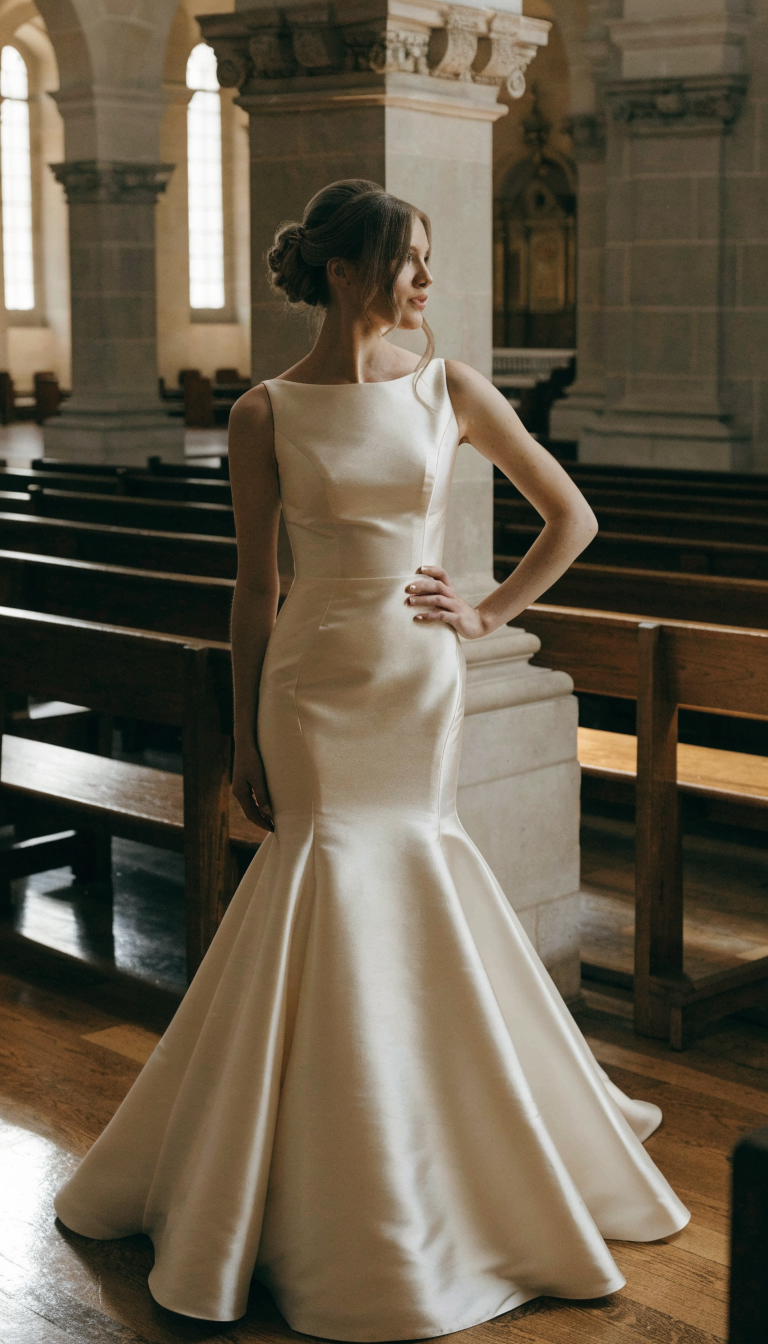
- Walking clearance: The earlier flare gives a bit more step room than a classic mermaid while preserving the fitted look.
- Season pairing: Heavier fabrics suit cooler months; lighter versions with minimal lining work better in mild weather.
- Alteration notes: The transition point from fitted to flared often needs adjustment so the flare begins at the intended height.
5. Sheath or Column Silhouette for Understated Ceremony Lines
The sheath falls in a relatively straight line from shoulder to hem with minimal flare, creating a column effect that emphasizes length and simplicity. Traditional versions use smooth satin or crepe with subtle seaming and light structure rather than heavy embellishment. A modest train can still be added without disrupting the clean outline. The silhouette suits ceremonies where the focus remains on fabric quality and precise tailoring.
- Heat and weight: Minimal layers make this one of the cooler traditional options, though satin can still feel warm under direct sun.
- Undergarment check: Smooth shapewear or built-in cups work best; visible lines show more easily on a close-fitting cut.
- Sample-size reality: Because the fit is precise, buying a sample often requires more extensive alterations than on a fuller skirt.
6. Empire Waist Silhouette for Raised Comfort
An empire waist sits just below the bust, allowing the skirt to fall in soft, uninterrupted folds to the floor. The raised seam creates a traditional, slightly regency-inspired line while reducing pressure around the natural waist. Lightweight chiffon or silk georgette drapes fluidly and moves easily during a processional. The style appears frequently in both historic and contemporary traditional gowns when ease of movement is a priority.
- Sitting and restroom access: The high waist makes sitting and standing simpler than with a tightly defined natural waist.
- Fabric drape: Choose a lining that does not cling; otherwise the flowing skirt can lose its soft volume.
- Train options: A short chapel train pairs cleanly without adding bulk under the raised waistline.
7. Fit-and-Flare Silhouette for Moderate Traditional Volume
Fit-and-flare follows the body through the waist and hips, then opens into a gentle A-line or soft trumpet below the knee. It sits between a true mermaid and a classic A-line, offering definition without extreme tightness. Crepe or satin with moderate stretch provides structure that still allows sitting. Many traditional versions add lace appliqués on the bodice while keeping the skirt relatively plain.
- Dance practicality: The lower flare gives enough room for basic movement once the train is bustled.
- Budget range: These styles often appear in mid-range collections because the construction is less complex than a full ball gown.
- Shoe pairing: A modest heel keeps the flare from pooling too heavily at the front.
8. Tea-Length Vintage Style for Shorter Ceremony Moments
Tea-length hems fall at mid-calf, offering a traditional silhouette with less fabric to manage during the ceremony and early photos. Lace or satin versions with a fitted bodice and modest full skirt evoke mid-century formal wear while remaining practical. The shorter length reduces the need for a full bustle and makes restroom visits simpler. It works well when the ceremony is followed by an outdoor or less formal segment.
- Venue match: Suitable for garden, chapel, or daytime ceremonies where a full train would feel excessive.
- Layering ease: A lightweight slip or petticoat adds structure without the bulk of a floor-length skirt.
- Re-wear note: The length can sometimes be altered further for later events more easily than a full gown.
Timeless Necklines
9. Sweetheart Neckline for Soft Structured Framing
The sweetheart neckline curves in a gentle heart shape across the bust, creating a defined yet soft frame that has remained a staple of traditional gowns. It pairs naturally with strapless or thin-strap bodices that include built-in cups and light boning for support. Satin or lace over a structured base holds the curve cleanly. The shape photographs well from the front and works with both full and fitted silhouettes.
- Support test: In the fitting room, raise your arms and lean forward to check that the neckline stays in place without constant adjustment.
- Climate consideration: Strapless versions expose the shoulders, which can feel cool in air-conditioned venues or warm under direct sun.
- Alteration tip: The curve often needs minor reshaping if the bust measurement changes between fittings.
10. Off-the-Shoulder Neckline for Romantic Coverage
An off-the-shoulder neckline sits below the collarbones and rests on the upper arms, offering a traditional romantic line without full sleeve coverage. It can be cut from satin, lace, or a combination, often with a slight structure so the fabric does not slip. The style frames the neck and shoulders while still allowing a necklace or earrings to show. Many versions include a lightly boned bodice underneath for security.
- Arm movement: Practice raising your arms; the neckline should stay seated without pulling the bodice downward.
- Season fit: Works in mild weather; in cooler months a matching wrap or detachable sleeve can be added for the ceremony.
- Fitting check: Confirm the arm placement feels comfortable when seated, as the fabric can shift with posture.
11. Square Neckline for Architectural Tradition
A square neckline runs horizontally across the upper chest and meets the straps at right angles, creating a structured, classic frame. It appears frequently in traditional gowns made from satin, crepe, or lace and provides clear definition without deep cleavage. The straight line elongates the neck and pairs well with both A-line and column skirts. Light boning or internal cups help the neckline hold its shape throughout the day.
- Jewelry pairing: The open space above the neckline leaves room for a simple necklace without visual competition.
- Coverage level: Offers more upper-chest coverage than a sweetheart while remaining formal.
- Fabric behavior: Structured fabrics hold the corners cleanly; softer materials may need additional internal support.
12. Bateau Neckline for Collarbone Emphasis
The bateau, or boat, neckline follows the line of the collarbones from shoulder to shoulder in a gentle curve, offering modest coverage with a refined traditional look. It is often cut from lace or satin and can include a high back or illusion panel. The wide horizontal line draws attention to the shoulders and neck without exposing much of the décolletage. It works especially well on gowns intended for formal indoor ceremonies.
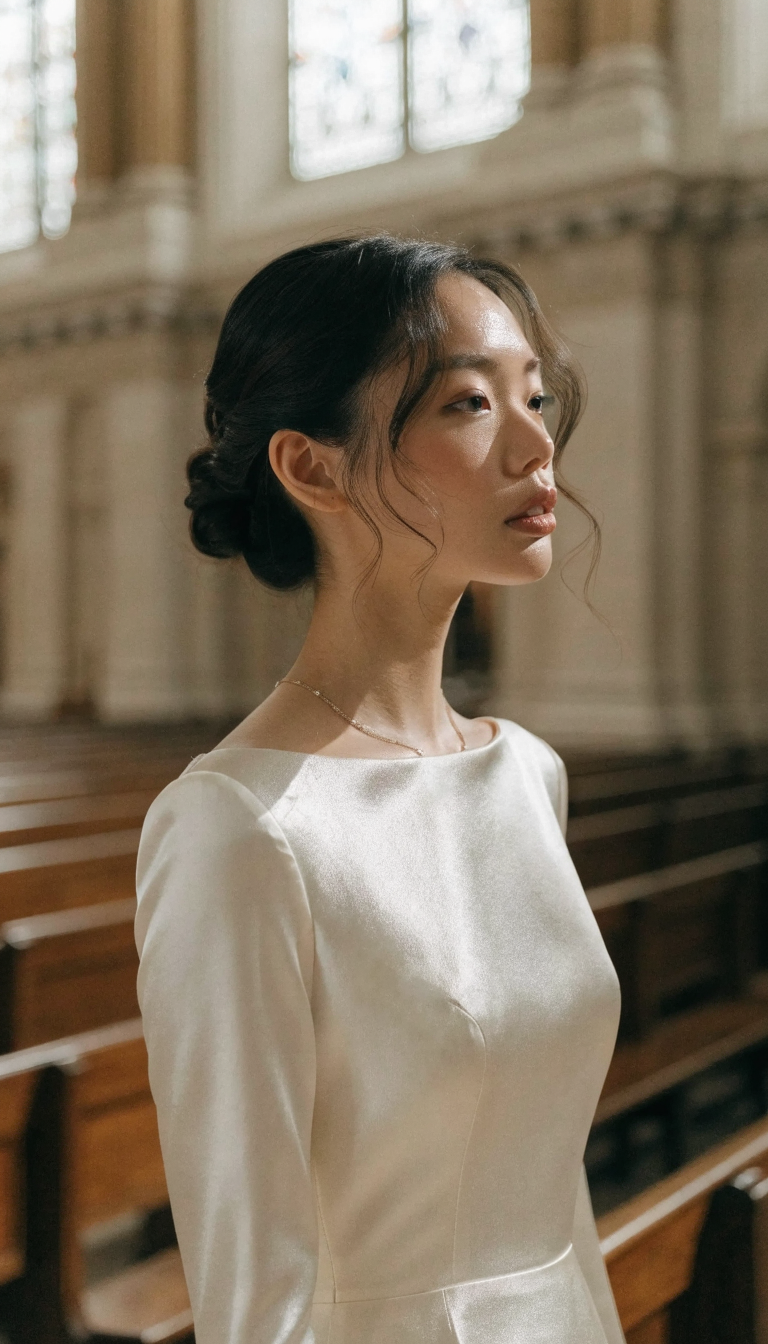
- Shoulder comfort: The wide placement distributes weight evenly; check that straps do not dig when the dress is fully fastened.
- Back options: Many traditional versions continue into a covered or buttoned back for consistent modesty.
- Photo angle: The straight line across the shoulders reads clearly in both frontal and three-quarter views.
13. High Neckline with Lace for Full Coverage
A high neckline rises to the base of the throat and is frequently finished with lace or an illusion panel that maintains traditional modesty. It can be paired with long sleeves or a sleeveless bodice depending on the overall design. The elevated line creates a formal, composed silhouette suitable for church or highly traditional ceremonies. Internal structure keeps the neckline from gaping or shifting.
- Layering flexibility: A high neckline often eliminates the need for additional neck coverage such as a separate bolero.
- Heat awareness: Full coverage around the neck and upper chest can feel warmer; choose breathable lining when possible.
- Alteration complexity: Adjusting a high neckline usually requires careful work so the lace or edge remains even.
14. V-Neckline for Vertical Elongation
A V-neckline dips in a pointed or softly rounded shape toward the center of the bust, creating a lengthening vertical line that has long been part of traditional bridal design. It can be cut modestly or more deeply and is often finished with lace edging or a sheer insert. The shape pairs with both strapless and sleeved bodices. Light boning helps the point of the V stay centered.
- Cleavage control: Depth can be adjusted during alterations; many traditional versions stay relatively modest.
- Bra compatibility: Built-in cups or a well-fitted strapless bra usually provide the needed support.
- Movement check: Lean and sit during the fitting to confirm the neckline does not gape.
15. Illusion Neckline for Sheer Traditional Detail
An illusion neckline uses a fine sheer mesh, often covered with lace appliqués or beading, to create the appearance of skin while maintaining coverage. It is a longstanding traditional technique for adding detail around the neck and shoulders without solid fabric. The mesh is typically backed by a more opaque lining lower on the bodice. The effect looks intricate in photographs while still feeling formal.
- Skin-tone matching: The mesh color should blend with the wearer’s skin so the illusion remains subtle.
- Care note: Sheer areas can snag more easily; handle the neckline carefully during fittings and on the day.
- Support underneath: The structured base below the illusion panel carries the weight of the dress.
Sleeves, Coverage, and Construction
16. Long Sleeve Lace Overlay for Ceremony Coverage
Long sleeves in lace or a combination of lace and lining provide traditional arm coverage while still allowing some visual lightness. The sleeves can be fitted or slightly flared and are often attached to a sweetheart or high neckline. They suit cooler seasons or formal indoor venues where full coverage is preferred. A soft lining prevents the lace from feeling scratchy against the skin.
- Temperature balance: Lace sleeves add coverage without the weight of heavy fabric, though they still trap some heat.
- Movement range: Check that the sleeves allow full arm extension for bouquet holding and dancing.
- Detachable option: Some versions are designed to be removed after the ceremony for greater freedom.
17. Cap Sleeve Detail for Subtle Traditional Framing
Cap sleeves sit just over the shoulder edge, offering a small amount of coverage and a classic bridal outline without full sleeves. They are commonly cut from the same lace or satin as the bodice and sit smoothly against the upper arm. The detail softens a strapless or wide-neckline gown while remaining light. Cap sleeves appear frequently on traditional A-line and ball-gown styles.
- Shoulder fit: The sleeve should rest without digging or slipping; a quick arm raise during fitting reveals problems.
- Season versatility: Light enough for mild weather yet present enough to feel finished in cooler indoor spaces.
- Alteration ease: Small adjustments to the sleeve length or placement are usually straightforward.
18. Detachable Sleeve Option for Flexible Coverage
Detachable sleeves attach at the shoulder or upper arm with discreet hooks, buttons, or snaps and can be removed after the ceremony. Traditional versions are often made of lace or sheer fabric that matches the bodice. They allow a bride to begin with full coverage and later reveal the shoulders for the reception. The base gown underneath is typically strapless or thin-strapped so the transition looks intentional.
- Attachment security: Test the fasteners while moving the arms so the sleeves stay in place during the processional.
- Storage plan: Have a designated person or bag ready to hold the sleeves once they are removed.
- Matching finish: The edge where the sleeve meets the gown should align cleanly so no gap appears.
19. Strapless with Built-in Support for Clean Traditional Lines
A strapless bodice relies on internal boning, built-in cups, and a well-fitted structure rather than external straps. Traditional versions use satin or lace over a firm base so the neckline stays in place through walking and sitting. The clean line across the shoulders has remained popular for formal ceremonies. Proper internal construction is essential for comfort over several hours.
- Stay-put test: Raise arms, sit, and lean during the fitting; the bodice should not slip downward.
- Undergarment pairing: Most designs include cups, so a separate bra is often unnecessary or can interfere.
- Long-day note: Strong internal structure reduces the need to adjust the neckline throughout the event.
20. Halter Neckline for Supported Traditional Coverage
A halter neckline wraps around the neck or uses a high band that connects behind the neck, leaving the shoulders and upper back exposed while providing support. Traditional versions are often paired with a fitted bodice and modest back coverage lower down. The style creates a strong vertical line and can feel secure without conventional straps. It works with both full and slim silhouettes.
- Neck comfort: The band should not dig; check pressure when the head is turned or tilted.
- Back openness: Many designs leave the upper back open, so consider a matching wrap if cooler temperatures are expected.
- Hair and jewelry: The high placement leaves the neck clear for earrings and simple necklaces.
21. Full Lace Gown for Textured Tradition
A gown constructed primarily from lace—whether over a lining or as a heavier guipure—delivers one of the most enduring traditional looks. The lace can cover the bodice, sleeves, and skirt, creating continuous texture that photographs with depth. Lighter lace versions remain breathable; denser patterns add weight and structure. Many include a modest train finished with a matching lace edge.
- Weight consideration: Full lace coverage can feel substantial; ask about the total weight before ordering.
- Lining choice: A soft, breathable lining prevents itchiness and reduces transparency.
- Repair ease: Small snags in lace are often repairable, but dense patterns require careful handling.
22. Duchess Satin Construction for Structured Sheen
Duchess satin is a medium-to-heavy fabric with a smooth face and subtle luster that holds shape well in traditional bodices and skirts. It creates crisp seams and a polished surface that catches light without looking metallic. The fabric works for both fitted and fuller silhouettes and often includes light boning in the bodice for support. It is a frequent choice for formal indoor ceremonies.
- Wrinkle behavior: Satin can crease when packed or sat on for long periods; steaming before the ceremony is usually necessary.
- Heat factor: The fabric is less breathable than chiffon or lace, so it suits cooler venues better.
- Price tier: Higher-quality satin versions typically fall in the mid-to-upper range of traditional gowns.
23. Layered Tulle Skirt for Volume Without Excess Weight
Multiple layers of soft tulle create traditional fullness in the skirt while remaining lighter than a single heavy fabric. The layers are usually gathered at the waist or hips and finished with a lining that prevents see-through areas. Tulle allows the skirt to move with walking and can be bustled more easily than stiffer materials. It pairs with structured bodices made of satin or lace.
- Petticoat alternative: Built-in layers often reduce the need for a separate petticoat.
- Dance clearance: Once bustled, the tulle compresses reasonably well for movement.
- Climate note: Layers trap air and can feel warm; fewer layers or a shorter train help in hotter weather.
24. Cathedral Length Train for Formal Processional Impact
A cathedral train extends several feet behind the gown, creating a long, traditional sweep that is visible during the processional and in full-length photographs. It is typically attached at the waist or shoulders and requires a bustle for later movement. The train can be made of the same fabric as the skirt or a lighter matching material. It is most practical for venues with a clear aisle and space for the fabric to spread.
- Bustle complexity: Longer trains usually need multiple attachment points so the fabric lifts evenly.
- Venue space: Confirm the aisle and photo area can accommodate the length without the train bunching.
- Handling plan: Assign someone to manage the train during the walk and for restroom visits.
25. Corset Laced Back for Adjustable Traditional Fit
A corset-style back uses lacing through eyelets or loops, allowing the bodice to be tightened or loosened for a precise fit. Traditional versions often include a modesty panel behind the lacing and can be finished with a bow or covered buttons. The adjustable closure helps accommodate small changes in measurement between fittings and the wedding day. It provides strong support across the torso.
- Lacing time: Allow extra minutes for fastening; the process is slower than a zipper.
- Comfort check: The lacing should feel supportive without restricting breathing when seated.
- Alteration benefit: Minor size adjustments can sometimes be handled with the lacing rather than full seam work.
26. Button-Covered Back with Modest Train for Finished Detail
A back covered in a row of fabric-covered buttons, often running from the neckline to the waist or hips, creates a classic traditional finish. The buttons can be functional or decorative over a zipper. When paired with a short to medium train, the detail remains visible in photos without overwhelming the silhouette. The style appears on both lace and satin gowns intended for formal ceremonies.
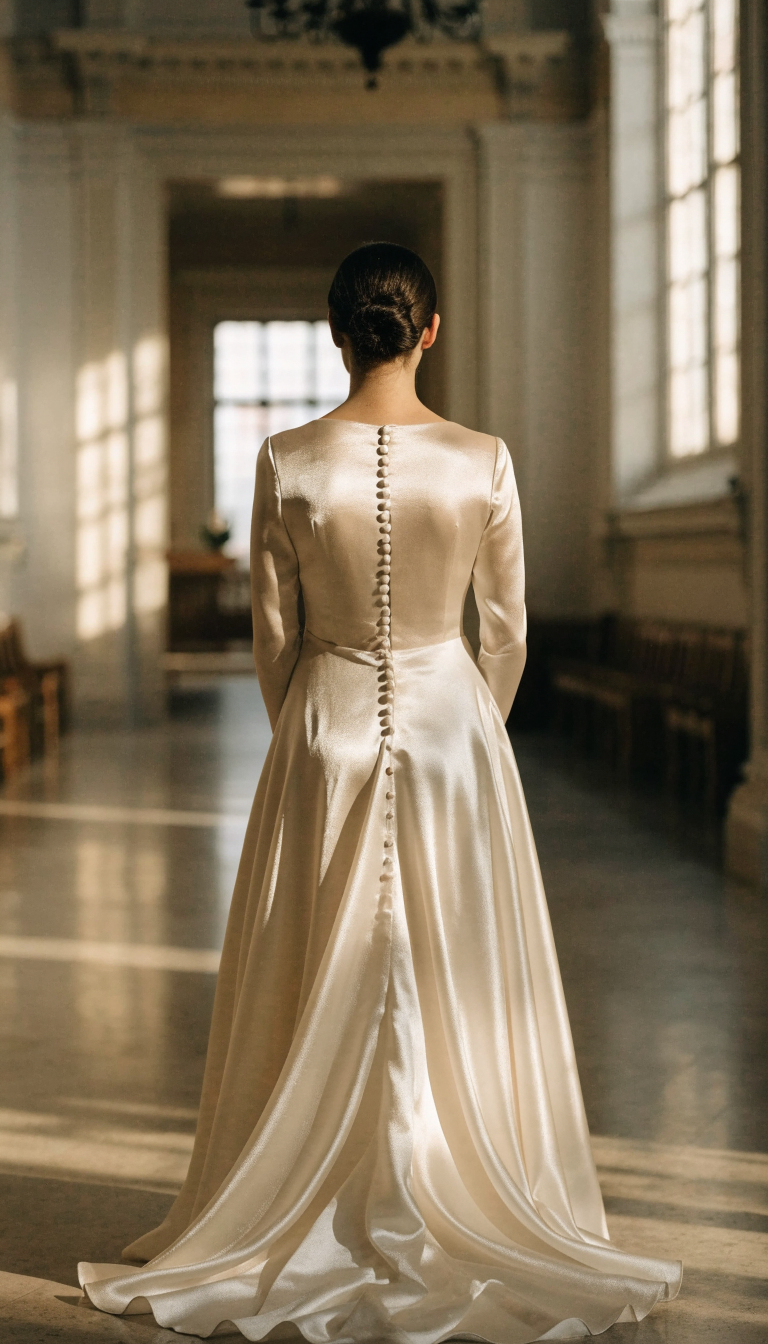
- Fastening time: A long row of buttons takes longer to close than a zipper; practice the process.
- Train length: A chapel or sweep train pairs cleanly with the button detail without requiring an elaborate bustle.
- Repair note: Individual buttons can be replaced if one loosens, which is simpler than repairing a zipper.
Narrow the list by first choosing a silhouette that matches how much you want to move, then select a neckline and sleeve treatment that fit the venue’s formality and temperature. Bring the shoes you plan to wear, any preferred undergarments, and photos of the ceremony space to your first fitting so the consultant can assess real-world comfort.
Frequently Asked Questions
How far in advance should a traditional wedding dress be ordered? Most made-to-order gowns require four to eight months, though some designers need longer. Ordering early leaves time for multiple fittings and unexpected alterations.
Can a sample dress still look traditional? Yes. Sample gowns are often previous-season traditional styles. They usually require more extensive alterations because they were not cut to your measurements, but they can reduce both cost and wait time.
How many fittings are typical? Three to four fittings are common: an initial assessment, a mid-process check after major alterations, a near-final review, and a last confirmation close to the wedding. Heavier fabrics or complex trains may need an extra session.