
A square neck wedding dress draws a clean horizontal line across the upper chest, framing the collarbones and creating an architectural shape that reads modern yet rooted in vintage tailoring. The straight edges demand precise fit—any gaping at the corners or pulling across the bust breaks the geometry—so the style rewards careful construction and the right understructure. Most bridal gowns in this neckline are made to order, with typical lead times of several months, and alterations remain a separate step that usually requires multiple fittings. The list below groups practical pairings of silhouette, fabric, and sleeve so you can match the neckline to your venue, climate, and how much movement you need on the day. Prices mentioned are approximate and shift with designer, fabric weight, region, and the extent of alterations.
1. A-Line Crepe Square Neck for Everyday Movement
Crepe’s matte, fluid hand lets the square neck sit as the only structured element while the skirt skims the hips and flares gently from the waist. The fabric breathes better than heavier satins in moderate heat and recovers quickly from sitting, which matters during a long ceremony followed by photos and a reception. Thin or medium straps with light boning keep the neckline edges true without adding bulk. This pairing suits garden or indoor venues where the dress needs to photograph cleanly yet allow walking, dancing, and getting in and out of a car without constant adjustment.
- Garden or indoor ease: Skims rather than clings, so heat buildup stays low.
- Strap and bust test: Raise your arms in the fitting room; the corners should stay flat.
- Hem and bustle note: A modest train is straightforward to bustle and usually needs only one or two fittings.
2. Mikado Ball Gown with Wide-Strap Square Neck
Mikado’s structured, slightly crisp body holds the square neck’s corners sharp and supports a full skirt that holds volume without collapsing. The fabric has a soft sheen rather than high shine, so the gown photographs with presence in a formal ballroom or church while still feeling substantial under the hand. Wide straps distribute weight across the shoulders, and internal boning or cups keep the horizontal line from gaping. The overall weight is higher than crepe or chiffon, so plan for a cooler climate or strong air conditioning if you expect long stretches outdoors.
- Formal venue presence: Volume reads well from a distance down a long aisle.
- Heat and weight trade-off: Heavier fabric can feel warm after several hours of dancing.
- Alteration complexity: Full skirts often need more precise hemming and a multi-point bustle.
3. Lace Mermaid with Square Neck and Subtle Appliqué
A mermaid cut follows the body through the hips before releasing near the knees; the square neck balances that curve by keeping the eye on the upper body. Soft floral or Chantilly lace softens the geometric neckline while still tracing its straight edges clearly. The lace is usually mounted over a lightweight lining or crepe underlayer so the dress moves without feeling rigid. Because the silhouette is fitted through the lower body, sitting and walking require a properly placed stretch panel or careful seam placement—test both in the fitting room.
- Dramatic yet balanced: Horizontal neckline counters the strong hip curve.
- Dance-floor mobility: Release at the knee allows easier steps than a tighter column.
- Undergarment pairing: Built-in cups or a low-back shapewear option usually works cleanly.
4. Column Satin Square Neck for Minimal Lines
A column silhouette in fluid satin or charmeuse keeps the focus on the clean square neck and an unbroken vertical line. The fabric’s soft drape catches light gently without the stiffness of mikado, making the dress feel lighter for a city hall, art-gallery, or modern indoor ceremony. Thin straps and minimal seaming keep the look pared back; the trade-off is that any undergarment lines or fabric wrinkles show more readily, so a smooth, seamless foundation and careful steaming matter. Sitting is comfortable once the hem and any short train are fitted correctly.
- Modern indoor settings: Clean lines photograph well against simple architecture.
- Wrinkle and sheen watch: Satin can crease at the lap; plan a quick steam before photos.
- Shoe and strap balance: Medium heels keep the hem from pooling when you walk.
5. Fit-and-Flare with Detachable Puff Sleeves
The square neck pairs naturally with a fit-and-flare that follows the torso then flares below the knee. Detachable or removable puff sleeves in lightweight organza or tulle add volume at the shoulders for a ceremony and can be removed for the reception, giving two looks from one gown. The sleeves sit just off or on the shoulder edge without competing with the neckline’s straight line. This construction works well for outdoor or garden weddings where you want a bit of romance yet still need the option to cool down later.
- Two-look flexibility: Sleeves come off after the ceremony without a full change.
- Shoulder and heat check: Test the sleeves in warm conditions; sheer fabrics breathe better.
- Fitting sequence: Confirm sleeve attachment points before final alterations so seams stay secure.
6. Lightweight Organza A-Line for Destination or Beach
Organza’s crisp yet airy layers hold a gentle A-line shape while remaining far lighter than satin or mikado. The square neck stays defined even when the fabric is sheer or semi-sheer, especially when edged with a narrow binding or delicate lace. Multiple soft layers move easily in a breeze and dry faster than heavier fabrics if humidity is high. Because the material is translucent, a full opaque lining or carefully placed cups is essential for coverage and to prevent undergarment show-through under bright outdoor light.
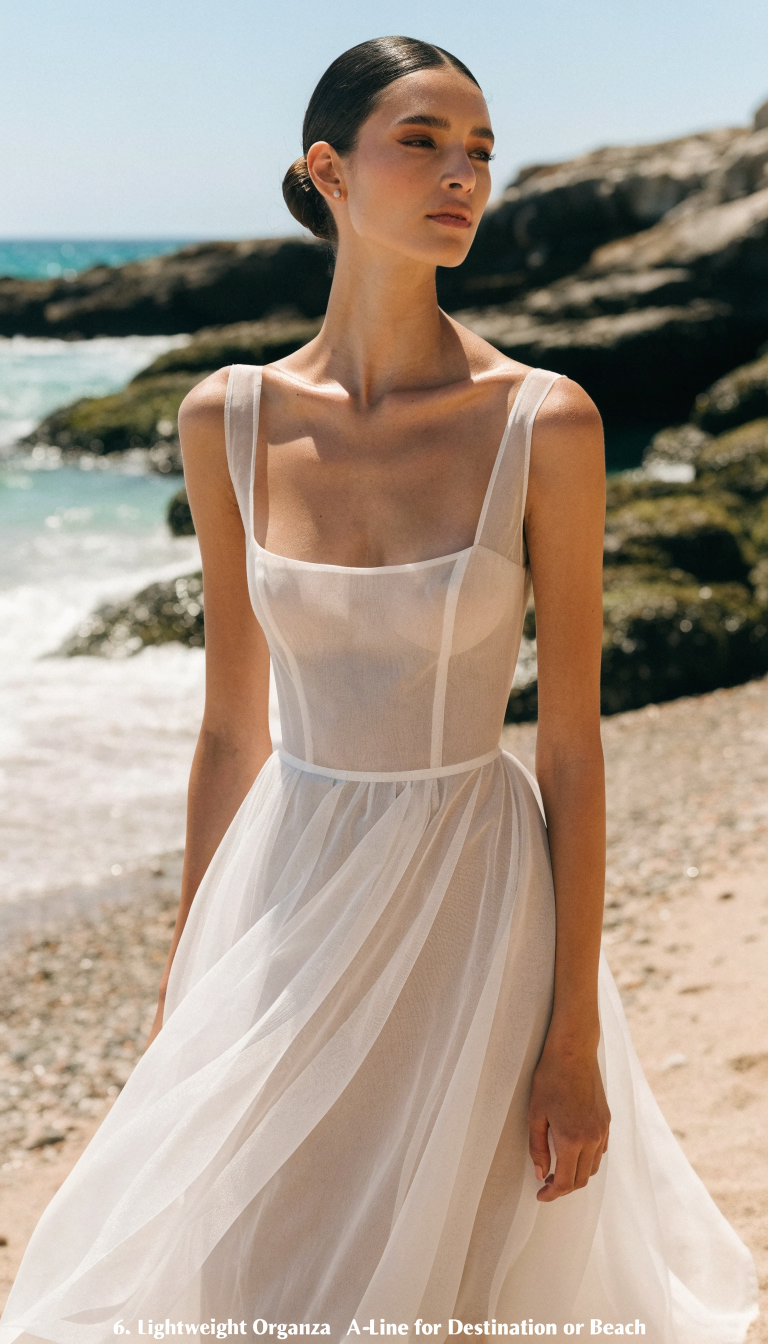
- Beach or destination practicality: Light weight and airflow suit heat and travel.
- Coverage under bright light: Check the lining density in natural light during a fitting.
- Travel and wrinkle note: Organza can crease in luggage; allow time to steam on arrival.
7. Long-Sleeve Crepe Square Neck for Cooler Seasons
Long sleeves in crepe or a crepe-lace blend keep the square neck as the focal point while adding coverage and warmth for fall, winter, or air-conditioned indoor spaces. The sleeves can be slim or slightly bishop-shaped; either way they should allow full arm movement without pulling the neckline out of line. The matte fabric reduces shine under mixed lighting and feels substantial without the weight of brocade or heavy satin. A modest train remains easy to manage, and the overall silhouette often needs fewer structural alterations than a full ball gown.
- Season and climate match: Sleeves add warmth without bulk for indoor or mild outdoor ceremonies.
- Arm-raise test: Move freely in the fitting; sleeves should not drag the bodice.
- Layering potential: A light wrap or cape can be added later without clashing with the neckline.
8. Tea-Length Square Neck with Pockets for Comfort
A tea-length hem ends at mid-calf, reducing fabric weight and making stairs, grass, and dancing simpler than a floor-length gown. The square neck still provides the architectural frame, while side-seam pockets (when well-placed and lined) give a practical place for a phone or lip color. Crepe or a soft satin works well; both hold the neckline shape and move without clinging at the shorter length. This style suits a rehearsal dinner, courthouse, or garden ceremony where you want bridal presence without a long train or bustle.
- Movement on uneven ground: Shorter hem clears grass and steps more easily.
- Pocket placement check: Sit and walk to confirm pockets do not pull or gape.
- Re-wear potential: The length and neckline often work for other formal events later.
9. Corset-Back Square Neck for Adjustable Fit
A square neck in front with a corset or lace-up back allows incremental tightening or loosening after the ceremony meal or as the day progresses. The front stays crisp while the back provides the flexibility that a standard zipper sometimes lacks. Boning channels keep the structure even when the lacing is adjusted. This construction is especially useful if your size fluctuates or you prefer a more secure feel through dancing. Most still require professional alterations for the perfect neckline fit and hem.
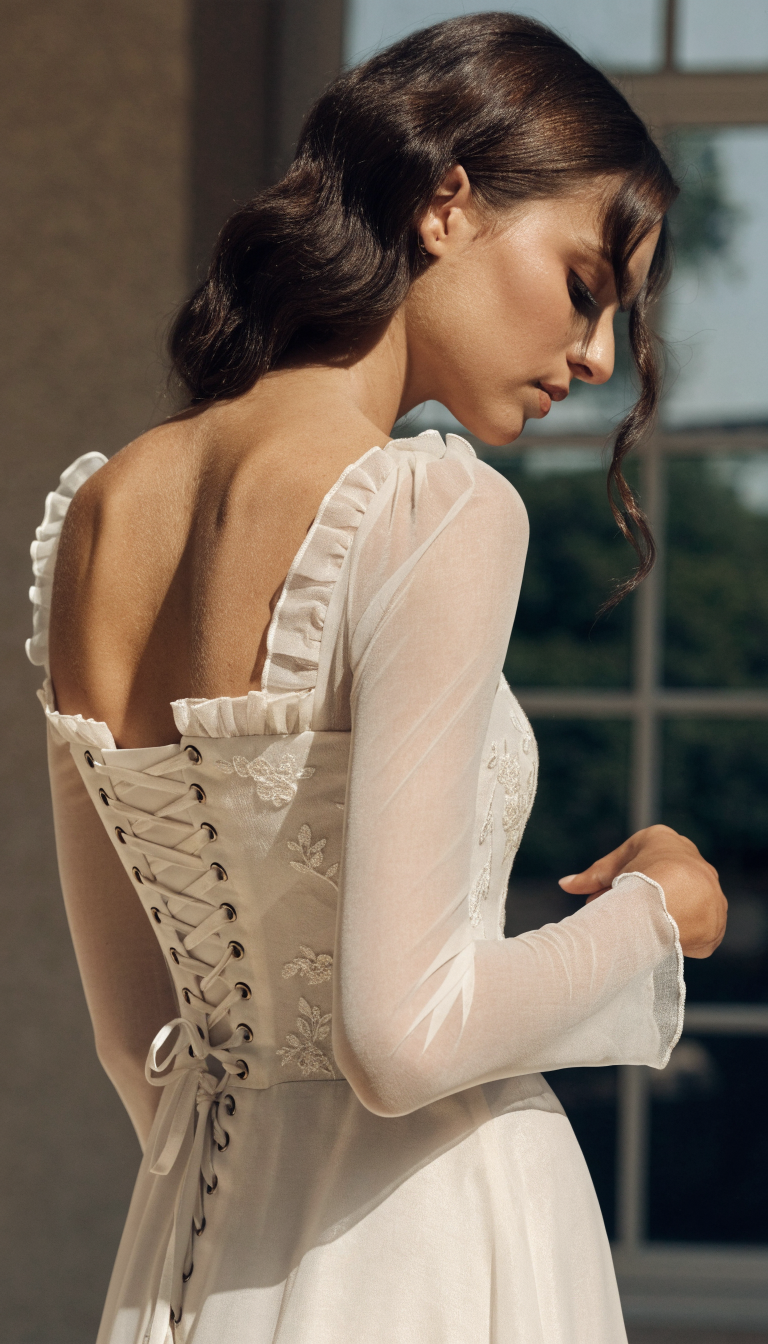
- Day-of adjustability: Lacing lets you refine the fit without a full re-zip.
- Back support and posture: Proper boning keeps the front neckline from shifting.
- Fitting timeline: Plan extra time; corset backs often need more precise placement.
10. Simple Strappy Square Neck for Courthouse or Elopement
Thin straps and a clean square neck in crepe or lightweight satin create a streamlined look that photographs well in small spaces and requires less fabric overall. The style is lighter to wear and pack, and many versions are available closer to the event through sample sales or ready-to-wear bridal lines, though made-to-order options still dominate traditional salons. Because there is less structure, the fit at the bust and the exact strap width become critical—gap or dig will show immediately. A short or no train keeps logistics simple for a civil ceremony followed by a small celebration.
- Small-venue practicality: Less volume works in tight spaces and travel.
- Strap comfort test: Wear the shoes you plan to use and move for several minutes.
- Timeline flexibility: Sample or ready-to-wear versions can shorten the usual multi-month wait.
Start by bringing two or three photos that show the exact square-neck proportion and silhouette you prefer, plus the shoes you plan to wear, to your first salon appointment. Try each dress seated, with arms raised, and after a short walk so you can judge how the neckline edges and fabric behave once you are no longer standing still. Most brides narrow to one or two options after the second fitting and then schedule remaining alterations four to six weeks out.
FAQ
How far in advance should I order a square neck wedding dress? Most made-to-order bridal gowns need several months; eight to twelve months is a common planning window so alterations can finish without rush. Sample sales or ready-to-wear styles can shorten that timeline if your date is closer.
Does a square neckline work for different bust sizes? Yes, when the width, depth, and strap placement are adjusted and internal cups or light boning keep the straight edges flat. A good fitting focuses on preventing gaps at the corners rather than forcing a single proportion.
How many fittings are typical? Three fittings are common: an initial pin session, a mid-point check after major seams are set, and a final try-on with shoes and undergarments. Corset backs or heavy skirts may need an extra appointment.
Can I wear a square neck dress with a veil or jacket? A simple cathedral or fingertip veil sits cleanly above the neckline; a light jacket or wrap can be added for cooler moments as long as it does not cover the square edge you want visible in photos.