
A royal wedding dress typically pairs structured coverage with precise detailing so the gown reads formal under bright church lights and holds its shape through a long ceremony. Most share long sleeves or high coverage, a defined train, and fabrics that photograph cleanly rather than collapse. The 26 styles below group silhouettes, necklines, sleeves, fabrics, and finishing details so you can shortlist what matches your venue, climate, and how much movement you want on the day. Prices vary widely by designer, fabric, and alterations; treat any range as approximate only.
Classic Silhouettes for Royal Impact
1. Full Ball Gown with Cathedral Train
The ball gown keeps a fitted bodice then releases into a wide, supported skirt that fills a nave or ballroom. Royal examples often use layered tulle or stiffened satin so the shape stays open rather than sagging. A cathedral-length train (roughly six to eight feet) extends the line behind you without the extreme length that needs multiple attendants. Duchesse satin or silk taffeta holds the volume better than softer crepe.
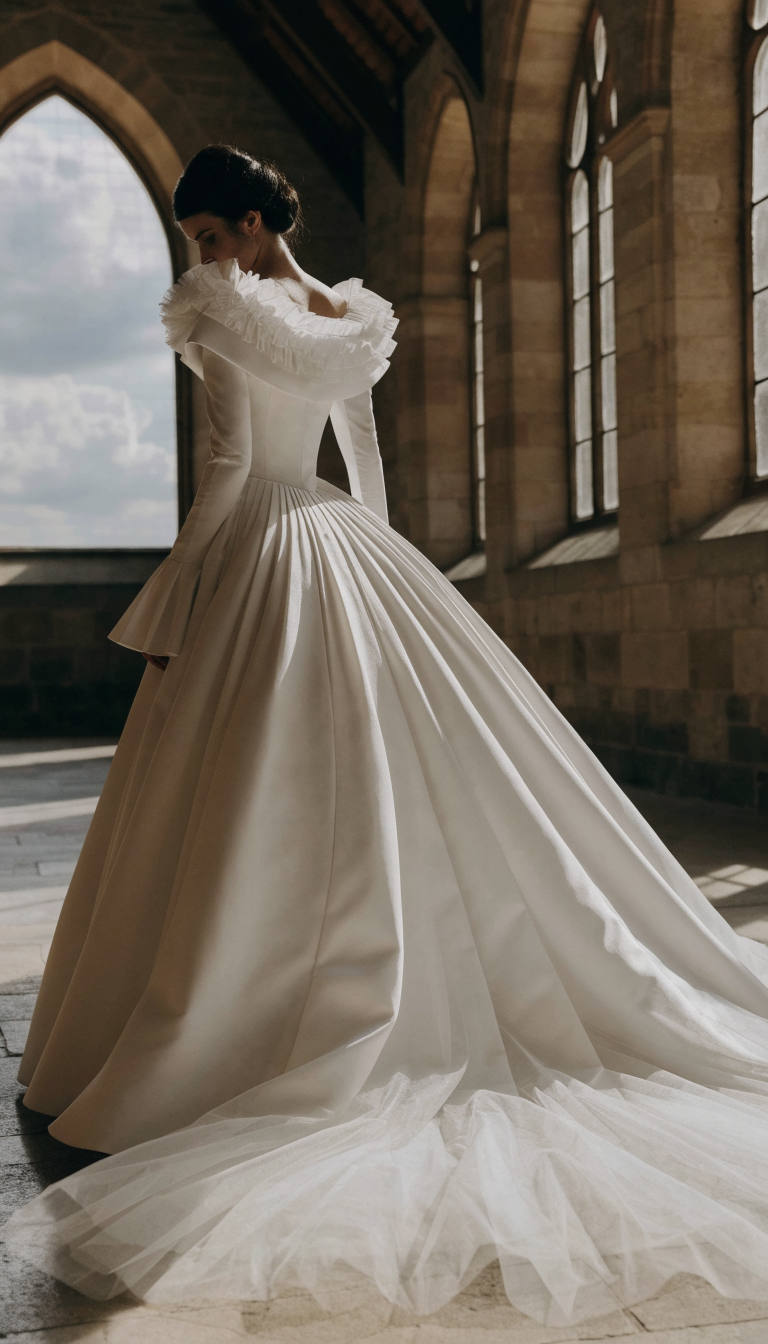
- Aisle presence: The width looks strongest in large, high-ceilinged spaces with room for the skirt to settle.
- Heat and weight: Multiple layers can feel heavy after an hour; test sitting and walking in the sample.
- Bustle planning: Expect a multi-point bustle during alterations so the train can be lifted for photos and dancing.
2. A-Line with Soft Box Pleats
An A-line starts close through the waist and flares gently, creating the balanced shape seen on several modern royal gowns. Soft box pleats in the skirt add controlled volume without the full ball-gown circumference. Ivory satin gazar or medium-weight mikado keeps the flare crisp while still allowing a natural walk. The silhouette photographs evenly from the side and back.
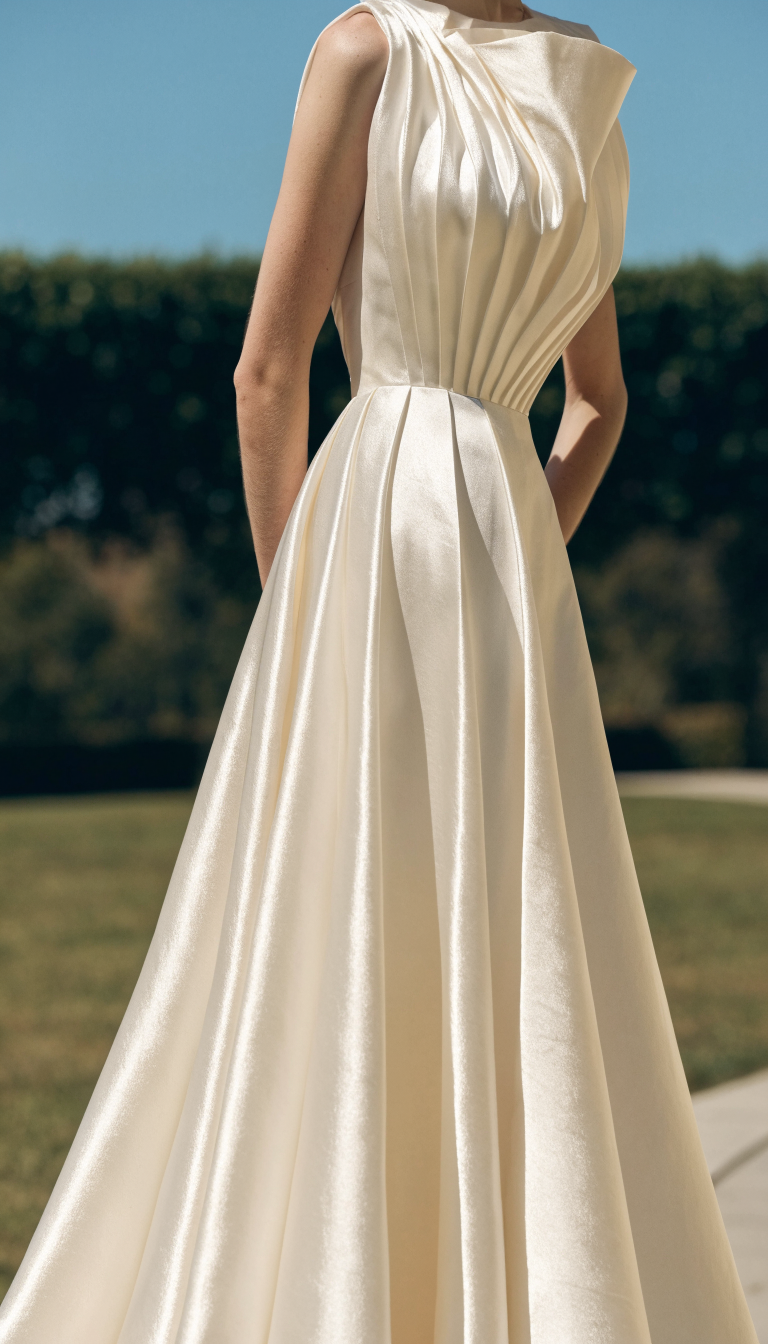
- Venue match: Works equally well in a traditional chapel or a garden with a formal aisle runner.
- Alteration ease: The gradual flare usually needs only a simple hem and minor side adjustments.
- Dance comfort: The skirt clears the floor once hemmed, so movement stays freer than a mermaid cut.
3. Fit-and-Flare Contour
Fit-and-flare follows the body through the hips then opens below the knee, offering more movement than a true mermaid while retaining a tailored line. Royal versions often add a modest train and long sleeves so the overall effect stays formal rather than body-con. Crepe or lightweight satin moves with the wearer; heavier taffeta can feel restrictive once seated.
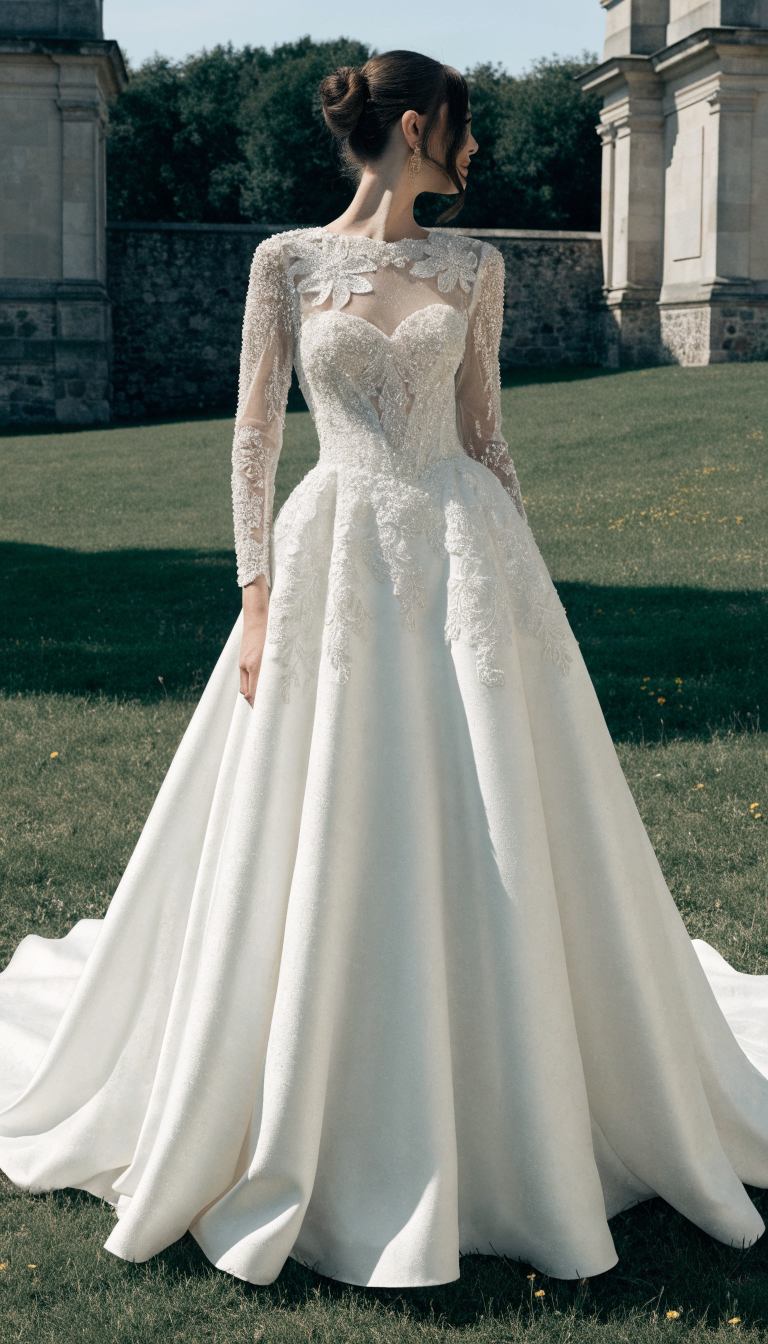
- Sitting test: Check how the flare behaves when you sit in a pew or car; the knee point is critical.
- Fabric drape: Fluid crepe reduces the risk of the skirt clinging or wrinkling in humidity.
- Shoe height: The flare changes with heel height, so bring the shoes you plan to wear to fittings.
4. Column Sheath for Sleek Form
A column or sheath runs close from shoulder to hem with minimal flare, giving a modern, understated royal look. It relies on clean lines and precise tailoring rather than volume. Silk crepe or charmeuse creates a soft matte surface that catches light without shine; avoid stiff fabrics that fight the slim shape. A short train can still add ceremony without overwhelming the silhouette.
- Fitting precision: The close fit shows every seam, so multiple fittings and accurate measurements matter.
- Undergarment note: Smooth shapewear or built-in lining helps prevent visible lines under light fabrics.
- Heat warning: Close-fitting styles can feel warmer; choose breathable linings for summer ceremonies.
5. Empire Waist for Vertical Line
An empire waist sits just under the bust and lets the skirt fall in soft folds, lengthening the torso and easing movement through the midsection. Historic royal gowns sometimes used this cut for both comfort and drama. Lightweight silk or chiffon under a lace overlay keeps the fall fluid; heavier satin can pull the waistline down. The style pairs well with a modest neckline and long sleeves.
- Comfort through hours: The raised waist reduces pressure at the natural waist during a long service.
- Train addition: A detachable train can restore formality without permanent bulk.
- Petite or tall note: The high waist shifts proportions; try it on before deciding it adds the height you want.
Necklines That Convey Modesty and Elegance
6. High Neckline with Coverage
A high or standing collar covers the collarbone and upper chest, a frequent choice for formal church settings. It can be finished with a soft lace edge or a clean band of satin. The neckline pairs naturally with long sleeves and keeps jewelry secondary. Structured fabrics hold the collar upright; soft chiffon may need internal support.
- Church suitability: The coverage meets many formal or traditional dress codes without extra layers.
- Jewelry pairing: A simple necklace sits cleanly; large statement pieces can compete with the height.
- Fitting check: Confirm the collar does not dig when you turn your head or look down.
7. Bateau or Boat Neck
The bateau neckline runs straight across the collarbones from shoulder to shoulder, creating a wide, balanced frame. It offers modest coverage while still showing the neck and upper chest. Silk satin or crepe in this cut photographs with clean lines; lace overlays can soften the edge. The style works with both sleeveless and long-sleeve constructions.
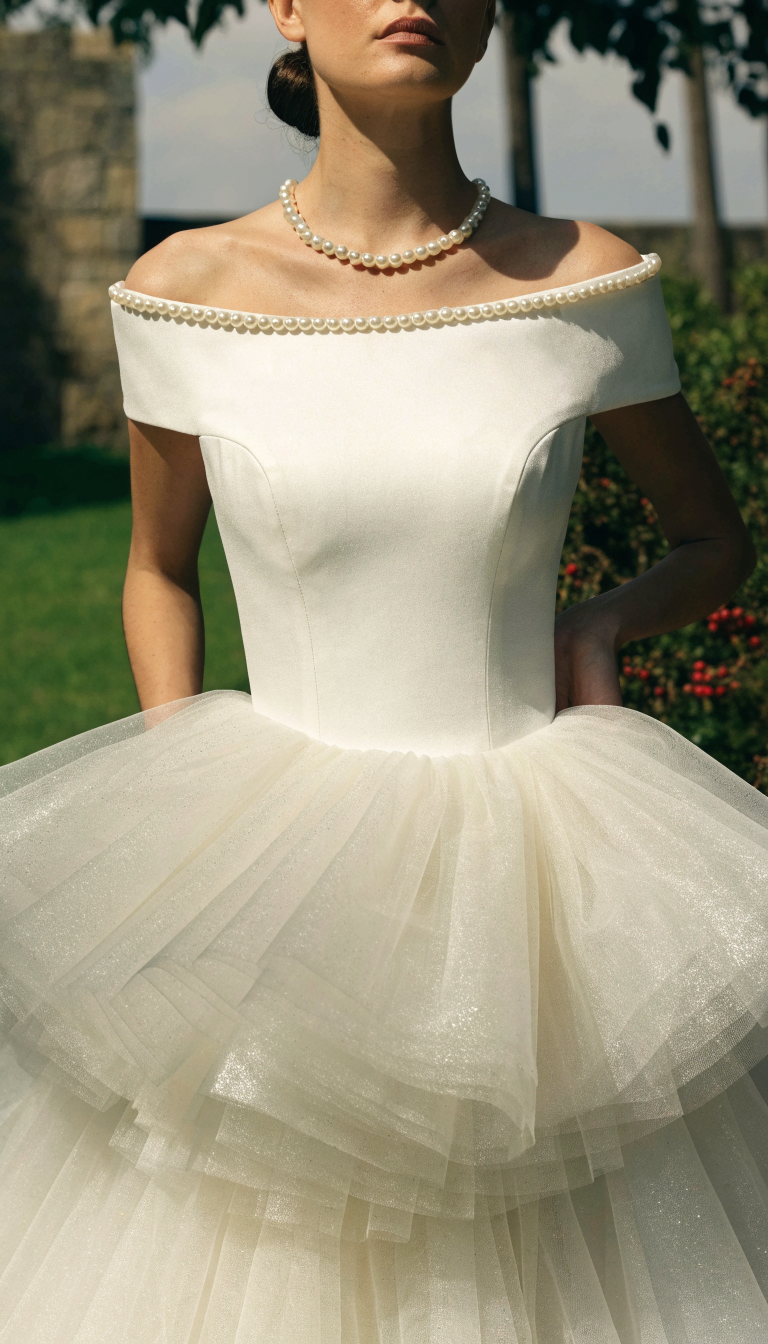
- Shoulder line: The wide cut can balance broader shoulders or draw attention upward.
- Strap support: If sleeveless, built-in cups or a well-fitted lining keep the line secure.
- Veil placement: A bateau often pairs cleanly with a veil that starts at the back of the head.
8. Modest V-Neck with Lace
A moderate V-neck opens the chest slightly while remaining higher than a plunging cut. When finished with a lace overlay or illusion panel, it adds texture without exposing more skin. The V lengthens the torso visually and works under structured bodices. Satin or crepe bases keep the point crisp.
- Coverage control: The lace or illusion layer lets you adjust modesty without changing the overall shape.
- Boning placement: Internal boning should end before it presses into the V point.
- Photo angle: Side and front views both read clearly; the V rarely disappears in ceremony photos.
9. Heart-Shaped Neckline
A heart-shaped neckline curves gently over the bust then dips in a soft point, a detail seen on several mid-century royal gowns. It frames the face while still offering structured coverage. Duchesse satin or taffeta holds the curve; softer fabrics may need extra boning. The shape pairs well with long sleeves or a modest train.
- Bust support: Built-in cups or a well-fitted lining keep the heart point sitting correctly.
- Season fit: The defined shape works in cooler weather when the fabric does not soften from heat.
- Alteration note: The curved edge can be tricky to adjust; discuss changes early with the seamstress.
10. Illusion Neckline with Lace
An illusion panel of sheer tulle or organza rises from a strapless or sweetheart base to the neck, then is overlaid with lace. The effect adds height and coverage while keeping a lighter look. It is common when a bride wants the appearance of sleeves or a high neck without full fabric weight. The sheer layer must be finished cleanly so no raw edges show.
- Layer testing: Check how the illusion fabric photographs under bright lights; some sheers glare.
- Comfort at neck: The sheer panel should not itch or pull; a soft lining underneath helps.
- Support needs: The base still requires cups or boning even if the upper portion is sheer.
11. Square Neck with Structure
A square neckline cuts straight across the chest and drops at right angles toward the shoulders, creating a geometric frame. It works on both A-line and ball-gown silhouettes and pairs cleanly with long or three-quarter sleeves. Structured satin or mikado keeps the corners sharp; lace can soften the edges if preferred.
- Collarbone focus: The straight line draws attention upward without a deep plunge.
- Strap or sleeve fit: Wide straps or sleeves should meet the square cleanly so no gaps appear.
- Sitting posture: The neckline stays consistent when you sit, unlike some draped styles.
Sleeves and Coverage for Formal Ceremonies
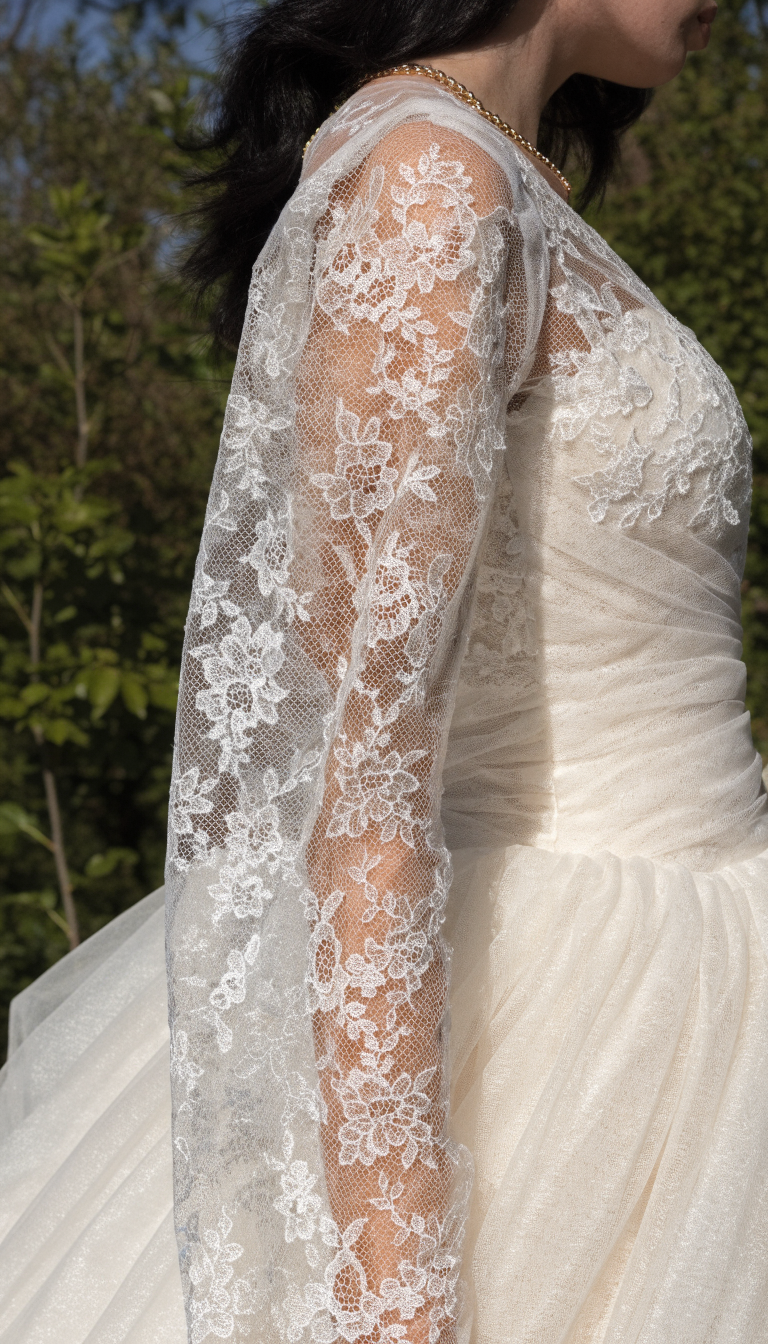
12. Long Sleeve Lace Overlay
A long sleeve made of lace over a nude or matching lining covers the arms while remaining lighter than solid fabric. The lace can continue onto the bodice for a continuous pattern, a detail often used in royal gowns to add texture and modest coverage. Chantilly or Cluny lace works well; heavier lace can feel stiff. The overlay also hides the seam where sleeve meets bodice.
- Arm movement: Test reaching and hugging; tight lace can restrict motion at the elbow.
- Season use: The layer adds warmth without bulk, useful in spring or air-conditioned venues.
- Matching detail: Ask whether the same lace continues onto the train or veil for cohesion.
13. Softly Puffed Sleeves
Puffed or leg-of-mutton sleeves gather at the shoulder then taper toward the wrist, creating volume that echoes 1980s royal styles without requiring extreme size. They add shoulder presence under a full skirt. Taffeta or structured satin holds the puff; softer fabrics collapse. The volume can be reduced with internal ties if the original sample feels oversized.
- Proportion check: Large puffs can overwhelm a petite frame; try a scaled version first.
- Fabric weight: Crisp taffeta keeps the shape through the ceremony; organza softens it.
- Underarm comfort: The gather should not bunch or dig when the arm is down.
14. Fitted Long Sleeves
Fitted long sleeves follow the arm closely from shoulder to wrist, offering full coverage with a tailored finish. They appear on many formal royal gowns and pair with high or bateau necklines. Stretch satin or crepe with a small amount of give improves comfort; pure silk can feel tight once the arm bends. Button or zip closures at the wrist keep the line clean.
- Range of motion: Raise and lower your arms during the fitting to confirm the sleeve does not pull.
- Temperature note: Solid fitted sleeves can feel warm; a lightweight lining helps.
- Jewelry room: Leave enough space at the wrist for a bracelet or watch if desired.
15. Three-Quarter Sleeves
Three-quarter sleeves end between elbow and wrist, balancing coverage with a slightly lighter feel. They work under both lace overlays and solid fabrics and suit transitional seasons. The length still meets many formal dress codes while allowing easier movement for toasts or dancing. Crepe or satin finishes the edge cleanly.
- Wrist clearance: Confirm the sleeve does not ride up when you bend your elbow.
- Layering option: A separate bolero can be added later if more coverage is needed.
- Photo consistency: The length stays visible in both seated and standing ceremony shots.
16. Detachable Sleeves
Detachable sleeves fasten at the shoulder or upper arm and can be removed after the ceremony. They let a bride wear full coverage for the vows then switch to a cooler, sleeveless look for the reception. Hidden snaps or covered buttons keep the attachment discreet. The main gown still needs proper support so the line stays clean once the sleeves come off.
- Transition plan: Practice attaching and removing them so the change is quick.
- Support underneath: The strapless or sleeveless base must stay secure on its own.
- Fabric match: The sleeves should use the same lace or satin as the bodice so the join disappears.
Fabrics That Hold Structure and Detail
17. Duchesse Satin for Crisp Structure
Duchesse satin is a tightly woven, medium-to-heavy satin that holds pleats, trains, and structured bodices without collapsing. It has a soft sheen rather than high gloss and photographs well under both natural and artificial light. Royal gowns frequently use it for skirts and trains that need to keep their shape. It can feel warm, so a breathable lining is essential for longer events.
- Pleat retention: The weave keeps box pleats and folds crisp through the ceremony.
- Heat consideration: Choose a lighter lining if the wedding is in warm weather.
- Steaming needs: Most satin benefits from professional steaming rather than home ironing.
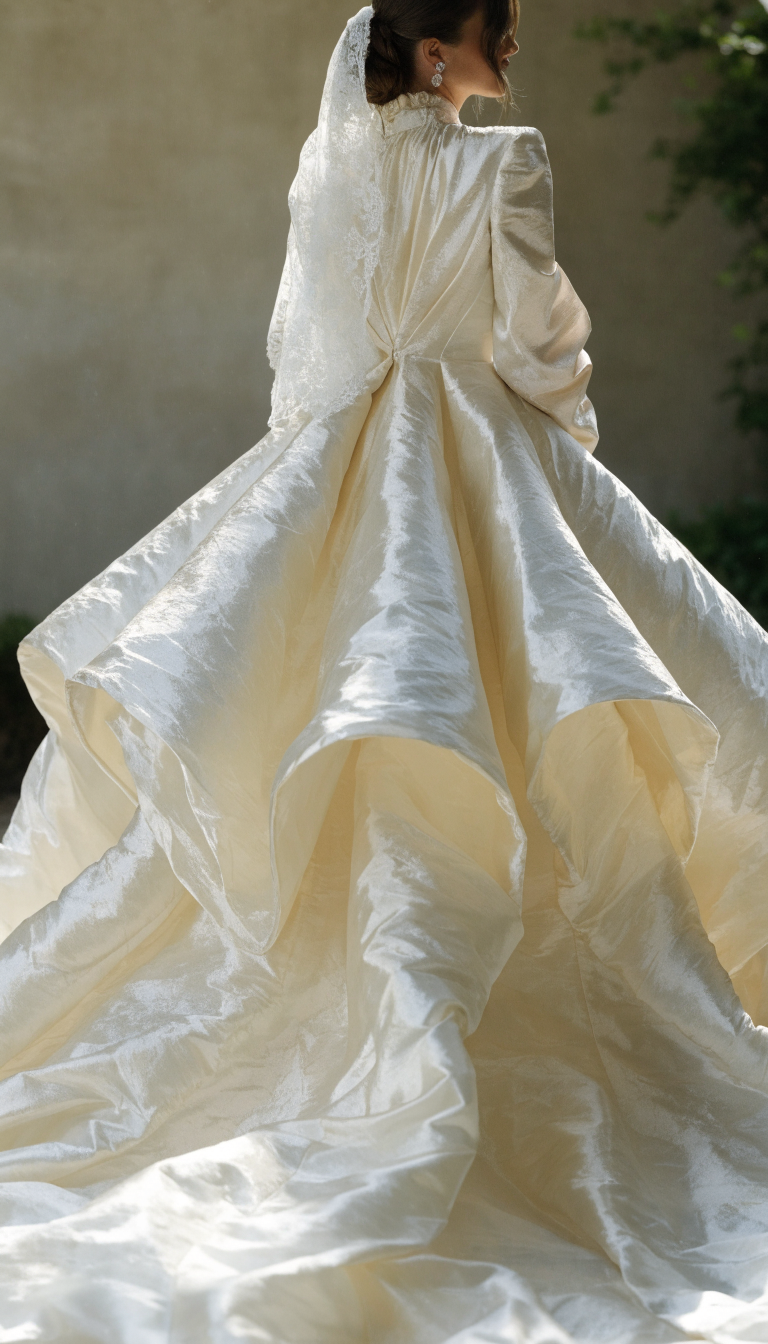
18. Silk Taffeta for Volume
Silk taffeta has a crisp hand and a subtle rustle that adds presence when the skirt moves. It supports full skirts and dramatic trains while remaining lighter than some satins. Historic royal gowns used taffeta for its ability to hold wide shapes. The fabric can crease, so plan for steaming and careful transport.
- Movement sound: The light rustle is noticeable in quiet venues; some brides prefer it, others do not.
- Crease recovery: Ask about wrinkle resistance; pure silk taffeta usually needs steaming.
- Train support: The crispness helps a long train stay open rather than pooling tightly.
19. Chantilly Lace for Soft Texture
Chantilly lace is fine and floral, often used as an overlay on satin or tulle. It adds intricate detail without heavy weight and appears on many royal gowns for both bodices and skirts. The open weave can be layered over a lining so skin does not show through. It photographs with depth under soft lighting.
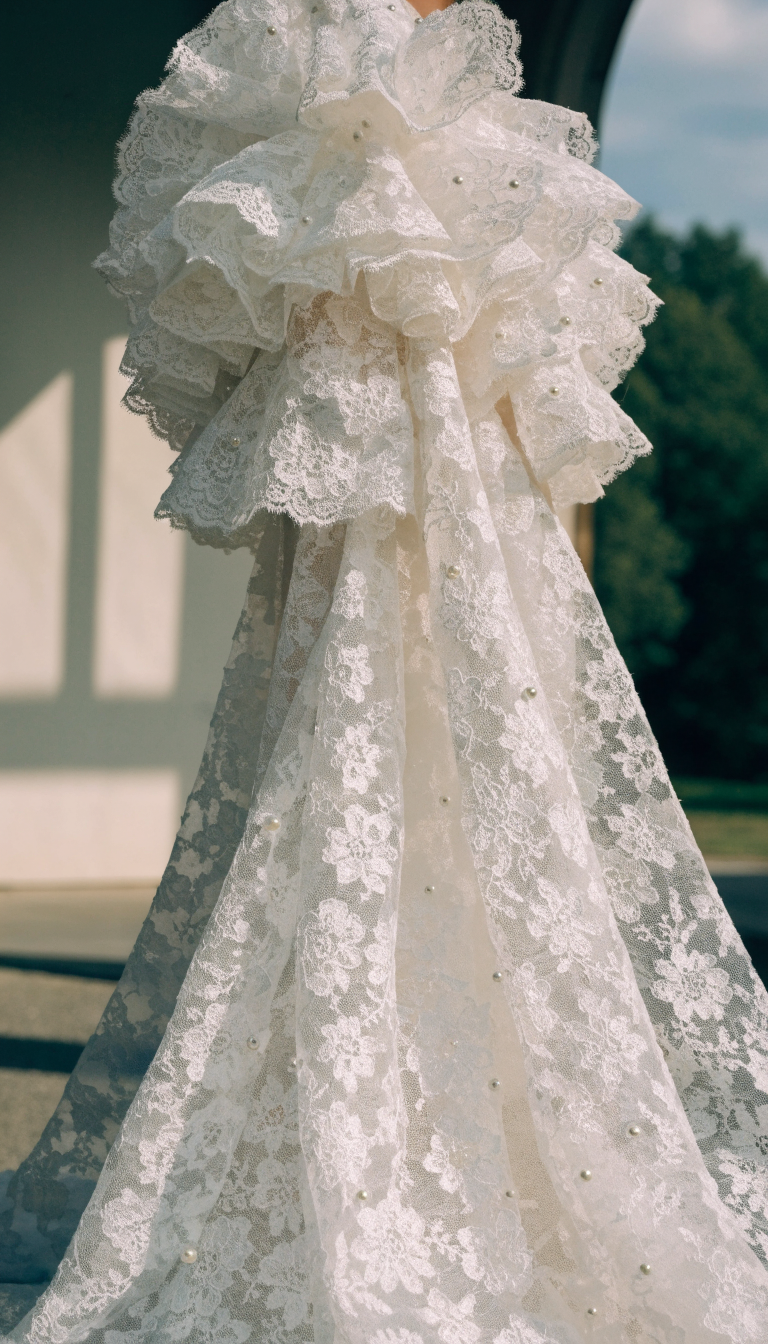
- Layering choice: A nude or ivory lining under the lace controls coverage and color.
- Edge finish: Scalloped edges can be left raw or finished with a narrow binding.
- Weight difference: Fine Chantilly feels lighter than corded or guipure lace.
20. Organza Overlays for Light Volume
Organza is a crisp, sheer fabric that can be layered to create soft volume without the weight of tulle. It works well for skirts or as a covering over a structured base. In royal contexts it sometimes appears in veils or light overskirts. Multiple layers can still feel warm if the base fabric is heavy.
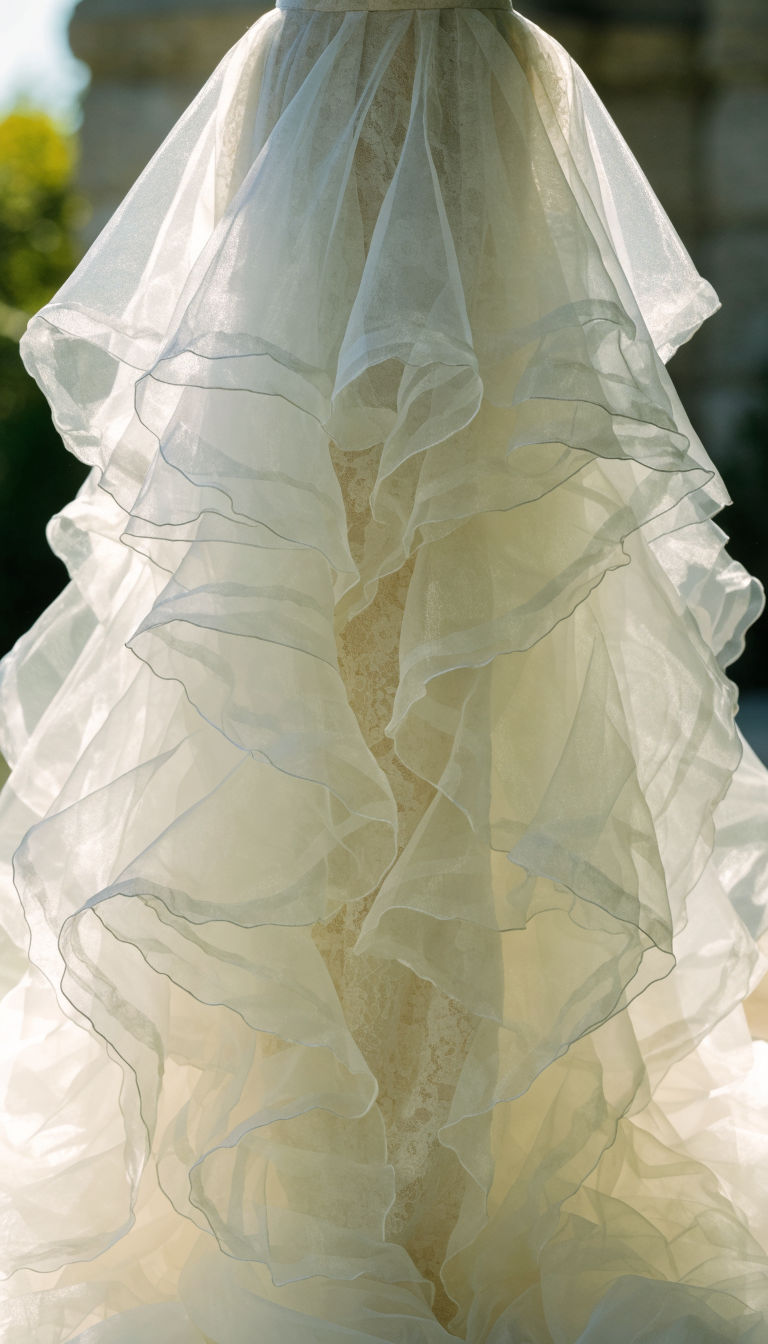
- Layer count: Two or three layers usually give enough body; more can become bulky.
- Static note: Organza can cling in dry air; a light anti-static spray helps.
- Hem finish: A clean rolled hem or narrow binding keeps the sheer edges neat.
21. Crepe for Fluid Movement
Crepe has a matte, slightly textured surface that drapes softly and resists shine. It suits column, A-line, and fit-and-flare styles where movement matters more than rigid volume. The fabric breathes better than heavy satin and wrinkles less than pure silk chiffon. It can be used alone or under a lace overlay.
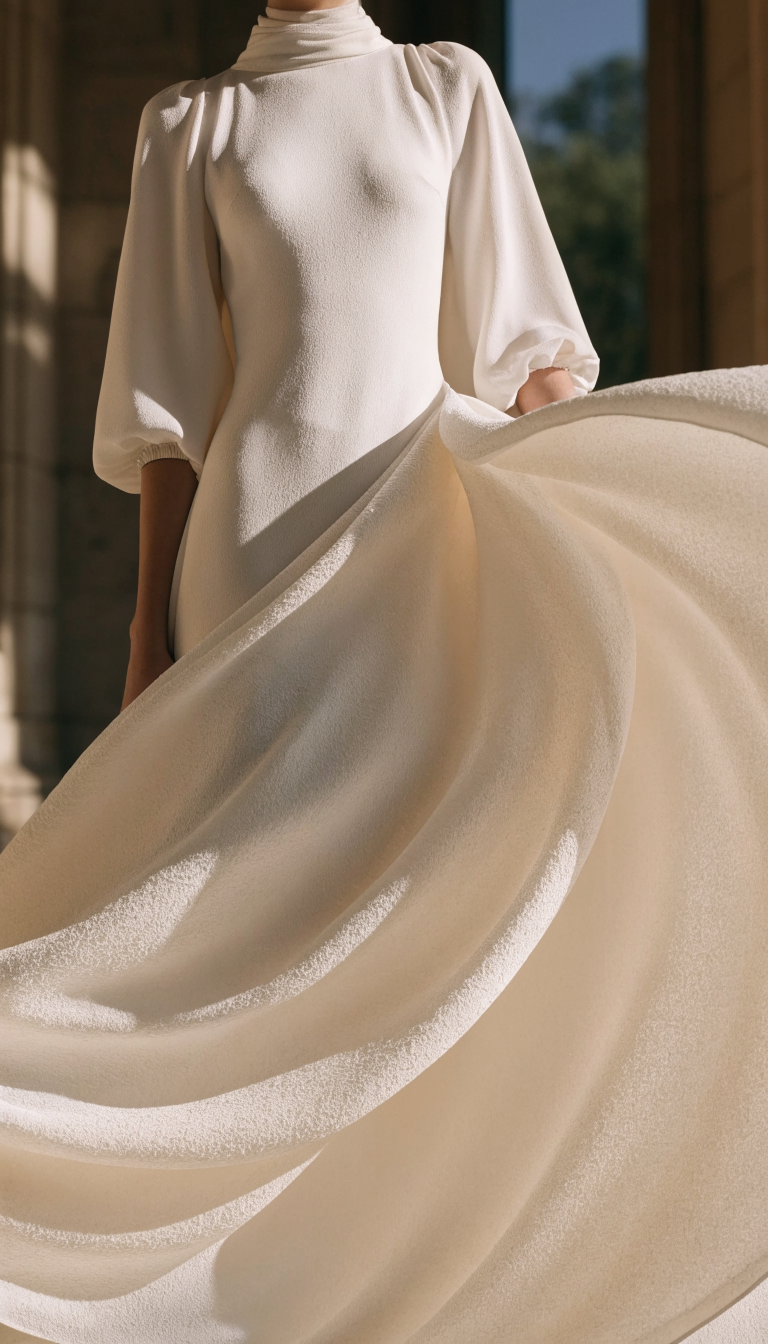
- Drape test: Walk and turn in the sample; crepe moves with the body rather than standing away.
- Undergarment visibility: The matte surface can show lines, so smooth support is important.
- Season flexibility: The lighter hand works in both cooler and warmer indoor venues.
Embellishments and Practical Finishes
22. Cathedral or Royal-Length Train
A cathedral train extends roughly six to eight feet; a royal or monarch train can run longer. Both create the extended line associated with formal processions. The fabric must be strong enough to support its own weight without dragging the hem. Most require a bustle for the reception so the train can be lifted and secured.
- Helper needs: Longer trains usually need one or two people to arrange them at the altar.
- Venue space: Confirm the aisle and altar area can accommodate the full length.
- Bustle complexity: Multi-point bustles take more time during alterations and on the day.
23. Pearl and Crystal Embroidery
Hand or machine embroidery with seed pearls and crystals adds texture and light reflection without covering the entire surface. Royal gowns often place the work along the bodice, hem, or train edge so it catches light during the procession. The embellishment increases the gown’s weight slightly and requires careful cleaning later.
- Placement balance: Concentrated work on the bodice or train edge usually photographs better than all-over coverage.
- Weight addition: Dense beading can add noticeable pounds; ask for an approximate total.
- Care after: Most heavily embellished gowns need professional cleaning rather than home methods.
24. Floral Appliqué Motifs
Floral lace appliqués—roses, thistles, shamrocks, or other symbolic flowers—can be cut and hand-applied to tulle or satin. The technique appears on several modern royal gowns to represent places or family connections. Appliqués sit on the surface so they can be placed precisely; they also allow a designer to use less overall lace.
- Symbol choice: Discuss meaningful motifs early so the placement can be planned before cutting.
- Edge security: Hand-applied pieces should be reinforced so they do not lift during wear.
- Color match: The appliqué lace should match or deliberately contrast the base fabric.
25. Corseted Bodice with Internal Boning
A corseted bodice uses vertical boning channels to shape and support the torso without relying only on the outer fabric. The structure keeps necklines and waistlines in place through hours of standing and sitting. It is common on royal gowns that combine lace overlays with structured bases. The boning should be flexible enough to allow normal breathing and movement.
- Comfort duration: Wear the sample for at least twenty minutes to check pressure points.
- Cup integration: Built-in cups reduce the need for a separate bra under many necklines.
- Fitting sequence: Boning adjustments usually happen in the second or third fitting.
26. Button-Back Closure
A row of fabric-covered buttons running down the center back creates a traditional finish and allows precise fit adjustments. The closure can sit over a zipper for security or function alone with loops. It appears on many formal royal gowns and photographs cleanly from behind. Button placement must align with the waist and hip so the line stays straight.
- Entry ease: Practice fastening the buttons or zipper so you know how long the process takes.
- Bustle relation: The button row should not interfere with where the bustle attaches.
- Alteration access: Buttons can be moved slightly during fittings if the waist needs tweaking.
Most of these styles are made to order, so expect several months of lead time plus separate alteration appointments. Bring the shoes, undergarments, and any planned veil or tiara to fittings so the proportions can be checked together. Start with the two or three elements that matter most for your venue and comfort—silhouette, coverage, or train length—then narrow the rest.
FAQ
How far in advance should a royal-style gown be ordered? Most made-to-order gowns need four to eight months. Complex lace, embroidery, or long trains can push the timeline longer, so confirm the designer’s current schedule early.
Can a sample gown be altered to look custom? Yes, if the base silhouette and fabric already suit you. Expect multiple fittings and possible additional charges for lace matching or train adjustments.
Do long trains require special planning on the day? Yes. Assign one or two people to manage the train at the altar and practice the bustle beforehand so the transition to the reception is smooth.