
A wedding dress that works with a hijab starts with the meeting point of neckline and scarf, then the sleeve and fabric. High or bateau necklines close the gap under the chin, full-length sleeves with a little ease at the elbow let you raise your arms, and opaque linings under lace or sheer layers keep coverage consistent in photos and in person. Most bridal gowns are made to order with lead times of several months, and alterations (hemming, sleeve adjustments, bustle points) are usually a separate cost that needs multiple fittings. Prices vary widely by designer, fabric quality, region, and custom work. The styles below are grouped by silhouette, fabric behavior, and practical layers so you can shortlist options that feel comfortable for sitting, dancing, and a long day.
Silhouettes That Pair Naturally with Hijab
1. Satin A-Line with High Bateau Neck
Smooth ivory or soft white satin creates a clean line that photographs evenly under both natural light and flash. The bateau neckline sits across the collarbone so the hijab can tuck neatly without a visible gap, while long fitted sleeves and a gently defined waist flow into a skirt that moves away from the body. Medium-weight satin holds a soft structure through the skirt without the heavy weight of a full ball gown.
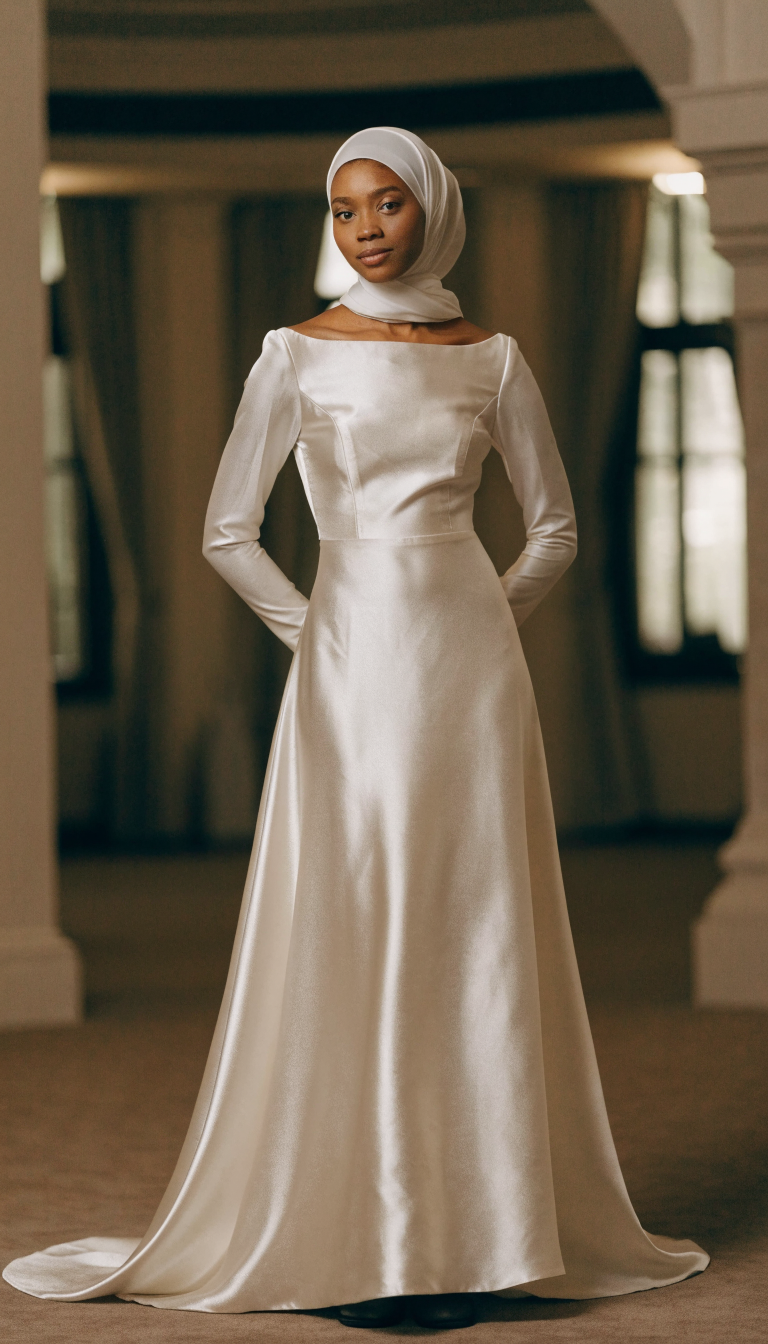
- Where the light falls: Indoor ballrooms and hotel venues where the sheen reads luminous rather than harsh.
- Sitting and creasing: Satin shows elbow and hip lines after long periods seated, so expect some texture by the reception.
- Hem and train note: A modest sweep train is straightforward to bustle; request extra fabric if you need significant length adjustments.
2. Lined Lace Ball Gown
Floral lace over a full opaque lining (often crepe or satin) gives volume and texture while keeping coverage complete. A structured bodice with a high or bateau neck, long lace sleeves that are fully lined, and a gathered or layered skirt starting at the natural waist create presence without relying on an open neckline. The lining prevents the lace pattern from reading as sheer in photos.
- Movement through volume: Practice turning and walking through doorways with a bouquet; full skirts need space.
- Lining quality check: Hold the sleeve and bodice to the light during fittings to confirm no skin shows.
- Weight consideration: Layered skirts can feel substantial after several hours; ask about the total fabric weight.
3. Minimalist Crepe Column
Dense bridal crepe skims without clinging, offering a modern, matte finish that stays relatively cool compared with shiny satins. A high mock or bateau neck, long sleeves with subtle ease at the underarm, and a straight or gently flared skirt keep the silhouette modest and clean. The fabric’s slight texture hides minor wrinkles better than satin while still showing the quality of the cut.
- Shapewear visibility: Crepe can outline undergarments, so bring the exact pieces you plan to wear to fittings.
- Heat and breathability: Single-layer crepe is more comfortable in warmer venues than heavily lined or layered options.
- Shoe pairing: A lower or block heel works well because the column lengthens the line without needing dramatic height.
4. Modest Mermaid in Stretch Crepe
A mermaid cut that skims the body and flares around or just below the knee can work when the fabric has stretch and the neckline and sleeves provide full coverage. Stretch crepe or lined lace allows sitting and walking without the restriction of rigid non-stretch materials. The high neck and long sleeves balance the fitted lower silhouette.
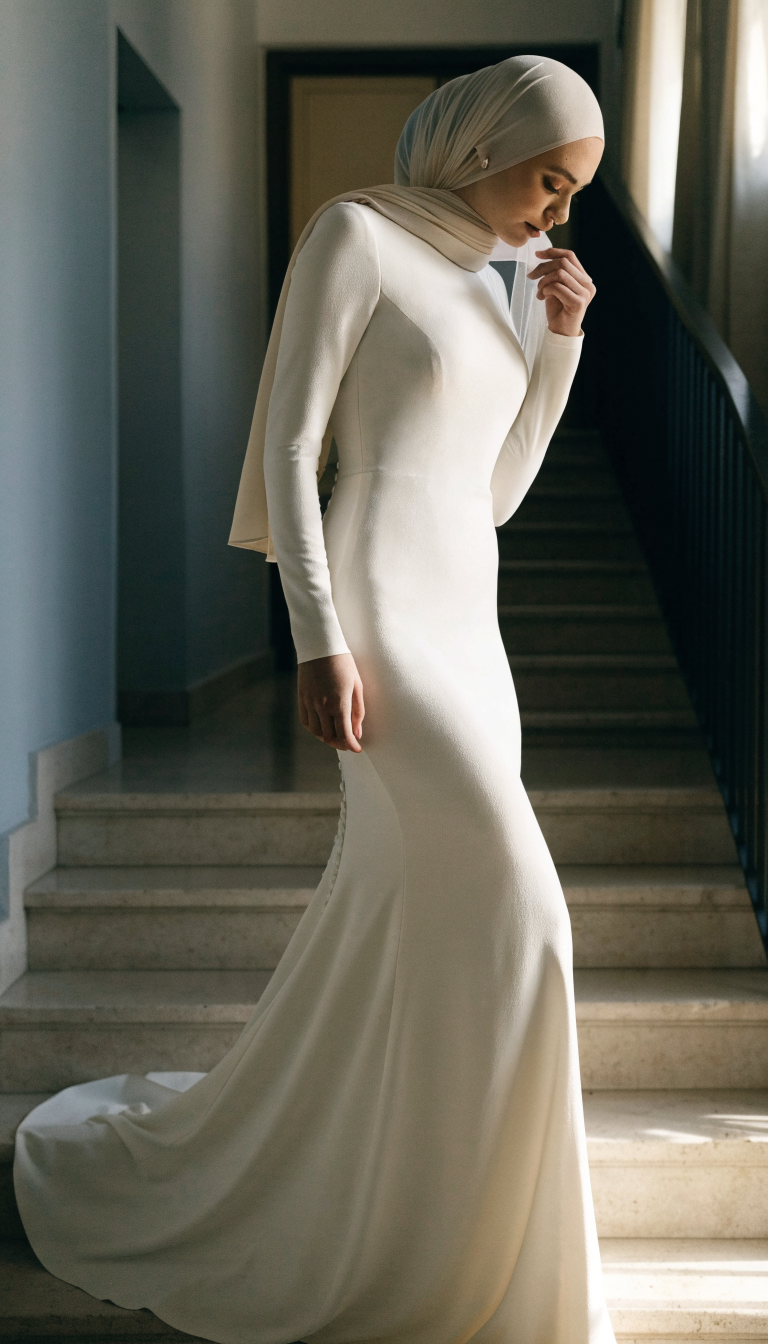
- Walking and steps: Confirm the flare starts low enough that you can climb stairs or a stage comfortably.
- Detachable option: An overskirt or short cape can soften the silhouette for parts of the day if desired.
- Alteration ease: Stretch fabrics need careful hemming so the stretch remains even around the hem.
5. Structured Mikado A-Line
Mikado’s crisp, low-sheen hand holds architectural folds and a defined waist while remaining fully opaque. A bateau neckline, long sleeves, and a skirt with controlled volume create a formal look suited to cooler indoor venues. The fabric’s structure means less reliance on heavy lining or understructure for shape.
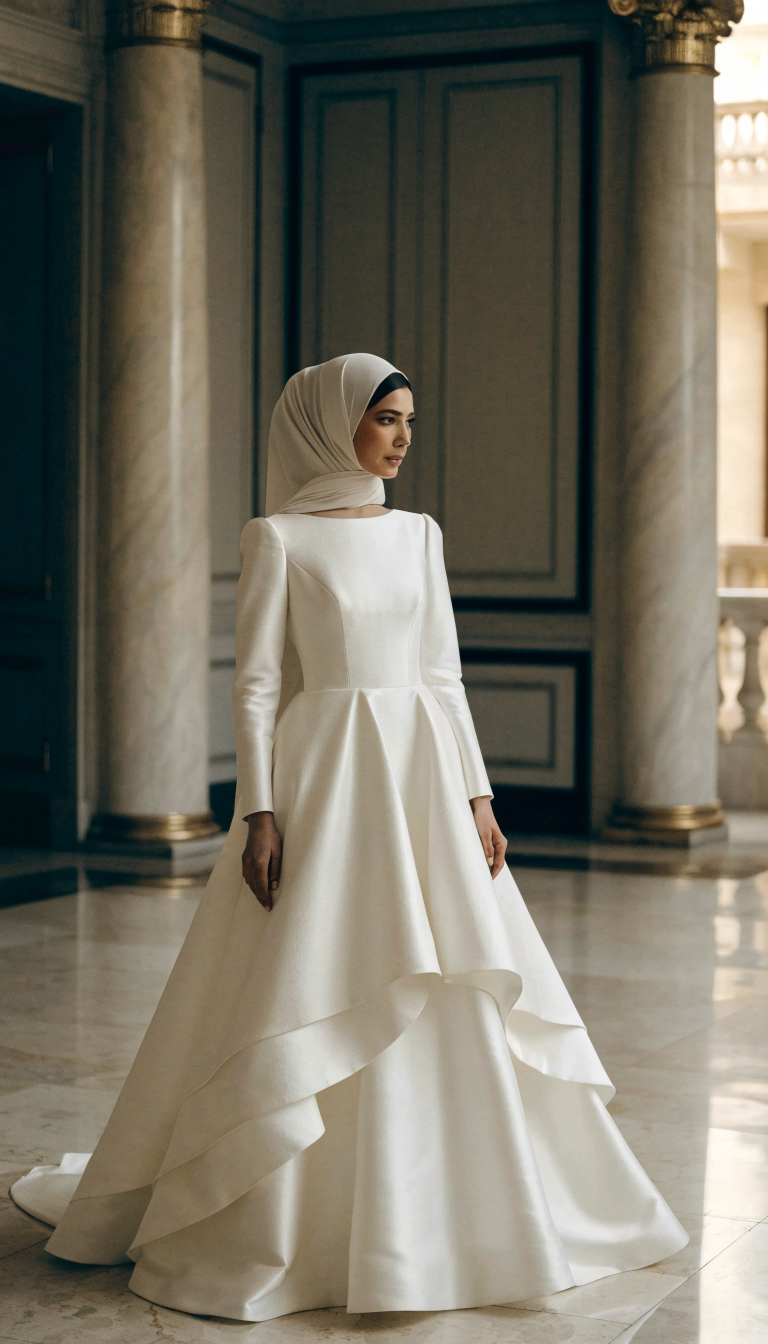
- Venue formality: Holds up well in grand indoor spaces where softer fabrics can lose definition.
- Sitting test: The crispness means the skirt stays put when you sit, though it can feel more structured than fluid crepes.
- Steaming note: Mikado responds well to professional steaming; avoid high heat on any beading.
6. Flowing Chiffon Maxi with Opaque Base
Lightweight chiffon layers over a fully lined, opaque underdress create movement and softness without compromising coverage. A high neck, long sleeves in the same lined construction, and a gathered or fluid skirt work especially well for outdoor or destination ceremonies. The outer chiffon catches light gently while the base layer keeps everything covered.
- Wind and outdoor use: Lighter outer layers can lift; secure the hijab firmly and consider a slightly heavier undercap.
- Wrinkle behavior: Chiffon shows fewer hard creases than satin but can rumple if packed tightly.
- Layer count: Too many chiffon layers add warmth; two or three are usually enough for volume.
Fabrics and How They Behave on the Day
7. Organza-Layered A-Line
Organza’s crisp, luminous quality builds volume in the skirt without the weight of satin or heavy tulle. Pair it with an opaque high-neck bodice and long sleeves (either organza over lining or solid fabric) for a light, structured look. The fabric holds soft folds that photograph cleanly in daylight.
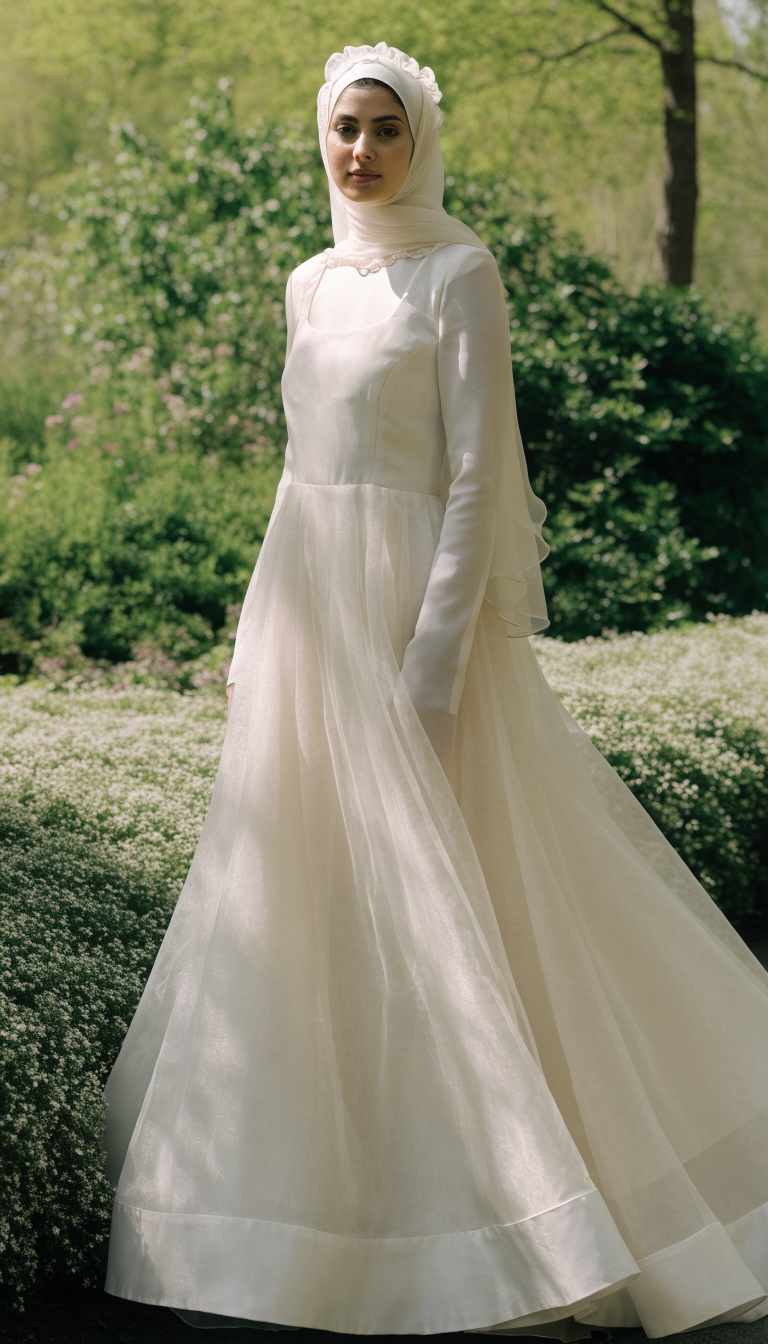
- Season fit: Excellent for spring and summer outdoor ceremonies where heavier fabrics feel too warm.
- Volume control: Organza layers can be adjusted at the seamstress if the skirt feels too full once the hijab and veil are added.
- Edge finish: Look for clean hems or subtle horsehair to keep the organza from collapsing.
8. Soft Tulle Skirt over Opaque Bodice
Multiple layers of soft tulle create airy volume while an opaque, high-neck bodice and lined long sleeves handle the coverage. The contrast keeps the upper body clean and the skirt romantic. Tulle is light, so the overall dress stays wearable even with a full silhouette.
- Dance-floor comfort: The light skirt moves easily; check that the bodice stays in place when you raise your arms.
- Bustle practicality: Tulle trains are relatively easy to bustle but can catch on heels or outdoor surfaces.
- Photo lighting: Soft tulle can appear brighter in flash; a slightly warmer ivory lining underneath helps.
9. Champagne or Ivory Satin with Matte Hijab
A satin gown in champagne or soft ivory pairs with a matte chiffon or crepe hijab so the sheen stays on the dress rather than competing around the face. High neckline and long sleeves keep the coverage consistent. The subtle color can be kinder under warm lighting than bright white for some complexions.
- Color coordination: Bring hijab fabric swatches to the salon so the tones match under the venue’s lighting.
- Crease management: Satin still shows sitting lines; a light steam between ceremony and reception helps.
- Jewelry balance: Minimal earrings or a simple bracelet keep attention on the fabric rather than adding shine at the neck.
10. Velvet or Rich Winter Fabric Gown
For cooler ceremonies, a medium-weight velvet or dense jacquard with a high neck and long sleeves offers warmth and texture. The pile of velvet absorbs light for a soft, rich look rather than high shine. An A-line or gentle column silhouette prevents the fabric from feeling overly heavy.
- Climate match: Best for indoor winter or evening venues; can feel warm in heated spaces if the venue is crowded.
- Texture care: Velvet marks easily from pressure; avoid heavy jewelry or tight seating that leaves impressions.
- Cleaning note: Most velvet requires professional cleaning, so plan for that after the day.
11. Georgette or Lightweight Crepe for Destination
Georgette’s slight texture and fluid drape, or a lightweight crepe, travel more easily and breathe better in warm climates. High-neck, long-sleeve construction with full lining keeps coverage while the lighter weight reduces bulk in luggage and on the day. The matte finish photographs evenly outdoors.
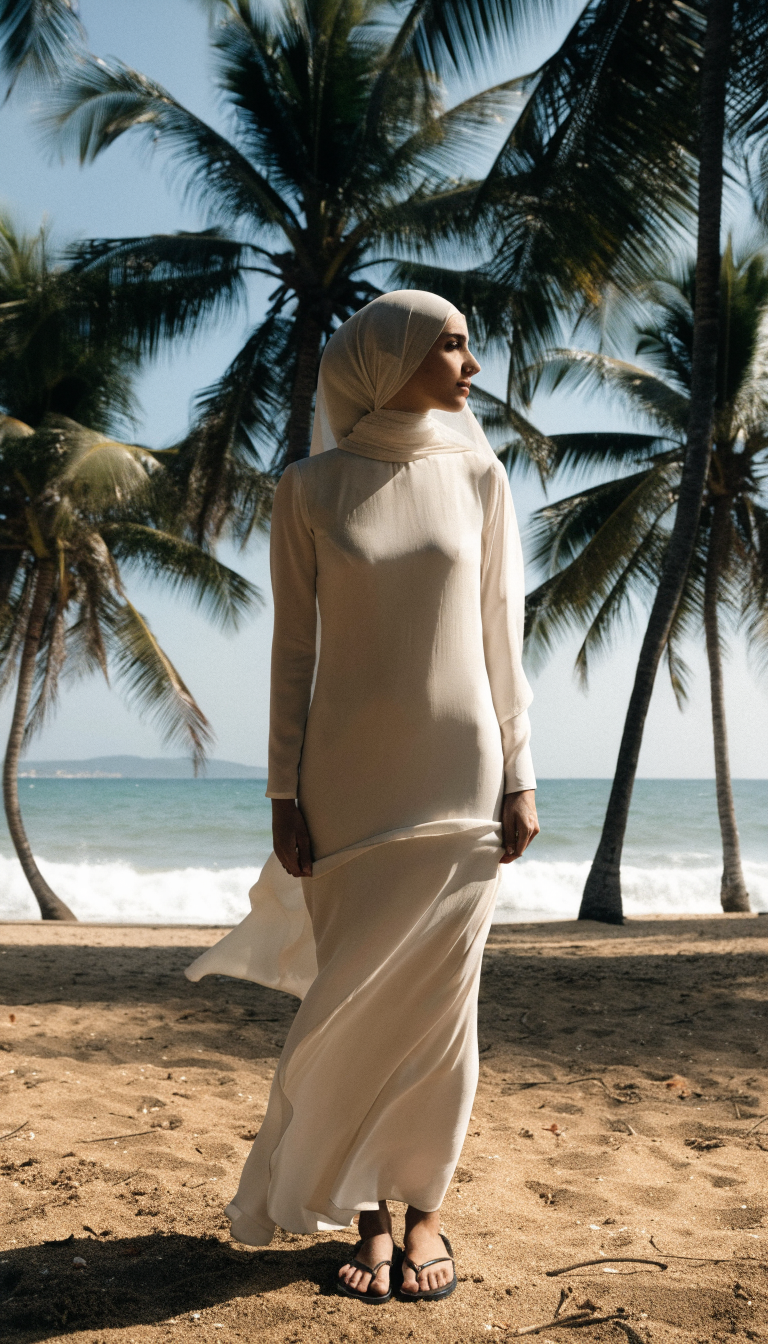
- Travel practicality: These fabrics pack with fewer permanent creases than structured satins or mikado.
- Humidity behavior: They handle moisture better than shiny fabrics that can cling when damp.
- Local alterations: Confirm a destination seamstress can handle the fabric if last-minute hem or sleeve tweaks are needed.
12. Charmeuse or Silk-Blend Fluid Column
Charmeuse offers a softer sheen and more fluid drape than traditional satin, creating gentle movement in a column or A-line. A high neckline and long sleeves in the same fabric keep the look continuous. The lighter hand can feel more comfortable for longer wear than heavier satins.
- Drape and movement: The fabric flows with walking; check that it doesn’t catch on shoes or outdoor surfaces.
- Opacity check: Some charmeuse is lighter; confirm the lining is complete and skin-matching if needed.
- Undergarment lines: Fluid fabrics can show more, so smooth shapewear is worth testing.
Details, Layers, and Practical Additions
13. Pearl or Bead Accent on High Neck and Cuffs
Scattered pearls or fine beading concentrated on the bodice, neckline edge, and cuffs add dimension without full-surface weight. A high neck or bateau with this detail frames the hijab cleanly. Keep the skirt simpler so the embellishment reads intentional rather than heavy.
- Weight distribution: Upper-body beading is easier to wear for hours than dense all-over work.
- Hijab interaction: Test that beads or pearls do not snag the hijab fabric during movement.
- Alteration caution: Embellished areas are harder to adjust; confirm neckline and sleeve fit early.
14. Detachable Cape or Overskirt
A long-sleeve, high-neck base gown in crepe or satin paired with a detachable chiffon or organza cape (or a full overskirt) gives two looks from one dress. The cape can cover the shoulders and add drama for the ceremony, then come off for dinner and dancing. Secure attachment points keep it stable with the hijab.
- Attachment security: Practice putting it on and taking it off with the hijab already in place.
- Reception ease: Removing the layer reduces weight and heat once formal photos are done.
- Storage plan: Assign someone to hold the cape so it stays clean and unwrinkled.
15. Floral Appliqué on Lined Lace
Three-dimensional or flat floral appliqués concentrated on the bodice, sleeves, and upper skirt add texture while a full lining handles coverage. A high neckline keeps the appliqués from competing with the hijab framing. The effect is romantic without requiring a sheer illusion neck.
- Hand feel: Raised appliqués can catch on the hijab or bouquet; check movement in the fitting.
- Photo dimension: Appliqués create soft shadows that read well in natural light.
- Cleaning after: Delicate appliqués usually need professional care.
16. Covered Button or Corset-Style Back (Fully Lined)
A buttoned or laced back that remains fully covered and lined provides structure and a traditional detail without an open back. Combined with a high neck and long sleeves, it keeps the gown modest from every angle. The buttons or lacing can be decorative or functional.
- Getting in and out: Practice with help, especially if the lacing is tight or the buttons are many.
- Sitting comfort: Confirm the back construction doesn’t dig in when seated for long periods.
- Bustle integration: Back details sometimes limit bustle placement; discuss this with the seamstress.
17. Two-Piece Modest Set (Long-Sleeve Top and Skirt)
A coordinated long-sleeve, high-neck top and separate flowing or A-line skirt can be easier to alter independently and sometimes more comfortable for sitting. Matching fabric and a consistent neckline keep the look bridal. The top can be worn with different skirts if the celebration has multiple events.
- Separate alterations: Sleeves and hem can be adjusted without affecting the whole garment.
- Layering option: An additional lightweight jacket or cape can be added if needed.
- Visual continuity: Choose the same fabric family so the pieces read as one outfit.
Cultural and Specialty Approaches
18. Embroidered Kaftan or Abaya-Style Gown
A flowing kaftan or structured abaya silhouette with dense embroidery at the neckline, cuffs, and hem offers full coverage and cultural resonance. Long sleeves and a high or modest neckline are built into the cut. Pair with a coordinating hijab in a complementary fabric weight so the embroidery remains the focus.
- Movement in volume: Wide cuts are comfortable for sitting and walking; check that the hem doesn’t drag excessively.
- Embroidery weight: Heavy work at the hem can pull; ask about lining or reinforcement.
- Rewear potential: Many of these styles transition more easily to other formal events than a traditional gown.
19. Long-Sleeve Lehenga or Sharara Adaptation
A traditional lehenga or sharara with a custom long-sleeve, high-neck blouse (ordered with opaque lining from the start) and a full skirt creates a cultural bridal look that works with hijab. The dupatta can be styled over or alongside the hijab, or a separate lighter scarf used for the head covering. Confirm the blouse length meets the skirt when arms are raised.
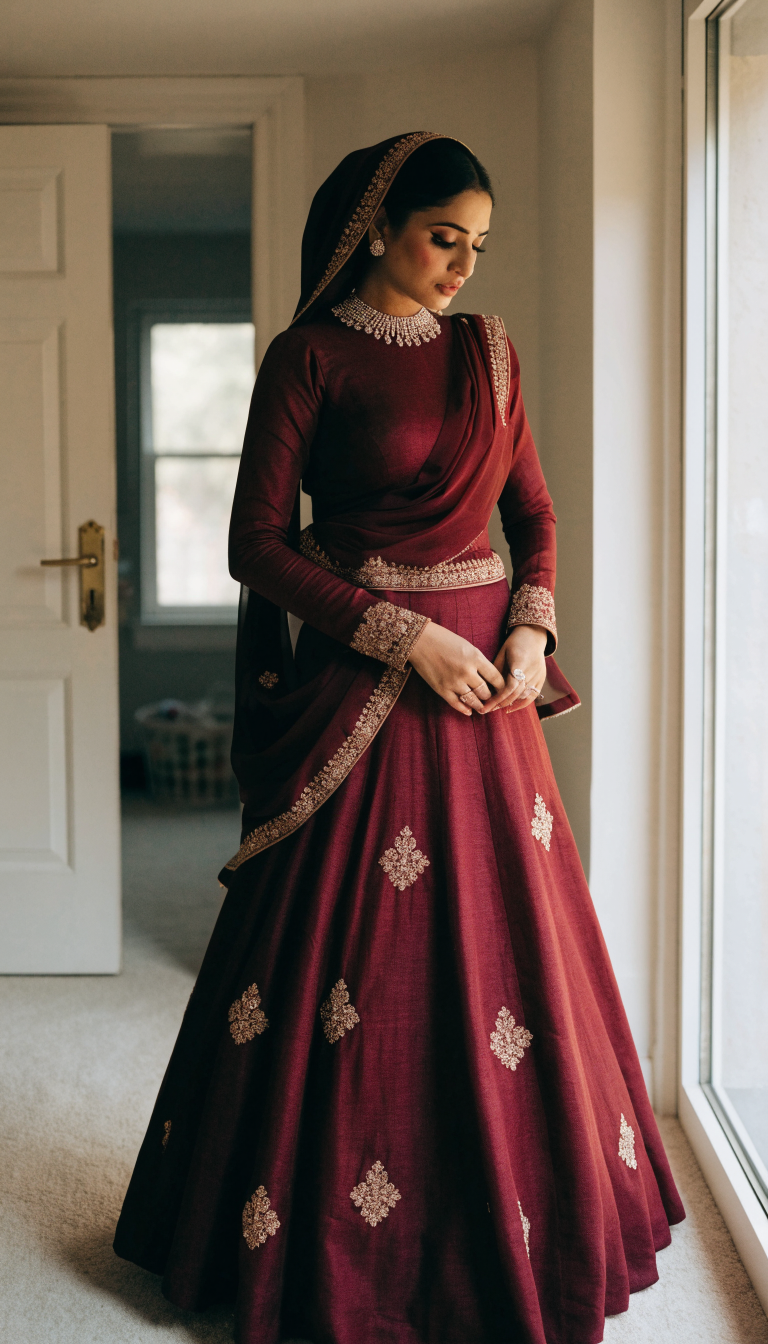
- Order timing: Specify full sleeves and lining at the design stage rather than adding them later.
- Dupatta placement: Practice how the extra fabric sits with the hijab so it doesn’t shift during the ceremony.
- Sitting in volume: Full skirts need enough space; test on the actual seating if possible.
20. Lightweight Destination or Courthouse Column
A simple long-sleeve, high-neck column in crepe or lightweight satin works for intimate courthouse ceremonies or warm destination weddings where a full gown would feel impractical. The clean lines keep the focus on the hijab and minimal accessories. A short or no train reduces handling.
- Timeline flexibility: Simpler styles are sometimes available closer to the date or as samples.
- Heat management: Fewer layers and lighter fabric make a long outdoor or daytime event more comfortable.
- Accessory focus: A well-coordinated hijab and simple earrings carry the bridal feel without heavy embellishment.
Bring your actual hijab, undercap, pins, and the shoes you plan to wear to every fitting—the combination changes how the neckline sits and how the hem looks. Start shopping early enough for made-to-order timelines and at least two or three alteration appointments. Narrow your list by testing how each option feels when you sit, raise your arms, and walk; the one that stays comfortable and covered through those movements is the one worth bringing to the day.
FAQ
How far in advance should I order a made-to-order modest wedding dress? Most salons recommend starting six to nine months ahead so there is time for production, shipping if applicable, and multiple fittings. Simpler or sample dresses can sometimes be ready sooner.
Can I add long sleeves or raise a neckline on an existing gown? Yes, many dresses can be altered, but it is usually cleaner and less expensive to order the coverage from the start. Added sleeves need matching fabric and proper lining, which takes time.
What undergarments work best under these styles? Smooth, high-coverage shapewear or a well-fitted slip in a skin-matching tone reduces lines under crepe and satin. Bring the exact pieces to fittings so the neckline and sleeves can be adjusted around them.
Do I need a separate veil with a hijab? Not always. Some brides prefer only the hijab; others add a lightweight veil attached at the back of the hijab for photos. Test the combination so the veil doesn’t pull the hijab or create bulk at the neck.