
A wedding reception dress lets the bride move freely after the ceremony, typically as a shorter or lighter second look that prioritizes dance-floor ease, sitting through dinner, and late-night comfort without sacrificing a polished bridal feel. The choice affects photos, energy levels, and how practical the outfit remains after hours in a more structured gown. This list groups styles by length and construction so you can match movement needs, climate, and venue while scanning quickly for fabric behavior and fit details. Approximate prices vary by designer, fabric, region, and alterations.
Mini Reception Dresses
1. Satin Mini Sheath with Structured Bodice
A clean satin mini sheath skims the body from a fitted bodice to a straight or lightly tapered hem just above the knee, offering a modern bridal silhouette that photographs crisply under evening lights. Fluid yet weighty satin catches soft sheen without heavy layering, while internal boning or a built-in cup can provide support so the dress stays secure during spins. It works well for indoor ballrooms or hotel receptions where floors are smooth and the temperature stays controlled.
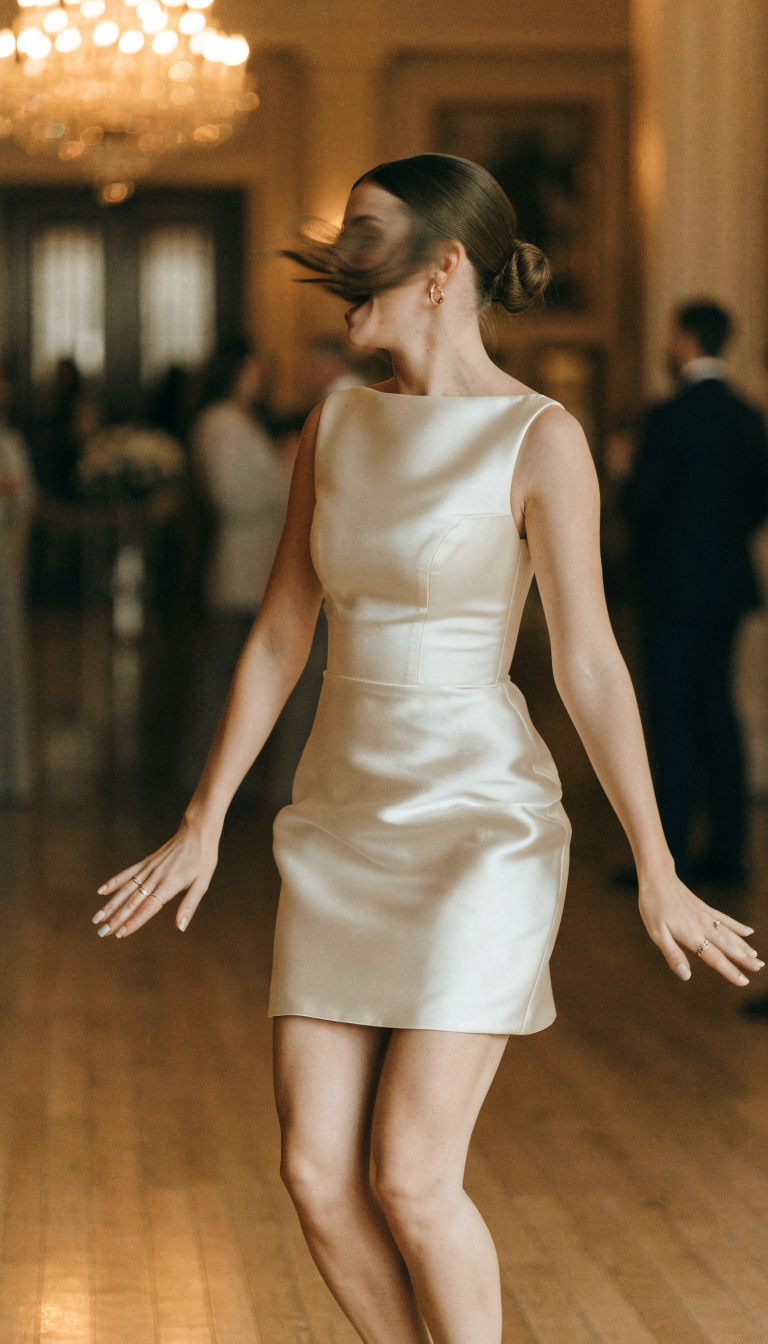
- Dance-floor ease: Short hem and minimal volume let you move without catching heels or tripping on uneven surfaces.
- Sitting and restroom test: Check the hem length while seated; stretch satin can ride up, so try a quick sit-and-stand during the fitting.
- Alteration note: Simple seams often need only a basic hem and side adjustments rather than complex restructuring.
2. Lace Overlay Mini with Scalloped Hem
Delicate lace over a smooth lining creates a romantic short dress whose scalloped edges add texture that reads clearly in photos even at a distance. The overlay breathes better than solid satin when lined lightly, and a soft A-line or fit-and-flare cut under the lace prevents the fabric from clinging after hours of movement. Garden or outdoor evening settings suit it when temperatures drop slightly after sunset.
- Weather match: Lightweight lace works in mild evenings but can feel drafty if the venue is air-conditioned; layer a short jacket if needed.
- Undergarment pairing: Seamless nude briefs or built-in shorts keep lines invisible under the semi-sheer lace.
- Budget-friendly path: Off-the-rack versions in this style often appear in sample sales or ready-to-ship collections with shorter lead times.
3. Sequin Fringe Mini for Party Energy
Dense sequins or pearl-fringe panels on a short base catch light with every step, turning ordinary movement into visual motion on the dance floor. The fringe or beading adds weight that can feel substantial after a long day, so a lined, stretchy base fabric helps the dress stay comfortable rather than stiff. It shines in indoor venues with ambient lighting where the sparkle reads without competing with natural sunlight.
- Heat consideration: Full sequin coverage traps warmth; choose this for climate-controlled spaces rather than humid outdoor tents.
- Movement check: Swing your arms and take a few steps in the fitting room to see whether the fringe snags or swings freely.
- Shoe pairing: Strappy heels or low blocks work well; the short length shows them off without hem interference.
4. Off-the-Shoulder Ruffle Mini
Soft ruffles across the neckline and hem of a short dress create volume that photographs playfully while the open shoulders keep the look light. Crisp organza or lightweight taffeta holds the ruffle shape without collapsing, and a fitted bodice underneath provides structure so the ruffles do not overwhelm the silhouette. This style suits semi-formal garden parties or rooftop receptions where a bit of movement in the fabric looks lively.
- Support needs: Built-in cups or a strapless bra with strong grip help keep the neckline secure when arms lift during dancing.
- Fabric drape: Organza ruffles stay perky; softer chiffon versions flatten more easily when you sit.
- Quick change note: Fewer closures than a full gown make this easier to swap into between ceremony photos and the reception entrance.
5. Feather-Trim Mini with Clean Lines
A simple mini base finished with a feather band at the hem or cuffs adds texture and motion that photographs dynamically without requiring a full ballgown volume. Feathers move with each step and can shed slightly, so a densely attached trim on a stable fabric base reduces loose pieces. Indoor ballrooms or evening hotel settings keep the feathers protected from wind and humidity better than open-air spaces.
- Practical limitation: Feathers can catch on jewelry or table settings; test a short walk and arm raise during the fitting.
- Cleaning reality: Most feather trims require professional cleaning and may not survive repeated wear as well as plain fabric.
- Bra compatibility: Strapless or convertible styles with a secure band work when the neckline is straight or square.
6. Square-Neck Mini with Subtle Boning
A square neckline on a short dress frames the collarbone cleanly and pairs well with statement earrings, while light boning in the bodice maintains shape through sitting and dancing. Matte crepe or structured satin holds the geometric neckline without stretching out of form, and the shorter length keeps the overall look easy to manage. It fits formal indoor receptions or modern loft venues where clean lines photograph sharply.
- Fitting-room test: Raise and lower your arms to confirm the neckline stays in place without gaping.
- Shapewear note: A smooth, mid-rise brief or light shapewear prevents visible lines under the fitted skirt.
- Hem adjustment: Most ready-to-wear versions need only a standard hem rather than extensive restructuring.
7. Puff-Sleeve Mini for Soft Structure
Short puff or balloon sleeves on a mini dress add shoulder volume that balances a fitted bodice and creates a playful silhouette without a full skirt. Lightweight organza or cotton-blend fabric keeps the sleeves from feeling heavy, and an elastic or structured cuff helps them hold shape through movement. Mild outdoor or airy indoor venues suit the look when temperatures are moderate.
- Temperature fit: Puff sleeves can feel warm in high heat; choose breathable fabrics and shorter sleeve lengths for summer.
- Dance comfort: The sleeves stay out of the way better than long ones, but confirm they do not restrict arm movement.
- Rewear potential: Many versions in this style work for other semi-formal events after the wedding with minimal changes.
8. Corset-Bodice Mini with A-Line Skirt
Visible or internal boning in a short dress creates waist definition and support that stays comfortable through dinner and dancing, while an A-line skirt flares gently for leg room. Structured satin or mikado (a crisp, medium-weight fabric that holds shape) keeps the bodice firm without the weight of a full gown. It works across indoor ballrooms and controlled outdoor spaces where you want both structure and mobility.
- Support built-in: The boning often reduces the need for a separate bra, but test the top edge for comfort against skin.
- Sitting check: Sit and cross your legs to ensure the skirt volume does not ride up awkwardly.
- Alteration complexity: Boning adjustments require a skilled seamstress; plan extra fitting time if resizing is needed.
9. Long-Sleeve Lace Mini for Cooler Evenings
A short lace dress with fitted long sleeves provides coverage and a bit of warmth while the hem stays easy to dance in. Stretch lace or a lined version moves with the body, and a simple zipper or button back keeps the construction straightforward. Cooler indoor venues or outdoor receptions after sunset benefit from the added layer without the bulk of a full gown.
- Layering option: A thin slip or camisole underneath prevents itch and improves opacity if the lace is open.
- Movement range: Bend and reach in the fitting room to confirm the sleeves do not pull at the shoulders.
- Timeline advantage: Many off-the-rack lace minis ship quickly compared with made-to-order ceremony gowns.
10. Beaded Sheath Mini with Side Slit
Sparse beading or pearl accents on a short sheath catch light subtly, while a modest side slit adds mobility for walking and dancing without full exposure. Stretch crepe or lined satin provides a smooth base that holds the beading securely and resists wrinkling better than thinner fabrics. It suits modern hotel or loft receptions where the details read well in closer photos.
- Slit practicality: Walk and sit to check that the slit stays controlled and does not gape when you move.
- Weight balance: Light beading adds less bulk than full sequin coverage, making it easier for extended wear.
- Undergarment lines: Choose seamless options; the fitted cut shows more than a flared skirt.
Midi Reception Dresses
11. Bias-Cut Satin Slip Midi
A bias-cut satin slip falls in liquid folds from a simple neckline to a midi hem that hits between the calf and ankle, creating soft movement that photographs fluidly. The diagonal grain of the fabric drapes closely without rigid structure, though it can show undergarment lines and crease when seated. Intimate or garden settings with soft lighting highlight the sheen without requiring heavy embellishment.
- Crease warning: Satin marks easily from sitting; plan a quick steam or choose a version with a light lining.
- Support reality: Thin straps or a cowl neck often need a strapless bra or adhesive cups for security.
- Shoe height: The midi length works with both heels and flats; test the hem so it does not drag.
12. Halter Satin Midi with Clean Back
A halter neckline on a midi dress leaves the shoulders bare and creates a continuous line from neck to hem that looks polished in photos, while the longer length covers more than a mini during seated moments. Fluid satin or charmeuse (a lightweight, drapey satin) moves easily for dancing yet maintains a refined surface. It fits both indoor formal spaces and milder outdoor venues where coverage still matters.
- Neck support: The halter ties or hooks must stay secure; check the fit at the nape during movement.
- Back comfort: An open or low back can feel cool but may require adhesive support if the fabric is slippery.
- Rewear ease: Many satin midis transition to other events with different jewelry or a jacket.
13. Tiered Chiffon Midi for Soft Volume
Multiple tiers of lightweight chiffon create gentle volume that sways with movement without the weight of a full ballgown skirt. The fabric breathes well and layers can be lined at the top for opacity, making it suitable for warmer climates or outdoor receptions where airflow matters. A fitted bodice keeps the tiers from overwhelming the silhouette.
- Heat advantage: Chiffon stays cooler than satin or sequined options during active dancing.
- Hem practicality: The longest tier should clear the floor when you walk; grass or sand can catch lower layers.
- Steaming note: Chiffon wrinkles less than satin but still benefits from a light steam before wearing.
14. Crepe Column Midi with Minimal Detail
Matte crepe falls in a straight column from a simple neckline to a midi hem, offering a structured yet breathable surface that resists shine and hides minor creases better than satin. Light stretch in many crepes improves comfort through sitting and dancing while maintaining a clean line. Modern indoor venues or daytime-to-evening transitions suit the understated look.

- Fabric feel: Crepe feels dry and smooth against skin compared with slippery satin.
- Alteration simplicity: Column cuts often need only length and side-seam adjustments.
- Undergarment choice: Smooth, full-coverage briefs or light shapewear prevent lines under the straight skirt.
15. Asymmetrical Hem Midi in Satin
An asymmetrical hem on a midi dress creates visual interest and practical movement, with one side shorter for easier walking while the longer side adds flow in photos. Fluid satin or crepe holds the uneven line without stiffness, and a fitted or lightly flared bodice keeps the overall proportion balanced. It works for both formal indoor spaces and garden settings where the hem can move freely.
- Walking test: Take several steps and turn to confirm the longer side does not catch underfoot.
- Photo advantage: The uneven hem photographs differently from every angle, adding variety without extra volume.
- Budget range: Ready-to-wear asymmetrical styles often cost less than custom gowns and arrive faster.
16. Lace Midi with Illusion Neckline
An illusion panel (sheer fabric over the neckline or back) on a lace midi dress adds coverage while maintaining a delicate look, and the longer hem provides more modesty during seated meals. Soft lace over a lining moves gently, and the illusion detail can be paired with a higher back for support. Cooler indoor or outdoor evening venues suit the layered texture.
- Opacity check: Hold the lace up to light in the fitting room to see how much lining is needed.
- Sleeve or strap options: Cap sleeves or thin straps can be added or removed depending on the base design.
- Comfort during sitting: The midi length covers more when you sit than a mini, reducing the need to adjust constantly.
17. High-Neck Crepe Sheath Midi
A high or mock-neck line on a crepe midi dress creates a polished, covered look that pairs well with statement earrings or a simple necklace, while the column or lightly fitted skirt stays easy to move in. Matte crepe holds the neckline cleanly and feels less slippery than satin during long wear. It fits formal indoor receptions or venues where a more covered neckline aligns with the dress code.
- Neck comfort: Ensure the high neck does not feel tight when you turn your head or sit.
- Bra pairing: Built-in cups or a strapless bra work well since the neckline covers the shoulders.
- Rewear note: The modest neckline makes this style easier to wear to other events after the wedding.
18. Open-Back Midi with Secure Closure
A low or open back on a midi dress creates visual interest from behind while the front remains covered, and a secure zipper or button closure keeps it in place through dancing. Fluid fabrics like satin or crepe drape smoothly over the open area, and the midi length balances the exposure. Indoor ballrooms or evening settings highlight the detail without outdoor wind interference.
- Support requirement: Adhesive cups or a low-back bra are usually necessary; test during the fitting with your planned undergarments.
- Movement security: Bend forward and raise your arms to confirm the back stays closed and comfortable.
- Temperature note: An open back can feel cooler in warm venues but drafty in strong air conditioning.
19. Fit-and-Flare Midi with Soft Flare
A fit-and-flare midi hugs through the bodice and hips before flaring gently below the knee, offering more room for movement than a straight sheath while remaining shorter than a full gown. Stretch crepe or satin provides recovery so the fabric returns to shape after sitting, and light structure in the bodice maintains the line. It suits a range of indoor and outdoor venues where moderate volume is welcome.
- Dance mobility: The flare gives leg room for steps without the bulk of a ballgown.
- Hem clearance: Confirm the flare clears the floor in your chosen shoes so it does not drag.
- Alteration ease: Side seams and the hem are the main adjustment points for most ready-to-wear versions.
20. Embellished Tulle Midi Overlay
A soft tulle overlay with light beading or embroidery over a simpler base adds texture and volume to a midi length without the weight of a full ceremony gown. Multiple tulle layers create airy movement that photographs softly, while a lined bodice provides structure and opacity. Garden or ballroom settings with ambient light suit the gentle sparkle.
- Layer comfort: The innermost tulle should be soft against skin; scratchy layers can irritate during long wear.
- Volume control: Too many layers can feel bulky when sitting; check the seated silhouette in the fitting room.
- Care note: Embellished tulle often needs professional cleaning and careful storage.
Longer and Alternative Styles
21. Simple Maxi Slip for Fluid Coverage
A long bias-cut or column slip in satin or crepe offers full coverage with minimal structure, moving fluidly for dancing while remaining lighter than a traditional gown. The fabric drapes closely and can be paired with a short train or left clean at the hem for easier movement. It works for venues where a longer silhouette is preferred but heavy volume is not.
- Train decision: A short or no train reduces the need for bustling and makes restroom visits simpler.
- Fabric weight: Lightweight crepe or charmeuse stays cooler than heavier satin during extended wear.
- Shoe and hem: Have the hem finished to your shoe height so the fabric does not pool excessively.
22. Bridal Jumpsuit with Wide Legs
A tailored jumpsuit in crepe or satin provides full coverage and unrestricted leg movement, with a fitted or corset-style bodice that keeps the look bridal. Wide legs or palazzo cuts allow easy walking and dancing, and many versions include pockets or a detachable sash. Modern loft, gallery, or indoor venues suit the clean lines.
- Restroom practicality: A jumpsuit requires more steps to remove than a dress; practice the process if the timeline is tight.
- Fit through hips: Ensure the rise and leg width allow comfortable sitting and dancing without pulling.
- Rewear strength: Well-cut jumpsuits often work for other formal events with different accessories.
23. Two-Piece Crop and Skirt Set
A separate crop or bandeau top paired with a matching midi or mini skirt lets you mix coverage and movement, often with a high waist that defines the silhouette. Fluid satin or structured crepe holds the pieces in place, and the separation can make temperature adjustments easier. It fits both indoor and outdoor receptions where a coordinated but flexible look is desired.
- Security check: Confirm the crop stays in place when you raise your arms and that the skirt waistband does not roll.
- Layering option: A short bolero or jacket can be added if the venue cools down.
- Alteration flexibility: Each piece can sometimes be adjusted independently, simplifying some fittings.
24. High-Low Maxi with Practical Front
A high-low hem keeps the front shorter for walking and dancing while the back falls longer for visual drama, often in satin or chiffon that moves with the body. The shorter front reduces tripping risk compared with a full-length gown, and light structure in the bodice maintains shape. It works across ballrooms and garden spaces where the hem can flow without catching.
- Front clearance: Walk and turn to ensure the short front stays above the floor in your shoes.
- Back management: A light bustle or simple tie can control the longer back if needed during dinner.
- Fabric choice: Chiffon versions feel lighter and cooler than satin for warmer climates.
25. Tailored Blazer and Shorts or Skirt Set
A structured white or ivory blazer paired with matching tailored shorts or a short skirt creates a modern alternative that prioritizes ease of movement and rewear potential. Crisp crepe or lightweight suiting fabric holds the tailored lines, and the separates allow temperature adjustments. Contemporary indoor venues or daytime-to-evening transitions suit the polished yet practical approach.
- Coverage note: Tailored shorts or a short skirt under the blazer provide secure coverage during active dancing.
- Shoe pairing: Pointed heels or dressy flats both work; the shorter bottom shows them clearly.
- Rewear advantage: The pieces can often be worn separately to other events after the wedding.
26. Convertible Dress with Detachable Overlay
A simple base dress paired with a detachable tulle or lace overlay lets you shift from a more covered look to a lighter one as the evening progresses, often with the overlay removed after dinner. Lightweight overlay fabrics add volume temporarily without permanent weight, and the base remains comfortable for dancing. It suits venues with changing temperatures or long receptions where versatility helps.
- Attachment security: Test that the overlay stays in place during movement yet releases easily when you want it off.
- Base comfort: The underlying dress should feel wearable on its own for the majority of the night.
- Timeline fit: Many convertible options are available ready-to-wear, reducing the multi-month lead times common with full custom gowns.
Choosing among these styles starts with your venue surface, expected temperature, and how much you plan to dance versus sit. Bring the shoes you will wear, any planned undergarments, and a phone to record short movement tests during fittings so you can compare options later. Most reception dresses can be sourced ready-to-wear or with shorter lead times than ceremony gowns, leaving more room for final alterations focused on hem and fit.
FAQ
When should I change into the reception dress? Most brides change after formal photos and before the reception entrance or after dinner, depending on the schedule and whether hair and makeup need touch-ups. A simple dress with fewer closures makes the switch faster.
Do I need a second dress if my ceremony gown is already comfortable? No. A second dress is optional and most useful when the ceremony gown has a long train, heavy fabric, or restrictive structure that limits dancing and sitting.
How many fittings should I expect for a reception dress? Ready-to-wear styles often need one or two fittings for hem and minor adjustments, fewer than the multiple sessions typical for made-to-order ceremony gowns. Bring your shoes and undergarments to the final fitting.
Can a reception dress be reworn? Many shorter or separates styles in neutral fabrics can be worn to other events with different accessories or a jacket, especially if the construction is straightforward rather than heavily embellished.