
A simple wedding dress centers clean construction, quality fabric, and a silhouette that moves with you rather than against you. These choices photograph clearly in most lighting, feel more manageable in heat or on uneven ground, and often require fewer alterations than heavily embellished gowns. The 27 options below are grouped by silhouette, neckline and sleeve treatment, fabric behavior, and practical features so you can match the style to your venue, season, and how long you expect to wear the dress.
Clean Silhouettes
1. Classic A-Line Silhouette
The A-line starts fitted through the bodice and opens gradually from the natural waist, creating room through the hips and legs without dramatic volume. It suits many body shapes because the flare begins after the waist and allows easy walking and sitting. Pair it with a modest train that can be bustled for the reception so the skirt does not drag.
Best for: Most venues, including church aisles, gardens, and indoor ceremonies; brides who want movement without feeling restricted. Common fabrics: Crepe for a matte, structured fall; satin for light sheen; chiffon overlays for softer movement that catches air. Typical price range: Approximate $800–$2,800 depending on designer, region, fabric weight, and alterations. Watch out for: Very full versions can feel warm in summer heat; confirm the skirt clears the floor with your planned shoe height.
2. Sleek Sheath Dress
A sheath follows the body in a straight or gently tapered line from shoulder to hem with little or no flare. It keeps the overall look minimal and elongates the figure in photographs. Choose a version with slight stretch or a lining that allows comfortable sitting and dancing; rigid fabric can restrict steps.
Best for: Courthouse, city, or modern indoor settings; anyone who prefers a streamlined shape and easy car entry. Common fabrics: Stretch crepe that skims without clinging; silk charmeuse for fluid drape; mikado for a firmer hold. Typical price range: Approximate $700–$2,500 depending on designer, region, fabric weight, and alterations. Watch out for: Precise fit is essential—any tightness shows; plan extra fitting time and smooth undergarments that do not create lines.
3. Column Gown
The column silhouette stays close through the torso and hips then falls straight to the floor, often with a subtle train. It reads formal yet uncomplicated and works well when the neckline or back provides the main design interest. A well-cut column lets you walk without lifting the skirt constantly.
Best for: Formal indoor venues or winter ceremonies where a longer line feels appropriate. Common fabrics: Crepe or satin that holds a clean vertical line; lighter silk for softer movement. Typical price range: Approximate $900–$3,000 depending on designer, region, fabric weight, and alterations. Watch out for: Long trains need a bustle plan; test walking and turning in the salon to check balance.
4. Bias-Cut Slip Dress
Cut on the bias, this style drapes diagonally so the fabric molds gently and moves with the body. Thin straps or a cowl neck keep the upper half minimal. The result feels light and fluid, which helps in warmer weather, but the cut demands accurate measurements.
Best for: Beach, garden, or destination weddings; anyone wanting an easy, unfussy silhouette. Common fabrics: Silk satin or charmeuse that flows; lighter crepe for less sheen. Typical price range: Approximate $600–$2,200 depending on designer, region, fabric weight, and alterations. Watch out for: Bias fabric can twist or pull if the pattern is off; work with a fitter experienced in bias cuts and allow time for adjustments.
5. Empire Waist Style
The seam sits just below the bust, and the skirt falls freely from there. This raises the visual waistline and removes pressure around the midsection, making sitting and dancing more comfortable. It also accommodates slight changes in body size more readily than waist-seamed styles.
Best for: Outdoor or daytime ceremonies; anyone prioritizing comfort over a defined waist. Common fabrics: Soft chiffon or georgette for flow; lightweight crepe for a cleaner line. Typical price range: Approximate $700–$2,400 depending on designer, region, fabric weight, and alterations. Watch out for: The high waist can shorten the torso visually; check proportions in full-length photos during fittings.
6. Tea-Length Dress
The hem ends around mid-calf, offering coverage without a full floor-length skirt. It works well for less formal settings and reduces the risk of the fabric catching on grass or steps. Shoes become more visible, so plan the pair early.
Best for: Garden parties, vineyard weddings, or daytime celebrations; anyone who wants easier movement. Common fabrics: Crepe or satin for structure; lace over a smooth lining for texture without bulk. Typical price range: Approximate $500–$1,800 depending on designer, region, fabric weight, and alterations. Watch out for: Hem length must be even; bring the exact shoes you will wear so the seamstress can set the length correctly.
7. Soft Fit-and-Flare
The dress stays relatively close through the hips then flares gently above or at the knee. It offers more ease than a tight mermaid while still defining the waist. A modest flare supports dancing without requiring constant skirt management.
Best for: Indoor receptions or mixed indoor-outdoor venues where some shape is desired without heavy volume. Common fabrics: Stretch crepe for recovery; satin for a smooth surface. Typical price range: Approximate $800–$2,600 depending on designer, region, fabric weight, and alterations. Watch out for: The flare point affects how the skirt moves when you sit; test sitting and standing in the salon.
8. Structured Minimalist Ball Gown
A fitted bodice meets a full but clean skirt with limited layers and no heavy beading. The volume creates presence without the weight of multi-tiered tulle. Proper boning and a well-fitted waist keep the skirt from shifting.
Best for: Formal ballrooms or winter ceremonies where drama is welcome but simplicity is preferred. Common fabrics: Mikado or taffeta for hold; organza layers for lighter lift. Typical price range: Approximate $1,200–$3,500 depending on designer, region, fabric weight, and alterations. Watch out for: Skirt volume can make restroom visits and car travel harder; practice both and confirm a workable bustle.
Necklines and Sleeve Treatments
9. Soft V-Neckline
A moderate V opens the neckline just enough to lengthen the upper body without requiring extensive support. It pairs cleanly with both A-line and sheath silhouettes and photographs well under most lighting. The depth can be adjusted with lining or a modesty panel.
Best for: Most body proportions and venues; anyone who wants an open yet balanced neckline. Common fabrics: Crepe or satin that lies smooth; light lace if texture is desired only at the edge. Typical price range: Approximate $750–$2,500 depending on designer, region, fabric weight, and alterations. Watch out for: Deeper Vs may need a stick-on bra or built-in cups; test the combination with your planned jewelry.
10. Square Neckline
The straight horizontal line across the collarbone and vertical drops create a modern frame. It works especially well on structured fabrics that hold the shape. The geometric cut looks crisp in photographs and suits both short and long sleeves.
Best for: Contemporary venues or anyone seeking an architectural look without ornament. Common fabrics: Mikado or crepe for sharp edges; satin for a softer version of the same line. Typical price range: Approximate $800–$2,700 depending on designer, region, fabric weight, and alterations. Watch out for: The corners can gap if the bodice is too loose; expect precise alterations around the bust.
11. Bateau or Boat Neck
The neckline runs straight from shoulder to shoulder, following the collarbone. It offers coverage while keeping the look open and elongated. Long or cap sleeves often finish the line cleanly.
Best for: Church or formal settings where modest coverage is preferred; cooler seasons. Common fabrics: Crepe or satin that drapes smoothly across the shoulders. Typical price range: Approximate $700–$2,400 depending on designer, region, fabric weight, and alterations. Watch out for: Shoulder fit must be exact or the line pulls; bring undergarments to the first fitting.
12. Subtle Sweetheart Neckline
A gentle curve frames the bust without deep plunge or heavy decoration. On a simple dress it adds soft shape while remaining understated. Built-in cups or light boning usually provide support so straps are optional.
Best for: Strapless or thin-strap versions for warmer weather; anyone who likes a defined but not ornate bust line. Common fabrics: Satin or crepe for a smooth curve; light lining for opacity. Typical price range: Approximate $800–$2,600 depending on designer, region, fabric weight, and alterations. Watch out for: Strapless styles can slip during dancing; confirm the bodice stays in place when you raise your arms.
13. High Neck or Illusion Neckline
A high neck or sheer illusion panel covers the upper chest and shoulders while remaining light. The effect is covered yet not heavy, which suits cooler venues or preferences for modesty. The sheer area needs careful lining placement so it does not appear opaque or transparent unexpectedly.
Best for: Church ceremonies, winter weddings, or anyone wanting coverage without long sleeves. Common fabrics: Illusion tulle over a solid base; crepe or lace for the solid portions. Typical price range: Approximate $850–$2,800 depending on designer, region, fabric weight, and alterations. Watch out for: Sheer panels show undergarments and skin tone differences; test the exact color match under venue lighting.
14. Cowl Neck Drape
Soft folds of fabric drape across the neckline, adding gentle movement without construction details. The drape works best in fluid fabrics that hold soft folds rather than stiff ones. It photographs with natural texture and feels light against the skin.
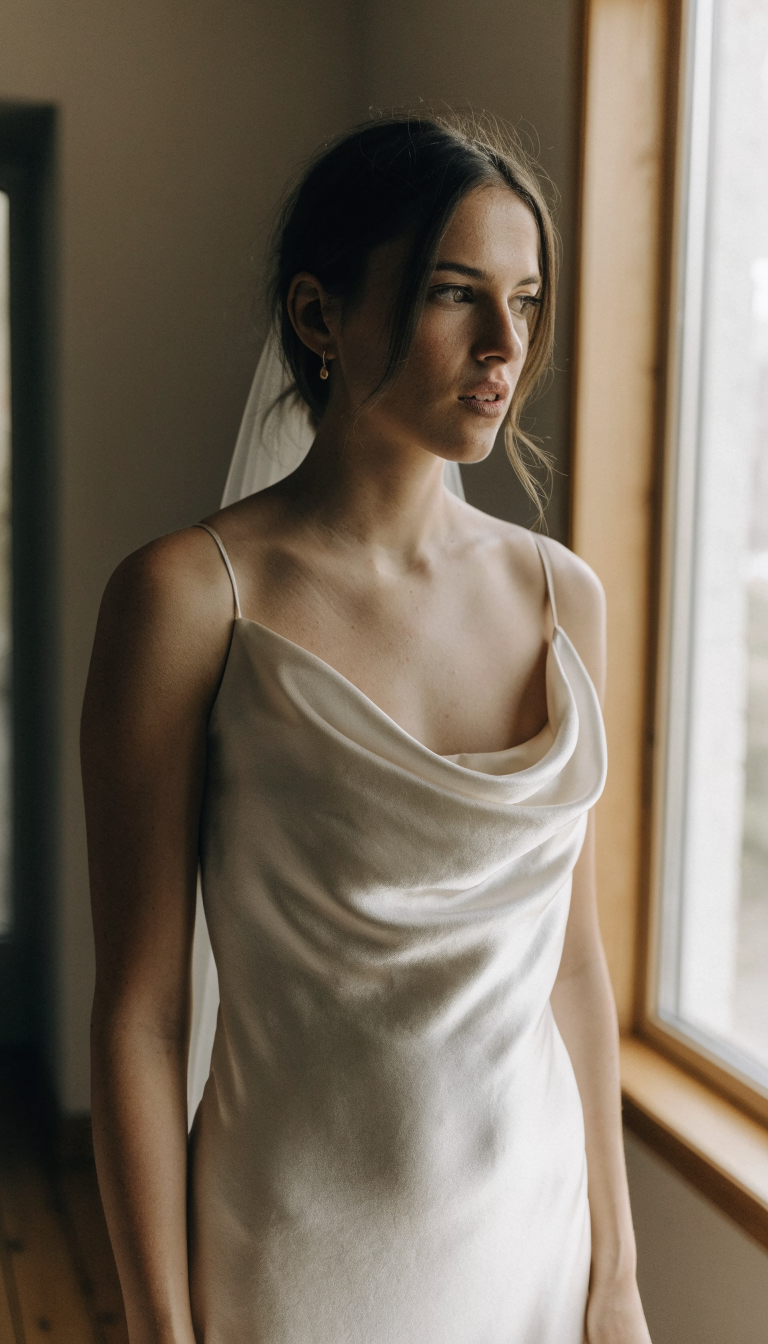
Best for: Warmer climates or anyone who likes soft, unstructured necklines. Common fabrics: Silk charmeuse or lightweight satin that falls in even folds. Typical price range: Approximate $700–$2,300 depending on designer, region, fabric weight, and alterations. Watch out for: Excess fabric can shift or bunch; pin and check the drape while moving during fittings.
15. Off-the-Shoulder Minimal Style
The neckline sits just below the shoulders, exposing the collarbone and upper arms while remaining supported by the bodice. On a simple dress it adds a soft horizontal line without ruffles or heavy trim. Elastic or boning usually holds the position.
Best for: Garden or evening outdoor ceremonies; cooler indoor settings where shoulders can stay bare. Common fabrics: Crepe or satin that molds without slipping; light stretch for comfort. Typical price range: Approximate $800–$2,500 depending on designer, region, fabric weight, and alterations. Watch out for: The band can dig or slip if too tight or loose; test arm movement and sitting.
16. Strapless Clean Bodice
A straight or gently curved strapless neckline relies on internal structure rather than straps. When the boning and cups fit correctly, the line stays clean and the dress feels secure. It pairs easily with detachable sleeves or a wrap for later in the day.
Best for: Warm-weather or indoor venues; anyone who wants a clear shoulder line. Common fabrics: Structured satin or mikado; crepe with added boning. Typical price range: Approximate $750–$2,600 depending on designer, region, fabric weight, and alterations. Watch out for: Support depends on precise fit; plan multiple fittings and a well-matched undergarment or stick-on solution.
17. Long Sleeve Simplicity
Full-length sleeves in a smooth fabric create continuous coverage from shoulder to wrist. The look stays minimal when the sleeves are unadorned and the fabric matches the bodice. They add warmth and can hide or smooth the upper arm area.
Best for: Winter or air-conditioned indoor ceremonies; anyone preferring full arm coverage. Common fabrics: Crepe or stretch satin that moves with the arm; light lining to reduce cling. Typical price range: Approximate $900–$2,900 depending on designer, region, fabric weight, and alterations. Watch out for: Sleeve length and wrist fit change with posture; check both arms raised and lowered.
18. Cap or Flutter Sleeve
Short sleeves that sit on the upper arm add a small amount of coverage without heat. A simple cap or soft flutter keeps the silhouette light and works with most necklines. They are easy to alter for length or width.
Best for: Spring or fall outdoor events; anyone who wants modest shoulder coverage. Common fabrics: Chiffon or crepe that drapes softly; matching satin for a firmer edge. Typical price range: Approximate $700–$2,200 depending on designer, region, fabric weight, and alterations. Watch out for: Flutter styles can catch wind or movement; confirm they stay in place during a walk and turn.
19. Detachable Sleeves
Sleeves that button, hook, or zip on and off let you start the ceremony covered and remove them for the reception. The attachment points must be secure yet invisible when the sleeves are off. This option adds versatility without changing the base dress.
Best for: Mixed-season or multi-part days; anyone who wants options for temperature changes. Common fabrics: Matching crepe or lace for the sleeves; solid base fabric underneath. Typical price range: Approximate $900–$3,000 depending on designer, region, fabric weight, and alterations. Watch out for: Attachment hardware can show or snag; test removal and reattachment before the day.
20. Clean Open Back
A low or open back finished with a simple edge or light buttons keeps the rear view uncluttered. It balances a higher front neckline and stays cool. Support still comes from the front bodice and side seams.
Best for: Evening or indoor settings where the back will be visible; warmer climates. Common fabrics: Satin or crepe that finishes cleanly; light lining for the front. Typical price range: Approximate $800–$2,700 depending on designer, region, fabric weight, and alterations. Watch out for: Open backs can require special undergarments or tape; practice sitting and leaning.
21. Buttoned or Corset Back
A row of fabric-covered buttons or a laced corset closes the dress while remaining relatively plain. The corset version allows minor size adjustment; buttons create a continuous line. Both need time for fastening on the day.
Best for: Anyone who wants a secure close with a traditional or adjustable finish. Common fabrics: Crepe or satin for the body; matching covered buttons. Typical price range: Approximate $850–$2,800 depending on designer, region, fabric weight, and alterations. Watch out for: Button loops or lacing take longer to fasten; schedule extra time with your attendant or seamstress.
Fabrics and Practical Features
22. Matte Crepe Fabric
Crepe has a smooth, low-sheen surface that absorbs light and photographs evenly. It drapes with moderate weight and resists cling better than some satins. Stretch versions recover well after sitting.
Best for: Most seasons and lighting conditions; anyone who prefers a non-shiny finish. Common fabrics: Crepe itself, often with a stretch lining for comfort. Typical price range: Approximate $700–$2,500 depending on designer, region, fabric weight, and alterations. Watch out for: Lower-quality crepe can pill or show wear; ask about fiber content and care.
23. Lustrous Satin or Charmeuse
Satin reflects light softly and creates a fluid surface that moves with the body. Charmeuse is lighter and drapes more than heavier duchess satin. Both highlight clean seams and simple necklines.
Best for: Indoor venues with controlled lighting; cooler months when a bit of shine feels appropriate. Common fabrics: Silk or high-quality polyester satin; charmeuse for bias or slip styles. Typical price range: Approximate $800–$2,800 depending on designer, region, fabric weight, and alterations. Watch out for: Heavier satins trap heat; lighter versions wrinkle easily and may need steaming before photos.
24. Lightweight Chiffon or Georgette
These sheer or semi-sheer fabrics add soft volume or overlays without weight. They move in air and feel cool against the skin. Multiple layers or a solid lining underneath provide coverage.
Best for: Beach, garden, or hot-climate weddings; anyone who wants flow without bulk. Common fabrics: Chiffon or georgette over a crepe or satin base. Typical price range: Approximate $650–$2,200 depending on designer, region, fabric weight, and alterations. Watch out for: Sheer layers show undergarments and can snag; plan opaque lining and careful handling.
25. Mikado for Structure
Mikado is a firm, slightly textured fabric that holds shape and creates clean architectural lines. It works well for A-line or ball-gown skirts that need volume without many layers. The surface stays relatively matte.
Best for: Formal settings or anyone who wants structure that photographs crisply. Common fabrics: Mikado itself, often lined for comfort. Typical price range: Approximate $1,000–$3,200 depending on designer, region, fabric weight, and alterations. Watch out for: The firm hand can feel stiff in heat or when sitting for long periods; test movement thoroughly.
26. Minimal Lace Overlay
A light lace layer over a solid lining adds subtle texture without dense patterning or heavy beading. The lace can cover only the bodice or continue lightly onto the skirt. It softens a plain silhouette while remaining understated.
Best for: Garden or romantic venues; anyone who wants a hint of detail without ornament. Common fabrics: Soft floral or geometric lace over crepe or satin. Typical price range: Approximate $850–$2,900 depending on designer, region, fabric weight, and alterations. Watch out for: Lace edges can fray or catch; confirm finishing quality and plan gentle steaming only.
27. Pockets or Built-in Support Features
Functional pockets sewn into the side seams or built-in cups and light boning add practicality without changing the exterior look. Pockets let you carry a phone or tissues; built-in support reduces the need for separate undergarments. Both features should be tested for bulk and placement.
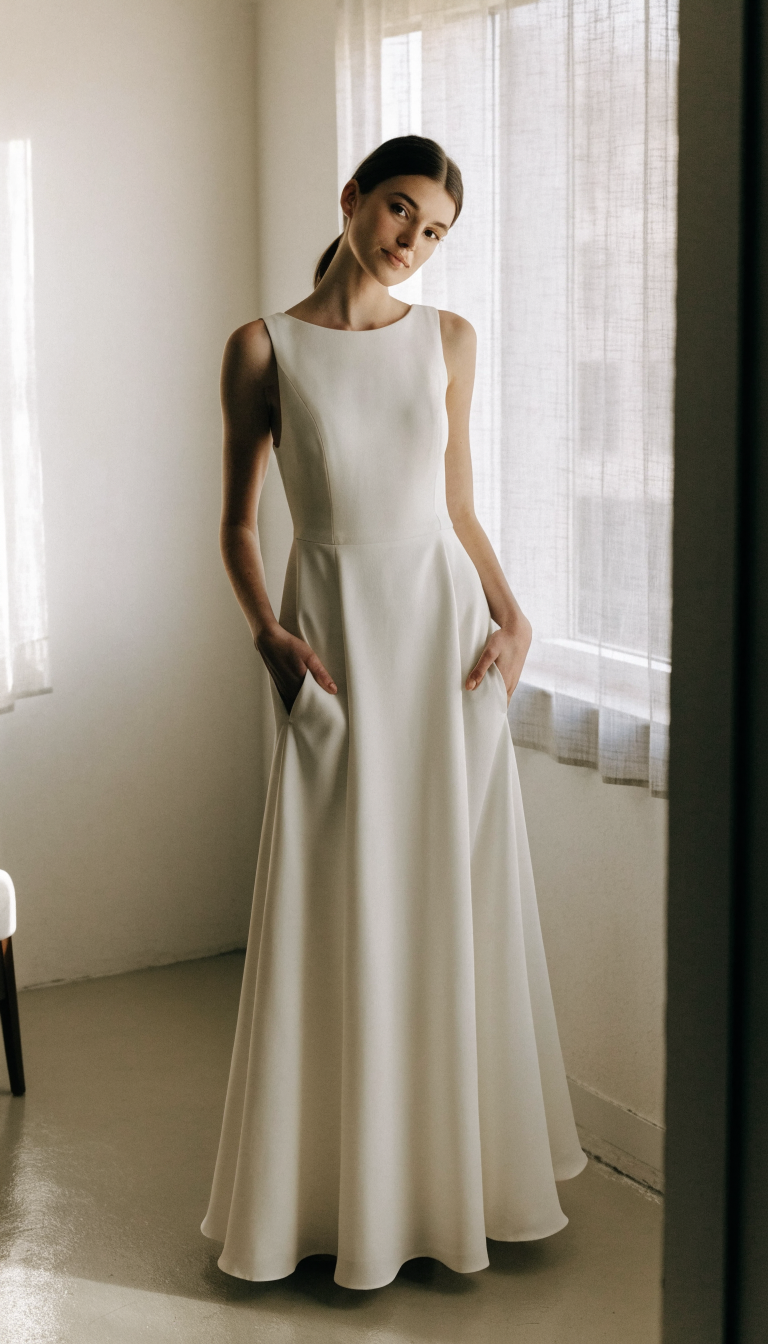
Best for: Anyone who values hands-free convenience or simplified undergarment needs. Common fabrics: Any base fabric; pockets usually match the lining. Typical price range: Approximate $700–$2,600 depending on designer, region, fabric weight, and alterations (features may add modest cost). Watch out for: Poorly placed pockets create bulk or pull; ask to see the construction and test with the items you plan to carry.
Most bridal gowns are made to order, so lead times of several months are common. Alterations are almost always a separate cost and typically require two to four fittings. Bring the shoes, undergarments, and any jewelry you plan to wear to the first appointment so the fit can be checked accurately. Narrow your shortlist by venue climate and how much you will move, then schedule fittings early enough to allow adjustments without rushing.
FAQ
How far in advance should I order a simple wedding dress? Made-to-order dresses commonly need four to eight months. Sample or off-the-rack options can be ready sooner, but still allow time for alterations.
Can I buy a sample dress to save time and money? Yes. Samples are often available at reduced prices and can be taken home quickly, though they may show light wear and still need alterations for a custom fit.
How many fittings are typical? Most people need two to four fittings. The first establishes the main changes; later ones refine length, bustle, and any final comfort adjustments after the dress has been worn for short periods.