
A flowy wedding dress earns its place when the fabric actually travels with your steps instead of fighting them. Lightweight layers of chiffon, georgette, soft tulle, or fluid crepe create that gentle sway while still looking finished in photographs and remaining practical on a warm day or an outdoor aisle. The right cut and fabric combination also affects how long you can stand, sit, and dance without constant readjustment. The styles below are organized by silhouette and key detail so you can match movement, coverage, and venue needs before you book fittings. Most bridal gowns are made to order, so plan several months of lead time plus separate alteration appointments.
1. Soft Chiffon A-Line with a Natural Waist
The classic soft A-line keeps a defined waist while the skirt falls away in light, layered chiffon that catches air with every step. Because the fabric is sheer, a solid lining and structured bodice cups keep the shape controlled rather than clingy. This version works especially well when you want clear waist definition without the weight of satin or mikado. It moves freely through a garden ceremony and stays breathable during an outdoor reception.
- Garden-aisle ease: The light layers handle a slight breeze without billowing uncontrollably once the hem is properly shortened.
- Lining check: Confirm the skirt lining sits smoothly and does not bunch when you sit or climb stairs.
- Hem timing: Schedule the final hem after you have the exact shoes you will wear so the chiffon clears the ground cleanly.
2. Empire-Waist Georgette Gown
An empire seam sits just below the bust so the skirt releases immediately into a continuous drape of georgette. The fabric’s slight texture and added weight compared with chiffon keep the skirt from wrapping tightly around the legs while still flowing. Many brides choose this cut when they prefer no constriction at the natural waist or want a longer visual line from chest to floor. It remains comfortable for long ceremonies and for anyone who values ease over a cinched waist.
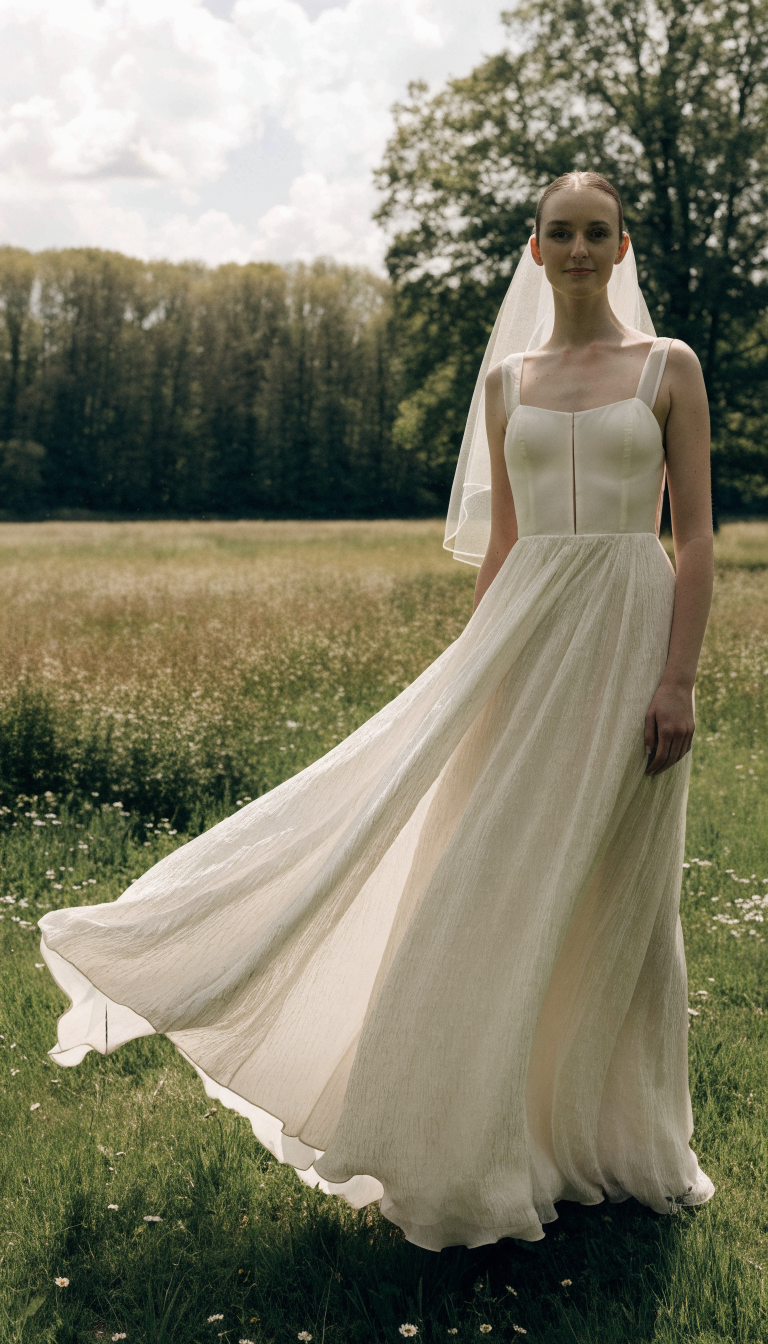
- Breezy outdoor fit: Georgette handles light wind better than the sheerest chiffon while staying cool against the skin.
- Bust support test: Try the built-in cups or a supportive strapless bra under the raised seam to confirm the neckline stays secure.
- Train length: Keep any train modest so the flowing skirt does not require constant bustling on grass or sand.
3. Bias-Cut Silk Slip Dress
Cut on the bias, a silk or silk-blend slip follows the body in a continuous fluid line without darts or heavy structure. The fabric skims rather than clings once it is properly fitted, and a small train or simple hem adds just enough movement for photos. This style reads modern and unfussy in a city hall, intimate indoor venue, or evening reception. It rewards careful alterations because even a small adjustment at the bust or hip changes how the bias falls.
- City-venue polish: The clean drape photographs well under indoor lighting and pairs with minimal jewelry.
- Undergarment note: A smooth seamless brief and adhesive cups usually work best; traditional bras create visible lines.
- Walking test: Take several steps in the fitting room to confirm the bias does not twist or ride up at the hips.
4. Layered Soft Tulle A-Line
Multiple layers of soft, unstarched tulle create volume that still collapses and rebounds when you move, unlike stiffer ballgown tulle. A fitted bodice balances the skirt so the overall silhouette stays wearable for dancing. This option suits garden and estate settings where you want visible movement without the full weight of a traditional ballgown. The layers can be adjusted in the salon if they feel too full once you try the dress on.
- Dance-floor freedom: Soft tulle recovers quickly after you sit or spin, provided the hem is even.
- Heat consideration: Extra layers trap a little warmth; request a breathable lining and test the dress in a warm room.
- Bustle plan: Ask the consultant how many points the bustle will need so the tulle does not drag once the train is lifted.
5. Organza Overlay with Gentle Structure
Organza brings a light crispness that holds a soft A-line or modest ballgown shape while still fluttering. It sits between the extreme drape of chiffon and the stiffness of mikado, so the skirt moves but does not collapse completely when you stop. This fabric works for late-afternoon outdoor ceremonies that may turn cooler or for venues that prefer a more polished silhouette. A lining keeps the sheen and opacity consistent.
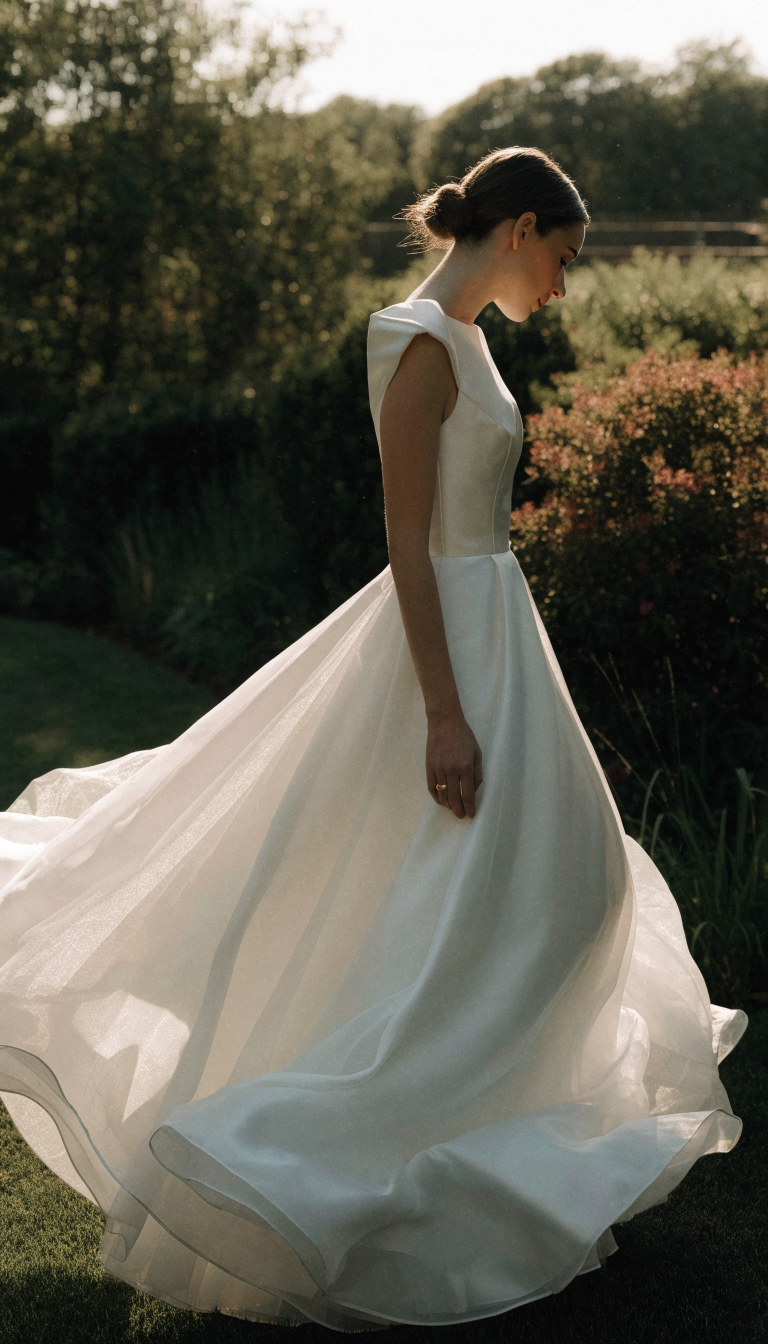
- Evening temperature shift: Organza’s slight structure keeps the skirt looking finished even if a breeze picks up after sunset.
- Opacity check: Confirm the overlay and lining together hide undergarments from every angle under natural light.
- Steaming note: Organza responds well to careful steaming; wrinkles usually release without heavy pressing.
6. Bohemian Lace Overlay on a Flowing Skirt
A lightweight lace overlay sits over a chiffon or georgette base so the skirt still moves while the lace adds texture and coverage. The combination suits outdoor and garden settings where a fully plain skirt might feel too spare. Choose a lace with an open pattern if you want the fabric underneath to remain visible as you walk. The two layers must be hemmed together so they do not separate or catch.
- Outdoor texture match: Open lace over fluid fabric photographs softly against foliage and stone without looking stiff.
- Layer alignment: Ask the seamstress to tack the lace and underlayer at intervals so they travel as one piece.
- Coverage option: Higher necklines or long sleeves in the same lace keep the look cohesive for more formal or modest preferences.
7. Flutter-Sleeve Chiffon A-Line
Short, layered flutter sleeves cut from the same chiffon as the skirt add movement at the shoulder without the weight of long sleeves. They soften a strapless or sweetheart neckline and create gentle motion in photos. This detail works for warm-weather ceremonies where full coverage is unnecessary but bare shoulders feel incomplete. The sleeves should be cut wide enough to sit comfortably without digging into the upper arm.
- Warm-day balance: The open sleeve design allows air circulation while the skirt stays light.
- Strap support: Confirm the bodice has enough internal structure so the flutter sleeves do not pull the neckline down.
- Movement trial: Raise and lower your arms during the fitting to make sure the sleeves do not flip inside out.
8. Off-the-Shoulder Flowing Skirt
An off-the-shoulder neckline paired with a soft A-line or gently gathered chiffon skirt frames the collarbones while the lower half moves freely. The sleeve or strap placement must be secure so the neckline stays in place when you raise your arms or hug guests. This style suits garden and ballroom settings where a romantic neckline is welcome. A modest train keeps the focus on the flowing skirt rather than heavy volume.
- Garden-portrait line: The open neckline and moving skirt create clear separation between upper body and fabric in photos.
- Stay-up test: Wear the dress for several minutes and lift your arms to confirm the off-shoulder edge remains stable.
- Shoe pairing: A low or mid heel usually balances the soft skirt better than a very high heel that shortens the visual line.
9. High-Low Hem in Lightweight Fabric
A high-low hem rises in front to mid-calf or ankle and lengthens toward the back, letting the front layers of chiffon or georgette move freely while a short train remains behind. The front ease makes walking and dancing simpler on uneven ground or grass. This cut works for beach, garden, or informal outdoor ceremonies where a full floor-length hem would collect debris. The back length should still clear the ground once the shoes are chosen.
- Uneven-ground practicality: The shorter front hem stays cleaner on grass, sand, or gravel.
- Front-length check: Walk and turn in the fitting room to make sure the front does not lift too high when you take long strides.
- Back bustle: Even a short train benefits from a simple bustle so it does not trail once the ceremony ends.
10. Tea-Length Chiffon Dress
A tea-length skirt ends between the knee and ankle in soft chiffon or georgette, creating movement at a shorter hem while remaining clearly bridal. The reduced fabric volume makes sitting, dancing, and navigating small spaces easier than a floor-length gown. This length suits courthouse ceremonies, city elopements, or second looks for the reception. A modest heel or flat keeps the proportion balanced.
- City-ceremony mobility: The shorter hem clears steps and car doors without catching.
- Sitting comfort: Confirm the hem does not ride up excessively when you sit so the length stays intentional.
- Undergarment simplicity: A standard brief and strapless or convertible bra usually suffice because the skirt volume is lower.
11. Long Sheer Chiffon Sleeves on an A-Line
Sheer long sleeves cut from chiffon or georgette add coverage and vertical lines while the matching A-line skirt continues the fluid movement. The sleeves can be gathered at the wrist or left open, depending on the desired formality. This combination works for cooler outdoor ceremonies or for brides who prefer more coverage without switching to a heavier fabric. The sleeves should not restrict the arms when they are raised for photos or dancing.
- Cooler-evening coverage: Lightweight sleeves provide a layer without the insulation of opaque fabric.
- Wrist finish: Try both gathered and open cuffs to see which stays comfortable through the full day.
- Arm-raise test: Lift both arms fully during the fitting to confirm the sleeves and bodice remain secure.
12. Cowl-Neck Fluid Crepe Dress
A soft cowl neckline drapes across the chest in fluid crepe or charmeuse, pairing with a simple A-line or column skirt that moves gently. The neckline adds interest without beading or heavy structure, and the fabric’s matte finish keeps the look quiet. This style suits intimate indoor venues or evening receptions where soft lighting flatters the drape. The cowl depth should be adjusted so it sits comfortably without gaping.
- Evening indoor light: The matte drape catches light softly rather than reflecting sharply.
- Neckline security: Wear the dress and lean forward slightly to confirm the cowl stays in place.
- Strap options: Thin or wide straps can both work; test which distributes the weight of the fabric most evenly.
13. Open-Back Georgette Column
A column or soft sheath in georgette follows the body closely while still allowing a gentle sway at the hem. An open back with a button or corset closure adds detail without adding bulk. The fabric’s slight weight prevents the skirt from clinging in warm air the way thinner chiffon sometimes does. This silhouette works for modern indoor venues or destination ceremonies where a streamlined shape is preferred.
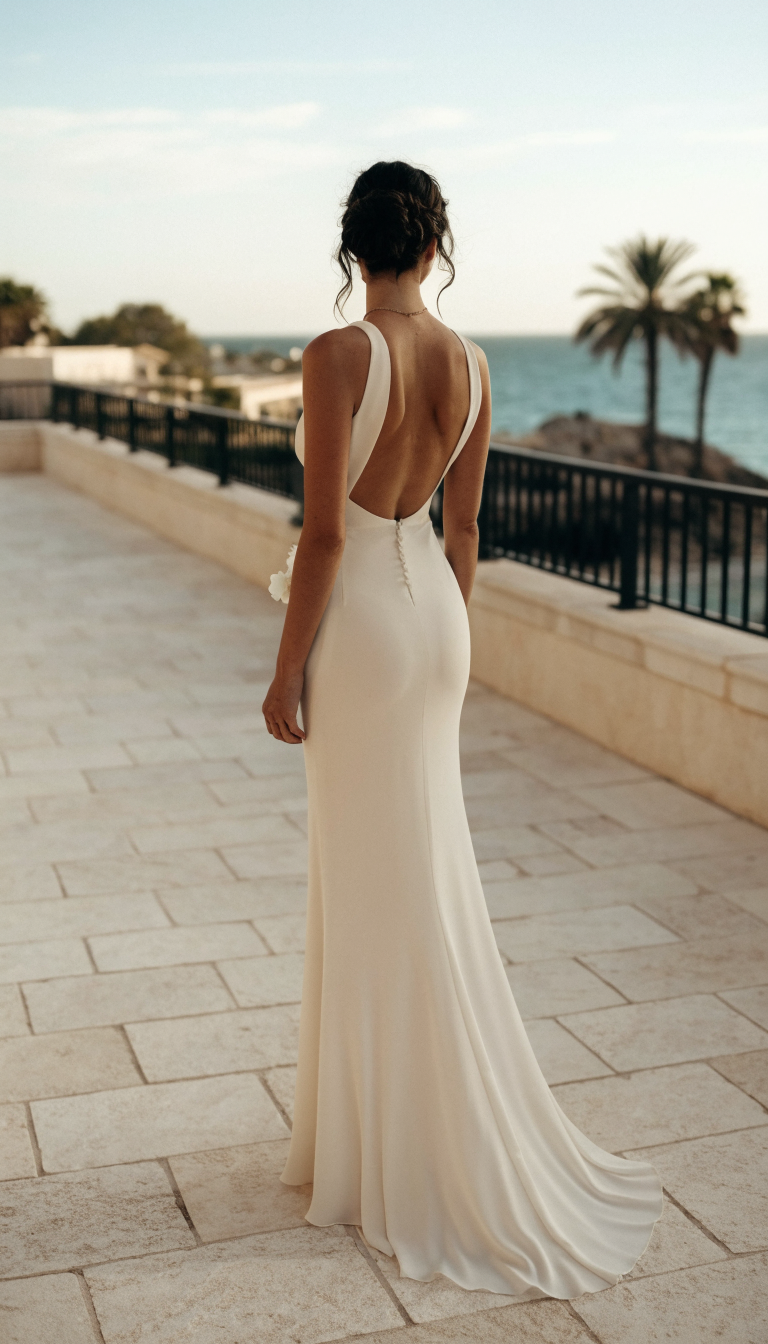
- Destination practicality: The close fit travels more easily in luggage than a full skirt and still moves when you walk.
- Closure comfort: Try both a button and a corset-style closure to see which feels more secure for a long day.
- Undergarment match: A low-back adhesive or strapless option is usually required; test it under the dress before ordering.
14. Pleated Chiffon Skirt A-Line
Vertical or soft knife pleats in chiffon create continuous movement that fans out when you turn and settles when you stop. The pleats add visual texture without the bulk of extra layers. A simple fitted bodice keeps the focus on the skirt. This detail photographs especially well in outdoor light where the folds catch and release shadow. The pleats must be pressed and hemmed carefully so they remain even.
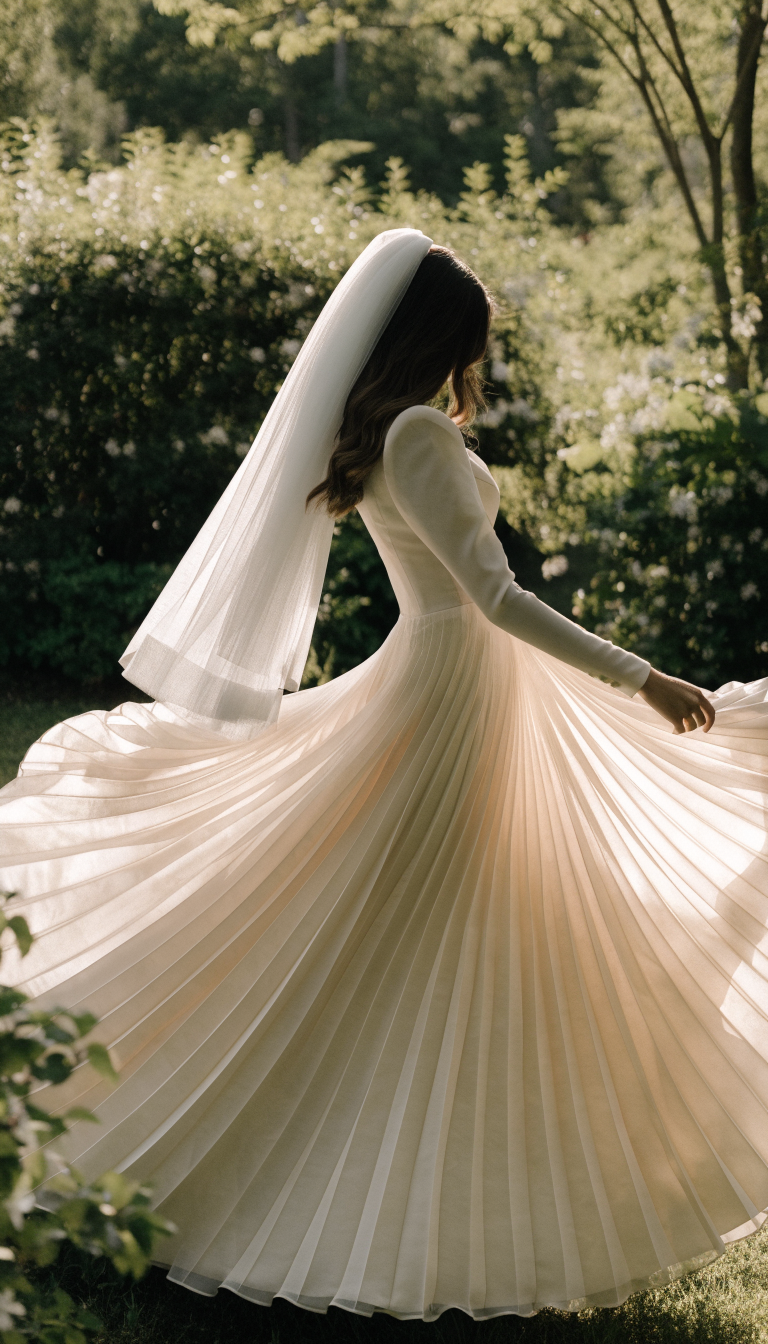
- Turning motion: The pleats open naturally when you spin, then fall back into place without extra help.
- Hem evenness: Walk across the fitting-room floor to confirm every pleat ends at the same length.
- Pressing plan: Ask how the salon recommends refreshing the pleats after travel or storage.
15. Detachable Soft Cape over a Flowy Base
A lightweight cape or short overskirt in chiffon or organza attaches at the shoulders or waist and can be removed after the ceremony. The base dress remains a simple A-line or column that continues to move freely once the cape is off. This option lets you add drama for the aisle and then reduce volume for dancing and dinner. The attachment points must be secure yet easy to release without help.
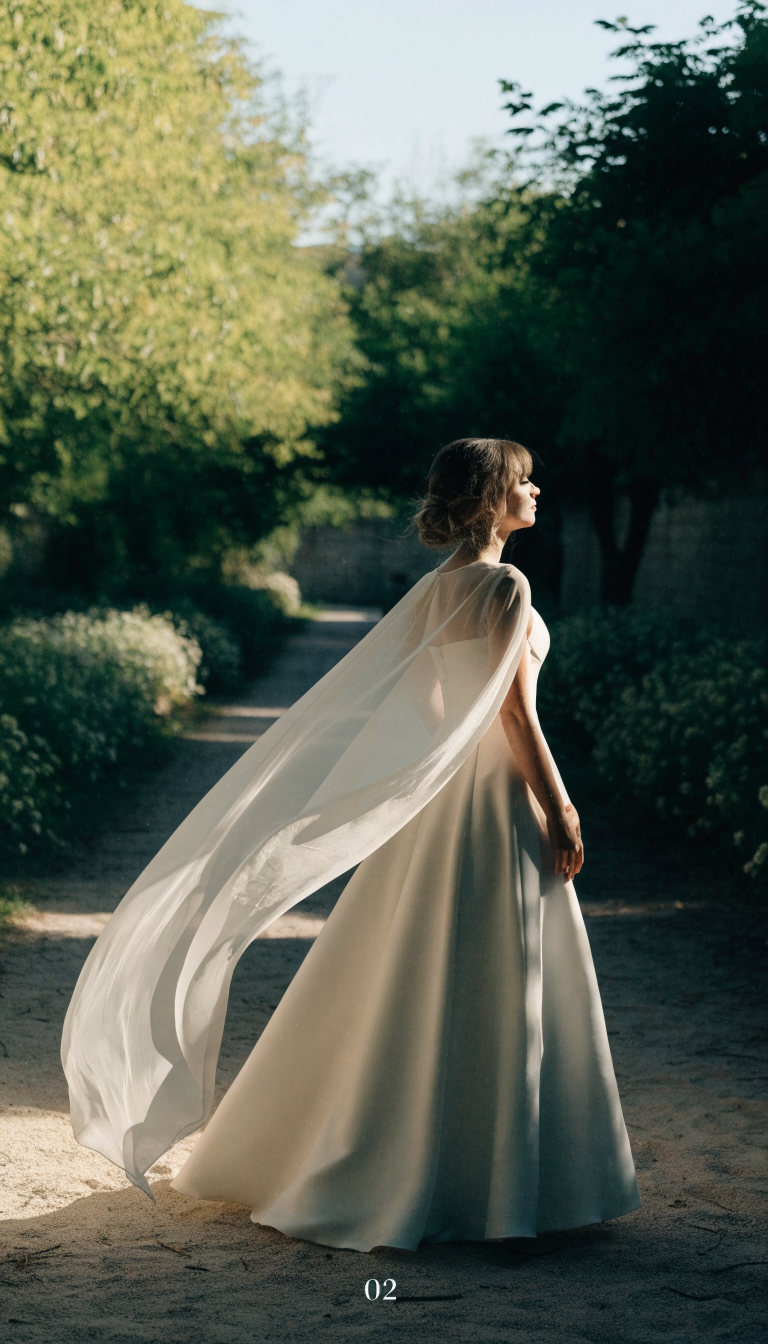
- Ceremony-to-reception shift: Remove the cape after photos so the under-dress stays cool and unencumbered.
- Attachment security: Practice fastening and unfastening the cape once during the fitting so the process feels familiar.
- Base-dress completeness: Confirm the dress underneath looks finished on its own once the cape is removed.
16. Square Neckline Soft A-Line
A square neckline frames the shoulders and collarbones while a chiffon or georgette A-line skirt supplies the movement. The geometric neckline pairs well with soft fabric because it adds structure at the top without requiring a heavy bodice. This combination works for both garden and indoor settings and offers a clear area for a simple necklace. Wide straps or a supportive lining keep the neckline from shifting.
- Necklace space: The square opening leaves room for a pendant or simple chain that will not compete with the neckline.
- Strap width: Wider straps usually distribute the skirt weight more evenly than thin ones on this neckline.
- Posture check: Stand and sit to confirm the neckline stays level across the chest.
17. High-Neck Modest Flowing Gown
A high or illusion neckline paired with long sleeves and a soft A-line skirt in chiffon or georgette provides full coverage while the lower half continues to move. The lightweight fabrics prevent the modest construction from feeling heavy or restrictive. This style suits ceremonies that call for more coverage or for brides who simply prefer it, and it remains practical in warm weather when the skirt is unlined or lightly lined. The sleeves and neckline should allow full arm movement.
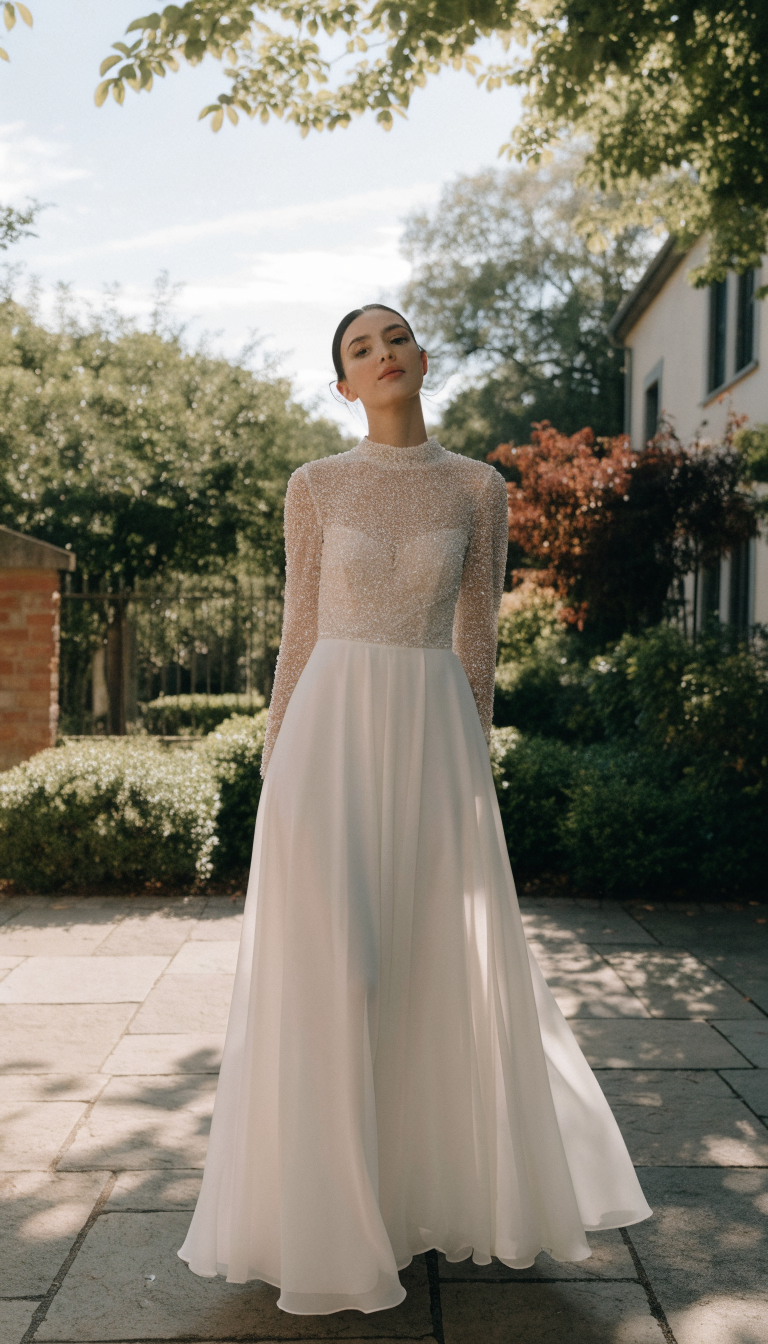
- Warm-weather coverage: Sheer or lightweight sleeves and a flowing skirt keep the dress cooler than opaque structured fabrics.
- Arm mobility: Raise both arms and cross them in front of you to confirm the sleeves do not pull or restrict.
- Lining preference: Discuss with the consultant whether a full lining or a shorter one better balances opacity and breathability.
Bring the shoes you plan to wear, a simple undergarment set, and a clear list of must-have features to your first fitting. Most made-to-order gowns need several months, so start the search early enough to allow for at least two or three alteration appointments after the dress arrives. Prices vary widely by designer, fabric, and region; the final cost almost always includes separate alteration fees.
FAQ
How far in advance should I order a flowy wedding dress? Most salons recommend ordering six to nine months ahead so there is time for production and multiple fittings. Sample dresses can sometimes be purchased sooner if the size and style already exist.
Do flowy fabrics need special care after the wedding? Chiffon and georgette usually require professional cleaning. Store the dress hanging or carefully folded in a breathable bag rather than plastic so the lightweight layers do not crease permanently.
Can I add a bustle to a very light skirt? Yes. A simple French or American bustle works on most chiffon and georgette skirts. Ask the seamstress to demonstrate the lift so the layers do not tangle once the train is secured.