
Fall temperatures shift between an outdoor ceremony and a warmer reception, so the right dress balances structure, coverage, and movement without feeling heavy. Choosing a style early helps with made-to-order lead times that often stretch several months, plus the fittings needed for hemming, a bustle, or minor adjustments. The styles below group practical options by fabric weight, silhouette, and how they handle real wedding-day movement.
Fabrics With Substance
1. Crepe Back Satin Sheath
A crepe back satin sheath skims the body with a smooth face and a matte reverse that hides small creases better than high-shine satin. The fabric holds a clean line from the bodice through the hips while still allowing enough give for sitting and walking. It photographs with quiet depth against golden leaves or wood paneling and feels substantial without the bulk of heavier satins.
- Cool-air hold: The denser weave keeps the shape steady outdoors once the temperature drops.
- Sitting test: Crease recovery is better than pure satin; still steam the lap area before photos.
- Alteration note: Straightforward hemming and a simple train bustle keep the cost moderate compared with heavily beaded styles.
2. Mikado A-Line With Soft Volume
Mikado carries a low sheen and enough internal structure to support a full A-line skirt without extra petticoats. The fabric stays crisp in a light breeze yet does not cling when the bride moves from ceremony to reception. It works especially well in venues with stone or timber backdrops where clean lines read clearly in photographs.
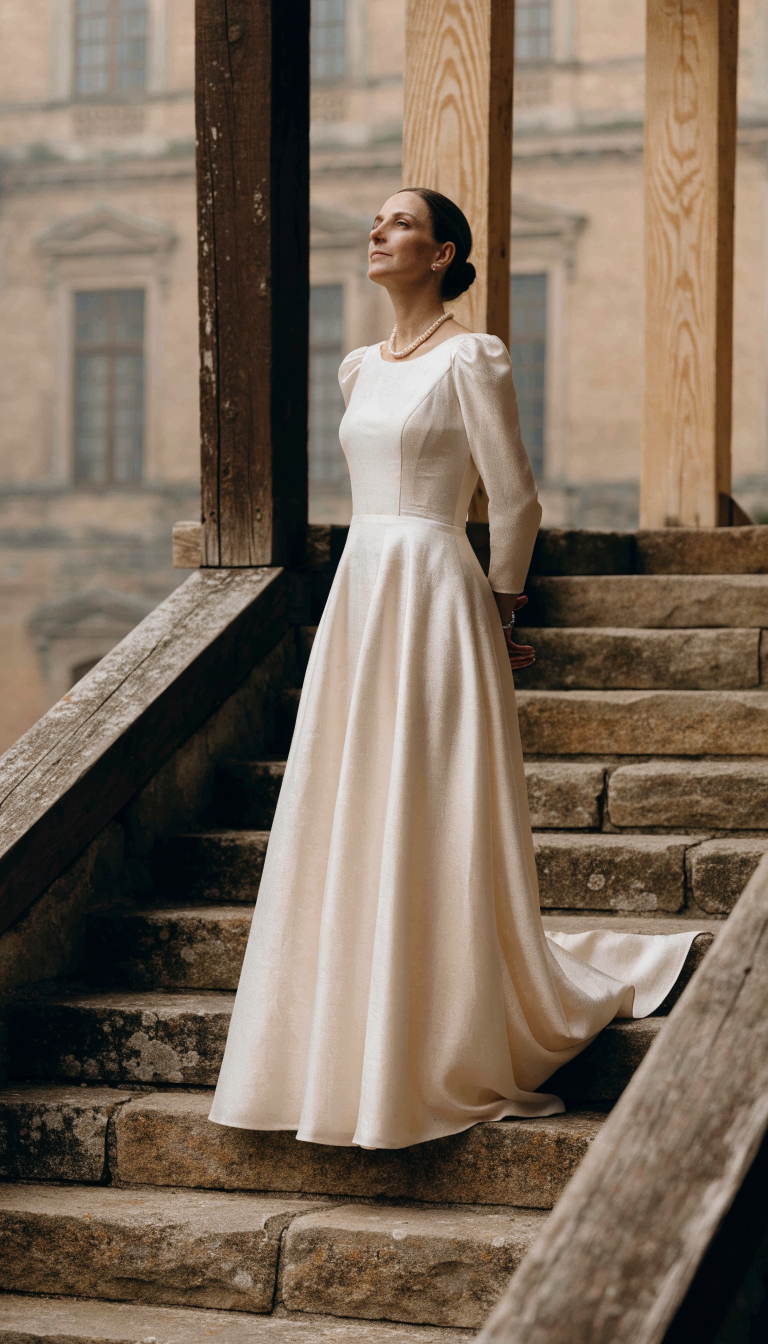
- Venue match: Holds shape outdoors or in a ballroom without collapsing under its own weight.
- Dance-floor ease: The skirt swings freely once the hem clears the floor; pair with a low-profile bustle.
- Fitting reminder: Try it with the intended shoes early so the hem can be set accurately.
3. Lace Over Lined Satin
A lace overlay on a satin or crepe lining adds texture and a light layer of warmth without the weight of dense embroidery. The lining prevents the lace from feeling sheer in cooler air, and the combination photographs richly in both direct sunlight and softer indoor light. Choose a softer Chantilly or a more graphic guipure depending on how much pattern you want visible from a distance.
- Layering comfort: The lining can be cut higher or lower at the back to control coverage and temperature.
- Movement check: Test how the lace catches on rings or jewelry when you lift your arms.
- Budget tier: Mid-range to higher; sample-sale versions often reduce cost if sizing works.
4. Floral Jacquard Fit-and-Flare
Woven floral jacquard gives a subtle seasonal pattern that echoes autumn foliage without relying on appliqué. The fabric has body, so a fit-and-flare silhouette stays defined through the hips before easing at the knee or calf. It reads especially well against rustic or garden settings where the texture catches the light differently than smooth satin.
- Photo depth: The woven motif creates soft shadows that show up clearly in natural light.
- Heat trade-off: Heavier than crepe; plan a short outdoor ceremony or an indoor-first timeline.
- Undergarment note: A seamless shapewear short works under the flare; test for lines at the hip.
Coverage and Sleeves
5. Long-Sleeve Crepe Column
A long-sleeve crepe column covers the arms while the fluid fabric skims rather than clings. The matte surface photographs evenly in mixed lighting and feels comfortable for hours of greeting guests. It suits both church aisles and outdoor ceremonies where a light wind can make bare shoulders feel cooler than expected.
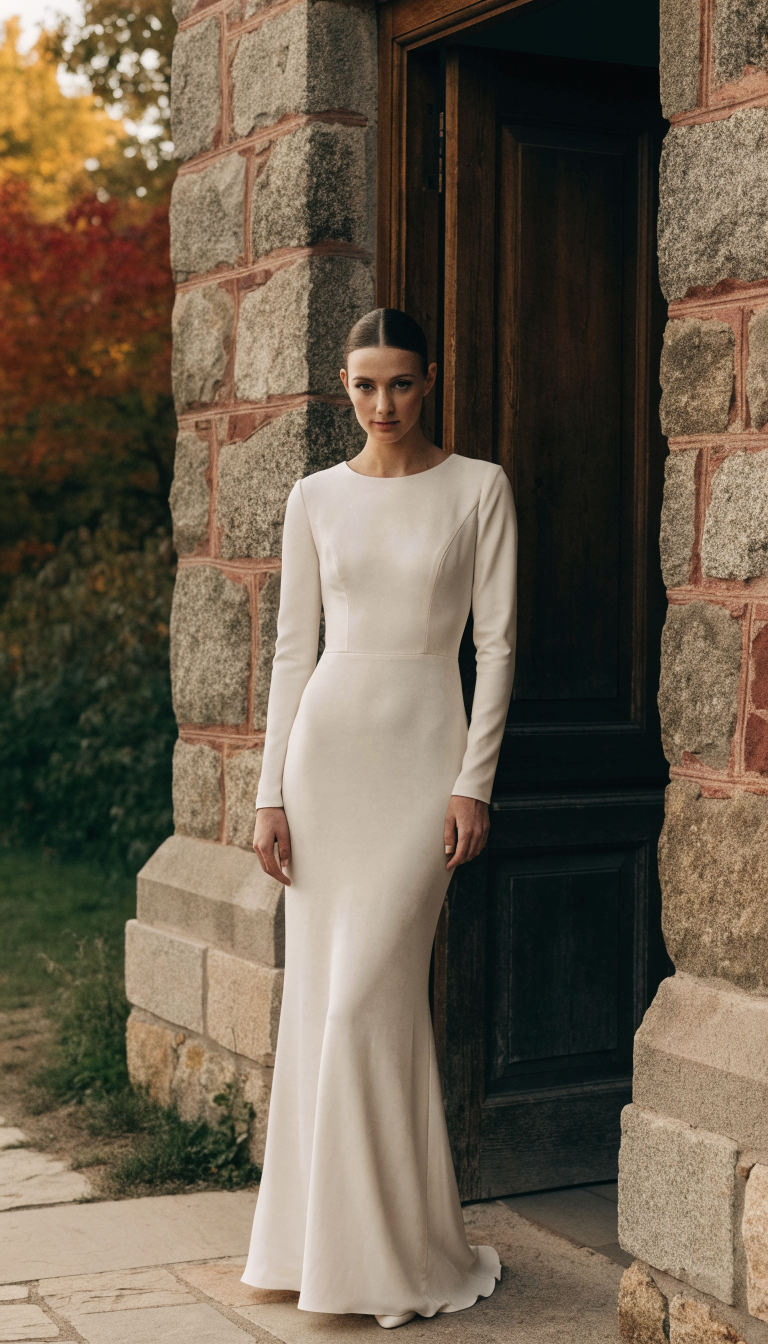
- Arm movement: Stretch crepe versions allow easier reach for hugs and toasts.
- Layer option: A short cape or wrap can come off later if the reception warms up.
- Bra compatibility: Built-in cups or a strapless adhesive option usually work; confirm support at the first fitting.
6. Illusion Neckline With Long Sleeves
An illusion neckline of fine tulle or lace over a higher bodice creates the look of a high neck while still showing skin at the collarbone. Paired with long sleeves, the style offers coverage that feels intentional rather than purely practical. The sheer panel can be lined or left open depending on the venue’s formality and the bride’s preference for modesty.
- Cool-weather edge: Sleeves and the higher neck reduce the need for a separate wrap during the ceremony.
- Veil pairing: A shorter veil or none at all keeps the illusion detail visible from the front.
- Alteration complexity: Illusion seams need careful steaming so they do not wrinkle across the chest.
7. Three-Quarter Sleeve Organza Overlay
An organza overlay on the sleeves and bodice adds a light, crisp layer that catches light without trapping heat the way heavier lace can. The fabric stands slightly away from the body, creating gentle volume at the shoulder that softens a more fitted skirt. It works well for early-fall ceremonies that may still be mild during the day.
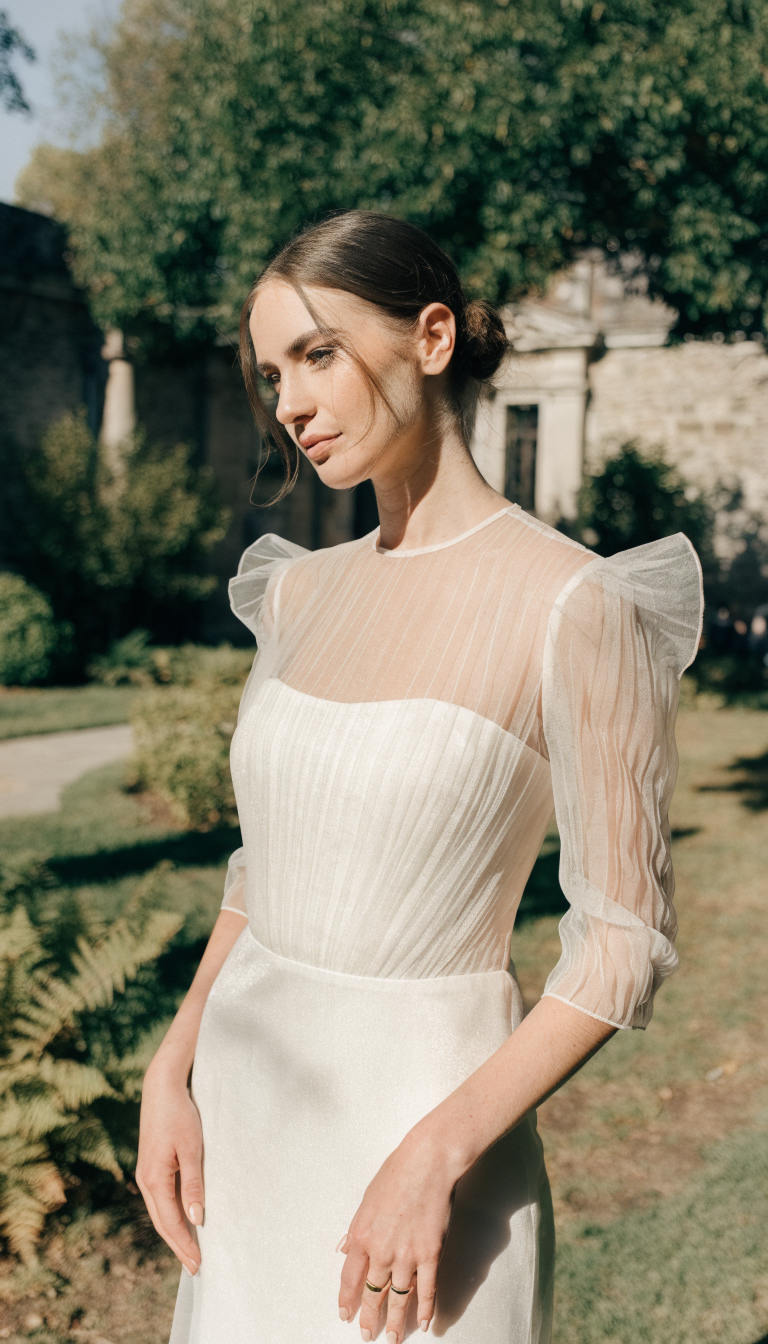
- Temperature swing: The overlay can be removed or replaced with a denser jacket if evening temperatures drop.
- Wind behavior: Organza moves more than satin; secure any loose edges if the venue is breezy.
- Shoe pairing: The slightly structured sleeve looks balanced with a mid-heel or low block rather than a very high stiletto.
8. Detachable Sleeve or Cape Set
A gown designed with detachable sleeves or a matching cape lets the bride start covered and later remove the extra piece for dancing. The main dress can be a simpler crepe or satin base, while the detachable element carries the lace or heavier fabric. This approach avoids the cost of a fully separate second look while still adapting to changing temperatures.
- Timeline practicality: Practice attaching and removing the piece during a fitting so the transition feels smooth.
- Storage note: Assign someone to hold the cape after removal so it stays clean for later photos.
- Price range: Often mid-to-higher; confirm whether the detachable piece is included or an add-on.
Silhouettes for Fall Movement
9. Ball Gown in Structured Mikado
A ball gown cut in mikado creates clear volume that photographs strongly against autumn foliage or formal interiors. The fabric’s natural structure means the skirt does not require as many underlayers as tulle, reducing bulk under the arms and across the lap when seated. The silhouette still allows a full train that can be bustled for the reception.
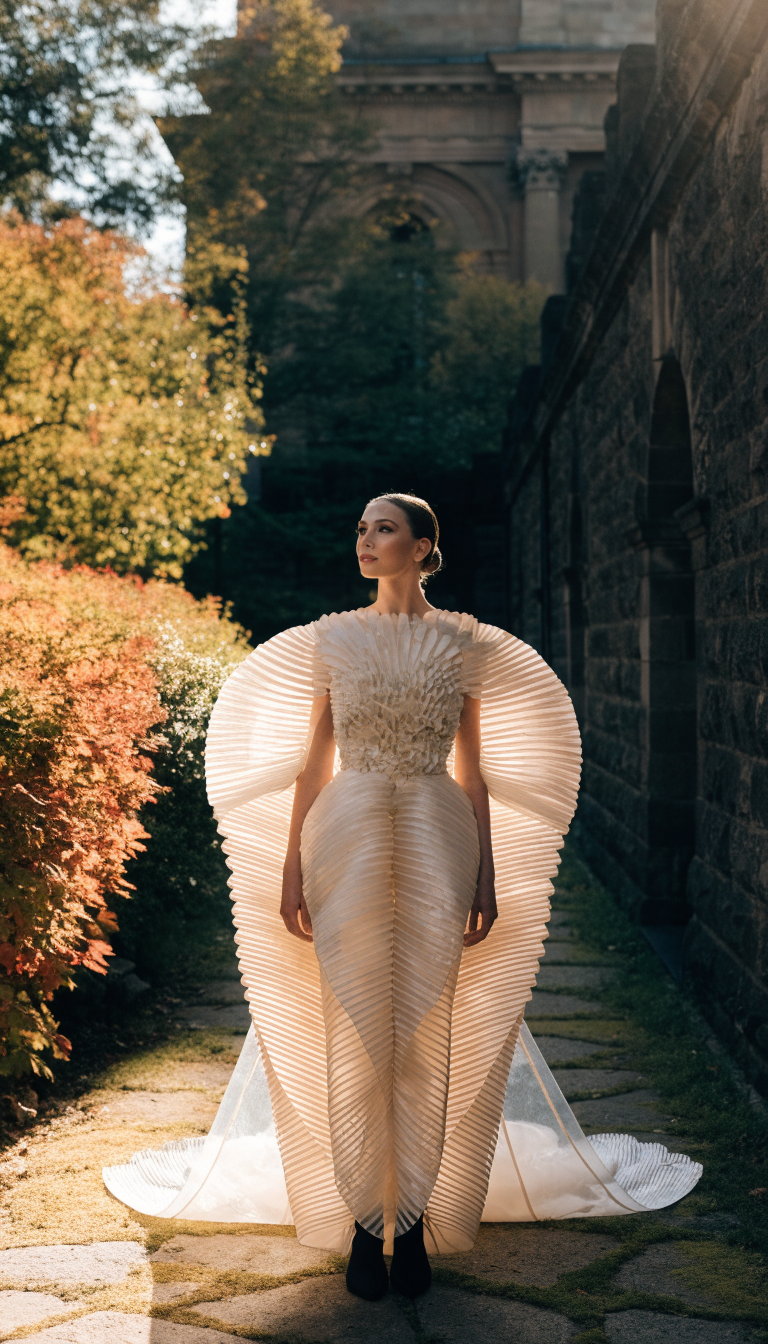
- Sitting comfort: Practice sitting so the skirt can be arranged without crushing the hem.
- Bustle planning: A multi-point bustle is usually needed; schedule the final fitting close to the wedding.
- Venue scale: The width works best in spaces with room to turn and walk.
10. Mermaid in Stretch Crepe
A stretch-crepe mermaid follows the body closely through the hips and thighs before flaring below the knee. The fabric’s slight give makes the fit more wearable for walking and sitting than a rigid satin version. It photographs cleanly in both outdoor light and candlelit receptions and pairs well with long sleeves or a higher neckline for cooler days.
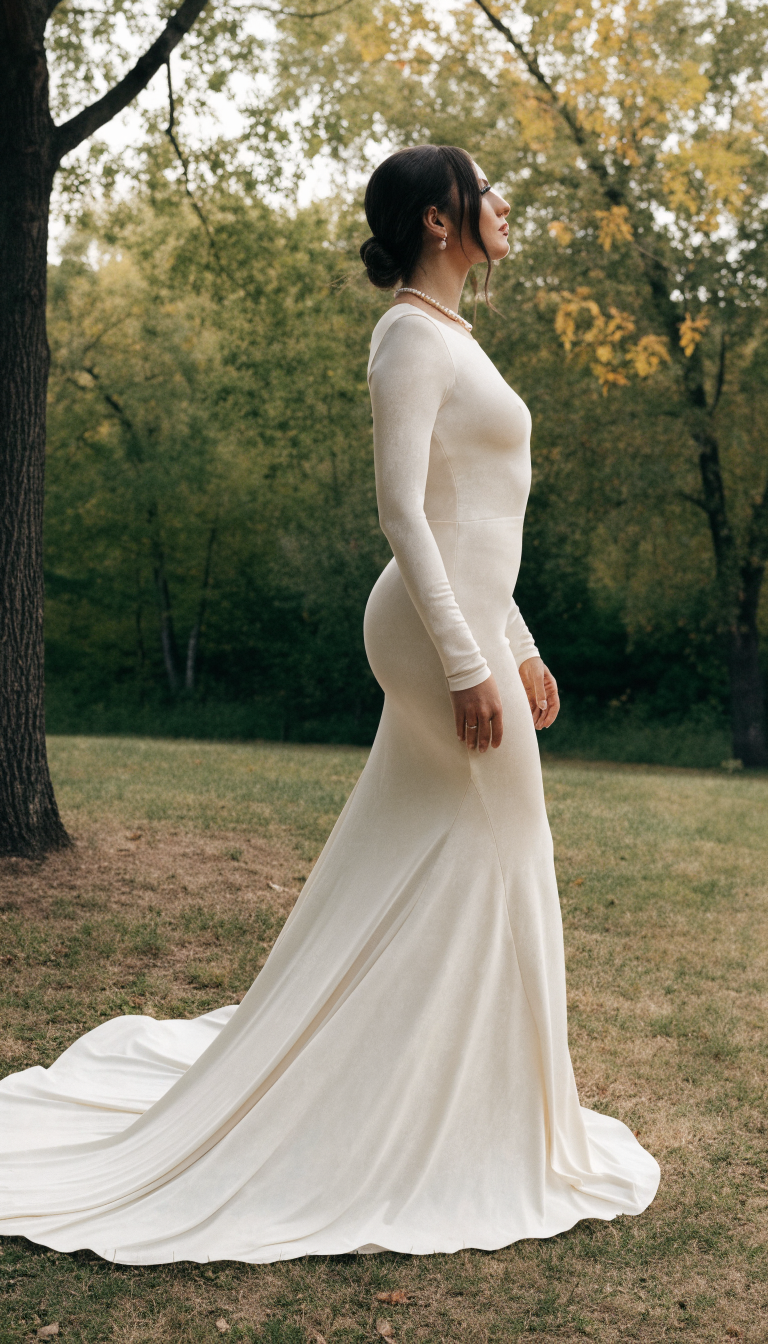
- Dance-floor test: Walk and step sideways in the fitting room to check the flare point.
- Restroom practicality: The close fit means a clear plan for using the restroom; a slit or well-placed buttons help.
- Support check: Confirm built-in cups or a low-back bra option early.
11. Fit-and-Flare With Soft Train
A fit-and-flare releases at the knee rather than the thigh, giving more ease for steps and sitting while still creating a defined waist. A modest train adds presence without the management demands of a cathedral length. Crepe or a light mikado keeps the skirt from feeling heavy as the bride moves between outdoor and indoor spaces.
- Car entry: Practice sitting and standing in a car so the hem can be lifted cleanly.
- Hem clearance: Set the front hem so it clears the ground when shoes are on.
- Alteration focus: Most changes happen at the hem and any side seams; less complex than a full ball gown.
12. Tea-Length Crepe for Casual Settings
A tea-length crepe dress ends mid-calf, removing the need for a long train and simplifying movement on grass or gravel. The shorter hem works for daytime garden or barn ceremonies where a full gown might feel oversized. Pockets can be added during construction without disrupting the clean line of the fabric.
- Terrain fit: The hem stays clear of dirt and leaves more easily than a floor-length skirt.
- Re-wear potential: The length and simple fabric make the dress more usable after the wedding.
- Shoe flexibility: Works with both heels and dressier flats.
Details and Construction
13. Square Neckline With Long Sleeves
A square neckline frames the collarbone while long sleeves cover the arms, creating balanced coverage that still feels open at the neck. The neckline sits securely and usually needs less adhesive support than a strapless style. Crepe or a smooth satin keeps the geometric line crisp against softer autumn backgrounds.
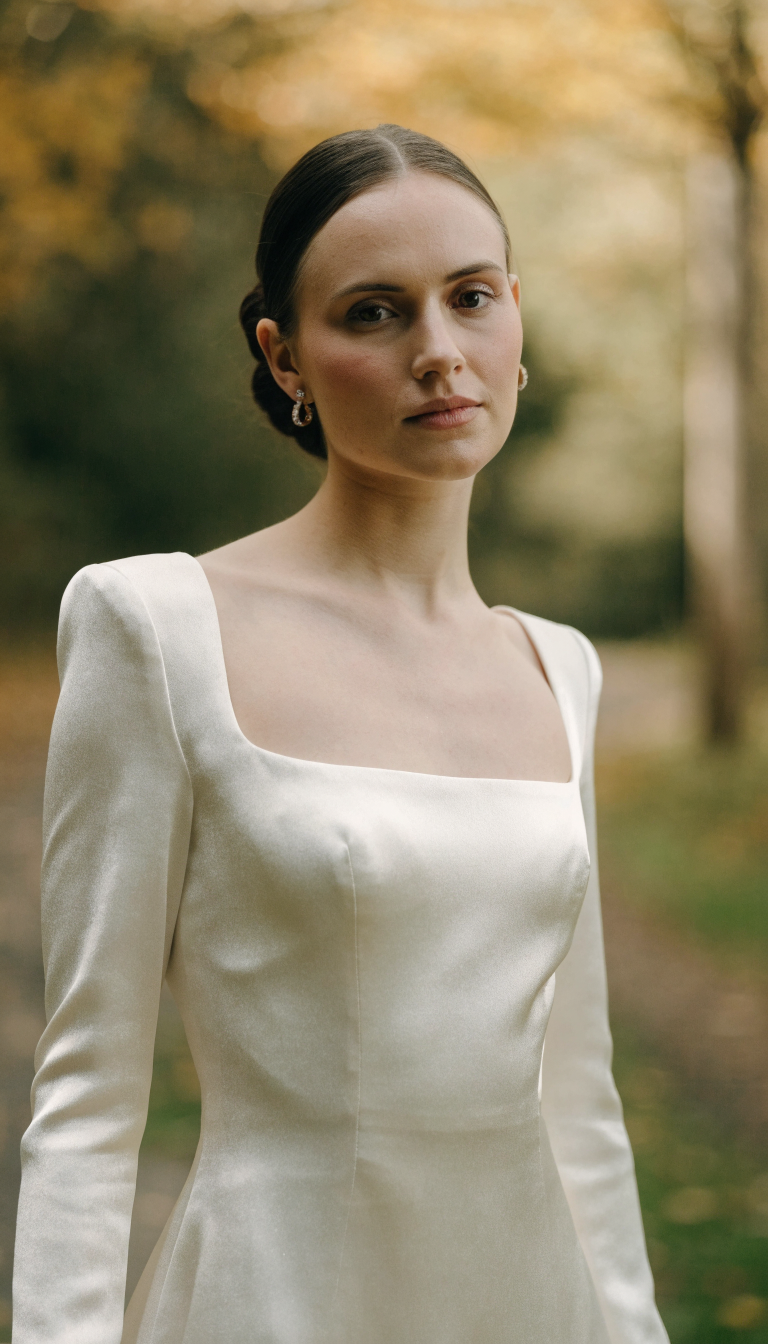
- Bra options: A standard or low-cut bra often works; test straps under the sleeve seam.
- Jacket pairing: A structured jacket can go over the square neck without bunching.
- Photo angle: The neckline reads clearly from the front and slightly above.
14. Corset Back Crepe Gown
A corset back uses lacing to adjust the fit at the waist and can be tightened or loosened slightly as the day progresses. In crepe the lacing lies flat and does not add bulk under a jacket or wrap. The construction offers more flexibility than a zipper alone if minor weight changes occur between fittings and the wedding.
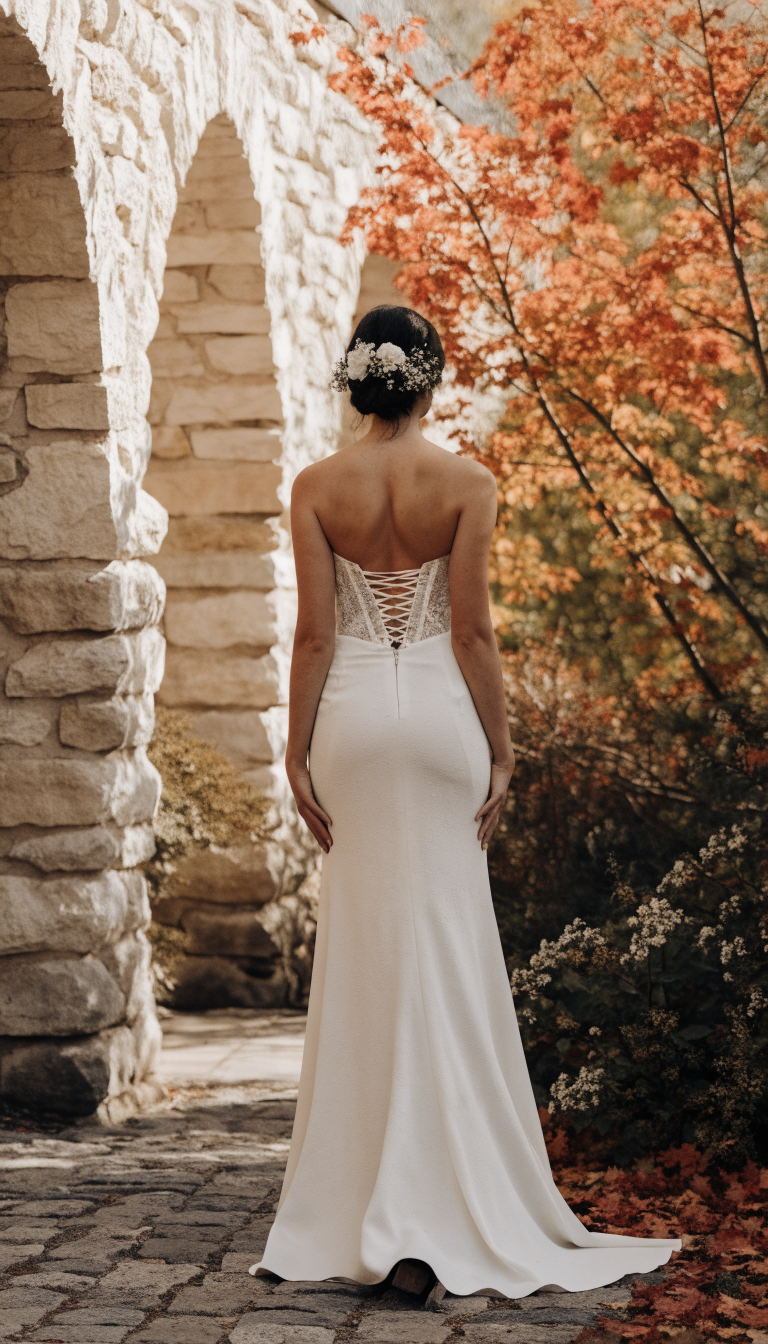
- Fitting sequence: Expect at least two fittings so the lacing can be tested while seated and standing.
- Help needed: Someone must know how to lace the back correctly; practice before the day.
- Comfort note: The lacing distributes pressure more evenly than a rigid closed back for some wearers.
15. Button-Back Satin Column
A row of fabric-covered buttons down the back of a satin column creates a classic line that photographs well from behind. The buttons can stop at the waist or continue lower, depending on how much coverage is wanted. Satin holds the button loops cleanly, though the fabric shows any pulling if the fit is too tight across the shoulders.
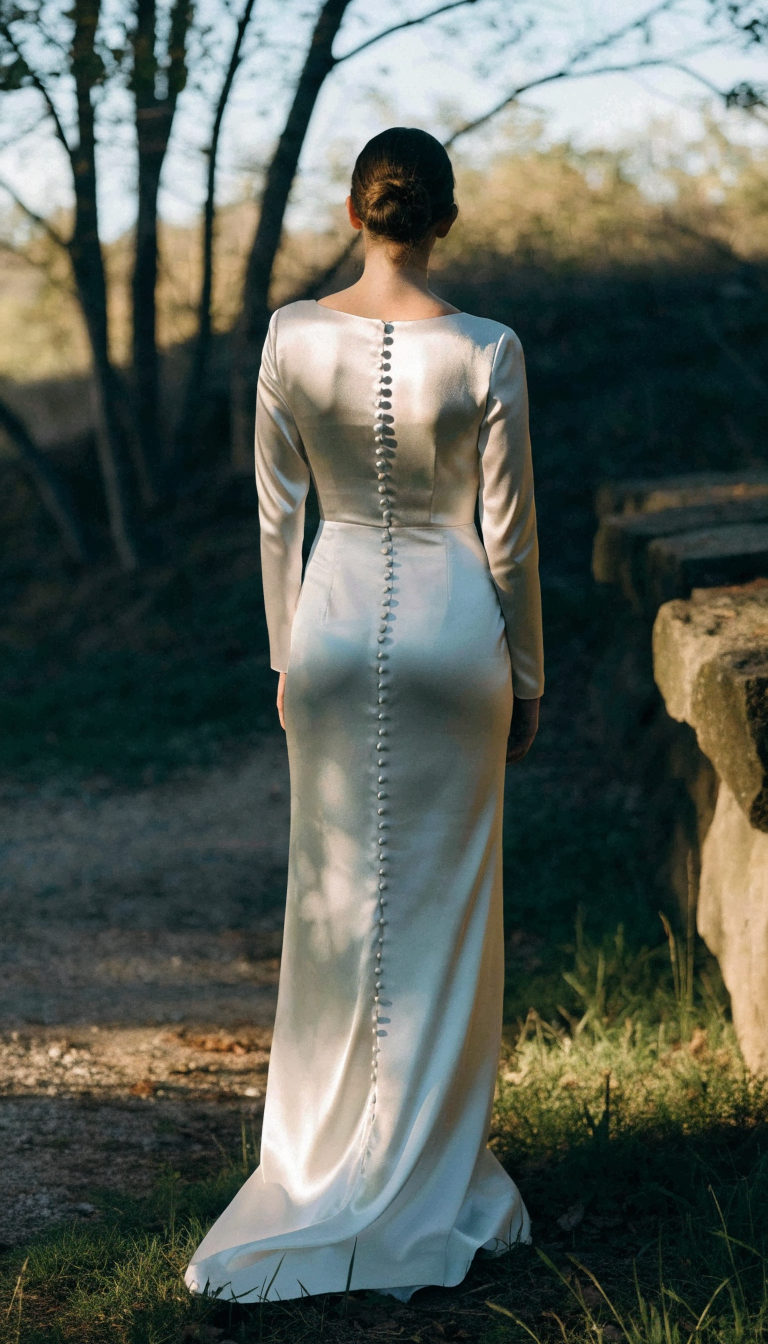
- Entry and exit: Buttons take longer than a zipper; allow extra time or choose a hybrid closure.
- Steam care: Satin buttons need careful steaming so the loops do not crease.
- Support pairing: Built-in cups reduce the need for a separate bra under the close fit.
16. Layered Tulle Skirt With Warmer Bodice
A bodice in crepe or lace over satin paired with a layered tulle skirt keeps the upper body warmer while the skirt stays light enough for movement. The contrast works for mixed indoor-outdoor timelines common in fall. The tulle can be cut fuller or more restrained depending on the venue size and the bride’s preference for volume.
- Temperature balance: The bodice provides coverage while the skirt does not trap heat around the legs.
- Bustle type: A French or ballroom bustle usually suits the lighter skirt.
- Underslip choice: A smooth slip prevents the tulle from catching on legs during dancing.
17. Minimalist Crepe With Functional Pockets
A clean crepe silhouette with side-seam pockets offers a practical place for a lipstick or note without adding bulk. The matte fabric hides pocket openings better than shiny satin, and the simple construction reduces alteration complexity. The style suits smaller ceremonies or couples who prefer less ornament while still wanting a dress that feels finished.
- Pocket placement: Check that the pockets sit at a natural hand height when arms are relaxed.
- Weight distribution: Keep items light so the fabric does not pull at the side seams.
- Overall timeline: Simpler construction often means shorter lead times or easier off-the-rack options.
Prices for these styles typically range from the mid-hundreds for off-the-rack or sample pieces to several thousand for made-to-order designer gowns; the final cost depends on fabric, embellishment, and alterations. Bring the shoes and any planned undergarments to every fitting, and start shopping early enough to allow for the usual multi-month production window plus at least two or three alteration appointments.
Frequently Asked Questions
How far in advance should a fall wedding dress be ordered? Most made-to-order gowns need four to eight months. Order early enough to leave time for the dress to arrive and for two or three fittings.
Which fabrics hold up best if the ceremony is outdoors and the reception is indoors? Crepe, mikado, and lace over a lining adapt well. Pure velvet is better reserved for cooler evening-only events because it can feel warm once the temperature rises.
Do long sleeves require special undergarments? Usually a standard or adhesive bra works if the neckline supports it. Test the combination during the first fitting so any adjustments can be planned.
Is a sample dress a practical option for a fall wedding? Yes, if the size is close and the fabric and style suit the season. Factor in alteration time and confirm the sample has not been heavily worn or altered already.