
A queen wedding dress prioritizes clear presence through structured fabrics, controlled coverage, and a silhouette that photographs cleanly from the back of a large room. These 17 options focus on the polished lines, refined textures, and deliberate details associated with formal ceremonies—without assuming a multi-attendant train or unlimited budget. The list moves from silhouettes that hold space, through neckline and sleeve choices that affect coverage and support, to fabric and construction details that change how the dress moves and holds up through a long day. Most bridal gowns are made to order and require several months of lead time; alterations are usually quoted separately and need their own fittings.
Silhouettes That Hold a Formal Room
1. Duchesse Satin Ball Gown with Natural Waist
The classic queen-inspired silhouette places a fitted bodice at the natural waist before releasing into a full, structured skirt. Duchesse satin holds crisp folds without collapsing, so the volume reads intentional rather than costume-like. A moderate cathedral train keeps the drama visible in photos while remaining manageable for most indoor venues. Built-in cups and light boning in the bodice provide support without a separate longline bra for many wearers.
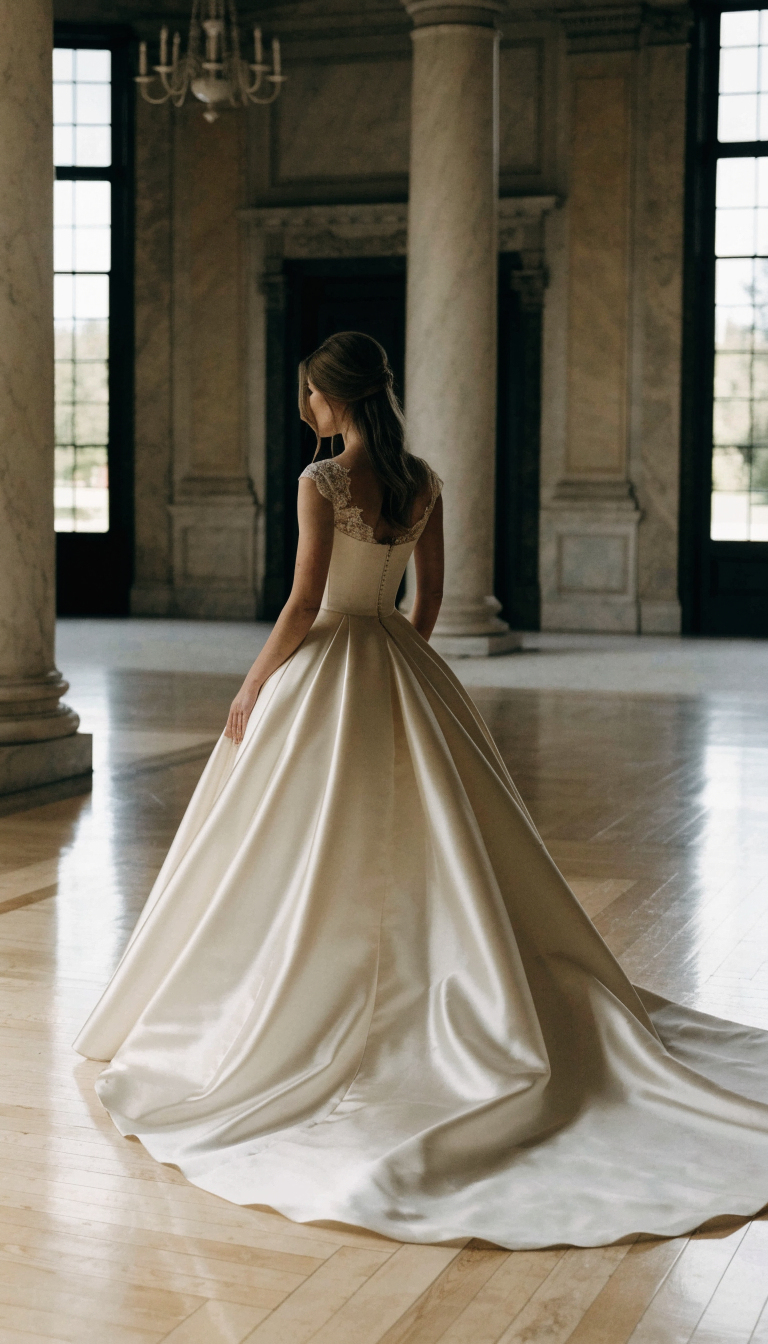
Grand hall volume: The skirt fills a wide aisle or ballroom without needing extreme height. Sitting and dancing note: The fullness can push forward when seated; test with the shoes you plan to wear. Alteration complexity: Hemming a full skirt and adding bustle points takes longer than a simpler shape.
2. Structured A-Line with Controlled Flare
An A-line that stays close through the waist then flares gently creates presence without the weight of a full ball gown. Mikado or heavier satin gives the skirt enough body to move cleanly on stairs or outdoor paths. The shape works in both traditional churches and larger reception halls where a more extreme silhouette might feel oversized. Light boning keeps the bodice smooth under a fitted jacket or cape if weather changes.
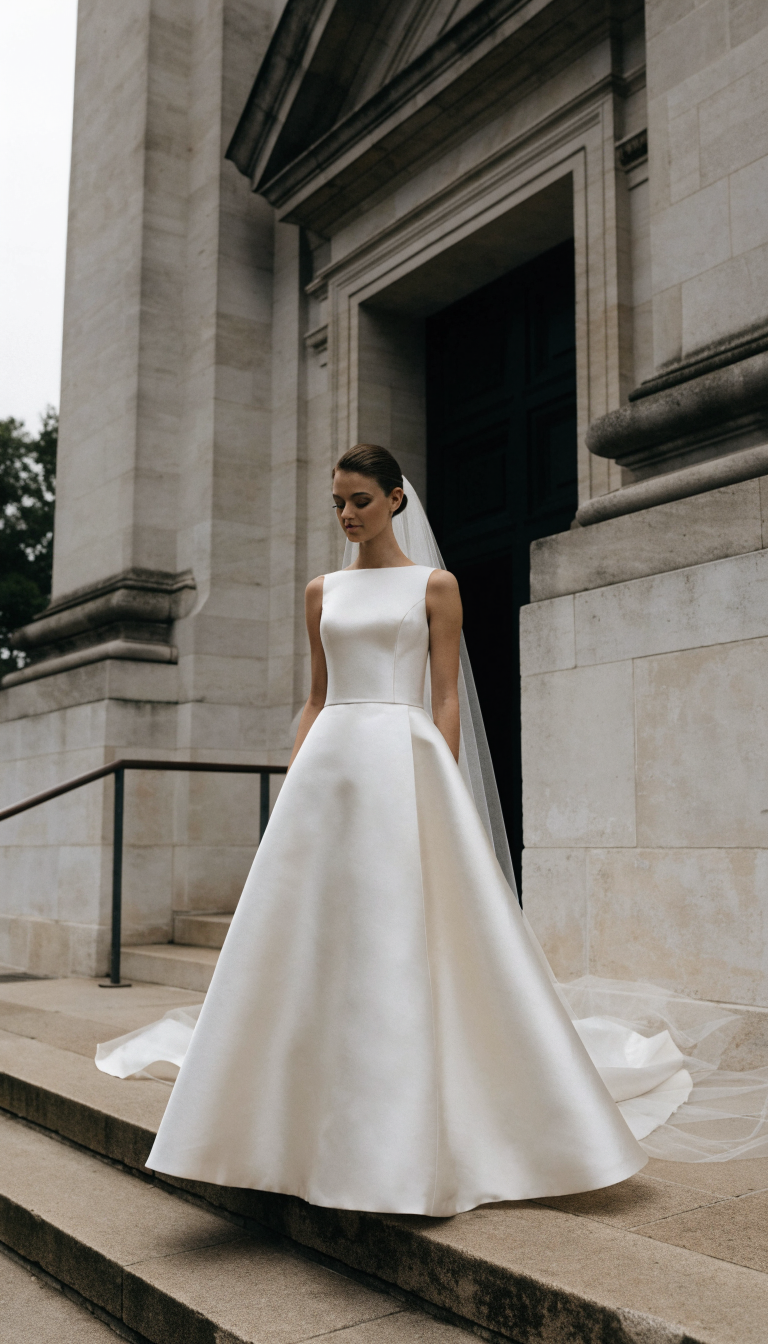
Venue flexibility: Handles both formal indoor aisles and garden paths with fewer logistics. Fabric weight trade-off: Structured fabrics resist wrinkles better than soft tulle but add warmth. Fitting-room check: Walk and sit to confirm the flare does not catch on heels.
3. Column Silhouette with Cathedral Train
A sleek column or sheath in satin or crepe paired with a substantial train creates a modern regal line. The body-skimming shape keeps the focus on the train and neckline rather than skirt volume. This style suits narrower aisles and contemporary venues where a wide ball gown would dominate the space. A well-placed bustle turns the train into a manageable skirt for dancing.
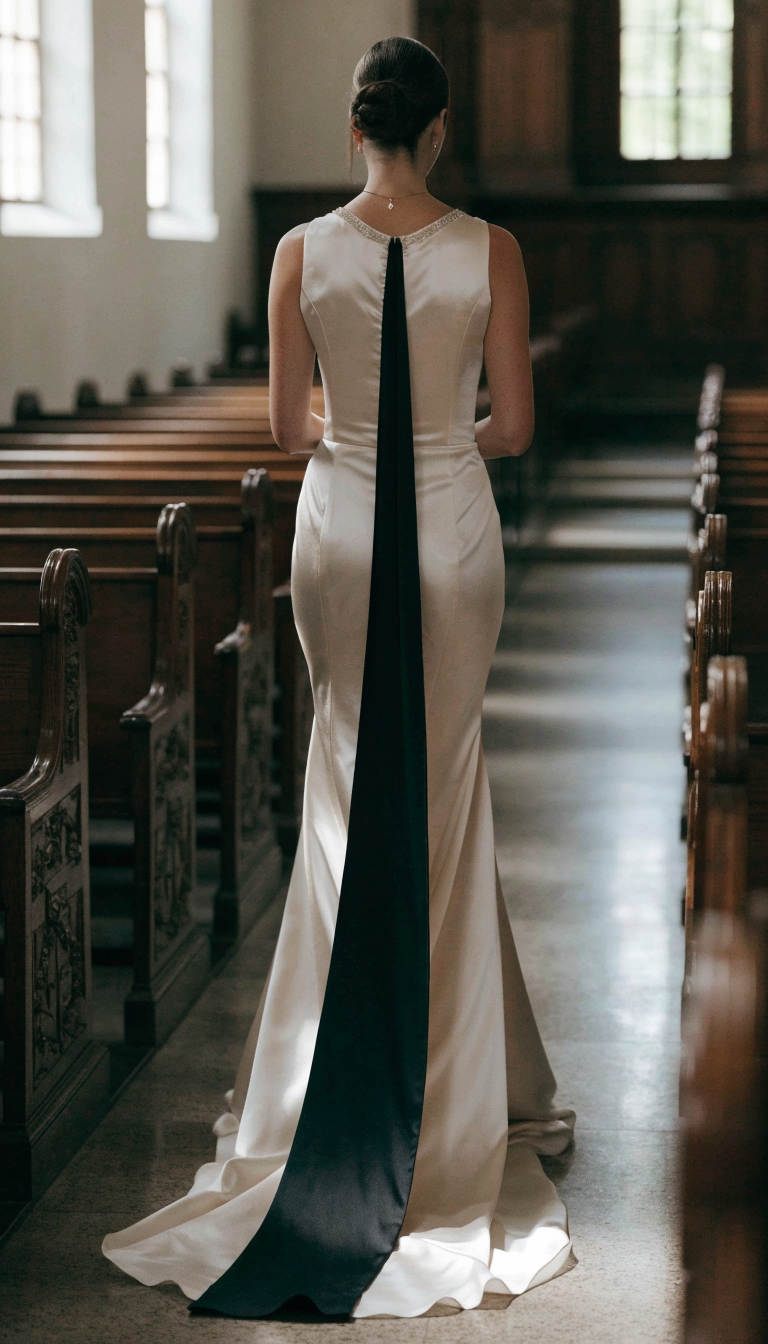
Narrow aisle advantage: Moves easily through tight processional paths. Train management: Plan bustle points early so the back looks intentional after the ceremony. Support test: Confirm the fabric does not cling or ride up when walking.
4. Fit-and-Flare with Controlled Volume
The dress stays close through the hips then releases into a gentle flare, offering more movement than a strict mermaid while retaining shape. Crepe or medium-weight satin provides stretch and recovery so the fabric returns to place after sitting. The silhouette photographs cleanly from multiple angles and works well when the ceremony and reception are in the same space. Light lining prevents the fabric from showing undergarment lines.
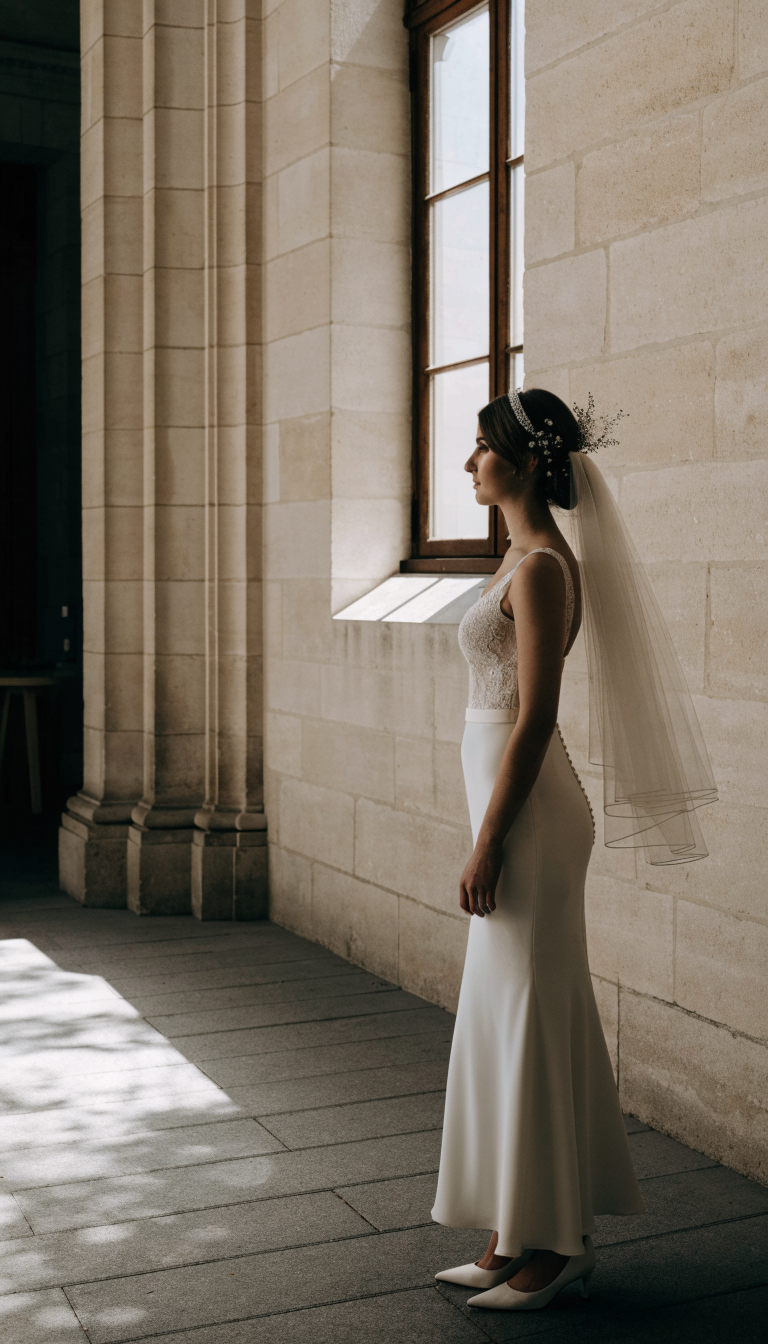
Dance-floor mobility: The lower flare allows a wider step than a tight mermaid. Heat consideration: Avoid heavy layers if the reception is outdoors in warm weather. Alteration note: Precise hip and thigh measurements matter more here than on fuller shapes.
Neckline and Sleeve Coverage for Polished Presence
5. High-Neck Long-Sleeve Satin
A high or standing neckline with long sleeves creates the covered, formal look often associated with traditional royal ceremonies. Structured satin or mikado keeps the neckline upright without constant adjustment. This style suits cooler seasons and venues with formal dress codes. The continuous fabric from neck to wrist reduces the need for separate jewelry while still allowing a tiara or headpiece.
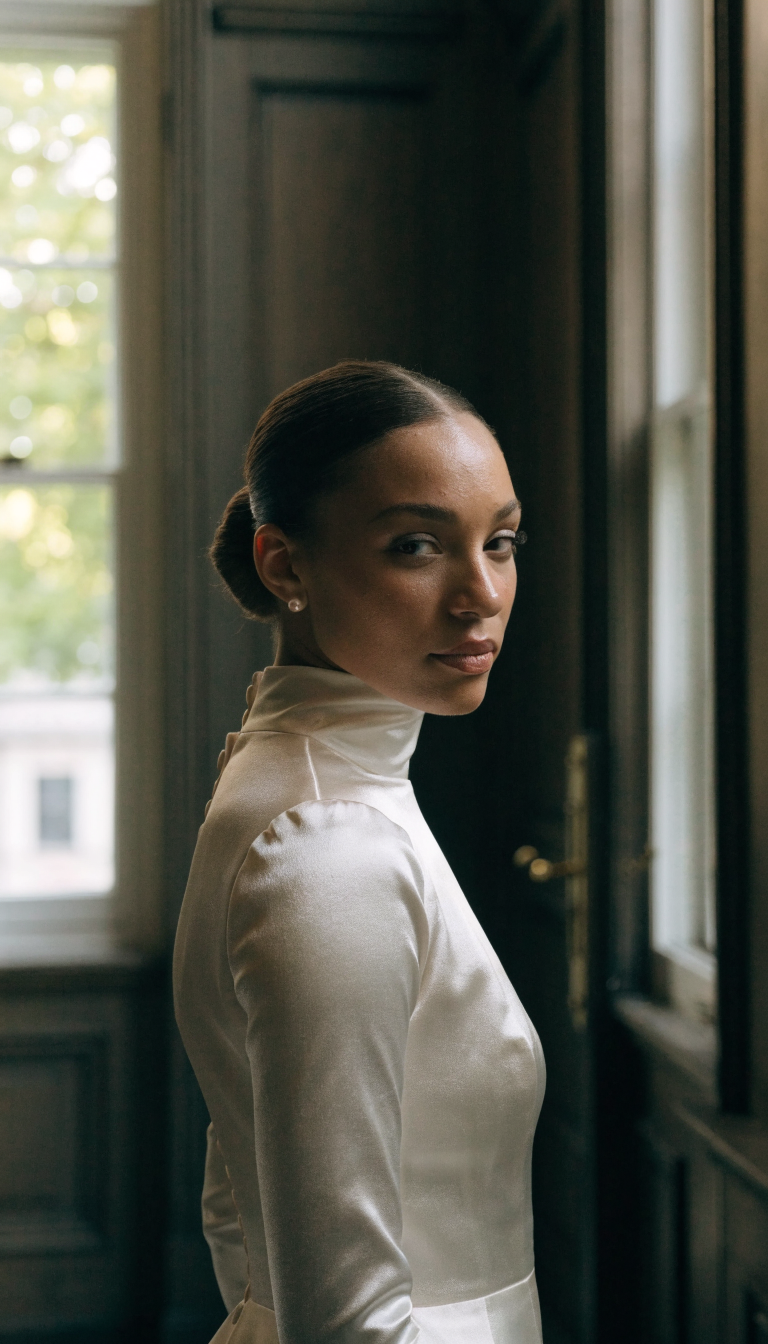
Cooler-season fit: Provides coverage without adding a separate bolero or jacket. Jewelry restraint: A simple necklace or none at all often looks cleaner. Undergarment note: Built-in cups usually eliminate the need for a separate bra.
6. Illusion Neckline with Lace Sleeves
Sheer illusion fabric across the neckline and long lace sleeves adds coverage while keeping the upper body light. The lace can be lined or left open depending on the desired opacity. This combination photographs well in both soft garden light and formal indoor settings. The sleeves provide a place for subtle beading or embroidery without weighing down the entire gown.
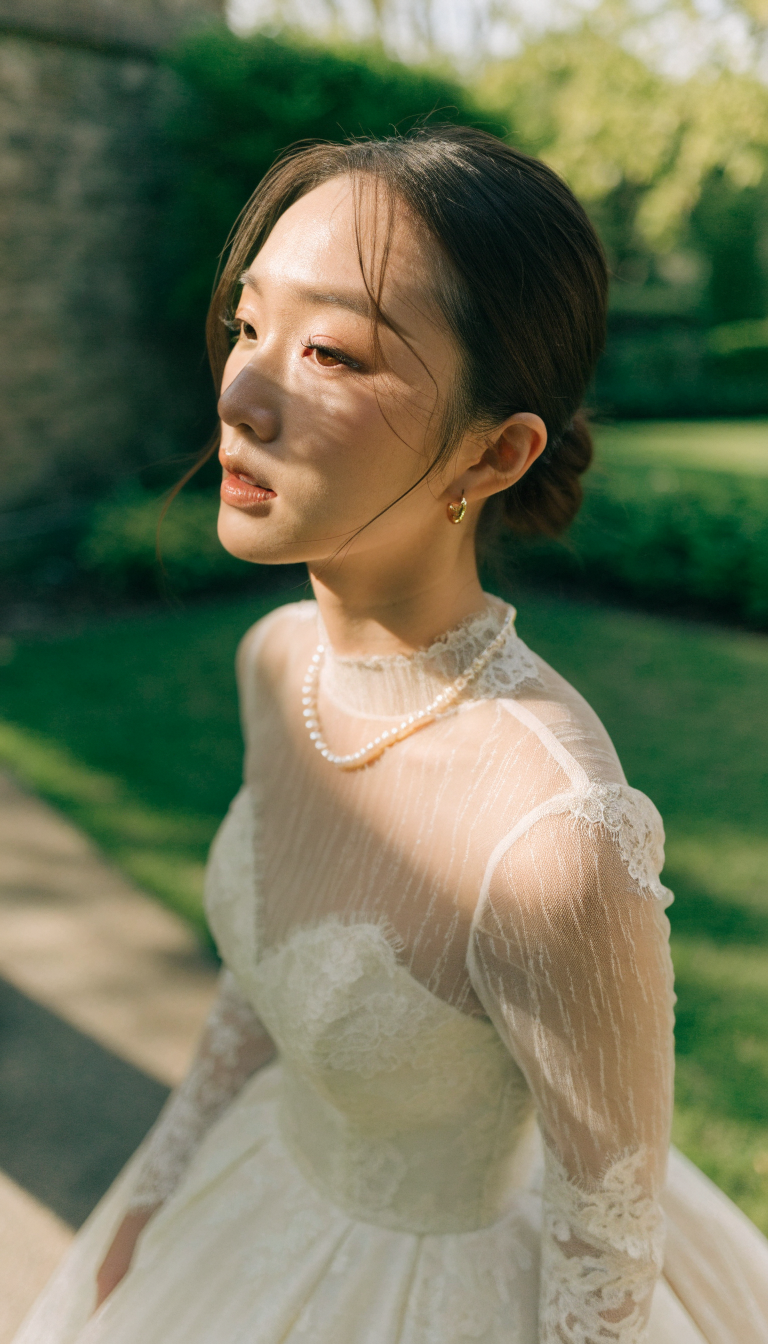
Coverage without bulk: Offers arm and shoulder coverage that feels less heavy than opaque fabric. Season range: Works in spring and fall when full opaque sleeves might feel warm. Fitting detail: Check that the illusion fabric does not pull or gap at the shoulders.
7. Off-the-Shoulder with Structured Shoulders
An off-the-shoulder neckline that sits securely on the upper arms creates a wide, balanced line across the torso. Mikado or satin holds the shape better than soft chiffon, so the neckline stays in place during movement. The style suits formal evening ceremonies and pairs cleanly with a shorter veil or headpiece. Light boning in the bodice helps the shoulders remain level.
Secure placement: Structured fabric reduces the chance of the neckline slipping during the ceremony. Photo balance: The wide neckline reads clearly in both close and full-length shots. Support check: Confirm the bodice provides enough hold without straps.
8. Square Neck with Button-Back Detail
A square neckline frames the collarbone while covered buttons running down the back add a traditional finishing detail. Satin or crepe keeps the neckline crisp. The buttons can be functional or decorative; functional ones allow for easier dressing and more adjustability during fittings. This combination works well in both historic venues and modern spaces with clean architecture.
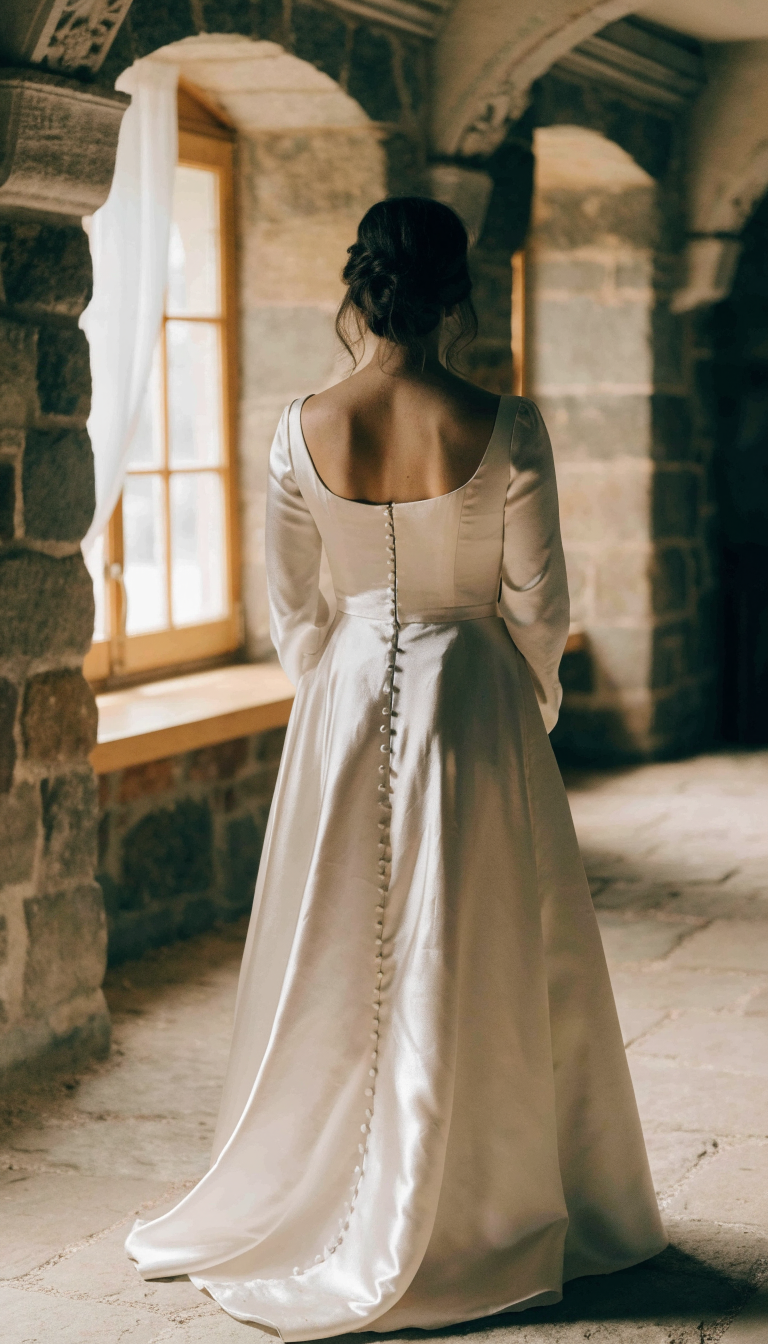
Dressing practicality: Functional buttons can simplify getting in and out of the dress. Neckline stability: The square shape stays even without constant adjustment. Alteration flexibility: Button spacing can often be adjusted during fittings.
9. Boat Neck with Minimal Sleeve
A wide boat or bateau neckline paired with cap or short sleeves creates a clean horizontal line across the shoulders. The shape suits structured fabrics that hold their edge. This neckline often pairs with a longer train and works in both daytime and evening formal settings. Minimal sleeve coverage keeps the arms free while still providing a finished edge.
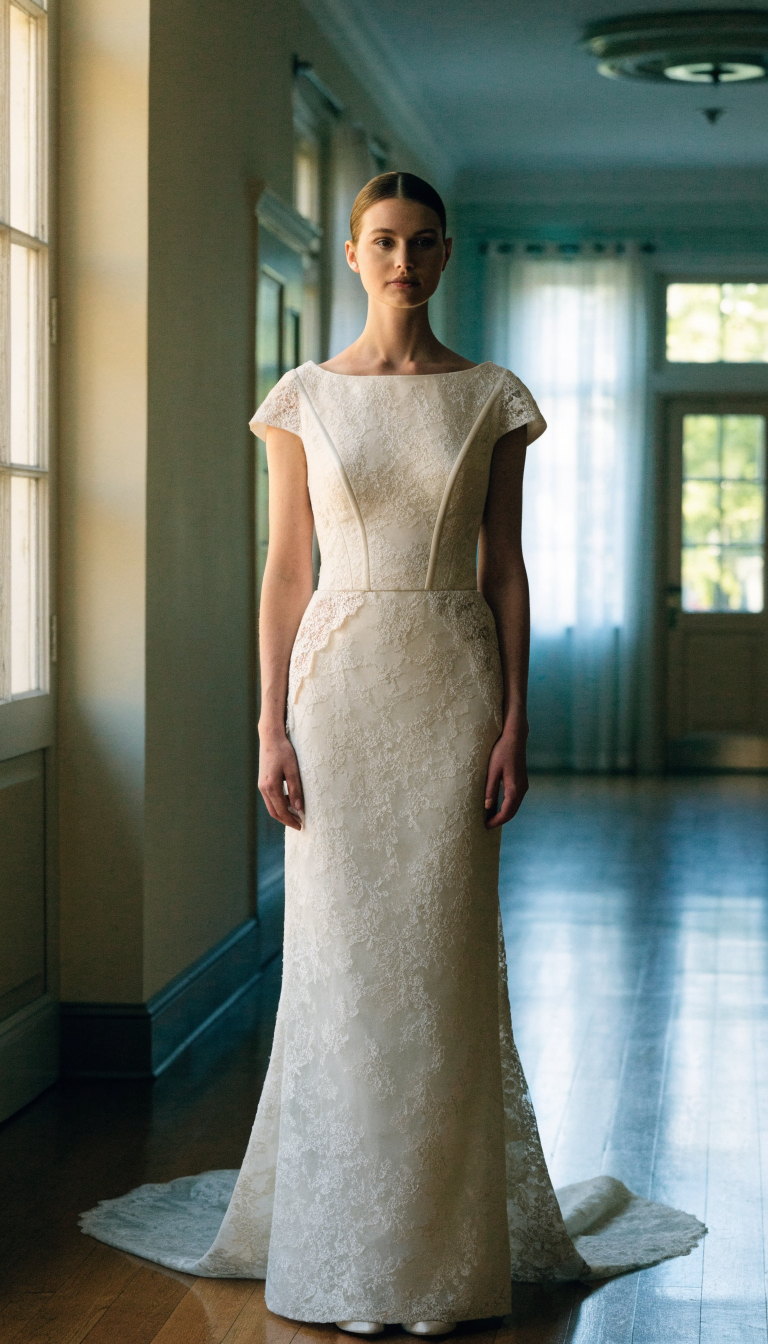
Shoulder line: The wide neckline balances a fuller skirt or long train. Arm freedom: Cap sleeves allow easy movement without full sleeve weight. Jewelry pairing: A simple earring or none at all usually looks balanced.
Fabric and Construction Details That Change the Experience
10. Detachable Long Sleeves over Strapless Base
Detachable sleeves or a removable overlay allow a strapless or low-neck base for the ceremony and a covered look for cooler moments or photos. The base dress can be satin or crepe; the sleeves are often lace or lighter fabric. This approach works for outdoor ceremonies that move indoors or for venues with changing temperatures. The sleeves attach with hidden snaps or buttons so the transition stays quick.
Temperature shift: Add or remove coverage as the day moves from ceremony to reception. Attachment security: Test the fasteners during a fitting so they do not pull on the bodice. Timeline note: Confirm the sleeves are ready in time for the final fitting.
11. Mikado with Crisp, Structured Drape
Mikado, a heavier silk blend with a subtle sheen, holds sharp folds and clean edges. It creates a polished surface that photographs well under both flash and natural light. The fabric works for both ball gowns and more fitted shapes because it maintains structure without excessive weight. It is less likely to wrinkle heavily during travel than lighter satins.
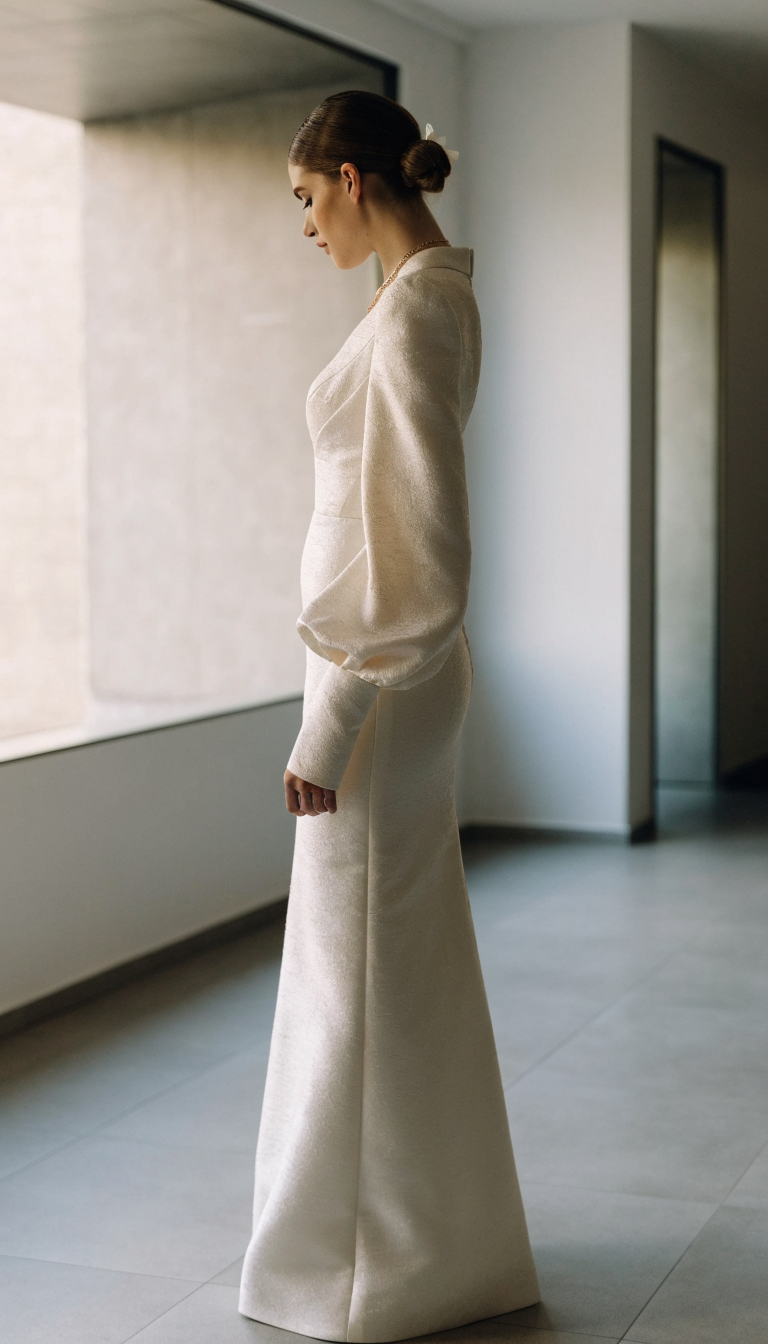
Surface finish: The subtle sheen reads formal without high gloss. Wrinkle resistance: Holds shape better than many softer fabrics during long wear. Season note: The weight provides some warmth, making it suitable for fall and winter.
12. Pearl and Crystal Embroidered Bodice
Concentrated embroidery of pearls or crystals on the bodice or along the neckline adds texture without covering the entire dress. The embellishment catches light in formal indoor settings and remains visible in photographs. Placement on the bodice rather than the full skirt keeps the weight manageable. The detail pairs well with a simpler skirt in satin or crepe.
Light reflection: The embroidery shows clearly under both indoor and soft outdoor light. Weight distribution: Concentrating embellishment on the bodice avoids heavy skirts. Cleaning consideration: Beading may require specialized cleaning after the wedding.
13. Chantilly Lace Overlay on Satin Base
A layer of Chantilly lace over a satin or crepe base adds texture while the underlying fabric provides opacity and structure. The lace can cover the bodice only or extend onto the skirt in a controlled pattern. This combination works across seasons when the lace is not too dense. The overlay can be removed or shortened during alterations if the original length feels too long.
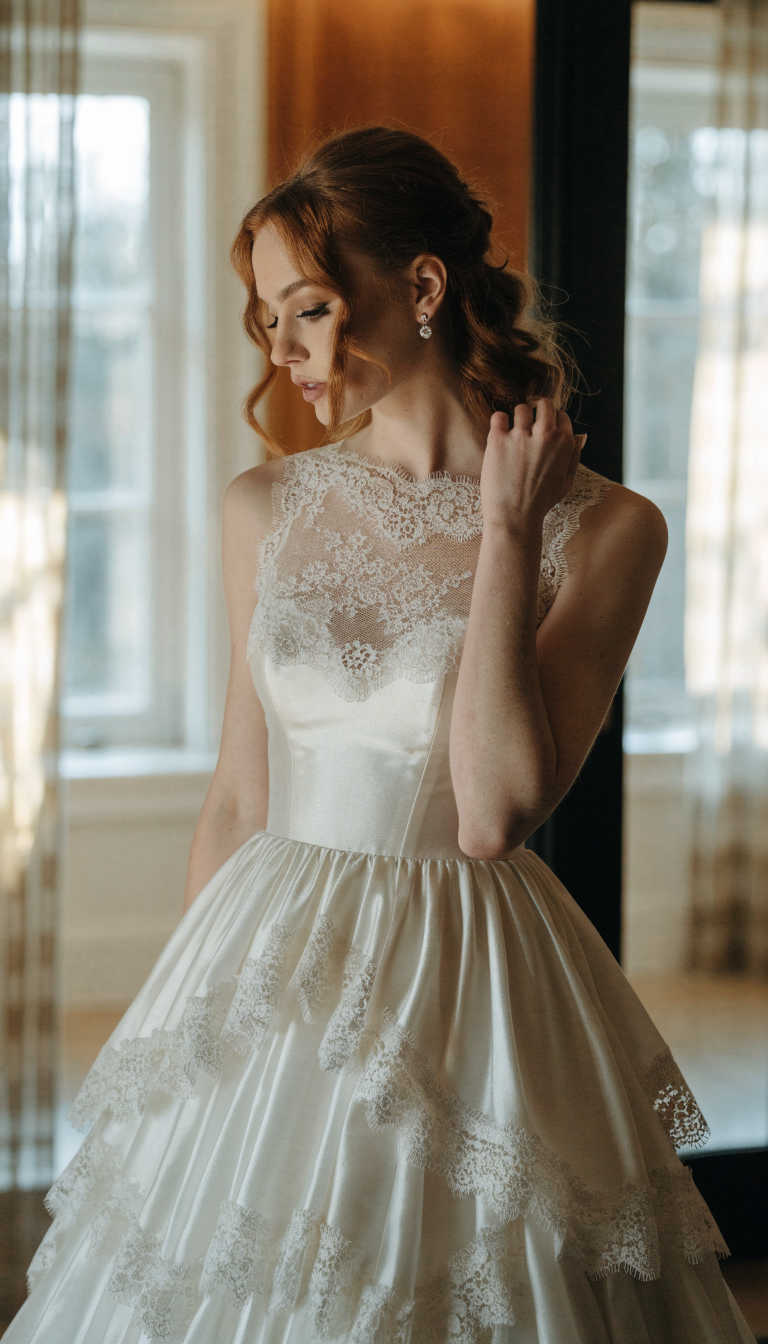
Texture without weight: Lace adds visual interest without the bulk of heavy beading. Opacity control: The base fabric prevents the lace from appearing sheer in bright light. Alteration option: The lace layer can sometimes be adjusted separately from the base.
14. Organza Layers for Soft Volume
Multiple layers of organza create volume that feels lighter than tulle while still holding shape. The fabric has a crisp edge that reads structured rather than cloud-like. This works well for A-line or ball gown skirts in venues where extreme fullness might feel overwhelming. The layers can be graduated so the hem stays manageable.
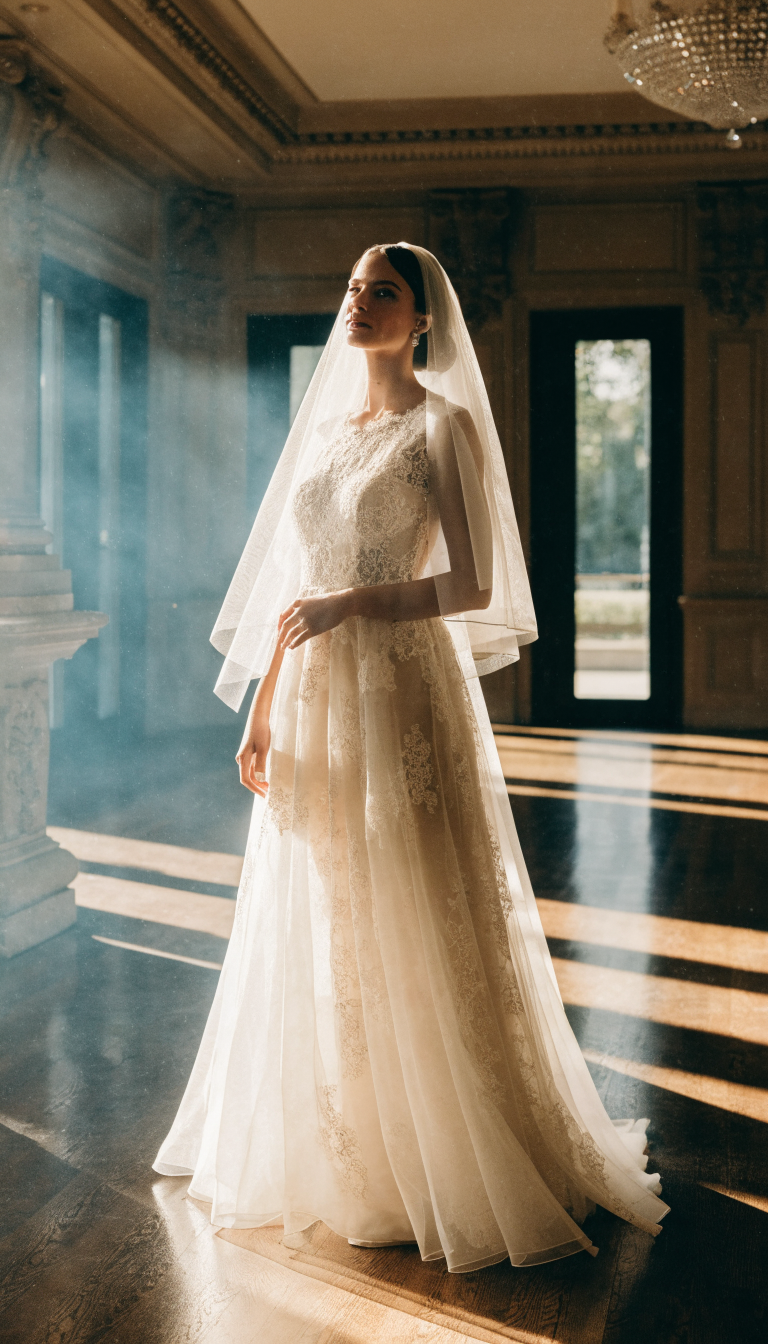
Lighter volume: Organza provides fullness with less weight than multiple tulle layers. Edge definition: The crisp quality keeps the silhouette from looking soft or blurred. Movement test: Walk and turn to confirm the layers do not catch or separate.
15. Cathedral Train with Planned Bustle Points
A cathedral-length train creates a clear processional line and photographs well from behind. The key is planning the bustle points during the design or early fittings so the train can be secured neatly for the reception. Multiple points distribute the fabric and reduce the chance of a bulky or uneven back. The train works with most silhouettes when the fabric has enough body to lie smoothly.
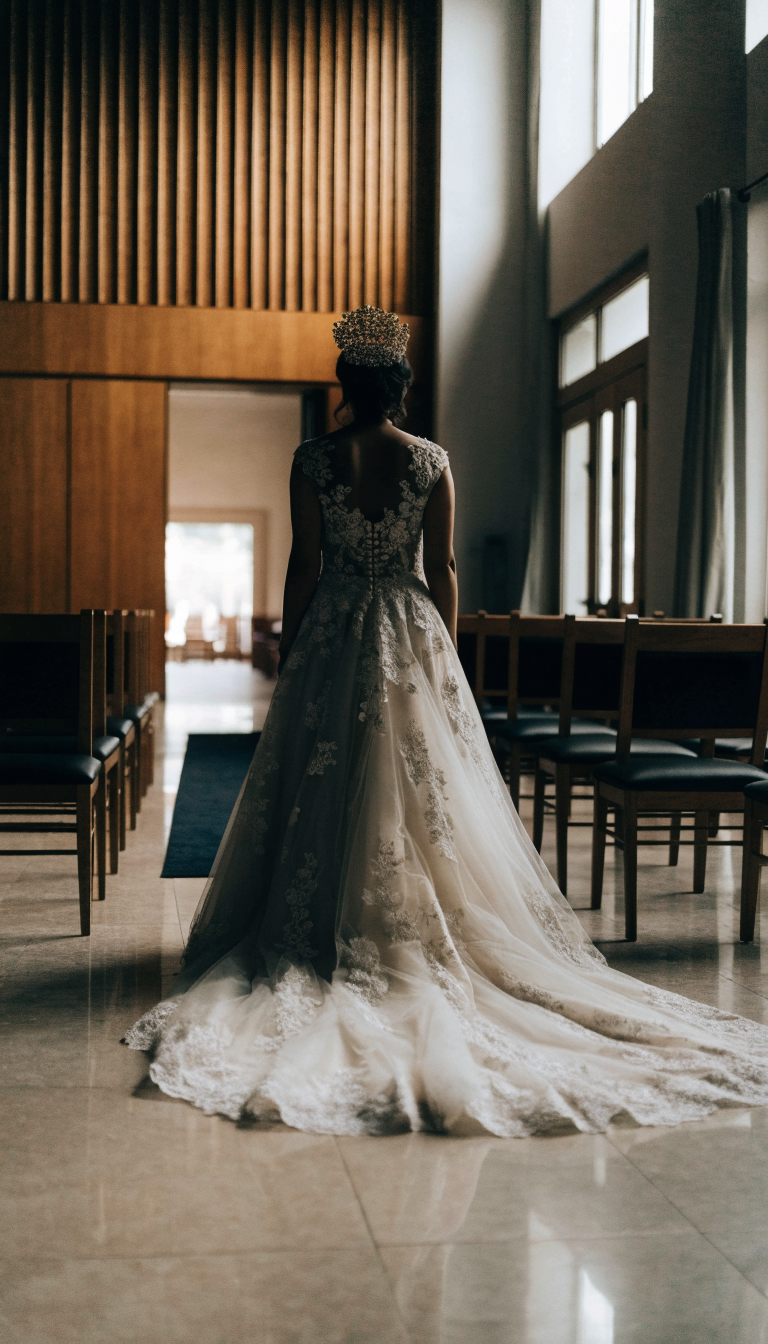
Processional presence: The length remains visible as the wearer walks down a long aisle. Bustle planning: Mark points early so the reception version looks intentional. Fabric choice: Structured fabrics hold the train shape better than very soft ones.
16. Corset Back for Adjustable Fit
A corset-style back with lacing allows for small adjustments in the days before the wedding and during the day itself. The lacing can be covered with a fabric panel for a cleaner look or left visible for a more traditional detail. This construction pairs with both fitted and fuller silhouettes. It reduces the need for last-minute seam adjustments if measurements shift slightly.
Fit flexibility: The lacing accommodates minor changes between fittings. Dressing assistance: Most wearers still need help to lace and secure the back. Visual option: A covered panel keeps the back smooth if preferred.
17. Cape Overlay for Added Drama
A matching or coordinating cape attaches at the shoulders and creates an extended silhouette without adding permanent weight to the dress. The cape can be removed after the ceremony, leaving a simpler base dress for the reception. Structured fabrics such as satin or mikado keep the cape from collapsing. The piece works especially well in cooler weather or formal indoor settings.
Removable drama: The cape provides processional impact and can come off later. Shoulder attachment: Confirm the attachment points do not pull the dress neckline. Weather use: Offers light coverage for outdoor arrivals or cooler venues.
Most of these styles are available as made-to-order pieces, so begin appointments several months ahead of the wedding date. Bring the shoes and any undergarments you plan to wear to the first fitting, and ask specifically about bustle options and lead time for any detachable pieces. A second fitting after the main alterations usually confirms the final length and support.
Frequently Asked Questions
How far in advance should I order a queen-style wedding dress? Most made-to-order bridal gowns need four to eight months. Add extra time if the style includes extensive embroidery, a custom train, or detachable pieces that must be fitted separately.
Can I buy a sample dress instead of ordering new? Sample dresses can reduce both cost and wait time. They often require more alterations and may show minor wear; ask about the condition and whether the original embellishments can be repaired or replaced.
How many fittings should I expect? Most brides schedule two to four fittings. The first confirms the base fit, later ones check hem length, bustle placement, and any detachable pieces after the main alterations are complete.
Does a dramatic train always need multiple attendants? No. A well-planned bustle and a train of moderate length can be managed by the wearer or one attendant. Discuss the exact length and bustle method with the salon before finalizing the design.