
A medieval wedding dress pairs structured bodices, elongated sleeves, and textured fabrics with the practical needs of a full wedding day. These 18 styles work especially well for stone chapels, castle grounds, woodland clearings, and historic estates, where the silhouette reads clearly in photographs without relying on modern volume alone. Most bridal gowns are made to order, so plan for several months of lead time plus multiple fittings; alterations are a separate cost. Approximate price tiers for specialty or custom medieval-inspired pieces often fall in the mid to upper bridal range, though simpler ready-to-wear options exist—exact figures vary by designer, fabric, region, and alterations. The list is organized by silhouette foundations, sleeve shapes, fabric behavior, and coverage details so you can match the gown to your venue, season, and movement needs.
Silhouette and Bodice Foundations
1. Lace-Up Corset Bodice with Full A-Line Skirt
A lace-up corset bodice gives the clearest medieval cue while still providing real support through boning and internal structure rather than costume-style lacing alone. Pair it with a gently flared A-line skirt that falls in soft folds instead of a stiff hoop, and the silhouette stays period-inspired without becoming theatrical. Matte silk or crepe keeps the surface quiet so embroidery or a decorative belt can stand out. Wide straps or a square neckline help distribute the weight so the bodice does not rely solely on the lacing for lift.
- Castle courtyard comfort: The full skirt moves easily across uneven stone or grass once the hem is properly balanced.
- Boning and lining check: Ask to see the internal channels; soft boning with a cotton or silk lining prevents the fabric from digging during a long ceremony.
- Sitting and restroom test: Sit fully in the sample; the lacing should close evenly without gaping when you lean forward.
2. Fitted Cotehardie-Inspired Column Silhouette
The cotehardie, a closely fitted medieval gown that flares from the hips with gores, translates into a modern column or sheath shape with long narrow sleeves and a defined waist. The cut elongates the torso and photographs cleanly in tight historic interiors where a full skirt might overwhelm the space. Smooth crepe or lightweight silk holds the tailored lines without clinging, and a modest train can be added without disrupting the columnar fall.
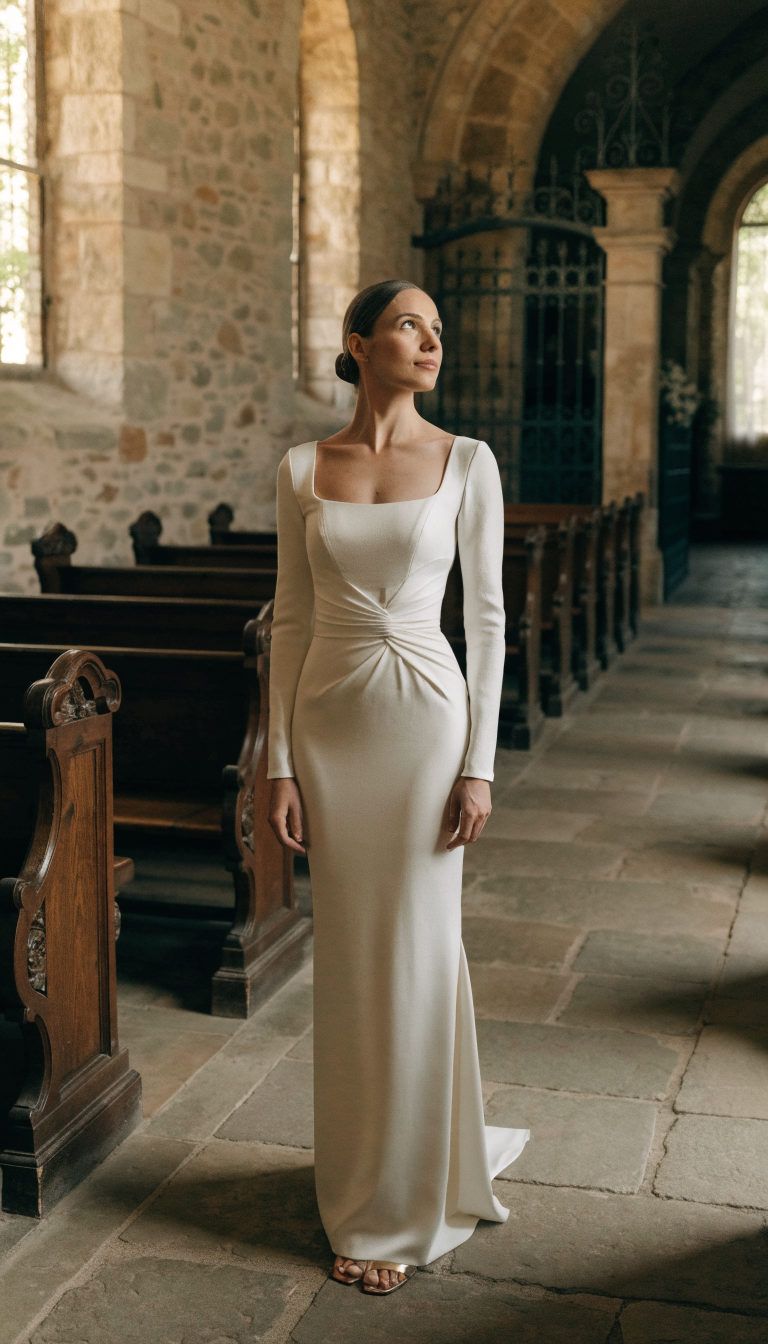
- Church aisle movement: Narrow sleeves and a close skirt make kneeling and rising simpler than in a voluminous gown.
- Alteration focus: The fitted torso often needs precise side or back adjustments; plan for at least two fittings after the initial pin session.
- Undergarment pairing: A lightly structured longline bra or built-in cups works better than a traditional strapless bustier under the high or square neck.
3. Dropped U-Shaped Waist with Full Skirt
A waist seam that sits below the natural waist and curves into a soft U-shape creates the elongated torso common in later medieval illustrations. The skirt releases into generous folds that pool slightly, giving the look of wealth through fabric without requiring extreme volume. Structured mikado or a firm silk blend holds the seam line cleanly, while a lightweight lining keeps the skirt from feeling heavy.
- Garden ceremony balance: The lower waist visually lengthens the figure against greenery and open space.
- Train and bustle note: A modest train can be bustled higher at the back so the dropped seam remains visible during dancing.
- Shoe height trial: Wear the exact heel height you plan for the day; the lower waist changes how the hem sits when you move.
4. Empire Waist Flowing Gown
An empire waist sits just under the bust and lets the skirt fall in soft, unbroken lines—an approach that echoes the high-waisted silhouettes of late medieval and early Renaissance dress. Fluid chiffon or georgette keeps the fabric light enough for outdoor ceremonies, and long sleeves can be added without weighing the upper body. The cut offers easy movement for walking and dancing while still reading as historically influenced when paired with a circlet or simple embroidery.
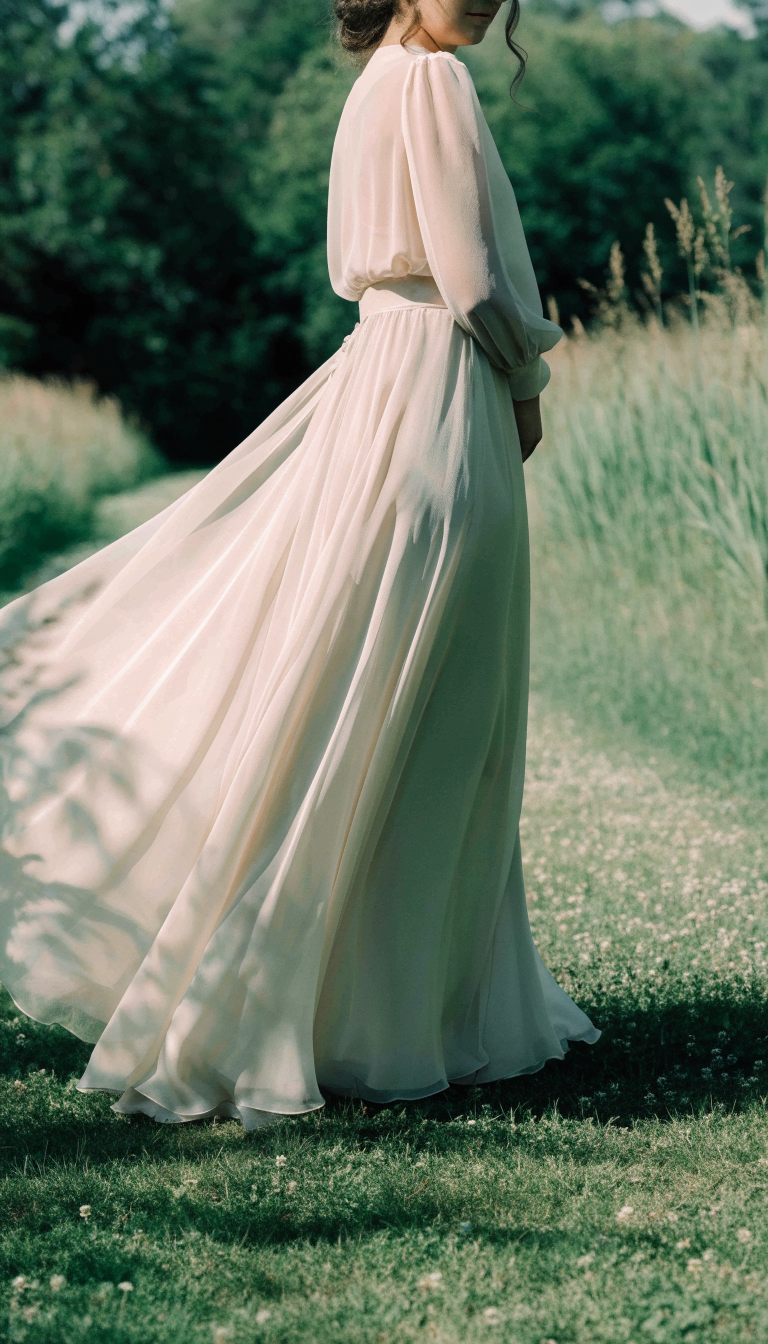
- Warm-weather drape: Lightweight fabrics move with a breeze rather than trapping heat against the torso.
- Support underneath: Built-in cups or a separate soft-cup bra stay secure because the waist is high and the skirt is not pulling downward.
- Hem practicality: A shorter train or tea-length variation reduces the risk of the fluid fabric catching on outdoor paths.
5. Structured Ball Gown with Medieval Bodice Details
A fitted, lightly boned bodice paired with a full but softly supported skirt creates the regal volume associated with noble medieval dress without the extreme crinoline of later eras. The skirt falls in layered folds rather than a rigid bell, which keeps the movement closer to period illustrations. Velvet or brocade on the bodice adds texture while the skirt can stay in a lighter silk or satin for balance.
- Historic estate formality: The volume fills a grand hall or chapel without needing additional decoration.
- Weight distribution: Confirm the skirt is supported by soft petticoats rather than a hard hoop so sitting remains possible.
- Getting in and out of a car: Practice the maneuver; full skirts often need a helper or a slightly higher hem clearance.
Sleeve Shapes That Signal the Period
6. Bell Sleeves on an Ivory A-Line
Bell sleeves that widen from the elbow or wrist are one of the fastest visual cues for a medieval wedding dress. On an ivory A-line gown in soft crepe or chiffon, the sleeves float when you walk and frame the hands without restricting motion. The bodice can stay simple—square or shallow V—so the sleeves remain the focal detail. A modest train keeps the overall proportion balanced.
- Woodland or garden setting: The sleeves catch light and movement against trees and open air.
- Dance-floor range: Test raising your arms; the bell should clear without snagging on a partner or bouquet.
- Fabric weight difference: Chiffon sleeves stay cooler than velvet versions of the same shape.
7. Hanging or Angel Sleeves
Hanging sleeves, sometimes called angel sleeves, drape from the upper arm and fall in long panels that can be tied or left free. They create dramatic vertical lines and pair well with a fitted under-sleeve or a simple bodice. Silk or a fluid crepe holds the drape without stiffness, and the extra fabric can be secured for the ceremony then released or removed for the reception.
- Candlelit chapel effect: The long panels catch warm light and add depth to photographs.
- Practicality during movement: Have a seamstress show how the panels can be lightly tied so they do not trail on stairs.
- Layering option: Wear them over a long fitted sleeve for cooler venues, or alone for milder weather.
8. Narrow Fitted Long Sleeves
Long, narrow sleeves that follow the arm closely echo the more tailored medieval gowns worn under outer layers. They work especially well with square or high necklines and a clean A-line or column skirt. Stretch crepe or a silk blend with a small amount of give makes the fit comfortable for hours, and covered buttons or subtle embroidery at the cuffs add period detail without bulk.
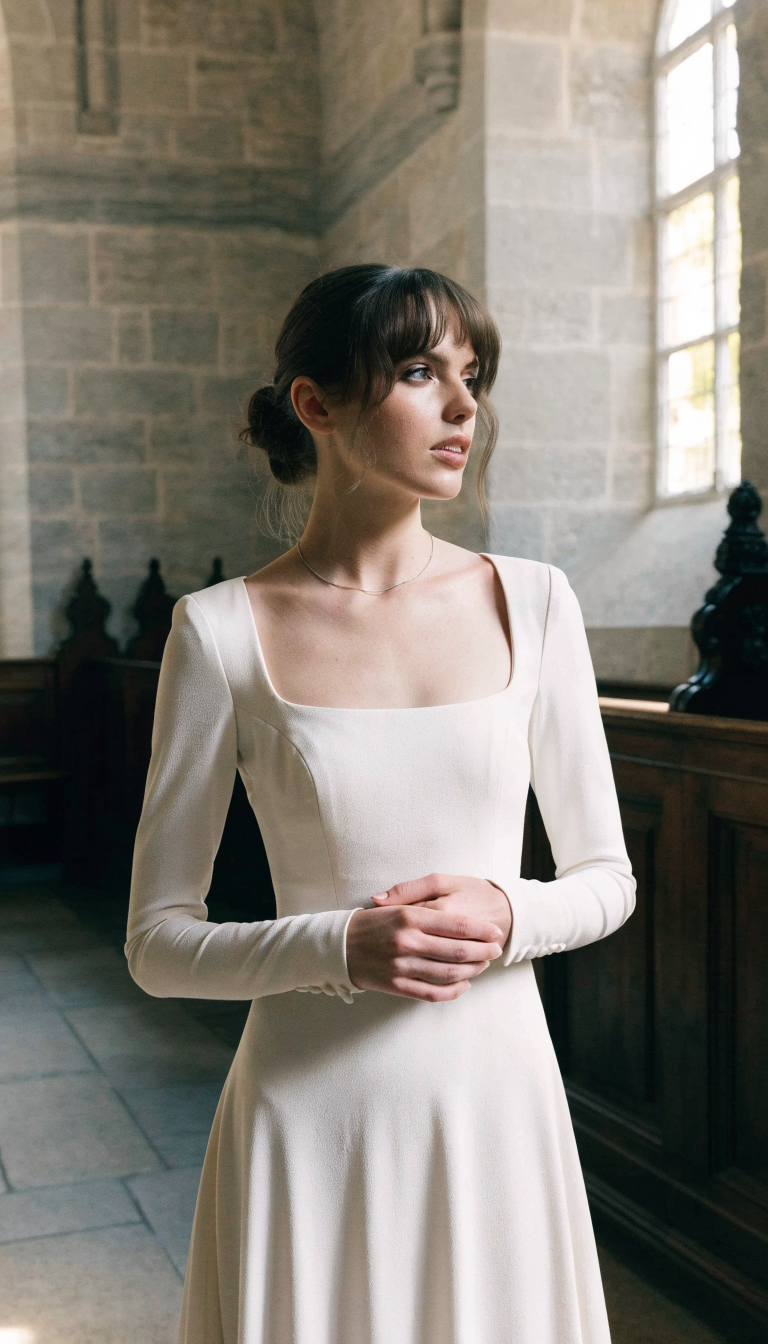
- Modest venue match: Full arm coverage suits chapels or ceremonies with a formal dress code.
- Heat consideration: In warm climates, choose a breathable lining or a lighter fabric weight so the sleeves do not feel confining.
- Cuff and bracelet check: Make sure any jewelry clears the sleeve edge cleanly.
9. Detachable Bell Sleeves
Detachable bell sleeves give the full medieval silhouette for the ceremony and then come off for the reception, leaving a simpler long-sleeve or cap-sleeve base. The base gown is often in crepe or satin, while the sleeves can be in a contrasting texture such as lace or lightweight velvet. Magnetic or button closures keep the transition quick and secure.
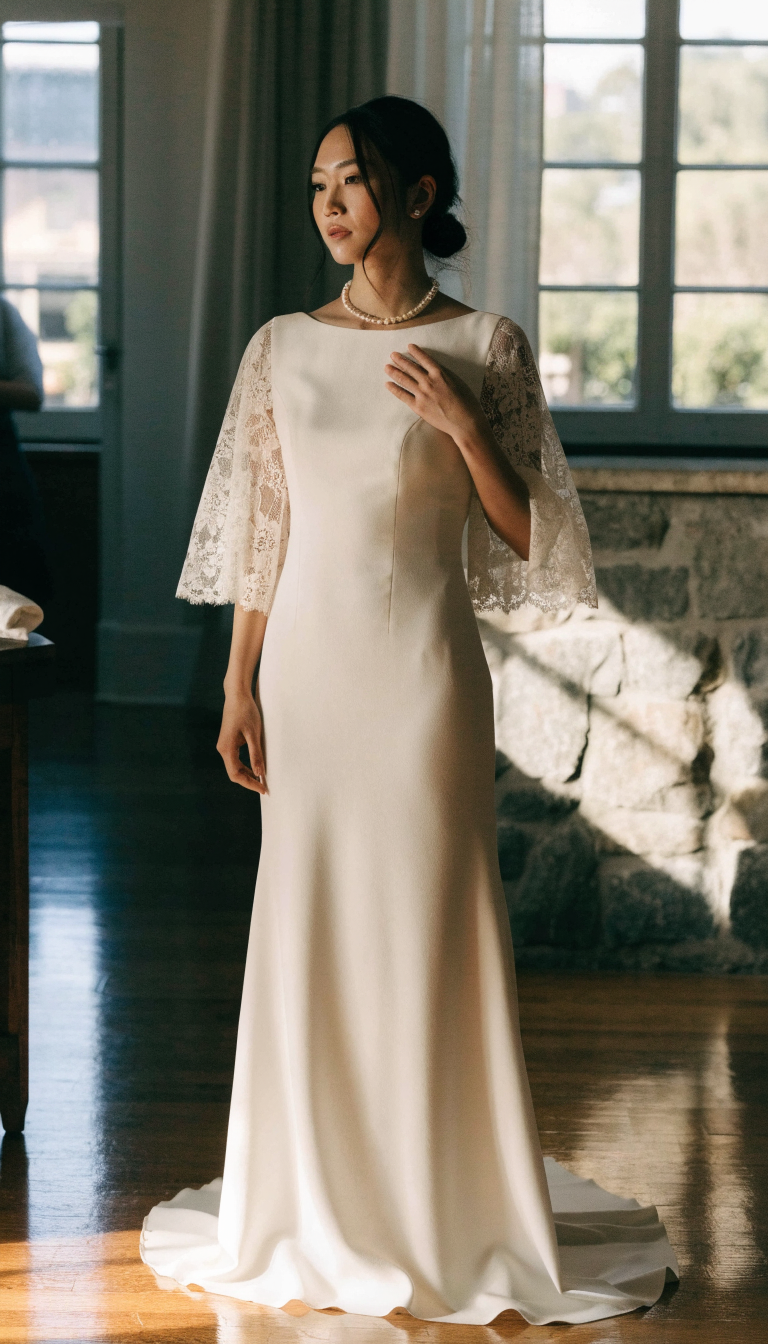
- Ceremony-to-reception shift: Ideal when the first dance and dinner require freer arm movement.
- Attachment security: Test the closures while moving; they should stay put through walking and hugging.
- Storage plan: Assign someone to hold the sleeves once removed so they do not get lost.
10. Houppelande-Style Voluminous Sleeves
The houppelande was a voluminous medieval outer gown with dramatically wide sleeves. A modern interpretation uses generous, floor-grazing sleeves on a full or A-line skirt, often in a structured fabric that holds the shape. The look is best reserved for cooler seasons or indoor venues where the extra fabric does not create heat or mobility issues. A matching belt or girdle at the waist keeps the volume from overwhelming the figure.
- Cool-weather drama: Velvet or brocade sleeves add presence in autumn or winter ceremonies.
- Mobility limitation: Wide sleeves can catch on chairs or dance partners; practice the first dance in the sample.
- Cleaning note: The large surface area means the sleeves may need careful steaming rather than aggressive pressing.
Fabric Choices and Texture
11. Velvet Medieval Wedding Dress
Velvet has a dense, light-absorbing surface that photographs richly in candlelit or low-light historic spaces. An ivory or soft champagne velvet gown with long sleeves and a fitted bodice feels regal without relying on shine. Because velvet holds heat and can mark, it is best suited to cooler months or air-conditioned venues. A cotton or silk lining prevents the fabric from clinging to the body.
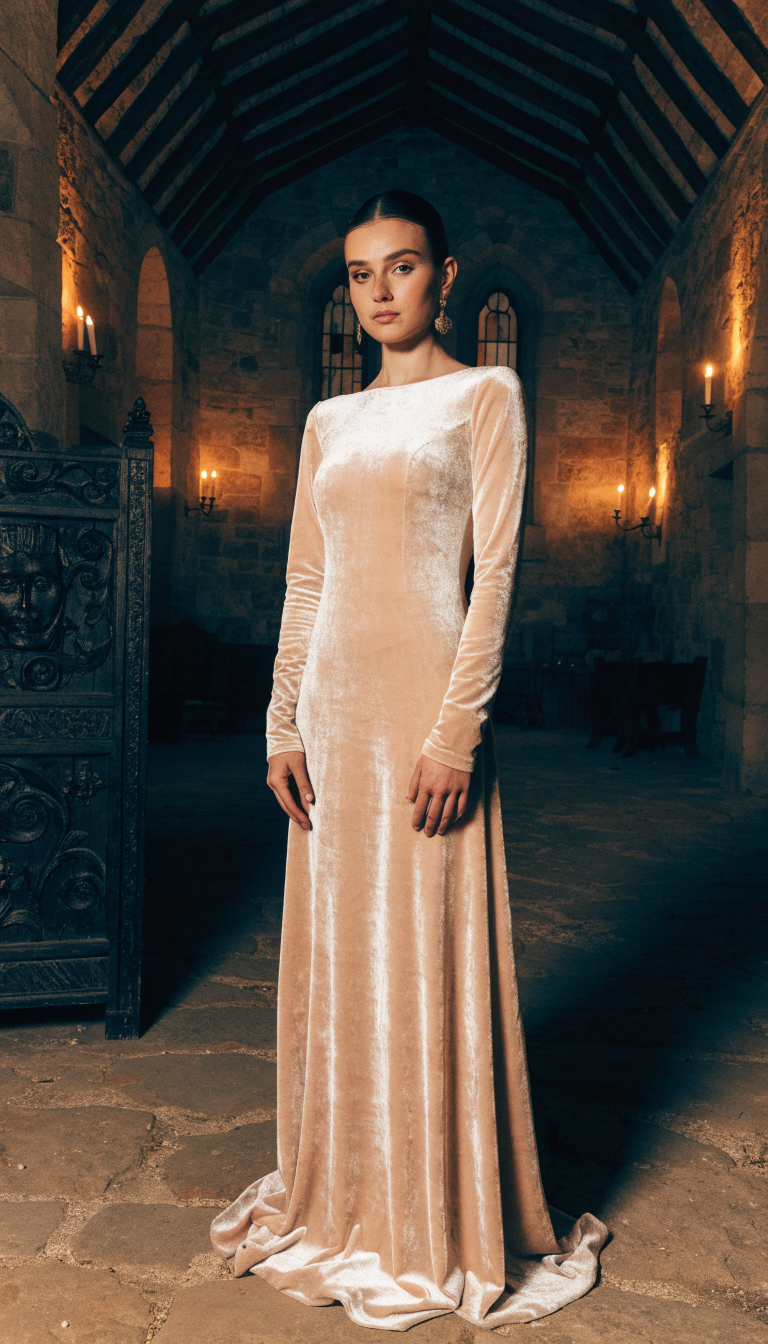
- Autumn or winter venue: The weight and texture suit stone halls and cooler outdoor evenings.
- Mark and lint care: Keep a soft brush or lint roller nearby; velvet shows contact marks easily.
- Sitting crease test: Sit for several minutes and check whether the pile recovers; some velvets hold creases longer than others.
12. Brocade or Damask Patterned Gown
Brocade and damask carry woven patterns that catch light in the same way medieval textiles did when gold or silver threads were used. A subtle floral or vine motif in ivory or champagne keeps the gown bridal while still reading as historically influenced. The fabric has natural structure, so the bodice can stay lightly boned and the skirt can fall in controlled folds. Pair it with minimal jewelry so the pattern remains the focus.
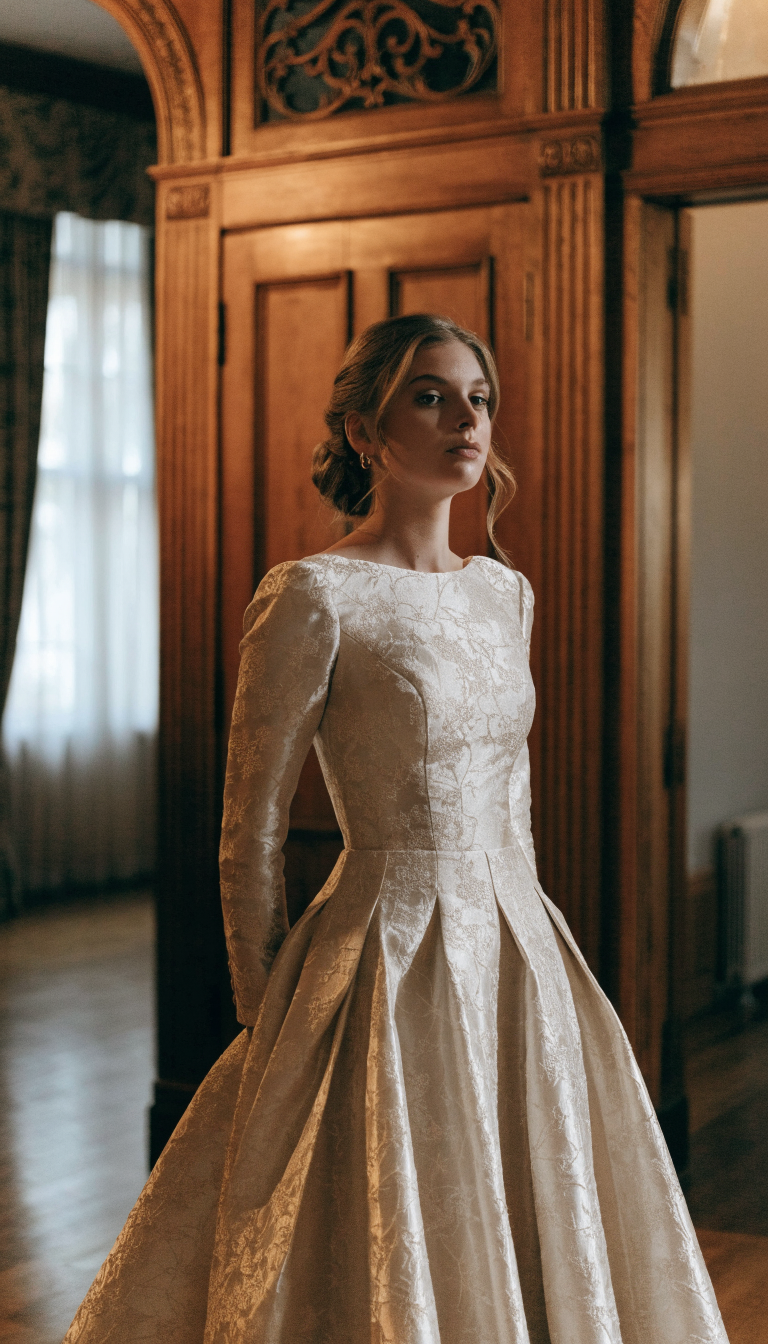
- Interior lighting match: Patterned fabrics look richest under warm indoor lighting rather than harsh daylight.
- Weight and movement: The woven texture adds some heft; confirm the hem does not drag when you walk at a natural pace.
- Alteration caution: Pattern matching across seams can raise the alteration cost; discuss this early with the salon.
13. Silk with Gold-Thread Embroidery
A smooth silk base with vine, floral, or geometric embroidery in metallic thread creates the sense of medieval luxury without covering the entire gown. The embroidery is often concentrated on the bodice, cuffs, or hem so the skirt stays fluid. Silk drapes well and photographs with a soft sheen; a lining keeps the embroidery from irritating the skin. This approach works across seasons when the base fabric is chosen for weight.
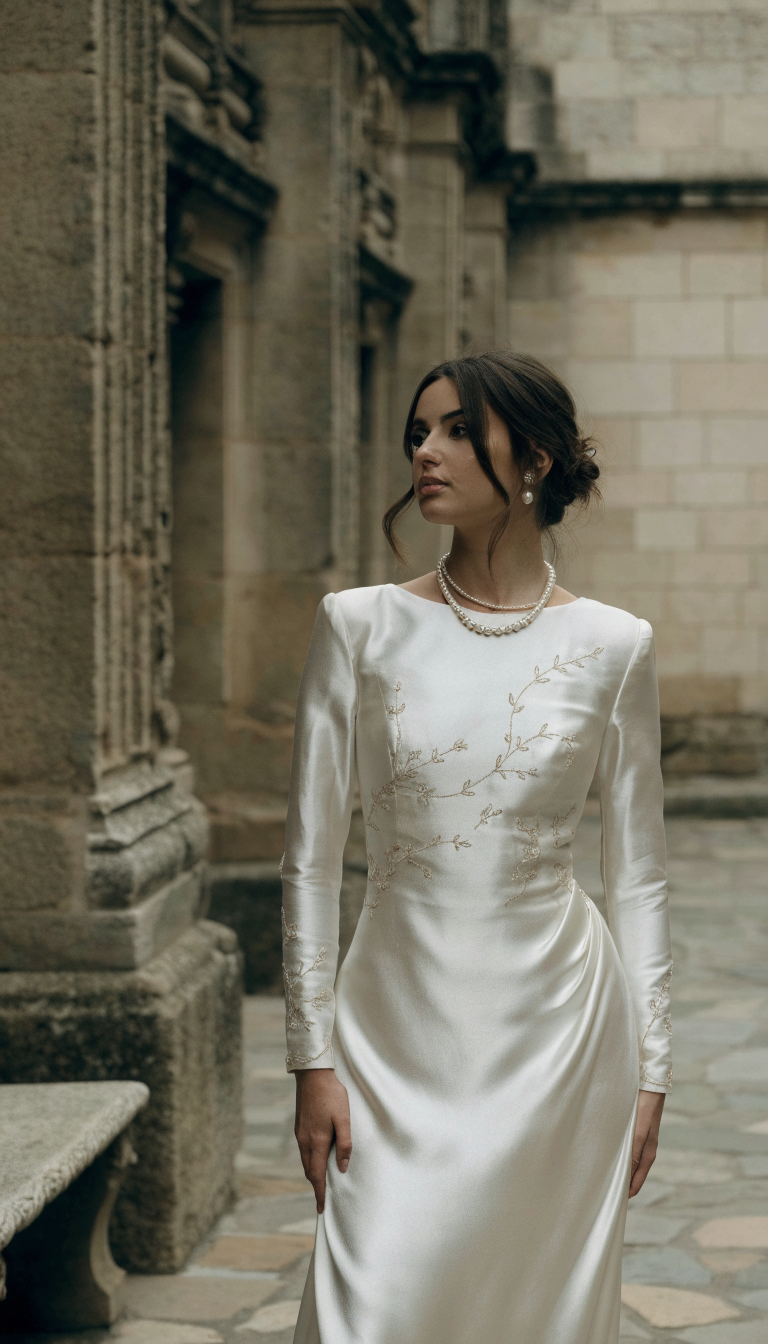
- Detail that photographs: The metallic thread catches light in both indoor and soft outdoor settings.
- Skin comfort: Ask about the backing of the embroidery; raised metallic work should be lined or carefully placed.
- Budget tier note: Hand embroidery typically places the gown in a higher price range than machine-applied motifs.
14. Lightweight Chiffon or Crepe for Warm Weather
When the venue is outdoors in warmer months, a medieval silhouette can be executed in chiffon, georgette, or lightweight crepe. Bell or hanging sleeves still read clearly, and an A-line or empire skirt stays cool and mobile. The fabrics wrinkle more easily than structured silks, so a light steam before the ceremony and careful packing matter. A modest train is easier to manage than a heavy one in breeze and heat.
- Outdoor summer fit: Breathable layers reduce heat buildup during a long outdoor ceremony.
- Wrinkle recovery: Crepe holds shape better than pure chiffon; test how the sample looks after sitting.
- Undergarment visibility: Light colors and thin fabrics can show lines; bring the exact shapewear or bra you plan to wear.
15. Lace Overlay with Period Motifs
A lace overlay with botanical or geometric motifs over a silk or crepe base adds texture without the weight of velvet or brocade. The lace can cover the bodice and sleeves while the skirt remains simpler, or it can run the full length for a more continuous surface. Illusion or soft lace necklines keep the look modest when desired. The overlay is usually removable or lightly attached so alterations stay straightforward.
- Soft garden or chapel light: Lace photographs with depth against both greenery and stone.
- Layer breathability: Confirm the lining is present under the lace so the gown does not feel scratchy or transparent in motion.
- Repair ease: Small lace repairs are often simpler than reweaving a patterned brocade if a snag occurs.
Coverage, Necklines, and Finishing Layers
16. Square Neckline with Long Sleeves
A structured square neckline paired with long sleeves creates a clean, late-medieval line that works across a range of shoulder widths. The square opening frames the collarbone while the sleeves provide coverage and support. Crepe or silk holds the neckline edge firmly so it does not gape. The combination pairs well with a simple circlet or a short veil tucked into an updo.
- Shoulder and collarbone balance: The square shape distributes visual weight evenly across the upper body.
- Bra compatibility: Wide straps or a built-in cup option keep support independent of the neckline.
- Jewelry scale: A single pendant or small earrings usually read better than a heavy necklace against the clean edge.
17. High Neck or Modest Coverage Style
A high neck or softly covered neckline with long sleeves offers a refined, modest option that still feels bridal when the fabric and details are chosen carefully. Lace, smooth crepe, or a lightly embroidered silk all work; the key is keeping the fabric close but not restrictive. This style photographs clearly in formal or religious venues and pairs naturally with a circlet rather than a dramatic veil.
- Formal or religious setting: Full coverage meets many traditional dress codes without looking costume-like.
- Heat and layers: In warmer weather, choose a breathable lining and consider whether a detachable outer layer is available.
- Hair and headpiece clearance: Braids or an updo sit cleanly above a high neck; test the exact style with the gown.
18. Hooded Cape or Mantle Layer
A separate hooded cape or short mantle worn over a simpler base gown adds instant medieval presence for the processional and photos, then can be removed for the reception. Velvet, wool-blend, or a structured silk works for cooler weather; a lighter chiffon or lace version suits milder days. The base gown underneath can be an A-line or column style so the overall look remains cohesive once the layer comes off.
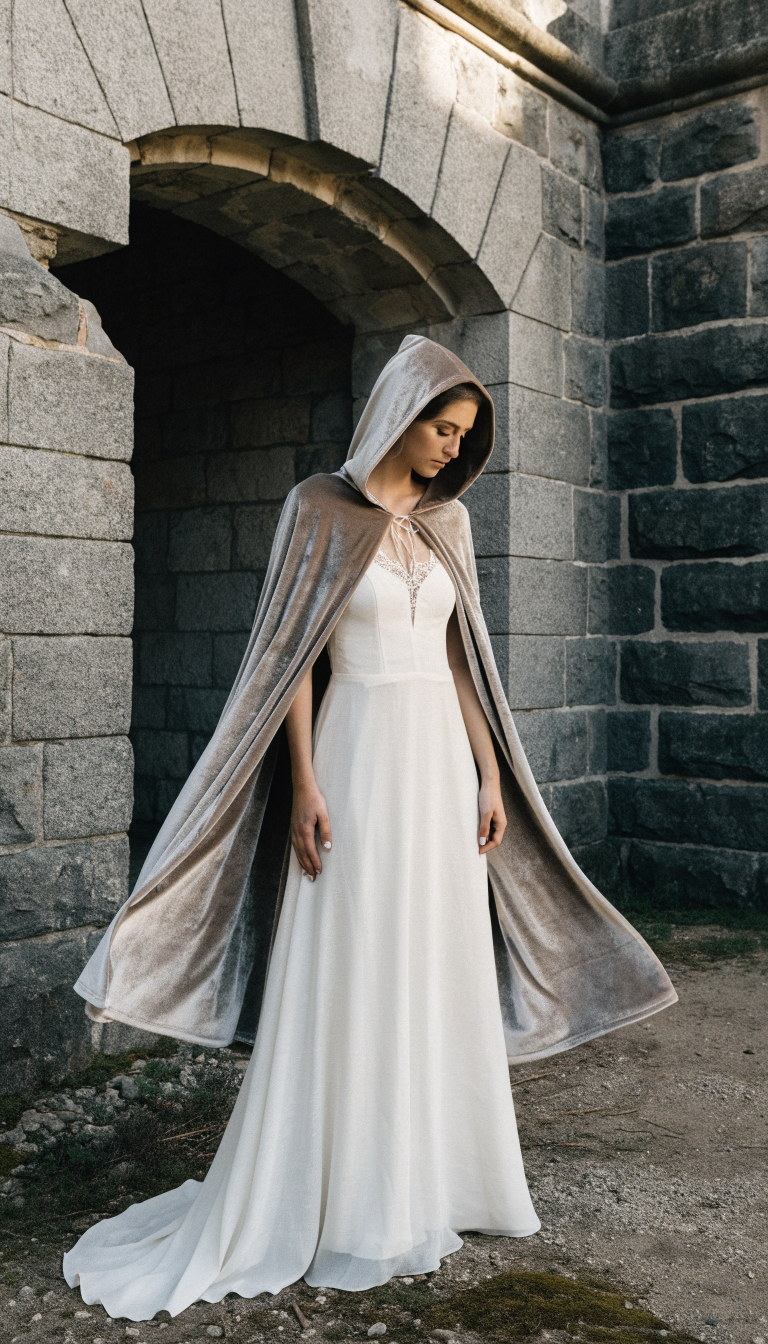
- Entrance and photo moment: The cape creates a strong silhouette for the walk down the aisle or outdoor portraits.
- Removal timing: Decide in advance whether the cape stays for the ceremony only or is removed before the first dance.
- Attachment and weight: Lightweight closures or a simple hook keep the layer secure without adding bulk at the shoulders.
These 18 medieval wedding dress styles range from subtle sleeve details to full layered looks, so you can choose how far the historical reference goes. Bring the shoes, undergarments, and any headpiece you plan to wear to every fitting, and test sitting, walking stairs, and raising your arms. Start shopping early enough to allow for made-to-order timelines and the alterations that fine-tune the fit for your specific venue and day.
FAQ
How far in advance should I order a medieval-inspired wedding dress? Most made-to-order bridal gowns require several months; specialty or custom medieval styles can take longer if embroidery or unusual fabrics are involved. Order as soon as the date and venue are set so fittings and alterations have enough time.
Can I find medieval wedding dress styles off the rack or at sample sales? Yes. Some ready-to-wear lines offer bell sleeves, lace-up details, or high necks that can be adapted. Sample sales and pre-owned gowns can also provide starting points that a seamstress can modify with added sleeves or a belt.
How many fittings are typical? Expect an initial fitting for measurements and style confirmation, then at least two alteration fittings after the gown arrives. More complex sleeves or layered pieces may need an extra session to check movement and closures.
Do medieval-inspired dresses always require a bustle? Not always. A modest train on an A-line or column can often be looped or lightly bustled. Full skirts with longer trains usually need a proper bustle so the fabric does not drag during the reception.