
Garden ceremonies favor dresses that stay light in sun or breeze, move cleanly across grass or paths, and photograph well in natural light without fighting the setting. The right silhouette, fabric, and hem keep you comfortable from vows through dancing while matching how formal or relaxed your particular garden feels. This list groups 18 garden wedding dress options by silhouette, neckline and sleeve choices, fabric and texture preferences, and practical lengths or features so you can narrow choices against your venue terrain, season, and preferred level of structure. Approximate dress prices vary widely by designer, fabric, region, and whether the gown is made-to-order or off-the-rack; alterations are almost always a separate cost.
Garden-Friendly Silhouettes
1. Soft A-Line Silhouette for Easy Walking
A fitted bodice that flares gently from the natural waist creates volume without bulk, so the skirt clears uneven ground more readily than a full ball gown. Soft A-lines photograph with balanced proportions against hedges or lawns and let you sit and stand without the skirt bunching awkwardly. Chiffon or lightweight organza skirts catch air without dragging, while a structured bodice keeps the top half polished for daytime or early-evening light.
- Path and lawn clearance: The gradual flare reduces snagging on low plantings compared with wider skirts.
- Skirt fabric movement: Look for layered chiffon or organza that settles rather than billowing uncontrollably.
- Hemming for shoes: Plan the hem with the exact heel height you will wear so the edge does not brush grass.
2. Fit-and-Flare Shape with Controlled Volume
The bodice and hip stay close through the thigh before the skirt opens, giving definition that reads clearly in photos yet still allows a walking stride. This shape works on both manicured estate lawns and slightly wilder gardens because the lower flare is narrower than a classic A-line. Crepe or soft satin in the bodice holds its line, while a lighter skirt fabric prevents heat buildup during longer outdoor photos.
- Dance-floor range of motion: The flare starts low enough that you can step freely once the hem is set.
- Bodice support notes: Built-in cups or light boning keep the fitted section secure without heavy structure.
- Alteration focus areas: Expect attention on the hip and flare transition so the curve sits evenly.
3. Empire Waist for Breezy Outdoor Days
The seam sits just below the bust so the skirt falls in an unbroken line, creating airflow around the torso and simplifying movement over grass. Empire styles pair well with chiffon or georgette that drapes rather than clings, and they accommodate a range of torso lengths without heavy waist cinching. The higher waistline also keeps the bulk of the fabric away from the legs when you walk or sit on garden chairs.
- Warm-weather airflow: The raised seam lets air circulate under the skirt more freely than a natural-waist fit.
- Undergarment pairing: A strapless or convertible bra with smooth cups works cleanly under the high line.
- Sitting comfort check: Sit and stand during the fitting to confirm the fabric does not pull at the underbust.
4. Tiered Skirt for Layered Garden Movement
Horizontal tiers or ruffles add texture that echoes layered plantings while remaining lighter than a solid full skirt. Soft tulle or chiffon tiers catch light and breeze without the stiffness of traditional ball-gown construction, making them suitable for both relaxed and semi-formal garden settings. The layers can be graduated so the hem still clears the ground once hemming is complete.
- Breeze response: Tiers flutter independently, so the overall silhouette stays lively without becoming a sail.
- Weight distribution: Multiple light layers spread volume so the dress feels less heavy than a single full skirt.
- Cleaning considerations: Ask how the tiers are finished; some edge treatments pick up more debris outdoors.
5. Sheath or Column for Minimalist Gardens
A straight fall from shoulder to hem keeps the line clean against architectural hedges or modern garden rooms. Lightweight crepe or fluid satin skims rather than clings, and the narrow shape is easy to manage on narrow paths or stone terraces. Many column dresses include a subtle side slit or slight flare at the knee so walking remains unrestricted once the hem is set to your shoes.
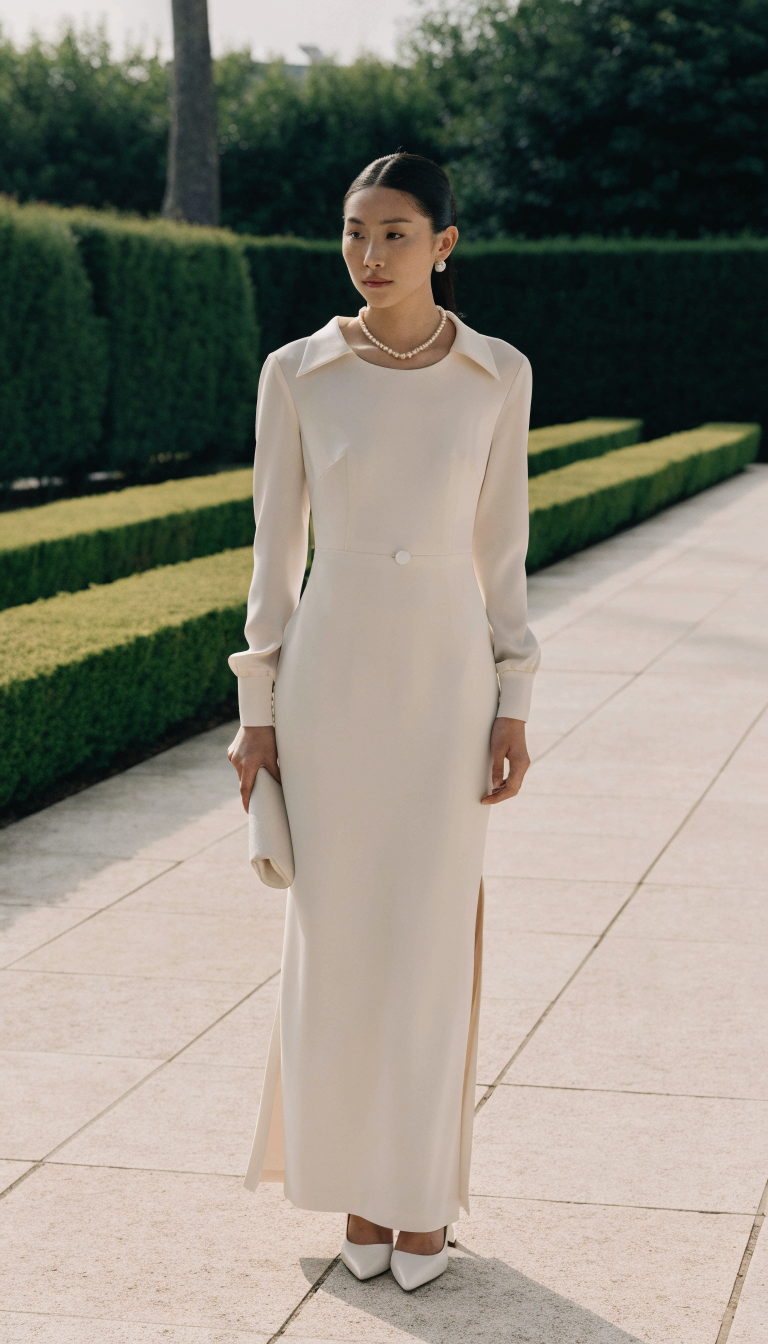
- Narrow-path navigation: The close silhouette reduces contact with bordering plants or furniture.
- Fabric handfeel: Seek crepe or charmeuse that moves with the body yet holds a smooth surface in photos.
- Slit or ease check: Confirm you can take a full stride and sit without the fabric binding at the knee.
6. Soft Ball Gown in Lightweight Layers
Volume comes from multiple soft tulle or organza layers rather than stiff taffeta, so the skirt holds shape yet compresses enough to sit and move. The fitted bodice balances the skirt so the overall proportions stay elegant in open garden light rather than overwhelming the setting. A shorter or lightly bustled train keeps the hem practical once you leave the ceremony area.
- Volume without stiffness: Test how the layers compress when you sit; true soft tulle recovers quickly.
- Train management: A simple bustle or wrist loop lets you lift the back for photos or dancing.
- Heat and weight note: Even light layers add some warmth; try the dress in conditions close to your expected temperature.
Necklines and Sleeve Choices
7. Off-the-Shoulder Neckline for Soft Coverage
The neckline rests just below the collarbones, framing the shoulders while still providing a continuous fabric line across the upper chest. Soft satin or lace versions sit comfortably without digging, and the style pairs well with detachable sleeves if you want coverage that can be removed later. In garden light the open shoulder reads as romantic without requiring a high neck or heavy bolero.
- Strap security test: Raise your arms and lean forward to confirm the neckline stays in place.
- Sleeve add-on option: Many off-the-shoulder dresses accept a light chiffon or lace sleeve for sun or chill.
- Bra compatibility: A strapless bra with good grip or adhesive options works under most versions.
8. V-Neck with Illusion Panel for Air and Structure
A moderate V balanced by a sheer illusion insert creates visual interest while still offering coverage and support. The illusion (a fine mesh) can be edged in lace so the neckline looks finished rather than unfinished, and it photographs clearly against green backgrounds. This combination works in both warmer and cooler garden settings because the mesh adds almost no weight.
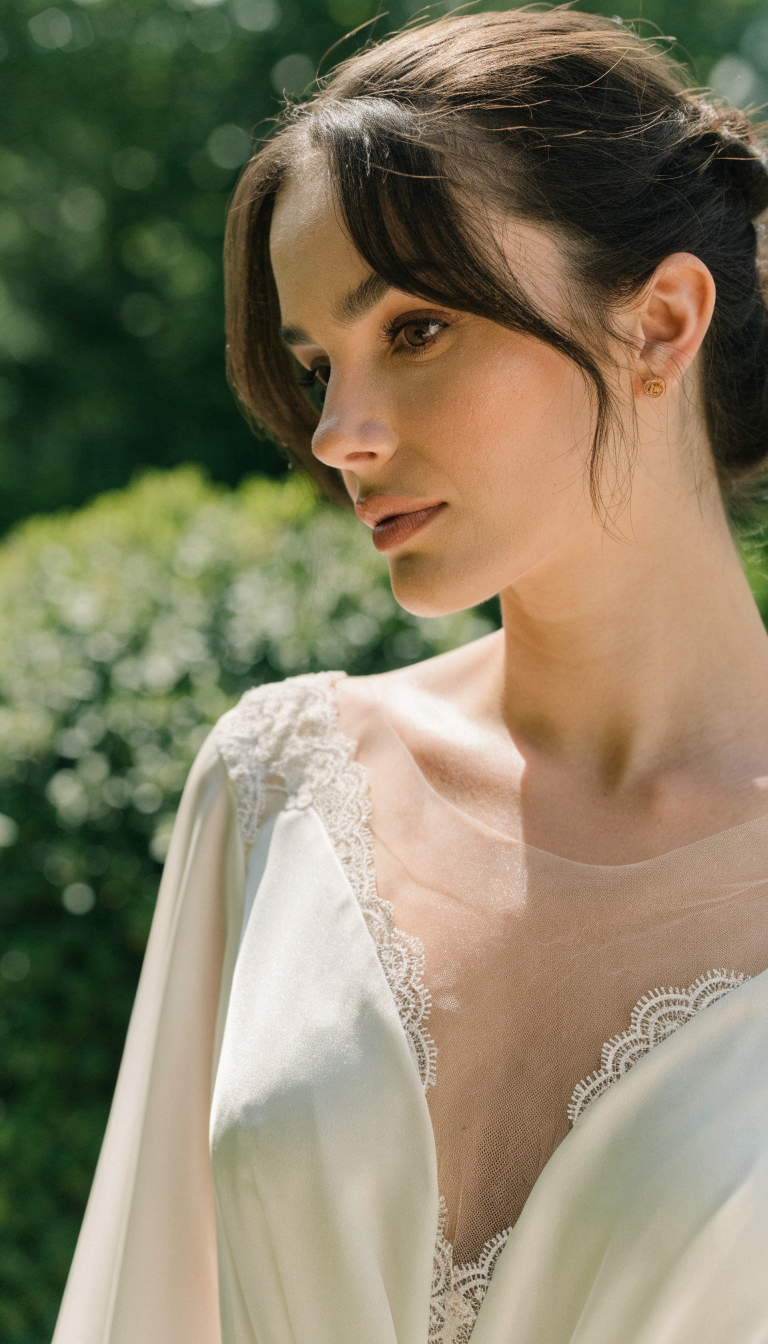
- Support under the V: Look for built-in cups or a low-cut bra that stays hidden at the lowest point of the V.
- Mesh behavior: Quality illusion stays smooth; cheaper versions can buckle when you move.
- Sun and breeze balance: The open neckline ventilates while the panel prevents the edges from shifting.
9. Flutter or Cap Sleeves for Light Protection
Short, soft sleeves add a small amount of shoulder coverage without the heat of long sleeves, useful when the ceremony runs into brighter afternoon light. Flutter versions in chiffon or organza move with the arms and photograph as gentle movement rather than static structure. They also soften the transition from bare shoulder to bodice on dresses that would otherwise feel very open.
- Arm mobility: Swing and raise your arms; the sleeves should not pull the bodice out of place.
- Fabric weight match: Choose a sleeve fabric similar in hand to the skirt so the pieces feel related.
- Removal possibility: Some styles are sewn on; others can be detached after the ceremony if you prefer.
10. Square Neckline for Clean Horizontal Lines
The straight-across neckline creates a defined upper edge that contrasts nicely with organic garden shapes and keeps the bodice looking structured. Wide straps or a built-in lining give reliable support, and the shape works with both lace overlays and plain crepe. In outdoor photos the geometric line stays crisp even when light is soft or dappled.
- Strap width comfort: Wider straps distribute pressure better during long standing periods.
- Posture and sitting: The square edge should not dig into the underarm when you sit or lean.
- Jewelry pairing: A simple chain or nothing at all usually reads cleaner than a heavy necklace.
Fabrics and Surface Details
11. Chiffon for Breathable, Fluid Movement
Chiffon is lightweight and semi-sheer, so it drapes in soft folds and allows air to pass through multiple layers. It photographs with gentle highlights rather than hard shine and recovers from sitting better than many crisp fabrics. A chiffon skirt over a smooth lining keeps the dress opaque while still feeling cool during warmer garden hours.
- Layer count and opacity: Ask to see the dress against strong light so you know how many layers are needed.
- Wrinkle recovery: Most chiffon shakes out after sitting; still steam rather than iron if creases appear.
- Wind behavior: The fabric moves freely; a light lining or under-layer prevents it from wrapping tightly.
12. Floral Lace Overlays for Texture Against Greenery
Lace with leaf or bloom motifs adds surface interest that echoes the surroundings without requiring a printed fabric. When placed over a soft lining the lace reads as delicate rather than heavy, and it catches natural light in a way solid fabrics often do not. Many garden-appropriate laces are cotton or nylon blends that breathe better than dense metallic versions.
- Lining color effect: An ivory or champagne lining changes how the lace appears more than the lace pattern itself.
- Edge finishing: Scalloped or raw-looking edges can catch on plants; smoother hems are easier outdoors.
- Alteration skill needed: Matching lace motifs during hemming or taking-in requires an experienced seamstress.
13. Organza for Light Volume That Holds Shape
Organza is crisp yet transparent, so it creates controlled volume in skirts or sleeves without the weight of satin. It holds a gentle structure in breezes and photographs with clear edges, making it useful when you want shape but not stiffness. Combined with a softer under-layer it stays comfortable for sitting and walking on mixed surfaces.
- Crispness versus softness: Pure silk organza is finer; polyester versions can feel slightly stiffer in heat.
- Static and cling: A light anti-static spray or under-layer keeps the fabric from sticking to itself.
- Volume test: Walk and turn to see whether the organza flares too widely for your path widths.
14. Three-Dimensional Floral Appliqués for Added Dimension
Raised flowers or leaves sewn onto the skirt or bodice catch light and create shadows that read clearly in outdoor photographs. They work especially well on otherwise simple silhouettes where you want texture without an all-over lace pattern. Placement matters: appliqués near the hem can be more vulnerable to grass contact than those higher on the skirt.
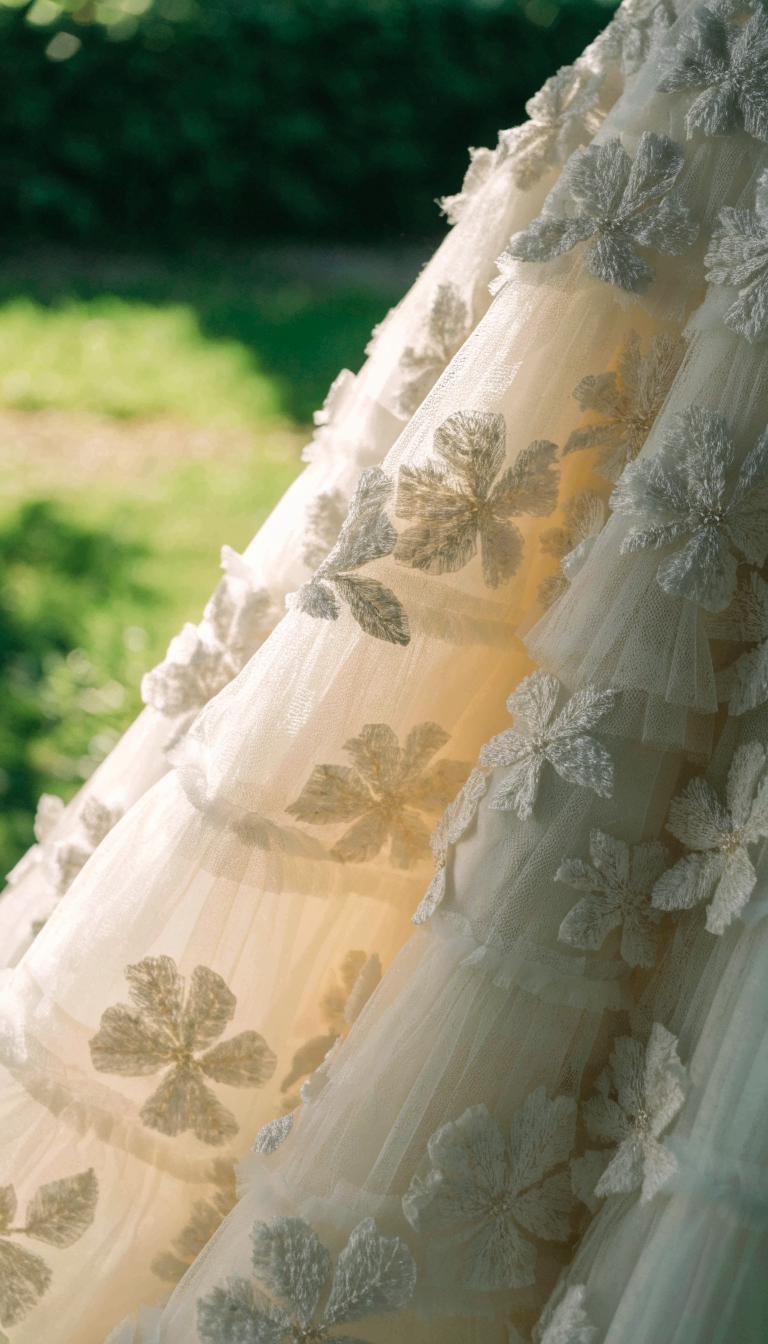
- Attachment security: Gently tug a few appliqués in the fitting to confirm they are well sewn.
- Weight addition: Dense clusters add noticeable weight; distribute them so the dress still feels balanced.
- Cleaning caution: Many appliqués cannot be steam-cleaned aggressively; ask for care instructions early.
Lengths and Practical Features
15. Tea-Length Hem for Ground Clearance
The hem ends mid-calf to just above the ankle, so the fabric never touches grass, dew, or garden paths. This length photographs as polished rather than casual when the silhouette is still structured, and it simplifies movement, sitting, and restroom visits. Tea-length versions in chiffon or lace often need less complex hemming than floor-length gowns with trains.
- Exact length decision: Decide the final hem with the shoes you will actually wear on the day.
- Proportion check: The shorter hem can make the bodice appear longer; confirm the balance looks intentional.
- Re-wear potential: Many tea-length styles transition more easily to other events after the wedding.
16. Clean Floor-Length Hem with a Simple Bustle
A hem that just skims the ground once you are in shoes avoids pooling while still giving a classic bridal line. For any train, a bustle (a set of loops or buttons that lifts the back fabric) keeps the skirt manageable after the ceremony. Most made-to-order gowns allow the bustle to be planned during alterations so it matches the existing construction.
- Bustle lesson timing: Schedule the final fitting so someone in your party can practice fastening the bustle.
- Hem evenness: Walk on both flat and slightly uneven surfaces during fittings to catch dips.
- Train length choice: A sweep or chapel train is usually easier on grass than a cathedral length.
17. Functional Pockets in the Skirt
Hidden pockets sewn into the side seams give a place for a small item or simply let your hands rest naturally during photos and reception moments. They work best in skirts with enough volume or structure that the pocket does not pull the silhouette out of line. Many modern bridal patterns include them as an option, and a skilled seamstress can sometimes add them during alterations.
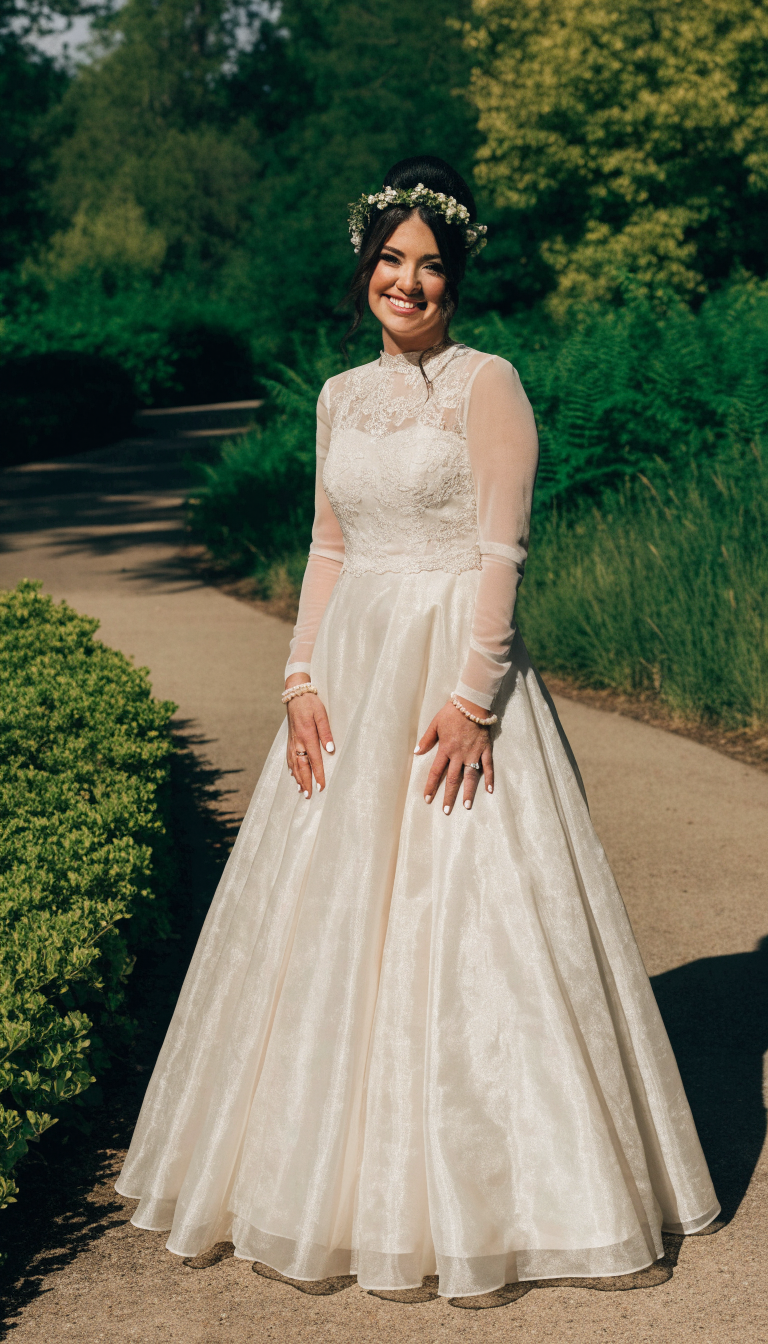
- Pocket depth and placement: Reach into them while standing and sitting to confirm they stay flat.
- Fabric weight effect: Heavy items will show; design the pockets for lightweight use only.
- Seam reinforcement: Ask that the pocket openings be reinforced so they do not stretch open over time.
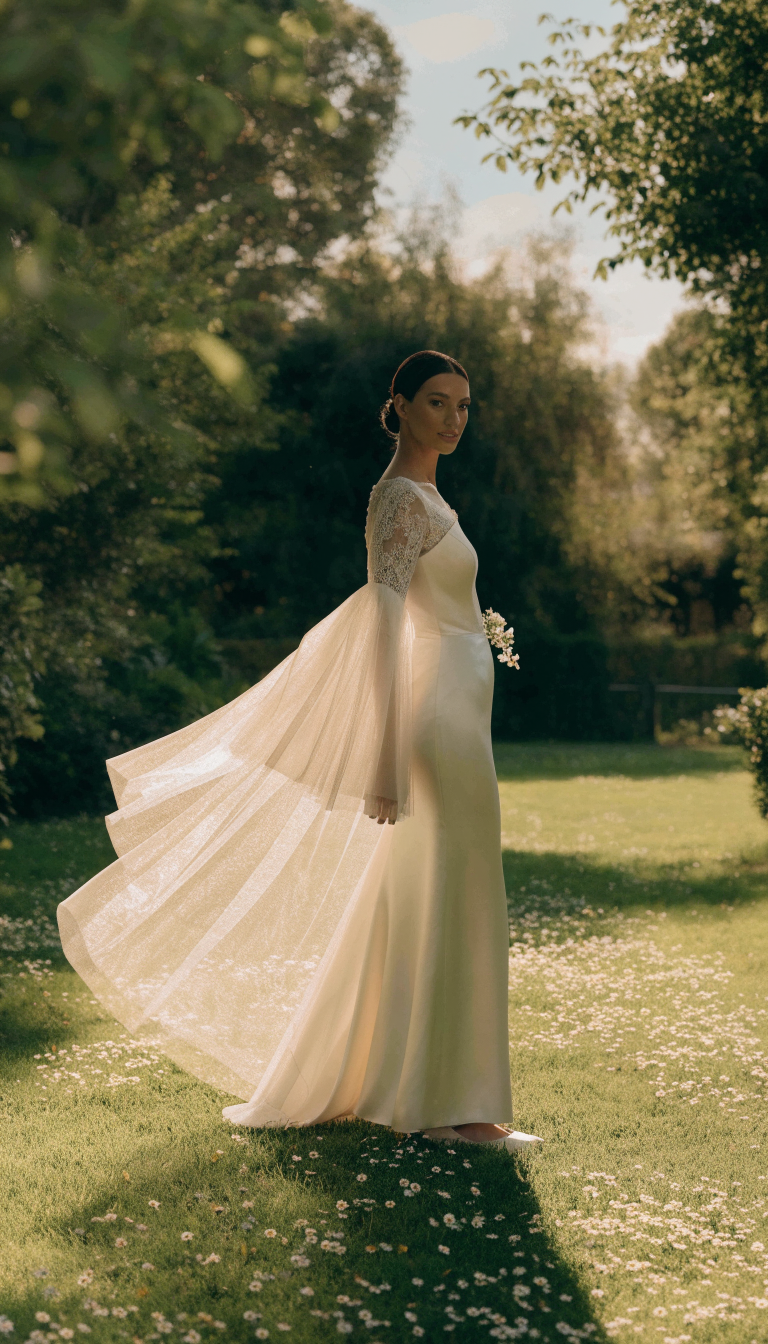
18. Detachable Overskirt or Cape for Changing Conditions
A separate overskirt or light cape adds volume or coverage for the ceremony and can be removed for the reception, giving two looks without a second dress. Lightweight tulle or chiffon versions stay cool and can be stored easily once taken off. Because the piece is separate, it can be ordered or added later and does not change the base dress timeline as much as a permanent redesign would.
- Attachment method: Hooks, buttons, or a simple tie should be secure yet quick to release.
- Storage during the day: Confirm you have a clean place to keep the removed piece until you want it again.
- Coordination of fabrics: Match the hand and color of the overskirt to the main dress so the transition looks intentional.
Most garden wedding dresses are made to order, so allow several months from order to arrival before alterations begin; two or three fittings are typical once the gown is in hand. Bring photos of your specific garden paths, seating, and expected light to the salon so the stylist can assess movement and hem needs in context. Start with the silhouette and fabric that feel right for your climate and terrain, then refine neckline, length, and any detachable pieces during fittings.
Frequently Asked Questions
How far in advance should I order a garden wedding dress? Most made-to-order gowns need four to six months or longer to arrive, after which alterations require another six to twelve weeks and multiple fittings. Begin shopping eight to twelve months before the date if your timeline allows, and confirm the designer’s current lead time before you place the order.
Do I need a bustle for a garden wedding dress? If the dress has any train or a hem that could touch the ground, a bustle keeps the fabric off grass and out of the way for dancing and photos. The bustle is usually added or finalized during alterations, and someone in your party should practice fastening it before the wedding day.
What shoes work best with a garden wedding dress? Block heels, wedges, or dressy flats with a stable sole handle grass and uneven paths better than thin stilettos. Bring the exact shoes to every fitting so the hem can be set correctly and you can test walking on a surface similar to your venue.