
Satin catches light along seams and folds, so the cut and the weight of the fabric determine whether a gown photographs as intentional or as a series of pulls and wrinkles. Choosing the right combination of silhouette and satin type—duchesse for structure, charmeuse for drape, mikado for crisp lines—affects how the dress sits during a ceremony, how it moves on a dance floor, and how much alteration work it needs. The list below groups styles by silhouette first, then neckline and sleeve options, then practical details, so you can shortlist by venue, season, and how much time you want to spend in fittings.
Classic Silhouettes
1. Duchesse Satin Ball Gown
A fitted bodice paired with a full skirt in heavy duchesse satin creates volume that holds its shape without relying only on crinoline. The fabric’s firm hand keeps the skirt from collapsing when you sit, which suits formal indoor ceremonies where the gown is the visual centerpiece. Duchesse reads as polished rather than glossy under most lighting, and the weight of the skirt gives a steady walk down the aisle. Most versions need a defined bustle for the reception so the train does not pool underfoot while dancing.
Holds volume cleanly: Duchesse keeps architectural folds without extra underlayers in moderate climates. Formal indoor match: Works well in churches or ballrooms where the skirt has room to move. Bustle planning: Expect multiple fittings to set the buttons or ties so the skirt can be lifted after photos.
2. Charmeuse Satin Slip Dress
Lightweight charmeuse falls in soft folds that follow the body rather than fighting it, producing the fluid line associated with 1990s-inspired gowns. Bias-cut versions glide over the hips and flare slightly at the hem, making them practical for destination or courthouse ceremonies where a heavy skirt would feel excessive. The fabric shows undergarment lines easily, so a well-lined version or a simple built-in slip is usually required. Because charmeuse wrinkles when compressed, plan for a steamer on the day and keep sitting time short before formal photos.
Fluid for warm weather: Lighter weight reduces heat compared with structured satins. Bias movement: Cut on the diagonal so the fabric shifts rather than clings at the knees. Line check in fitting: Walk and sit to confirm no visible edges from shapewear or a slip.
3. Mid-Weight Satin A-Line
The bodice fits through the natural waist and the skirt flares gradually, giving the structured sheen of satin without the circumference of a ball gown. Mid-weight satin or crepe-back satin provides enough body for the flare while remaining easier to walk and sit in than heavier options. This silhouette photographs clearly from a distance and works across garden, hotel, and church settings. Alterations typically focus on the waist seam and hem length rather than extensive reshaping.
Balanced daily wear: Enough volume for presence, low enough for car travel and dancing. Venue flexibility: Reads formal without dominating smaller ceremony spaces. Hem and waist focus: Standard alterations stay simpler than full skirt restructuring.
4. Mikado Mermaid Silhouette
Mikado’s crisp hand and lower sheen create clean lines that follow the body to the knee before flaring, avoiding the high shine that can emphasize every seam in brighter satins. The fabric holds the fitted section without excessive stretch, which suits brides who want a defined shape for photos but still need room to walk. Because the flare begins lower, sitting and restroom breaks require practice with the skirt. Lead times for made-to-order versions often run several months, so schedule the first fitting early enough for two or three adjustment rounds.
Crisp line control: Mikado keeps the hip-to-knee section smooth without cling. Movement practice: Test stairs and sitting before committing, as the flare starts lower. Timeline note: Plan several months for production plus fittings if ordering custom.
5. Stretch Satin Fit-and-Flare
A small percentage of stretch fiber lets the fabric move with the body through the hips while still holding a clean satin face. The flare begins around the upper thigh rather than the knee, giving more step room than a classic mermaid. This combination works for active receptions or outdoor venues where you expect to dance or walk on uneven ground. The stretch reduces some alteration pressure around the hips, though the waist and hem still need precise fitting.
Step room built in: Higher flare point than mermaid styles for easier walking. Outdoor practicality: Stretch helps the fabric recover after movement on grass or sand. Hip fit check: Confirm recovery after sitting so the satin face stays smooth.
6. Bias-Cut Satin Sheath
Cut on the bias, the satin drapes diagonally and skims rather than grips, producing a column that moves when you walk. Charmeuse or lightweight satin is the usual choice because heavier grades resist the bias drape. The style suits minimalist ceremonies or evening receptions where the fabric itself is the detail. Undergarment seams show readily, so many brides choose a fully lined version or skip separate shapewear below the waist.
Diagonal drape: Bias cut lets the fabric shift with each step instead of locking in place. Minimalist settings: Clean enough for courthouse or small indoor venues. Lining preference: Full lining reduces the need for separate underlayers that create lines.
7. Satin Trumpet Gown
The silhouette stays close through the thigh and opens in a controlled flare below the knee, shorter in transition than a mermaid and less gradual than a fit-and-flare. Duchesse or mid-weight satin holds the fitted portion and the opening without collapsing. It photographs with a clear curve at the lower leg while still allowing a normal walking stride once the hem is set. A modest slit or a carefully placed bustle helps with stairs and dancing.
Controlled flare point: Opens lower than an A-line but higher than many mermaids. Stair and dance test: Walk a short staircase in the sample to check the opening. Slit or bustle option: Either detail eases movement without changing the overall line.
8. Empire Satin Dress
The seam sits just under the bust and the skirt falls in a soft column or gentle A, often in lighter satin that does not add bulk at the waist. This placement works for outdoor ceremonies in warmer months because the fabric does not press tightly through the midsection. Charmeuse or mid-weight satin both appear in this cut; the lighter version moves more freely. Hemming is usually straightforward, though the high seam means bust support must be built into the bodice or handled with a compatible strapless option.
Under-bust placement: Reduces pressure through the waist for longer wear. Warmer-month option: Lighter satin versions feel less insulating than structured gowns. Bodice support check: Confirm cups or boning hold the bust without separate straps.
Neckline and Sleeve Variations
9. Off-the-Shoulder Satin A-Line
The neckline rests across the upper arms, leaving the shoulders bare while the mid-weight satin bodice provides structure. This style suits garden or late-afternoon ceremonies where the light is soft enough that the satin sheen does not overexpose. Because the fabric sits off the shoulder, the bodice must be fitted precisely at the underarm so it does not slip. Many versions include light boning or a built-in band for stability during dancing.
Soft-light venues: Garden or evening light keeps the sheen even. Underarm stability: Precise fitting prevents the neckline from shifting when arms move. Dancing security: Light internal structure keeps the bodice in place without straps.
10. Strapless Satin Mermaid
A clean strapless neckline paired with a fitted satin body emphasizes the fabric’s surface and the curve of the silhouette. Duchesse or crepe-back satin holds the bodice without heavy embellishment. The absence of straps means the bodice relies on boning and a precise bust fit; many brides add a light adhesive or rely on well-placed cups. Heat can build against the skin in warmer venues, so a breathable lining helps.
Surface-focused look: Strapless cut lets the satin face read clearly in photos. Boning reliance: Internal structure replaces strap support, so fit must be exact. Lining for heat: A light lining reduces direct contact in summer or indoor warmth.
11. Long-Sleeve Satin Sheath
Full-length sleeves in mid-weight or stretch satin cover the arms while the body remains a clean column. This combination works for winter ceremonies or cooler indoor venues where extra coverage is practical. The sleeves must be cut with enough ease at the elbow for movement; otherwise they pull when arms bend. Alterations often include sleeve length and underarm ease in addition to the usual waist and hem work.
Cooler venue coverage: Sleeves add warmth without a separate wrap. Elbow ease test: Bend and reach in the sample to confirm the sleeve does not bind. Extra alteration points: Sleeve length and underarm often need adjustment alongside the body.
12. Detachable Sleeve Satin Dress
A strapless or thin-strap bodice in satin is paired with separate sleeves that can be removed after the ceremony. The sleeves are usually made in matching satin or a lighter complementary fabric so they can be set aside for the reception. This approach suits ceremonies with a more formal dress code followed by a relaxed evening. The attachment points—usually buttons or hooks at the shoulder—must be secure enough for the processional but easy to release later.
Ceremony-to-reception shift: Sleeves stay on for formal photos and come off for dancing. Attachment security: Test the hooks or buttons so they hold during the aisle walk. Matching fabric weight: Sleeves cut from the same satin avoid a visible texture difference.
13. Square Neck Satin A-Line
A straight-across neckline in structured satin frames the collarbone and creates a geometric line that photographs cleanly. Mid-weight or duchesse satin holds the edge without rolling. The style works in both traditional and modern venues because the neckline reads as intentional rather than trend-specific. Bust support is usually built in, and the neckline height can be adjusted slightly during alterations if needed for comfort.
Geometric photo line: The straight edge stays distinct under different lighting. Edge stability: Heavier satin prevents the neckline from curling or stretching. Built-in support: Most versions include cups so separate straps are unnecessary.
14. High-Neck Satin Column
A bateau or modest high neckline in satin covers the collarbone and pairs with a straight or gently flared skirt. This cut suits church ceremonies or venues with a more covered dress code. Charmeuse or mid-weight satin both appear; the lighter option drapes more softly at the neck. The high line means the back closure—often buttons or a zipper with a cover—needs careful fitting so it lies flat.
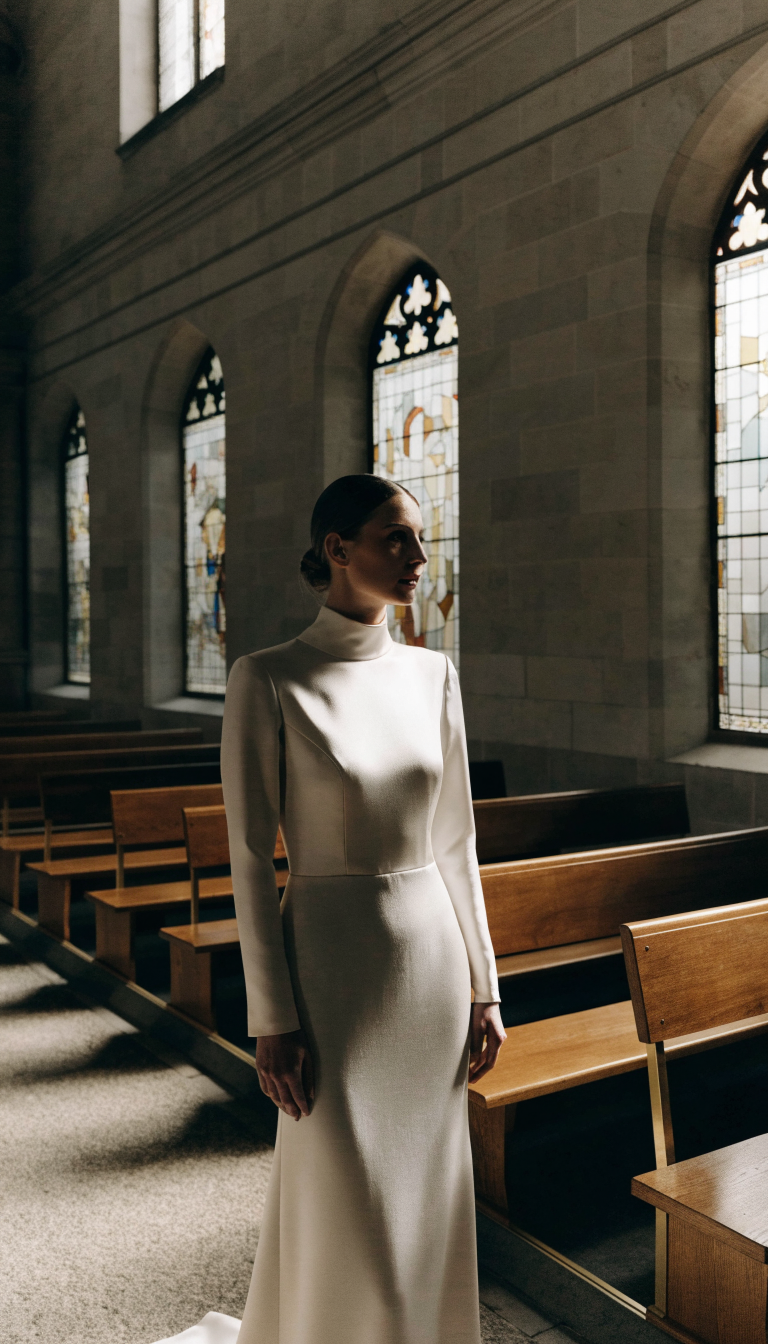
Covered ceremony fit: Meets modest dress codes without added layers. Neck drape check: Confirm the fabric sits smoothly rather than pulling at the base of the neck. Back closure detail: Buttons or a covered zipper should lie flat after the final fitting.
Practical Details and Features
15. Basque Waist Satin Ball Gown
The waist seam dips to a point at the center front, lengthening the torso visually while the full skirt in duchesse satin provides volume. This construction suits formal indoor settings where the pointed waist creates a clear focal line. The dipped seam requires precise alteration so it sits correctly on the body; a mismatch shows immediately in satin. Most versions include a full lining and internal structure to support the skirt weight.
Pointed waist line: The dip creates a longer torso appearance in photos. Precision fitting: The center point must sit exactly or the satin pulls. Internal support: Boning and lining handle the skirt weight during long wear.
16. Satin A-Line with Side Pockets
Functional pockets set into the side seams of a mid-weight satin A-line let you carry small items without a separate bag. The pocket bags are usually cut from a lighter fabric so they do not add bulk that shows through the satin. This detail works for garden or outdoor ceremonies where you may want a place for tissues or a phone during the processional. The pocket opening must be reinforced so the satin does not stretch or tear at the seam.
Hands-free option: Pockets hold essentials during the ceremony and photos. Hidden construction: Lighter pocket bags prevent visible bulk under the satin. Seam reinforcement: Extra stitching at the opening keeps the satin from giving way.
17. Illusion Neckline Satin Gown
A sheer illusion panel at the neckline or back is layered over a satin bodice, creating coverage while keeping the satin as the main visual fabric. The illusion is usually soft tulle or mesh that does not compete with the satin sheen. This combination suits venues where a higher neckline is preferred but a fully opaque high neck feels heavy. The sheer section requires careful steaming so it does not wrinkle against the satin underneath.
Coverage without weight: Illusion adds modesty while the satin remains the focus. Layer steaming: The sheer panel needs gentle steaming so it lies smooth over the satin. Neckline height flexibility: The illusion can be adjusted slightly in alterations for comfort.
18. Cowl Neck Charmeuse Slip
A soft cowl drapes across the neckline in lightweight charmeuse, adding movement without structure. The fabric falls in gentle folds that shift when you walk, suiting evening or destination ceremonies where a fluid look is preferred. Because the cowl is cut on the bias in many versions, the neckline sits differently depending on posture; a fitting should include standing, sitting, and a short walk. A light lining keeps the cowl from becoming transparent under direct light.
Soft fold movement: The cowl shifts with walking rather than staying fixed. Posture test: Check the drape while standing straight and while seated. Light lining: Prevents the thin charmeuse from reading as sheer in bright conditions.
19. Satin Dress with Removable Overskirt
A fitted satin base—often a sheath or mermaid—is paired with a separate overskirt in matching or complementary satin that can be removed after the ceremony. The overskirt adds volume for formal photos and the processional, then comes off for easier dancing. Attachment is usually at the waist with hooks or a simple tie system. This approach works when the ceremony and reception have different formality levels or when the venue has limited space for a full skirt all evening.
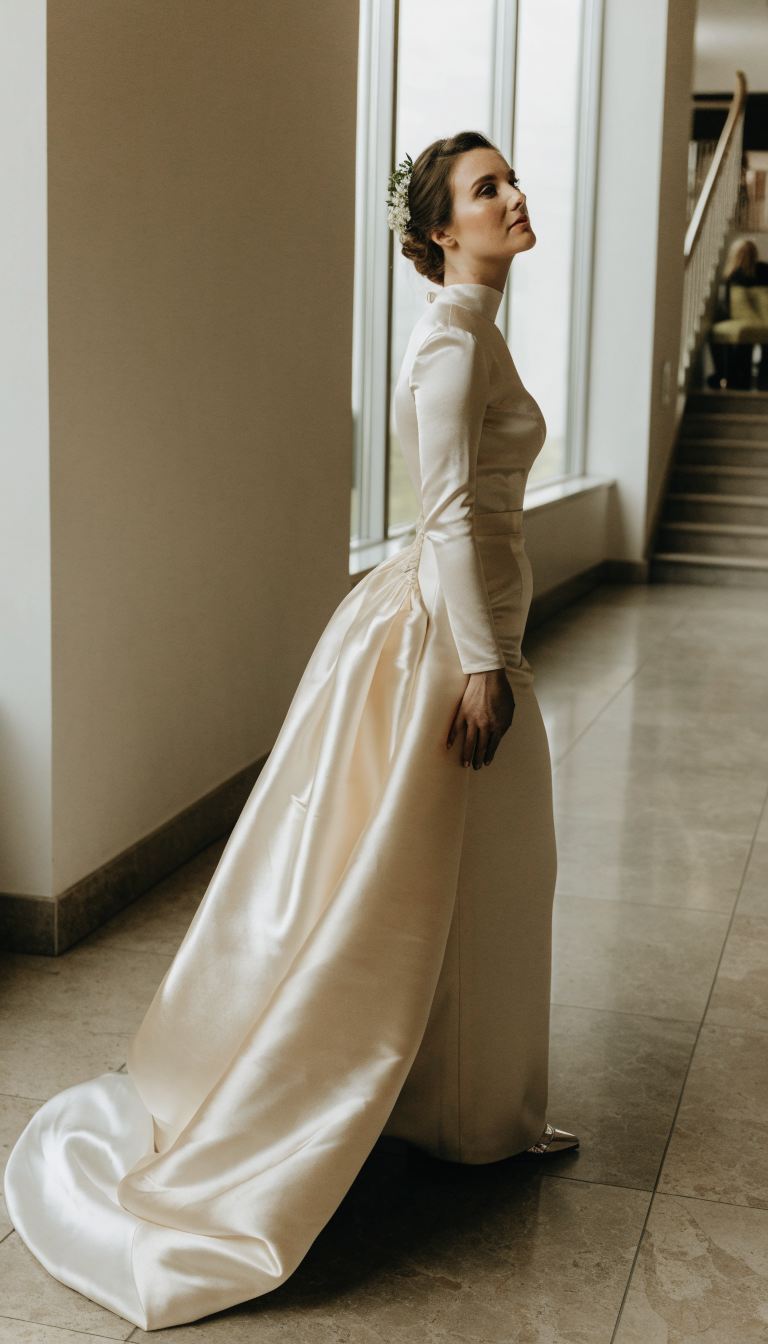
Two-look option: Volume for the ceremony, simpler movement for the reception. Waist attachment: Hooks or ties should release cleanly without damaging the base dress. Matching sheen: The overskirt fabric should sit at a similar sheen level to avoid contrast.
20. Minimalist Satin Courthouse Dress
A simple sheath or tea-length style in mid-weight satin keeps the fabric as the only detail, suitable for a civil ceremony followed by a small gathering. The shorter length or clean column reduces fabric management in small spaces and makes sitting at a restaurant table straightforward. Charmeuse or crepe-back satin both work; the choice depends on how much drape versus structure is preferred. Off-the-rack or sample versions are more common in this category, which can shorten the timeline compared with full made-to-order gowns.
Small-space practicality: Less fabric to manage in a courthouse or restaurant setting. Timeline advantage: Samples and ready-to-wear options are more available than elaborate gowns. Seam visibility: Smooth satin means undergarment choices matter even in a simple cut.
21. Winter Satin with Matching Cape
A structured satin gown—often an A-line or modest ball gown—is paired with a separate cape or short bolero in the same fabric for outdoor or cold-weather ceremonies. The cape covers the shoulders and upper arms during the processional and can be removed indoors. Duchesse or mikado holds the cape’s shape so it does not collapse against the dress. The attachment is usually simple so the cape can be handed off after photos without affecting the gown underneath.
Cold-weather coverage: Cape adds warmth for an outdoor arrival without changing the gown. Shape retention: Structured satin keeps the cape from clinging or wrinkling against the dress. Easy removal: A simple closure lets the cape come off cleanly once indoors.
22. Tea-Length Satin Wedding Dress
The hem ends at mid-calf, reducing the amount of satin that needs managing while still providing the fabric’s characteristic sheen. Mid-weight or charmeuse satin both appear; the lighter version moves more freely at the shorter length. This style suits daytime garden ceremonies, courthouse weddings, or receptions where dancing and sitting are priorities. Hemming is usually the main alteration, and the shorter length makes shoe choice more visible, so bring the intended heels to the fitting.
Reduced fabric volume: Shorter hem simplifies walking, sitting, and restroom access. Daytime suitability: Works for garden or afternoon ceremonies without evening formality. Shoe visibility: The hem length shows more of the shoe, so test the pair during fittings.
Prices for satin wedding dresses vary widely by designer, fabric grade, construction, and region; alterations are almost always an additional cost. Most bridal gowns are made to order, so several months of lead time plus two to four fittings is a common timeline. When you visit a salon, wear the undergarments and shoes you plan to use, walk the length of the room, sit, and raise your arms. Those few minutes show how the satin behaves once the clamps come off and the day is underway.