
A romantic wedding dress relies on fluid lines, tactile fabrics, and details that photograph softly rather than sharply. These 18 romantic wedding dress options emphasize A-line flares, layered tulle, floral lace, and necklines that frame the collarbone or décolletage without stiffness. The right choice shapes how the gown feels during an aisle walk, a seated dinner, and a dance floor, plus how it holds up under heat or candlelight. Styles are grouped by silhouette, then neckline and sleeve treatments, then fabric and finishing details so you can match climate, venue formality, and how freely you need to move. Most gowns are made to order, so expect several months of lead time; alterations remain a separate cost that requires multiple fittings.
Soft Silhouettes
1. Soft A-Line with Floral Lace Bodice
An A-line silhouette sits close through the bodice and natural waist before opening into a gradual flare that reaches the floor. Floral lace across the bodice adds texture without weight, while a soft satin or mikado underlayer keeps the skirt from collapsing. The shape reads clearly in photographs from a distance yet leaves enough room at the hips for sitting and walking. In chiffon or lightweight tulle the skirt moves easily in a garden breeze; denser satin holds structure for a church aisle. The flare also simplifies hemming compared with more sculpted shapes.
Garden aisle ease Works well on grass or gravel because the skirt clears the ground once hemmed.
Sitting comfort check Test how the waist seam sits when you sit; excess fabric can bunch if the flare starts too high.
Hemming simplicity Most A-lines need only a straightforward hem and modest bustle, keeping alteration time shorter.
2. Layered Tulle Ball Gown
A ball gown pairs a fitted bodice with a full, structured skirt that creates volume from the waist outward. Multiple layers of tulle over a stiffer base give the skirt lift without the weight of heavy satin, so the gown still moves when you walk. Lace or embroidered appliqués scattered across the tulle add depth that catches light without feeling rigid. The silhouette photographs dramatically in both outdoor and ballroom settings, yet the layers can trap heat. A modest train is common and can be bustled for the reception.
Heat and weight note Layered tulle stays lighter than structured satin but still warms up under direct sun or crowded dance floors.
Bustle planning Ask how the train will be secured; a simple French bustle often works better than a complex American one for dancing.
Support undergarments Built-in cups or a separate strapless bra usually provide enough lift; test both with the gown on.
3. Empire Waist with Flowing Chiffon
The empire waist places the seam just below the bust so the skirt falls freely from that high point to the floor. Soft chiffon or georgette creates a fluid drape that skims the body and moves with every step, which feels lighter than a defined waist. The raised seam lengthens the torso visually and leaves the midsection unrestricted, useful for long ceremonies or warmer climates. Delicate lace at the bodice or a soft V-neck keeps the look romantic rather than Grecian-minimal. Because there is no tight waist, sitting and standing transitions stay easy.
Climate suitability Breathable chiffon suits outdoor or destination weddings where temperatures rise.
Undergarment lines Lightweight skirts can show seams; a smooth slip or seamless shapewear helps.
Shoe pairing The free drape pairs cleanly with low or moderate heels; very high shoes can disrupt the hem line.
4. Fit-and-Flare with Gentle Release
A fit-and-flare hugs through the bust, waist, and upper hips before releasing into a soft flare around the mid-thigh or knee. The release is milder than a classic mermaid, so walking and sitting remain practical while the silhouette still follows the body’s curve. Soft stretch crepe or lace over a light lining keeps the fabric fluid rather than compressive. The shape photographs well in motion and works for both garden and indoor venues. Alterations focus mainly on the hip and thigh area, so accurate measurements matter early.
Dance-floor range The moderate flare allows easier steps than a full mermaid while still showing movement.
Fitting accuracy Have the hip and thigh measured carefully; small changes affect comfort more than in looser silhouettes.
Fabric drape Look for crepe or soft lace that yields slightly rather than rigid satin that digs in.
5. Soft Mermaid with Lace Overlay
A soft mermaid follows the body closely through the hips and thighs before flaring below the knee, but a lace overlay softens the line so it feels less severe. The lace can be all-over or concentrated on the bodice and upper skirt, adding texture that photographs romantically in both daylight and evening light. Stretch underlayers help with movement, yet the close fit still limits large strides. A modest train is typical and benefits from a well-planned bustle. The style suits formal indoor venues more than very casual outdoor ones.
Movement trade-off Expect shorter steps and plan the bustle so the flare does not catch during dancing.
Lace stretch Choose a lace with some give so sitting does not feel restrictive.
Train length note A chapel-length train is usually easier to manage than a cathedral one on this silhouette.
6. Column Sheath with Romantic Lace
A column or sheath falls close to the body from shoulder to hem with little or no flare. When finished in soft lace or lightweight crepe with subtle floral motifs, the silhouette stays clean yet reads as romantic rather than severe. The narrow shape photographs elegantly in tight spaces and travels well for destination weddings. Because there is minimal volume, undergarment lines and fit become highly visible. Sitting requires a slit or enough stretch, and the hem must clear the ground cleanly once shoes are on.
Destination practicality Lightweight fabrics and a simple shape pack and steam more easily than voluminous gowns.
Sitting slit need Most sheaths need a discreet slit or stretch fabric so you can sit comfortably through dinner.
Undergarment precision Seamless shapewear or built-in cups prevent visible lines under close-fitting lace.
Romantic Necklines and Sleeves
7. Sweetheart Neckline with Soft Straps
A sweetheart neckline curves across the bust in a heart-like shape that frames the décolletage. Soft straps or a light illusion panel keep the look romantic without full straplessness. The curve pairs naturally with both A-line and ball-gown skirts and works with lace or smooth satin. Support comes from built-in cups or boning, so the fit at the bust is critical. The neckline photographs well from the front and pairs easily with simple earrings or a delicate necklace.
Bust support test Lean forward in the fitting room to check whether the neckline stays in place without gaping.
Strap options Detachable or convertible straps let you adjust coverage for ceremony versus reception.
Jewelry scale Smaller earrings and a short necklace keep the focus on the neckline curve.
8. Off-the-Shoulder Neckline
An off-the-shoulder neckline sits just below the shoulders, exposing the collarbones while fabric bands or soft sleeves frame the upper arms. The line feels romantic and works especially well with A-line or ball-gown skirts that balance the volume below. Construction can range from a structured band to more fluid draping in chiffon. Arm movement is slightly restricted compared with strapless styles, so test raising the arms. The look pairs cleanly with an updo and simple jewelry.
Arm range check Raise both arms in the fitting room to see whether the neckline shifts or digs.
Season pairing The open shoulder line suits warmer months or indoor venues with controlled temperature.
Sleeve softness Look for fluid chiffon or light lace rather than stiff fabric that stands away from the arm.
9. Square Neck with Cap Sleeves
A square neckline forms a straight horizontal line across the chest with right-angle corners at the straps. Cap sleeves in lace or soft fabric add a romantic finish without covering the upper arm fully. The structured line balances softer skirts and works with both satin and lace bodices. The neckline offers moderate coverage and photographs cleanly in formal settings. Fit at the corners must be precise so the fabric does not gape or cut in.
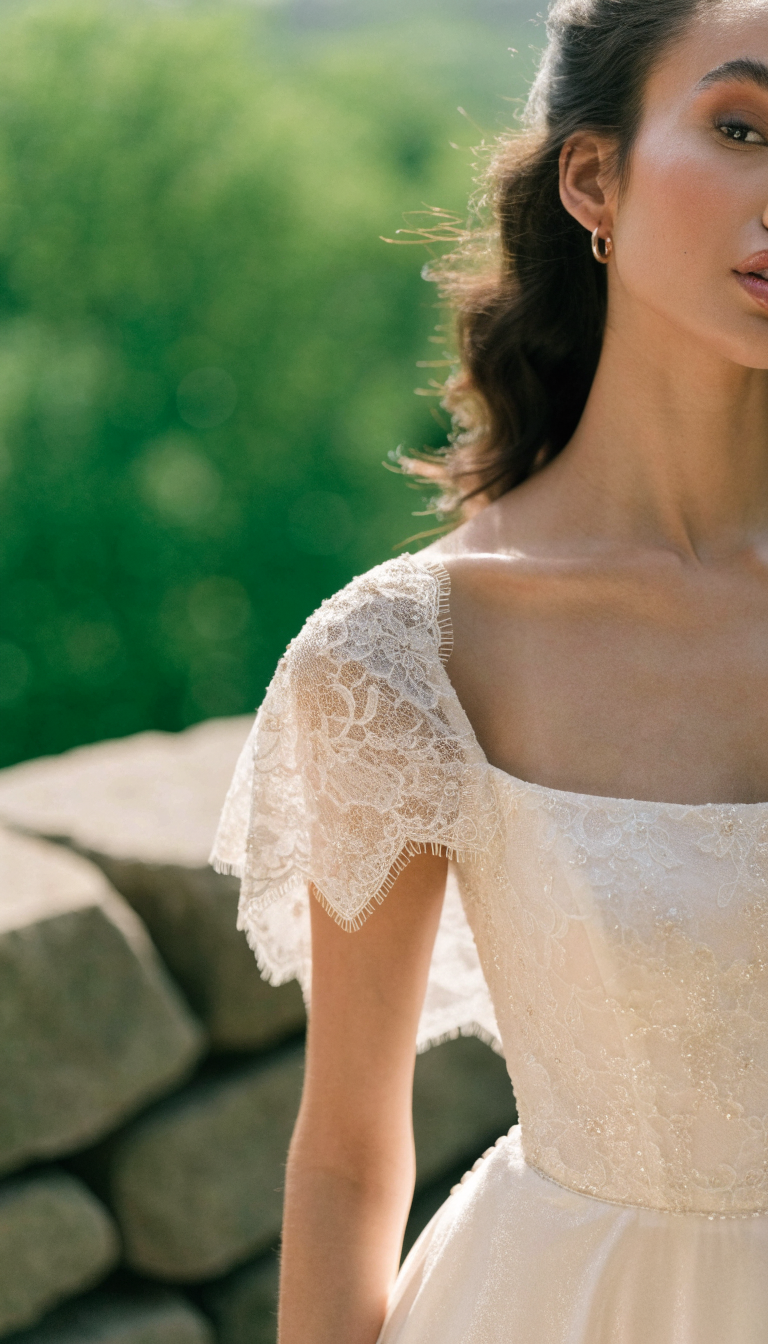
Coverage balance The square line gives more coverage than a deep V while still feeling open and romantic.
Cap-sleeve comfort Short sleeves should sit lightly on the arm; test for rubbing during a short walk.
Bodice structure Light boning or a well-fitted lining keeps the square corners from collapsing.
10. Illusion Neckline with Floral Appliqués
An illusion neckline uses sheer tulle or mesh across the chest and shoulders, often finished with lace appliqués that create the appearance of coverage while remaining light. The effect is soft and romantic, especially when the appliqués continue onto long or short sleeves. The sheer panel reduces weight compared with solid fabric and works across many silhouettes. Skin tone shows through, so lining and undergarment color matter. The look photographs ethereally in natural light.
Sheer panel care Handle the illusion carefully during fittings; snags are more visible than on opaque fabric.
Undergarment match Choose a nude or matching undergarment so the sheer area stays clean.
Appliqué placement Ask whether the appliqués are sewn securely; loose edges can catch on jewelry or veils.
11. Soft V-Neck with Lace Overlay
A soft V-neck dips modestly at the center of the bust, lengthening the torso without becoming a deep plunge. When finished with a lace overlay or delicate straps, the line stays romantic rather than sharp. The shape pairs with both flowing and lightly structured skirts and works in crepe, satin, or lace. Support can come from built-in cups or a well-fitted bra. The neckline photographs cleanly from the front and leaves room for a simple necklace.
Torso length note The V draws the eye downward, which can visually lengthen a shorter torso.
Bra compatibility Test with the undergarment you plan to wear; the dip can limit some strap styles.
Lace weight A light lace overlay keeps the neckline soft; heavier lace can make the V feel more structured.
12. Long Lace Sleeves on a Soft Skirt
Long sleeves in floral or Chantilly lace cover the arms while remaining semi-sheer and lightweight. Paired with an A-line or gently flared skirt in tulle or chiffon, the sleeves add romance without bulk. The lace can be fitted or slightly relaxed at the wrist, and many styles include a button or zipper at the cuff for ease. The coverage suits cooler seasons or more formal venues. Movement through the arms stays freer than with heavier fabrics.
Season suitability Lace sleeves provide light coverage for spring or fall ceremonies without the heat of dense fabric.
Cuff ease Check that the wrist opening allows comfortable movement and does not dig when you gesture.
Layering option Some long-sleeve styles allow a detachable oversleeve if you want to remove coverage later.
Fabric and Finishing Details
13. All-Over Floral Lace Gown
An all-over lace gown uses floral or botanical lace across both bodice and skirt, creating continuous texture. The lace can sit over a nude or ivory lining so the pattern reads clearly, or over a soft underlayer that adds volume. The result feels romantic in both close and full silhouettes and photographs with rich detail. Because lace is often delicate, the gown needs careful handling and steaming rather than aggressive pressing. Alterations focus on lining and seams so the lace itself is disturbed as little as possible.
Steaming preference Most all-over lace responds better to light steaming than ironing to avoid flattening the pattern.
Lining choice A soft underlining keeps the lace from feeling scratchy against the skin.
Detail durability Ask how the lace is attached; well-secured motifs hold up better through fittings and wear.
14. Layered Chiffon with Subtle Embroidery
Multiple layers of chiffon create soft volume and movement while remaining breathable. Subtle embroidery or scattered beads add light-catching detail without the weight of heavy beading. The fabric drapes fluidly, so the skirt shifts with walking and dancing, which suits outdoor or garden venues. Chiffon wrinkles more easily than structured fabrics, so steaming before the ceremony helps. The lightness also makes the gown easier to manage in warm weather.
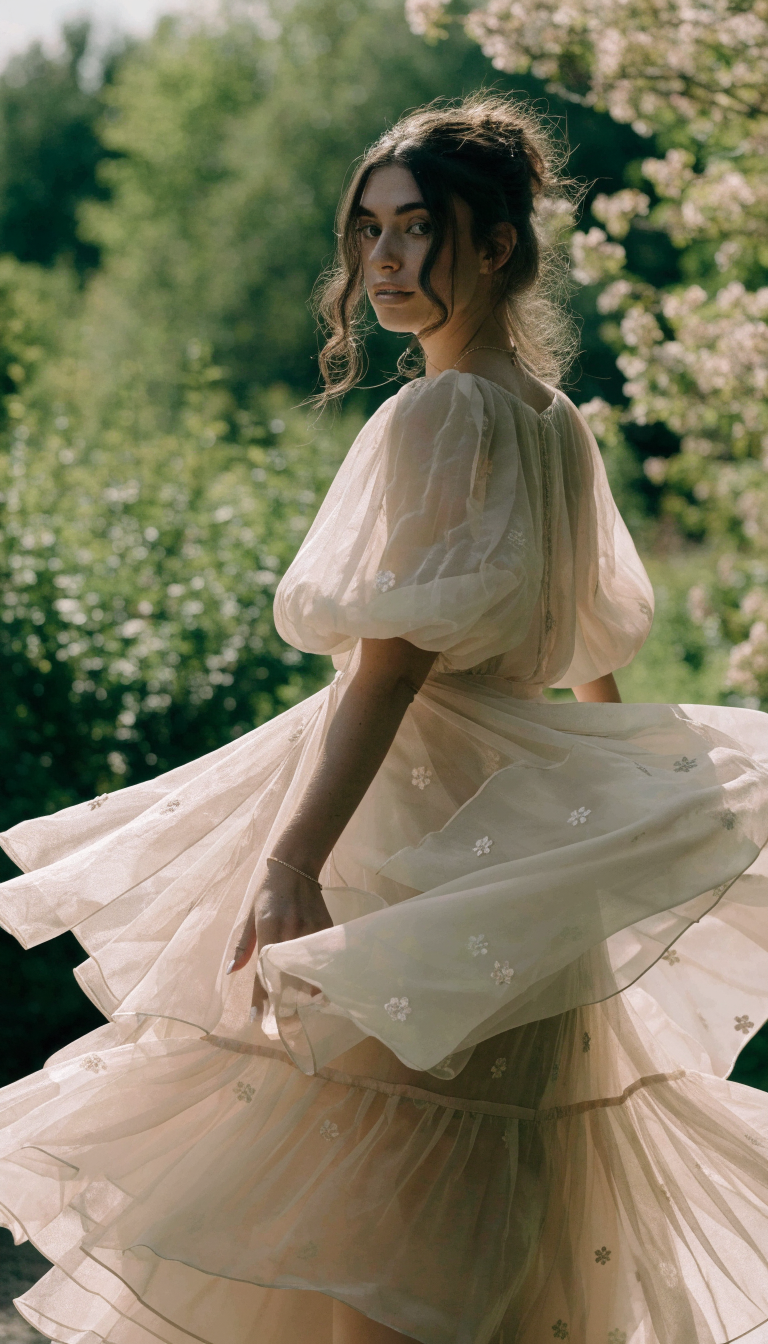
Wrinkle management Plan for light steaming on the day; chiffon recovers quickly but shows travel creases.
Movement quality The layers shift independently, creating gentle motion in photographs and on the dance floor.
Heat comfort The open weave stays cooler than satin or dense tulle in warm climates.
15. Basque Waist with Soft Skirt
A basque waist extends the bodice in a gentle V or curved point below the natural waist, creating a defined yet romantic line. The pointed shape lengthens the torso visually before the skirt opens into an A-line or soft ball-gown flare. Soft fabrics such as crepe or light satin keep the point from feeling rigid. The construction often includes light boning for structure. The waist detail photographs clearly from the front and works well with both simple and lace-trimmed skirts.
Torso definition The extended point draws the eye to the waist without a tight cinch.
Boning feel Light boning supports the shape; test how it feels when you sit and bend.
Skirt balance A soft rather than heavily structured skirt keeps the overall look romantic rather than formal.
16. Detachable Sleeve or Capelet Option
Detachable sleeves or a short capelet in lace or chiffon can be worn for the ceremony and removed for the reception. The pieces attach with buttons, hooks, or ties at the shoulder or upper arm, adding coverage and romance without permanent weight. The option lets one gown shift from more covered to open-shoulder. Construction must be secure enough for the aisle yet easy to remove later. The added pieces also provide a practical layer for cooler venues or evening ceremonies.
Attachment security Test the fasteners with a short walk so nothing shifts during the ceremony.
Reception flexibility Removing the sleeves after photos gives a lighter look for dancing without a second gown.
Fabric match Choose sleeves in the same lace or chiffon as the gown so the pieces feel intentional.
17. Soft Corset Back with Flowing Skirt
A soft corset back uses light boning and a lace-up or button closure that shapes the bodice without extreme compression. Paired with a flowing tulle or chiffon skirt, the structured back still feels romantic rather than severe. The adjustable closure helps with minor fit changes between fittings. The open or partially open back photographs well and allows air flow. Sitting and dancing remain practical when the skirt is not overly full.
Adjustment range The lace-up or button back can be tightened or loosened slightly between fittings.
Back comfort Light boning should support without digging; test a seated position.
Photo angle The back detail shows clearly in photos, so lining and closure quality matter.
18. Floral Appliqué Accents on a Simple Base
A relatively simple satin or crepe gown gains romance through scattered or clustered floral appliqués on the bodice, sleeves, or upper skirt. The appliqués add texture and light play without covering the entire surface, so the base fabric’s drape remains visible. Placement can be denser at the neckline and lighter toward the hem. The approach works across many silhouettes and keeps the gown from feeling heavy. Appliqués must be securely attached so they survive fittings and wear.
Placement balance Concentrating appliqués near the neckline keeps the lower skirt lighter and easier to move in.
Attachment check Gently tug the motifs in the fitting room to confirm they are well secured.
Base fabric choice A smooth crepe or satin lets the appliqués stand out clearly.
Narrow your shortlist to three or four styles that match your venue, climate, and how freely you need to move, then bring photos of those specific looks to your first salon appointment. Note lead times of several months for made-to-order gowns and schedule fittings with enough buffer for hem, bustle, and any neckline adjustments. Prices vary by designer, fabric, region, and alterations.
FAQ
How far in advance should I order a romantic wedding dress? Most made-to-order gowns require four to eight months, sometimes longer for custom details or busy seasons. Start looking as soon as the date is set so there is time for fittings and any unexpected adjustments.
Do I need a bustle for every romantic style? Styles with a train usually benefit from a bustle for the reception. A-line and softer ball gowns often use a simple French bustle, while closer-fitting silhouettes may need a more tailored solution so the flare does not catch.
Can I wear a romantic lace gown in warm weather? Yes, if the lace is lightweight and paired with a breathable lining or chiffon underlayer. Avoid dense, heavily beaded lace or multiple heavy tulle layers if the ceremony is outdoors in heat.