
Champagne wedding dresses sit a step warmer than ivory, blending pale beige with a soft gold undertone that catches light without the starkness of pure white. The shade works across many skin tones, shows lace and beading clearly, and feels at home in gardens, ballrooms, or evening ceremonies. This list groups 16 styles by silhouette, neckline, and fabric so you can match the gown to your venue climate, how much you plan to move, and the fittings you have time for. Most bridal gowns are made to order, so plan on several months of lead time; alterations are a separate cost that usually need two or three fittings.
Silhouettes
1. A-Line Champagne Lace Wedding Dress
An A-line champagne lace gown starts with a fitted bodice that marks the waist, then opens into a skirt that clears the hips and falls in a gentle flare. The champagne lining under ivory or floral lace gives each motif a soft shadow so the pattern reads clearly in photos without looking busy. Fluid lace over a light lining moves easily down an aisle or across a lawn, while the shape stays balanced when you sit or climb stairs. It suits garden ceremonies and indoor receptions where you want detail without heavy volume.
- Movement through the day: The flare lets you walk, dance, and sit without the skirt binding at the knees.
- Alteration note: Lace bodices hide minor seam adjustments well; hem the skirt once the shoes are chosen.
- Venue match: Soft outdoor light and candlelit rooms both show the lace depth without washing out the color.
2. Satin Ball Gown in Champagne
A full champagne satin ball gown relies on structure rather than decoration. The bodice is usually boned so it holds its shape, and a waist stay can carry the skirt’s weight so it does not drag on the hips. Duchess satin or mikado holds a crisp, architectural flare that photographs with a rich glow under indoor lighting, while the warm color keeps the volume from feeling stiff. Grand ballrooms and historic hotels give the skirt the space it needs.
- Structure check: Ask about the boning and waist stay so the weight sits on the waist, not the hips.
- Heat consideration: Heavy satin layers trap warmth; reserve this for climate-controlled indoor evenings.
- Train handling: A cathedral or chapel train needs a bustle practice before the day so the volume does not trip you on the dance floor.
3. Beaded Mermaid Champagne Gown
The mermaid silhouette follows the body closely to the knee before flaring, and champagne satin or crepe makes the fitted section glow against the skin. Vertical or curved beading lines draw the eye along the body and keep the dense section from looking heavy. The color softens the drama so the gown reads glamorous rather than severe. Practice walking and sitting in the fitting room, because the flare must start at or just above the knee for any real movement.
- Dance-floor limit: The narrow knee area restricts long strides; a modest slit or stretch lining helps.
- Beading placement: Vertical lines lengthen the fitted section; dense all-over sparkle can stiffen the fabric.
- Car and restroom test: Sit and stand several times so the flare does not ride up or catch.
4. Sheath Champagne Crepe Dress
A column or sheath in champagne crepe skims the body in a straight line from the shoulders or waist to the hem. Crepe has a soft matte hand and enough give to move, yet it still shows the warm color cleanly without shine. The minimal shape works for courthouse ceremonies, modern venues, or any setting where you want the color and fabric to do the work. Smooth undergarments and a precise fit prevent lines from showing through the fluid material.
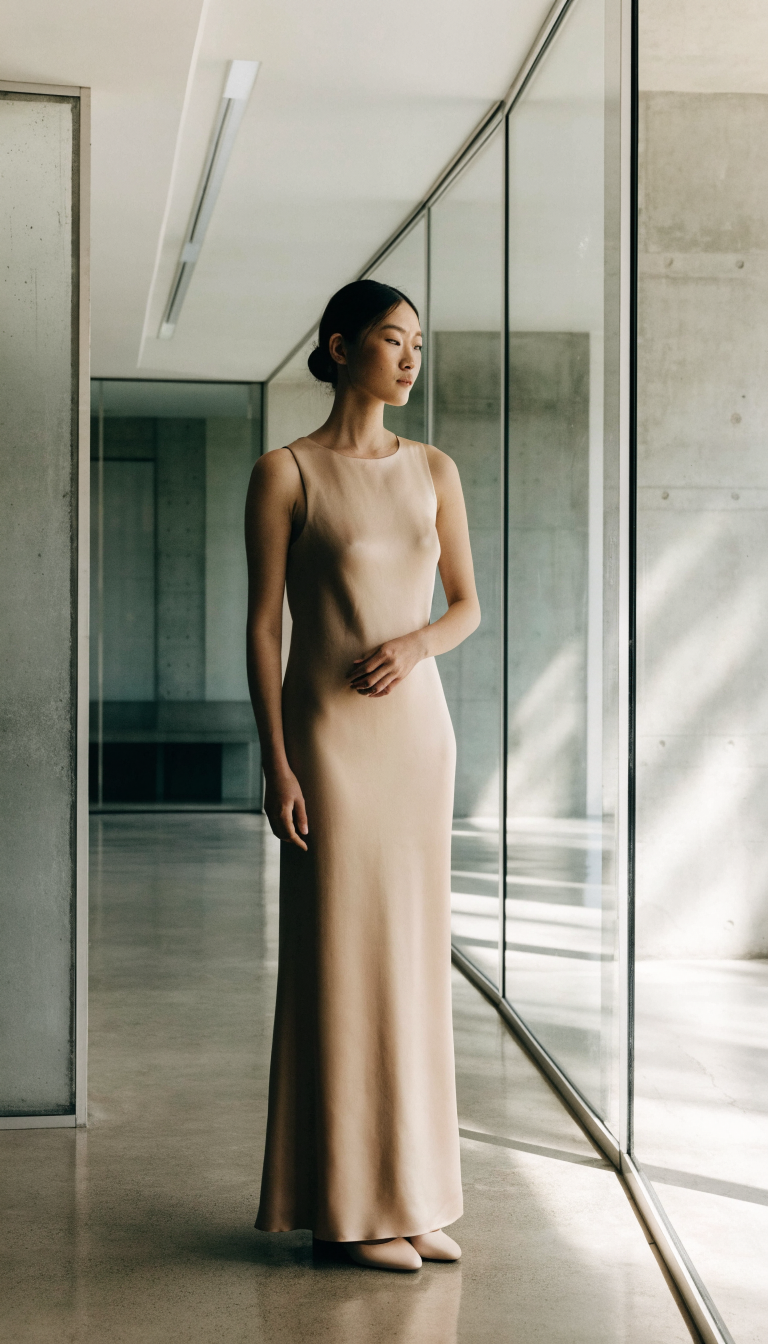
- Undergarment match: A seamless shapewear piece or built-in cups keeps the clean line intact.
- Wrinkle watch: Crepe travels well but benefits from a quick steam before photos.
- Budget-friendly path: Off-the-rack crepe sheaths often appear in sample sales and need only a hem.
5. Fit-and-Flare Champagne Satin
The fit-and-flare follows the torso and hips, then releases into a modest flare below the knee. Champagne satin catches light along the curves and softens the transition so the shape feels balanced rather than tight. It gives more walking room than a true mermaid while still defining the waist. Garden and indoor evening weddings both suit the moderate volume.
- Walking ease: The lower flare lets you take normal steps once the hem is set for your shoes.
- Bustle need: A short train can be bustled simply; check the buttons or loops before ordering.
- Fitting focus: Confirm the flare begins where your natural movement needs it, not lower.
6. Empire Champagne Chiffon Gown
An empire waist sits just under the bust, letting a soft champagne chiffon skirt fall freely from that high point. The lightweight fabric moves with a breeze and stays breathable in warm weather, while the raised waistline creates a long, fluid line. It works well for outdoor or destination ceremonies where comfort and air flow matter more than structure. A lightly lined chiffon prevents transparency without adding weight.
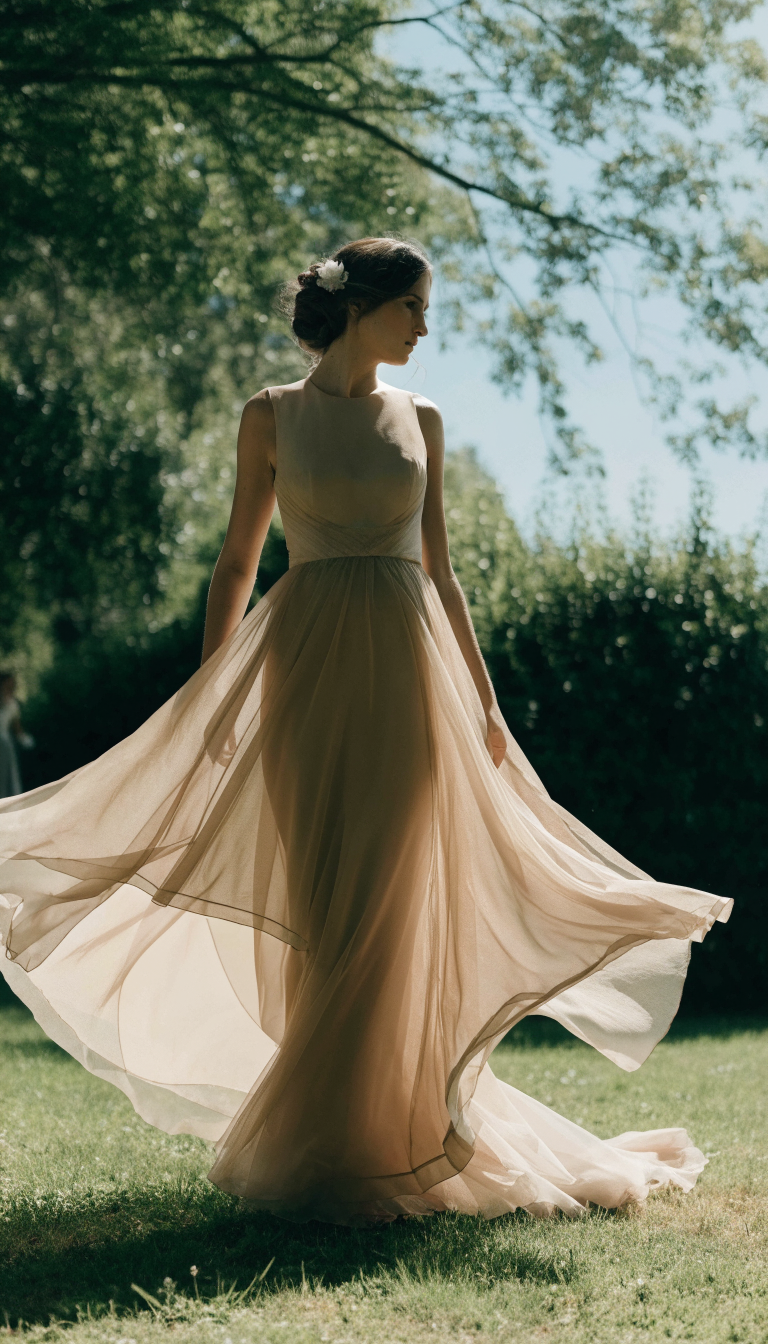
- Heat comfort: The raised waist and airy skirt keep the gown from clinging in humidity.
- Support option: Built-in cups or a separate strapless bra stay secure under the high seam.
- Hemming simplicity: The soft skirt is usually straightforward to shorten once shoe height is final.
Necklines and Sleeves
7. Off-the-Shoulder Champagne Lace
An off-the-shoulder neckline in champagne lace rests along the upper arms and frames the collarbones. The lace pattern hides the seam where the bodice meets the sleeves, so minor fit tweaks stay invisible. The warm color against skin gives a soft glow that photographs well in both daylight and evening light. Pair it with a fingertip veil or none at all so the neckline stays clear.
- Strap security: Elastic or internal straps keep the neckline from slipping during dancing.
- Season fit: Works for mild spring or fall outdoors; add a light wrap if the evening cools.
- Jewelry pairing: Delicate drops or a thin chain sit cleanly above the lace edge.
8. Illusion Neckline with Champagne Underlay
An illusion neckline uses sheer tulle or lace over a champagne lining so the color shows through the transparent panel. The contrast makes the lace motifs stand out while the high or sweetheart base underneath provides coverage and support. It suits church or formal indoor settings that prefer a higher neckline without losing romance. The sheer layer is usually stable once the bodice is fitted.
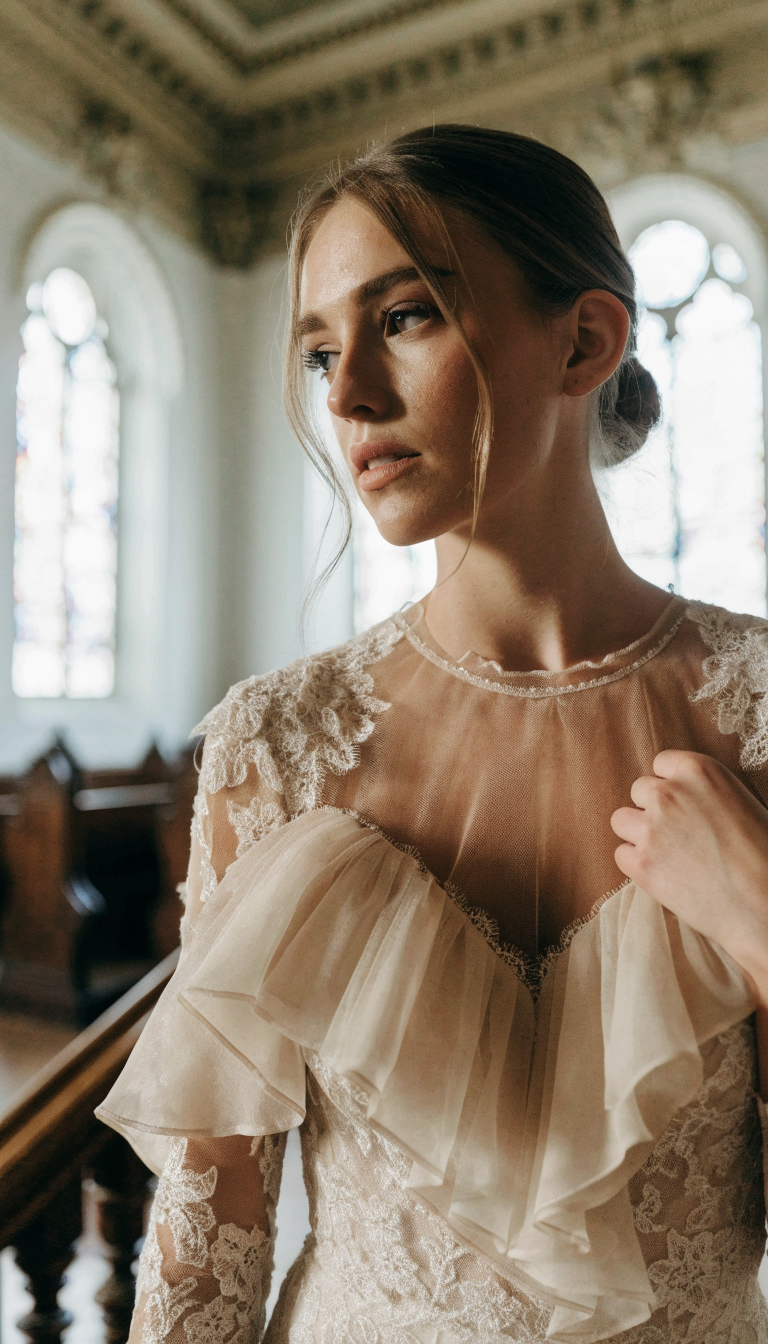
- Coverage level: The lining sets the actual neckline depth; confirm it matches your preference before ordering.
- Alteration ease: Lace and tulle illusion panels can be adjusted at the seams with less risk of visible marks.
- Photo clarity: The champagne underlay keeps the sheer section from disappearing against bright backgrounds.
9. Long-Sleeve Champagne Crepe
Long sleeves in champagne crepe or stretch lace cover the arms fully and create a clean, continuous line. Crepe sleeves move with the arms and stay relatively cool compared with heavier satin, while the matte surface lets the warm color read softly. The style works for winter ceremonies, modest requirements, or any venue where you want coverage without a separate jacket. Stretch content in the sleeve fabric improves comfort for dancing and gesturing.
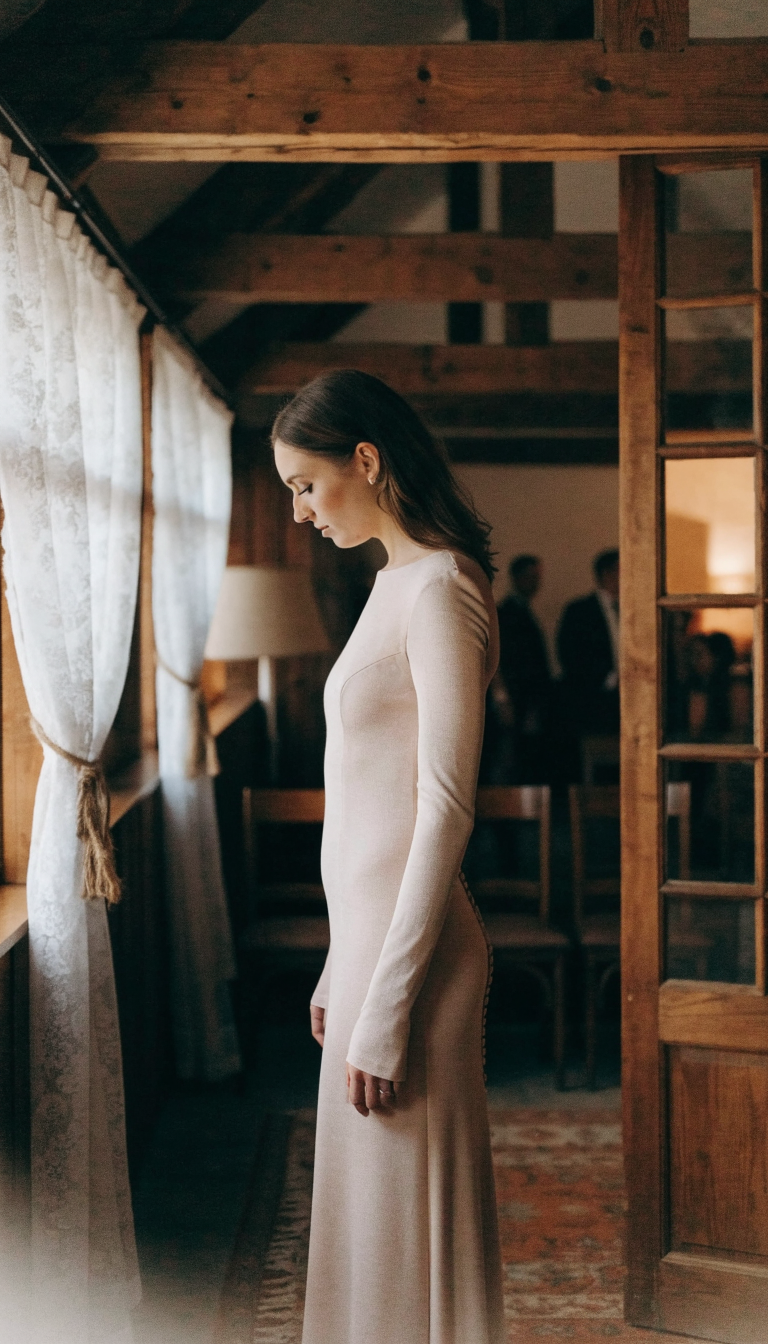
- Layering option: A matching crepe jacket or cape can come off after the ceremony if the room warms.
- Wrist finish: Check that the cuffs sit smoothly over a watch or bracelet if you plan to wear one.
- Fabric stretch: A small percentage of elastane keeps the sleeves from pulling across the back.
10. Strapless Satin Champagne Bodice
A strapless champagne satin bodice relies on internal boning and a well-fitted cup line to stay in place. The clean neckline lets the luminous fabric catch light across the chest and shoulders, and the warm tone softens the structured look. It pairs with ballroom or black-tie venues where the gown can stand alone without sleeves. A secure fit is essential so the bodice does not shift when you raise your arms.
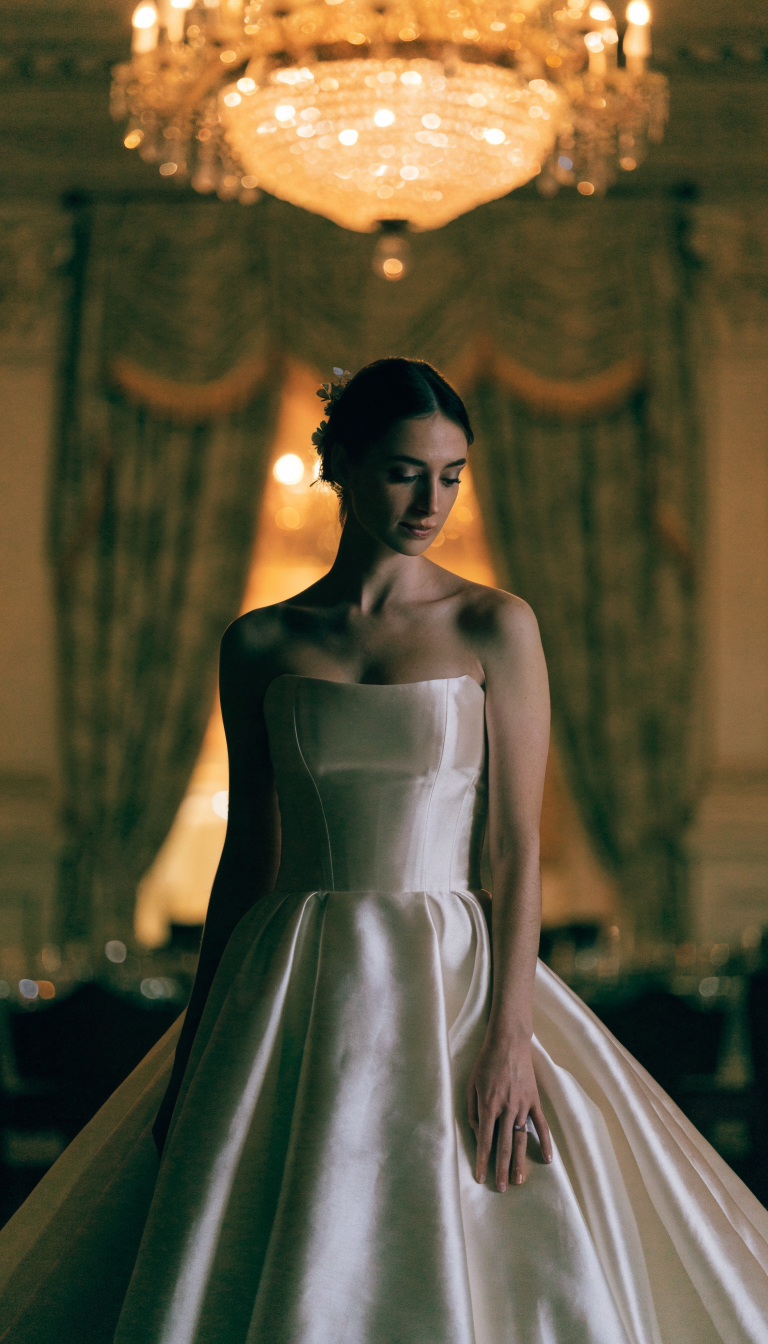
- Stay-up test: Raise your arms and lean forward in the fitting room; the bodice should not gap or drop.
- Bra solution: Built-in cups or a low-back strapless bra provide the needed support.
- Evening match: The polished edge works under chandeliers and with simple stud earrings.
11. V-Neck Champagne A-Line
A moderate V-neck in a champagne A-line opens the neckline just enough to lengthen the torso while the skirt keeps the overall shape balanced. Satin or crepe shows the color cleanly along the V, and a soft lining prevents the edge from feeling sharp against the skin. The neckline suits both indoor and garden settings and leaves room for a simple necklace or none at all. Most A-line constructions make the V easy to adjust if the depth needs a small change.
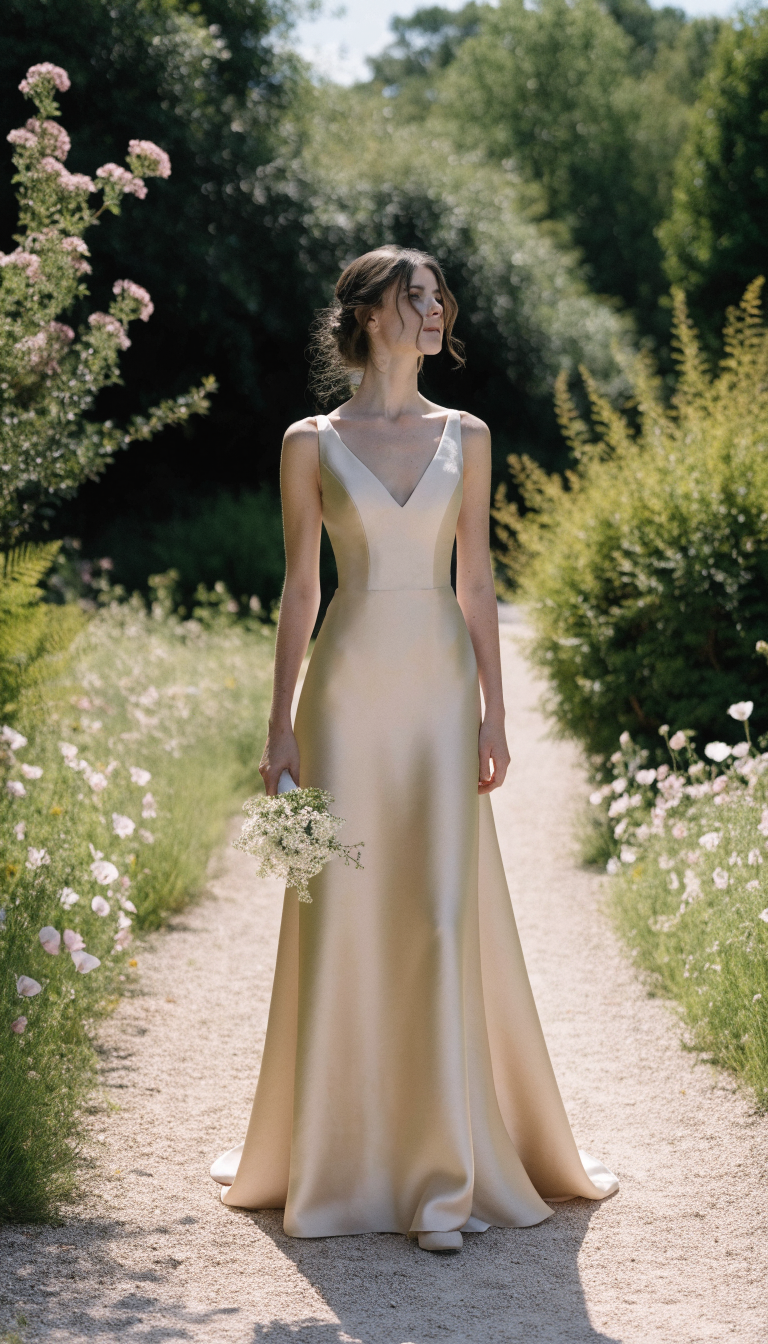
- Depth preference: Mark the lowest point you are comfortable with so the salon can set the neckline accurately.
- Necklace space: A short chain or pendant sits naturally in the open area without competing with the fabric.
- Support note: The V often works with a low-cut bra or built-in cups that follow the same line.
Fabrics and Details
12. Chiffon Champagne for Outdoor Ceremonies
Champagne chiffon drapes in soft, breathable layers that move with a light breeze and stay cooler than satin in warm weather. The fabric lets the warm color read gently rather than with high shine, which suits garden, beach, or daytime ceremonies. A lined chiffon skirt prevents transparency while still feeling light when you walk or dance. It wrinkles more easily than structured fabrics, so a quick steam before photos helps.
- Weather fit: Ideal for spring and summer outdoors; the layers dry faster if humidity rises.
- Movement freedom: The fluid skirt does not restrict steps or sitting, even with a modest train.
- Steam reminder: Pack a handheld steamer or ask the venue for one so travel creases disappear.
13. Mikado Champagne for Structured Evenings
Mikado is a crisp, medium-weight fabric with a subtle sheen that holds architectural folds and a defined silhouette. In champagne it catches indoor light with a rich glow and keeps ball-gown or A-line shapes crisp through the evening. The fabric suits formal winter or climate-controlled venues where you want volume that does not collapse. It is less forgiving of wrinkles than crepe but holds its shape once steamed.
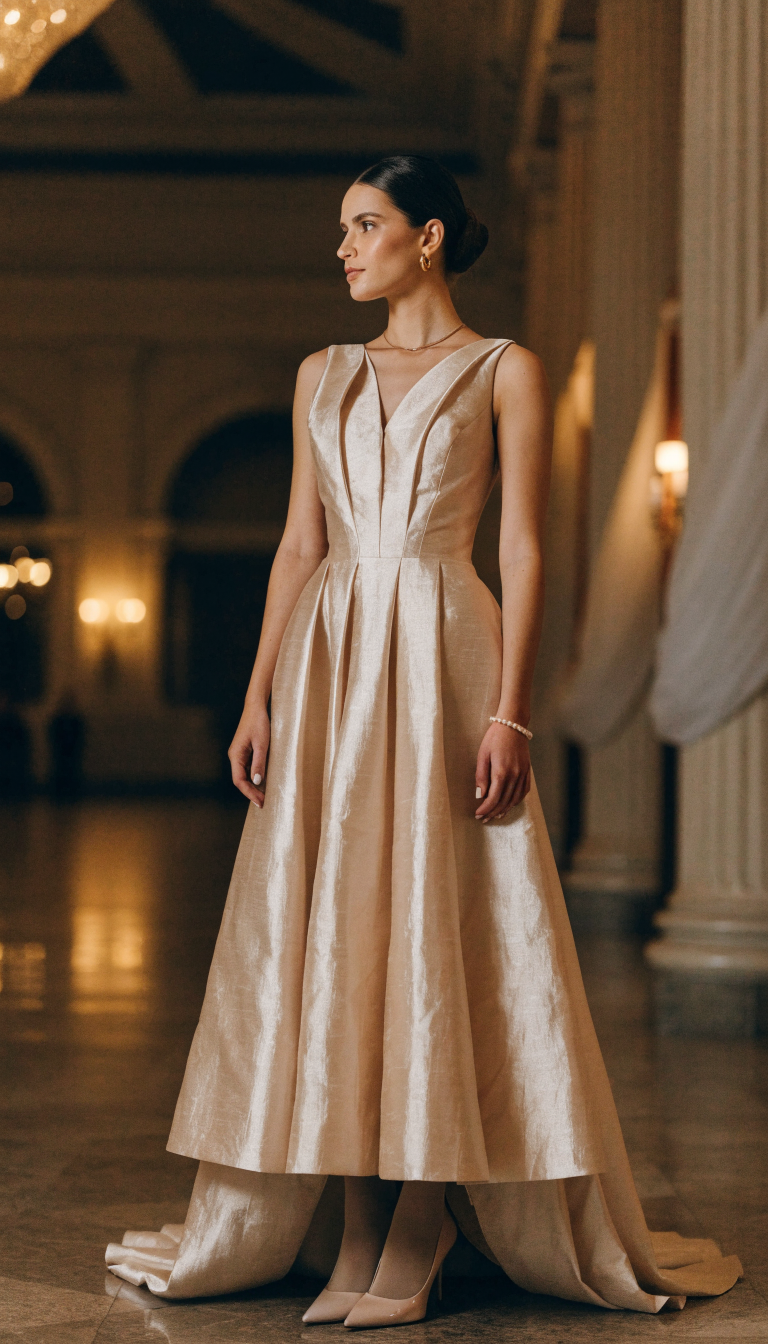
- Shape retention: The crisp hand keeps pleats and flares looking intentional under chandeliers.
- Weight awareness: Mikado skirts feel substantial; confirm you can move and sit comfortably for the full event.
- Indoor preference: Best where temperature stays steady so the fabric does not feel heavy.
14. Tea-Length Champagne Crepe or Lace
A tea-length champagne dress ends around mid-calf, giving easier movement and a lighter overall weight than a floor-length gown. Crepe or lace versions keep the warm color soft and practical for courthouse, rehearsal-dinner crossover, or daytime garden events. The shorter hem simplifies walking on uneven ground and reduces the need for a bustle. Many ready-to-wear or sample versions appear in this length.
- Ground clearance: The hem stays clear of grass or gravel once shoes are chosen.
- Re-wear potential: The length and color can work for other formal events after the wedding.
- Shoe flexibility: Heels or flats both work; the shorter hem shows more of the shoe.
15. Beaded or Sequined Champagne Overlay
A champagne base under gold or crystal beading creates a unified warm shimmer rather than a stark contrast. Vertical or scattered placement keeps the gown from feeling rigid while the color makes the sparkle read as part of the fabric. It suits evening ballrooms or winter ceremonies where the light will catch the details. Dense beading adds weight, so check how the gown feels after an hour of standing.
- Sparkle balance: Light scatter keeps movement easy; heavy all-over beading can stiffen the skirt.
- Cleaning note: Beaded gowns often need professional cleaning; factor that into the budget.
- Light test: View the gown under both daylight and warm indoor bulbs so the champagne and beads match your venue.
16. Button-Back or Corset Champagne Gown
A button-back or corset closure in champagne lace or satin gives a secure, adjustable fit through the torso. Covered buttons or a lace-up panel let the gown tighten or loosen slightly after the final fitting, which helps if weight fluctuates. The warm color softens the structured back so it still feels romantic from every angle. Most made-to-order gowns include this option; confirm the number of buttons or the lacing length matches the support you need.
- Fit flexibility: The closure can be adjusted on the day if the bodice feels tighter or looser than expected.
- Help required: Buttons or lacing usually need a second person; practice the process before the wedding.
- Support strength: A well-boned corset back holds the gown without separate straps in many cases.
Prices for champagne wedding dresses vary widely by designer, fabric weight, and custom work; expect approximate ranges from ready-to-wear options in the low thousands to made-to-order designer gowns well above that, with alterations added separately.
Bring the shoes you plan to wear, any preferred undergarments, and photos of the venue lighting to your fitting so the champagne shade and hem can be checked accurately. Start appointments several months ahead if the gown is made to order.
FAQ
How far in advance should I order a champagne wedding dress? Most made-to-order gowns need four to eight months, sometimes longer for intricate lace or beading. Sample or off-the-rack options can be ready sooner but may still need alterations.
Does champagne photograph well outdoors? Yes. The warm undertone holds up in natural light and does not wash out the way pure white can in bright sun. Check a swatch under similar conditions if you can.
Can I add sleeves or change the neckline on a champagne gown? Lace and crepe styles often accept sleeve or neckline adjustments more easily than heavy satin. Discuss the change early so the salon can order matching fabric.
How many fittings are typical? Two to three fittings are common: one for initial adjustments, one after major changes, and a final check with shoes and undergarments.