
An Italian wedding dress prioritizes precise tailoring, romantic textures, and fabric that moves with the body rather than against it. Most brides shopping this aesthetic want something that feels special for a villa terrace, historic church, or long reception without sacrificing comfort through hours of standing, sitting, and dancing. The styles below are organized by silhouette and key construction details, so you can quickly match a gown to your venue, climate, and how much structure you prefer. Prices for these gowns typically fall in the mid-to-high designer range and vary widely by lace quality, lining, and custom work; alterations remain a separate cost with multiple fittings expected.
1. Soft Chantilly Lace A-Line with Scalloped Edge
This silhouette pairs a lightly structured bodice with a gently flared skirt so the lace can show movement without bulk. Chantilly lace sits lightly against the skin and photographs with soft detail rather than heavy pattern, which suits outdoor ceremonies where wind or natural light might otherwise flatten denser fabrics. The scalloped hem and neckline finish the edge cleanly, reducing the need for heavy trimming. It works especially well when you want romance that still lets you walk and sit without managing a full skirt.
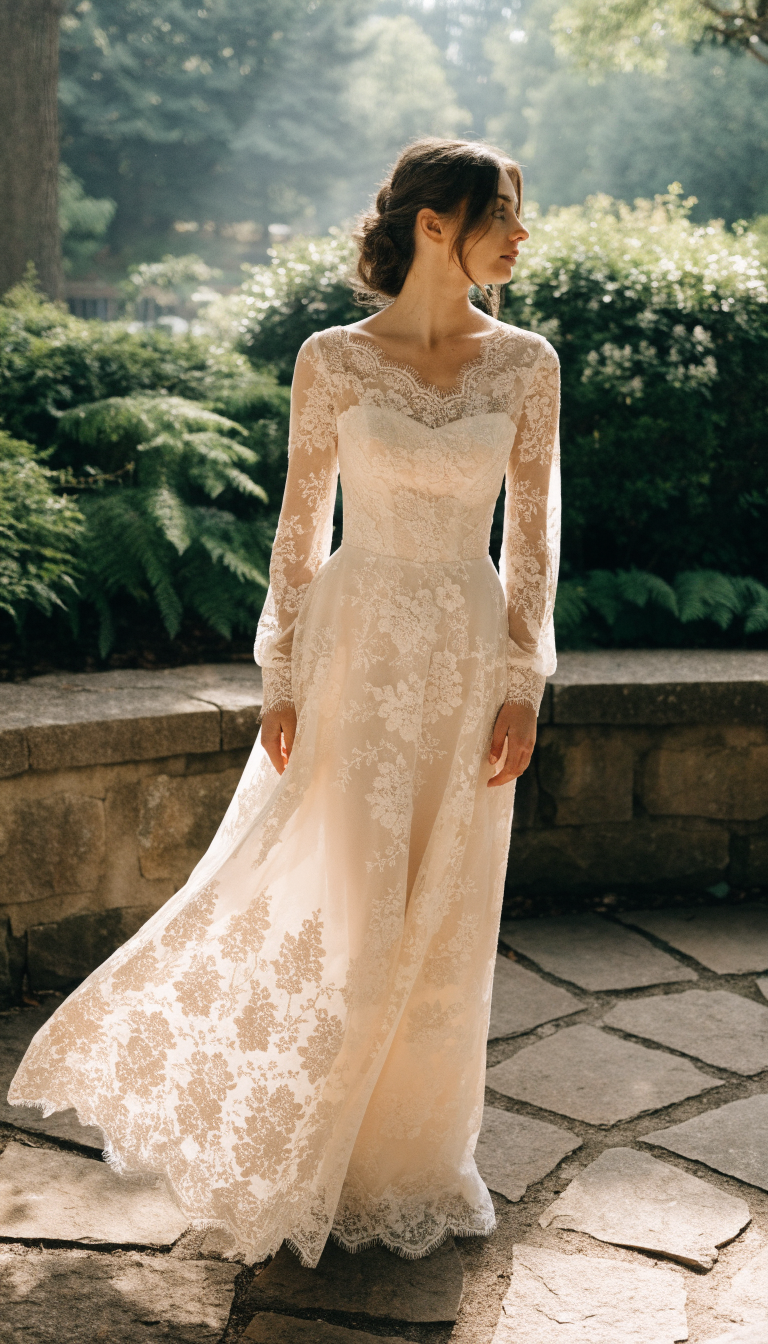
- Garden terrace ease: Lightweight lace and moderate volume stay manageable on uneven paths or grass.
- Breathable lining note: Ask for a silk or cotton lining that reduces cling in warmer months.
- Bustle simplicity: A short or medium train usually needs only a basic bustle for the reception.
2. Crisp Mikado Ball Gown with Basque Waist
Mikado is a firm silk blend that holds a sculpted shape without collapsing, so the skirt keeps its width even after hours of wear. The Basque waist dips lower at the center front, lengthening the torso visually while the full skirt creates presence for a grand aisle. Internal boning and a structured underlayer keep the bodice from shifting. This style suits formal indoor spaces or cooler evenings where a heavier fabric feels appropriate rather than oppressive.
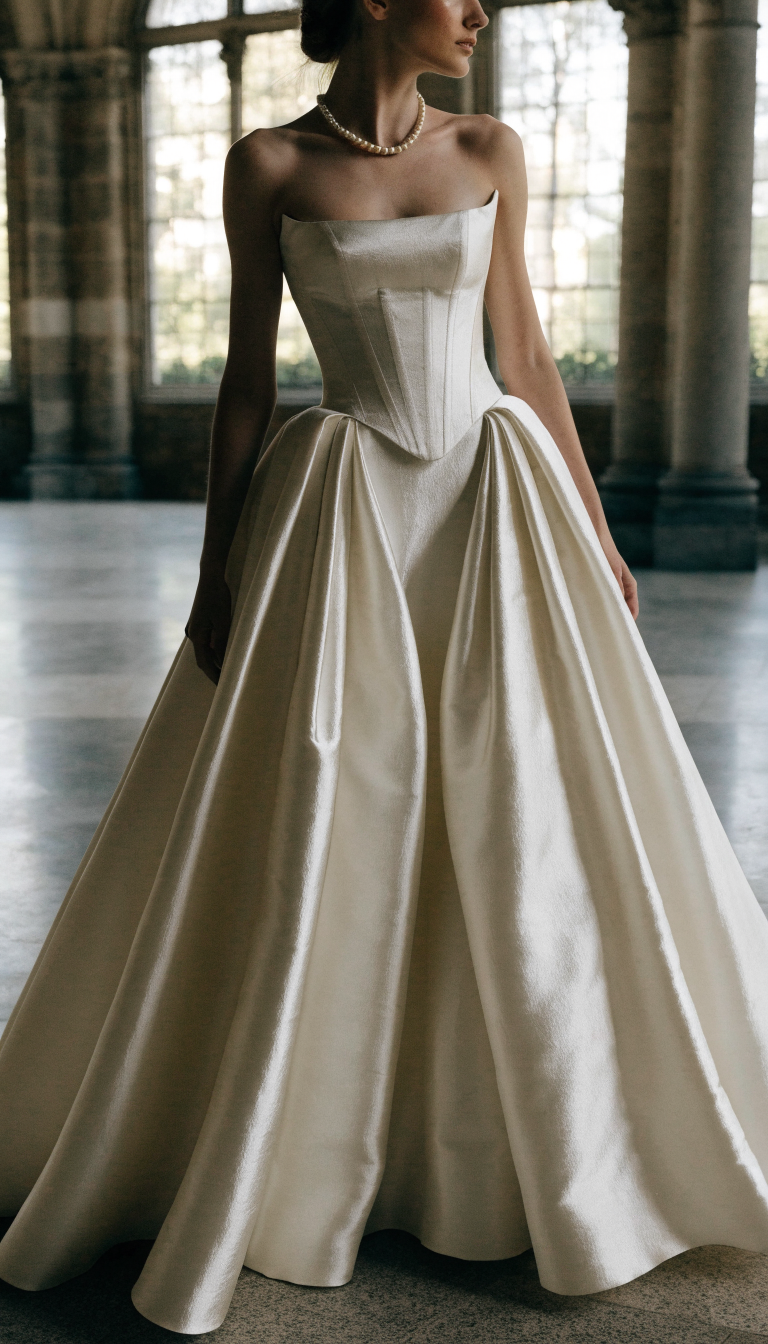
- Historic venue scale: The skirt needs room to clear steps and pews without catching.
- Heat trade-off: The dense fabric traps warmth; best reserved for spring, fall, or air-conditioned rooms.
- Hemming complexity: Full skirts often require multiple fittings to balance length across the circle.
3. Bias-Cut Silk Charmeuse Column
Cut on the bias, the fabric skims the body and creates soft diagonal drape instead of rigid seams. Charmeuse has a fluid hand that catches light gently and moves easily when you walk or sit. A clean column silhouette keeps the look modern and understated, common in contemporary Italian ateliers that favor clean lines over heavy embellishment. It reads elegant for city halls or minimalist villas where the architecture already provides drama.
- Car and chair test: The narrow cut can ride up when seated; try sitting and standing during the fitting.
- Undergarment lines: Smooth, seamless shapewear works best so seams do not show through the fluid fabric.
- Shoe height balance: Slight heels keep the hem from pooling; flats may require a careful hem adjustment.
4. Off-the-Shoulder Lace Mermaid with Fitted Hip
The neckline sits just below the shoulders, framing the collarbone while the lace continues over the arms or as a sheer overlay. The mermaid shape follows the body through the hip before flaring near the knee, giving controlled drama. Stretch lace or a light lining helps the fit stay comfortable rather than restrictive. This combination appears often in Italian bridal collections that blend traditional lace with a more contemporary silhouette.
- Dance-floor movement: The flare begins low enough for walking but can limit wide steps; test a few dance moves.
- Strap support reality: Off-the-shoulder styles rely on internal structure or boning rather than shoulder straps.
- Climate caution: Lace sleeves or overlays can feel warm; pair with a light shawl only if the ceremony is outdoors in heat.
5. Square-Neck Mikado A-Line with Clean Shoulders
A squared neckline creates a strong horizontal line that balances a softer A-line skirt. Mikado keeps the bodice crisp and the skirt lightly structured so the silhouette holds its shape without tulle volume. The open shoulder area works well for warmer months or indoor venues with good airflow. Many Italian makers favor this combination for its architectural clarity and photogenic lines against stone or cypress backdrops.
- Neckline support check: Built-in cups or a well-fitted bodice prevent gaping when you raise your arms.
- Alteration timeline: Structured fabrics hold marks; schedule fittings early so seams can be pressed cleanly.
- Reception transition: The moderate skirt volume moves more easily than a full ball gown once the train is bustled.
6. Illusion Long-Sleeve Lace Gown with Soft Skirt
Sheer illusion tulle or fine lace covers the arms and upper chest while a solid lining underneath provides coverage and support. The sleeves add a traditional note without the weight of opaque fabric. A softly gathered or lightly A-line skirt keeps the overall silhouette from feeling heavy. This style suits church ceremonies or cooler seasons where covered arms feel appropriate, and Italian lace houses often execute the transparency with careful motif placement so it does not look sparse.
- Coverage flexibility: The illusion can be adjusted at the neckline for more or less skin depending on venue norms.
- Sleeve comfort: Stretch in the lace or a small gusset under the arm reduces pulling during movement.
- Veil pairing: A simple fingertip or cathedral veil sits cleanly over the sheer sleeves without competing patterns.
7. Fluid Crepe Sheath with Minimal Seaming
Crepe has a matte, slightly textured surface that drapes close to the body and resists shine. The sheath silhouette stays narrow through the hip and falls straight, emphasizing clean lines and precise tailoring. Italian ateliers frequently use this fabric for modern brides who want structure without stiffness. It photographs well in natural light and remains comfortable for long receptions because the fabric breathes better than satin.
- Sitting and walking balance: A slight stretch or strategic seam placement prevents the skirt from riding or restricting steps.
- Heat performance: Matte crepe stays cooler than shiny satin in warm venues or outdoor settings.
- Pocket practicality: Some makers add discreet side pockets; confirm they do not pull the silhouette out of line.
8. One-Shoulder Draped Satin Gown
The single shoulder strap or asymmetric drape creates a strong diagonal line that feels contemporary yet still formal. Satin or a satin-backed crepe holds the folds cleanly so the drape does not collapse. The skirt can stay column or open into a gentle A-line. This style appears in Italian collections that favor sculptural detail over all-over lace, making it suitable for modern venues or evening receptions.
- Asymmetry fit check: The unsupported shoulder needs internal structure so the neckline stays level.
- Movement range: Raise both arms during the fitting to confirm the drape does not shift or gap.
- Accessory restraint: The strong neckline usually looks best with simple earrings rather than a heavy necklace.
9. Floral Appliqué Tulle A-Line with Scattered Motifs
Individual lace or embroidered floral pieces are placed across a soft tulle skirt and bodice rather than covering the entire surface. This keeps the gown lighter and more airy than dense lace while still offering romantic texture. Italian makers often hand-place the appliqués so the pattern follows the body’s curves. The result works for garden or vineyard settings where a lighter fabric moves with breeze and does not overwhelm the surroundings.
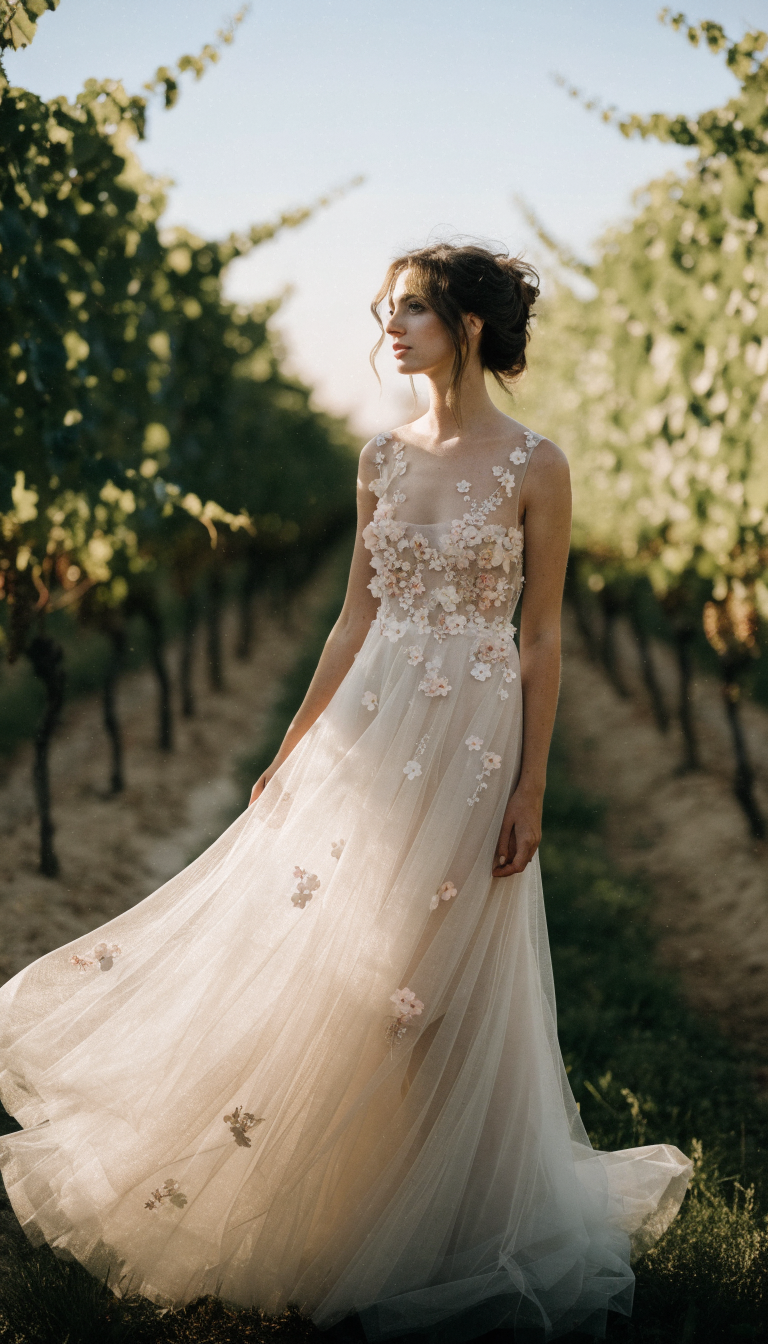
- Weight and layering: Fewer layers of tulle reduce bulk; confirm the skirt does not become see-through when you sit.
- Appliqué durability: Ask how the motifs are attached so they do not snag on chairs or during dancing.
- Train length choice: A shorter train is easier to manage outdoors on gravel or grass.
10. Cap-Sleeve Vintage-Inspired Lace with Fitted Bodice
Short cap sleeves sit just over the shoulder edge, offering a modest touch of coverage without full sleeves. Combined with a sweetheart or soft V neckline and a fitted lace bodice, the look references older Italian bridal photographs while remaining wearable. The skirt can flare gently so the overall volume stays moderate. This style suits brides who prefer a nod to tradition without heavy construction.
- Shoulder coverage: The caps provide a small barrier against sun or cooler air but leave most of the arm free.
- Lace density: Choose a lighter lace if the ceremony is outdoors so the bodice does not feel confining.
- Fitting-room bra test: Built-in cups or a low-back adhesive option usually works better than a traditional strap bra.
11. High-Neckline Minimalist Crepe Column
A high or bateau neckline creates a clean frame around the face and collarbone while the crepe column keeps the rest of the silhouette quiet. The fabric’s matte finish and controlled drape emphasize tailoring over ornament. Italian designers who favor architectural simplicity often use this combination for brides who want elegance without lace or volume. It photographs cleanly against strong architectural backgrounds.
- Neck comfort: The higher neck can feel warm; confirm there is enough ease so it does not ride up when you turn your head.
- Back detail: Many versions open lower in the back for balance and easier movement.
- Shoe and hem pairing: A precise hem that just clears the floor works best with a consistent heel height.
12. Sweetheart Neckline with Detachable Lace Sleeves
The sweetheart shape frames the décolletage while separate lace sleeves can be added for the ceremony and removed later. The main gown stays lighter once the sleeves come off. Italian ateliers frequently offer this modular approach so one dress can shift from formal to more relaxed. The bodice usually includes internal boning for support once the sleeves are gone.
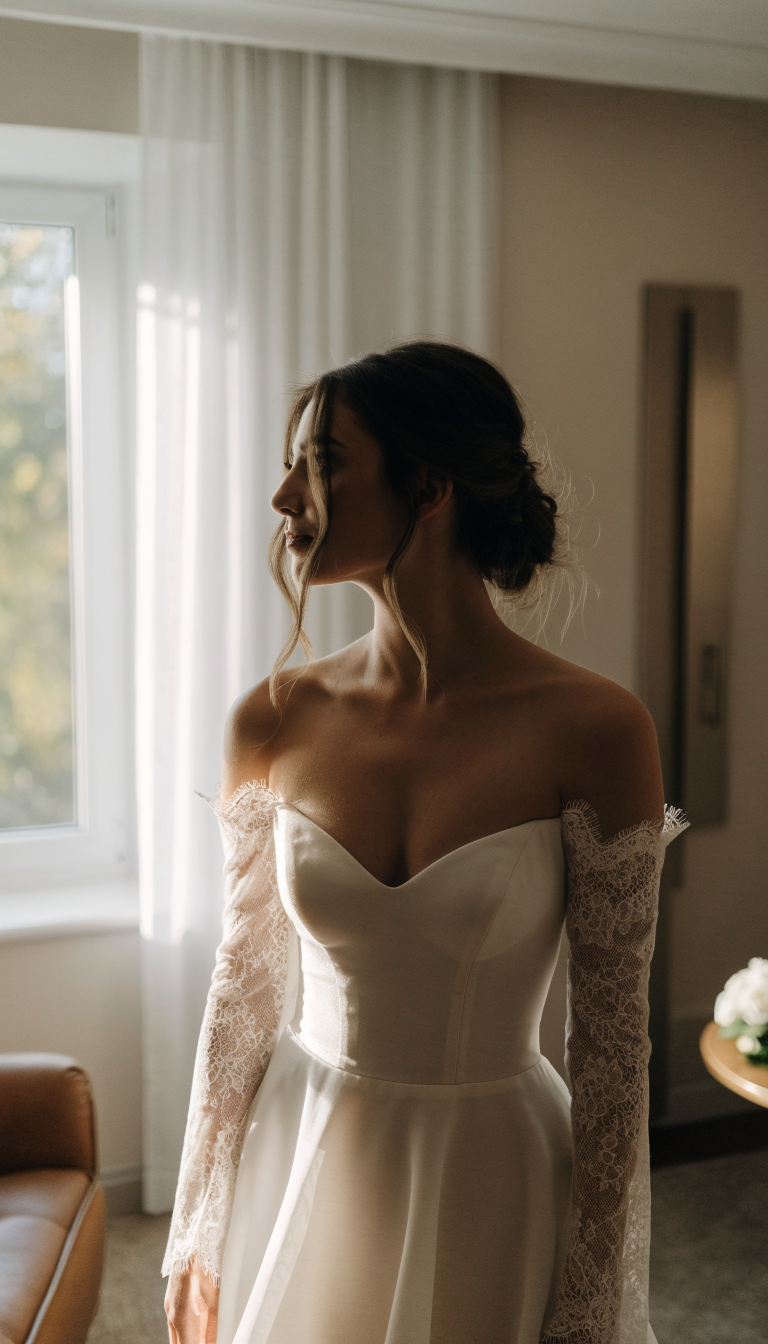
- Sleeve attachment: Confirm the sleeves attach securely and can be removed without damaging the gown or requiring a seamstress on site.
- Ceremony-to-reception shift: Removing the sleeves changes the neckline support; test both versions.
- Storage note: Bring a clean bag or the dress’s own sleeve pouch so the lace does not wrinkle while stored.
13. Open-Back Silk Charmeuse with Soft Drape
The back opens low, often with a simple keyhole or clean cutout, while the front remains covered in fluid charmeuse. The fabric’s weight allows gentle draping across the lower back without stiff structure. This construction is common in contemporary Italian work that prioritizes movement and skin as part of the design. It suits evening or indoor venues where the open back will not be affected by strong sun or wind.
- Support structure: Internal boning or a low-back adhesive bra keeps the front stable when the back is open.
- Hair and jewelry: An updo or soft waves usually works; long hair can catch on the open edge if left down.
- Sitting comfort: The open back can press against chair backs; try a few seated positions in the fitting.
14. Tea-Length Lace Gown with Soft Fullness
Ending at mid-calf, the tea length reduces the amount of fabric while still offering a romantic lace overlay. A lightly gathered or A-line skirt gives movement without the weight of a floor-length train. This proportion appears in Italian collections aimed at less formal or destination celebrations where full trains are impractical. The shorter hem also simplifies alterations and makes stairs or cobblestones easier to navigate.
- Venue practicality: Ideal for garden, beachside, or multi-level spaces where long trains become cumbersome.
- Shoe visibility: The hem shows more of the shoe; choose a style that coordinates cleanly.
- Rewear potential: The shorter length can sometimes be worn again for other formal events with minor adjustments.
15. Trumpet Silhouette with Lace Overlay from Hip
The skirt stays close through the thigh then flares more gradually than a classic mermaid, creating a controlled sweep. A lace overlay adds texture without the full weight of an all-lace gown. Italian makers often cut the flare so it begins just above the knee, balancing drama with walkability. The result works for both indoor processions and outdoor settings where a sudden flare might catch on surfaces.
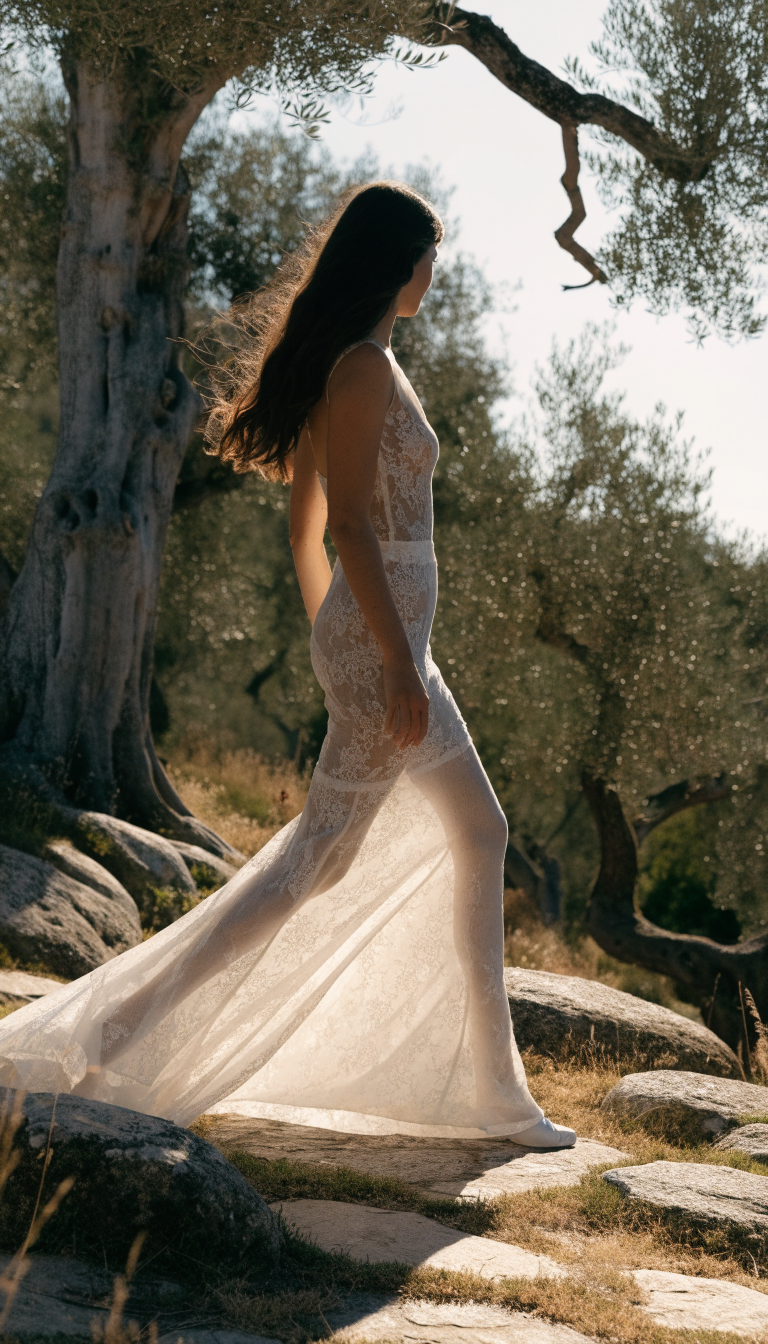
- Step width: The flare allows more stride than a tight mermaid; still practice walking and turning.
- Lace placement: Confirm the overlay does not create bulk at the hip or catch on the underlayer when you sit.
- Bustle needs: Even a moderate flare benefits from a simple bustle so the back does not drag during dancing.
16. Empire Waist Soft Chiffon with Subtle Gather
The raised waist sits just under the bust, allowing the chiffon skirt to fall in soft vertical folds. This construction offers more ease through the midsection and moves freely in warm weather. Italian romantic collections sometimes use this silhouette for its lightness and classic proportions. It can feel more forgiving than a fitted waist while still reading formal when the fabric is high quality.
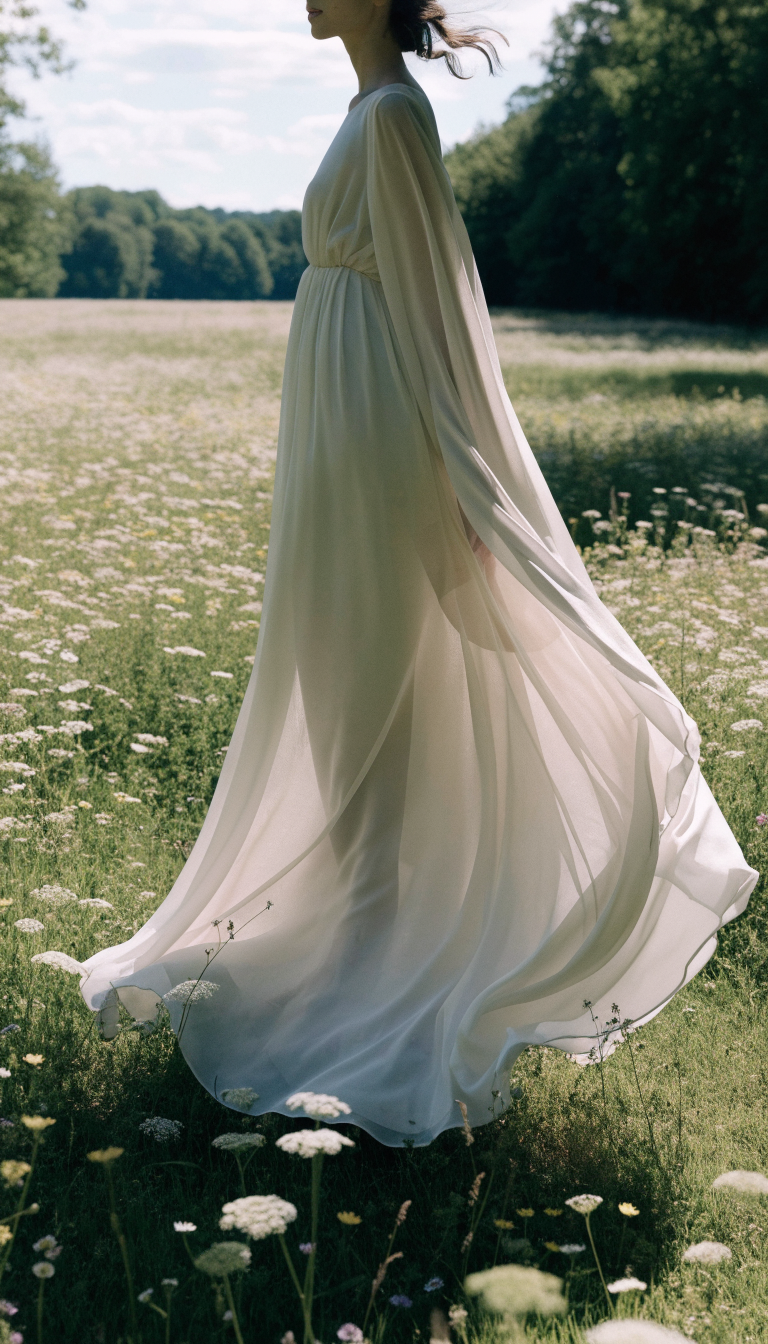
- Proportion check: The high waist can shorten the torso visually; try the gown with the shoes you plan to wear.
- Wind and movement: Lightweight chiffon lifts easily outdoors; a light lining or weighted hem can help.
- Comfort priority: Many wearers find this waistline easier for long periods of standing and sitting.
17. Fitted Corset Bodice with Dramatic Cathedral Train
Internal boning and a structured lining create a supportive bodice that holds its shape through the ceremony. The cathedral-length train extends well behind the gown, requiring careful handling down the aisle and a professional bustle afterward. Italian couture work often emphasizes precise boning placement so the corset feels secure rather than restrictive. This style suits grand venues with long aisles and formal processions.
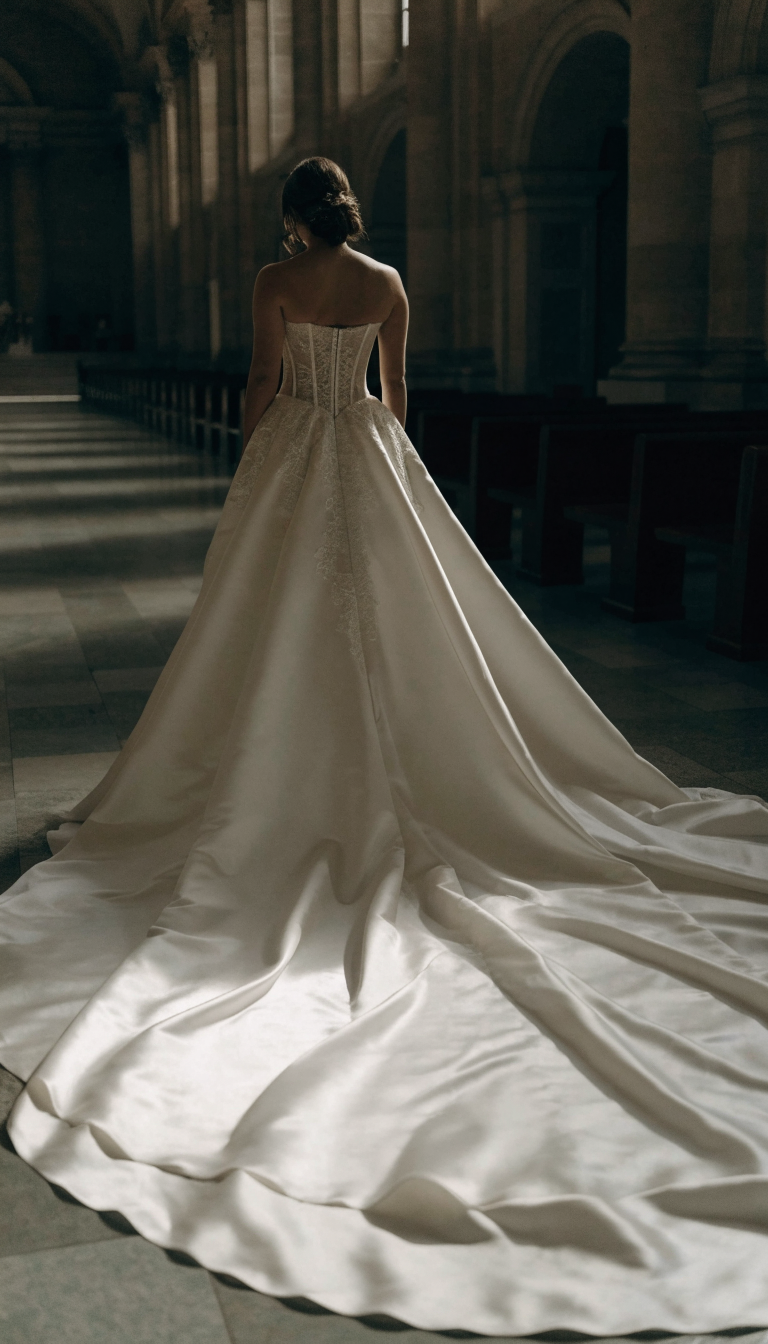
- Train management: Arrange for someone to hold or bustle the train; practice the transition before the day.
- Boning comfort: Multiple fittings allow the seams and boning channels to be adjusted so nothing digs or gaps.
- Timeline note: Elaborate trains and structured bodices usually require longer made-to-order lead times.
18. Soft Square-Neck Crepe A-Line with Clean Lines
A squared neckline paired with matte crepe creates strong geometry without shine or heavy texture. The A-line skirt provides enough volume for graceful movement while the crepe keeps the overall weight moderate. This combination appears in Italian collections that favor modern tailoring with quiet elegance. It photographs cleanly and remains practical for mixed indoor-outdoor celebrations.
- Neckline stability: The square shape needs careful fitting so the corners sit flat against the body.
- Fabric recovery: Crepe can wrinkle; confirm the lining and steaming process so the skirt stays smooth.
- All-day wear: The moderate volume and breathable fabric support long ceremonies followed by dancing.
Bring clear photos of your venue, a list of the activities you expect (ceremony length, dancing, outdoor time), and the shoes you plan to wear to your first fitting. Most Italian-style gowns are made to order, so begin appointments several months ahead to allow for production and the usual series of alterations. A well-chosen dress should feel secure when you sit, walk, and raise your arms—test those movements before you decide.
FAQ
How far in advance should I order an Italian-style wedding dress? Most made-to-order gowns need four to eight months from order to delivery, depending on the atelier and complexity. Start looking early enough to allow for multiple fittings after the dress arrives.
Can I buy a sample Italian wedding dress instead of ordering new? Sample sales offer lower prices on dresses that have been tried on, but sizes are limited and minor wear is common. Factor in the cost of professional cleaning and any needed repairs or resizing.
How many fittings are typical? Most brides need two to four fittings. The first focuses on overall fit and structure; later appointments refine the hem, bustle, and any remaining comfort issues.
Does the fabric choice change how the dress photographs? Matte crepe and soft lace tend to photograph with less glare in bright outdoor light, while satin and mikado catch light more dramatically. Consider both the venue lighting and how much shine you want in the final images.