
A Muslimah wedding dress succeeds when coverage, movement, and silhouette work together rather than compete. High necklines, opaque long sleeves, and fully lined fabrics keep the focus on the gown’s lines while a coordinated hijab finishes the look without gaps or bulk. The choices below group practical silhouettes, fabric behaviors, and modest constructions so you can match the dress to your venue, climate, and how long you need to sit, walk, or dance.
1. Satin A-Line with High Neck and Fitted Sleeves
A smooth A-line in duchess or crepe-back satin defines the waist then releases into a gentle skirt that moves freely. The high bateau or mock neck creates a clean line under a hijab, while fitted long sleeves stay in place when you raise your arms. Heavier satin holds structure in photos and resists wrinkling better than thin polyester versions, though it shows every seam of undergarments. Pair it with a matte chiffon or silk hijab so the upper body does not reflect light harshly under ceremony lighting.
Opacity check Hold the sleeve and skirt against a bright window; quality satin should not reveal skin tone or lining edges. Sitting test Lower into a chair for a full minute; the skirt should pool softly without pulling the bodice forward. Alteration note Plan an extra fitting if the sleeve length or neck height needs adjusting after the hijab is pinned in place.
2. Lined Lace A-Line for Romantic Detail
Lace over an opaque satin or crepe base gives texture without relying on sheer panels. Full-length sleeves and a high neck keep the floral pattern visible while the lining prevents flash-through in photographs. Corded or slightly raised lace holds its shape next to a plain hijab; very dense lace pairs better with a simple wrap so the patterns do not compete. The A-line skirt balances the visual weight of the lace and allows easy walking down an aisle or across a garden lawn.
Lining priority Request the underlayer at the order stage rather than during later alterations so seams sit flat. Movement note Swing your arms and lift them as if holding a bouquet; lined sleeves should not ride up or bind at the elbow. Venue match The detail reads clearly in both indoor formal settings and soft outdoor light without needing heavy jewelry.
3. Duchess Satin Ball Gown with Covered Bodice
A structured ball gown uses a fitted, high-neck bodice and long sleeves to anchor the full skirt so volume does not overwhelm the modest upper half. Medium-weight duchess satin supports the shape without the extreme weight of multiple petticoats. The skirt’s width lets you stride and sit more comfortably than a tightly fitted gown, though the overall volume requires space in a car and careful management of any train. A neat hijab wrap keeps attention on the silhouette rather than competing layers at the shoulders.
Weight warning Ask the salon for the approximate finished weight; very full satin skirts can feel heavy by the end of a long reception. Bustle plan Confirm whether a bustle is needed and practice it with your helper before the day. Budget tier Full ball gowns with custom lining and sleeve work usually sit in the mid-to-higher made-to-order range.
4. Matte Crepe Column for Clean Lines
Crepe drapes close to the body with a soft matte finish that photographs without shine. A high boat neck, long fitted sleeves, and a straight or gently flared skirt create a modern column that skims rather than clings. The fabric’s natural weight helps seams lie flat, yet it reveals every contour of shapewear or a bra, so accurate undergarments matter. This silhouette works well for indoor ceremonies or minimalist venues where the cut itself supplies the interest.
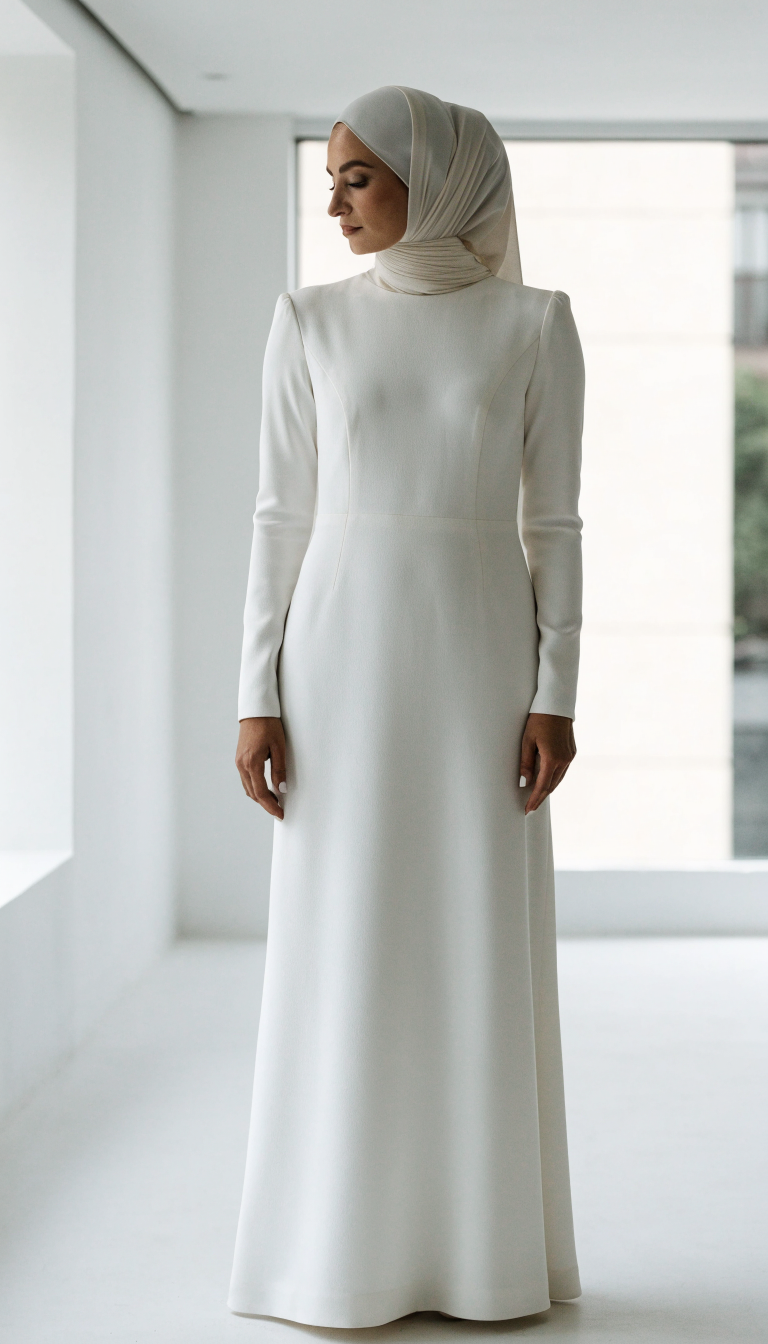
Undergarment test Wear your chosen shapewear to every fitting; crepe shows lines more readily than lace or structured satin. Heat comfort The matte surface stays cooler than glossy satin in warm rooms, though full coverage still traps some body heat. Hemming note Column hems need precise length for your shoes; bring the exact pair to the final fitting.
5. Lined Chiffon A-Line with Soft Bishop Sleeves
Fluid chiffon, fully lined, creates movement without bulk. A high gathered neck and long bishop or gently flared sleeves add softness while remaining opaque. The lightweight layers suit spring or indoor venues where heavier fabrics would feel stifling, and the A-line skirt lifts easily for stairs or dancing. Choose a matching or slightly matte hijab so the airy fabric does not compete with a shiny scarf.
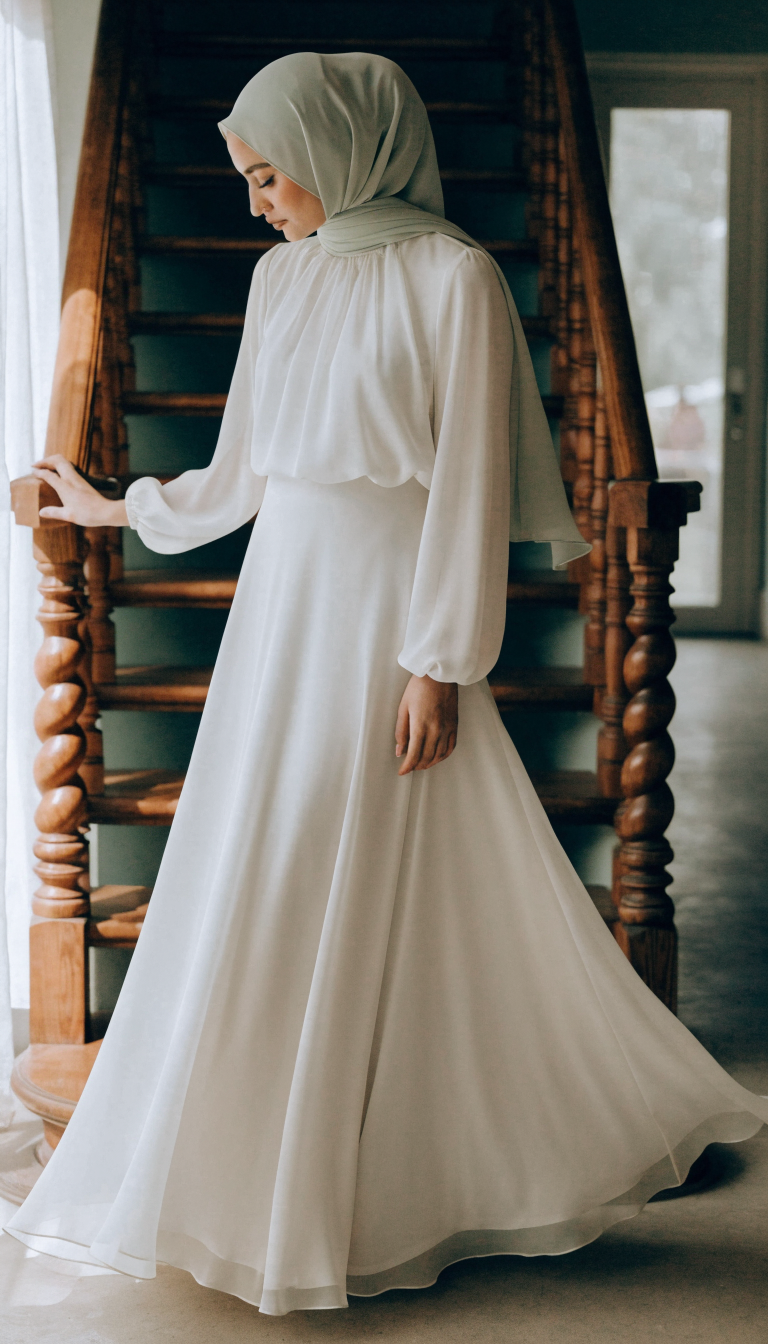
Layer check Confirm the lining extends through the sleeves and bodice; unlined chiffon is rarely suitable for full coverage. Dance-floor ease The light weight lets you move freely, though the fabric can catch on rough surfaces if not finished carefully. Season fit Ideal for milder weather or air-conditioned halls; avoid for very cold outdoor ceremonies unless layered.
6. Modest Fit-and-Flare with Opaque Coverage
A fit-and-flare or soft mermaid follows the torso then flares from the knee, offering shape while long opaque sleeves and a high neck maintain coverage. Matte crepe or properly lined lace works better than thin stretch fabrics that cling. The flare gives walking room that a true mermaid often lacks, yet the fitted upper half still needs careful seam placement so nothing pulls when you sit. Pair with a simple hijab so the silhouette stays the focus.
Sitting check Sit and stand several times; the flare should release without the bodice riding up. Fabric caution Thin stretch materials can show undergarment edges and feel less secure under a photographer’s flash. Shoe pairing A moderate heel keeps the hem from pooling excessively while still allowing the flare to show.
7. Empire Waist for Movement and Comfort
An empire silhouette gathers just below the bust and falls in soft folds, creating an easy line that works with long sleeves and a high neck. Lightweight crepe, chiffon, or soft satin lets the skirt move freely for sitting, standing, and dancing without a defined waistband that digs in. The raised waist can lengthen the visual line and feels less restrictive during long celebrations. A coordinated hijab sits cleanly against the simpler upper bodice.
Comfort note The lack of a tight waistband makes this practical for multi-hour events that include seated meals or prayer. Fabric drape Soft materials fall naturally; stiffer fabrics can create unwanted volume under the bust. Alteration simplicity Hemming is usually straightforward, though the gathers need even distribution so the skirt hangs balanced.
8. Cape Overlay on a Simple Base Gown
A lightweight chiffon or organza cape attaches at the shoulders or upper back of a high-neck, long-sleeve gown and falls to the floor or mid-calf. The cape supplies drama and movement while the base dress remains fully covered and easy to manage. Many brides remove or pin the cape after the ceremony for freer dancing. Match the cape’s opacity and color closely to the gown so the layers read as one intentional look with the hijab.
Attachment test Check that the cape sits securely without pulling the neckline or shifting the hijab. Two-look option Confirm whether the cape detaches cleanly so you can transition for the reception. Venue strength The flowing layer photographs well in both formal halls and open garden settings.
9. Bridal Abaya or Layered Maxi Ensemble
An ivory or soft-white abaya in crepe, satin, or structured nida fabric offers full coverage in a silhouette that feels familiar for nikah or mosque settings. An open style layered over a matching high-neck maxi allows the outer piece to be removed later if desired. Subtle pearl trim or tonal embroidery adds detail without weight. The looser cut is practical for sitting on the floor or moving through crowded spaces, and a simple hijab completes the continuous modest line.
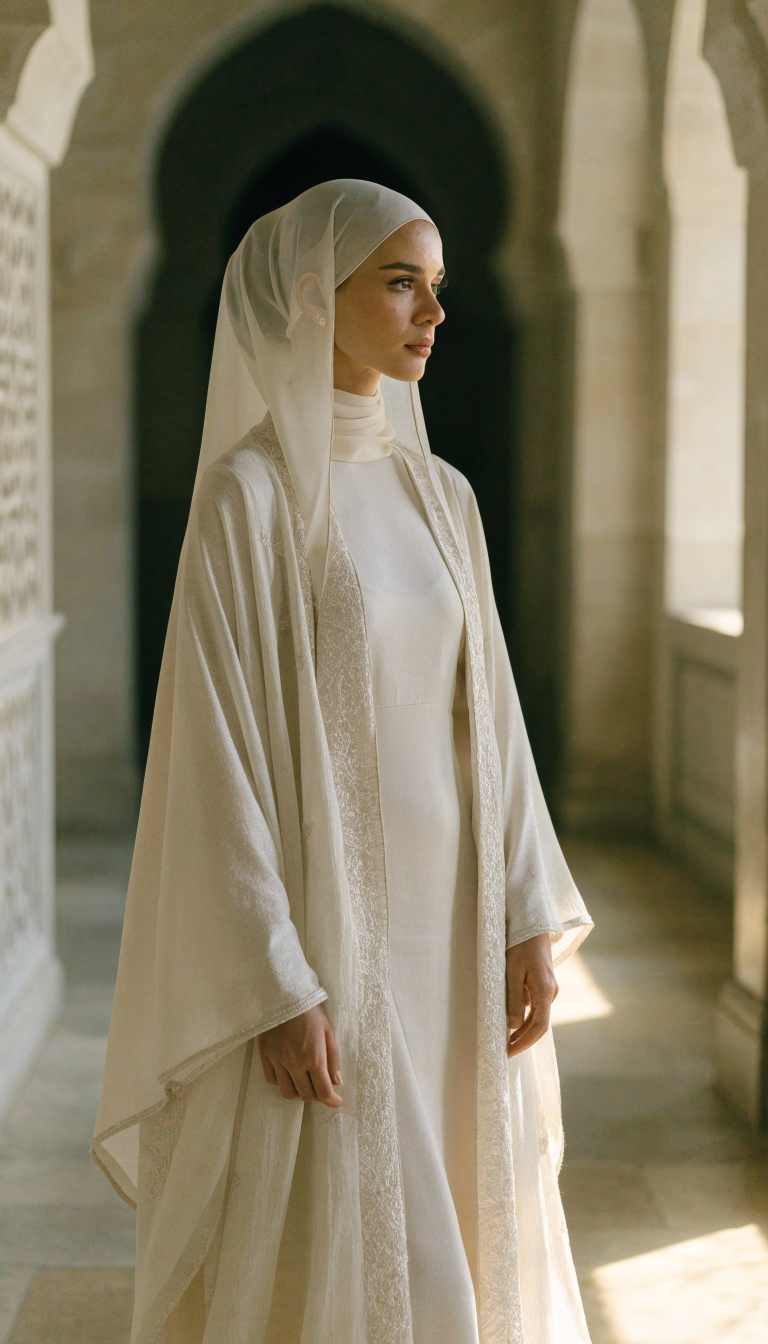
Setting match Especially suitable for home or mosque ceremonies where a voluminous ball gown would feel out of place. Layer flexibility An open outer layer lets you adjust coverage for different parts of the day. Comfort priority The relaxed fit reduces the need for extensive alterations compared with closely fitted gowns.
10. Embellished Kaftan for Cultural Celebrations
A flowing kaftan in satin or crepe with embroidery or beading concentrated at the neck, cuffs, and front panels delivers richness while remaining loose and breathable. The silhouette works for walima or reception events that blend cultural elements, and the long sleeves plus high or modest neckline keep coverage consistent. A coordinating hijab or light dupatta-style drape can echo the embroidery without adding bulk. Choose lighter base fabrics if the event is warm so the added decoration does not feel heavy.
Detail placement Keep embellishment higher on the body so the lower skirt stays light for walking. Cultural flexibility The shape adapts easily to different color palettes and handwork traditions. Heat consideration Open sides or a lighter lining help airflow during longer outdoor or warm indoor celebrations.
11. High-Neck Gown with Pearl or Bead Accents
Concentrated pearls or small beads along the neckline, cuffs, and upper bodice add refinement to an otherwise simple A-line or column in satin or crepe. The high neck creates a seamless base for the hijab while the sparkle draws the eye upward. Full lining under any beaded lace sections prevents transparency. This approach keeps the gown wearable for long hours because the weight of embellishment stays limited rather than covering the entire skirt.
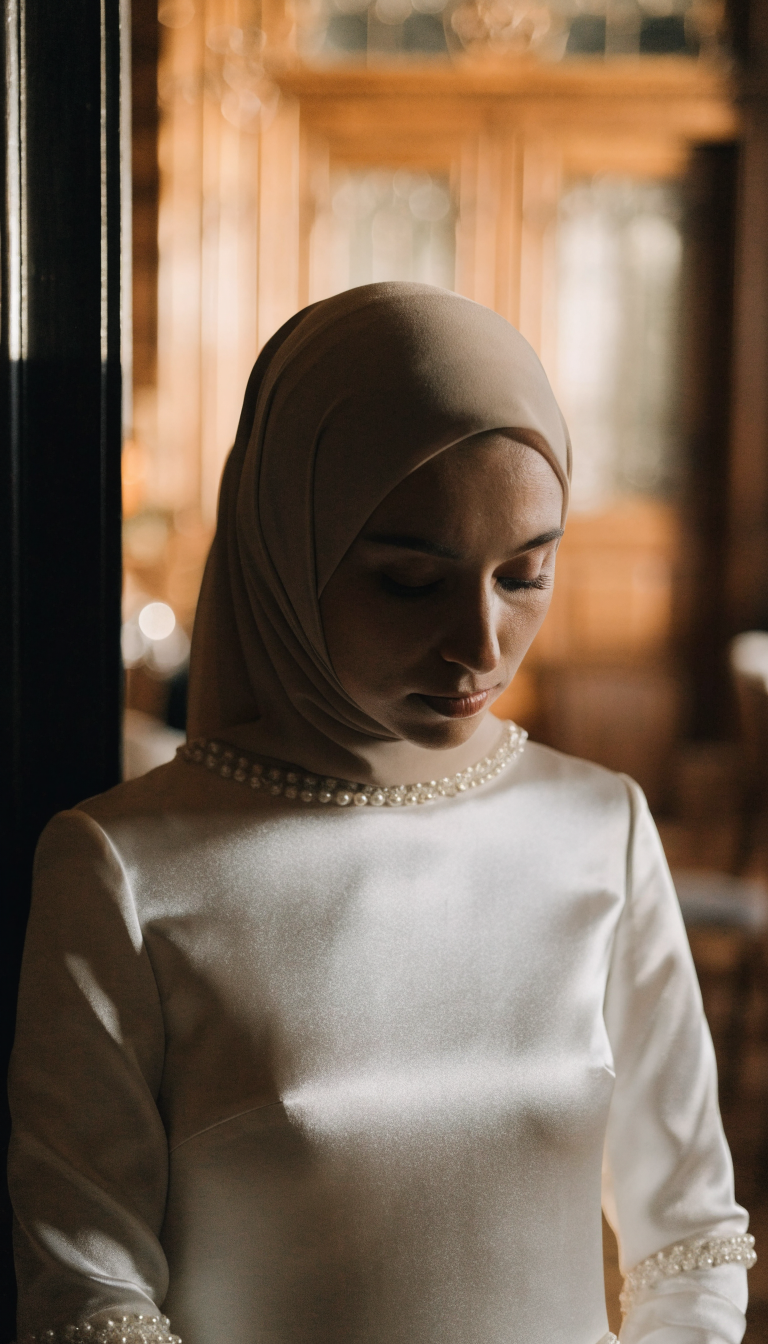
Scratch test Run a finger inside the sleeve cuffs; hand-sewn beads can irritate unless the interior is softly lined. Hijab pairing A plain matte hijab lets the pearl detail remain visible rather than competing with texture. Budget note Focused embellishment usually costs less than all-over beading while still reading as bridal.
12. Minimalist Matte Crepe for an Intimate Nikah
A clean crepe dress with a high neck, long sleeves, and soft A-line or empire skirt relies on precise tailoring and fabric quality rather than decoration. The matte surface photographs calmly under indoor or mosque lighting and feels understated for smaller ceremonies. Because there is little visual distraction, fit and opacity matter more than usual. A matching or slightly softer hijab keeps the entire upper half continuous and quiet.
Quality check Heavier crepe drapes more cleanly and hides minor imperfections better than thin versions. Undergarment match Wear the exact pieces you plan for the day; matte fabric shows every line. Timeline note Simple construction can sometimes move faster through the salon, though custom sleeve and neck work still requires standard lead time.
13. Layered Organza for Volume Without Excess Weight
Organza holds a soft shape and layers well over a lined base, creating fullness that is lighter than solid satin. Long sleeves and a high neck keep the gown modest while the crisp yet airy fabric moves easily in photographs. It suits garden or outdoor ceremonies where a heavy skirt would drag. A simple hijab balances the textured layers so the overall look stays refined rather than busy.
Layer control Too many organza tiers can still add bulk; ask the designer for a balanced count that allows sitting. Weather note The lighter construction works in mild conditions but can feel cool if the venue is air-conditioned or outdoor at night. Steam tip Organza wrinkles less dramatically than chiffon yet still benefits from a light steam before photos.
14. Coordinated Hijab and Gown in Matching Fabric
When the gown and hijab are cut from the same or closely matched satin, crepe, or silk, the neckline and head covering read as one continuous piece. A high neck and long sleeves on an A-line or column silhouette make this pairing especially clean in photographs. The matching fabric reduces visual breaks at the jaw and shoulders. This approach works across many venues and keeps accessory needs minimal—pearl pins or a small brooch are usually enough.
Color match Order the hijab fabric at the same time as the gown so dye lots stay consistent. Pin placement Test the wrap and pins with the finished neckline so nothing creates bulk under the chin. Photo benefit The continuous line photographs clearly from both front and side angles.
15. Detachable Sleeve or Cape Options for Multi-Event Days
A base gown with long sleeves or a high neck can include detachable elements—such as a light cape or additional sleeve layers—so the same dress serves a more formal ceremony and a freer reception. The foundation remains fully modest, while the removable pieces add drama only when wanted. Lightweight chiffon or organza overlays work best so attachment points do not pull or leave marks. Discuss the transition plan with your salon early so seams and closures are secure yet easy to manage on the day.
Transition practice Rehearse removing the detachable piece with a helper so the base gown and hijab stay undisturbed. Closure strength Check that snaps or hooks hold through movement yet release cleanly. Planning note Multi-event adaptations usually require extra fittings and should be decided before the final order.
Most Muslimah wedding dresses are made to order, so several months of lead time is typical, and alterations for sleeves, neck height, or lining often need multiple appointments. Bring your actual hijab, undercap, pins, and shoes to every fitting so the neckline, sleeve length, and hem can be checked together. Prices vary widely by designer, fabric, embellishment, and region; treat any figures you see online as rough starting points only.
Start by deciding how much structure versus movement you want and whether the event is formal, intimate, warm, or multi-part. Shortlist two or three silhouettes that match those needs, then try them with your hijab in place. That single step reveals more about comfort and final appearance than any photo alone.