
Choosing a wedding dress for men starts with matching the garment to the venue’s formality, the climate, and how long you’ll actually be standing, sitting, and dancing. A well-cut wool suit photographs cleanly under mixed lighting and recovers from sitting, while a heavy embroidered sherwani can feel ceremonial yet warm. The styles below are organized by formality and climate first, then by silhouette and fabric behavior, so you can shortlist options that work for the full day rather than just the first photos.
Classic Formal Styles
1. Classic Black Tuxedo with Satin Lapels
A black tuxedo remains the clearest answer for evening black-tie or white-tie events because the satin or grosgrain facing on the lapels creates a controlled sheen that reads formal under artificial light without competing with the couple. The jacket is usually cut with a structured shoulder and a higher armhole so the arms can move for photos and dancing while the torso stays clean. Pair it with a white marcella or plain-front shirt and a black bow tie; the trousers typically carry a single satin braid down the outer seam.
Best evening venues Indoor ballrooms and hotel receptions where lighting is controlled and the dress code is explicitly black tie.
Wool or barathea cloth A mid-weight worsted wool or formal barathea holds the press through dinner and recovers after sitting; avoid anything too lightweight that collapses.
Fitting check for movement Raise both arms and sit; the jacket should not gap at the back or pull at the button. Plan for at least one full alteration appointment.
2. Midnight Blue Tuxedo
Midnight blue reads as formal as black under evening light yet photographs with more depth and less harsh contrast, which helps in dim ballrooms or outdoor evening ceremonies. The cloth is usually the same formal wool or barathea, and the construction follows tuxedo rules: peaked or shawl lapels with a facing, no belt loops, and trousers with a braid. It offers a subtle distinction for the groom or a guest who wants formality without the absolute classic black.
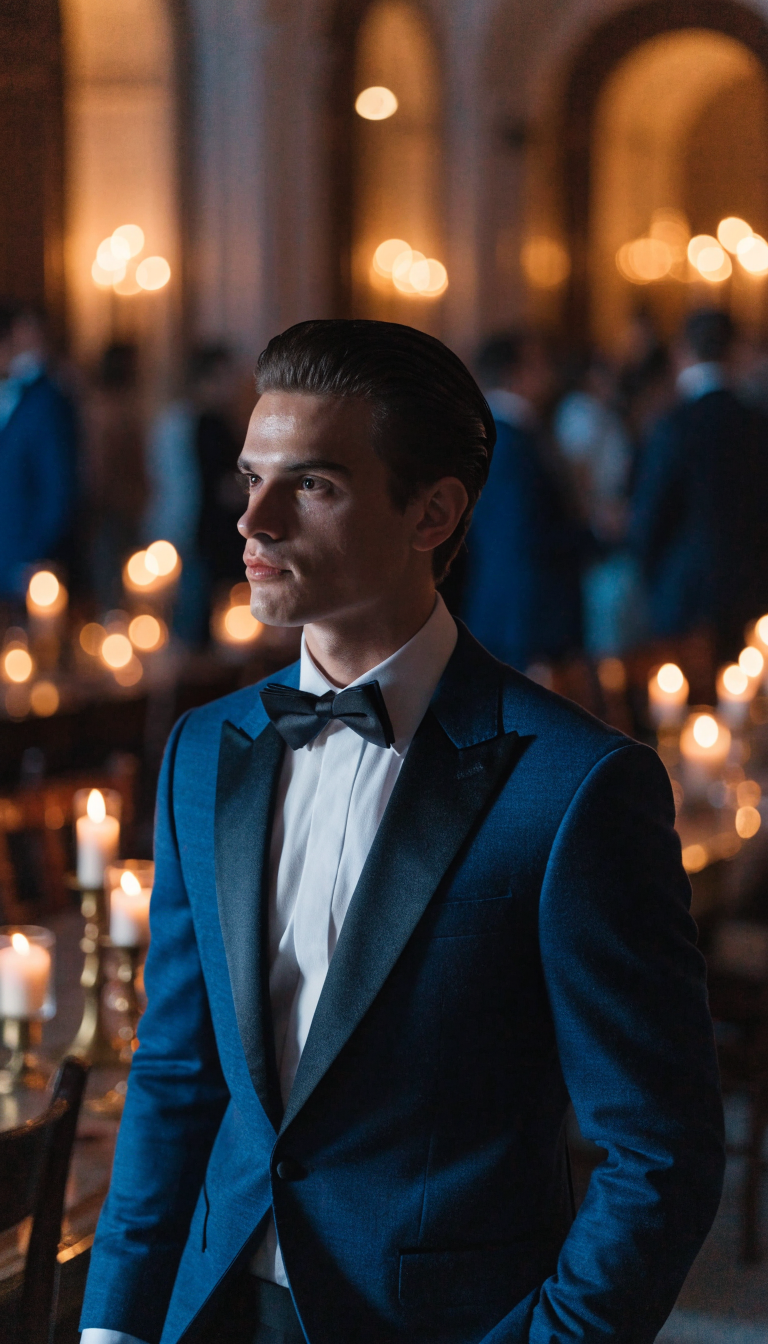
Candlelit or low-light settings The richer color catches warm light more gently than pure black and still satisfies strict black-tie expectations.
Satin or grosgrain finish Look for a smooth, dense face cloth so the lapel facing stays crisp rather than shiny in an uneven way.
Shoe and shirt pairing Black patent or highly polished oxfords and a white shirt keep the look coherent; test the full outfit under the venue’s lighting if possible.
3. Navy Wool Suit for Year-Round Use
A navy worsted wool suit is the most versatile wedding dress for men because the color works for both daytime and evening, formal and semi-formal, and the cloth drapes cleanly while resisting wrinkles better than linen or cotton. Mid-weight options around 280–320 g/m² handle temperature swings from air-conditioned rooms to outdoor photos. Single- or double-breasted cuts are both appropriate; the key is a shoulder that sits on your own frame rather than forcing a slim or oversized shape.
Most venues and seasons Church, garden, hotel, or destination settings where the dress code is formal or cocktail rather than strict black tie.
Cloth recovery after sitting Worsted wool’s natural crimp lets the fabric spring back; avoid overly fine Super 150s if you expect a lot of movement or packing.
Alteration and re-wear note Shoulder and sleeve adjustments are usually straightforward; a navy suit remains useful for other formal events after the wedding.
Daytime and Warm-Climate Options
4. Ivory or Cream Suit for Daytime Ceremonies
An ivory or cream wool or wool-silk blend suit creates a lighter presence in natural daylight and photographs well against greenery or sand without the starkness of pure white. The cloth should still have enough structure to hold a shoulder and lapel; a pure white cotton or linen can look washed out or translucent under strong sun. It pairs with a soft blue or pale pink shirt and a textured or knitted tie for daytime formality.
Garden and beach ceremonies Daytime outdoor venues where black or navy would feel heavy and the light is bright.
Fabric weight and lining Choose an unlined or half-lined jacket in a lighter wool so heat does not build; full canvas construction still helps the shape.
Undergarment and shirt test Check that the shirt stays opaque and that any shapewear or undershirt does not show at the collar or through the fabric.
5. Linen Suit for Heat and Outdoor Settings
Linen’s open weave moves air better than almost any other suiting fiber, which makes it practical for summer beach, garden, or destination weddings where temperatures stay high for hours. It wrinkles quickly and the creases become part of the look rather than a flaw; a linen-cotton or linen-wool blend reduces the most extreme creasing while keeping the breathability. Colors that work are sand, stone, light blue, or soft gray.
Hot outdoor venues Beaches, vineyards, and daytime gardens where wool would feel heavy and polyester would trap heat.
Embrace the natural crease Expect visible texture after sitting or traveling; a steamer at the venue helps, but do not expect a pressed wool finish.
Shoe and pant break Lighter leather loafers or derbies pair better than heavy oxfords; confirm the trouser hem clears the shoe cleanly on grass or sand.
South Asian and Ethnic Styles
6. Embroidered Sherwani
A sherwani is a long, structured coat that falls to the knee or below, worn over a kurta with churidar or straight trousers. It carries the highest ceremonial weight for traditional North Indian, Pakistani, or Bangladeshi wedding ceremonies because the length and embroidery read from a distance. Fabrics such as silk brocade, raw silk, jacquard, or velvet support heavy zari or thread work; lighter silk or cotton-silk versions exist for warmer days.
Main ceremony or baraat The length and detail make it the strongest choice when the event is the primary wedding ritual rather than a cocktail reception.
Weight and heat trade-off Heavy embroidery and layered construction can feel warm after several hours; choose a lighter base cloth and test sitting and walking.
Layering and footwear A matching or complementary kurta underneath, plus traditional shoes or mojaris, complete the silhouette; plan the full height with the shoes you will wear.
7. Bandhgala or Jodhpuri Jacket
The bandhgala is a hip-length jacket with a closed stand collar, paired with tailored trousers. It functions like a formal Indian equivalent of a tuxedo jacket—structured, sharp, and versatile for receptions, engagements, or Indo-Western events. Fabrics range from suiting wool and velvet to raw silk or linen blends; minimal embroidery keeps it cleaner, while subtle thread work adds ceremony without the bulk of a full sherwani.
Receptions and cocktail events Shorter length and tailored cut allow easier movement for dinner and dancing than a long sherwani.
Collar and button test The closed neck should sit comfortably without choking; metal or covered buttons change the formality, so try both if available.
Reusability after the wedding A well-cut bandhgala in a solid or lightly textured cloth works for other formal evenings, unlike heavily embroidered pieces.
8. Kurta Set with Churidar or Straight Pants
A kurta is a tunic-length garment that can be plain or lightly embroidered, worn with churidar, pajama, or straight trousers. In silk, chanderi, or cotton-silk it reads festive yet remains more breathable and less structured than a sherwani, making it practical for daytime functions, mehendi, or guests who need to move between events. The silhouette is looser through the body, which helps in heat and for long hours of sitting.
Daytime or multi-function days Haldi, mehendi, or daytime ceremonies where comfort and repeated wear matter more than maximum ceremony.
Fabric drape and opacity Silk or cotton-silk holds a soft drape and photographs with depth; check that lighter colors do not become sheer when backlit.
Ease of movement and restroom access The looser cut and simpler closure make sitting, standing, and quick changes easier than longer, heavier garments.
Special and Modern Cuts
9. Velvet Dinner Jacket
A velvet jacket—often in deep navy, burgundy, or black—adds plush texture that catches low evening light and works as a statement piece for winter or indoor receptions. It is usually worn with matching or contrasting formal trousers rather than as a full suit; the pile feels soft yet can trap heat, so it suits cooler venues. Pair with a simple shirt and bow tie or narrow tie so the fabric remains the focus.
Evening or winter indoor settings Candlelit ballrooms or cooler-season receptions where the texture photographs richly and heat is not an issue.
Pile and care notes Velvet shows marks more easily than wool; avoid heavy bags or rough surfaces and steam rather than iron directly.
Jacket-off flexibility Once the jacket comes off after dinner, the look depends on the shirt and trousers, so keep those polished.
10. Charcoal Three-Piece Suit
A charcoal three-piece in worsted wool adds formality through the waistcoat while remaining more flexible than a tuxedo. The waistcoat keeps the silhouette sharp when the jacket is removed later in the evening, which is useful for reception photos. The color works across most venues and seasons and pairs cleanly with white or light blue shirts and silk ties.
Formal daytime or evening Church, hotel, or ballroom settings where a tuxedo feels too rigid but a two-piece feels underdressed.
Waistcoat and temperature The extra layer adds warmth and structure; remove it only if the venue is warm and the shirt underneath stays neat.
Fit through the middle The waistcoat should close without pulling; have the trousers and jacket tailored together so the proportions stay balanced.
11. Double-Breasted Suit
A double-breasted jacket in navy or charcoal wool creates a stronger horizontal line and a more formal presence than a single-breasted cut. It works best when the wearer has enough chest and shoulder structure for the overlapping front to sit cleanly; the peak lapels add height. The style photographs well in both indoor and outdoor formal settings and remains reusable.
Formal venues needing presence Ballrooms, historic venues, or evening events where a single-breasted suit might recede.
Button and stance test Most double-breasted jackets are worn fastened; check that the buttons close without strain and that the lapels lie flat.
Tailoring complexity Shoulder and chest adjustments matter more here; expect a slightly higher alteration cost than a simple single-breasted suit.
12. Pastel or Soft-Color Suit
Soft blue, sage, blush, or light gray suits in lightweight wool or wool-linen blends bring color into daytime or garden weddings without looking costume-like. The cloth must still have enough body to hold the shape; very pale or shiny fabrics can photograph poorly in strong sun. They pair with white shirts and textured ties or open collars for a modern, less rigid look.
Garden and spring daytime events Outdoor or semi-formal settings where navy or black would feel heavy and the color palette is soft.
Color under natural light Test the fabric outdoors; some pastels shift or wash out, while others stay true.
Undergarment visibility Lighter colors show more; choose an opaque shirt and confirm that any undershirt or shapewear stays invisible.
13. Tweed or Textured Wool for Autumn
A tweed, flannel, or herringbone wool suit adds tactile surface interest that photographs well in fall light and works for countryside, barn, or cooler indoor venues. The cloth is usually heavier, so it provides warmth without needing extra layers, and the texture hides minor wrinkles. Colors such as brown, olive, rust, or charcoal keep the look grounded.
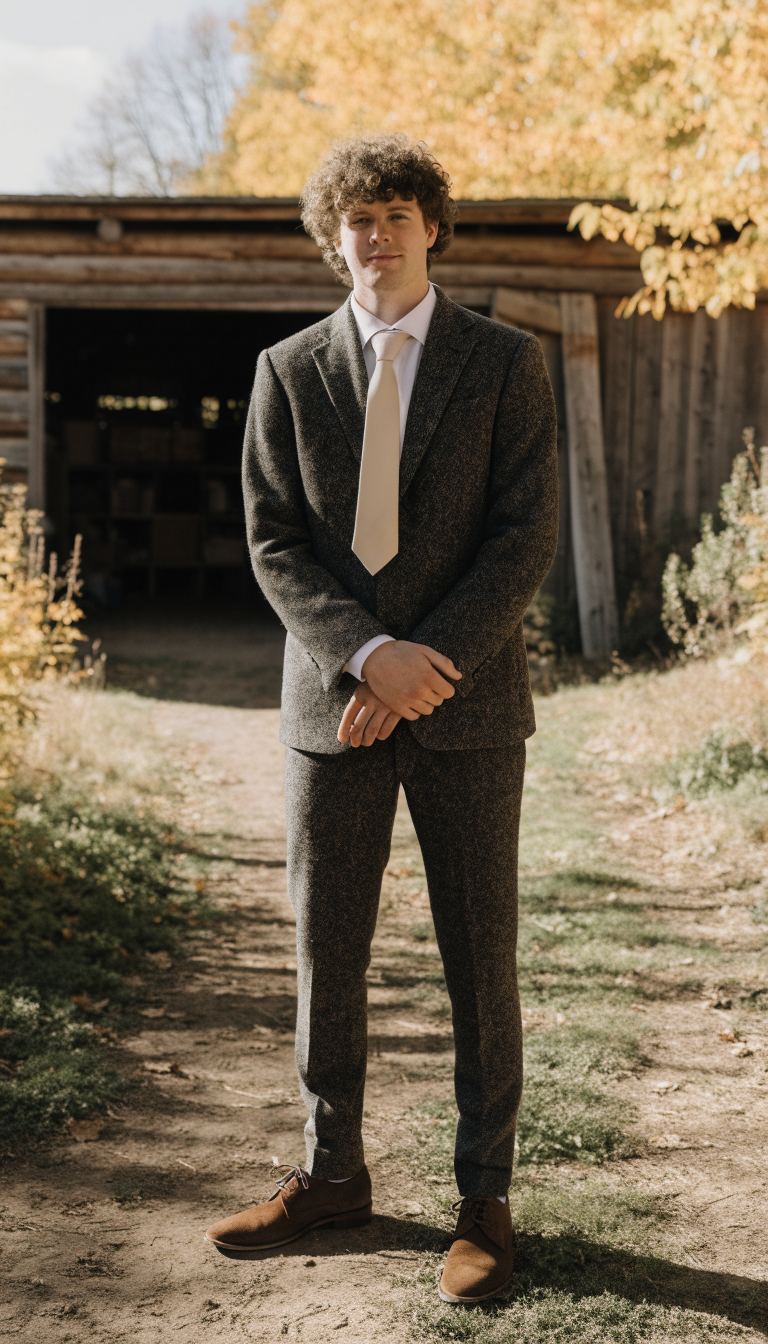
Autumn outdoor or rustic venues Gardens, estates, or barns where a smooth wool would feel too polished and the temperature is mild to cool.
Texture and wrinkle behavior The surface variation makes small creases less noticeable than on a smooth worsted cloth.
Shoe and accessory pairing Suede or textured leather shoes and a knitted or wool tie complement the cloth better than high-shine patent.
14. Indo-Western Hybrid Jacket
An Indo-Western piece combines a bandhgala-style collar or asymmetric detailing with a more tailored, suit-like length and Western trousers. It bridges traditional and contemporary expectations for mixed-culture weddings or receptions where a full sherwani feels too formal and a plain suit feels too plain. Fabrics are typically wool, silk blends, or structured cotton.
Fusion or contemporary ceremonies Events that mix cultural elements or have a modern dress code where pure ethnic or pure Western would feel incomplete.
Collar and proportion check The stand collar should not compete with a shirt collar; confirm the jacket length hits at a clean point on the hip.
Movement for dancing The shorter cut and lighter construction generally allow freer arm movement than a long embroidered coat.
15. Morning Suit for Formal Daytime
A traditional morning suit uses a black or charcoal cutaway jacket with peaked lapels, striped or formal trousers, a waistcoat, and a tie rather than a bow tie. It is the correct daytime formal option for certain British or very traditional Western ceremonies held before evening. The silhouette is longer and more structured through the front, so fit at the waist and shoulder is critical.
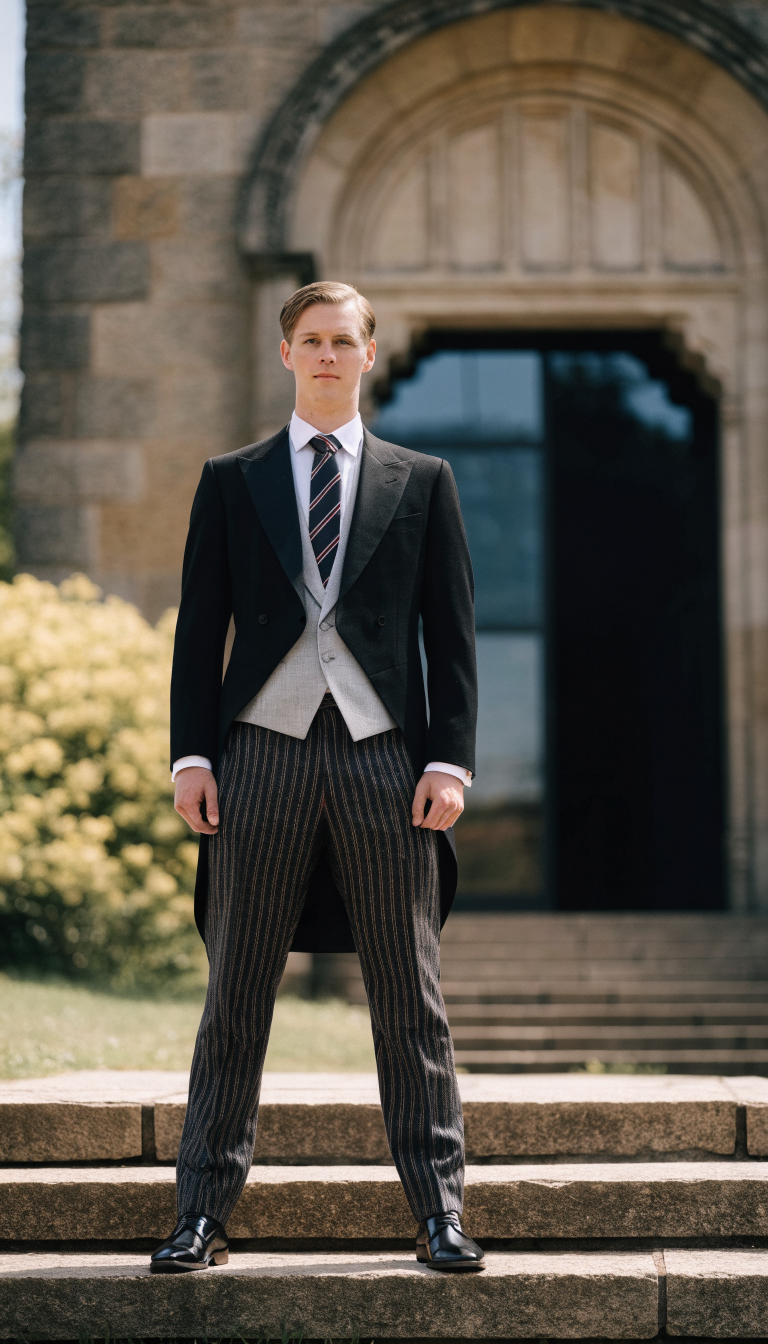
Formal daytime church or estate Events that specify morning dress or hold a high daytime formality where a regular suit would under-deliver.
Trouser and waistcoat coordination The trousers are often a different cloth or pattern; they must be tailored as a set with the jacket.
Limited re-wear The cutaway shape is specific to the occasion, so consider rental if you will not need it again.
Prices for these styles are approximate and vary by designer, fabric, region, whether the piece is off-the-rack or made-to-measure, and the cost of alterations. A well-fitted ready-to-wear wool suit often falls in a moderate range, while custom embroidered sherwanis or bespoke tuxedos cost more.
Bring the shoes you plan to wear, any undergarments or shapewear, and clear photos of the venue and dress code to every fitting. Start looking several months ahead for made-to-order or heavily altered pieces so there is time for multiple fittings and any steaming or pressing before the day.
FAQ
How far in advance should I order a wedding suit or sherwani? Made-to-measure or custom pieces commonly need several weeks to a few months depending on the maker and embroidery level. Off-the-rack options can be faster but still require alteration time. Begin shopping once the date, venue, and dress code are fixed.
Can I wear a sample or rental tuxedo? Yes for many formal events. Confirm the condition of the cloth, the fit through the shoulders (which are harder to alter), and whether the rental includes pressing. Bring your own shirt and shoes if the rental fit is uncertain.
How many fittings should I expect? Most tailored suits or jackets need at least two fittings: one for initial adjustments and one to confirm the final balance after any major changes. Heavy embroidery or complex constructions may need an extra check.
What should I do if the venue is both hot and formal? Choose the lightest cloth that still meets the formality—tropical-weight wool, a linen blend, or a lighter silk for ethnic styles—and prioritize an unlined or half-lined jacket. Plan for a jacket-off option later in the day.