
A tea length wedding dress ends at mid-calf, roughly between the knee and the ankle, so the hem clears the ground while still reading as formal. This length removes the weight and management of a floor-sweeping skirt, keeps shoes visible, and works especially well for garden, beach, courthouse, daytime, or destination ceremonies where terrain, heat, or ease of movement matter. The styles below are grouped by silhouette, fabric behavior, and construction details so you can match the dress to your venue, climate, and how you actually plan to move through the day. Prices vary widely by designer, fabric, region, and alterations; the ranges noted are approximate only.
1. Full-Skirt A-Line Tea Length
The full-skirt A-line at tea length pairs a fitted bodice with a skirt that flares from the natural waist or just below it, often supported by a light petticoat. The volume stays controlled because the hem stops at mid-calf, so the silhouette feels celebratory without the bulk of a floor-length ball gown. Crisp satin or structured mikado holds the shape cleanly in photos, while softer tulle layers move more freely. This version photographs well from multiple angles and leaves room to walk and turn without constant skirt handling.
- Garden and daytime settings: The hem stays clean on grass or gravel and catches light without pooling.
- Petticoat volume control: A single or double layer keeps the skirt airy rather than stiff.
- Hemming precision: The mid-calf line needs exact placement; bring your shoes to every fitting.
2. Fit-and-Flare Tea Length
A fit-and-flare tea length follows the body through the bust and waist before releasing into a gentle flare around the hip, ending cleanly at mid-calf. The shape creates a defined line without the constriction of a mermaid skirt that continues to the floor. Fluid crepe or charmeuse drapes smoothly over the hips and recovers after sitting, while a light lining prevents cling in warm weather. This silhouette works for brides who want a closer fit but still need stride length for walking and dancing.
- Dance-floor ease: The flare starts high enough that the skirt does not bind at the knees.
- Crepe recovery: Matte crepe holds its shape after sitting and resists obvious wrinkles.
- Strap and bra check: Confirm built-in cups or a compatible strapless bra before the first alteration.
3. Column Sheath Tea Length
The column sheath is the most streamlined tea-length option: a continuous line from shoulder or neckline to mid-calf with minimal flare. It relies on precise tailoring and fabric with good recovery so the dress skims rather than clings. Matte crepe or lightweight mikado gives structure without shine, and a smooth lining reduces visible undergarment lines. This style suits city halls, modern venues, and brides who prefer a clean, architectural look over volume.
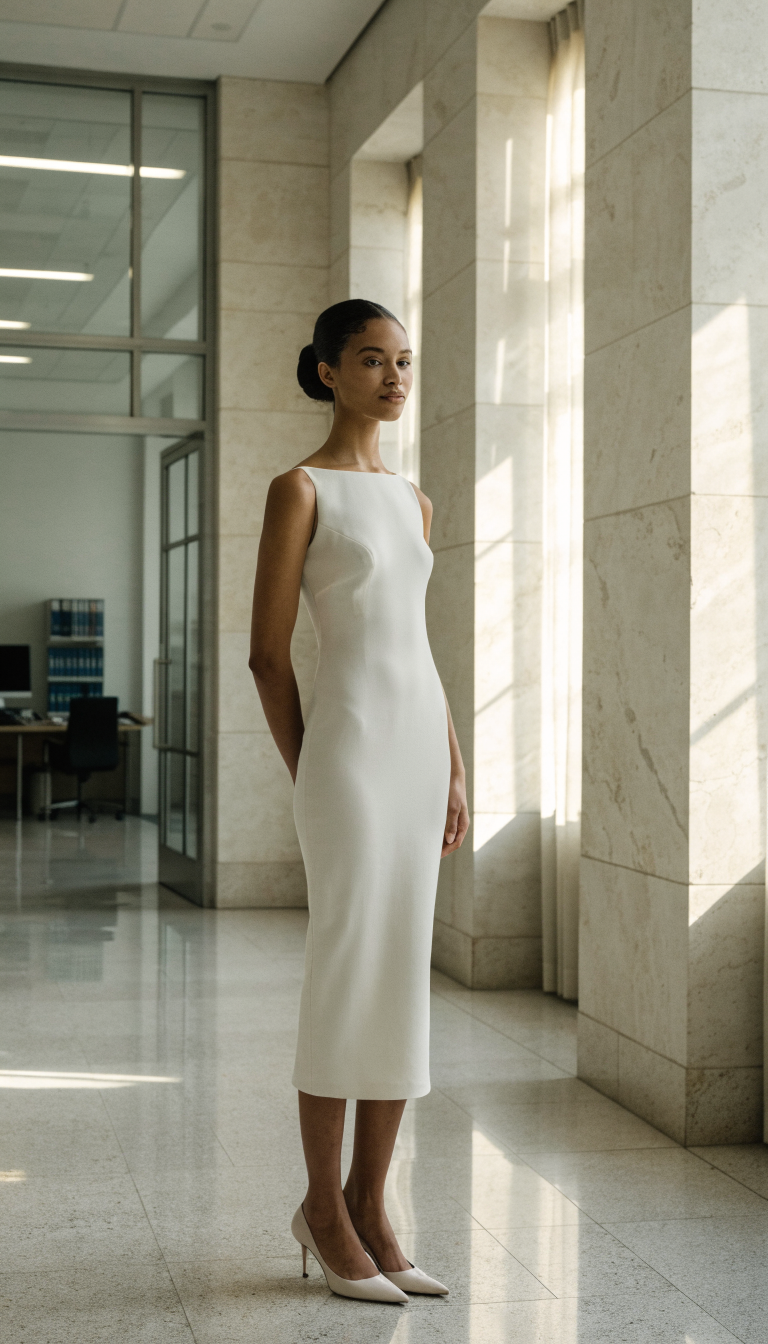
- City and courthouse venues: The short hem and clean lines feel intentional in compact indoor spaces.
- Sitting test: Sit, cross, and stand in the fitting room to check for pulling across the hips.
- Shoe pairing: Ankle boots or low heels keep the proportion balanced without adding height drama.
4. Lace Overlay Tea Length
A lace overlay tea length places floral, geometric, or guipure lace over a base fabric, usually satin, crepe, or tulle. The lace supplies texture and coverage while the shorter hem keeps the overall weight lighter than a floor-length lace gown. Alençon or Chantilly lace behaves differently: denser motifs add structure, while finer lace moves more softly. Alterations must preserve the pattern match at seams and hems, so plan extra time for handwork.
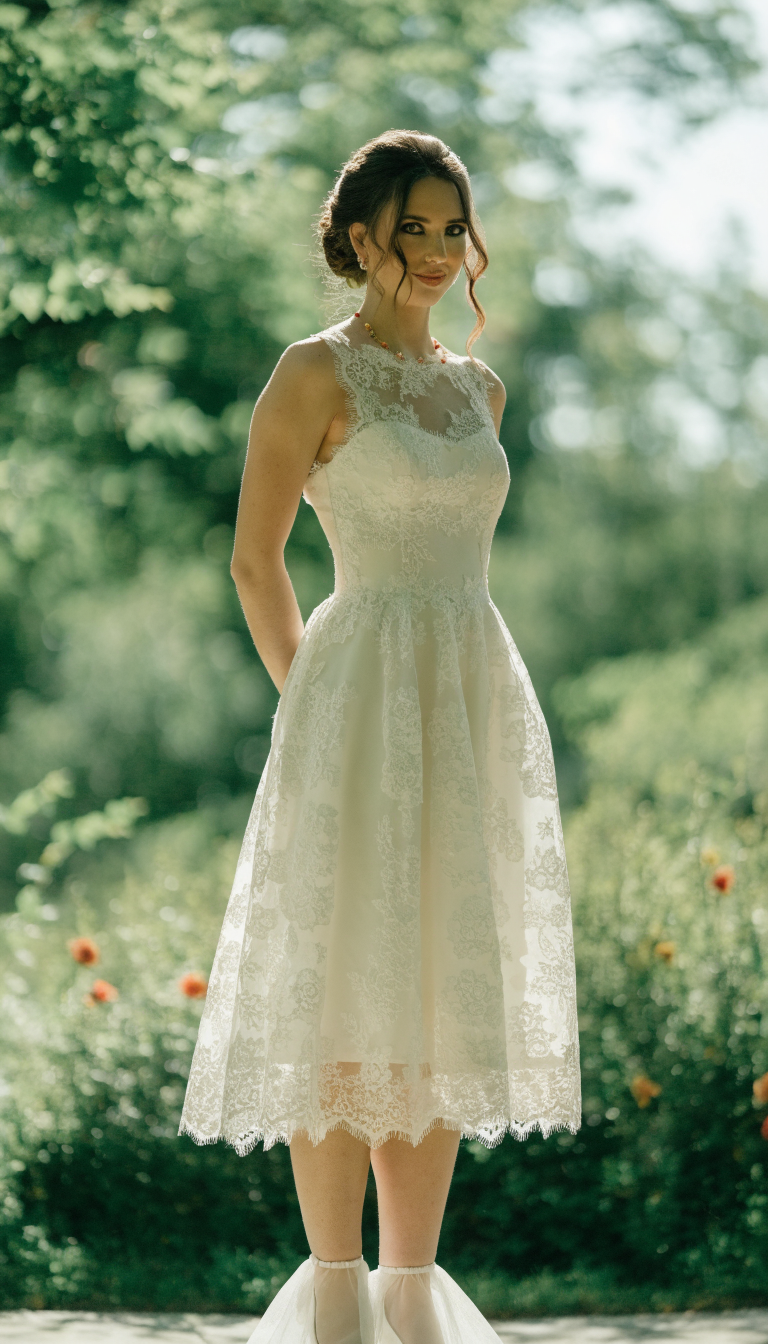
- Romantic outdoor light: Lace catches soft daylight without the heaviness of dense beading.
- Pattern matching note: Hemming or taking in requires careful motif alignment, which adds labor.
- Layer choice: A soft underlayer prevents the lace from feeling scratchy against the skin.
5. Lightweight Chiffon A-Line
Chiffon in an A-line tea length creates soft, continuous movement that photographs as fluid rather than structured. Multiple layers or a single layer over a lining can be tailored for opacity, and the fabric breathes well in heat. It wrinkles more easily than crepe or satin, so steaming before the ceremony is usually necessary. This version is practical for beach or garden weddings where breeze and temperature are factors.
- Heat and breeze response: Chiffon lifts gently in outdoor air and dries faster if damp.
- Opacity check: Hold the fabric to light in the salon to confirm lining coverage.
- Steaming plan: Factor a final steam into the day-of timeline; chiffon shows creases quickly.
6. Structured Mikado A-Line
Mikado is a firm, mid-weight satin with a subtle sheen and excellent body. At tea length in an A-line, it holds a crisp edge at the hem and maintains shape through hours of wear without collapsing. The fabric feels substantial yet does not cling, and it photographs with clean lines under both natural and artificial light. Because mikado shows needle marks, alterations need careful handling and longer lead time.
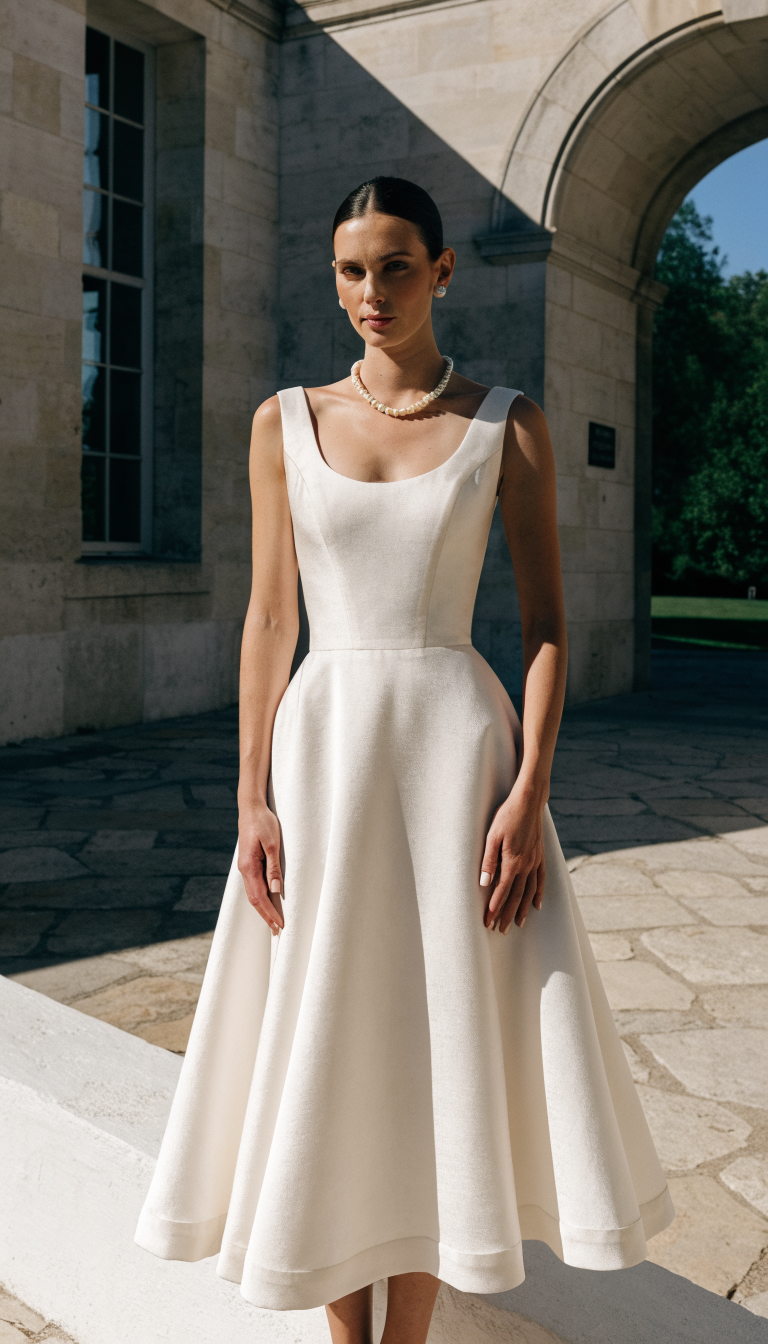
- Formal daytime polish: The structured hand keeps the dress looking composed in bright light.
- Alteration caution: Silk or polyester mikado requires precise stitching to avoid visible marks.
- Temperature note: The denser hand retains more warmth than chiffon, so consider indoor or milder climates.
7. Off-the-Shoulder Tea Length
An off-the-shoulder neckline sits just below the shoulders, framing the collarbone and upper arms while the tea-length skirt keeps the lower half light. The bodice usually includes boning or a fitted lining for support. Soft satin or lace overlay works well; heavier fabrics can pull the neckline downward. This style pairs cleanly with short veils or hair ornaments and leaves the arms free for movement.
- Support check: Try the dress with the undergarments you will wear; the neckline should stay in place when you raise your arms.
- Outdoor photo light: Bare shoulders photograph well in soft daylight without the bulk of long sleeves.
- Fitting adjustment: Strap length and boning placement often need fine-tuning at the first appointment.
8. Three-Quarter Sleeve Lace Tea Length
Three-quarter sleeves in lace or a lace-and-chiffon combination add coverage without the warmth of full-length sleeves. The sleeves end around the mid-forearm, balancing the mid-calf hem and creating a proportion that works for modest preferences or cooler seasons. Lace sleeves move more freely than structured fabric and can be lined or left semi-sheer. This construction is common in vintage-inspired designs and photographs with clear arm lines.
- Seasonal flexibility: Useful for spring or fall when full sleeves feel too warm but bare arms feel incomplete.
- Sleeve mobility: Raise and lower your arms in the fitting to confirm the lace does not bind.
- Modesty option: The combination of sleeve and mid-calf hem provides coverage without floor-length fabric.
9. Cap-Sleeve or Flutter-Sleeve Tea Length
Cap or flutter sleeves are short, soft extensions that cover the shoulder cap without restricting the arm. They add a gentle frame to the neckline and work especially well with A-line or fit-and-flare skirts at tea length. Lightweight fabrics such as chiffon or soft lace keep the sleeves from feeling heavy. This detail is practical for daytime ceremonies where full sleeves are unnecessary but some shoulder coverage is preferred.
- Daytime coverage: Provides a finished look in bright outdoor light without long-sleeve heat.
- Fabric weight: Choose soft, fluid materials so the sleeves do not stand away from the body.
- Alteration ease: Short sleeves are generally simpler to adjust than long or three-quarter versions.
10. V-Neck Tea Length
A V-neckline creates a vertical line that elongates the torso and pairs cleanly with almost any tea-length skirt. The depth can be modest or deeper depending on the design; many include a modesty panel or built-in cups. Fluid fabrics such as crepe or chiffon follow the V smoothly, while structured satin holds a sharper angle. This neckline is straightforward to alter and works across a range of body proportions.
- Torso balance: The V draws the eye upward and can visually lengthen the midsection.
- Cup and panel fit: Confirm whether the built-in support matches your preferred undergarment.
- Venue range: Suitable for both garden ceremonies and indoor venues because the line remains polished at any formality level.
11. Sweetheart Neckline Tea Length
The sweetheart neckline curves over the bust and meets at the center, creating a classic bridal shape that stops above the mid-calf hem. It is usually paired with boning and built-in cups for support. Satin or lace overlay holds the curve cleanly; softer fabrics may need additional structure. The neckline photographs well in both close and full-length shots and leaves the arms free.
- Bust support test: Lean forward and raise your arms in the fitting to check stability.
- Structured fabric preference: Firmer materials maintain the sweetheart curve better than very soft chiffon.
- Accessory pairing: A short veil or delicate necklace sits cleanly above the curved neckline.
12. High-Neck or Illusion Tea Length
A high neckline or illusion panel covers the collarbone and upper chest while the rest of the dress remains tea length. Illusion fabric is a fine mesh that can be plain or overlaid with lace, creating coverage without opacity. This option suits modest preferences and cooler venues. The hem still allows easy movement, so the dress does not feel restrictive overall.
- Coverage without weight: Illusion or high-neck construction adds modest detail while the skirt stays light.
- Mesh comfort: Check that the illusion fabric does not itch against the skin or show undergarment lines.
- Seasonal use: Practical for indoor or autumn ceremonies where more coverage is preferred.
13. Bubble-Hem Tea Length
A bubble hem gathers or rounds the skirt edge so the fabric curves under at mid-calf, adding sculptural volume without a full ball-gown circumference. The shape creates movement when walking and photographs with soft dimension. Organza, tulle, or lightweight satin works best; heavier fabrics can make the bubble stiff. This detail is currently appearing in contemporary collections and suits garden or modern venues.
- Movement in photos: The rounded hem catches light and shifts gently with each step.
- Fabric suitability: Choose materials with some body so the bubble holds its curve.
- Hem complexity: Altering a bubble hem requires careful redistribution of gathers, which takes extra time.
14. Basque-Waist Tea Length
A basque waist dips to a point at the center front, elongating the torso and creating a defined waistline above the tea-length skirt. The construction usually includes boning and a fitted lining. Structured fabrics such as mikado or satin hold the pointed waist cleanly. This detail works well with A-line or full skirts and photographs with clear vertical lines.
- Torso lengthening: The pointed waist draws the eye downward and can visually extend the midsection.
- Boning placement: Confirm the boning follows the body comfortably when seated.
- Skirt proportion: Pair with moderate volume so the pointed waist remains the focal detail.
15. Empire-Waist Tea Length
An empire waist sits just below the bust, then releases into a soft skirt that ends at mid-calf. The higher waist creates a flowing line that feels light and is often more comfortable across the midsection. Soft chiffon, georgette, or layered tulle moves freely. This silhouette is practical for outdoor ceremonies and for brides who prefer less definition at the natural waist.
- Midsection comfort: The raised waist avoids pressure at the natural waist during long events.
- Fluid fabric choice: Lightweight materials prevent the skirt from looking heavy below the empire line.
- Proportion check: The mid-calf hem balances the higher waist; test the overall length with your shoes.
16. Minimalist Crepe Tea Length
Matte crepe in a simple tea-length cut—often a sheath or gentle A-line—offers a clean surface with subtle texture and good recovery after movement. The fabric drapes smoothly, resists shine, and photographs evenly under varied lighting. Construction is usually straightforward, with clean seams and minimal embellishment. This style suits modern venues, city ceremonies, and brides who want the dress to feel understated yet intentional.
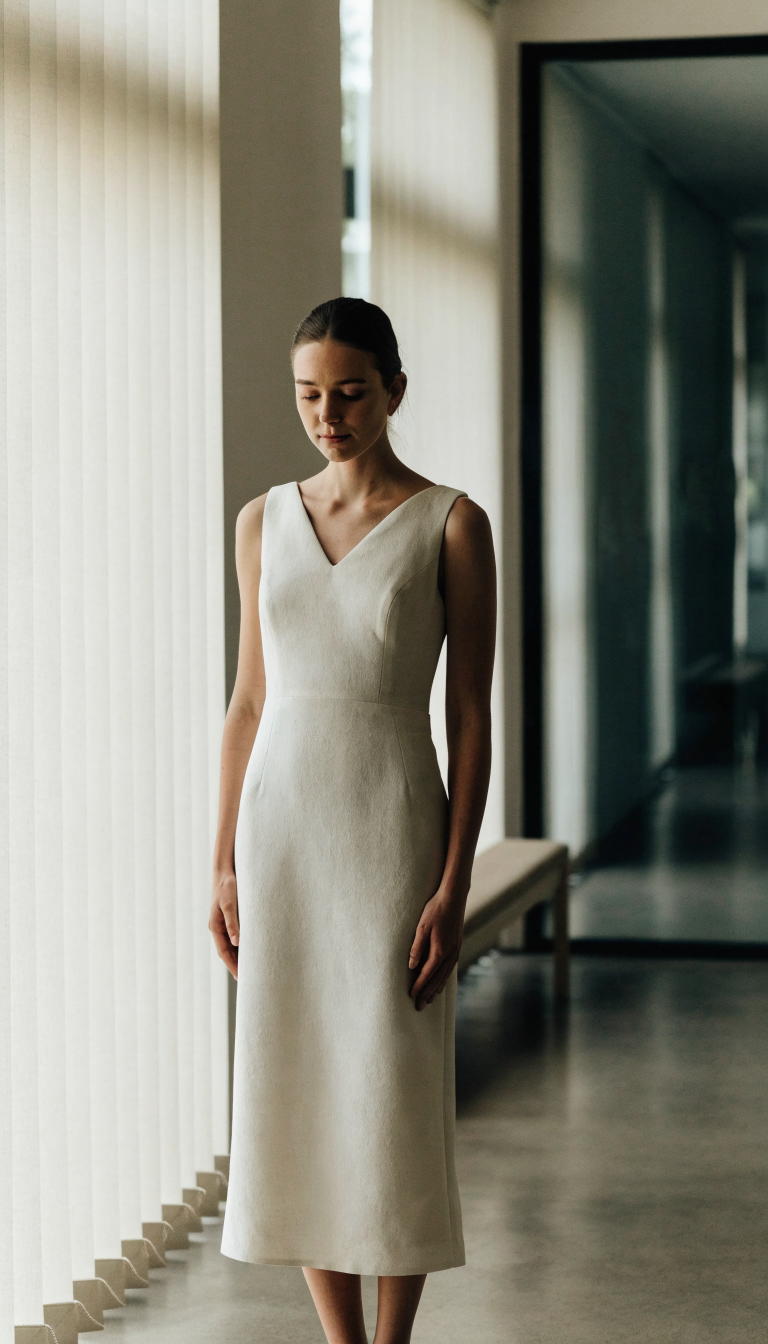
- Wrinkle recovery: Crepe smooths itself after sitting better than many shiny satins.
- Clean alteration path: Fewer layers and embellishments generally mean simpler, faster adjustments.
- Modern indoor venues: The matte finish and short hem read as polished without excess formality.
17. Tea Length with Functional Pockets
Pockets set into the side seams of a tea-length skirt provide a practical place for a phone, lipstick, or small essentials without disrupting the silhouette. They work best in fabrics with some structure, such as crepe or mikado, so the pocket does not pull or sag. Placement is usually at hip level and should not create visible bulk when empty. This detail is especially useful for destination or outdoor weddings where carrying a bag is inconvenient.
- Seam construction: Confirm the pocket opening is reinforced so the fabric does not tear with use.
- Bulk check: Wear the dress with the items you plan to carry to see how the pockets sit.
- Fabric preference: Structured materials hold the pocket shape better than very soft chiffon.
18. Plus-Size Structured Tea Length
Structured fabrics and clear seaming in a tea-length silhouette provide support and definition without relying on floor-length volume for coverage. Mikado, crepe, or satin with internal boning and a well-fitted lining hold their shape across a wider size range. The mid-calf hem keeps the overall weight lower than a full ball gown, which can improve comfort during long events. Fit is highly individual, so multiple fittings and accurate measurements are essential.
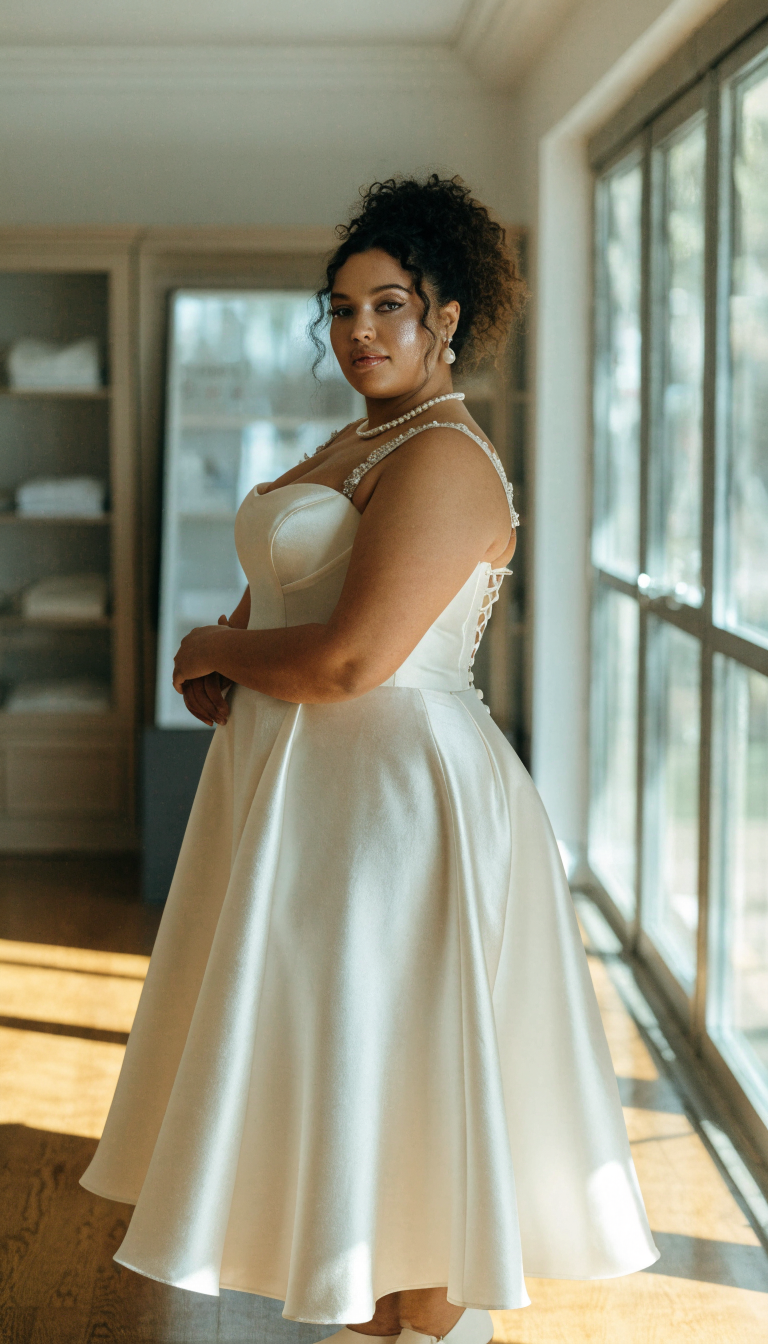
- Internal support: Boning and a smooth lining help the fabric sit smoothly without external shapewear.
- Hem balance: The mid-calf length needs precise adjustment so the proportion remains even.
- Fitting timeline: Allow extra appointments if taking in or letting out seams across multiple areas.
Tea length works when the hem sits at the most balanced point on the calf and the fabric matches the climate and movement of the day. Bring the shoes you will wear, the undergarments you prefer, and one person whose opinion you trust to the first fitting. Start looking several months ahead if the dress is made to order, since most bridal gowns require lead time plus separate alteration appointments.
FAQ
How far in advance should I order a tea-length wedding dress? Most made-to-order bridal gowns need several months of lead time. Begin shopping early enough to allow for production plus the usual sequence of fittings and alterations.
Does a tea-length dress need a bustle? No. Because the hem already ends above the floor, there is no train to manage. This removes one common alteration step.
Can tea length work for an evening or more formal wedding? It can for daytime or semi-formal events, especially outdoors. Very formal black-tie evening settings usually expect floor length, so confirm the dress code with the couple or venue.
How many fittings are typical? Most brides schedule two to three fittings. The first focuses on major adjustments such as taking in seams and setting the hem; later appointments refine the fit once the fabric has settled.