
An A-line wedding dress starts fitted through the bodice and flares gently from the natural waist into a soft triangular shape. That gradual opening gives most brides enough room through the hips for sitting, walking, and dancing without the heavier volume of a full ball gown. The 19 styles below focus on real construction choices—fabric weight, waist placement, neckline support, and train handling—so you can match the silhouette to climate, venue surface, and how long you expect to stay in the dress. Prices for ready-to-wear or made-to-order A-line gowns commonly fall between roughly $200 and $2,500 before alterations; exact figures depend on designer, fabric, and region.
Fabrics That Shape the A-Line
1. Fluid Chiffon A-Line Skirt
Chiffon creates a light, drifting skirt that moves with air rather than holding a rigid shape. The fabric is thin enough to stay breathable in warm outdoor settings yet needs a lining so it does not cling or show undergarment lines. Many brides pair it with a simple fitted bodice for garden or beach ceremonies where heavier satins would trap heat. The skirt still forms a clear A-line but reads softer and less structured than mikado or taffeta versions.
- Warm-weather ease: Works well for daytime outdoor ceremonies; the light weight reduces overheating compared with layered tulle.
- Wind and hem note: Can billow on breezy lawns—confirm the lining weight during a fitting so the skirt does not lift too easily.
- Alteration simplicity: Hemming usually stays straightforward because the fabric does not require complex layer matching.
2. Crisp Mikado A-Line
Mikado is a structured silk or silk-blend fabric that holds a clean line and subtle sheen without the high gloss of satin. The skirt flares into a defined A shape that photographs well in formal indoor venues and keeps its outline even after hours of wear. Because the fabric has body, the gown can feel more substantial; many brides choose it for church or hotel ballroom settings where a polished silhouette matters more than maximum airflow.
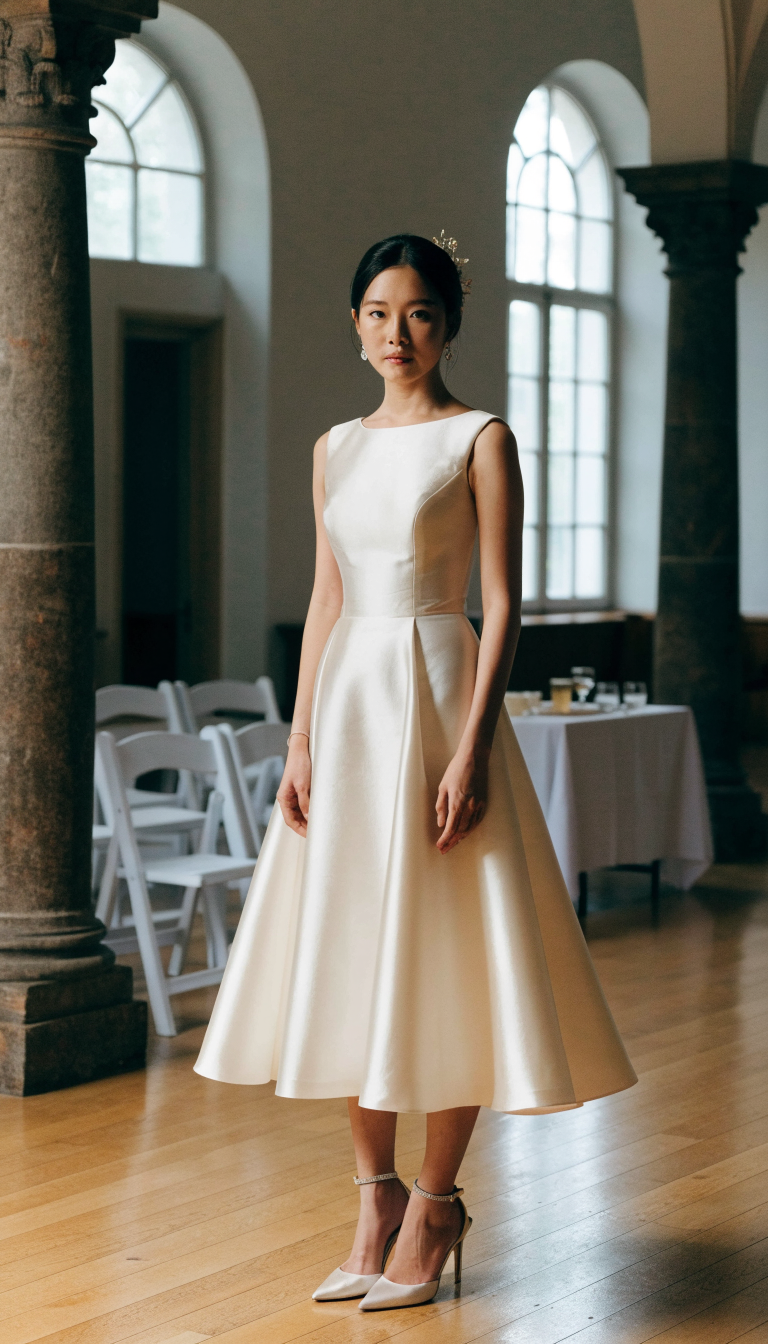
- Structure retention: Holds the A-line flare without needing heavy underskirts, which can simplify packing for destination weddings.
- Sitting test: The firmer hand can crease at the lap—try sitting for several minutes in the sample to check recovery.
- Price tier note: Often sits in the mid-to-higher range of ready-to-wear and made-to-order options.
3. Soft Tulle Layered A-Line
Multiple layers of soft tulle build gentle volume that still moves more easily than a ball-gown construction. The skirt opens from the waist in a classic A shape while the airy layers create a romantic, slightly ethereal effect suitable for garden or evening receptions. Heavier beading on the bodice can balance the lightness of the skirt; without enough layers the shape can collapse, so check the construction at the waist seam.
- Dance-floor freedom: Lighter layers generally allow easier walking and spinning than dense satin skirts of the same length.
- Heat caution: Even soft tulle can trap warmth if many layers are used—ask about the exact count during a salon visit.
- Bustle planning: Longer trains in tulle often need a simple American or French bustle so the fabric does not drag on floors.
4. Matte Crepe A-Line
Crepe offers a smooth, non-shiny surface with enough drape to follow the body while still flaring into an A-line from the waist. The fabric resists deep wrinkles better than chiffon and photographs cleanly under both daylight and indoor lighting. Many brides select it for modern or minimalist ceremonies where texture comes from cut and seam placement rather than lace or beading. The skirt remains comfortable for long hours because the material is usually lighter than mikado.
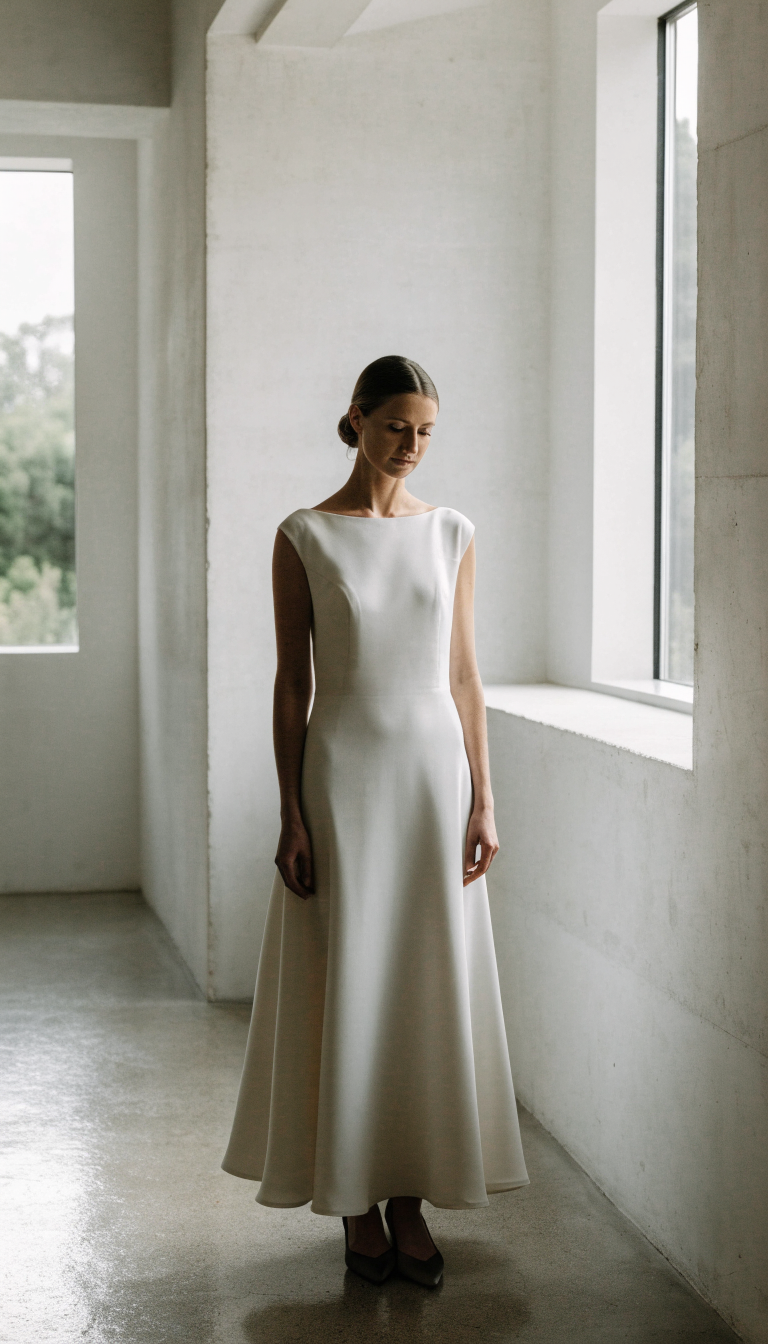
- Underlayer check: Look for a smooth lining so the crepe does not cling or reveal shapewear lines.
- Shoe pairing: Works with both low heels and higher styles because the clean hem does not compete visually.
- Lead-time reality: Most crepe A-lines are made to order, so plan several months ahead of the ceremony date.
5. Organza Overlay A-Line
Organza adds crisp volume with less weight than multiple tulle layers, giving the skirt a structured yet airy A-line. The fabric can be used alone or over a softer base; it holds pleats and seams clearly, which suits formal garden or ballroom settings. Because organza is semi-sheer, lining quality becomes important for opacity and comfort. The overall look stays lighter than a full satin ball gown while still reading as polished.
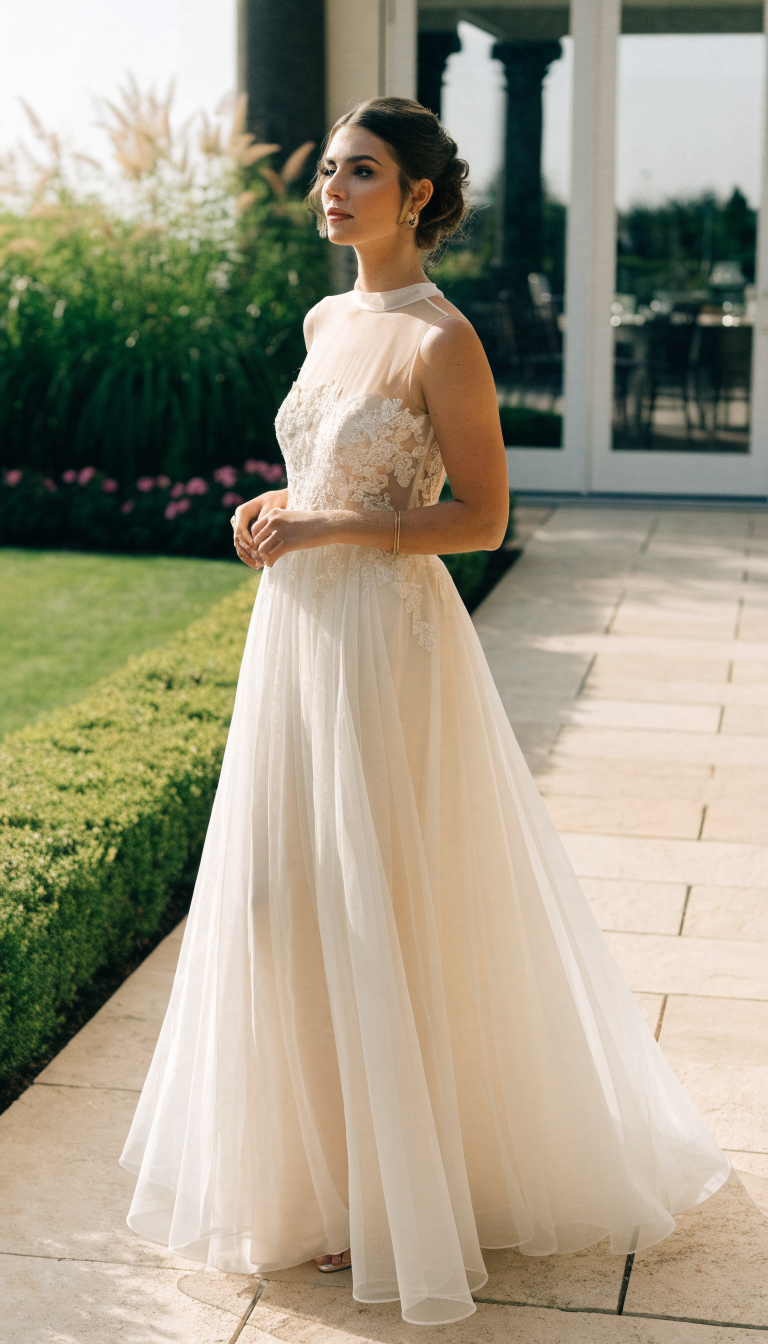
- Venue surface note: The stiffer hand can catch on uneven grass or gravel—test the hem length with the planned shoes.
- Steaming requirement: Organza shows wrinkles easily; budget time for professional steaming closer to the wedding.
- Support needs: Built-in cups or a well-fitted strapless bra often improve the bodice line under the crisp fabric.
Necklines and Sleeve Choices
6. Sweetheart Neckline A-Line
A sweetheart neckline curves over the bust and pairs naturally with the fitted bodice of an A-line, creating a balanced proportion that works across many body shapes. The opening can be modest or slightly deeper depending on the cut; many versions include light boning so the neckline stays in place during movement. This style appears frequently in both satin and lace A-lines and suits indoor or outdoor ceremonies when the bride wants classic bridal definition without extreme coverage or exposure.
- Bra compatibility: Look for built-in cups or a clear recommendation for adhesive or strapless support.
- Fitting-room test: Raise arms and lean forward to confirm the neckline does not gap or slip.
- Season flexibility: Works year-round; add a light wrap or jacket for cooler evening ceremonies.
7. Off-the-Shoulder A-Line
An off-the-shoulder neckline sits below the collarbones and can include soft straps or a wide band that rests on the upper arms. On an A-line the design draws attention upward while the skirt remains easy to move in. Construction usually requires solid boning in the bodice because there are fewer straps to hold the gown up. The style photographs well in outdoor light and suits both garden and ballroom venues when the bride prefers some shoulder coverage.
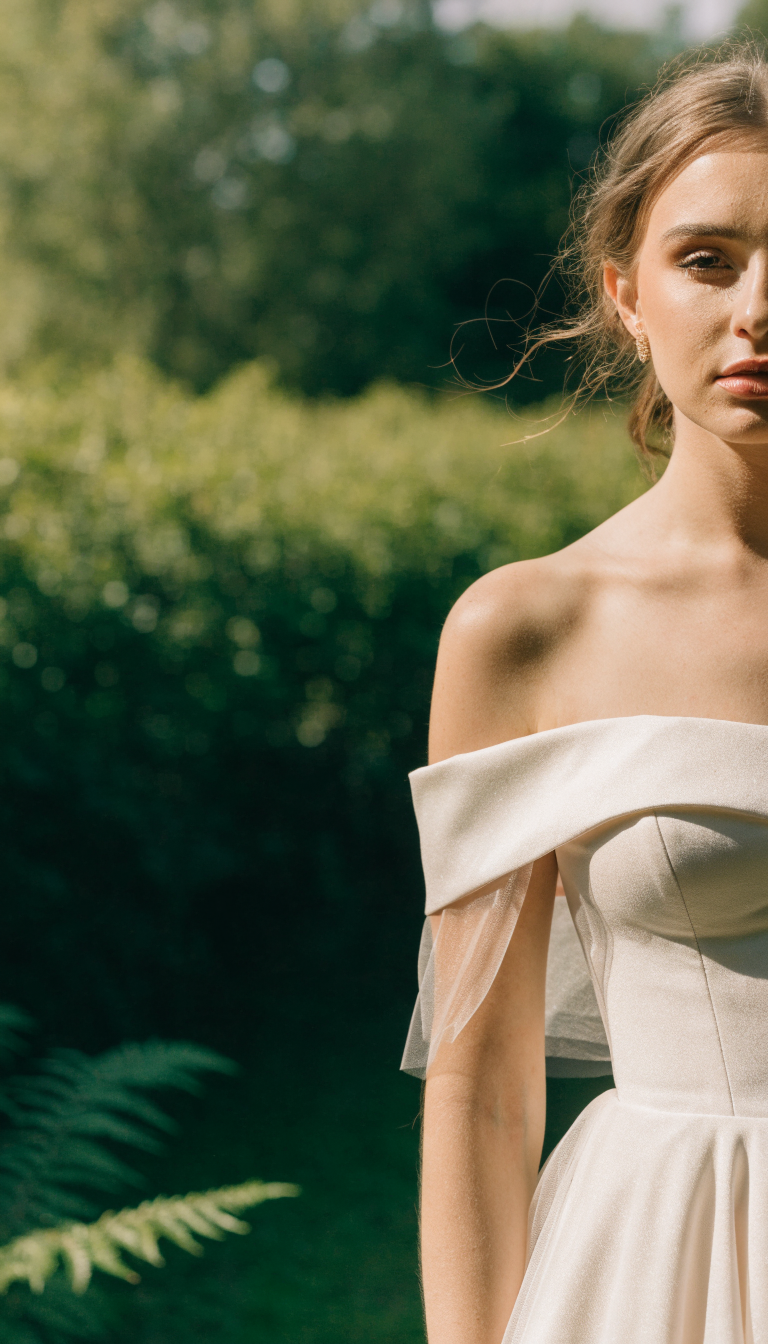
- Boning check: Ask the consultant how many bones are in the bodice and whether they are flexible or rigid.
- Sleeve option: Some versions come with detachable sleeves for ceremony coverage that can be removed later.
- Movement note: Practice sitting and standing so the band stays secure across the upper arms.
8. Square Neckline A-Line
A square neckline creates straight horizontal and vertical lines that frame the collarbone and pair cleanly with the gradual flare of an A-line skirt. The geometric cut reads modern yet remains modest enough for many venues and dress codes. Fabrics such as crepe or mikado emphasize the sharp lines, while lighter chiffon versions soften the overall effect. Support usually comes from the bodice structure rather than straps, so a proper fitting is essential.
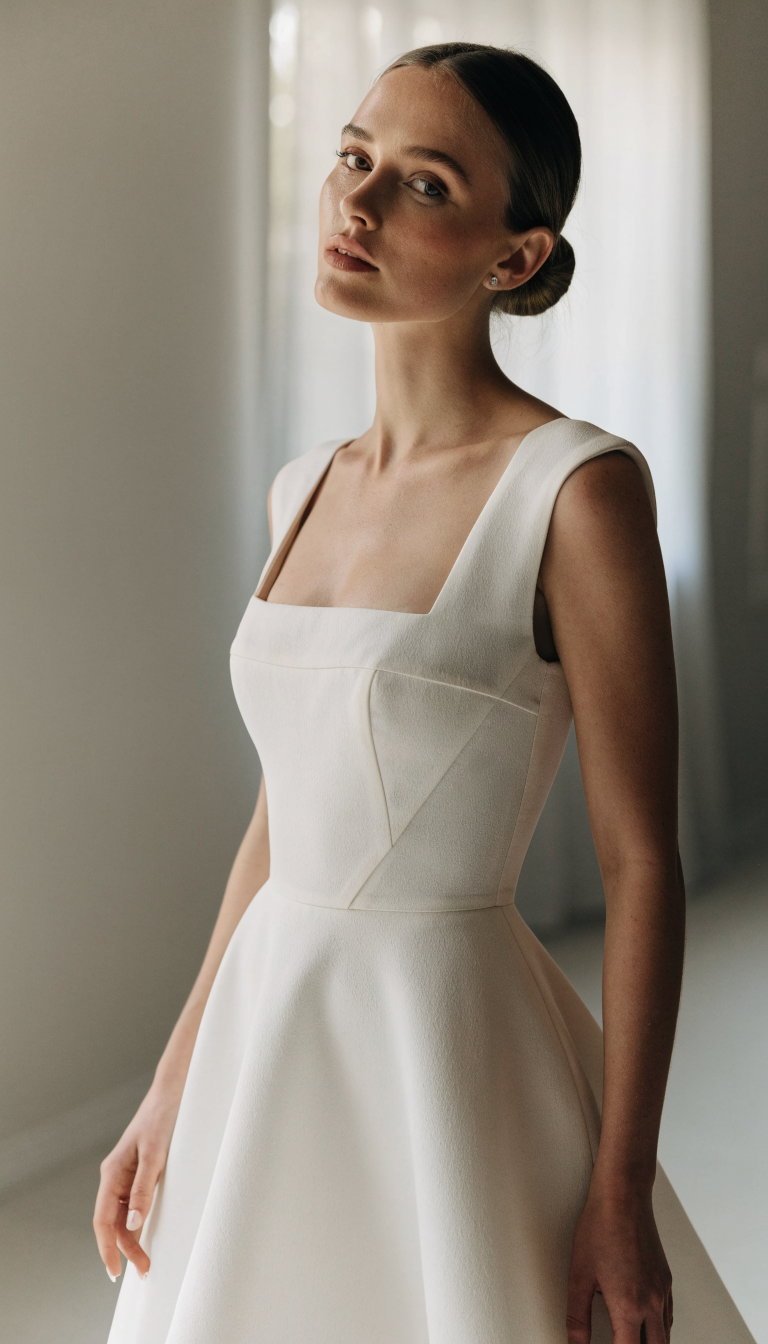
- Proportion guide: The width of the square can be adjusted in alterations if the sample sits too wide or narrow.
- Jewelry pairing: Often looks balanced with simple earrings rather than heavy necklaces.
- Alteration note: Shortening the straps or adjusting the neckline angle is possible but adds to the fitting schedule.
9. Illusion Neckline A-Line
An illusion neckline uses a sheer panel of tulle or lace that extends from the bodice up to the neck or across the shoulders, creating the appearance of skin while still providing coverage. On an A-line the sheer section keeps the upper body light so the skirt flare remains the main volume. Many versions include delicate embroidery or beading along the illusion edge. The construction works for both modest and romantic looks and can be paired with long or short sleeves.
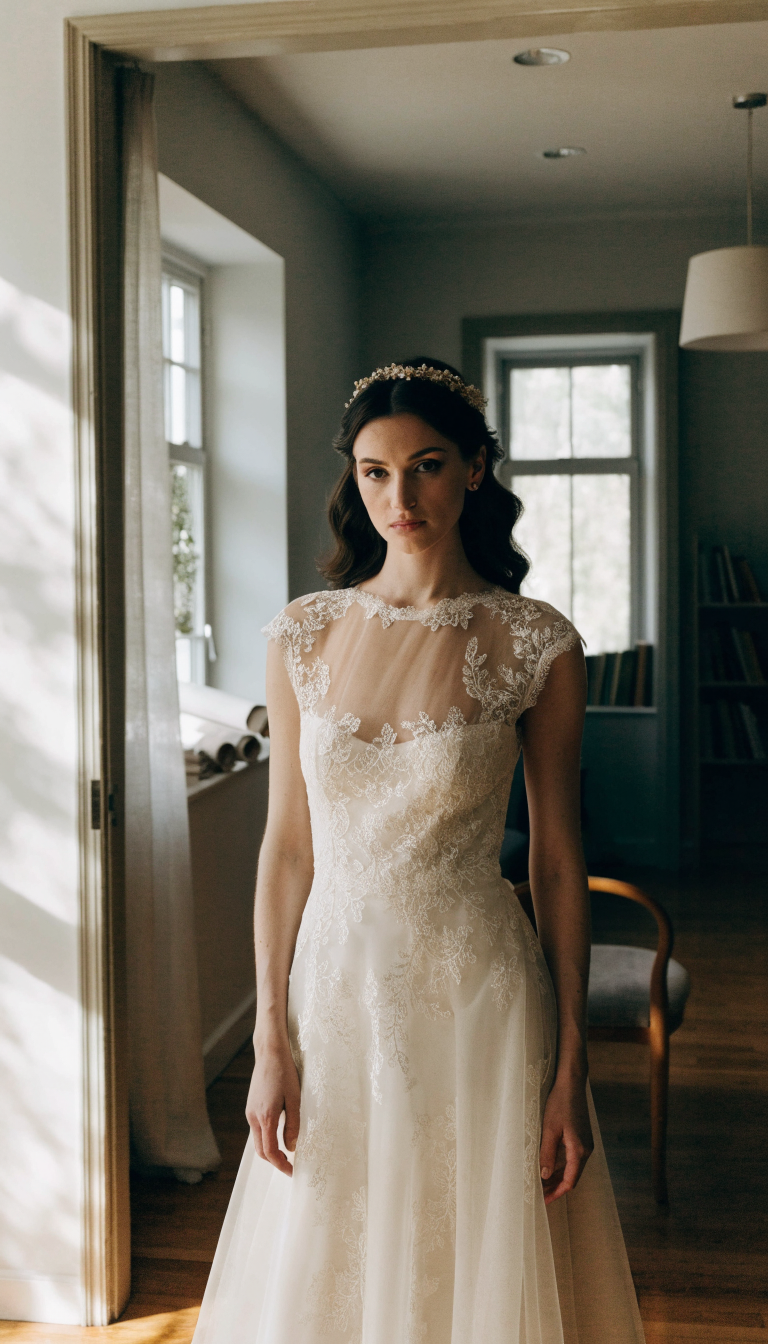
- Lining decision: Confirm whether the bodice itself is lined or left sheer underneath the illusion fabric.
- Comfort test: Sheer panels can feel warmer in direct sun—check the weight during a longer try-on.
- Modesty flexibility: Easy to style with or without a higher neckline accessory depending on venue rules.
10. Long-Sleeve Lace A-Line
Long sleeves in lace add texture and coverage while the A-line skirt keeps the lower half mobile. The sleeves can be fitted, slightly flared, or finished with a soft cuff; many are lined only at the bodice so the arms stay lighter. This combination suits cooler seasons or venues that require more coverage without switching to a heavier silhouette. The lace pattern continues the romantic detail from bodice to sleeve while the skirt remains comparatively plain for balance.
- Arm movement: Raise and lower the arms in the sample to make sure the lace does not pull across the back.
- Heat trade-off: Lace sleeves add a layer even when lightweight—consider the ceremony time of day.
- Alteration care: Sleeve length and cuff fit often need separate attention during the fitting process.
Waist, Skirt, and Practical Details
11. Basque Waist A-Line
A basque waist dips into a soft point or curve at the front, lengthening the torso visually before the skirt begins its A-line flare. The lowered waistline can create a more elongated line while still providing the classic flare from roughly the natural waist area. Many versions use a structured fabric such as mikado or satin so the point stays defined. The style works in both formal indoor spaces and outdoor settings where a slightly more sculpted look is preferred.
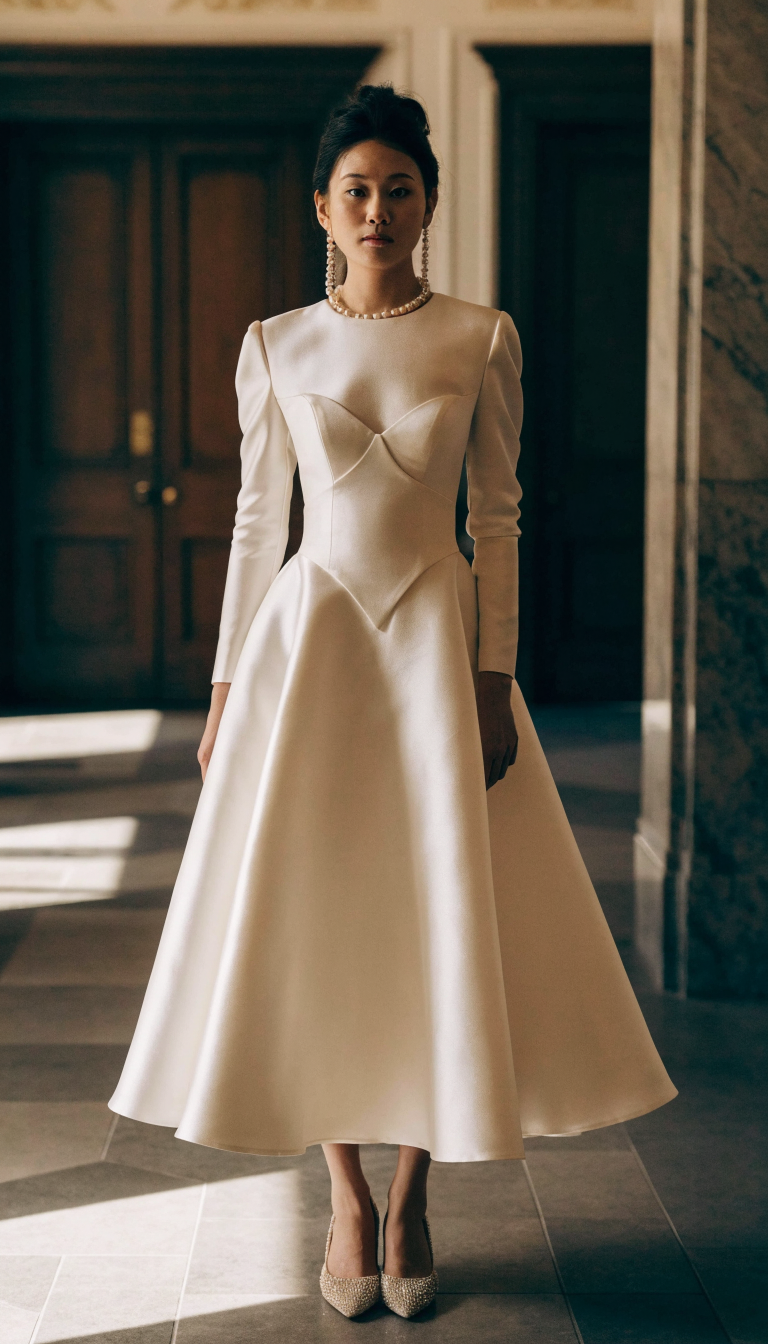
- Proportion check: Try the gown with the planned shoes to see how the lowered waist reads against overall height.
- Bustle placement: The dipped front can affect where the bustle buttons sit—confirm the plan with the salon.
- Comfort note: The structured point should not dig when sitting; test for several minutes.
12. Dropped-Waist A-Line
A dropped waist places the seam several inches below the natural waist, so the bodice extends over the hips before the skirt flares into the A shape. The result is a longer, more contemporary line that still offers the mobility of a classic A-line. Fabrics with some body help the dropped seam stay smooth. This variation suits modern venues and brides who want definition without a tightly cinched natural waist.
- Hip clearance: Walk and sit to confirm the dropped seam does not restrict movement through the hips.
- Fabric choice: Crepe or soft satin usually drapes more cleanly over the longer bodice than stiff organza.
- Timeline note: Made-to-order versions typically require the standard multi-month production window.
13. High-Slit A-Line
A high slit on one side of an A-line skirt adds a practical opening for walking and dancing while the rest of the skirt maintains the classic flare. The slit usually starts mid-thigh or higher and is finished with a clean edge or subtle trim. Many brides choose this detail for outdoor or destination weddings where stairs, uneven ground, or long reception hours are expected. The remaining skirt volume still provides coverage when standing still.
- Walking test: Take several steps in the sample shoes to see how the slit opens and closes.
- Undergarment note: The slit can reveal more leg movement—consider the lining and any shapewear visibility.
- Venue match: Useful for beach or garden settings with soft terrain; less critical on smooth indoor floors.
14. Pockets in the A-Line Skirt
Side-seam pockets sewn into an A-line skirt give a practical place for a phone, tissues, or lipstick without adding bulk to the silhouette. The pocket bags are usually cut from the same lining fabric so they stay flat against the body when empty. Because the skirt already flares, the pockets rarely disrupt the A shape. This detail appears more often in crepe, chiffon, or soft satin versions than in heavily structured mikado gowns.
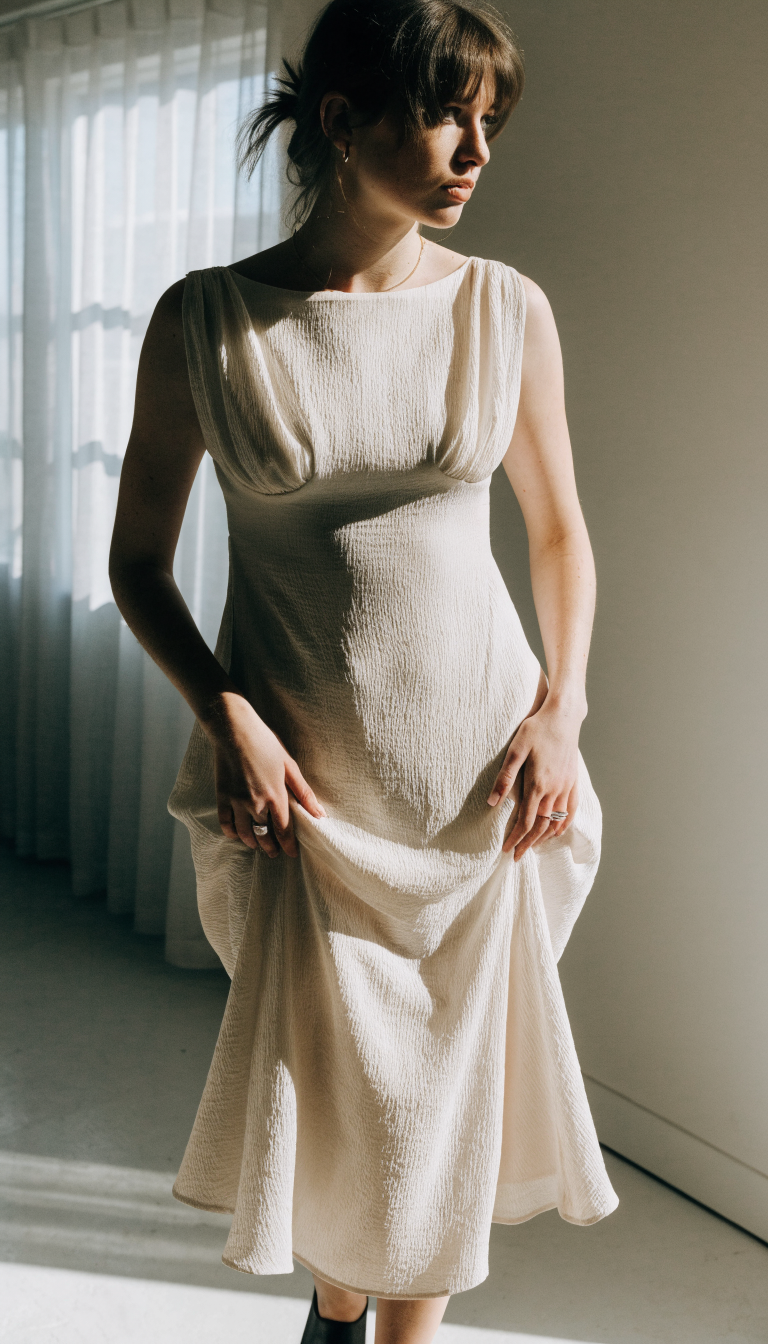
- Weight test: Place a phone in the pocket during the fitting to check whether the skirt pulls or sags.
- Seam placement: Confirm the pocket opening sits at a comfortable height for the arm.
- Alteration impact: Adding pockets later is possible but increases the alteration timeline and cost.
15. Chapel Train A-Line with Simple Bustle
A chapel-length train extends a few feet behind the hem of an A-line skirt, adding drama for the ceremony aisle without the full weight of a cathedral train. Most versions include a planned bustle so the train can be lifted and secured for the reception. The gradual A-line flare makes the train easier to manage than the same length on a mermaid silhouette. Fabrics such as tulle or chiffon keep the train lighter; satin versions feel more substantial.
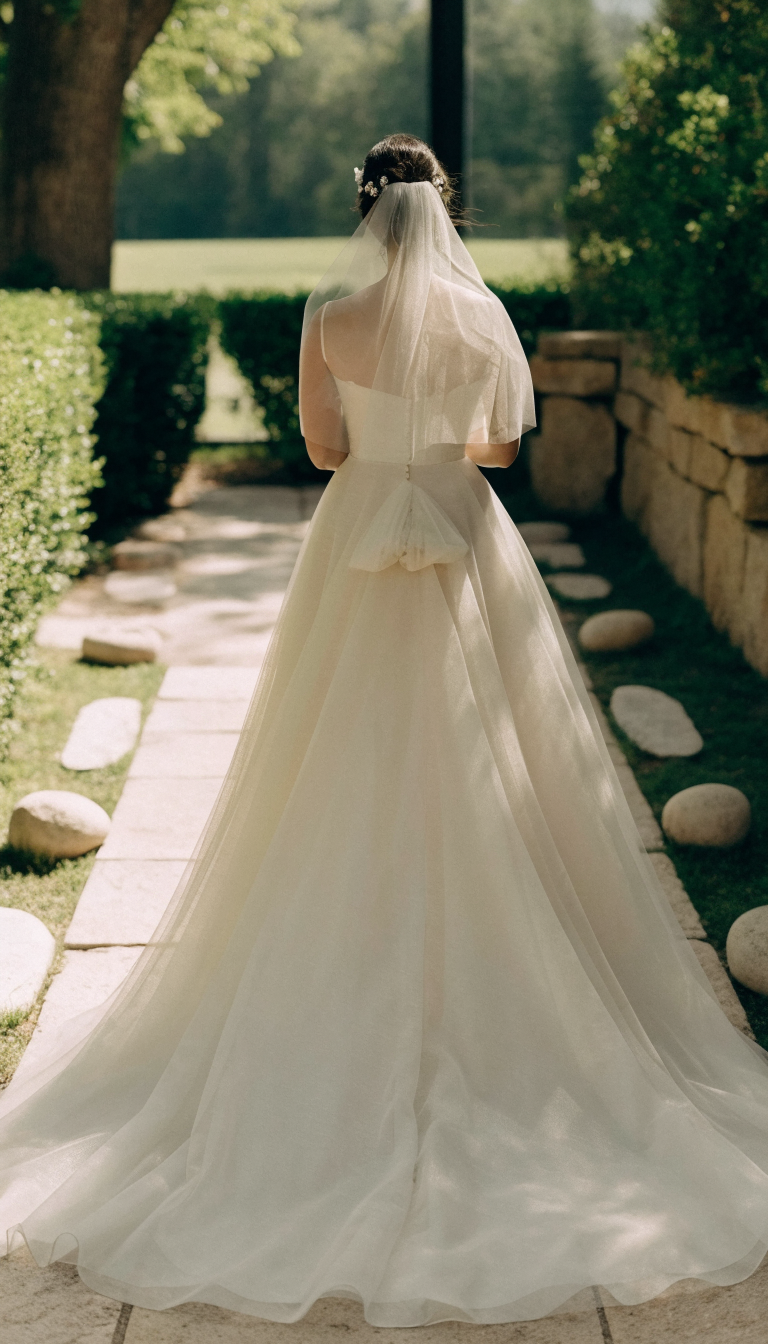
- Bustle rehearsal: Ask the salon to demonstrate the bustle and practice the steps yourself.
- Floor surface: Longer trains can catch on outdoor thresholds or dance-floor edges—confirm the exact length.
- Steaming plan: Schedule professional steaming after the final fitting so the train lies flat for photos.
16. Cap-Sleeve A-Line
Cap sleeves cover the top of the shoulder with a short, structured or soft fabric piece that ends above the upper arm. On an A-line they add a modest amount of coverage while keeping the neckline open. The sleeves can be made from the same fabric as the bodice or from matching lace. This option suits both warm and mild climates because it provides less coverage than long sleeves yet more structure than a fully strapless design.
- Strap support: The short sleeve can help keep the bodice in place; still check boning quality.
- Armhole fit: Raise the arms to make sure the sleeve does not dig or gap at the underarm.
- Layering option: Easy to wear under a light bolero or jacket if temperatures drop.
17. Beaded Bodice A-Line
Beading concentrated on the bodice of an A-line keeps the skirt lighter and easier to move in while still adding sparkle for evening photos. The beads or sequins can follow the neckline, create a motif, or cover the entire bodice. Because the weight sits higher on the body, the skirt flare remains comfortable for dancing. Many versions combine the beading with a soft tulle or chiffon skirt so the overall gown does not feel heavy.
- Weight distribution: Walk and turn in the sample to feel whether the beaded bodice pulls at the shoulders.
- Cleaning note: Beaded areas usually require professional cleaning; factor that into post-wedding plans.
- Lighting effect: The beads catch both daylight and indoor light differently—view the gown under both if possible.
18. Tea-Length A-Line
A tea-length A-line ends around mid-calf, keeping the classic flare from the waist while removing the floor-length hem and train. The shorter length makes stairs, dancing, and outdoor terrain easier to navigate and reduces the amount of fabric that can drag or wrinkle. Many versions use lighter fabrics such as chiffon or crepe. This style works for daytime, garden, or less formal ceremonies and can still include a fitted bodice and detailed neckline.
- Shoe visibility: The hem shows more of the shoe—try the exact pair planned for the day.
- Proportion balance: The shorter skirt can make the bodice appear longer; check the overall line in a full-length mirror.
- Re-wear potential: Some brides later shorten or restyle the gown for other events, though this depends on construction.
19. Modest High-Neck A-Line
A high or bateau neckline covers the collarbone and upper chest while the A-line skirt provides the usual ease of movement below the waist. The neckline can be finished in solid fabric, lace, or a combination, and often pairs with long or three-quarter sleeves for additional coverage. This construction suits venues or personal preferences that call for more modest necklines without sacrificing the comfortable flare of the A-line silhouette. Support comes mainly from the bodice fit rather than straps.
- Neck comfort: Check that the high neckline does not feel tight when turning the head or looking down.
- Layering ease: Works under a jacket or wrap if temperatures change during the day.
- Fitting focus: Pay attention to the shoulder seam and back closure so the coverage stays smooth.
| Fabric | Best climate / venue | Movement feel | Typical alteration note |
|---|---|---|---|
| Chiffon | Warm outdoor, garden | Light, drifting | Simple hem |
| Mikado | Formal indoor | Structured, holds shape | May need careful steaming |
| Soft tulle | Evening, garden | Airy layers | Bustle for longer trains |
| Crepe | Year-round, modern | Smooth drape | Low wrinkle recovery |
| Organza | Formal outdoor | Crisp volume | Shows wrinkles easily |
Most bridal A-line gowns are made to order, so production often takes several months; sample-sale or off-the-rack options can shorten that timeline when available. Alterations are almost always a separate cost and usually require two to four fittings to set the hem, adjust the bodice, and plan any bustle.
Bring the shoes, undergarments, and any planned accessories to the first fitting so the consultant can see the full line. Start shopping early enough to allow for production and alterations, then use the fabric and detail notes above to narrow the shortlist before you step into the salon.
Frequently Asked Questions
How far in advance should I order an A-line wedding dress? Most made-to-order A-line gowns need several months for production. Starting eight to twelve months before the wedding date leaves room for fittings and any unexpected delays, though sample or ready-to-wear pieces can be purchased closer to the date.
Do A-line dresses need a bustle? Only if the gown has a train. Chapel or longer trains are commonly bustled for the reception so the fabric does not drag; the salon can demonstrate the style of bustle that works with the specific skirt construction.
Which fabric is most comfortable for a long outdoor ceremony? Lightweight options such as chiffon or soft crepe generally feel cooler and move more easily in heat than heavy mikado or densely layered tulle. Always test the actual gown in conditions similar to the wedding day if possible.
How many fittings are typical? Two to four fittings are common. The first sets the overall size and major adjustments; later appointments refine the hem, bustle, and any final tweaks after the gown has been altered.