
16 Summer Wedding Dress Styles That Stay Cool and Elegant
A summer wedding dress needs to move with you, breathe in heat, and photograph well in bright light. The right combination of silhouette, fabric, and construction keeps the focus on comfort during the ceremony, photos, and dancing rather than on managing bulk or heat. This list organizes options by how they handle warm weather—favoring airy cuts, lightweight textiles, and practical details—while noting what each does well and where it can feel limited.
1. A-Line Silhouette in Chiffon
An A-line cuts close through the bodice then flares gently from the waist or just below, creating space for air to circulate without looking oversized. In chiffon, the skirt moves softly with a breeze and feels light even after hours of standing. The shape works across many body types because the flare skims rather than clings, and a light lining keeps the fabric from revealing undergarments while still allowing breathability. It suits garden and outdoor ceremonies especially well when the hem clears the ground or is bustled simply.
- Garden and breeze settings: The floaty skirt photographs cleanly outdoors and stays manageable on grass or paths.
- Fabric movement notes: Chiffon drapes fluidly but can wrinkle in transit, so plan a quick steam before the aisle.
- Sitting and dancing check: The flare makes sitting easier than a tighter skirt; test the hem with the shoes you will wear.
2. Lightweight Sheath in Crepe
A sheath follows the body’s line with minimal extra fabric, so there is less material to trap heat. Lightweight crepe has a soft matte surface and enough structure to skim without clinging when cut with a bit of ease or a modest stretch. It works well for courthouse or city venues and for brides who prefer clean lines over volume. A side slit or godet adds movement and airflow without changing the overall shape.
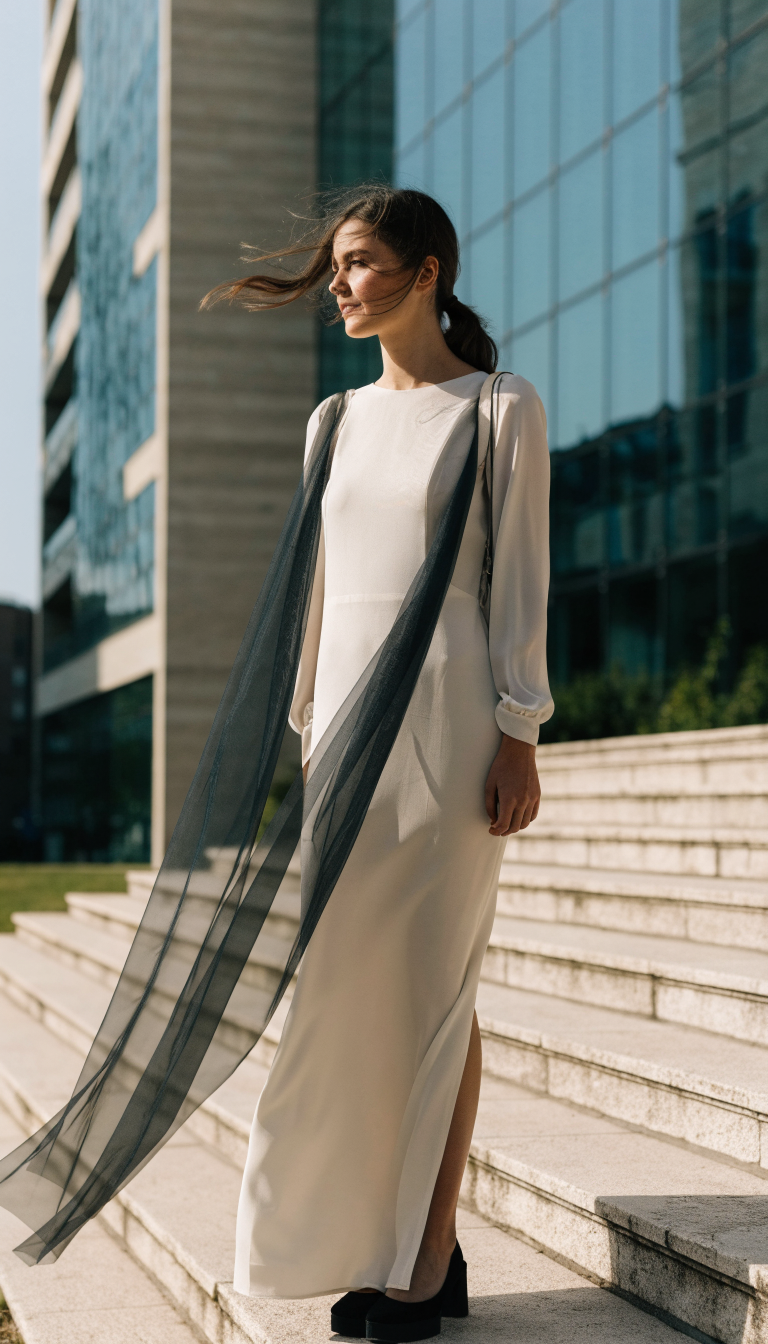
- Minimal fabric advantage: Fewer layers mean less weight and faster drying if humidity rises.
- Heat and cling caution: Ask for a breathable lining; pure synthetic crepe can feel warmer against the skin than silk blends.
- Alteration simplicity: Hemming and taking in the sides is usually straightforward compared with structured skirts.
3. Empire Waist with Floaty Skirt
The raised waist sits just under the bust, letting the skirt fall freely and relieving any tightness at the natural waist. Paired with chiffon or georgette, the skirt stays airy and moves easily when walking or dancing. This cut can feel cooler through the midsection and works for both indoor and outdoor summer ceremonies. It also offers flexibility for comfort during the day.
- Midsection ease: The high waist avoids pressure where heat and movement can feel restrictive.
- Skirt fabric behavior: Georgette holds a gentle texture that resists clinging better than plain chiffon in humidity.
- Support and bra notes: Built-in cups or a well-fitted strapless bra keep the bodice secure under the raised seam.
4. Tea-Length Lace Over Light Lining
Tea-length hems fall around mid-calf, reducing the amount of fabric that brushes the ground and absorbs heat. Soft lace over a smooth, lightweight lining adds texture without bulk, and the shorter length makes walking on sand, grass, or uneven surfaces simpler. It fits garden parties, casual beach settings, or daytime ceremonies where a full train would feel impractical.
- Venue and terrain fit: The hem stays cleaner on outdoor surfaces and pairs well with wedges or low heels.
- Lace and lining combo: Choose a lace with open motifs so air can pass; a silk or high-quality viscose lining keeps the dress cooler.
- Re-wear and packing ease: The shorter cut travels more easily and can work for other warm-weather events.
5. Off-the-Shoulder Neckline with Soft Drape
This neckline rests along the upper arms, exposing the shoulders and collarbones for a cooler feel while still offering coverage. In a fluid fabric such as chiffon or light crepe, the edge can be finished with a gentle drape or soft ruffle that moves with the body. It photographs well in natural light and suits both garden and indoor summer venues.
- Shoulder and sun exposure: Bring a light wrap or detachable piece if the ceremony moves into stronger sun or evening air-conditioning.
- Fabric drape quality: A matte chiffon or crepe avoids glare and keeps the look soft rather than shiny in daylight.
- Strap and support test: Confirm the neckline stays in place when raising your arms or dancing; light boning or cups help.
6. Spaghetti-Strap Slip in Silk Charmeuse
A bias-cut slip follows the body with thin straps and a fluid skirt, using very little fabric overall. Lightweight silk charmeuse feels cool against the skin and drapes smoothly without stiffness. The style suits indoor venues, evening receptions, or minimalist outdoor settings where a simple silhouette is preferred. A modest slit or open back increases airflow.
- Natural-fiber coolness: Silk adapts better to body temperature than many synthetics, though it may show moisture more readily in high humidity.
- Movement and slip factor: Bias cuts move freely; test the hem length with the exact shoes to avoid catching underfoot.
- Undergarment visibility: A seamless nude slip or built-in lining keeps lines clean under the thin fabric.
7. Open-Back Design for Ventilation
An open or low back removes fabric across the upper and mid-back, allowing air to reach the skin while the front remains covered. When the rest of the dress is cut in chiffon, crepe, or light lace, the opening adds noticeable comfort without changing the overall silhouette. It works for both outdoor and air-conditioned indoor ceremonies.
- Airflow and coverage balance: The back can be finished with a sheer panel or simple buttons if more coverage is wanted for the ceremony.
- Bustle and train practicality: A short or detachable train keeps the open back from competing with extra fabric at the hem.
- Support structure check: Ensure the bodice has enough internal support so the open back does not pull or gap when moving.
8. Detachable Cap Sleeves or Soft Bolero
Cap sleeves or a short bolero can be worn for the ceremony and removed afterward, giving coverage when needed and cooler shoulders later. Made in matching chiffon or lace, they add little weight and can be fastened with small buttons or hooks. This approach suits venues that shift from outdoor daylight to an evening reception.
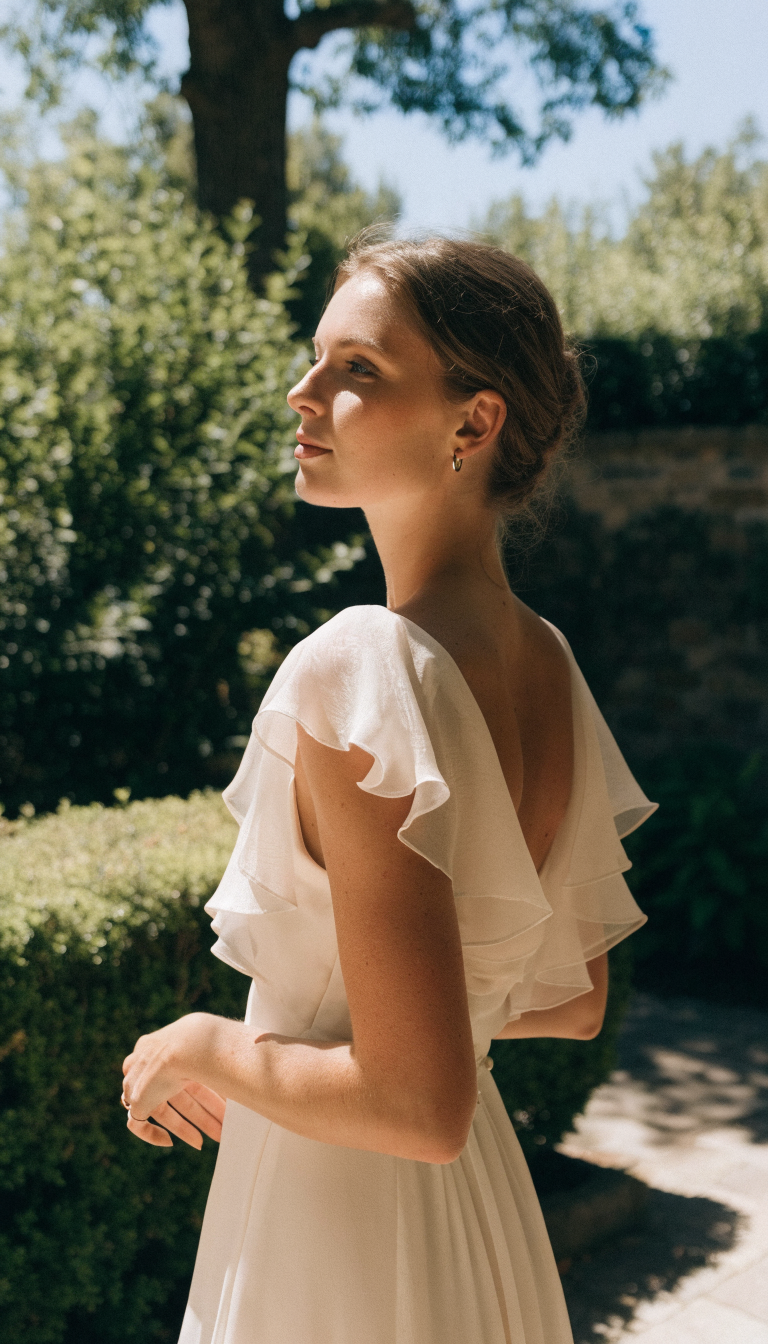
- Ceremony-to-reception switch: Practice attaching and removing the pieces so the change feels quick.
- Fabric weight match: Keep the sleeves as light as the dress so they do not feel hotter than going sleeveless.
- Fitting and alteration note: Confirm the attachment points sit correctly after the dress is hemmed.
9. Soft Fit-and-Flare with Strategic Slits
The bodice and hip area are fitted, then the skirt flares below the knee, creating movement without a full circle skirt. In stretch crepe or light tulle over crepe, the shape stays comfortable while a side or front slit lets air move and makes walking easier. It offers definition without the weight of a traditional mermaid.
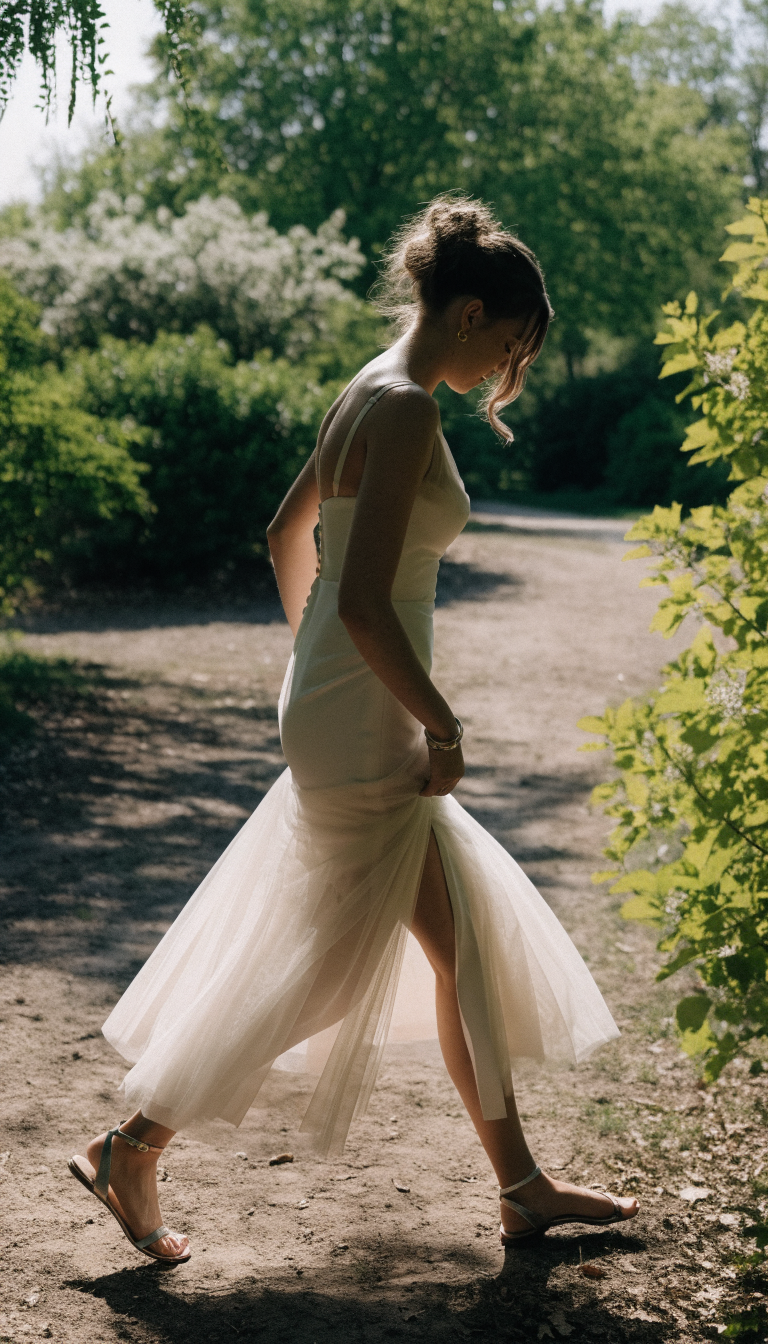
- Dance-floor ease: The flare and slit combination allows a wider stride than a fully fitted skirt.
- Stretch fabric behavior: A small amount of stretch helps the dress move with the body; test it seated and standing.
- Hem and slit placement: Ask the seamstress to place the slit so it stays closed when standing still.
10. Organza Overlay for Crisp Yet Light Volume
Organza holds shape better than chiffon while remaining lightweight, so it can create gentle fullness in an A-line or modest ball-gown skirt without heavy layers. The crisp hand of the fabric adds subtle structure that photographs cleanly in daylight. It suits garden or outdoor venues where a bit of volume is wanted but heat is a concern.
- Structure without bulk: Fewer layers of organza can replace heavier tulle while still giving shape.
- Weather and wrinkle notes: Organza resists some cling but can crease; steam rather than iron at high heat.
- Lining choice importance: A breathable lining under the organza prevents the crisp outer layer from feeling stiff against the skin.
11. Illusion or Soft Lace Bodice for Coverage
An illusion neckline or soft lace overlay provides coverage across the shoulders and chest while looking light. When the lace is open and placed over a smooth, breathable lining, air can still circulate. This option works for venues or personal preferences that call for more coverage without adding long sleeves or heavy fabric.
- Modest coverage option: The sheer panel can be adjusted in height to meet different comfort or dress-code needs.
- Lace openness factor: Larger motifs and a light lining keep the bodice cooler than dense, fully lined lace.
- Bra and cup compatibility: Built-in cups or a low-back bra usually sit cleanly under the illusion edge.
12. Deep V-Neckline for Elongation and Coolness
A V-neckline opens the chest and draws the eye upward while reducing fabric across the upper body. In crepe or chiffon, the neckline can be finished cleanly or with a soft facing that stays flat. It pairs well with A-line or sheath silhouettes and photographs clearly in both indoor and outdoor light.
- Upper-body ventilation: The open neckline helps heat escape during standing and photos.
- Support and gap prevention: Request light boning or a well-fitted underlayer so the V stays in place when moving.
- Jewelry and neckline balance: A simple necklace sits well; test it so it does not compete with the dress edge.
13. High-Low Hem for Practical Movement
A high-low hem is shorter in front and longer in back, reducing the fabric that drags on the ground while still giving a graceful train effect from certain angles. Cut in chiffon or light crepe, it moves easily on grass, sand, or steps. The shorter front also makes sitting and using stairs simpler.
- Terrain and walking ease: The front hem clears most outdoor surfaces without constant lifting.
- Train management: The back length can be bustled or left free depending on the reception space.
- Shoe pairing test: Confirm the front length with the exact heel height so it does not catch.
14. Column Dress with Side Godets or Slits
A column silhouette stays close through the body with minimal flare, and side godets or slits add controlled movement and airflow. In lightweight crepe or silk, the dress feels streamlined and cool. It suits indoor venues, city settings, or outdoor ceremonies where a narrow shape is preferred over volume.
- Streamlined heat control: Less fabric overall means less weight and faster movement between spaces.
- Godet placement: Ask for godets that open with a natural stride so the dress does not restrict walking.
- Lining and cling check: A smooth, breathable lining prevents the outer fabric from sticking in humidity.
15. Basque Waist for Definition Without Bulk
A basque waist dips slightly at the center front, creating a gentle point that defines the waist while the skirt can still flare in a light fabric. When the skirt is chiffon or organza, the overall weight stays low. The shape works for both A-line and modest full skirts and photographs clearly in daylight.
- Waist definition option: The dipped line adds shape without requiring a tightly fitted bodice or heavy boning.
- Skirt fabric match: Pair with an airy skirt so the defined waist does not feel heavier in heat.
- Alteration complexity: The curved waist seam may need careful fitting; allow time for adjustments.
16. Lightweight Tulle Skirt for Volume Without Weight
Multiple layers of fine tulle create fullness that looks substantial in photos yet remains light because the open weave lets air pass. Used as a skirt over a simple crepe or chiffon base, it gives a soft ball-gown effect suitable for outdoor ceremonies. The layers can be reduced or removed for the reception if desired.
- Volume and airflow balance: Light tulle layers feel cooler than denser fabrics of the same fullness.
- Layer count guidance: Fewer, finer layers usually move and breathe better than many heavy ones.
- Bustle and storage note: A simple bustle keeps the skirt manageable; confirm how the layers will be handled after the ceremony.
Prices for these styles vary widely by designer, fabric quality, and region; most bridal gowns are made to order with lead times of several months, and alterations are typically a separate cost. Bring notes on your venue, expected temperature, and any movement priorities to fittings so the seamstress can adjust hems, slits, and support accordingly.
Closing Start with the silhouette and fabric that match your venue and how you want to move, then refine neckline and length details in fittings. Order early enough for the standard made-to-order timeline and at least two or three alteration appointments. Bring the shoes and undergarments you plan to wear so every adjustment is accurate.
FAQ
How far in advance should I order a summer wedding dress? Most bridal gowns are made to order and require several months. Ordering six to nine months ahead is a common guideline so there is time for production and multiple fittings, though timelines vary by designer and any rush options.
Can I wear a sample-size dress if it fits? Yes, if the sample is in good condition and the salon allows it. Confirm any remaining alteration needs and whether the fabric has already been worn or steamed multiple times, as that can affect how it behaves on the day.
How many fittings are typical? Two to four fittings are common, depending on how much the dress needs to be adjusted. The first usually addresses major changes; later ones refine the hem, bustle, and any comfort details.
What should I test in the fitting room for a summer dress? Sit, walk, raise your arms, and practice the bustle if there is one. Note how the fabric feels against your skin and whether any area feels warmer or more restrictive than expected.