
A purple wedding dress gives brides a clear alternative to ivory or white while still looking intentional and formal. The shade you choose—soft lavender, dusty mauve, or deep plum—sets the mood more than almost any other detail, and the right silhouette and fabric keep the gown wearable from the ceremony through the last dance. This list groups 18 distinct styles by overall character so you can shortlist quickly, then compare comfort, movement, and practical fit details before your first salon appointment. Prices vary by designer, fabric, region, and alterations, so treat any ranges as general guides only.
Soft Pastel Purple Styles
1. Lavender Tulle Ball Gown for Garden Volume
Layers of airy lavender tulle create a light, romantic ball gown that photographs softly in daylight without reading as heavy. The fitted bodice, often with boning for support, balances the full skirt so the shape stays defined rather than shapeless. This works especially well for outdoor or estate ceremonies where the skirt can move freely.
- Garden setting match — Ideal for spring or early summer garden venues where the pale shade blends with greenery and soft florals.
- Dance floor movement — Lightweight layers allow easier walking and turning than denser skirts, though a bustle may still be needed for a longer train.
- Fitting room test — Sit in the sample to check how the tulle compresses and whether the bodice stays in place without extra support.
2. Lilac Lace A-Line with Gentle Structure
Floral lace over a matching lilac lining gives texture and a classic bridal feel while the A-line skirt skims the body and widens gradually from the waist. The lining keeps the color consistent and prevents the lace from looking transparent in photos. Many brides like the balanced shape for both ceremony processions and seated reception moments.
- Daytime venue strength — Suits historic properties or garden settings where the soft shade and lace details read clearly in natural light.
- Alteration complexity — Lace edges and the waist seam usually need careful hemming and possible bust adjustments, so plan for multiple fittings.
- Undergarment note — Built-in cups or a seamless bra often work well; test under the lace to avoid visible lines.
3. Dusty Mauve Crepe Sheath for Clean Lines
A matte crepe sheath in dusty mauve offers a sleek, modern silhouette that skims the body without cling or excess volume. The fabric drapes fluidly yet holds a structured look, making it practical for smaller venues or civil ceremonies where a full skirt would feel oversized. It also photographs with quiet elegance rather than shine.
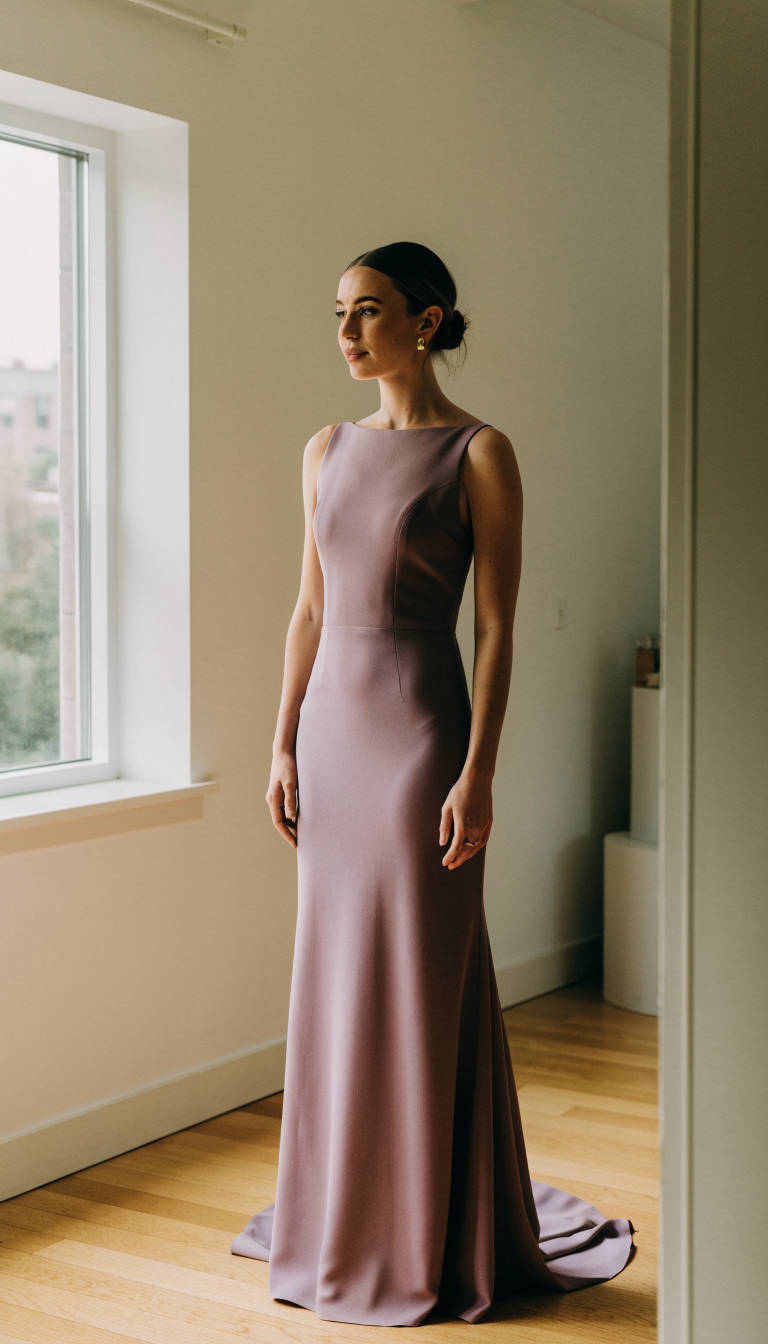
- Climate comfort — Crepe stays relatively breathable compared with satin, though it can show wrinkles if packed tightly.
- Shoe pairing check — A modest heel or flat works well; try the sample with your planned shoes to confirm the hem length.
- Budget-friendly path — Off-the-rack or sample-sale versions in this simpler cut are often easier to find and alter than heavily embellished gowns.
4. Wisteria Chiffon Empire for Easy Movement
An empire waist in fluid wisteria chiffon lifts the volume above the natural waist, creating a flowing skirt that feels light and unrestricted. The soft shade stays pale and airy, especially when the chiffon is layered lightly rather than densely. This style often appeals to brides who want comfort during long outdoor ceremonies or while moving through uneven ground.
- Heat and activity note — Lightweight chiffon handles warmer weather better than structured fabrics, but watch for wind lifting the layers.
- Support reality — The higher waist reduces some pressure at the natural waistline, yet the bodice still needs secure straps or a lining for coverage.
- Hemming practicality — Floor-length versions usually need a simple hem adjustment rather than complex reshaping.
5. Pale Lilac Organza A-Line with Soft Structure
Crisp organza in pale lilac adds gentle body and volume to an A-line shape without the weight of multiple tulle layers. The fabric holds a clean line that photographs well and moves with a slight rustle. It bridges the gap between very airy chiffon and denser options for brides who want some presence in the skirt.
- Spring outdoor fit — Works for garden or courtyard ceremonies where the pale color and light structure feel seasonal without overheating.
- Steaming reminder — Organza wrinkles more easily than crepe, so plan a final steam before the ceremony.
- Bra compatibility — A smooth, low-back or convertible bra often pairs cleanly under the lining.
Rich Jewel-Tone Purple Styles
6. Plum Satin Mermaid for Evening Shape
Deep plum satin creates a luminous, fitted mermaid silhouette that follows the body to the knee before flaring. The fabric’s smooth surface catches light in a controlled way, giving the gown a formal finish suited to evening or indoor celebrations. Proper boning and a secure lining help the shape stay smooth through sitting and standing.
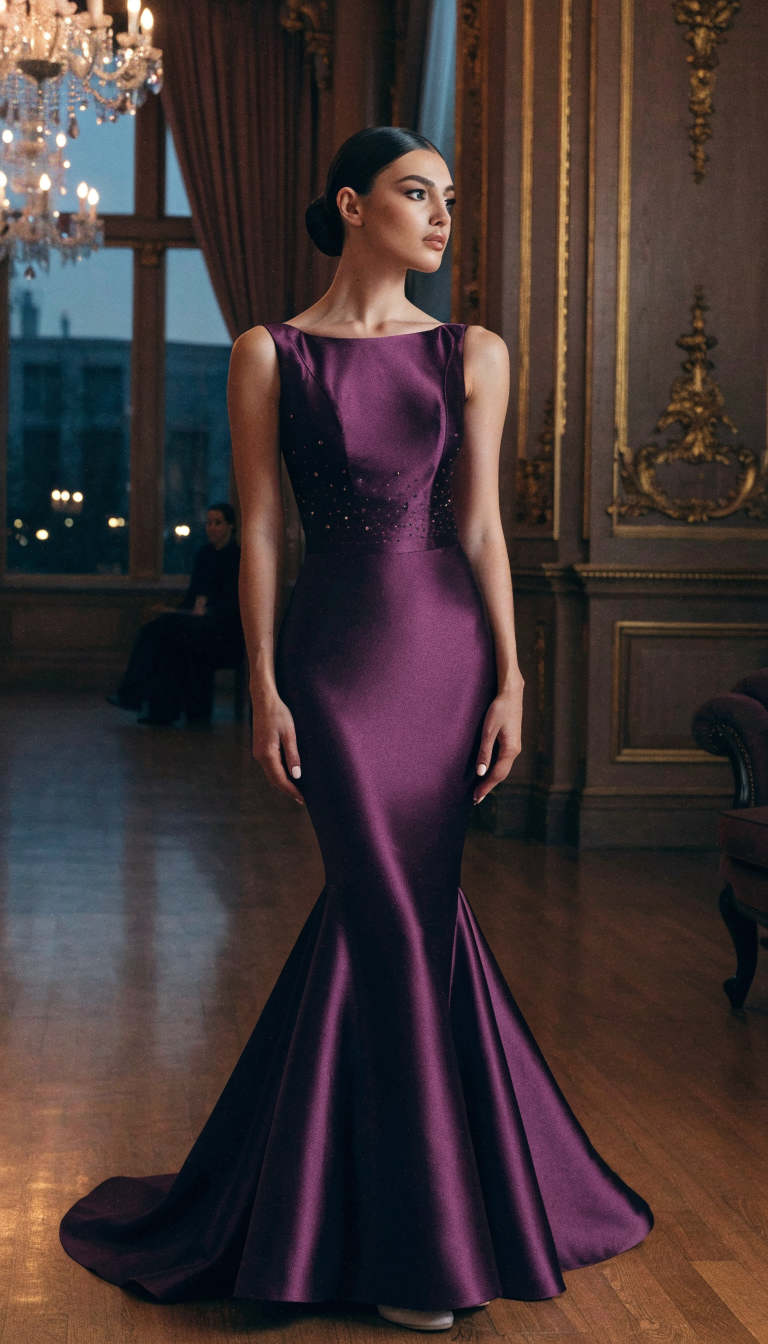
- Formal venue strength — Strong for ballroom or hotel settings where the rich color and defined shape photograph dramatically under artificial light.
- Movement trade-off — The fitted cut limits stride length, so practice walking and sitting in the sample before finalizing alterations.
- Bustle consideration — A short train is common and usually needs a simple bustle for dancing.
7. Eggplant Velvet Column for Cooler Seasons
Plush eggplant velvet in a column or slim A-line shape absorbs light and creates a deep, matte richness that feels substantial. The fabric works best in cooler weather because its weight and texture can feel warm. A lined version with internal structure keeps the silhouette clean without excessive cling.
- Winter ceremony match — Ideal for late-fall or winter indoor venues where the dense texture pairs well with darker florals and candlelight.
- Care and storage — Velvet can mark under pressure, so handle carefully and store hanging rather than folded.
- Alteration note — Hemming and side-seam adjustments are usually straightforward, though the pile requires a skilled tailor.
8. Violet Mikado Ball Gown with Presence
Mikado—a structured silk with a crisp hand and subtle sheen—holds a strong ball-gown shape in saturated violet without collapsing. The fabric gives the skirt body that reads formal and intentional, while the bodice can incorporate clean lines or light beading. It suits brides who want volume that still feels polished rather than soft and airy.
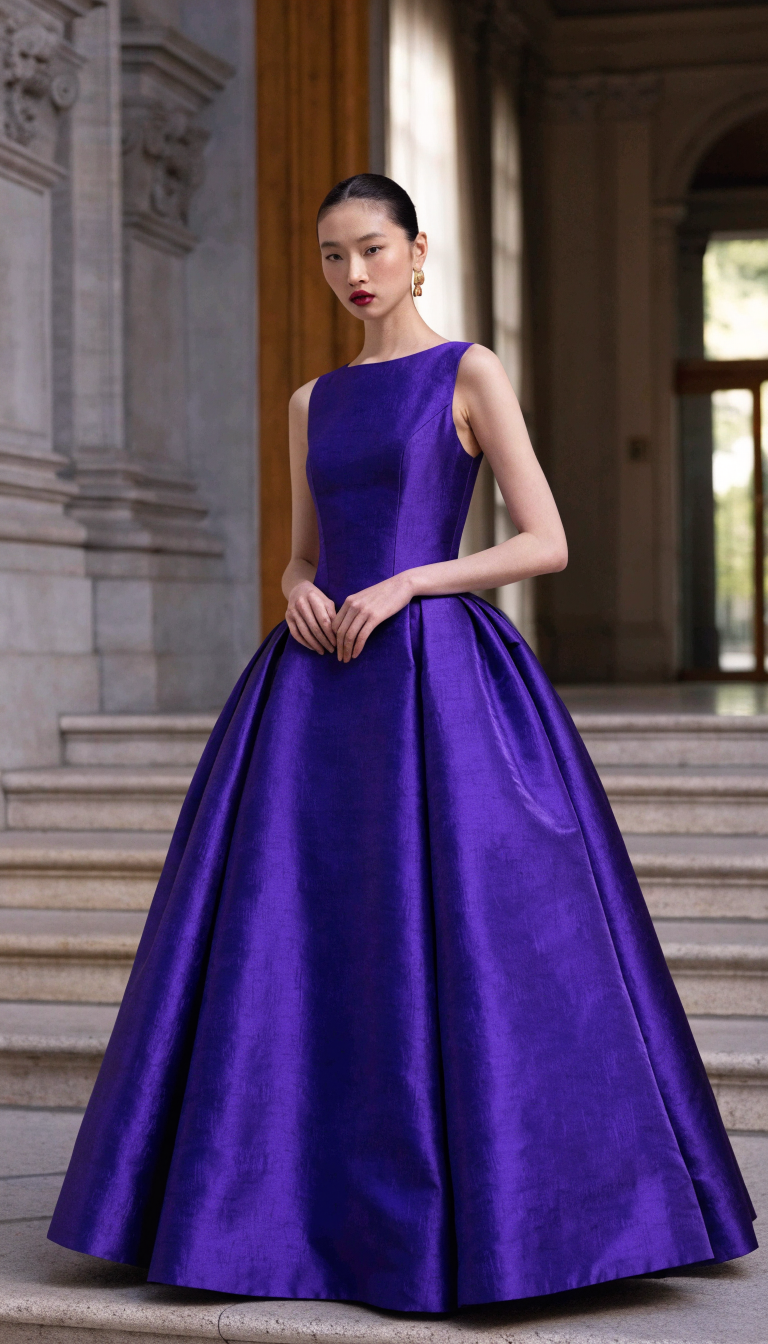
- Grand entrance effect — The structured skirt creates a clear silhouette in larger venues or when descending stairs.
- Heat caution — Mikado is denser than tulle or chiffon, so it is less ideal for hot outdoor ceremonies.
- Fitting timeline — Made-to-order versions typically need several months; confirm lead time early with your salon.
9. Amethyst Beaded Trumpet for Detail
An amethyst trumpet gown concentrates beading or sequins on the bodice and upper skirt, then flares below the knee. The jewel tone makes the embellishment visible without washing out, and the silhouette offers more walking room than a full mermaid. A strong lining and boning keep the beading from pulling the fabric.
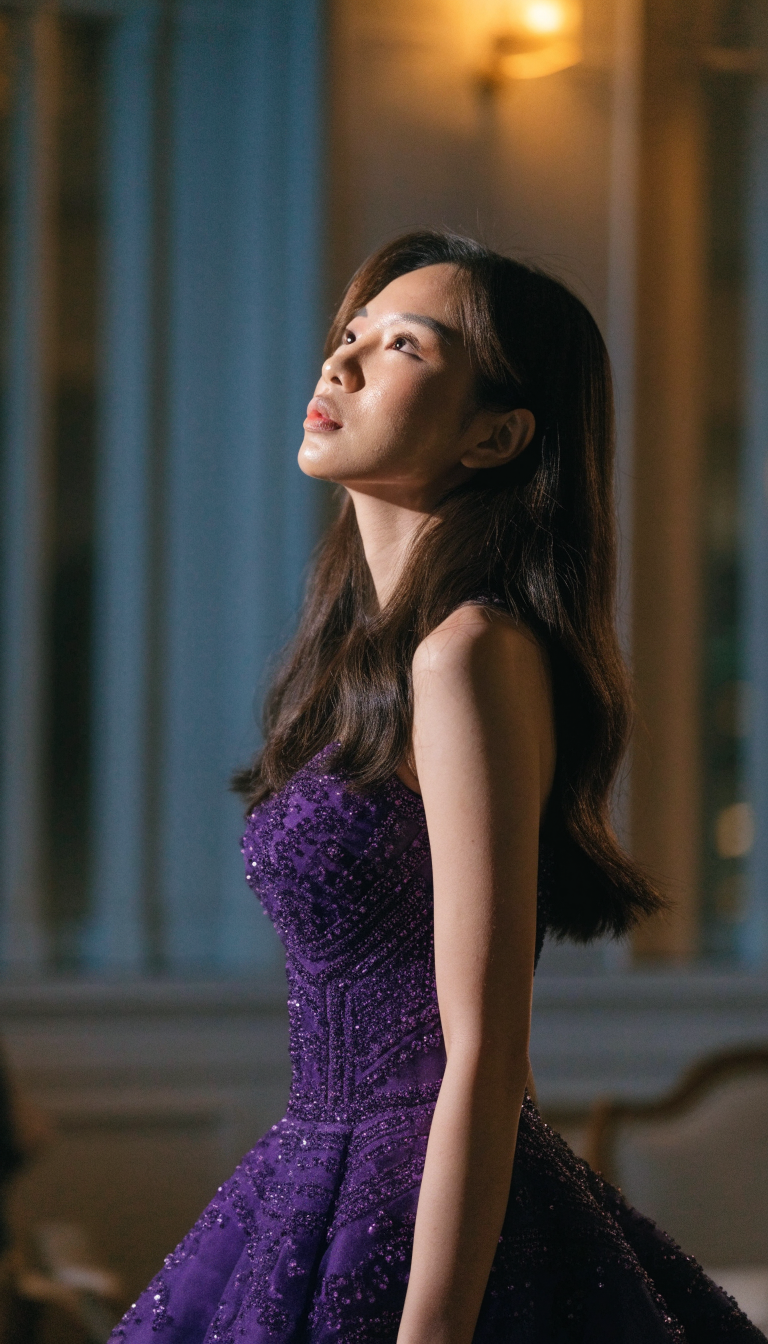
- Evening photography strength — Beading catches indoor light well, creating texture that reads in both close and full-length shots.
- Weight awareness — Extra beading adds heft, so test how the gown feels after several minutes of standing and walking.
- Seamstress skill — Alterations around beaded areas take more time and cost, so book a specialist if possible.
10. Royal Purple Off-the-Shoulder Lace
Deep royal purple lace over a matching or slightly darker lining creates an off-the-shoulder neckline that frames the collarbones while the skirt flows in an A-line or soft mermaid. The lace adds romantic texture that stands out against the saturated color. Many versions include a modest sleeve or strap option for additional coverage.
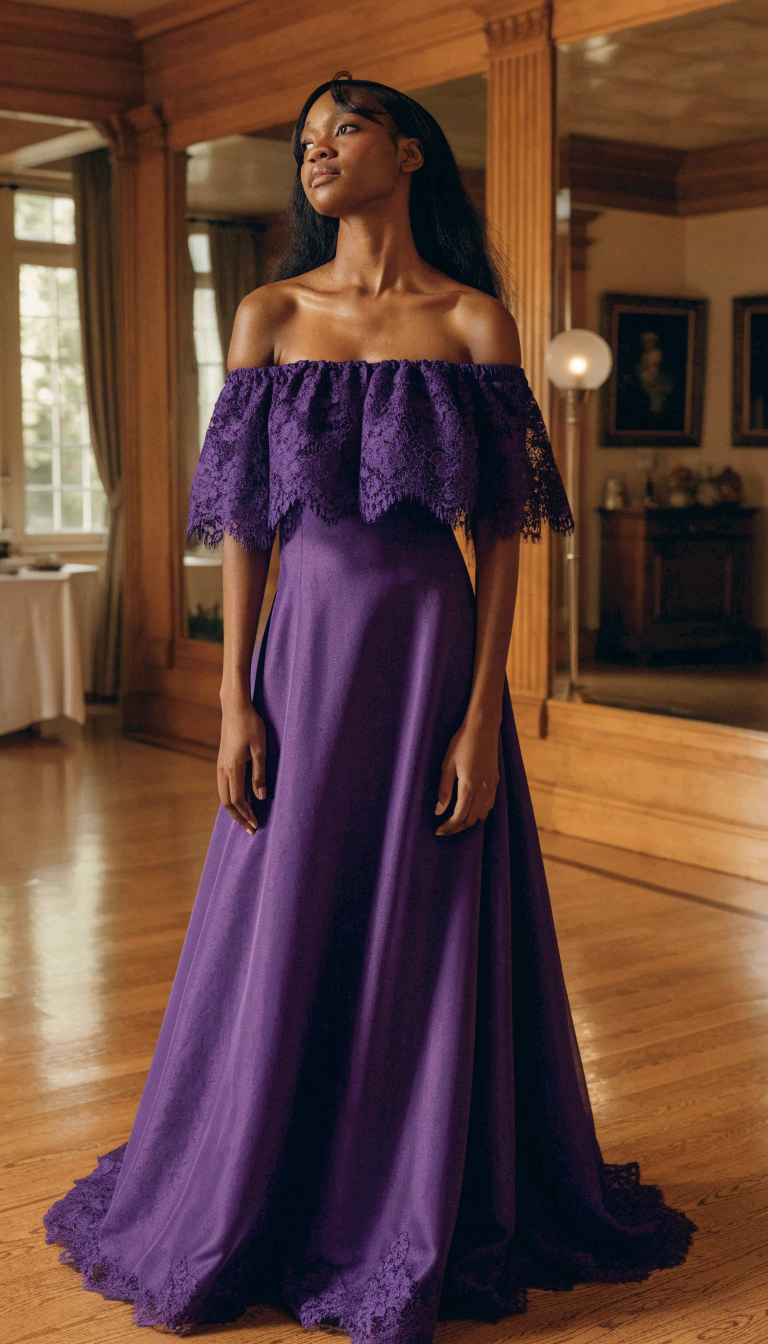
- Indoor formal match — Works for evening ceremonies or ballrooms where the rich shade and lace detail feel intentional.
- Strap support check — Off-the-shoulder styles often need silicone or internal grip to stay in place during movement.
- Train practicality — A sweep train is common and can be bustled simply for the reception.
Versatile Details and Alternative Cuts
11. Purple Ombre Ball Gown from Pale to Deep
An ombre skirt that begins in pale lilac or lavender at the bodice and deepens toward violet or plum at the hem creates a gradual color shift. Soft tulle or organza layers make the transition look fluid rather than abrupt. The effect feels artistic while still reading as a cohesive bridal gown.
- Visual interest note — The gradient adds dimension in photos without requiring heavy embellishment.
- Hemming care — The color shift means the hem must be evened carefully so the darkest section remains balanced.
- Venue flexibility — Suitable for both garden and indoor settings depending on the overall formality of the fabric.
12. High-Neck Illusion Violet with Coverage
A high-neck illusion panel in violet combines sheer mesh with opaque lining or lace for modest coverage while keeping a light appearance at the neckline. The silhouette can be A-line or fit-and-flare, and the color stays consistent through the sheer and solid sections. This option appeals to brides who prefer more coverage without losing the purple statement.
- Modesty and comfort — Provides neck and shoulder coverage that can feel more secure during long ceremonies or in cooler venues.
- Undergarment simplicity — The higher neck often allows a standard bra or built-in cups with fewer visibility concerns.
- Alteration ease — Neckline adjustments are usually minimal once the size is set.
13. Tea-Length Lavender for Smaller Celebrations
A tea-length lavender gown ends around mid-calf, offering easier movement and less fabric to manage. Lightweight fabrics such as chiffon or soft tulle keep the look airy, while a defined waist maintains a bridal silhouette. This length works well for courthouse, daytime, or destination ceremonies where a long train would be impractical.
- Practical movement — Easier for walking, sitting, and navigating stairs or uneven ground than a full-length gown.
- Shoe flexibility — Pairs well with a range of heel heights since the hem is shorter and less likely to drag.
- Timeline advantage — Simpler styles are sometimes available off-the-rack or with shorter made-to-order lead times.
14. Detachable Sleeve Plum Gown for Flexibility
A plum base gown with removable lace or chiffon sleeves lets you change the look between ceremony and reception. The core dress can be sleeveless or strapless, while the sleeves add coverage and texture when attached. Secure attachment points keep the sleeves stable during the processional.
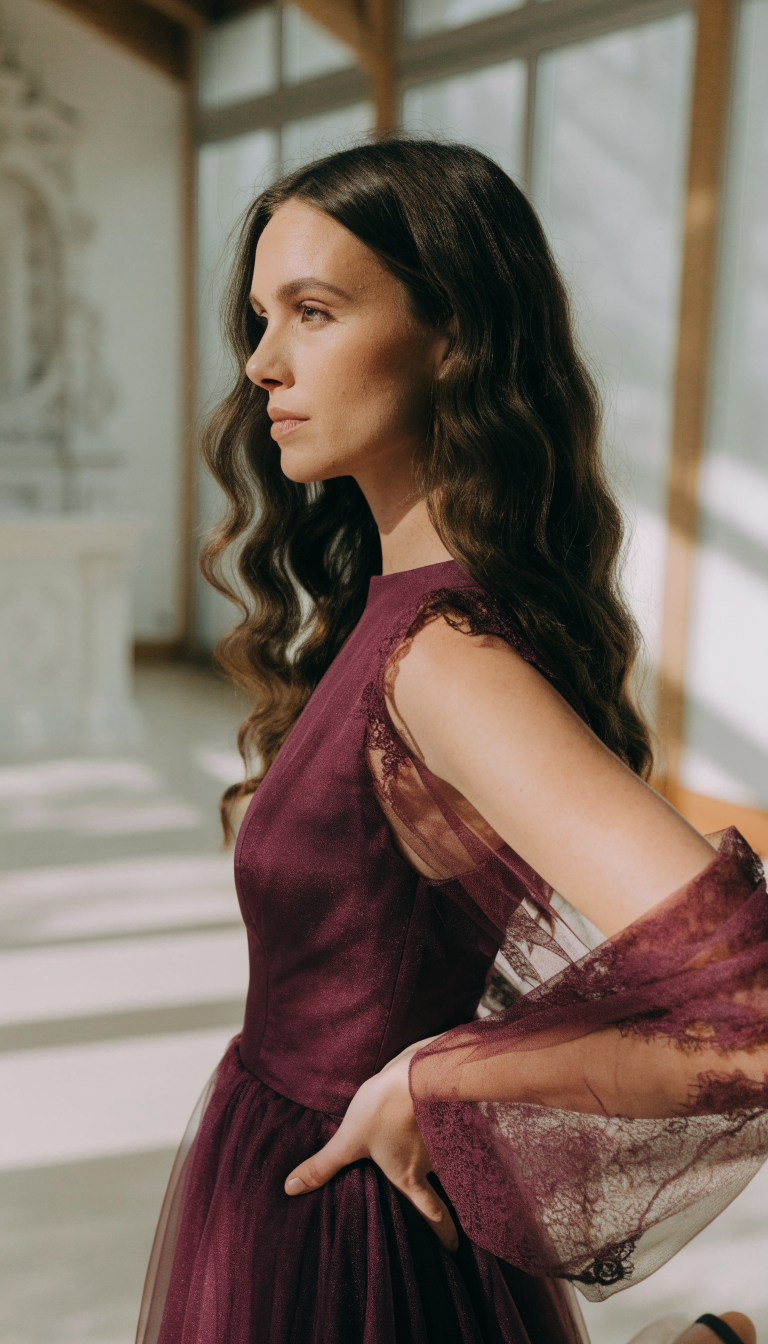
- Climate adaptability — Sleeves can be removed if the reception space warms up or if you want more freedom for dancing.
- Attachment check — Test how easily the sleeves come on and off and whether they leave marks on the main gown.
- Coordination note — Match the sleeve fabric closely to the base so the transition looks intentional.
15. Fit-and-Flare Mauve with Functional Pockets
A mauve fit-and-flare gown follows the body through the hips then flares gently, and discreet side pockets add practical storage for small items. Stretch lining or crepe helps the shape stay comfortable while moving. The silhouette offers more ease than a tight mermaid without losing definition.
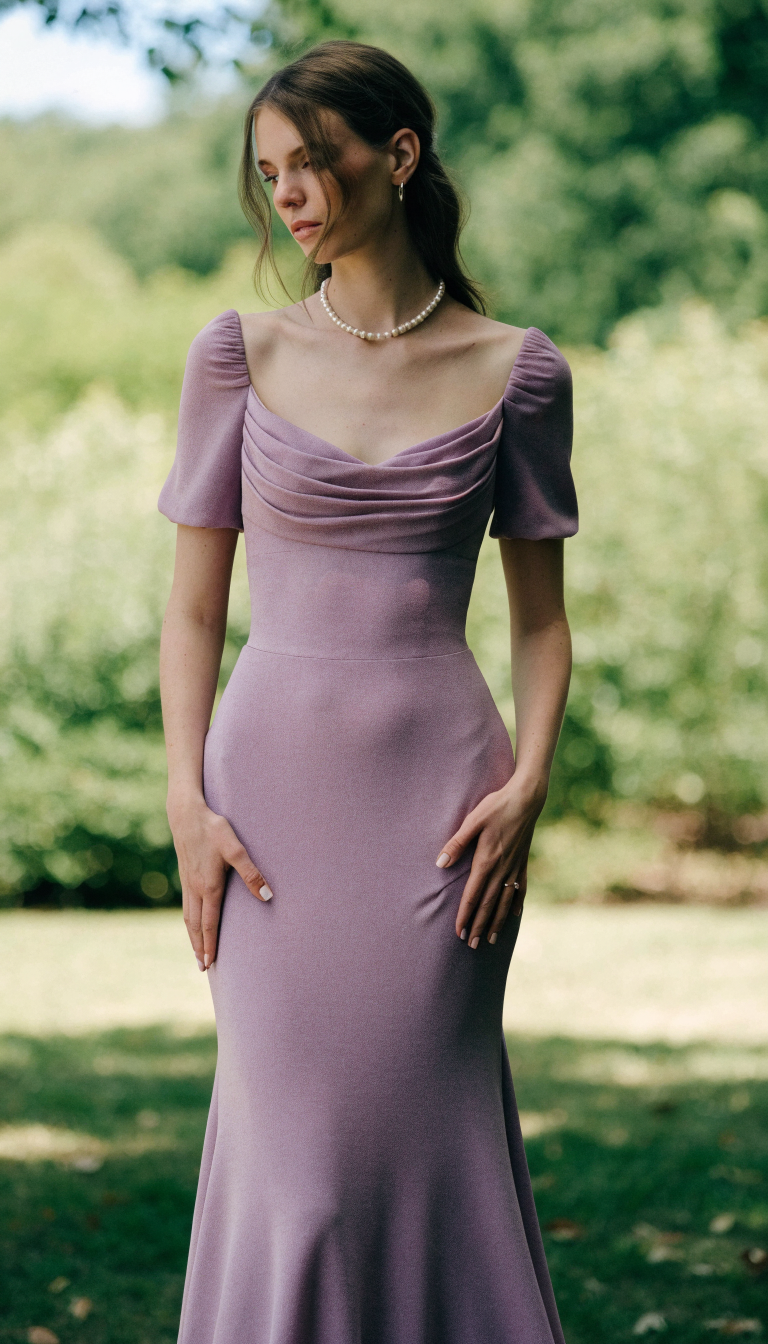
- Everyday ease — Pockets reduce the need for a clutch during parts of the day and feel useful for phone or lip color.
- Sitting test — Check that the flare and pockets do not pull or gap when seated.
- Alteration range — Waist and hip adjustments are common and usually straightforward on this cut.
16. Sheer Overlay Lilac with Appliqués
A lilac base with a sheer overlay and scattered floral appliqués creates texture and dimension while keeping the overall weight light. The appliqués can be concentrated on the bodice and scattered down the skirt so the color shows through clearly. A smooth lining prevents the overlay from clinging.
- Romantic detail focus — Appliqués add bridal character without requiring an all-over lace pattern.
- Layer behavior — The sheer fabric moves independently of the base, so test walking to see how the layers interact.
- Cleaning consideration — Appliqués may need spot cleaning rather than full immersion, so ask the salon about care.
17. Strapless Sweetheart Plum with Support
A strapless sweetheart neckline in plum satin or mikado creates a classic formal shape with strong color presence. Internal boning and a structured lining provide the necessary support so the neckline stays secure. The clean lines let the rich shade remain the main visual feature.
- Support requirement — Most strapless styles need a well-fitted bodice or additional cups; test movement during the fitting.
- Evening formal match — Works well for indoor or evening ceremonies where the structured shape photographs cleanly.
- Hem and train note — A modest train is typical and can be bustled for the reception without complex hardware.
18. High-Low Lavender for Practical Movement
A high-low lavender gown is shorter in front (often around the knee or mid-calf) and longer in back, combining easier walking with a graceful train effect. Lightweight fabrics such as chiffon or soft tulle keep the layers from feeling bulky. The cut suits outdoor or destination settings where a full-length hem might drag.
- Ground clearance — The shorter front reduces the chance of the fabric catching on grass, gravel, or stairs.
- Dance comfort — More freedom of movement than a traditional floor-length gown while still offering a bridal silhouette.
- Shoe visibility — The front hem shows footwear clearly, so choose shoes that coordinate with the lavender shade.
Bringing two or three shortlisted styles (or clear photos of them) to your first fitting helps the consultant focus on fit and fabric behavior rather than broad browsing. Most bridal gowns are made to order, so starting several months ahead gives time for production and the usual two to four alteration appointments. Ask about sample-sale or pre-owned options if your timeline is shorter.
How far in advance should I order a purple wedding dress? Most made-to-order bridal gowns need four to eight months, though some designers offer rush options or stock sizes. Confirm the exact lead time with the salon once you choose a style, and schedule alterations after the gown arrives.
Can I buy a sample dress in purple? Yes, many salons sell sample gowns at a reduced price. Check the condition of the fabric and any beading, and confirm whether the size can be altered to fit you comfortably.
How many fittings should I expect? Two to four fittings are typical: an initial pin session, one or two follow-ups for adjustments, and a final check closer to the wedding. Bring the shoes and undergarments you plan to wear.
Does a purple dress need special care on the day? Lighter shades can show stains more easily, while darker jewel tones may mark under pressure if the fabric is velvet. Ask your salon for steaming and spot-cleaning guidance specific to the fabric you choose.