
Choosing a lace wedding dress with sleeves balances romantic texture against practical coverage for cooler ceremonies, traditional settings, or simply personal preference. The lace itself—whether dense floral or airy geometric—adds dimension that catches light in photos while the sleeves provide structure and modest lines. Options range from long fitted styles suited to winter venues to lighter cap versions that work in milder weather. This guide groups 16 distinct approaches by sleeve length and construction so you can evaluate how each moves, fits under layers, and suits your climate and dress code during a fitting.
Long Sleeve Lace Approaches
1. A-Line Gown with Fitted Long Lace Sleeves
An A-line silhouette starts fitted through the bodice and flares gently from the hips or waist, giving room to walk and dance. Pairing it with long, fitted lace sleeves creates continuous coverage from shoulder to wrist without adding bulk. Floral or geometric lace over a light lining keeps the arms supported yet flexible. This combination works well when you want classic romance with enough skirt movement for a garden or ballroom reception.
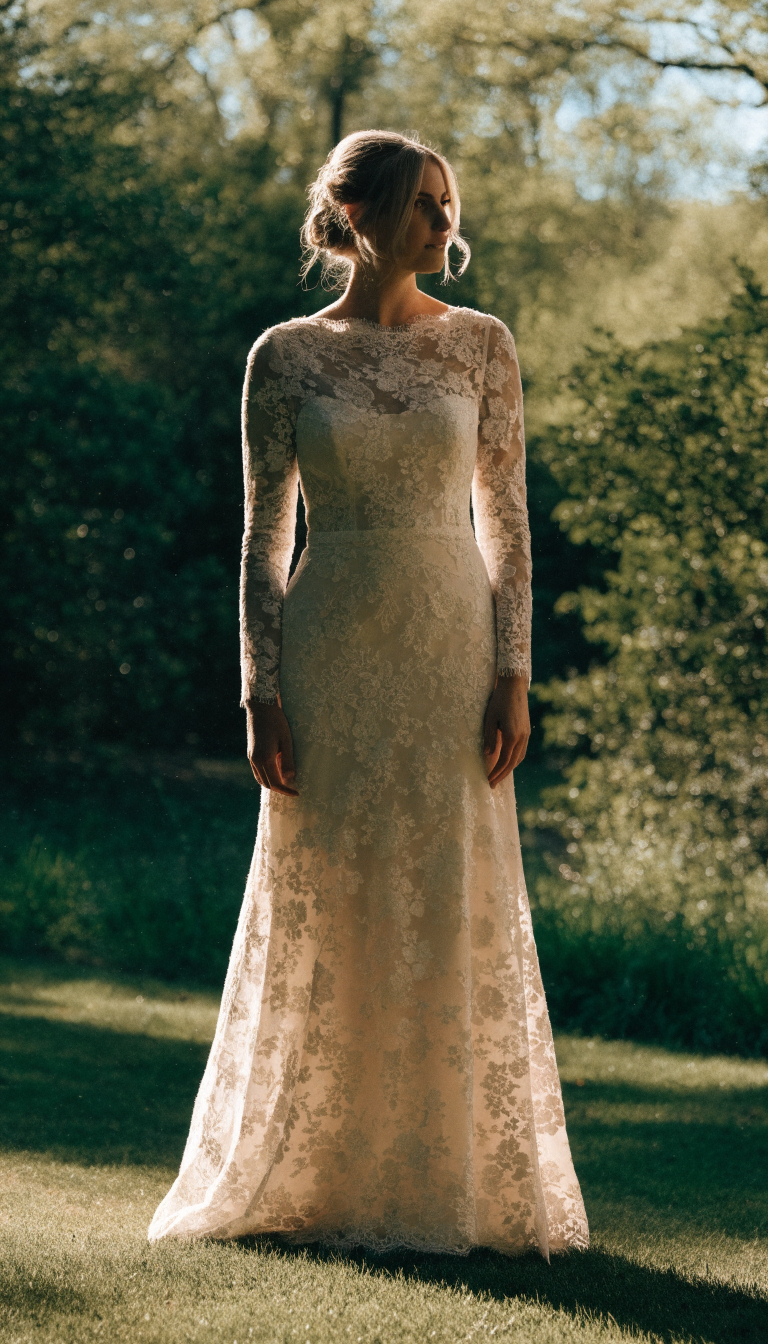
- Outdoor ceremony ease: The gentle flare handles grass or gravel better than a narrow skirt while the sleeves add polish for evening light.
- Stretch and lining check: Test whether the lace or its lining allows full arm raise without pulling at the shoulder seam.
- Cuff adjustment note: Length can often be refined at the wrist, though matching the lace pattern requires careful work.
2. Sheath Dress Featuring Balloon Lace Sleeves
A sheath follows the body closely from shoulder to hem, creating a clean vertical line. Balloon lace sleeves add soft volume through the upper arm before tapering at the wrist, balancing the narrow silhouette with texture. Lightweight floral lace keeps the volume from feeling heavy. The result suits a courthouse or city-hall setting where you want coverage without a full skirt.
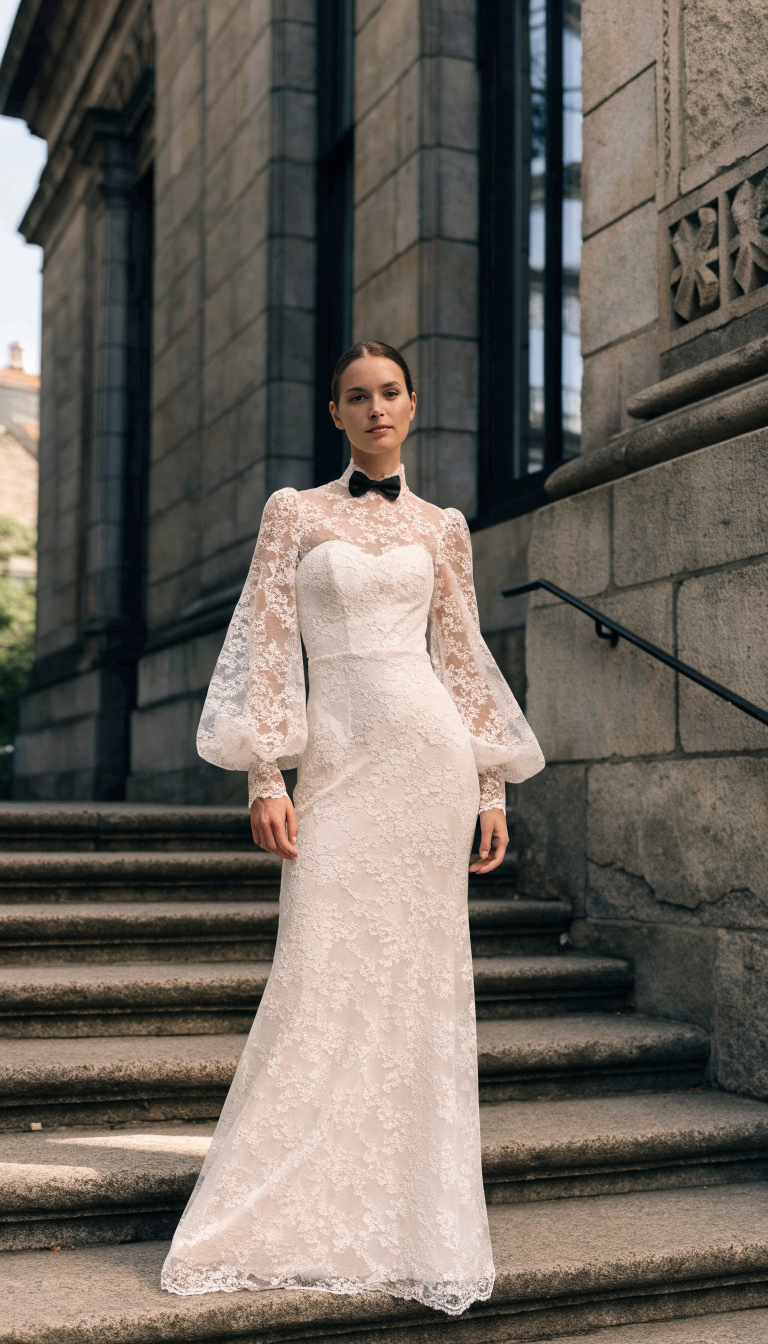
- City venue fit: The streamlined shape moves easily through doorways and into cars without excess fabric.
- Volume versus heat: The gathered upper sleeve can trap warmth; choose openwork lace if the ceremony runs long.
- Support under the arm: Confirm the balloon shape does not require extra padding or create bulk when arms are at your sides.
3. Mermaid Silhouette with Long Sheer Lace Sleeves
A mermaid shape hugs through the hips before flaring below the knee. Long sheer lace sleeves add coverage while remaining light enough not to compete with the dramatic skirt. Often layered over a nude or skin-tone lining, the lace reads as delicate rather than dense. This style photographs strongly in formal indoor spaces where the flare can be seen.
- Formal indoor lighting: Sheer lace catches highlights along the arm without adding visual weight to the fitted bodice.
- Dance-floor mobility: The flare begins low, so test sitting and then standing to confirm the sleeves stay in place.
- Lining opacity test: Hold the sleeve up to light during the fitting to see how much of the lining shows through.
4. Ball Gown Accented by Bishop Lace Sleeves
A ball gown offers full volume through the skirt, often supported by layers of tulle or organza. Bishop lace sleeves gather softly at the upper arm and again at a cuff, creating romantic fullness that echoes the skirt. Medium-weight lace holds the gathered shape without collapsing. The overall effect suits a grand ballroom or winter ceremony where coverage and presence both matter.
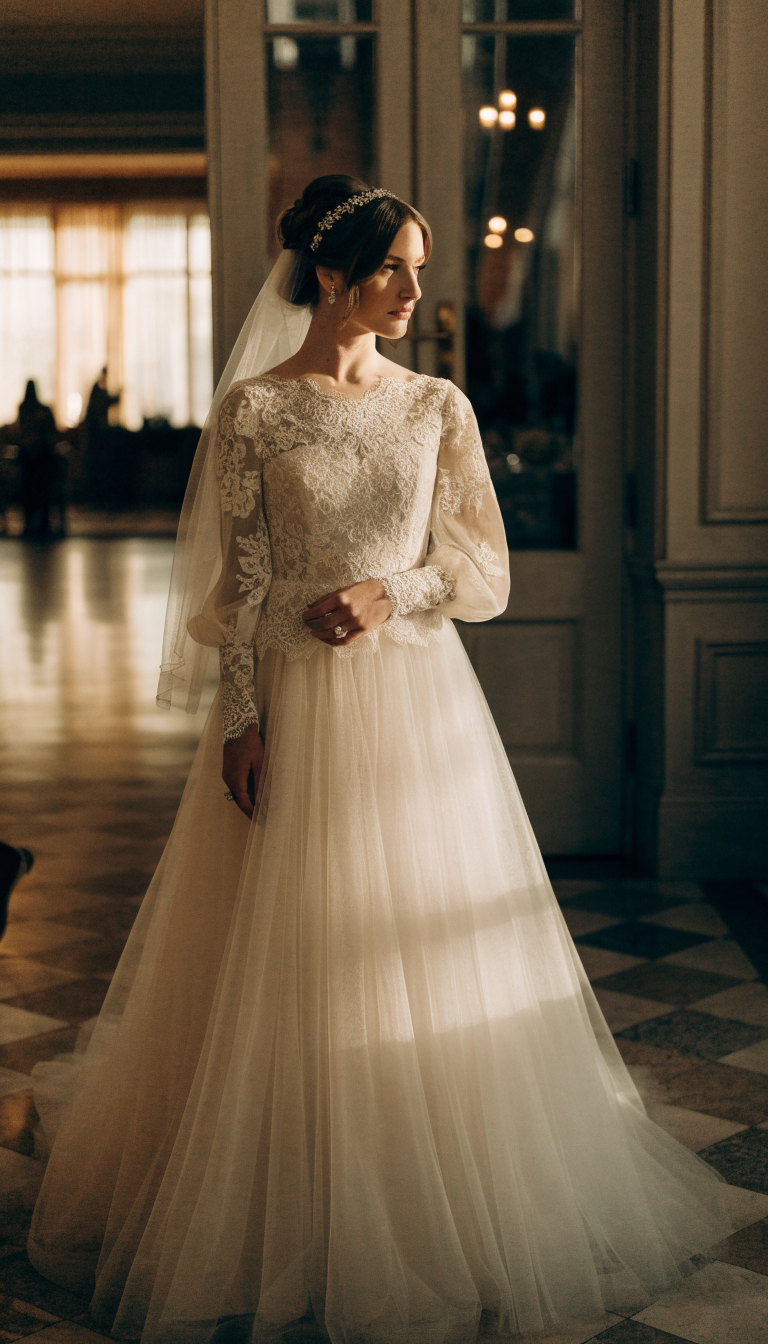
- Grand ballroom presence: The sleeve volume balances the wide skirt so the silhouette does not appear top-heavy in photos.
- Gathered cuff comfort: Check that the wrist gathers do not dig when you bend your arms or clasp hands.
- Weight distribution note: Full skirts plus gathered sleeves can feel heavier; confirm the bodice stays anchored during movement.
5. Column Style with High-Neck Long Lace Sleeves
A column dress falls straight from the shoulder or bust to the hem with minimal flare. High-neck long lace sleeves create continuous coverage from throat to wrist, producing a sleek, modest line. Smooth lining under the lace prevents transparency while allowing the pattern to show. This approach works for a traditional church aisle or any setting that calls for full arm coverage.
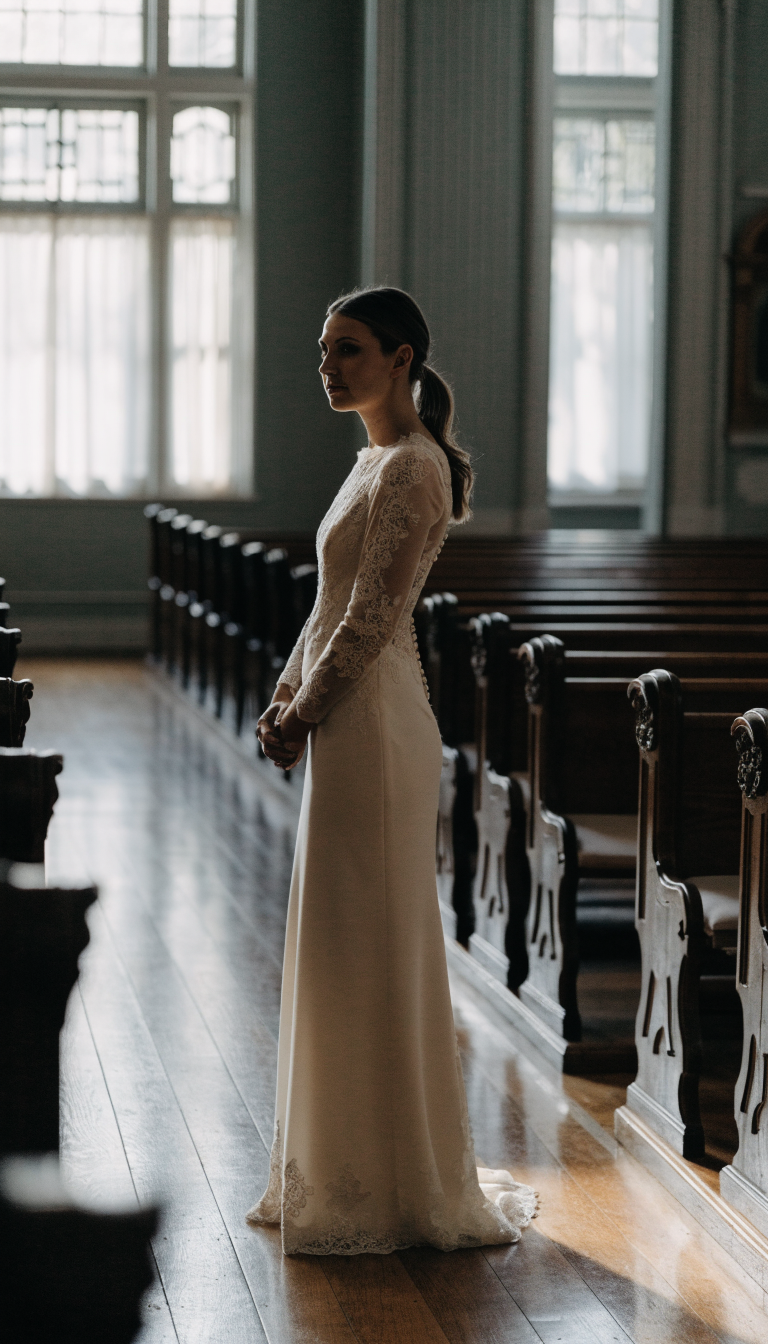
- Church aisle coverage: The high neck and long sleeves meet many formal dress codes without extra layers.
- Smooth underlayer feel: The lining should glide rather than cling when you raise your arms for a hug or photo.
- Neckline sitting test: Confirm the high neck does not gap or pull when you look down or turn your head.
Mid-Length Lace Sleeve Designs
6. Trumpet Gown with Three-Quarter Lace Sleeves
A trumpet silhouette fits closely through the torso and hips before flaring more dramatically than a mermaid. Three-quarter lace sleeves end between elbow and wrist, offering coverage without full-arm length. Floral appliqué lace adds texture that transitions cleanly into the bodice. The length works for milder outdoor evenings where full sleeves might feel too warm.
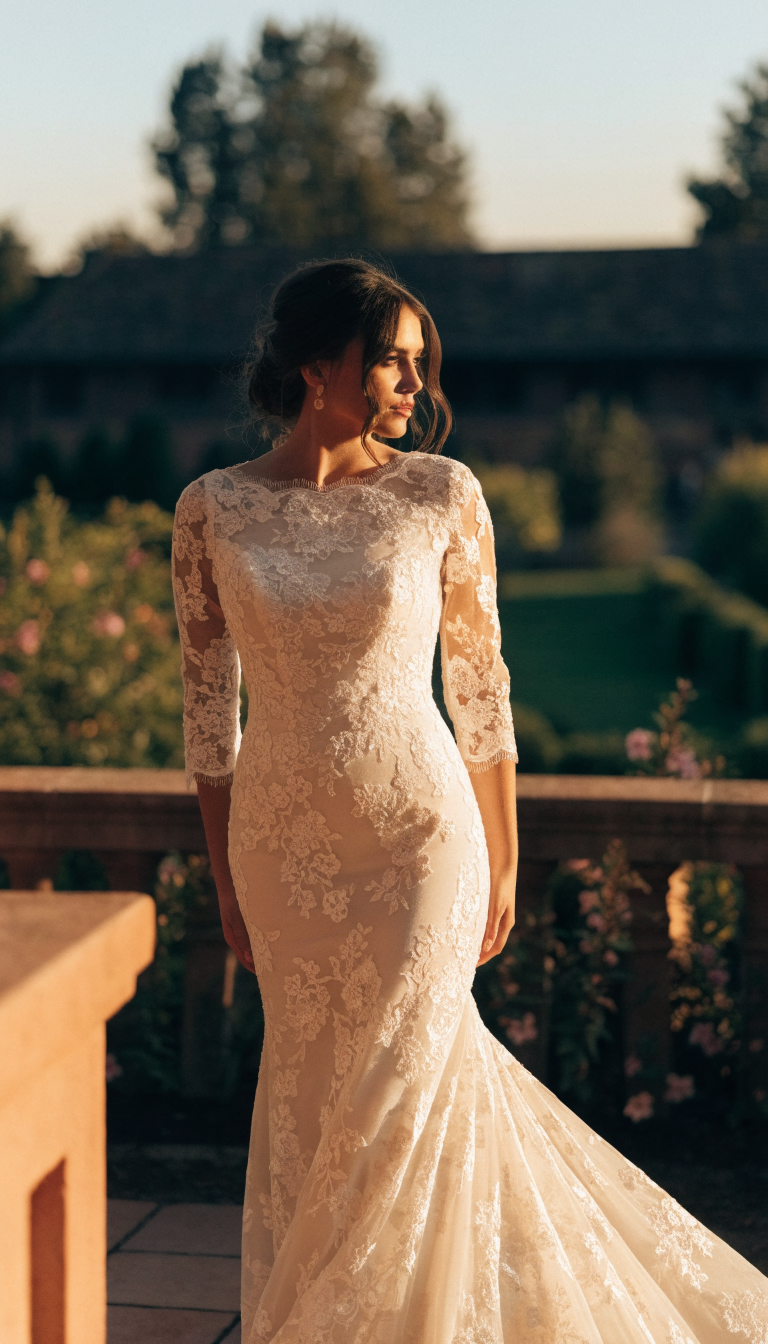
- Milder evening suitability: Three-quarter length reduces fabric on the forearm while still framing the hands.
- Appliqué placement note: Check that lace motifs align across the sleeve and bodice so the pattern reads continuous.
- Wrist clearance check: Ensure the sleeve end does not catch on a bracelet or watch during the ceremony.
7. Fit-and-Flare with Elbow-Length Lace Sleeves
Fit-and-flare follows the body to just above the knee before releasing into a moderate flare. Elbow-length lace sleeves stop at the joint, creating a balanced proportion that keeps the arms free. Soft, drapey lace avoids stiffness at the elbow. This style suits a garden reception where you expect to move between seated and standing moments.
- Garden movement range: The flare begins early enough to allow easy steps while the sleeves leave the lower arm open.
- Elbow bend test: Raise and bend your arms to confirm the lace does not bunch or restrict at the joint.
- Proportion with train: If the gown includes a modest train, the elbow length keeps visual weight centered rather than extended.
8. Off-the-Shoulder Dress with Short Lace Sleeves
An off-the-shoulder neckline sits below the shoulder line, often with a straight or curved edge. Short lace sleeves rest on the upper arm, providing a soft frame without covering the full shoulder. Lightweight lace maintains the airy quality of the neckline. The combination works for a daytime outdoor ceremony where you want romantic lines and some arm coverage.
- Daytime outdoor balance: Short sleeves add texture without the warmth of longer versions under direct sun.
- Shoulder stay check: Confirm the sleeves and neckline stay in place when you raise your arms or turn.
- Bra compatibility note: Off-the-shoulder styles often rely on built-in support; test whether additional straps are visible.
9. Square-Neck A-Line with Cap Lace Sleeves
A square neckline creates a horizontal line across the upper chest. Cap lace sleeves sit just at the shoulder, adding a small amount of coverage and a finished edge. Crisp lace holds the cap shape without drooping. This pairing suits a civil ceremony or modern indoor venue where clean geometry matters.
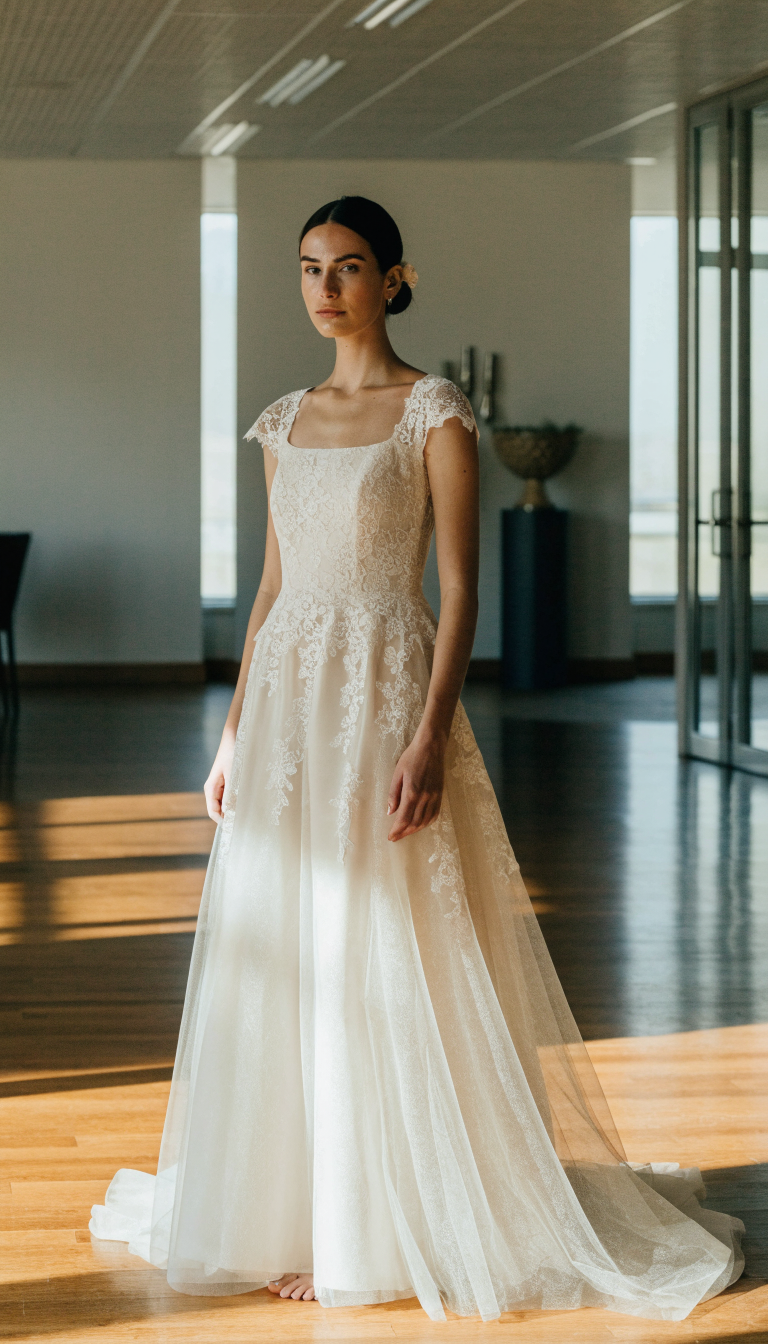
- Modern indoor geometry: The square line and small caps read structured rather than overly romantic.
- Cap stability test: Move your shoulders to ensure the lace caps do not slip or fold under the arm.
- Neckline support note: The horizontal edge may need light boning or a well-fitted bodice to stay flat.
Convertible and Illusion Lace Options
10. V-Neck Sheath with Delicate Cap Sleeves
A V-neck elongates the torso while a sheath keeps the overall line narrow. Delicate cap sleeves in fine lace soften the shoulder without adding length. Airy Chantilly-style lace keeps the detail light. The result works for a destination ceremony in a mild climate where minimal coverage still feels intentional.
- Destination climate fit: Short, openwork lace stays cooler than denser long sleeves in warmer locations.
- Fine lace durability: Inspect the edge of the cap for secure finishing so it does not fray with movement.
- V-depth sitting note: Lean forward slightly to confirm the neckline and caps stay comfortable when seated.
11. Illusion Neckline Paired with Lace Sleeves
An illusion neckline uses sheer fabric from the collarbone upward, often finished with lace. Matching lace sleeves continue the sheer effect down the arms. The combination creates coverage that photographs as soft rather than solid. This style suits a formal evening reception where you want romance without heavy fabric.
- Evening photo softness: Sheer lace and illusion fabric catch light along the arms and neck without bulk.
- Sheer support needs: A well-fitted lining or cups under the illusion area prevents transparency while keeping the look light.
- Seam alignment check: Confirm lace motifs flow continuously from the neckline into the sleeves.
12. Detachable Long Lace Sleeves on a Strapless Base
A strapless bodice provides a clean neckline that can stand alone. Detachable long lace sleeves attach at the shoulder or upper arm, usually with hidden snaps or buttons, so you can remove them after the ceremony. Medium-weight lace holds its shape while attached. This option lets you shift from formal coverage to a lighter reception look.
- Ceremony-to-reception switch: Remove the sleeves after photos if the reception is warmer or more casual.
- Attachment security: Test the snaps or buttons while raising your arms to ensure they stay fastened.
- Base-dress support: The strapless foundation still needs proper cups or boning once the sleeves come off.
13. Removable Lace Bolero with Sleeves
A separate lace bolero or cropped jacket adds sleeves and shoulder coverage over a simpler gown. The bolero can be buttoned, snapped, or worn open. Lightweight lace keeps the extra layer from feeling heavy. This approach works when you want the option to remove coverage for dancing without altering the main dress.
- Layer removal ease: Practice taking the bolero on and off so the process stays smooth on the day.
- Matching lace note: Choose a bolero whose lace pattern and weight closely match the gown so the pieces look intentional.
- Shoulder line check: Confirm the bolero sits evenly and does not shift the neckline of the dress underneath.
14. Modest Full-Lace Coverage Sleeves for Traditional Venues
Full-coverage lace sleeves, often paired with a higher neckline, create continuous fabric from neck to wrist. Dense or medium-density lace provides opacity while still showing pattern. A smooth lining underneath prevents irritation. This style meets many traditional or religious dress codes while remaining part of the gown rather than an added layer.
- Traditional venue alignment: The continuous coverage satisfies formal or modest requirements without a separate jacket.
- Opacity and lining: Hold the sleeve to light to confirm the lining hides skin tone while the lace pattern remains visible.
- Full-arm mobility: Move through a full range of motion to ensure the denser lace does not restrict at the shoulder or elbow.
15. Lightweight Openwork Lace Sleeves for Mild Climates
Openwork lace with larger spaces between motifs creates sleeves that feel lighter on the arm. Often used in three-quarter or long lengths over a minimal lining, the construction allows more airflow. Soft, fluid lace drapes rather than stands away from the arm. This version suits an outdoor ceremony in mild weather where full coverage is desired without excess warmth.
- Mild-weather airflow: Larger open spaces in the lace reduce heat buildup compared with densely patterned versions.
- Drape versus structure: Confirm the lightweight lace holds its intended shape rather than collapsing or stretching out.
- Undergarment lines: Check that the openwork does not reveal the edges of a bra or shapewear under the sleeve.
16. Structured Base with Lace Sleeve Overlays
A structured fabric such as mikado or crisp satin forms the main body of the gown while lace is applied only as an overlay on the sleeves. The contrast keeps the bodice clean and architectural while the sleeves add texture. The lace can be fitted or slightly gathered. This hybrid works for a modern indoor ceremony where you want both polish and romantic detail.
- Modern indoor contrast: The smooth structured body reads tailored while the lace sleeves supply softness.
- Overlay attachment: Inspect how the lace is joined at the armhole so it does not pull or gap during movement.
- Fabric weight balance: The structured base should not feel heavier than the lace sleeves, or the proportion can shift.
After narrowing your choices to two or three sleeve approaches, bring reference photos and note any specific concerns about heat, mobility, or dress-code requirements to the fitting. Most gowns are made to order, so allow several months of lead time plus multiple alteration appointments for adjustments to length, fit, and pattern matching. Approximate prices vary by designer, fabric weight, and custom details, with alterations billed separately.
FAQ
How far in advance should I order a lace wedding dress with sleeves? Most bridal gowns are made to order and commonly require several months of production time, though exact lead times differ by designer and season. Build in additional weeks for alterations, especially if sleeve length or lace pattern matching needs adjustment.
Can the length of lace sleeves be altered? Yes, but the process is more precise than a standard hem because the lace motif must stay aligned. Discuss the possibility early so the seamstress can plan the work and any extra fittings required.
Do lace sleeves feel warm during an outdoor ceremony? Dense or heavily lined lace can retain heat, while openwork or sheer versions with minimal lining allow more airflow. Test the specific fabric in the fitting room and consider the time of day and expected temperature at your venue.
What undergarments work best with sheer or illusion lace sleeves? A nude or skin-tone lining sewn into the sleeve often provides the cleanest coverage. If the lace is unlined, a long-line bra or seamless shapewear in a matching tone can reduce visible lines without adding bulk.