
A wedding dress needs to photograph well and still feel manageable through standing, sitting, and dancing. These 23 wedding dress inspo ideas sort options into silhouettes, necklines with sleeve styles, and fabrics or finishing details so you can shortlist by how each one sits, flows, and holds up at your specific venue and season. Most bridal gowns are made to order, so multi-month lead times plus separate alteration appointments are common. Any cost notes below are approximate and shift with designer, fabric, region, and alterations.
Silhouettes
1. A-Line Silhouette for Balanced Everyday Movement
An A-line dress fits through the bodice and waist, then flares gently from the hip into a full but not heavy skirt. The shape gives room to walk and sit without the skirt pooling or clinging, which makes it a practical base for both indoor ceremonies and outdoor receptions. Pairing it with a structured satin or crisp mikado keeps the flare defined; a softer crepe lets the fabric move more fluidly so the hem can be hemmed shorter for grass or sand without losing the line.
Salon floor test: Walk and sit to check whether the skirt swings clear of the knees. Heat reality: Lighter crepe versions breathe better than dense satin in warm months. Alteration note: Hemming is usually straightforward once shoe height is locked in.
2. Ball Gown with Full Skirt Volume
A ball gown features a fitted bodice and a dramatically full skirt supported by layers of tulle or a structured underlayer. The volume creates strong photo presence down an aisle or under high ceilings, yet the weight and circumference demand attention when turning or sitting. Mikado or taffeta gives a crisp, architectural skirt; softer tulle layers feel lighter but can crush in tight seating.
Venue match: Strongest in ballrooms, churches, or large gardens with space to move. Sitting check: Practice lowering into a chair to confirm the skirt does not bunch awkwardly. Bustle need: Most styles require a multi-point bustle so the train can be lifted for dancing.
3. Mermaid Cut That Follows the Body
A mermaid silhouette stays close through the hips and thighs before flaring below the knee. The shape emphasizes curves and photographs cleanly in closer portraits, but the tight fit through the legs limits stride length and can feel restrictive after several hours. Stretch crepe or satin with a bit of give improves comfort; rigid fabrics without stretch can pull at the seams when sitting.
Dance-floor limit: Expect a shorter, more careful step rather than free movement. Fabric choice: Look for fabrics with modest stretch listed on the care tag. Fitting priority: Confirm you can sit and rise without the hem riding or the seams straining.
4. Trumpet Silhouette Flaring Below the Knee
A trumpet dress follows the body closely to just below the knee, then opens into a moderate flare. It offers more walking room than a full mermaid while still creating a defined shape in photos. The flare point is usually set so the hem clears the floor once heeled shoes are added; crepe or charmeuse keeps the upper portion fluid, while a firmer satin holds the flare open.
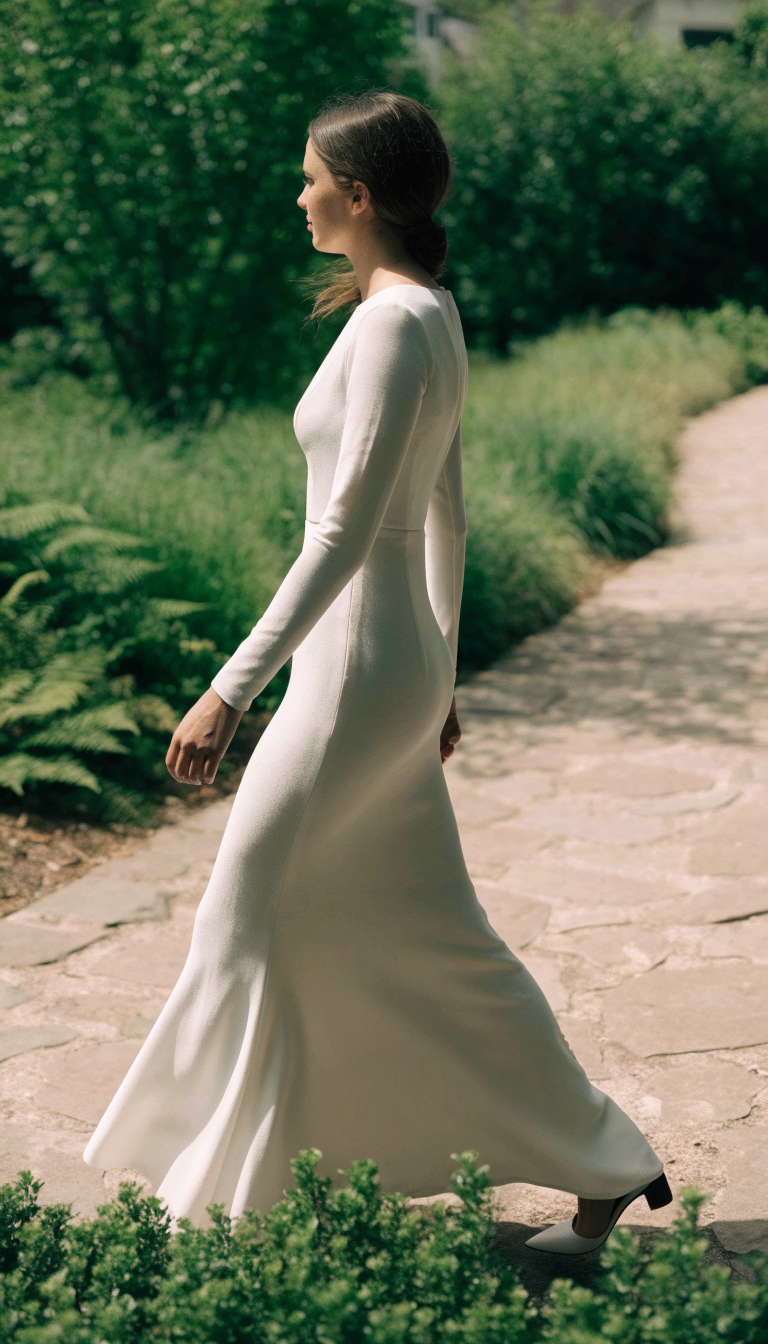
Step length: The flare begins low enough for a normal stride once the hem is set. Hem timing: Mark the hem only after the final shoes are chosen. Heat note: Single-layer versions in crepe stay cooler than multi-layer satin constructions.
5. Sheath Dress for Clean, Streamlined Lines
A sheath follows the body in a narrow, straight column from shoulder to hem. The minimal fabric keeps the look modern and reduces bulk, which works well in smaller venues or for couples who prefer an uncluttered silhouette in photos. Crepe drapes softly and moves with the body; a firmer mikado or heavy satin holds a sharper line but can feel more rigid.
Restroom practicality: Narrow skirts require a bit more care when sitting and standing. Undergarment match: Seamless shapewear works best because the fabric sits close. Shoe pairing: Heels or flats both work once the hem is set to the chosen height.
6. Fit-and-Flare That Releases at the Hip
A fit-and-flare dress is fitted through the bodice and hips, then opens into a gentle flare. The release point sits higher than a trumpet, giving more fabric movement around the knees while still defining the waist. Satin or mikado keeps the flare structured; layered tulle underneath can add softness without adding visible bulk.
Walking ease: The higher flare point allows a fuller step than a mermaid. Fabric drape: Crepe versions feel lighter and wrinkle less in travel. Alteration complexity: Adjusting the flare point usually needs a skilled fitter.
7. Empire Waist for Raised Comfort
An empire waist sits just under the bust and lets the skirt fall in soft, unbroken folds. The raised waist removes pressure around the midsection and creates a flowing line that works for both indoor and outdoor settings. Lightweight chiffon or georgette moves freely and stays cool; a lined version prevents the fabric from clinging or showing undergarment lines.
Movement freedom: The loose skirt allows easy walking and sitting. Support note: Built-in cups or a well-fitted strapless bra keep the bodice secure. Season fit: Sheer, light fabrics suit warm climates; add a lining for cooler venues.
8. Column Gown with Straight Fall
A column gown falls in a nearly straight line from the shoulders or bust, creating a narrow, elongated shape. The limited fabric keeps the dress light and reduces the chance of tripping, which is useful in venues with uneven ground or tight spaces. Fluid crepe or charmeuse drapes smoothly; a heavier satin holds a sharper edge.
Ground clearance: Confirm the hem clears the floor in the shoes you will wear. Fabric behavior: Crepe resists wrinkling better than satin during a long day. Photo line: The straight silhouette reads cleanly in both full-length and closer shots.
Necklines and Sleeves
9. Sweetheart Neckline with Heart-Shaped Curve
A sweetheart neckline dips in a soft heart shape across the bust. It frames the collarbone and creates a classic bridal line that photographs well from the front and three-quarter angles. The curve can be finished in lace, satin, or crepe; a built-in cup or light boning helps the shape stay in place without a separate bra.
Support test: Lean forward in the fitting room to check whether the neckline stays secure. Fabric pairing: Lace-edged versions add texture without adding weight. Venue note: Works in both formal indoor settings and outdoor ceremonies.
10. Off-the-Shoulder Neckline Framing the Collarbone
An off-the-shoulder neckline rests below the shoulders, exposing the collarbone and upper arms. The style feels romantic in photos and pairs naturally with soft fabrics that drape rather than stand away from the body. Crepe or chiffon stays comfortable against the skin; a firmer satin may need light boning or clear straps for security.
Strap security: Test whether the neckline stays in place when you raise your arms. Sun exposure: Consider a light wrap or shawl for outdoor daytime ceremonies. Bra option: Many styles work with a strapless bra or built-in cups.
11. Deep V-Neck for Vertical Emphasis
A deep V-neck drops in a pointed or softly rounded line toward the waist. The vertical opening lengthens the torso visually and works with both fitted and fuller skirts. Lightweight crepe or chiffon drapes cleanly into the V; heavier fabrics may need a sheer modesty panel or lining to prevent gaping.
Coverage choice: A deeper V can be lined or left open depending on preference. Support check: Confirm the bodice stays in place when you bend or dance. Season pairing: The open neckline feels cooler in warm weather than high styles.
12. Square Neckline Offering Structured Coverage
A square neckline cuts straight across the bust and rises at right angles toward the shoulders. The geometric line adds structure and coverage while still framing the collarbone. Satin or mikado holds the sharp edges; softer crepe or lace softens the look without losing the shape.
Bra compatibility: Many square styles accommodate a regular or strapless bra. Photo angle: The straight line reads clearly from the front in both close and full shots. Fabric weight: Lighter crepe versions stay comfortable for long ceremonies.
13. Illusion Neckline Using Sheer Mesh
An illusion neckline uses a sheer mesh or tulle panel to create the appearance of a higher neck while remaining lightweight. The sheer section can be plain or lightly embroidered and is usually lined at the bust for coverage. The mesh stays cool and flexible, though it requires careful steaming so it does not wrinkle or cling.
Sheer behavior: Ask the salon how the mesh responds to humidity and movement. Support layer: Most versions include built-in cups beneath the illusion panel. Care note: Sheer fabrics show marks more easily and may need extra steaming before photos.
14. High Neckline for Covered Elegance
A high neckline rises to the base of the neck or higher, offering full coverage across the chest and shoulders. The style works well for formal or modest settings and pairs with long or three-quarter sleeves. Crepe or lace keeps the neckline soft; a firmer fabric can feel more structured but may need lining for comfort against the skin.
Coverage level: The height can be adjusted slightly during fittings if desired. Heat consideration: Higher necklines feel warmer; choose breathable crepe or lined lace. Jewelry pairing: A simple necklace or none at all usually works best with the covered neck.
15. Halter Neckline Supporting an Open Back
A halter neckline wraps or ties behind the neck, leaving the shoulders and most of the back open. The style creates a strong vertical line in photos and allows good airflow. Stretch crepe or satin with light boning keeps the front secure; the open back typically requires a specific bra or built-in support.
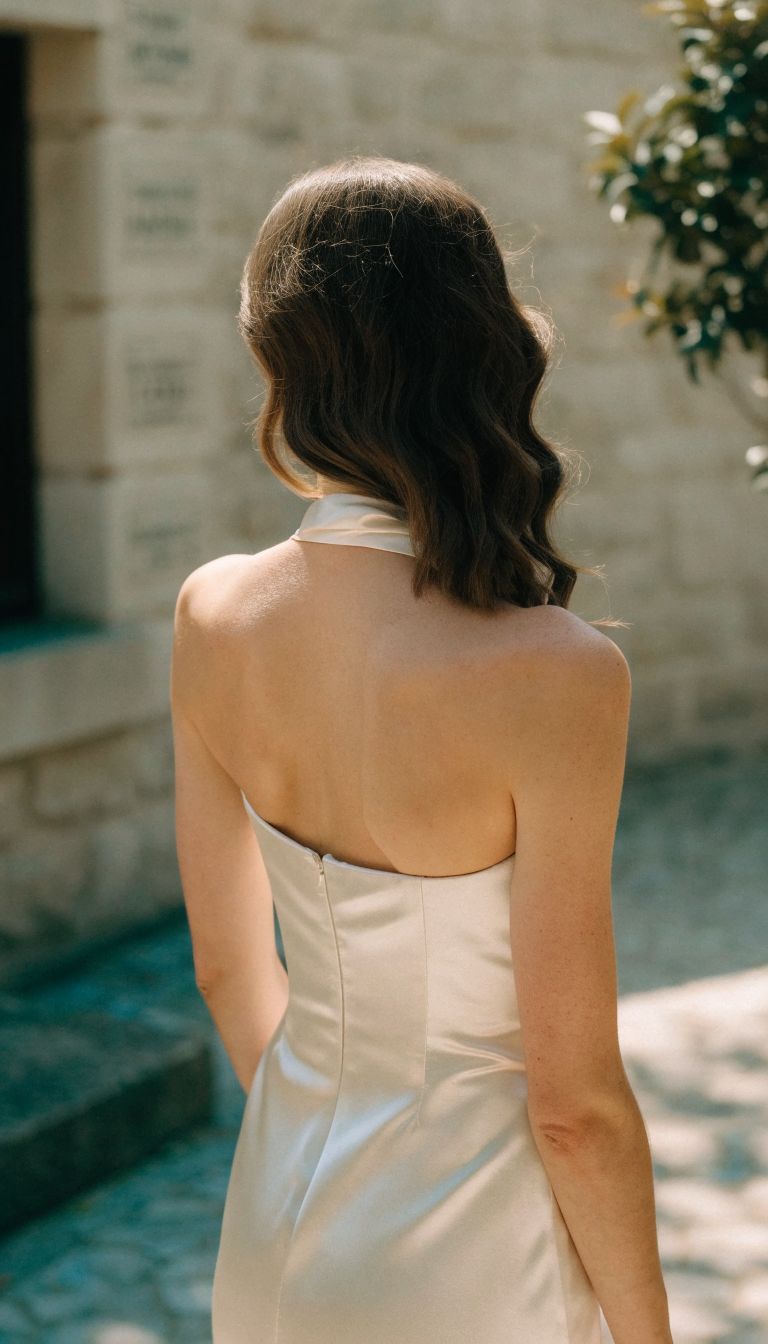
Back support: Confirm the halter stays comfortable when you turn your head or dance. Bra solution: Many brides use a low-back or adhesive option, or choose a dress with built-in cups. Sun note: The open back can mean more skin exposure outdoors.
16. Long Sleeve Style for Arm Coverage
Long sleeves cover the arms fully and can be fitted, slightly flared, or made of sheer fabric. They add warmth and coverage for cooler seasons or formal indoor venues while still allowing movement at the elbow and wrist. Crepe or lace sleeves move with the arm; a heavier satin sleeve can feel more structured.
Arm mobility: Raise and bend both arms in the fitting to check for pulling. Season match: Ideal for fall, winter, or air-conditioned indoor ceremonies. Detachable option: Some styles offer removable sleeves so the look can change later.
Fabrics and Finishing Details
17. Matte Crepe for Fluid Drape
Crepe has a matte surface and a soft, slightly textured hand that drapes fluidly without clinging or shining. It moves with the body, resists wrinkling better than many shinier fabrics, and photographs with a quiet, sophisticated finish. The fabric works across silhouettes and feels comfortable against the skin for long events.
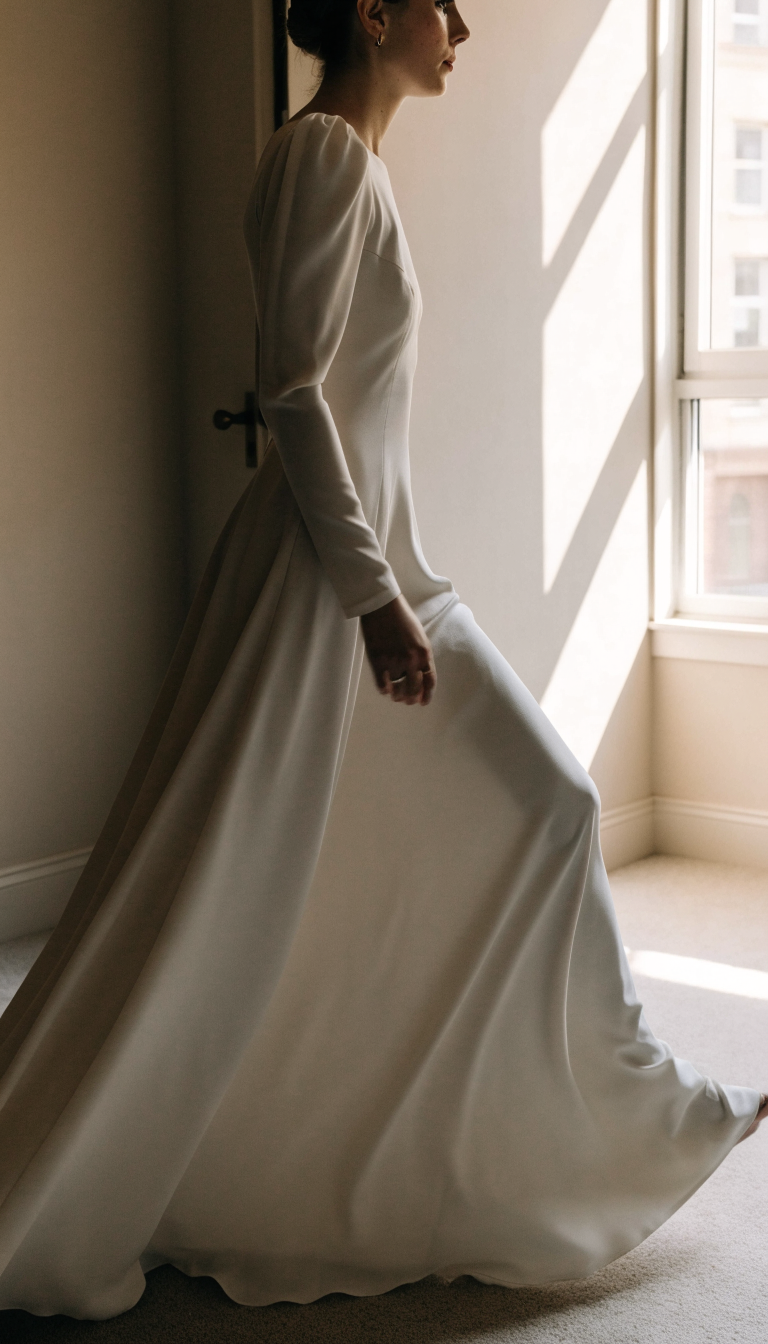
Wrinkle resistance: Crepe generally travels and sits better than satin. Heat comfort: The matte weave stays cooler than dense, shiny fabrics. Care label: Check whether the specific crepe is washable or dry-clean only.
18. Lace Appliqué for Added Texture
Lace appliqués are individual motifs sewn onto a base fabric, adding texture and visual interest without covering the entire gown. They can be placed along a neckline, sleeves, or skirt and work on both sheer and opaque bases. The added layer remains lightweight if the lace is fine, though denser motifs can increase weight slightly.
Texture placement: Ask where the appliqués sit so they do not rub or catch. Base fabric: Crepe or tulle under lace keeps the overall dress from feeling heavy. Steaming care: Lace can hold moisture; confirm the salon’s recommended steaming method.
19. Structured Mikado for Crisp Volume
Mikado is a firm, slightly textured silk or silk-blend fabric that holds structured shapes such as full skirts or sharp necklines. It creates clean architectural lines in photos and resists collapsing, yet the weight can feel substantial after several hours. The fabric is often used in ball gowns or A-line styles where volume is intentional.
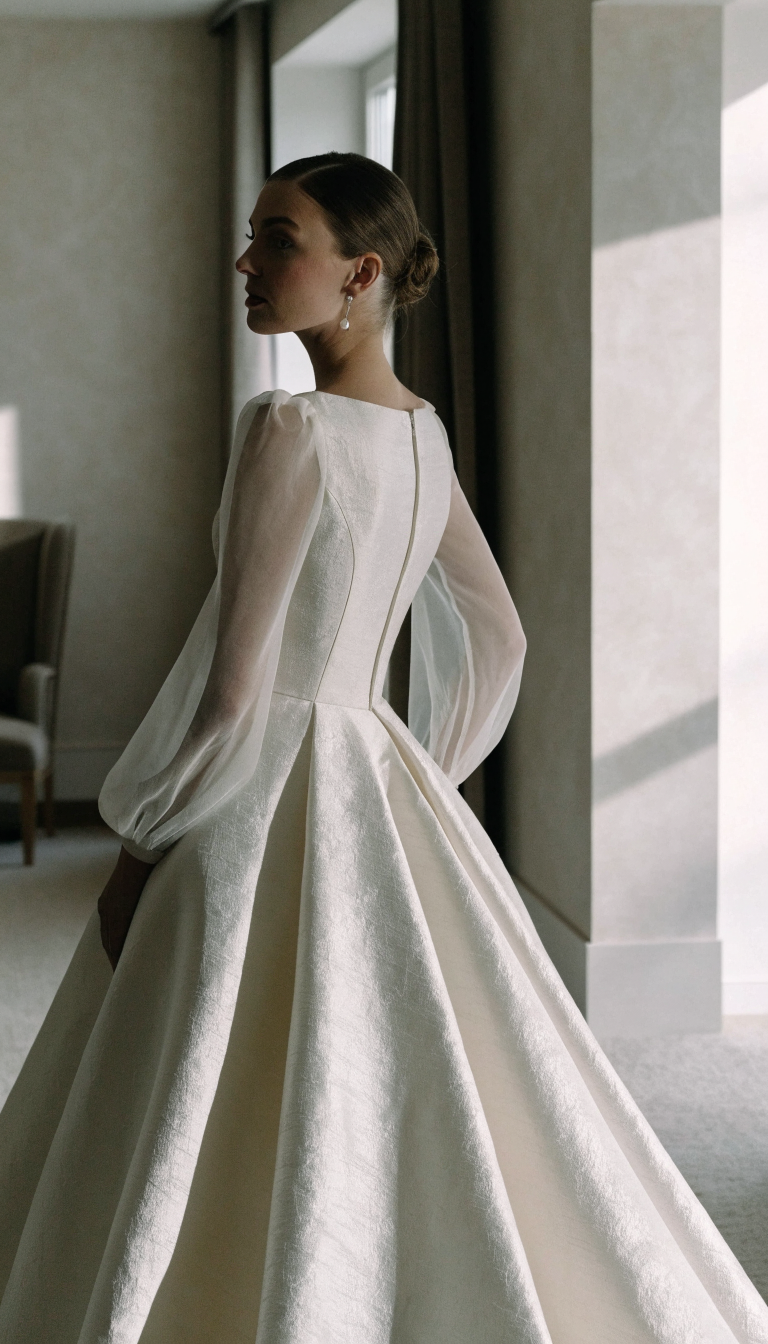
Weight awareness: Mikado skirts are heavier than crepe or chiffon versions. Structure benefit: The fabric maintains its shape without needing heavy underlayers. Climate note: The density makes it better suited to cooler venues or indoor settings.
20. Lightweight Chiffon for Soft Flow
Chiffon is a sheer, extremely light fabric that floats and moves with even small air currents. It is often used for skirts, overlays, or sleeves and stays cool in warm weather. Because it is translucent, most chiffon pieces are lined; without lining the fabric can cling or show undergarment lines.
Air movement: The fabric responds to breeze, which can be lovely outdoors or distracting in wind. Lining requirement: Confirm the dress is fully lined where coverage is needed. Wrinkle tendency: Chiffon creases easily and usually needs careful steaming.
21. Layered Tulle Skirt for Airy Fullness
Layered tulle creates volume without the weight of denser fabrics. Multiple fine layers produce a soft, cloud-like skirt that photographs with gentle movement. The layers can be gathered or flat, and the overall weight stays manageable if the tulle is high-quality and not overly dense.
Volume control: Fewer layers keep the skirt lighter and easier to manage. Sitting test: Practice sitting to see how the layers compress and spring back. Heat factor: Fine tulle breathes better than solid satin skirts of the same fullness.
22. Built-In Pockets for Everyday Ease
Pockets sewn into the side seams of a skirt or A-line dress give a place to rest hands or hold a small item. They add a practical detail without changing the outer silhouette when empty. The pocket bags are usually made of the same fabric or a lightweight lining so they do not show through.
Hand placement: Check that the pockets sit at a natural height when your arms hang. Fabric match: Matching fabric pockets stay invisible under most skirts. Alteration note: Adding pockets later is possible but simpler if they are included from the start.
23. Detachable Train for Ceremony-to-Reception Change
A detachable train attaches at the waist or hips for the ceremony and can be removed afterward. The feature lets a dress have drama for photos and the aisle, then become easier to dance in without a full bustle. Attachment points are usually hooks, buttons, or a hidden zipper; the train fabric matches the skirt so the transition looks intentional.
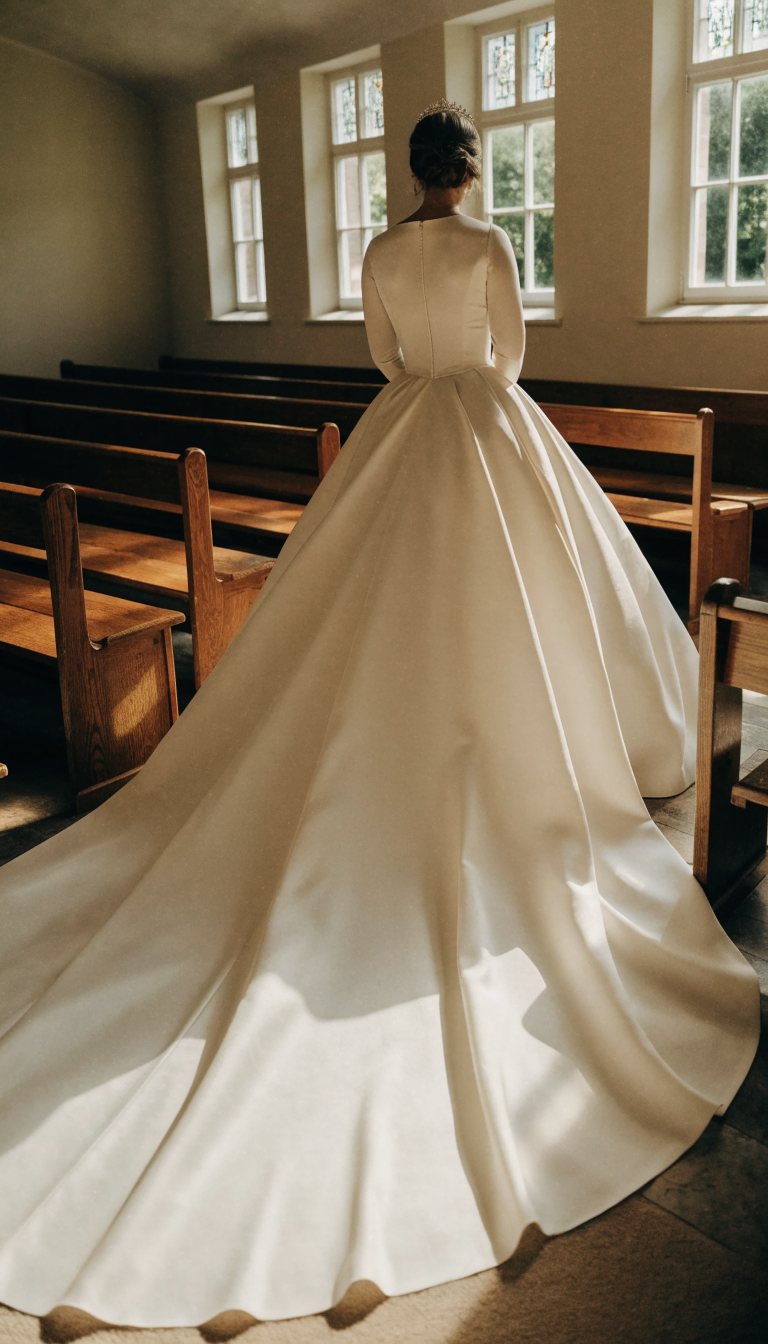
Removal timing: Practice detaching the train so it can be done quickly between events. Attachment security: Confirm the connection holds during walking and sitting. Storage plan: Have a place ready to keep the removed train until after photos.
Narrow your shortlist by trying two or three silhouettes first, then layering neckline and fabric preferences on top. Bring the shoes you plan to wear, any undergarments you intend to use, and notes about your venue’s ground surface and temperature so the fitter can mark hems and check movement accurately. Start shopping early enough to allow for made-to-order timelines and at least two or three alteration fittings.
FAQ
How far in advance should a wedding dress be ordered? Most made-to-order gowns need several months; six to nine months is a common window so there is time for production and alterations. Sample or off-the-rack dresses can move faster if sizing works.
How many alteration fittings are typical? Two to four fittings are usual. The first sets the major adjustments, later ones refine the hem once shoes are final and check that the dress still moves correctly after each change.
Can a sample dress be a good option? Yes, if the size is close and the condition is acceptable. Sample dresses are often discounted and available sooner, though they may show minor wear and still need alterations.