
A hijabi wedding dress succeeds when the gown and hijab read as one continuous look rather than separate pieces. High necklines that meet the scarf without a gap, fully opaque long sleeves, and fabrics that stay covered under flash photography or movement all matter more than volume alone. Most bridal gowns are made to order, so several months of lead time plus multiple fittings for sleeves, necklines, and hems are typical; alterations are usually a separate cost. Approximate price tiers for these styles often fall in the mid-to-upper bridal range and vary by designer, fabric weight, region, and custom work. The twelve options below are grouped by silhouette and practical fit so you can shortlist by venue, climate, and how freely you need to move.
1. High-Neck Satin A-Line with Fitted Sleeves
Satin A-lines define the waist cleanly then release into a gentle skirt that moves without clinging, making them a reliable starting point for full coverage. A high round or bateau neckline closes the space under a tucked hijab, while fitted long sleeves in the same opaque satin keep the arms covered even when you raise them for photos or hugs. The fabric’s soft sheen photographs well in controlled indoor light, though it shows elbow creases once you sit, so a quick steam before the ceremony helps. Pair it with a matte chiffon or crepe hijab in a matching ivory undertone so the face and neckline do not compete.
- Garden ceremony ease: The A-line skirt clears steps and grass without bulk.
- Satin crease behavior: Elbow and lap creases appear quickly; plan for a steamer.
- Fitting-room check: Wear your exact hijab and undercap so the neckline sits flat, not bunched.
2. Lined Lace Ball Gown with Covered Shoulders
A full lace ball gown delivers ceremony volume while the structured bodice and high neck keep the silhouette modest. Floral or corded lace must be fully lined in opaque ivory crepe or stretch mesh through the bodice, sleeves, and back; otherwise flash photography can make sheer areas read as skin. The wide skirt moves with a light petticoat underneath and suits indoor halls or cooler outdoor settings where the layers do not trap heat. A plain chiffon hijab keeps attention on the lace texture rather than competing with it.
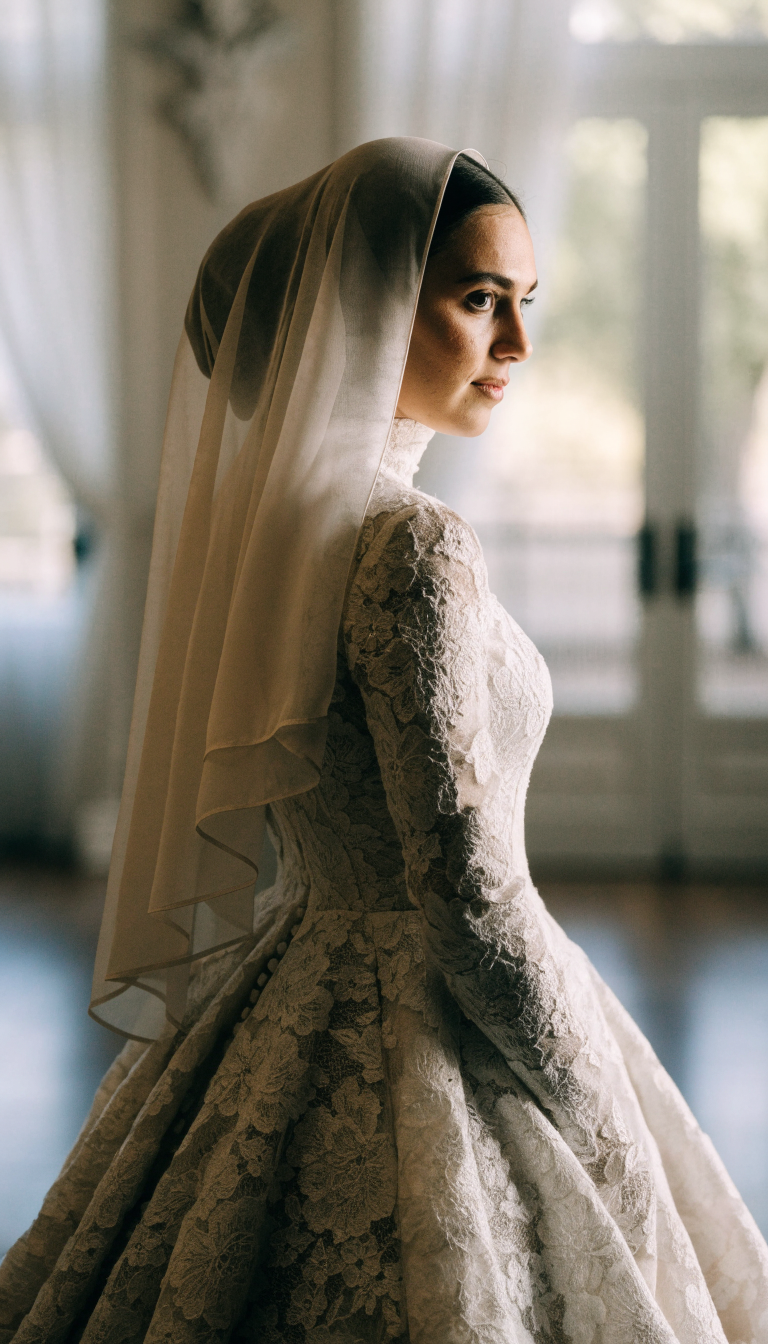
- Opacity test needed: Hold the sleeve against daylight before ordering lining.
- Dance-floor weight: The skirt volume stays manageable once the train is bustled.
- Alteration note: Adding or adjusting sleeves early is simpler than matching lace later.
3. Matte Crepe Column with Bateau Neck
Crepe columns skim the body with a soft, matte drape that photographs cleanly and resists clinging when cut with enough ease through the hips. A high bateau neckline and long fitted sleeves create a continuous line from hijab to hem, ideal for civil ceremonies or minimalist venues where ornament is unnecessary. Medium-weight crepe holds its shape better than thinner versions and hides less than lace, so the exact shapewear and bra you plan to wear should be present at every fitting. The fabric breathes reasonably well for mild climates.
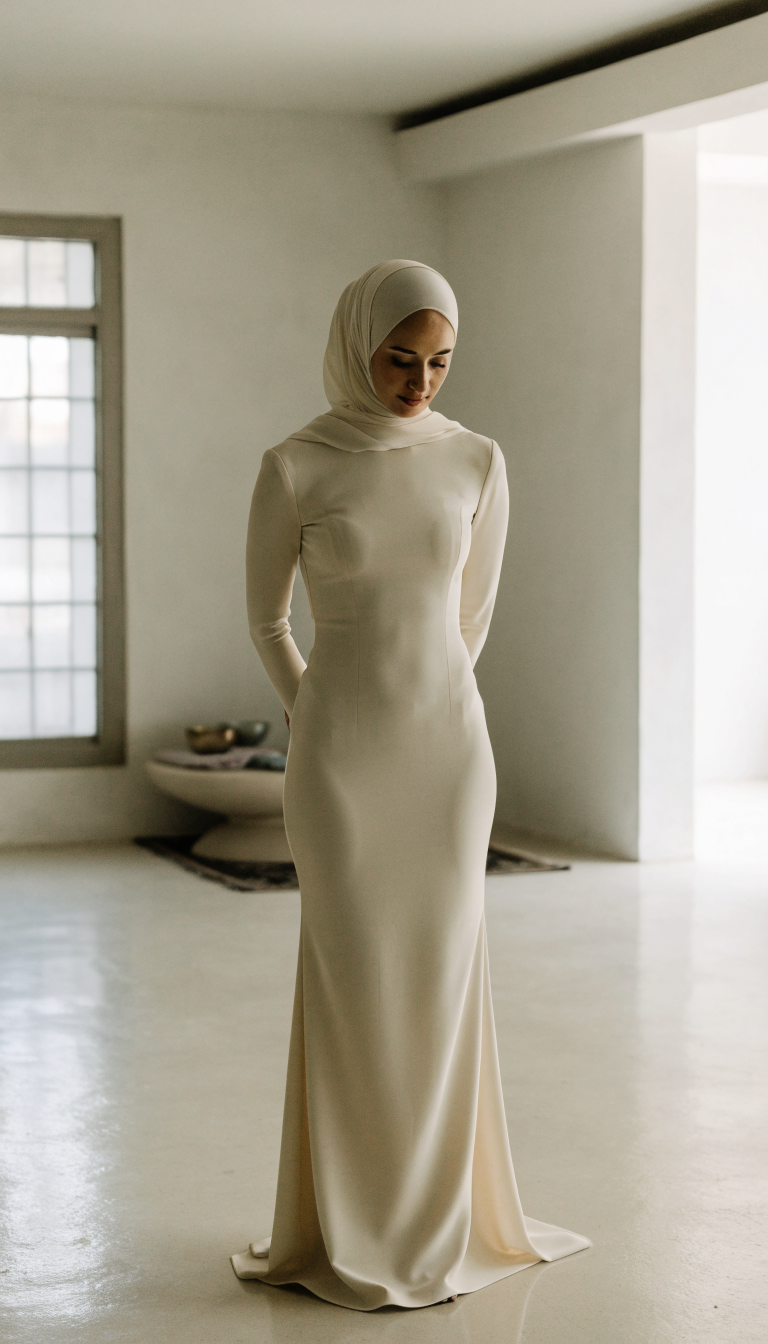
- Sitting comfort check: Confirm the hip ease lets you sit and rise without pulling.
- Crepe opacity note: Hold a skirt panel to the window; good weight stays covered.
- Shoe pairing: Pointed closed-toe heels or low block heels keep the clean line.
4. Chiffon A-Line with Bishop Sleeves
Lightweight chiffon layered over a full opaque lining gives airy movement without sacrificing coverage, making it practical for warm outdoor or destination ceremonies. Bishop sleeves that gather into fitted cuffs allow freer arm movement than tight sleeves while still reaching the wrist. The high neck can be softly gathered so a hijab tucks neatly without bulk. Because single-layer chiffon can turn translucent in strong light, the lining must extend fully under sleeves and skirt.
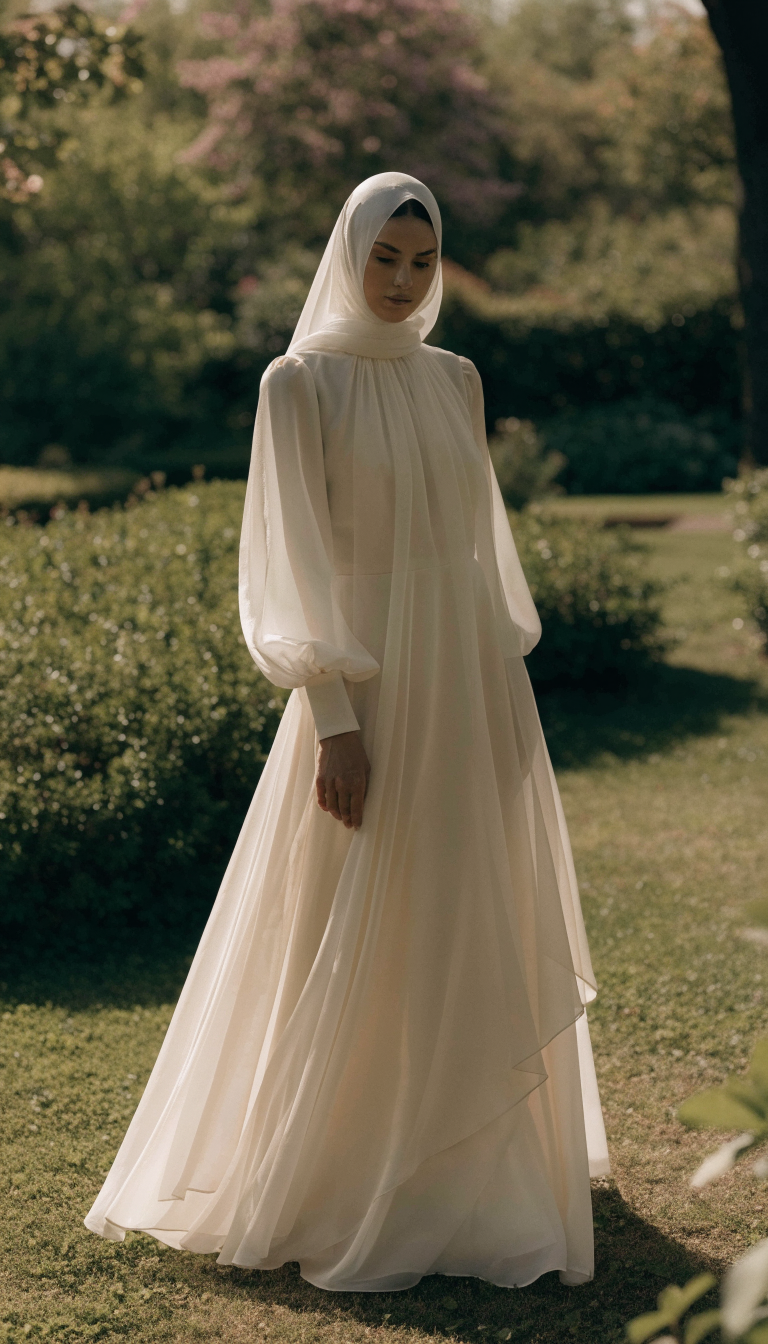
- Heat performance: Air moves through the layers better than heavy satin.
- Wind and pin note: Secure the hijab and any veil firmly for outdoor photos.
- Undergarment lines: Smooth shapewear prevents outlines under the light fabric.
5. Structured Mikado Ball Gown
Mikado, a crisp silk-blend fabric with more body than regular satin, holds deep folds and a clean high neckline with less reliance on internal boning. The result is a polished, architectural silhouette that stands up in formal ballrooms or winter ceremonies where structure photographs well. Long sleeves in the same fabric keep coverage consistent, and the skirt volume is substantial yet controlled. Because mikado is heavier, it suits cooler venues better than summer heat.
- Venue formality match: Best for indoor halls with controlled lighting.
- Shoulder weight note: Test the full look with hijab and veil for several minutes.
- Hem and train plan: A detachable or bustled train simplifies reception movement.
6. Modest Sheath with Detachable Cape
A streamlined sheath in crepe or satin, cut with a high neck and long sleeves, stays close without gripping when sized with modest ease. Adding a detachable floor-length cape in matching fabric or soft chiffon supplies extra shoulder coverage and visual drama for the ceremony, then removes for the reception. The cape attaches at the shoulder seams so it does not interfere with the hijab wrap. This combination works for couples who want a clean base silhouette with an optional formal layer.
- Movement with cape: Practice walking and turning so the cape does not catch.
- Reception option: Removing the cape lightens the look for dancing.
- Attachment check: Confirm the fasteners sit under or beside the hijab without bulk.
7. Empire-Waist Flowing Gown in Georgette
An empire waist sits just under the bust and lets the skirt fall in soft, unstructured folds, which many brides find comfortable for long ceremonies and receptions. Soft georgette or lined chiffon keeps the fabric fluid and relatively light while full lining maintains opacity. Long sleeves and a high neck complete the modest line, and the raised waistline can reduce pressure at the natural waist when sitting or moving. This shape suits garden or beach-adjacent venues where a lighter overall weight is welcome.
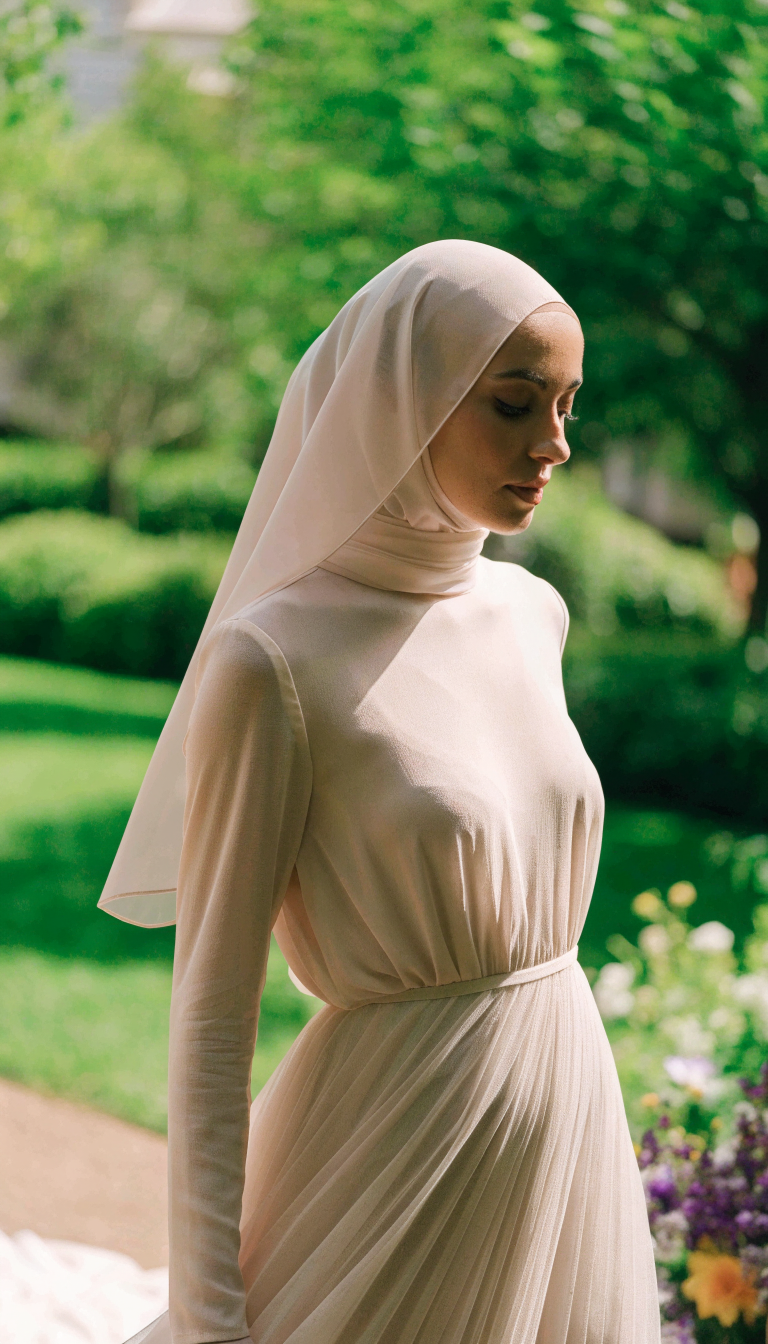
- Sitting and rising ease: The raised waist avoids constriction at the midsection.
- Fabric flow note: Georgette drapes softly yet holds a little more body than plain chiffon.
- Hem practicality: A shorter train or none at all simplifies outdoor movement.
8. Gentle Mermaid in Lined Crepe
A modest mermaid follows the body closely through the hips then flares from just above the knee, giving shape without a restrictive tube. Medium-weight crepe or lined lace provides the necessary opacity and enough structure to skim rather than cling. High neck and long sleeves are essential; the flare must be generous enough to allow sitting, climbing stairs, and dancing. This silhouette photographs dramatically in formal indoor settings when the fit is precise.
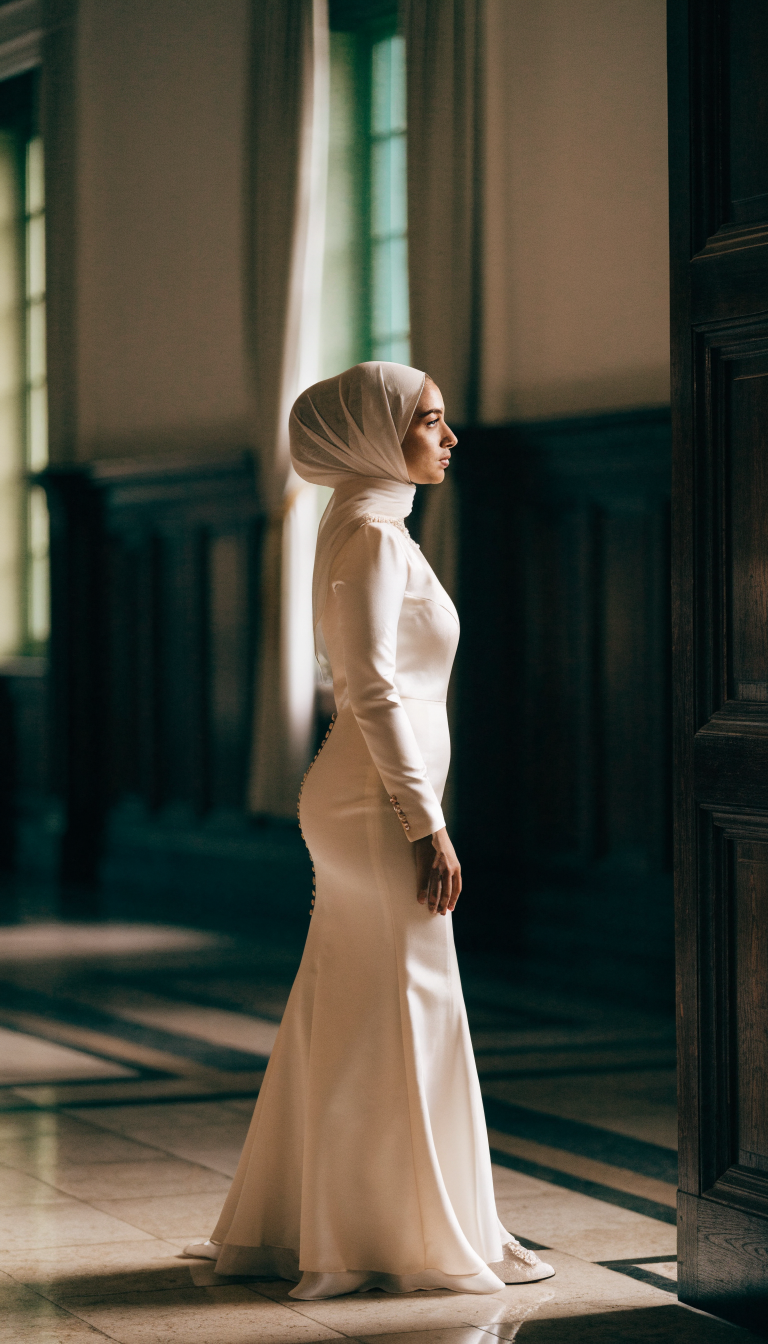
- Knee-flare test: Walk and sit in the sample to confirm the flare starts early enough.
- Hijab transition: A smooth high neck prevents bulk where the scarf meets the bodice.
- Alteration complexity: Hip and knee adjustments often need more than one fitting.
9. Organza Overlay A-Line for Crisp Volume
Crisp organza creates structured volume with less weight than layered tulle, so an opaque underdress in crepe or satin handles coverage while the organza supplies shape and subtle sheen. A high neck and long sleeves on the base layer, finished with matching organza sleeves if desired, keep the look fully covered. The fabric holds its form through photos and processions, making it suitable for daytime or evening formal venues. Because organza is sheer on its own, the lining must be complete.
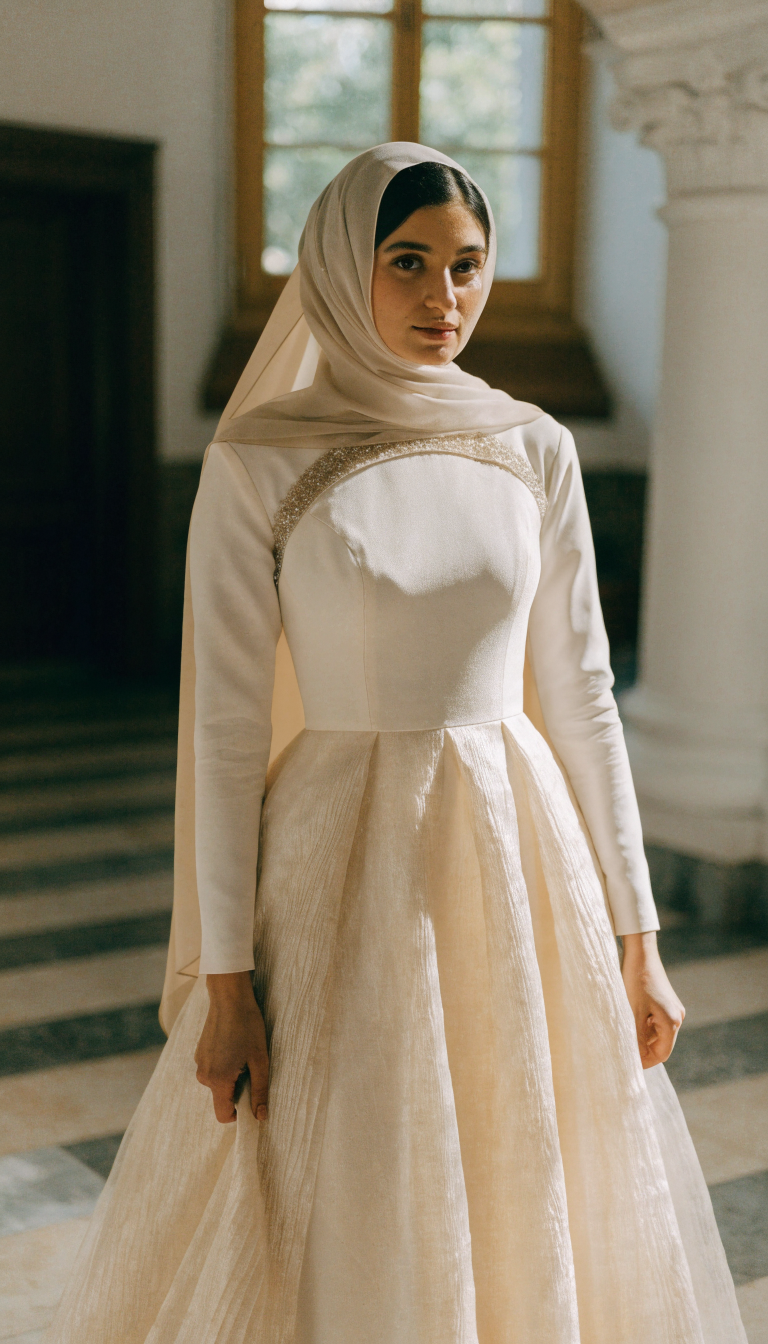
- Structure without bulk: The overlay adds presence without heavy satin weight.
- Light reflection note: Organza catches light softly; test under your venue’s lighting.
- Cleaning practicality: Spot-clean carefully; full steaming is usually enough.
10. Tea-Length Modest Dress for Intimate Events
A tea-length gown ending mid-calf offers full coverage with easier movement for smaller nikkahs, courthouse ceremonies, or receptions where a long train would be impractical. High neck, long sleeves, and an opaque A-line or sheath skirt in crepe or satin keep the silhouette modest while the shorter hem simplifies sitting, walking on grass, and using the restroom. This length also works well when shoes are visible and you prefer lower or mid heels. It is often available off-the-rack or with shorter lead times than full-length made-to-order gowns.
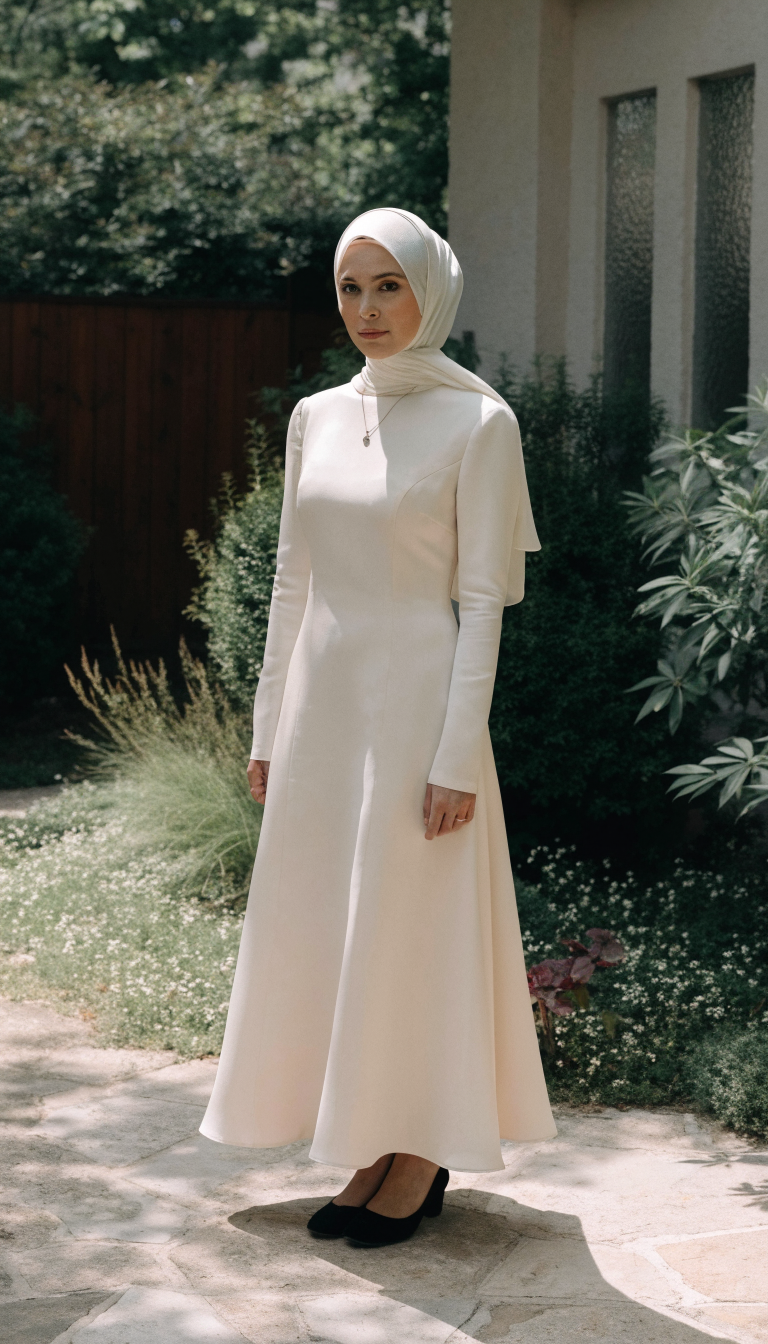
- Venue practicality: Ideal for home, garden, or civil settings with limited space.
- Shoe visibility: Closed-toe flats or low heels pair cleanly.
- Re-wear potential: The length and modest cut can suit later formal events.
11. Cool-Weather Velvet or Heavy Satin Gown
Velvet or substantial duchess satin provides warmth and rich texture for winter or air-conditioned indoor ceremonies. A high neck and long sleeves in the same fabric eliminate the need for an extra wrap while the matte or soft sheen photographs elegantly under warm lighting. The fabric has weight, so a simpler A-line or column silhouette keeps the overall look from becoming cumbersome. Pair with a jersey or heavier crepe hijab that grips well in cooler air.
- Temperature comfort: The weight feels supportive in chilly halls.
- Texture pairing: Matte hijab fabrics prevent competing shine against velvet.
- Movement trade-off: Practice stairs; heavier fabric can pull at the hem.
12. Layered Lightweight Gown for Warm Destinations
Multiple layers of lined chiffon or georgette create soft volume that still allows air movement, making this practical for outdoor destination weddings in heat. A high gathered neck and loose-to-fitted long sleeves maintain coverage while the overall weight stays low. Full opaque lining under every layer is non-negotiable for both modesty and flash photography. This approach works when you expect long hours outdoors and want to avoid heavy fabrics that trap heat under the hijab and gown.
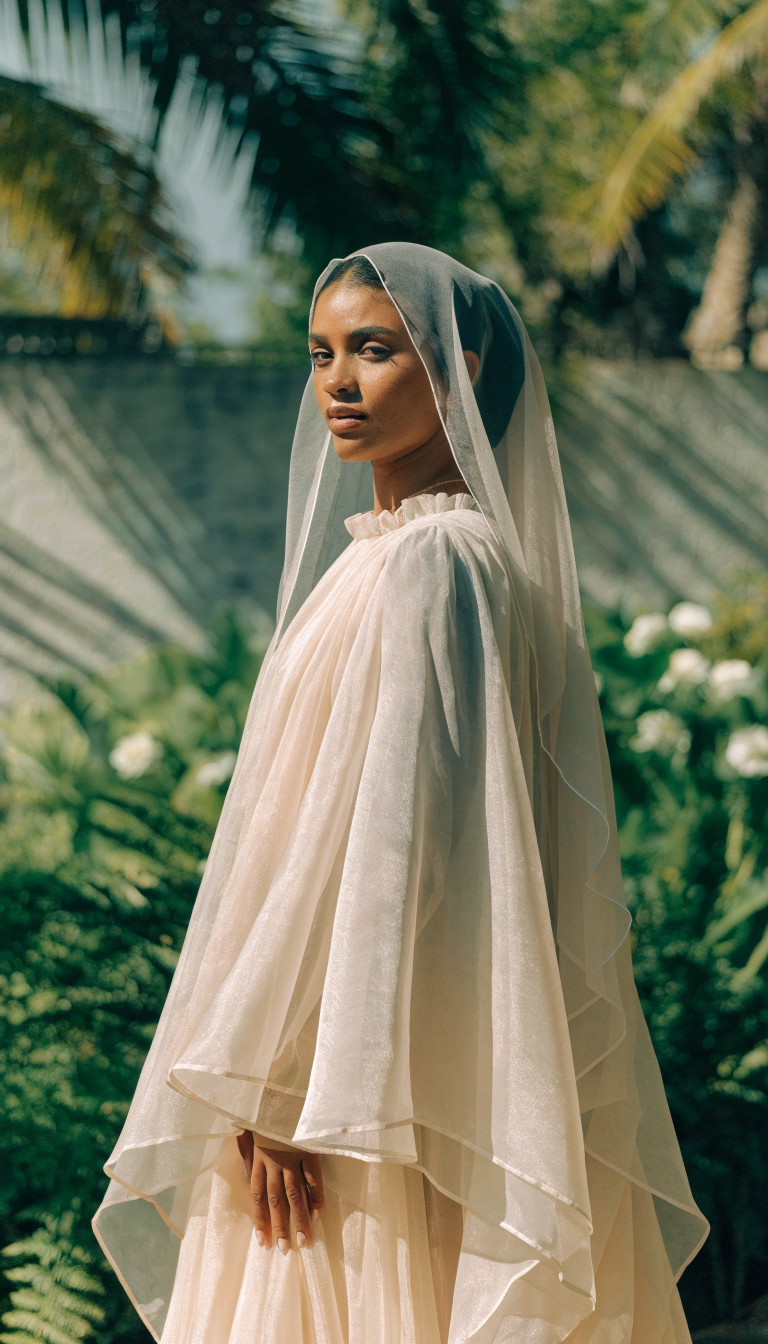
- Climate suitability: Best for warm, outdoor, or multi-event destination days.
- Layer opacity check: Confirm every layer is lined before finalizing the order.
- Pin and secure plan: Lightweight fabrics move more; secure the hijab thoroughly.
Start by narrowing to two or three silhouettes that match your venue and climate, then bring your actual hijab, undercap, pins, and intended shoes to every fitting so neckline height, sleeve length, and hem are tested together. Most salons can adjust sleeve ease or add lining if requested early in the made-to-order process.
FAQ
How far in advance should a hijabi bride order a wedding dress? Plan for several months of lead time for made-to-order gowns, especially if custom sleeves or lining changes are needed. Begin shopping six to nine months ahead so fittings can address coverage details without rushing.
Do I need to bring my hijab to fittings? Yes. The hijab, undercap, and pins change how the neckline sits and whether a gap appears at the throat. Testing with the exact pieces prevents last-minute bulk or exposure.
Can a standard bridal gown be adapted for hijabi coverage? Many can, by adding lined sleeves and raising or filling the neckline. A gown designed with coverage from the start usually fits more cleanly and may cost less in alterations than extensive modifications.
How many fittings are typical? Expect three to five fittings for a made-to-order dress. Extra appointments are common when sleeves, opacity lining, or hem adjustments interact with the hijab.