
Choosing a Nigerian wedding dress means balancing cultural heritage with the realities of long celebration days, heat, and multiple outfit changes. Many brides wear an aso-oke or lace ensemble for the traditional ceremony, then switch to a white gown for the church or civil service, followed by a reception look that allows movement. The right choice affects comfort while greeting guests, sitting through speeches, and dancing, plus how easily a local tailor can adjust it. This list groups 19 distinct styles by ceremony type, silhouette, and practical features so you can match fabric weight, neckline support, and alteration needs to your venue and timeline.
Traditional Ceremony Dresses
1. Aso-Oke Woven Bridal Ensemble
Aso-oke is a stiff, handwoven fabric that holds structured shapes and rich color or metallic threads without clinging. Many brides commission a full set—dress, ipele, and gele—so the look stays coordinated through the traditional rites. The weave itself provides coverage and formality, and a skilled tailor can add a modest neckline or short train that still lets you sit and greet elders comfortably. Because the fabric is substantial, it photographs crisply in outdoor compounds yet can feel warm once dancing starts.
- Compound or hall setting: Works well for daytime traditional events where the structured drape reads clearly from a distance.
- Weave weight to check: Ask the weaver about the tightness; looser weaves breathe better in humidity.
- Sitting and greeting test: Request a temporary hem and try lowering yourself onto a low stool during the fitting.
2. Embroidered George or Damask Gown
George fabric and damask offer a smoother hand than aso-oke while still accepting dense embroidery or beadwork along the neckline and hem. The material drapes with a soft sheen that catches light during the introduction of the couple, yet it remains opaque enough for modest cuts. Tailors often line it lightly so the embroidery does not scratch the skin. A fitted bodice with a gently flared skirt lets you move between the altar and family photos without constant readjustment.
- Ceremony length comfort: Choose a mid-weight lining so the gown stays cool through a multi-hour traditional program.
- Embroidery placement: Keep heavy beading above the waist or on the sleeves so the skirt stays light for walking.
- Local tailor timeline: Most custom embroidery houses need four to eight weeks; confirm the beadwork schedule early.
3. Coordinated Aso-Ebi Inspired Bridal Set
When the bridal party wears matching aso-ebi, the bride’s version is usually cut from a finer or more heavily worked version of the same fabric. The dress itself can be a simple column or A-line so the gele and accessories carry the drama. Because the cloth is often lighter than classic aso-oke, it is easier to dance in once the formal greetings end. A well-cut set also photographs as a unified family portrait without the bride disappearing into the group.
- Party color match: Bring a swatch of the aso-ebi to the fitting so the bride’s shade sits one tone deeper or brighter.
- Movement after greetings: Test a few steps of traditional dance moves while the fabric is still pinned.
- Re-wear potential: A clean column cut can be shortened later for other family events.
White Wedding Silhouettes
4. Classic Ball Gown in Layered Tulle
A full ball gown gives the drama expected at a church or hotel ballroom while the layers of soft tulle keep the skirt relatively light. Nigerian lace appliqués can be scattered across the bodice and skirt so the gown still feels culturally connected. The structured bodice supports the weight of a modest train, and a bustle point can be added so the skirt lifts cleanly for the reception. In air-conditioned halls the volume feels festive; outdoors it needs a breathable lining.
- Church aisle width: Confirm the skirt clears standard pew spacing before finalizing the circumference.
- Train and bustle plan: Ask the tailor to mark three bustle loops so you can sit and dance without dragging fabric.
- Undergarment support: A long-line bra or built-in cups keeps the neckline smooth under the lace.
5. Mermaid Fit with Nigerian Lace Overlay
The mermaid silhouette follows the body to the knee then flares, creating a clean line that photographs well against altar steps. Nigerian lace—often with scalloped edges—adds texture without the bulk of a full ball gown. Because the skirt is fitted through the hips, walking and sitting require careful construction; a hidden stretch panel or slit can help. The style suits both indoor church services and evening receptions where the lace catches candlelight.
- Hip and knee mobility: Walk the length of the fitting room and sit on a chair to check for pulling.
- Lace weight choice: Opt for a softer, more open lace if the ceremony will be outdoors in heat.
- Alteration complexity: Expect extra fittings to shape the flare so it does not collapse when you move.
6. A-Line Silhouette for Easy Movement
An A-line gown skims the body from the bust or waist and widens gradually, giving freedom to climb steps, turn for photos, and dance without constant adjustment. Lightweight satin or crepe under a lace overlay keeps the shape crisp yet breathable. The silhouette works for both traditional compounds and modern hotel ballrooms, and the skirt can be hemmed to any shoe height without losing proportion. Many brides find it easier to wear for the full day than a heavily fitted style.
- All-day venue shift: The gradual flare transitions well from church pews to reception tables.
- Fabric drape note: Crepe holds a matte finish and resists clinging in humidity better than shiny satin.
- Hem and shoe pairing: Bring the actual wedding shoes to the final fitting so the hem clears the floor cleanly.
7. Column or Sheath for Sleek Lines
A column dress falls straight from shoulder to hem, creating a streamlined silhouette that feels modern against traditional lace or beadwork. Fluid crepe or silk charmeuse moves with the body and stays cooler than heavily layered gowns. The lack of volume makes it practical for smaller venues or when you need to move quickly between ceremony and portraits. A modest slit or stretch lining can be added so sitting and dancing remain comfortable.
- Heat and humidity fit: Charmeuse feels cool against the skin but may show undergarment lines; test with your preferred shapewear.
- Walking stride: Take several long steps in the fitting to confirm the hem does not catch underfoot.
- Budget-conscious option: A simple column often requires fewer yards of fabric and less complex construction.
8. Fit-and-Flare with Subtle Train
The fit-and-flare shape hugs through the hips then opens below the knee, offering more ease than a true mermaid while still creating a defined waist. A short or chapel-length train can be added and bustled for the reception. Nigerian lace or embroidered organza on the bodice keeps the cultural reference without weighing down the skirt. The style photographs beautifully on both wide church steps and garden paths.
- Knee-level flare check: Bend and sit to make sure the flare does not ride up or bind.
- Train length decision: A chapel train is easier to manage in smaller venues than a cathedral length.
- Bustle timing: Practice the bustle with your attendant so the transition to dancing is quick.
Necklines and Sleeves
9. Off-the-Shoulder Neckline with Lace
An off-the-shoulder neckline frames the collarbones and pairs naturally with Nigerian lace that continues across the upper arms. The style feels romantic for both traditional and white ceremonies yet still offers coverage when the lace is dense. Elastic or hidden boning inside the bodice keeps the neckline in place while you raise your arms for photos or dancing. In warmer venues the open shoulders help with airflow.
- Shoulder security: Raise both arms and lean forward in the fitting to confirm the neckline stays put.
- Lace density for modesty: Choose a tighter weave if you prefer more coverage across the chest.
- Bra compatibility: A strapless long-line or adhesive support usually works best under this cut.
10. Long Sleeve Modest Style
Long sleeves—whether lace, crepe, or illusion—provide coverage that many Nigerian brides prefer for traditional rites or church services. The sleeves can be fitted or slightly flared at the wrist and still allow full arm movement. Lightweight lace sleeves add texture without the heat of heavy fabric, while crepe sleeves feel smooth and structured. The look pairs easily with a modest neckline and remains comfortable through a full day of greetings.
- Climate breathability: Open-weave lace sleeves release heat better than solid crepe in outdoor ceremonies.
- Arm movement test: Practice clapping, waving, and lifting a bouquet to check for restriction.
- Alteration ease: Sleeves are simpler to adjust for length than complex neckline beading.
11. Illusion or High Neck with Appliqués
An illusion neckline uses sheer tulle or organza from the collarbone upward, then covers it with lace appliqués so the result looks covered yet light. The construction keeps the shoulders and chest supported while still feeling cooler than a solid high neck. Nigerian lace motifs can be placed strategically for cultural detail. The style photographs cleanly against both bright outdoor light and indoor chandeliers.
- Sheer panel support: Confirm the illusion fabric is lined or reinforced so it does not sag.
- Appliqué placement: Keep heavier motifs lower on the bodice to avoid pulling at the neck.
- Undergarment lines: Test with a nude undergarment; sheer areas can reveal straps.
12. Sweetheart or Soft V-Neck for Structure
A sweetheart or gentle V-neckline creates a defined shape that flatters many body types and pairs well with lace or beaded overlays. The curved or angled cut offers built-in support when the bodice is properly boned, reducing the need for heavy shapewear. In Nigerian weddings the neckline often appears on the white gown so the traditional look can stay more covered. It remains comfortable for both seated dinners and standing portraits.
- Boning and cup support: Ask the tailor to add light boning and built-in cups so the neckline stays smooth.
- Sitting posture check: Sit upright and lean slightly forward to see whether the neckline gaps.
- Photo lighting note: The curved line catches light evenly in both natural and flash photography.
Fabrics and Details for Climate
13. Lightweight Lace and Organza Combination
Pairing open Nigerian lace with organza underlayers keeps the gown structured enough for formality while allowing air to move through the skirt. Organza holds volume without the weight of multiple tulle layers, which matters during long outdoor traditional events. The combination photographs with crisp texture yet feels less heavy when you dance. A light lining prevents the organza from scratching.
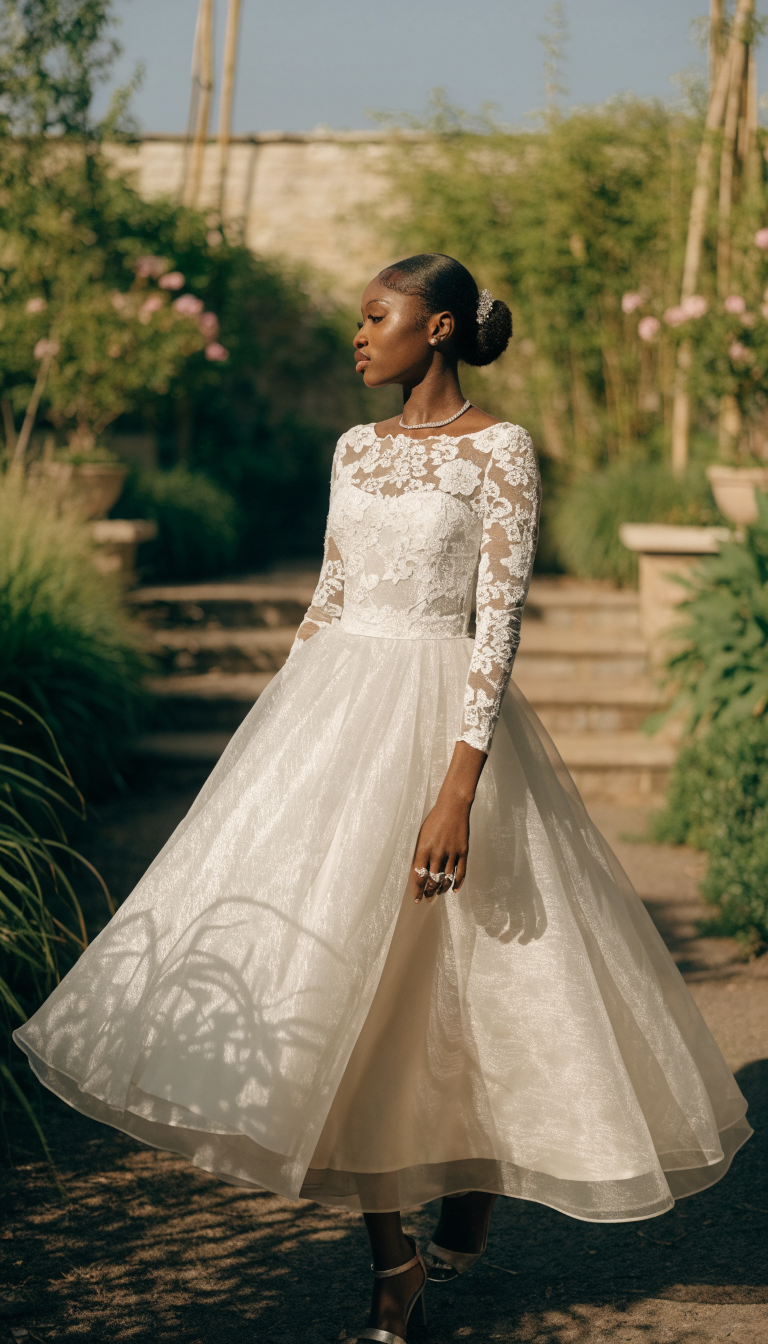
- Airflow in heat: The open lace and stiff organza create space between layers so heat escapes.
- Wrinkle behavior: Organza resists deep creases better than chiffon; a quick steam usually restores it.
- Layer count decision: Two organza layers usually give enough volume without excess warmth.
14. Structured Mikado or Satin for Formal Venues
Mikado is a crisp, medium-weight fabric that holds architectural shapes and resists clinging, making it suitable for hotel ballrooms or air-conditioned churches. Satin offers a smoother sheen but can feel warmer; both accept beading well. The structure means the gown keeps its line through hours of standing and sitting. Because the fabric is less fluid, movement feels more controlled than with chiffon.
- Indoor venue match: The crisp hand looks polished under chandeliers and flash photography.
- Heat caution: Mikado and satin trap warmth; choose them mainly for evening or climate-controlled spaces.
- Steaming needs: Both fabrics respond well to professional steaming the day before the wedding.
15. Breathable Crepe or Chiffon Options
Crepe has a matte, slightly textured surface that drapes smoothly and stays cooler against the skin than shiny satins. Chiffon is even lighter and more fluid, ideal for overlay skirts or sleeves when temperatures rise. Either fabric can be paired with lace for cultural detail without adding bulk. These choices suit garden ceremonies, outdoor traditional events, or any venue where air conditioning is limited.
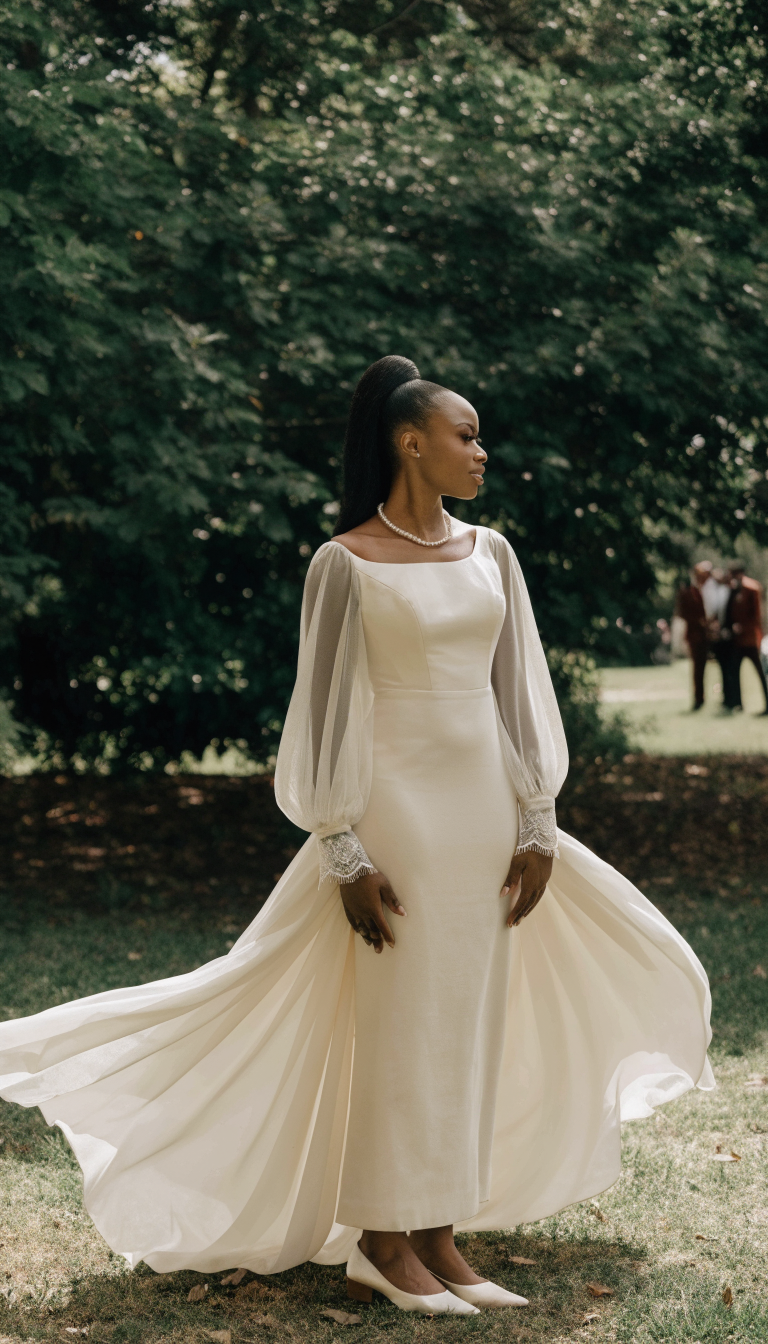
- Skin comfort in humidity: Crepe absorbs less moisture and feels less sticky than satin.
- Flow and movement: Chiffon skirts move easily when you turn or dance; test with a light breeze if possible.
- Lining requirement: Both usually need a lining so the outer fabric does not cling or show undergarments.
16. Beaded and Embroidered Surface Details
Strategic beadwork or embroidery along the neckline, cuffs, or hem adds Nigerian craftsmanship without covering the entire gown. Concentrating the detail on the bodice keeps the skirt lighter for movement and heat. A skilled embroiderer can match traditional motifs to a white or ivory base so the dress works for both ceremonies. The added texture photographs richly yet remains wearable when the beads are securely attached and not overly dense.
- Weight distribution: Keep heavy beading on the upper body so the skirt stays easy to lift and dance in.
- Attachment security: Ask the tailor to reinforce bead clusters so none loosen during the celebration.
- Budget note: Dense custom embroidery raises the price; simpler motifs still deliver cultural detail.
Reception and Practical Styles
17. Vibrant Colored Reception Gown
After the white ceremony many brides change into a richly colored gown—deep gold, burgundy, emerald, or a shade that echoes the aso-ebi. The fabric can be lighter lace, crepe, or even a structured satin that photographs well under evening lights. Because the reception often includes more dancing, the silhouette is usually less restrictive than the ceremony gown. The color shift also signals the move from formal rites to celebration.
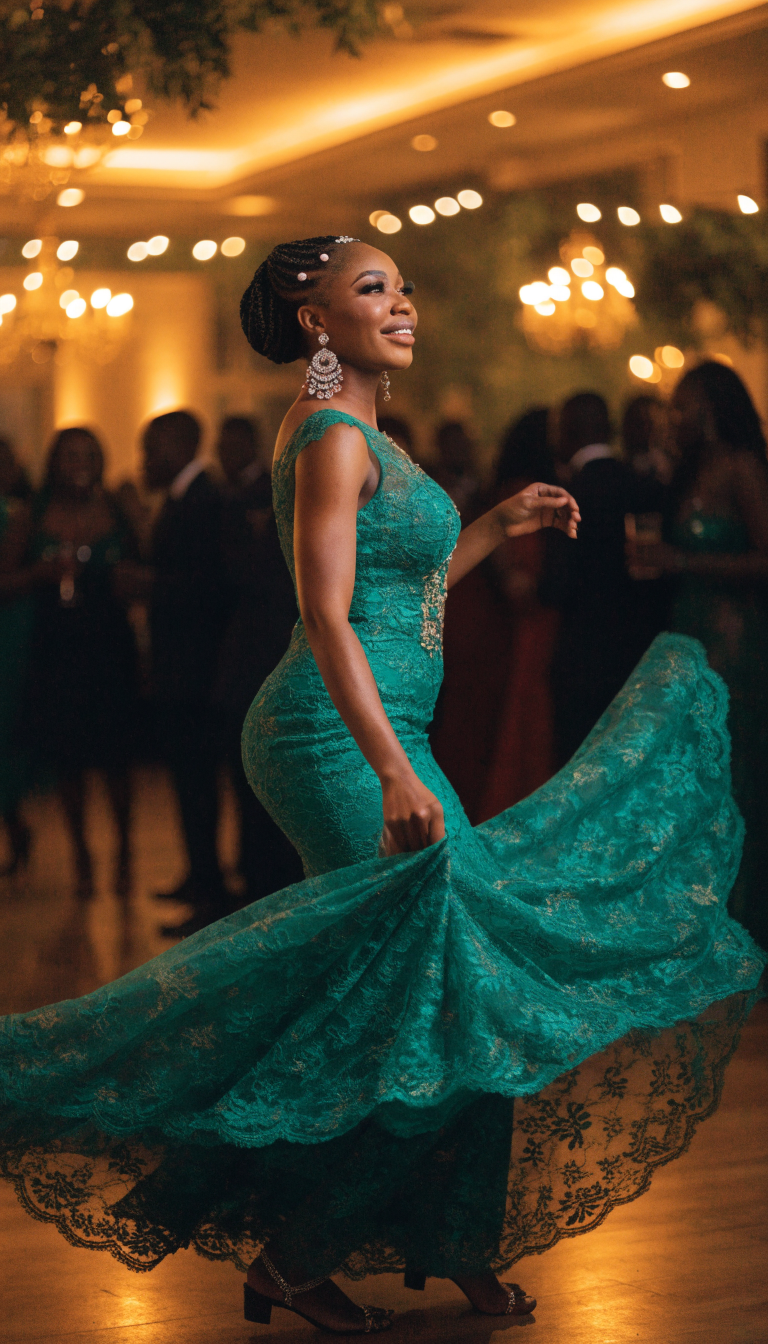
- Evening lighting match: Saturated colors hold up under warm reception lighting better than pale pastels.
- Dance-floor ease: Choose a skirt you can lift or that already has a slit so movement stays free.
- Quick-change practicality: A simpler closure (zipper or buttons) speeds the transition between outfits.
18. Tea-Length or Shorter Skirt for Dancing
A tea-length or midi skirt ends around the mid-calf or just below the knee, freeing the legs for traditional and modern dance steps. The shorter hem also stays cleaner on outdoor floors and makes restroom visits simpler. Lace or embroidered crepe still supplies the expected texture, while the reduced fabric volume keeps the dress cooler. Many brides reserve this length for the reception so the ceremony gown can remain more formal.
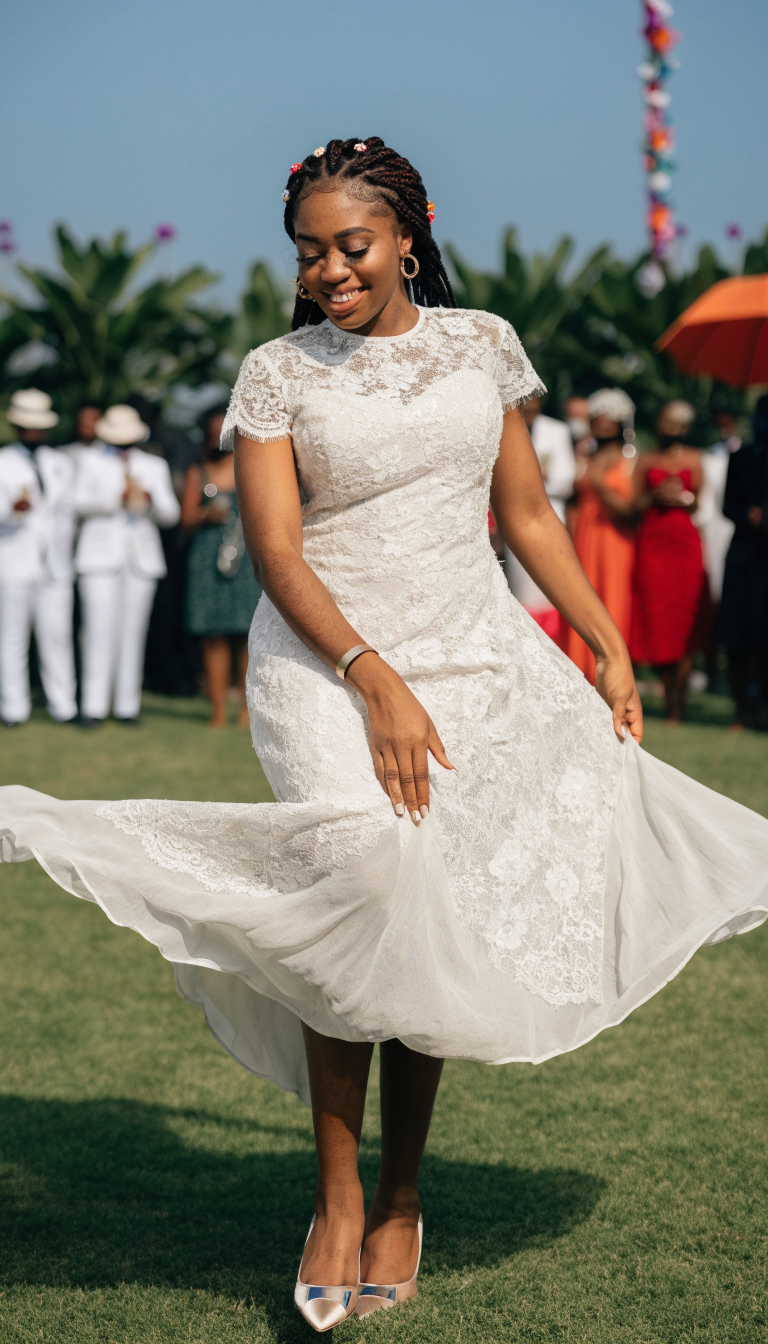
- Dance and floor clearance: The hem should clear the floor by several inches even in heels.
- Restroom and car access: A shorter skirt is easier to manage when moving in and out of vehicles.
- Shoe visibility: The length shows off the shoes, so bring them to confirm the proportion looks balanced.
19. Styles with Pockets or Easy Access Details
Functional pockets sewn into the side seams of a skirt let you carry a phone, lipstick, or small envelope without a separate bag. An easy-access side zipper or corset-style back also speeds dressing and restroom breaks during a long celebration. These practical additions work on both traditional and white gowns when the tailor plans them from the start. They do not change the outer silhouette yet make the day noticeably smoother.
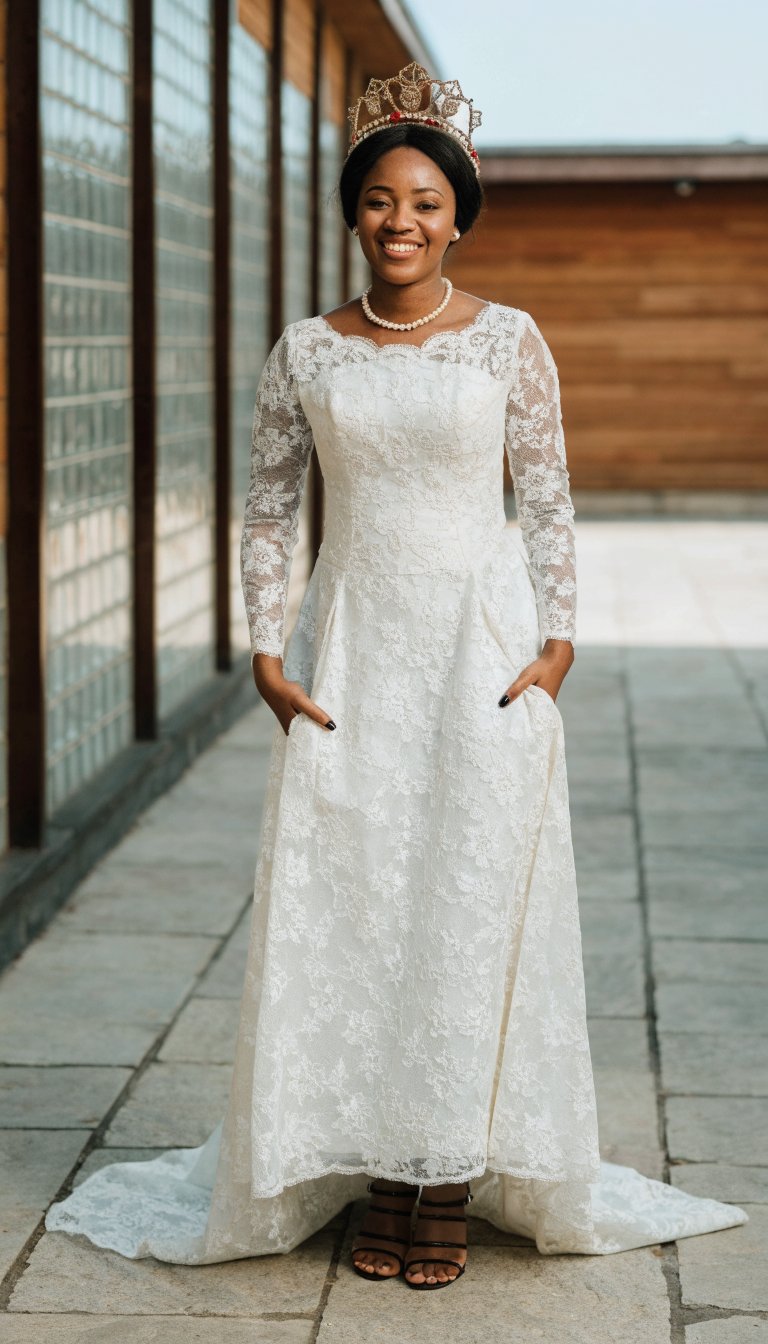
- Pocket placement test: Slip a phone into the pocket and walk to confirm it does not pull or show.
- Closure speed: Practice opening and closing the zipper or lacing with your attendant present.
- Alteration simplicity: Pockets and accessible closures are straightforward for most local tailors to add.
Prices for custom Nigerian wedding dresses vary widely by designer, fabric, embroidery density, and region; the figures you hear are approximate and do not include alterations. Most gowns are made to order, so allow several months and schedule at least two or three fittings. Bring the shoes, undergarments, and any gele or jewelry you plan to wear so the tailor can check proportions and movement in real conditions. Narrow your shortlist to two or three styles that match your main venues and heat level, then let the fitting-room tests decide the final cut.