
A midi wedding dress falls between the knee and the ankle, typically landing at mid-calf, and offers bridal formality without the weight or management of a floor-length skirt. This length works especially well when you need free movement for outdoor aisles, garden paths, or dance floors, and when you want shoes to remain visible. Most wedding dresses are made to order, so multi-month lead times are standard and alterations are usually a separate cost; a midi hem is often simpler to adjust than a long train or bustle. The styles below group silhouettes, fabrics, necklines, and settings so you can match construction and comfort to your venue and season. Approximate prices vary by designer, fabric, region, and alterations.
Structured Silhouettes for Clean Lines
1. Satin A-Line Midi Wedding Dress
A satin A-line midi wedding dress starts with a fitted bodice that releases into a gentle flare from the waist, creating balanced volume that ends at mid-calf. The smooth, slightly glossy surface of satin catches light without overwhelming the shorter hem, while the structure holds the skirt’s shape through photos and movement. This silhouette suits indoor ceremonies or cooler outdoor settings where a polished, classic look is wanted. Crepe can substitute if a matte finish is preferred, but satin’s body keeps the A-shape defined.
Shape that stays put Satin’s density resists collapsing when you sit or walk, so the flare remains consistent from aisle to reception.
Hem and heel match Ask for a hem that clears the ground in your chosen shoes so the satin does not drag or wrinkle at the edge.
Fitting check Walk, sit, and turn in the salon; the flare should not pull across the hips or restrict steps.
2. Crepe Column Midi Wedding Dress
A crepe column midi skims the body in a straight fall from shoulder to mid-calf, relying on the fabric’s fluid matte drape rather than flare or volume. Crepe’s lightly textured weave moves quietly and photographs evenly, making it a restrained choice for courthouse or minimalist ceremonies. The shorter length prevents the column from pooling, so the line stays clean. Built-in cups or light boning in the bodice provide support without adding bulk.
Quiet movement Crepe glides rather than rustles, which keeps the look understated during vows and photos.
Support test Try the dress with the undergarments you plan to wear; crepe shows lines more readily than heavier fabrics.
Timeline note Made-to-order crepe pieces typically need the same multi-month window as other bridal styles, plus fittings for the hem.
3. Mikado Structured Midi Wedding Dress
Mikado, a denser silk-blend fabric with a low sheen and firm hand, gives a midi dress architectural presence. The material holds crisp edges and soft volume without heavy layering, so an A-line or gently flared midi reads formal even at mid-calf. It performs best in cooler weather or indoor venues where the fabric’s weight feels comfortable rather than warm. Light boning in the bodice works with the fabric’s natural structure.
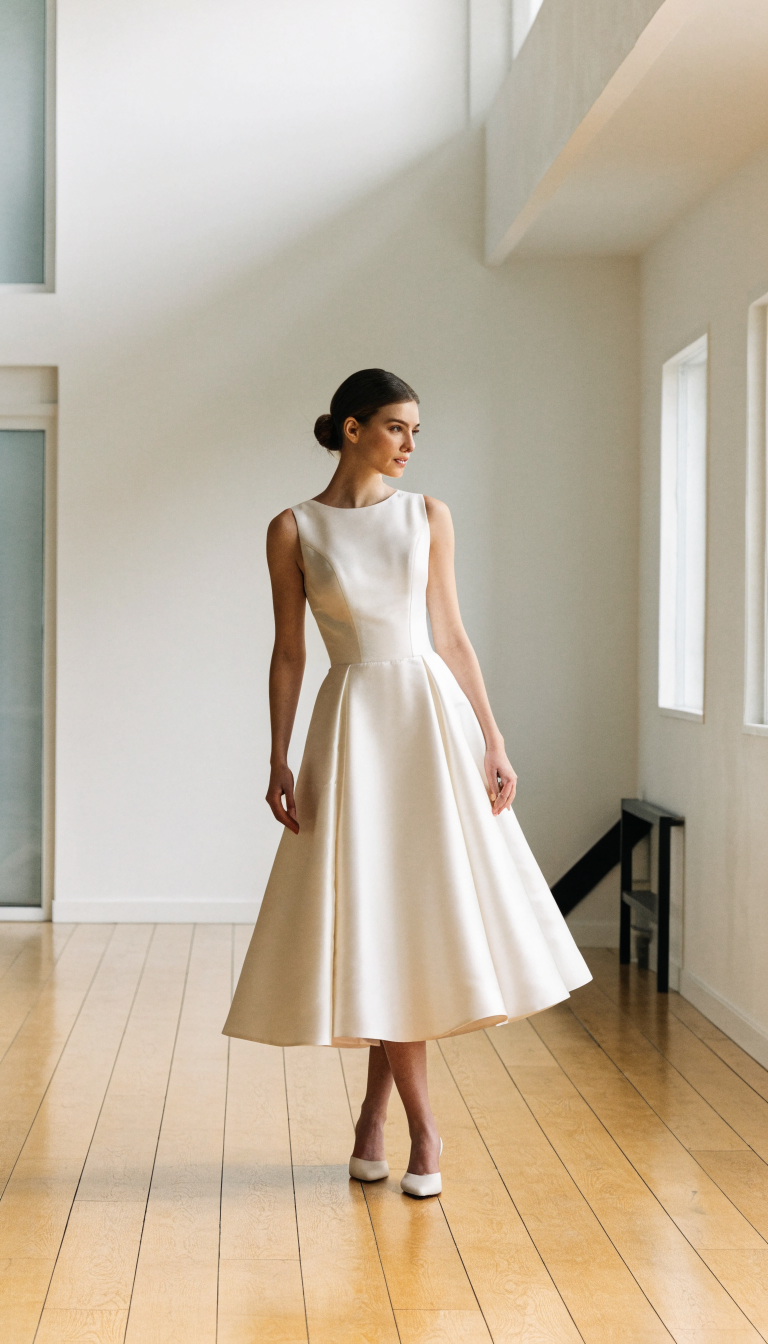
Cool-weather strength Mikado’s density holds shape through hours of wear and photographs cleanly under indoor lighting.
Weight awareness In warm climates the fabric can feel substantial; request a sample or try a similar weight before ordering.
Alteration ease Because the hem is shorter, hemming adjustments are usually straightforward compared with long trains.
Romantic Fabrics and Textures
4. Lace Tea-Length Midi Wedding Dress
Lace applied over a lining or soft underlayer adds pattern and texture to a midi silhouette that ends near mid-calf. Fine Chantilly lace feels delicate and breathable, while guipure offers more raised structure that holds its shape. The length keeps the lace detail visible rather than trailing, and the style pairs well with garden or vintage-inspired ceremonies. A simple lining prevents transparency while still allowing the lace to move.
Texture that photographs Lace edges and motifs catch natural light, so outdoor or window-lit settings show the pattern clearly.
Layer check Confirm the lining covers where you want opacity; open lace can reveal undergarments if the underlayer is sparse.
Comfort note Softer lace moves more freely for dancing than stiff guipure, which can feel more structured.
5. Layered Tulle Midi Wedding Dress
Multiple layers of soft tulle create airy volume in a midi skirt that still ends above the ankle, giving a light, celebratory feel without a full ball-gown weight. Tulle is breathable in single or double layers and floats with movement, making it suitable for daytime or outdoor ceremonies in mild weather. A fitted or lightly structured bodice balances the skirt. The shorter hem means less fabric to manage when walking on grass or uneven ground.
Airy dance floor Tulle layers shift easily, so twirling and dancing feel lighter than heavier structured skirts.
Layer count Fewer layers stay cooler; extra layers add volume but can trap heat in warm conditions.
Shoe pairing The hem shows shoes fully; choose a heel height that keeps the tulle from brushing the ground.
6. Vintage Full-Skirt Midi Wedding Dress
A fitted waist and fuller mid-calf skirt recall 1950s tea-length silhouettes, often cut in crisp organza, satin, or structured lace. The volume sits at the hem rather than pooling, which makes the style practical for indoor or garden celebrations where a classic shape is wanted. Boning or a defined waist seam supports the bodice so the skirt flares cleanly. The look works with or without a short veil.
Classic volume Organza or satin holds the skirt’s shape so the silhouette stays defined through movement.
Sitting test Sit and stand in the fitting; a full skirt can bunch, so confirm the waist and hem remain comfortable.
Accessory balance A shorter hem leaves room for statement shoes or a simple headpiece without competing bulk.
Necklines and Construction Details
7. Off-the-Shoulder Midi Wedding Dress
An off-the-shoulder neckline frames the shoulders and collarbone while the midi hem keeps the overall proportion light. Soft crepe or fluid satin drapes gently over the shoulders, while a more structured fabric holds the neckline in place. The style suits garden or indoor daytime ceremonies where the shoulder line is visible in photos. Built-in cups or a supportive bodice help maintain the neckline without straps.
Shoulder hold Test the neckline while moving your arms; it should stay in place without constant adjustment.
Undergarment match Strapless or adhesive options work best; regular bra straps will show under the open shoulder line.
Season fit The open shoulders feel cooler in warm weather and can be paired with a light wrap if temperatures drop.
8. Soft V-Neck Slip Midi Wedding Dress
A bias-cut or softly draped V-neck midi in charmeuse or lightweight crepe skims the body and falls to mid-calf with liquid movement. The neckline elongates the torso while the shorter hem prevents excess fabric from gathering at the feet. This style suits intimate or courthouse settings where a simple, fluid line is preferred. Light lining keeps the fabric from clinging too closely.
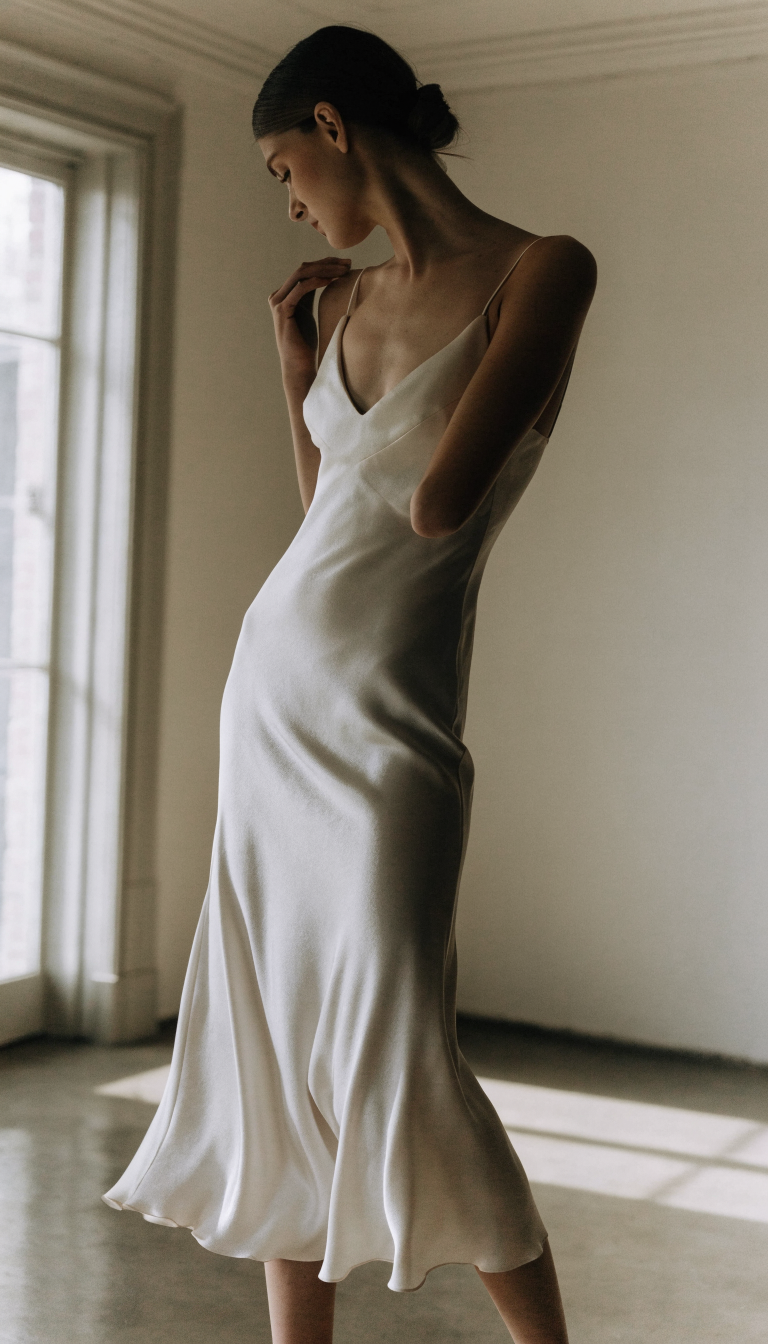
Fluid drape Charmeuse moves with the body and photographs with a soft sheen that stays even under indoor light.
Cling check Walk and sit in the dress; bias cuts can shift, so confirm the neckline and hem stay where intended.
Support need Most slip styles require adhesive cups or a built-in lining for coverage and shape.
9. Long-Sleeve Lace Midi Wedding Dress
Long sleeves in lace or soft chiffon add coverage and texture to a midi silhouette, making the dress suitable for cooler seasons or more formal indoor ceremonies. The sleeves can be fitted or slightly flared, and the midi hem keeps the overall look from feeling heavy. A lined bodice provides opacity and support. The combination works well for autumn or winter celebrations where sleeves are practical.
Coverage without bulk Lace sleeves breathe better than solid fabric while still offering arm coverage.
Movement range Raise your arms in the fitting; sleeves should not pull at the shoulder or restrict the hem.
Weather match Long sleeves suit cooler venues; in heat they can feel warmer than sleeveless styles.
10. Corset-Back Midi Wedding Dress
A corset back with visible boning or lacing offers adjustable support and a defined waist on a midi dress. The construction holds the bodice securely so the mid-calf hem moves freely. Structured fabrics such as mikado or firm crepe work with the boning, while softer options may need additional lining. The style suits both indoor and outdoor settings where a fitted torso is wanted.
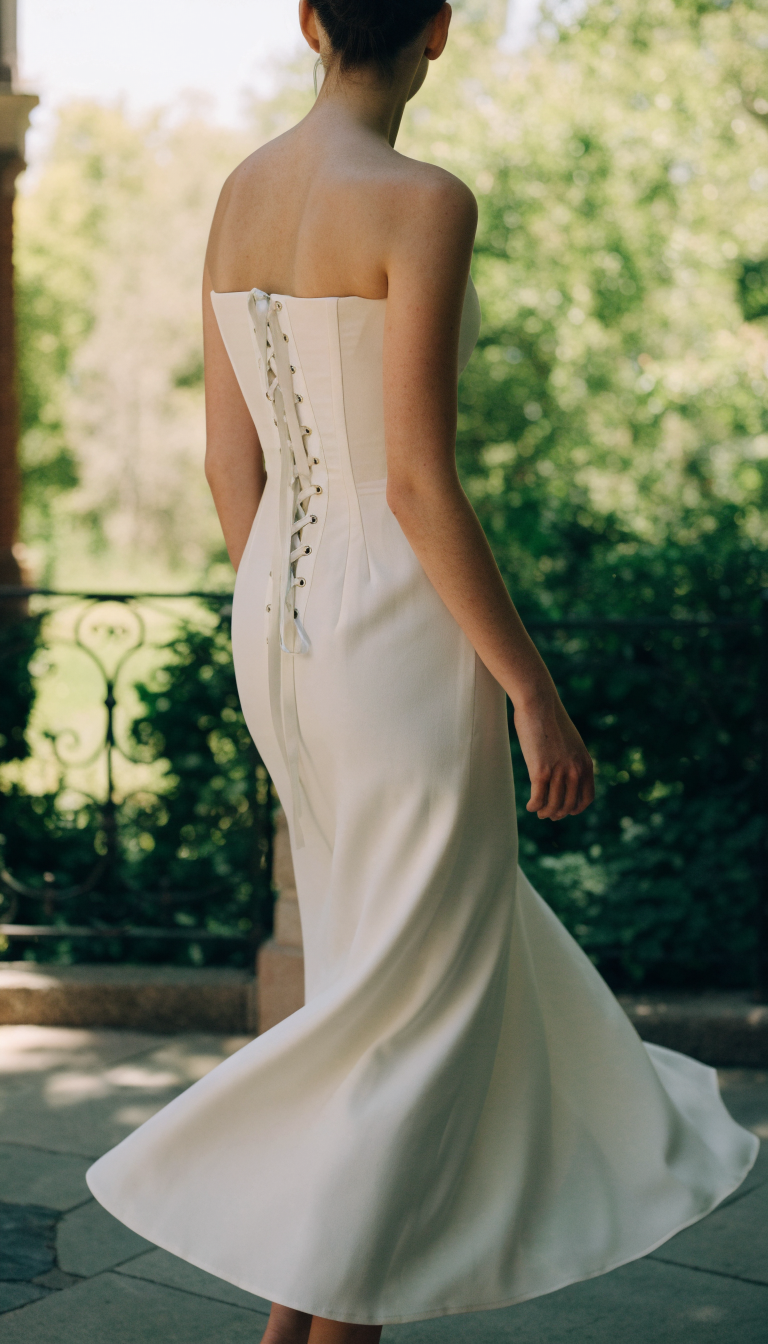
Adjustable fit Lacing allows minor size changes at fittings, which can reduce the need for extensive bodice alterations.
Boning comfort Sit and lean in the dress; boning should support without digging once the dress is adjusted.
Getting dressed Plan for help with lacing on the day, or choose a style with a zipper plus light boning for easier wear.
Venue and Setting Matches
11. Beach Chiffon Midi Wedding Dress
Lightweight chiffon in a midi silhouette moves with breeze and stays cooler against the skin, making it practical for sand or coastal ceremonies. The fabric’s soft drape ends at mid-calf so it is less likely to drag in sand or catch on low vegetation. A simple lining or slip underneath maintains coverage while the outer layer floats. The shorter length also makes walking on uneven surfaces easier.
Breeze behavior Chiffon lifts gently in wind; a modest lining prevents unexpected transparency.
Sand and heat The light weight reduces clinging and heat buildup compared with satin or mikado.
Hem practicality Confirm the hem clears typical sand or grass height so it does not collect debris.
12. Garden Lace Midi Wedding Dress
Delicate lace or floral-appliquéd fabric on a midi dress suits garden paths and outdoor ceremonies where a floor-length hem might catch on plants or uneven ground. The mid-calf length keeps details visible and movement free. Soft lining balances the lace’s openness. The style photographs well in natural light and pairs with simple accessories.
Path clearance The shorter hem reduces the chance of snagging on garden edges or steps.
Light and texture Outdoor daylight shows lace motifs clearly without the bulk of a long train.
Breathability Open lace over a light lining stays cooler than solid heavy fabrics in mild outdoor weather.
13. Courthouse Polished Midi Wedding Dress
A clean satin or crepe midi with a simple neckline and structured bodice meets the formality of a civil ceremony while remaining easy to move in. The mid-calf hem looks intentional in photographs and does not require train management in small spaces. Built-in support and a smooth finish keep the look polished from arrival to exit. This approach suits both indoor registry offices and short outdoor photo sessions.
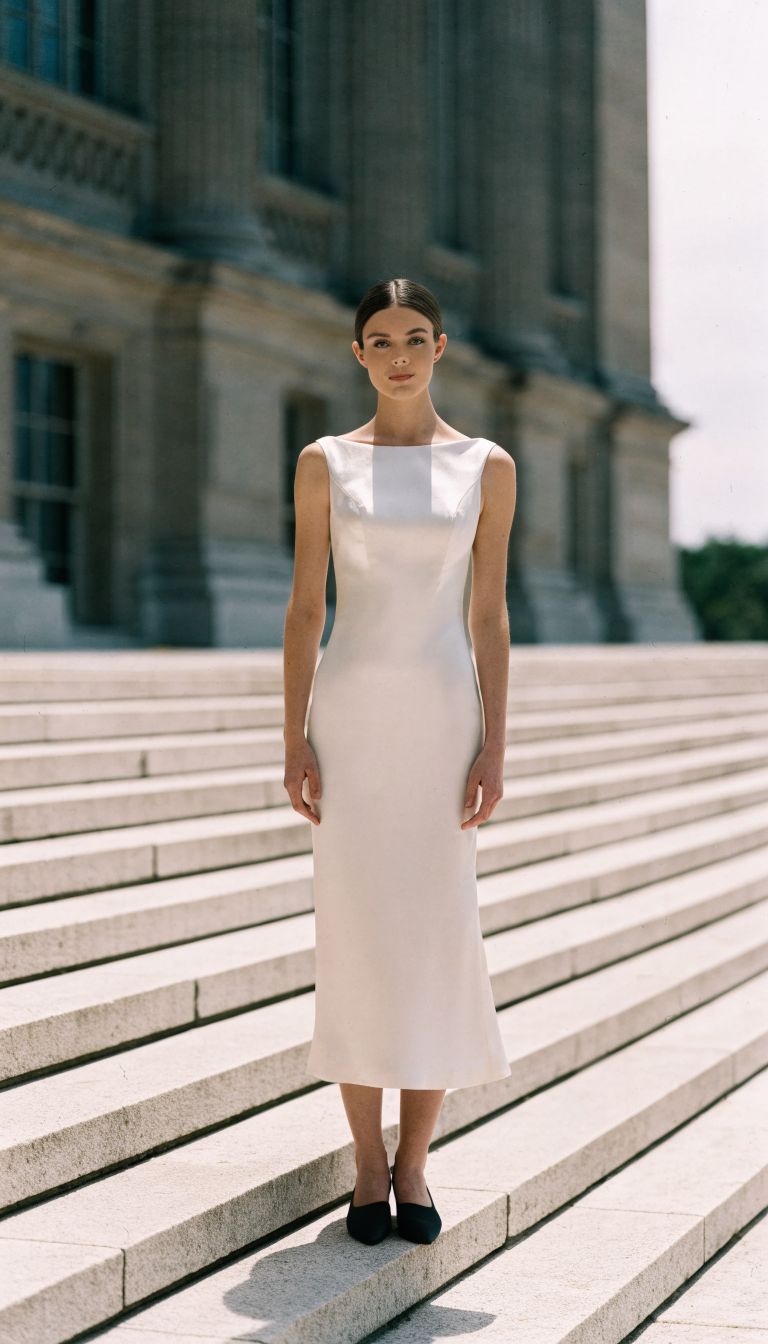
Small-space ease No train or long hem means simpler movement in elevators, stairs, and compact rooms.
Photo readiness A structured fabric holds its shape for quick portraits without extensive steaming.
Lead-time reality Even simpler midi styles are often made to order, so allow several months plus fittings.
14. Winter Crepe or Mikado Midi Wedding Dress
Crepe or mikado in a midi length provides coverage and structure for cooler months without the weight of a full-length gown. The fabric holds shape under layers or a coat and photographs cleanly indoors. A modest neckline or long sleeves can be added for extra warmth. The shorter hem makes layering a wrap or jacket more practical.
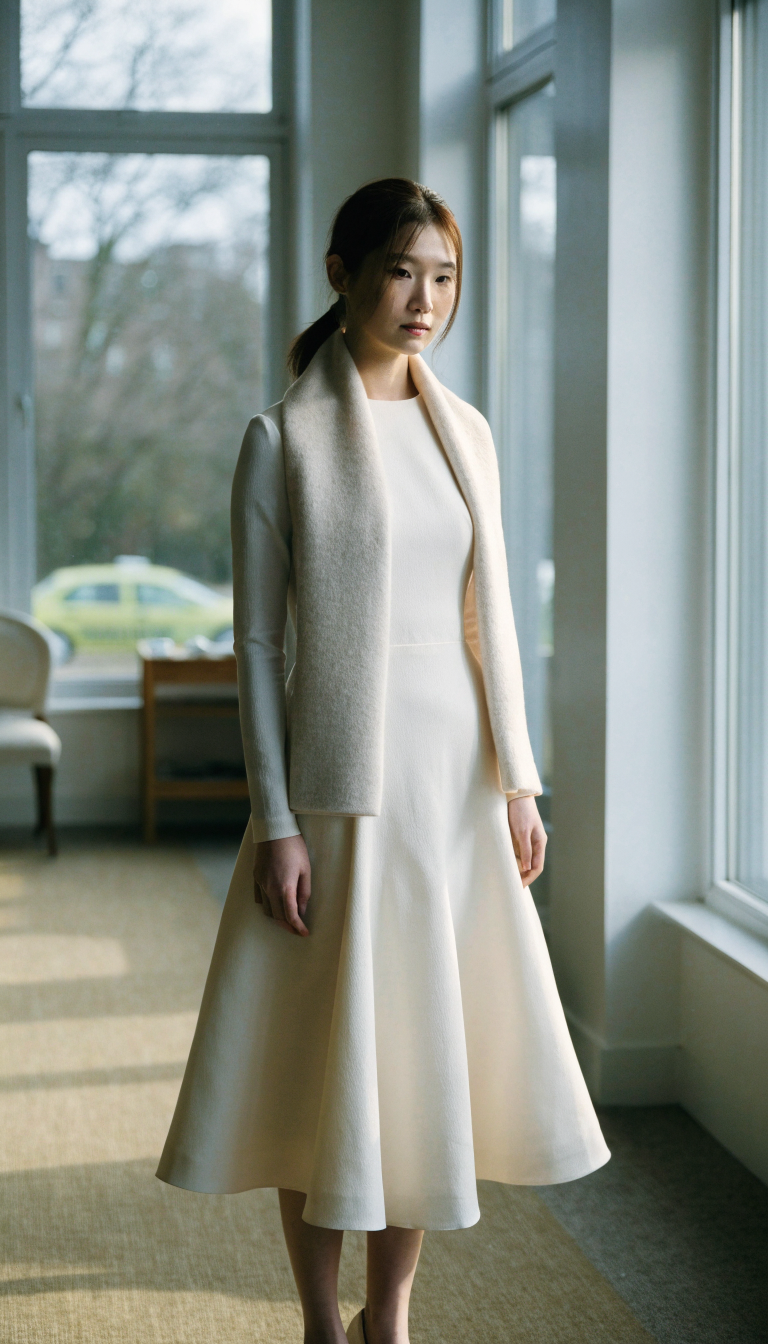
Layering room The mid-calf hem leaves space for a coat or wrap without competing with a long skirt.
Indoor hold Mikado and firm crepe resist wrinkling under indoor lighting and temperature changes.
Comfort duration Heavier fabrics stay comfortable longer in cool venues than in warm ones.
Practical Details and Modern Options
15. Midi Wedding Dress with Pockets
Pockets sewn into a midi skirt, often in crepe or soft satin, add function without changing the silhouette. The mid-calf length keeps the pockets accessible and prevents them from pulling the hem. This detail suits ceremonies where you may hold a phone, vows, or small items. The pockets should be placed so they do not create bulk when empty.
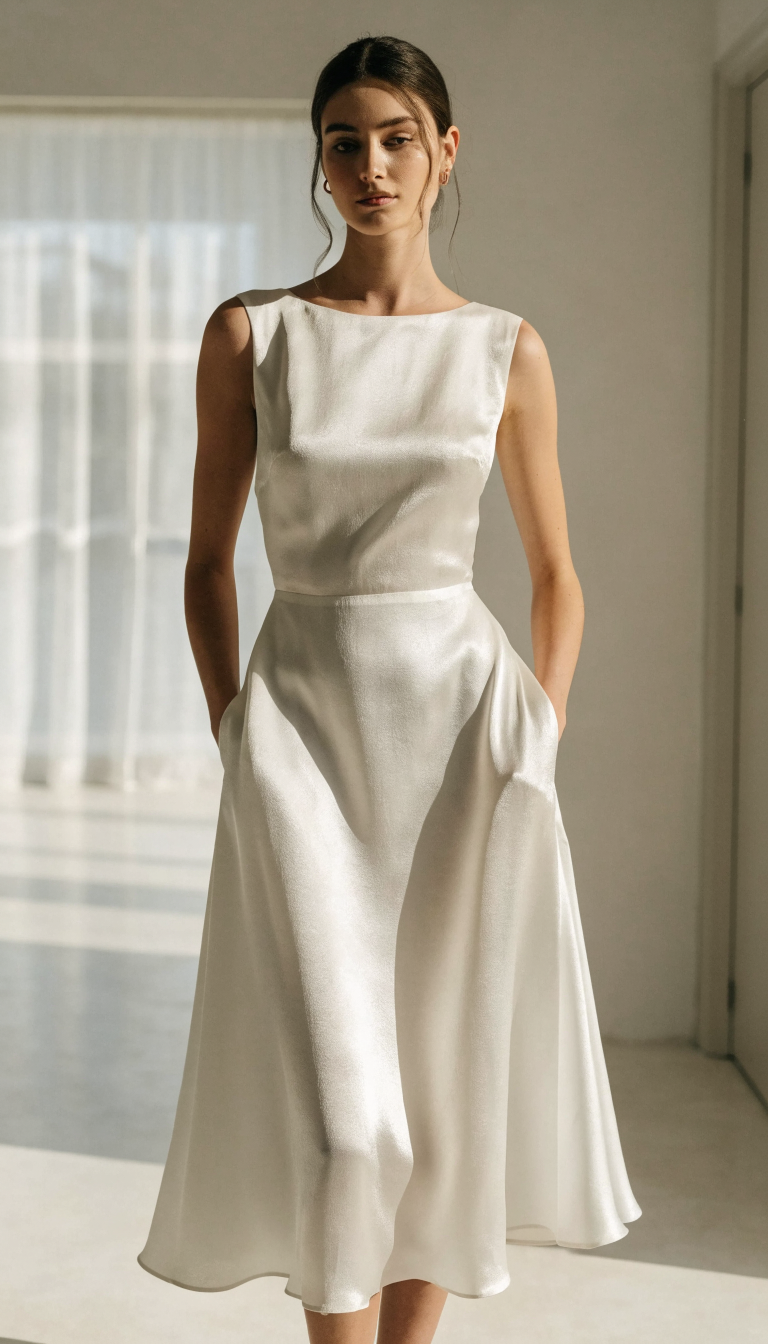
Everyday use Test the pockets while walking; they should not gape or shift the skirt line.
Fabric choice Softer fabrics drape over pockets more smoothly than stiff materials.
Alteration note Pocket placement can be adjusted during fittings if the original position feels high or low.
16. Bias-Cut Fluid Midi Wedding Dress
A bias-cut midi in charmeuse or lightweight crepe follows the body’s movement and ends cleanly at mid-calf. The diagonal cut creates soft folds that shift with walking and dancing. The style suits intimate or modern ceremonies where a close, fluid line is preferred. A light lining reduces cling while preserving the drape.
Movement quality Bias cuts glide rather than stand away, so the hem moves with each step.
Cling management Try the dress in the undergarments you will wear; bias fabrics reveal lines more easily.
Hem stability Because the fabric stretches on the bias, confirm the hem length remains even after fittings.
17. Second-Look or Convertible Midi Wedding Dress
A midi dress designed as a reception change or with detachable elements (such as a short overskirt or sleeves) lets you shift from ceremony formality to easier movement. The base midi remains practical for dancing and photos. Fabrics like crepe or satin hold up through multiple wears in one day. This option works when you want two looks without two full gowns.
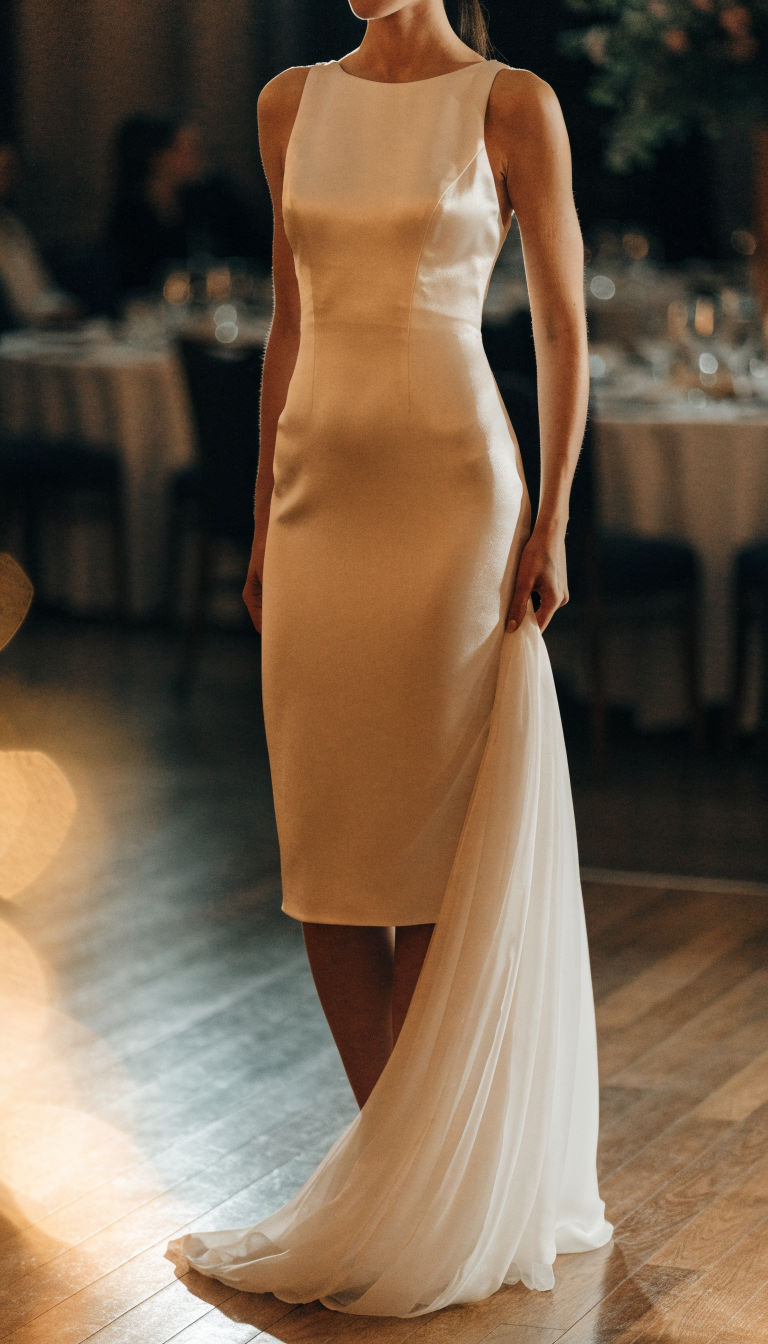
Transition ease Detachable pieces should come off cleanly so the midi base stays intact for the reception.
Wear test Try the dress both with and without the extra elements to confirm comfort in each version.
Ordering window Convertible styles still follow typical made-to-order timelines, so plan fittings for both configurations.
Most midi wedding dresses still require the standard bridal timeline of several months for made-to-order production plus multiple fittings for hem, bust, and any structural adjustments. Bring your shoes, a photo of the venue, and notes on expected weather to the first appointment so the hem and fabric can be evaluated in context. Start shopping early enough to allow for both production and alterations.
Frequently Asked Questions
How far in advance should I order a midi wedding dress? Most bridal gowns, including midi styles, are made to order and commonly require several months of lead time. Allow additional weeks for fittings and any hem or bodice adjustments so the dress is ready well before the ceremony date.
Are midi wedding dresses easier to alter than floor-length gowns? Hemming is often simpler because there is no long train or bustle to manage, but bodice, waist, and support adjustments still require skilled work and multiple fittings. Alterations remain a separate cost from the gown itself.
What shoes work best with a midi wedding dress? The mid-calf hem shows shoes fully, so both heels and flats are options. Choose a height you can wear for the full day and confirm the hem clears the ground in those shoes during fittings.
Can I wear a veil with a midi wedding dress? Yes. A short or fingertip veil pairs cleanly with the shorter hem and does not compete with the skirt. Longer veils can still be used if the overall proportion feels balanced for your setting.
Do midi styles work for different body types and heights? The length itself is adaptable; the bodice, waist placement, and fabric weight determine how the dress sits. Petite frames often prefer a hem that ends just below the knee to mid-calf, while taller frames can take a slightly longer mid-calf cut. Try the style on rather than relying on general rules.